Home Blog Page 39

advent journal: where are my background singers?

I can tell by watching the clip that it happened a long time ago–1996 to be exact–but I saw it for the first time this week: Patti LaBelle singing “This Christmas” at the National Christmas Tree Lighting and getting to the part where the background singers are supposed to sing, “This Christmas,” but nobody sings. She looks around and then says, “Where are my background singers?”

She has to ask the question several times, along with imploring the cue card person to keep up. Don’t take my word for it. Watch.

Most of us haven’t stood on a national stage, but I’m pretty sure we all have had moments that give us a glimpse of what she was feeling. We know what it’s like to wonder what happened to our backup.

Because we only get to see the world through our eyes, our overarching perspective is that we are the lead singer, if you will; we are singing our song. However, if we all look at life that way, or if that is the only way we look at life, we miss the best part of the song.

One of my favorite documentaries is Twenty Feet from Stardom, which tells the story of the background singers who were responsible for the Motown sound and a lot of the memorable moments in the rock and roll I grew up with. For the most part, they never stepped up to the front mic. A couple of them made it to the Rock and Roll Hall of Fame, but the names of most of them live on in liner notes (remember those?) and their voices are indelibly imprinted in our hearts.

Even though we can only see the world through our eyes, we can choose to be a background singer in someone else’s band. In fact, I think that is what most of life is about: answering someone else’s call for backup, for harmony, for support. Maybe the better question is, “Who needs a background singer?”

Back in the days of television variety shows, I remember seeing one where the Pips performed–without Gladys Knight–and all the did was sing the harmony parts and the choreography. Picture “Midnight Train to Georgia,” but with only the, “leavin’ on the midnight train . . . woo woo” and no melody. No Gladys. I knew every word because the background makes the song.(And thanks to my friend Paul, I found the clip from the Richard Pryor Show.)

The world is full of melodies, full of people stepping up for their moment, from baristas to barristers, politicians to public school teachers, trash collectors, postal workers, cooks and cabinet makers. And most of them are wondering, “Where are my background singers?”

Look for them. Listen for them. And step up. Sing along.

One of the comments on the YouTube page go the Patti LaBelle video is, “She sang the hell out of that tragedy.” Isn’t that what we are all trying to do in some sense? We all need background singers. Perhaps the secret is to look for ways to be one, rather than wondering what happened to ours.

Peace,
Milton

advent journal: sundowning

sundowning

some twenty winters ago
I learned to leave the house
before sundown so I
do not go down with it

outside the darkness
feels expansive
the house feels
like a tomb

the darkness
is not the problem
my depression
pulls the house down

wait–say that again

the darkness
is not the problem
my depression
pulls the house down

“when i gaze into the night sky”
the psalmist says in awe
they know there is nothing
wrong with the dark

still something in
the sundown sinks me
from the inside
I dim with the day

when I go outside
I am a part of what is
opening up as night
unfolds into mystery

i join the constellation
of all creation
dancing in the dark
a connection I carry

back to the house
back inside
as day is done and
I rest in the dark

Peace,
Milton

advent journal: leaf lessons

On this last day of November, the only leaves on the trees belong to the evergreens. A post about what I learned from the autumn leaves is woefully late, especially in a culture that puts out Halloween calendar in mid-August, but such is the nature of my life in these days.

One of those who wrote with the season was Maria Popova on her wonderful site, The Marginalian, where she wrote about the magic of cholophyll:

But autumn is also the season of revelation, for the seeming loss unveils a larger reality: Chlorophyll is a life-force but it is also a cloak, and when trees shed it from their leaves, nature’s true colors are revealed.

Photosynthesis is nature’s way of making life from light. Chlorophyll allows a tree to capture photons, extracting a portion of their energy to make the sugars that make it a tree — the raw material for leaves and bark and roots and branches — then releasing the photons at lower wavelengths back into the atmosphere. A tree is a light-catcher that grows life from air.

Joseph Bienaimé Caventou and Pierre Joseph Pelletier were the two men who identified chlorophyll in 1817. I say identified rather than discovered because that was the way they talked about what they had found.

We have no right to name a substance long-known, and to the story of which we have added only a few facts; however, we will propose, without granting it any importance, the name chlorophyll, from chloros, color, and φυλλον, leaf: a name that would indicate the role it plays in nature.

The described what they saw rather than try to take credit for it. Chlorophyll: the color of leaves. In the last hundred years, we have learned that more is going on in the leaves of autumn.

But chlorophyll, which is yet to be fully understood, is not the only pigment in trees. Throughout a leaf’s life, four primary pigments course through its cells: the green of chlorophyll, but also the yellow of xanthophyll, the orange of carotenoids, and the reds and purples of anthocyanins.

In spring and summer, when the days grow long and bright, chlorophyll saturates leaves as the tree busies itself converting photons into the sweetness of new growth.

As daylight begins fading in autumn and the air cools, deciduous trees prepare for wintering and stop making food — an energy expenditure too metabolically expensive in the dearth of sunlight. Enzymes begin breaking down the decommissioned chlorophyll, allowing the other pigments that had been there invisibly all along to come aflame. And because we humans so readily see in trees metaphors for our emotional lives, how can this not be a living reminder that every loss reveals what we are made of — an affirmation of the value of a breakdown?

I will go ahead and say right now that a post on “the value of a breakdown” is in my future, but what caught me in Popova’s words was “every loss reveals what we are made of.” Cue Cyndi Lauper:

I see your true colors shining through
I see your true colors and that’s why I love you
so don’t be afraid to let them show
your true colors are beautiful like the rainbow

Richard Rohr has also been my autumn companion, alongside Caventou and Pelletier and Popova. I am learning from him as well.

Only the human species absents itself from the agreed-on pattern [in nature] and the general dance of life and death. . . . Necessary suffering goes on every day, seemingly without question. . . . Most of nature seems to totally accept major loss, gross inefficiency, mass extinctions, and sort life spans as the price of it all. Feeling that sadness, even its full absurdity, ironically puts us into the general dance, the unified field, an ironic and deep gratitude for what is given–with no necessity and so gratuitously. All beauty is gratuitous. So whom can we blame when it seems to be taken away? Grace seems to be at the foundation of everything.

There is no good reason for beauty, just as, I suppose we could say there is no good reason for suffering. It’s all grace and gravity, or, perhaps, grace and gratitude.

When I worked as a hospital chaplain, I read an article that talked about helping people move from asking, “Why is this happening to me?” (a question with no good answers) to “What does this mean for my life?” The difference between the two questions has been helpful over the years in looking at ways to make meaning out of what happens to us. Rohr gave me a deeper insight into the second question in my reading this morning.

For postmodern people, the universe is not inherently enchanted, as it was for the ancients. We have to do all the “enchanting” ourselves. This leaves us alone, confused, and doubtful. There is no meaning already in place for our discovery and enjoyment. We have to create all meaning by ourselves in such an inert and empty world, and most of us do not seem to succeed very well. This is the burden of living in our heady and lonely time, when we think it is all up to us.

But there’s more to the story, he says.

The gift of living in our time, however, is that we are more and more discovering that the sciences, particularly physics, astrophysics, anthropology, and biology, are confirming many of the deep intuitions of religion, and at a rather quick pace in recent years. The universe really is “inspired matter,” we now know, and is not merely inert. . . . God seems to have created things that continue to create and recreate themselves from the inside out.

That last sentence includes us as well. We continue to create and recreate ourselves, or at least that is the invitation from the leaves and most everything else around us.

If I were to go back through my photos, I could probably find a dozen pictures like the one at the top of this post. Though they would all look alike, they each mark a moment when I was not who I am and where I am right now. To borrow from Stanley Kunitz, “I am not yet done with my changes.” I feel like the leaves I watched all fall, finding new colors, new beauty, even as I struggle with life on a day to day basis. In the middle of it all, ironically, I am grateful. Morning by morning, new mercies I see.

So, I’m late with my autumn reflection. I’m talking about leaves and the trees have turned to sleeping stick figures. That doesn’t mean I can’t still see their colors, or that it is too late for me to learn and grow about what fills them and you and me.

Peace,
Milton

advent journal: leftover life

Stephen Sondheim died last week.

He had Thanksgiving dinner with friends and died on Friday, unexpectedly it seems.

Looking back through my texts, I heard about his death around six on Friday, because that is when I wrote a friend with whom I share a love of Sondheim and his songs. I was in the kitchen making a Thanksgiving Leftover Pie, something new to me, but now something that will become a part of all our Thanksgivings going forward. (My version is at the end of this post.)

This morning, I read the tribute to Sondheim in The Atlantic and I was caught by two paragraphs in particular:

I’m sure Sondheim knew better, though. He never believed in simple happy endings, but he knew exactly how to take advantage of his audience’s yearning for them. In Into the Woods, for which he wrote the music and lyrics, the characters end Act I singing the jaunty “Ever After,” blissfully unsuspecting of the complications that await them in the second act.

and

Before Company, Sondheim said in the 2004 documentary, musicals “would always lead to the so-called happy ending. We were saying something ambiguous, which is ‘Actually, there are no endings’; it keeps going on is what, really, Company’s about.”

Even though neither Sondheim nor the writer of the piece used the word, I thought, “They’re talking about leftovers.”

Leftovers are the things you make into a meal after the meal. They are what you do after the happy ending, if you will. After the big gathering around the table we have all anticipated, after we have stuffed ourselves and then had pie, after we have napped and walked and talked, we come back to the fridge and pull out the leftovers to see what we can make of them, whether it’s a sandwich, a soup, or a pie.

Leftovers make pretty good metaphors as well. If Sondheim is right–and I think he is–life gets lived in the ever afters, in the stuff that happens after the endings. In the leftovers. The longer we live, the more bits and pieces we are left with to see what we can make of them. Wounds can become weapons or windows. Memories season our days in ways both sweet and savory, I suppose, though some we have to choose to no longer digest. The tables to which we return, whether the annual gatherings for holidays or the daily seats we take for breakfast and dinner, are never completely absent of what has been shared there already.

Life offers none of us a clean slate. We’re all dealing with leftover lives.

That’s good news, I think. At least that’s what I learned (again) from the Thanksgiving Pie. After we cut it open and ate it, I said, “I think I would make the whole meal again just so I could wait a day and make this.” Everything in the pie had already been on the table. All of the dishes are things i have made over and over. There were no surprises. And yet, when I layered them inside the pastry and baked them into a loaf pie that looked worthy of being cut open on The Great British Baking Show, it felt (and tasted) like I had done a new thing. And I had–with the leftovers.

One of the ways I am approaching Advent this year is thinking about it as a leftover story, not only as I read the story again in scripture, but also as I think about how we retell it in our time. Jesus was born in the middle of a colonized nation, as a part of an oppressed people, and to a family that was confused and frightened by much of what happened. No one was expecting an ever after, much less a happy one. And Jesus’ birth did not bring one. Nothing was solved in Bethlehem. The angels may have sung, but it was not a big finale. Love came down at Christmas and God has been making stuff out of the leftovers ever since.

Enjoy the recipe. Fill it with whatever you have.

Peace,
Milton

Thanksgiving Leftover Pie

Ingredients

For the hot water pastry:
4 cups all purpose flour
1 teaspoon salt
1 cup water
8 tablespoons unsalted butter (1 stick) or lard

For the filling:
dressing or stuffing
turkey, diced
vegetables
gravy
sweet potatoes or mashed potatoes

For the egg wash:
1 large egg yolk beaten with 1 tablespoon water

For the pastry:
Whisk together the flour and salt in a large bowl and make a well in the center.
Bring the water and fat to a boil in a large saucepan; stir as you go to melt the fat.
Pour the liquid into the well in the flour mixture and stir it until everything is evenly moistened and cool enough to handle comfortably. Once the liquid is incorporated, I use my hands to mix the dough. Turn the dough out onto a lightly floured surface and knead it a few times. Cut off a third of the dough for the top and set it aside to keep warm. (I wrap mine in a towel.)
Roll the remaining dough into a 16” long and 12” wide rectangle. Press it into a 9” x 5” loaf pan so the edges hang over the sides about a half an inch. Press the bottom down a bit to make sure it fits.

To assemble the pie:
Preheat the oven to 375°F. Spread all the filling ingredients (except the cranberry sauce) on top of one another in even layers. Each layer will be about 1/2 inch thick. I put the dressing on the bottom almost like a bed for the other stuff. I also finished with the sweet potatoes to create a kind of lid. Fill the pan full, so it even domes a little.
Roll the remaining dough into rectangle that fits the loaf pan. Place on top and then fold the overhanging edges of the bottom crust over and crimp the dough to seal it. Cut several slits in the top to vent it.

Brush the top of the pie with the egg wash. Place on a parchment-lined baking sheet and bake for 45 to 55 minutes, until you see liquid bubbling through the vents and the top crust is golden brown. Remove the pie from the oven and let it rest for at least fifteen minutes before slicing. It tastes good hot, at room temperature, and cold from the fridge.

advent journal: it can’t always be christmas

I began serving as the bridge interim pastor at Westbrook Congregational Church UCC in Westbrook, Connecticut this morning. I will be there until the Sunday after Easter while they complete their search for a settled pastor. My post to begin my Advent Journal for this year is the manuscript of my sermon. It is specific to their congregation in several spots, but sometime the particular is the best way to get to the larger truth, so I decided to share it here as well.

The text was 1 Thessalonians 3:9-13.

________________________________

One of the effects of the pandemic seems to be that Christmas stuff has shown up earlier and earlier. Last year, because most of us didn’t feel safe to go in stores, our shopping moved online. Instead of Black Friday deals where you had to be in the store on a particular day, the deals stretched out over weeks. Separate of shopping, a lot of folks put up decorations early because, like the song says, we needed a little Christmas right that very minute. We wanted some relief, some reason to celebrate.

This year, even though we feel a little freer to move about, those trends have continued. If you are Hallmark Christmas movie watchers like we are at our house, you know they started showing them before Halloween. About the same time, a lot of places started decorating and playing Christmas music. Thanksgiving sort of got lost in the shuffle. These are difficult days, so why not stretch Christmas out as long as we can? It feels like the opposite of the line I remember from the Chronicles of Narnia where it was “always winter and never Christmas.” We appear to wish for it to be Christmas and never winter. We just want to feel better right now.

In all of the churches I have been a part of, one consistent question comes every Advent: are we going to sing Christmas carols before Christmas?

The thoughts and feelings behind the question are more nuanced that simply saying we want it to be Christmas already. Music is at the heart of Christmas and, well, I would guess there aren’t many of us who have favorite Advent songs. Still, the question calls us into the creative tension that comes with learning how to wait. Waiting is good practice.

The oldest roots of the word wait mean “to watch with hostile intent, to be on guard, to defend.” Over time, the word came to mean “to be awake, to sit in expectation.” The word has grown from fear to anticipation. One of the songs of my youth that has stayed in my mental jukebox is Carly Simon’s song titled “Anticipation.” The opening lines say,

we can never know about the days to come
but we think about them anyway . . .

That’s pretty good theology. Part of what we do most any day is wonder what’s coming next. As the season of Advent became part of the church calendar over centuries, it has been seen as a season of preparation. The word advent means “to arrive at, come to, to approach.” It differs from the waiting we do in life because we do know what–or who–is coming. We are preparing for the birth of Jesus.

This year, our traditional season of waiting parallels what you are going through as a congregation: you are in an advent season as you prepare for an arrival: the arrival of your new settled pastor. The difference is you don’t know who will come, and you must wait and prepare for them anyway. At the same time, somewhere someone is preparing for you, even though they don’t know that yet. As you prepare to embrace the Christ child, pray daily for the one who will come to embrace you. Make room in your heart for hope.

Our passage for today is from Paul’s letter to the church at Thessalonica, a small congregation in a Greek port city in the north of the country that Paul had helped to start, but then he had to leave. They, too, didn’t know what was coming next.

Just as it is on most any Sunday, our scripture reading only tells part of the story. It is a snapshot, not a movie. The verses we read this morning are filled with words like hope, joy, love, and gratitude. It all sounds warm and inviting. We can hear Paul’s affection for the Thessalonian church, and there is more to the story. Paul had been run out of town for starting the church there. The Roman government didn’t want it; many of the Greeks were against the new religion. Paul fled the city and the small congregation kept meeting despite the hardship. Even though things were tough, they kept going–they kept their promises to God and to one another. Paul wasn’t talking about joy and hope and love because everything was warm and fuzzy. He was grateful for their commitment to God and to one another in the middle of extremely difficult circumstances.

Over the past couple of weeks, I have had a chance to meet with some of you as I have prepared to become your bridge pastor. One of the recurring themes I have heard in what you have said to me and to one another is how you are working to take care of one another. The pandemic has been hard on all congregations. Not everyone feels comfortable coming back in person. Even when we are here, we need to be masked and we can’t hang around and talk over coffee like we used to. Zoom and texts and e-mail messages are great, but they are not the same as being in person. Layer the losses that come with life on top of all of that, and it feels overwhelming. It feels like the relief we are waiting for is never going to come.

In the middle of all of that, we lit the candle of hope this morning.

Hope is more than thinking things are going to get better. Hope runs deeper than wishing for a brighter tomorrow. Paul wrote to the Thessalonians from prison and talked about hope because of the love they shared for one another. Even as we wait for Christmas, we are mindful that the birth of Jesus didn’t change much of anything. Yes, we know about shepherds and magi, but Jesus was born and life went on being difficult. What changed was God joined us in our humanity. Jesus showed us how to love one another, which is another name for hope.

Meister Eckhardt was a mystic in the twelfth century. He said something I come back to every Advent:

What good is it to me that Mary gave birth to the son of God fourteen hundred years ago, and I do not also give birth to the Son of God in my time and in my culture? We are all meant to be mothers of God. God is always needing to be born.

It isn’t always Christmas. Life is more than one season, and the season you are going through may not match the one on the calendar. Whatever season is in your heart or mine, we are in this together. Just as Paul told the Thessalonians, the best work we can do is to love one another in Jesus’ name, preparing our hearts for God to be born anew in our time, in our place, in these days. Amen.

Peace,
Milton

we all fall down

I am preaching this morning at our church in Guilford. The passage for today is Mark 13:1-8.

One of the memories that has stayed with me from my preaching class in seminary is one of a student questioning our professor about how to be original. A knowing smile came across the professor’s face and he said, “Originality is knowing how to hide your sources”—another way of echoing what the writer of Ecclesiastes said: there is nothing new under the sun.

I am going to be clear about my source. Peter Palumbo and I were having coffee yesterday and talking about life and he said, “It’s like that old nursery rhyme, ‘Ashes, ashes, we all fall down.’” And I remembered that nursery rhyme came from the seventeenth century plague in Great Britain that killed fifteen percent of the population. People carried sachets of posies to combat the stench; and “we all fall down” was another way of saying it felt like everyone was going to die.

Life hurts. On lots of levels. Each of us have pain that feels unique to us, and we all have shared pain, or perhaps I would do better to say we have pain we can choose to share—burdens we can bear collectively. The two categories are not mutually exclusive. As I have said before, life and faith are team sports. What we do as individuals ripples out in ways both seen and unseen.

The last six and a half weeks of my life have been focused on recuperating from a total knee replacement. Most every aspect of the process has involved pain of some sort. In the months before my surgery, when the pain I lived with was because my knee was deteriorating, the common wisdom offered me was to put it off as long as I could. I began to question that logic because I thought that the surgery offered me a new lease on life and putting it off just delayed that. So, I scheduled the surgery because the pain of recovery was more attractive than the pain of postponement.

Since my surgery, I have followed the common wisdom that the biggest key to my healing is my commitment to physical therapy. That wisdom is proving true—and it hurts. Healing hurts. One of the things I have learned in the process is how to differentiate between pain that heals and pain that indicates I am hurting myself. My therapist continues to remind me that there is a difference between PT and exercising. The point is not adding more weight at every session or doing more than I did before. The point is to help my knee understand that it is getting better, and I will not always hurt this way.

As much as I would like to mine what I have just told you for metaphors, that last part is where it all breaks down. Our lives are made up of both the pain that heals and the pain that damages, but we don’t necessarily have the choice to avoid the damaging stuff or postpone it. Life not only hurts, it often wounds us. I don’t want to be so flippant as to suggest that all we have to do is keep doing our exercises and things will get better. They might and they might not—which is the point Jesus was making with his disciples in the verses we just read.

Jesus and his disciples were leaving the Temple in Jerusalem, a magnificent building that represented the presence of God to the people who lived there. Even under the oppression of Rome the Temple was a tangible assurance that God was with them. The disciples were awestruck. Perhaps you know the feeling. Can you think of a building where you have stood that took your breath away? Trinity Episcopal Church in Copley Square, Boston is one of those for me. Let yourself go to that place as you hear Jesus’ words in response to their awe:

“See these great buildings? Not a single stone will be left on another. Everything will be torn down.”

A little later, Jesus was with four of them—two sets of brothers: Peter and Andrew, James and John—and they asked not so much for clarification, but for a warning: “What are the signs that this is going to happen?” Are we going to be able to see this coming?

Jesus doubles down with words that read like a Cormac McCarthy novel in many ways, particularly to our American ears so tuned to fear and distrust. But through the whole chapter Jesus keeps saying things like, “Don’t be alarmed when . . . ,” or “Things like this will happen” before he lists some sort of cataclysmic sequence. Wars. Rumors of Wars. Earthquakes. He makes it sound like Chicken Little was right, but then he says–in most translations–“Things like this must happen, but the end is still to come,” which, for those of us who have seen too many disaster movies sounds like an ominous statement. But a better translation would be, “But it is not yet the end,” or “The end is not yet,” which is to say all these horrible things are not the end of the story. God’s story all along has been a story of love. In the end, love wins. Therefore, as we often say, if love has not yet won, it is not the end.

Then he closes with an image that made me chuckle when I thought about it. Jesus was sitting in private with James and John, and Peter and Andrew. To that small circle of men he says, “This is only the beginning of the labor pains,” which is a wonderful metaphorical way to say that God makes meaning out of our suffering on the one hand, but I think it’s funny that he used a metaphor none of them could know experientially. I also find it hopeful. I trust that you can understand my knee replacement metaphorically without having to have one.

The pain we experience in life, whether hurtful or healing, is not a sign that pain is all that there is. When things fall apart, something else follows. Something new. More importantly, God shows up in new ways. Just because the symbols of God’s presence that we have counted on are temporary does not mean that the presence of God is temporary.

Mark 13, from which our passage is taken, is often labeled as “The Little Apocalypse.” Our modern understanding of the word is some sort of disaster–the end of the world–as if the world is going to end in the same violence we appear to be quite adept at perpetuating. But that is not what the word means at its root. It means an uncovering, a disclosure, a revelation, as if to say, “So that is what all of this means.”

Right after we married in 1990, Ginger and I moved from Texas to the Charlestown neighborhood of Boston. Everything felt ancient compared to Texas. The next year we had a chance to go to Paris and we went to Notre Dame, another building intended to symbolize the presence of God. We listened to a tour guide at Notre Dame describe the “new” rose window that was put in the 1500s and smiled at all the things we thought were so old in New England. It felt like that cathedral had and would last forever. It didn’t–at least, not in its original form.

The Temple Jesus was talking about was destroyed in the year 70. It has yet to be rebuilt.

We have gathered in this building this morning, which was also built a symbol of God’s presence. We are still tentative in our gathering because of the pandemic and the questions it has raised about how we can be together without endangering one another, so we gather, but it doesn’t feel like the room we have always known. Just as the disciples had a hard time imagining how they would know where God was if the Temple were destroyed, we are having a hard time figuring out how to be the church when we can’t do it the way we are used to, or when circumstances make it feel like we might not get that chance again.

Some of us miss the fellowship. Some of us miss the singing. Some of us worry that we won’t have enough money to pay the bills. Some of wonder if our kids will keep things going after we are gone. We aren’t having the Harvest Fair this year. By the time we get back to coffee hour, the kids are all going to be two years older than the last time they ran around with fistfuls of cookies. None of us know what lies ahead—and I’m not just talking about church when I say that. We are frightened, anxious, angry, frustrated, depressed. In our uncertainty, the symbols of God that are most attractive are those that offer comfort. Yet, what Jesus offers instead is hope, which is not always comfortable.

Though the pain of my surgery and my recovery in no way compare to what I imagine it feels like to be in labor, the clearest answer I can give to someone when they ask me how things are going is that I am doing well and it all hurts. The only way to continue to improve is to keep hurting. I hurt before the surgery as well, but that bone-on-bone pain that wouldn’t go away was replaced by a pain that offers me hope of being more agile and involved in life. I won’t describe exactly what they did to my knee but suffice it to say they destroyed it and rebuilt it. I am a construction project. I couldn’t stay the way I was and keep walking, so I let them replace my knee, a rather gruesome process that offers me hope.

Our experience of the pandemic over the last twenty months has made obvious what was already true. Things do not stay the same. Life hurts. In many ways, big and small, the walls we thought were solid have fallen down. It feels as though all the stones of our security have been scattered. But none of those things are signs that destruction is the last word, or that the best we can do is hunker down and take care of our own.

The source of our hope in Christ is more profound than perpetuating the things that make us feel safe. The building is not the church. We are the church, the living, breathing Body of Christ, the incarnate love of God alive and hopeful in a world far too easily convinced that pain is the last word. Rather than allow ourselves to be swept up in outrage or cynicism or fear, rather than read the signs of the times as a call to safety, let us choose to remind one another that love is the last word. Instead of joining the chorus that thinks we are doomed, let us be midwives for one another, helping to birth love and hope in each other’s lives.

These walls will fall down. We will all fall down. And love bears all things, believes all things, hopes all things, endures all things. Love never ends. Amen.

Peace,
Milton

reentry

Today marks five weeks since my knee replacement surgery. Since that time I have been more singularly focused than almost any time in recent memory. The last five weeks have consisted of doing my exercises, eating, and resting–though not always sleeping.

I came home from the hospital the day after my surgery and spent the next few days pretty drugged up to help deal with the pain. When I got to the one week mark, I realized I had not opened my laptop or engaged social media in any way. My job gave me a short term disability leave, so I had not opened my work computer either. Since I had two weeks of home health care, I decided the unintentional sabbatical a little more intentional and stay off until I started going to outpatient physical therapy, but when that time came, I was still finding something worth noticing in the silence and separation. I didn’t feel isolated. I reached out to people when I needed to and many sent notes and texts and e-mail messages. I just kept the computers closed and stayed away from social media. And my blood pressure dropped fifteen points.

One of the casualties of my recovery was the ability to concentrate, so I have not read much over these past weeks either. I have watched a great deal of television. Major League Baseball was kind enough to schedule the postseason during these weeks, which has been a true gift even though the Red Sox lost in the ALCS. One afternoon last week, I came across Apollo 13, which I saw many years ago. The timing was interesting because I had been thinking a lot about reentry into life and when I clicked into the movie it was the scene where they were discussing the danger of the capsule reentering the earth’s atmosphere because of the possibility of a crack in the heat shield. If they got the angle wrong, the capsule and the astronauts would have been incinerated. And there was a chance the parachutes had frozen and might not open. Still, they kept hurtling home.

I was never a real science-y kid, but I was captivated by the poetry of the space program: all of it was so filled with metaphor and mystery. I was thirteen the spring Apollo 13 went into space. We were living in Nairobi, Kenya, so the news was not immediate. I can remember sitting up with my dad listening to Voice of America to see if the men had made it home.

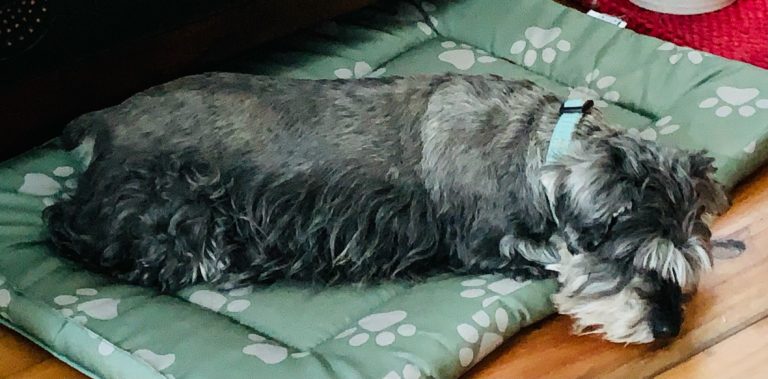
Last week I sat on the couch with my knee wrapped in a compression sleeve that was filled with ice water from the machine next to me as our Schnauzers snoozed around me. As I watched the movie, I thought through my own process of reentry. How would I get back to life that held more than healing? My unintentional sabbatical had proven to me that I needed one and, perhaps, five or six weeks were not going to be enough. The singularity of focus on my knee, along with the pain and discomfort, had pushed my depression out of view and I wondered what kind of comeback it might stage. Work holds issues and challenges that have not been made clearer by the distance of my recovery. The promises, demands, obligations, and choices that filled my life before surgery were still there.

As the astronauts talked about their concerns about the correct angle, or whether or not the heat shield had a crack in it, I found myself wondering how to reenter life with burning up.

I am still wondering. I’m a week away from going back to work and stepping fully back into life and I’m still not sure I have the angle right. I’m certain my heat shield has a crack in it. Who knows about the parachutes. At least I don’t feel like I am going 24,619 feet per second. I do get to pick my speed. Monday, I cooked dinner. Yesterday, I returned to my practice of posting a poem on Facebook. Today, I am posting here and planning to work to keep my promise to make this a daily practice as well. Next week, i go back to work. Any significant breaks in my routine will have to be by choice–and I am not always good at choosing them.

That last sentence makes me think that the breaks are not the real issue, however. October marked the one year birthday of my book The Color of Together: Mixed Metaphors of Connectedness. I’m proud of the book and wish I was better at finding ways to get it to people, but that’s another story. When I finished writing it, I told myself I was not going to let another five years pass between books. I had hopes of being well into the next manuscript by now. And I am not. I let my life fill up my writing space, which leads me to ponder that the lessons I am trying to learn in these days have more to do with being present rather than trying to meet the crushing demand of being current.

I don’t know. I suppose the next weeks and months will show me what I actually learned from these days. Here’s hoping I have the wherewithal to listen well.

Peace,
Milton


first lines

3

I started playing with words others have written that have become inscribed on my life for one reason or another. It was a nice distraction as I prepare for my surgery on Wednesday and turned out to be fun as well.

index of first lines

I pulled into Nazareth was feeling ‘bout half past dead
doctor my eyes have seen the years and the slow parade of tears
headlights are flashing down the highway
I wonder if we’re gonna ever get home
a look at you all see the love there that’s sleeping
when you’re down and troubled and you need a helping hand
keep a fire burning in your eye pay attention to the open sky
you who are on the road must have a code that you can live by
you come a-walking with a scar on your soul taking too much too lightly
I don’t want to hear a love song I got on this airplane just to fly
like a bird on a wire like a drunk in a midnight choir
I have tried in my way to be free

there’s a river of love that flows through all times
there’s a river of sorrow in my soul
don’t the hours grow shorter as the days go by
there are the ones you call friends
old friends sat on the park bench like bookends
another turning point a fork stuck in the road
people get ready there’s a train a-comin’
you can play the game and act out the part
when you know it wasn’t written for you
baby I’ve been searching like everybody else
in the middle of late last night I was sitting on a curb
where have all my friends gone? they’ve all disappeared

I’m going down to the Greyhound station
gonna get a ticket to ride
I’ve been sleeping for some hours
just woke up and you were there
when the road gets dark and you can no longer see
in every heart there is a room a sanctuary safe and strong
didn’t say we wouldn’t hurt anymore
that’s how you learn, you just get burned
people that are sad sometimes they wear a frown
the secret of life is enjoying the passing of time
I’ve heard love songs make a Georgia man cry
you with the sad eyes don’t be discouraged

when it’s dark outside you’ve got to carry the light
the waltzing fool he’s got lights in his fingers
shut it down and call this road a day
we’re living in a time of inconvenience
you come home late and you come home early
we are swimming with the snakes at the bottom of the well
all the unsaid words that I might be thinking
it was all I could do to keep from crying
the presence of your absence follows me
something in your eyes makes me want to lose myself
here we go again another round of blues
am I young enough to believe in revolution

when you start if you exist God believes in you
oh play me a blues song and fade down the lights
so many years so many hardships
in this world there’s a whole lot of trouble, baby
it’s like when you’re making conversation
and you’re trying not to scream
I found your letter in my mailbox today
late night drives and hot french fries
and friends across the country
I’ve been lately thinking about my lifetime
I can hear her heartbeat from a thousand miles
I’ve been down this road before

Peace,
Milton

grateful

We have had the kind of weekend that makes me glad I live in New England: cool mornings, highs in the seventies, low humidity, and the long, warm, late-afternoon light that lets you know the days won’t be this way for long. Our little town put on a Performing Arts Festival that gave us good reasons to get together and celebrate one another, the Library had a book and bake sale, and we finished it off tonight with a youth group gathering on the church lawn where we ate hamburgers and got to know each other.

I have felt lighter. And grateful.

When I got home tonight, I went back to a sentence I had underlined in After the Locusts:

Strangely, the more I lament, the easier it is to praise and feel grateful.

The sentence comes in the middle of a letter Denise Ackermann wrote to her children entitled “The Language of Lament,” which mattered to her because she “found a language for dealing with, although not solving, the problem of suffering.”

Let me be quick to say that she was not writing about depression. She wrote to her children who had grown up in South Africa during apartheid. But as she talked about the suffering of her nation, I found words that spoke to me as I try to manage these days.

One can risk making honest statements about despair and grief at the same time one affirms all that is good and trustworthy about the relationship.

It strikes me that both grief and praise are most powerful when they are most specific.

I can better respond to the general malaise that makes me feel like I am swimming in molasses that is about two inches deeper than I am tall by thinking of specific tributaries of grief that have fed the reservoir over the landscape of my life. In the same way, I deepen my gratitude when I notice the specific way the evening light hits our church steeple, or the way Lila, our middle Schnauzer, shows her teeth when she smiles, or how my heart still leaps when I hear Ginger come in the house.

Tonight, I am grateful that for the last two days my heart has felt lighter and my hope more tangible. The weather will change, I know. And I am still depressed. Life is not as simple as either/or. I am depressed and I am grateful.

I’m alive.

Peace,
Milton

tiny waltz

4

tiny waltz

and somehow
a day worth
bottling
has slipped into
night without
leaving words
to describe
how it felt
and I have
spent far too
long staring
at a screen
as though the
sheer silence
of sitting
would shape my
sentences
and I have
deleted
far more than
I have saved
but that’s true
most any day
but I found
this little
waltz of a
poem and
I’ll leave it
here in hopes
it finds you

Peace,
Milton