
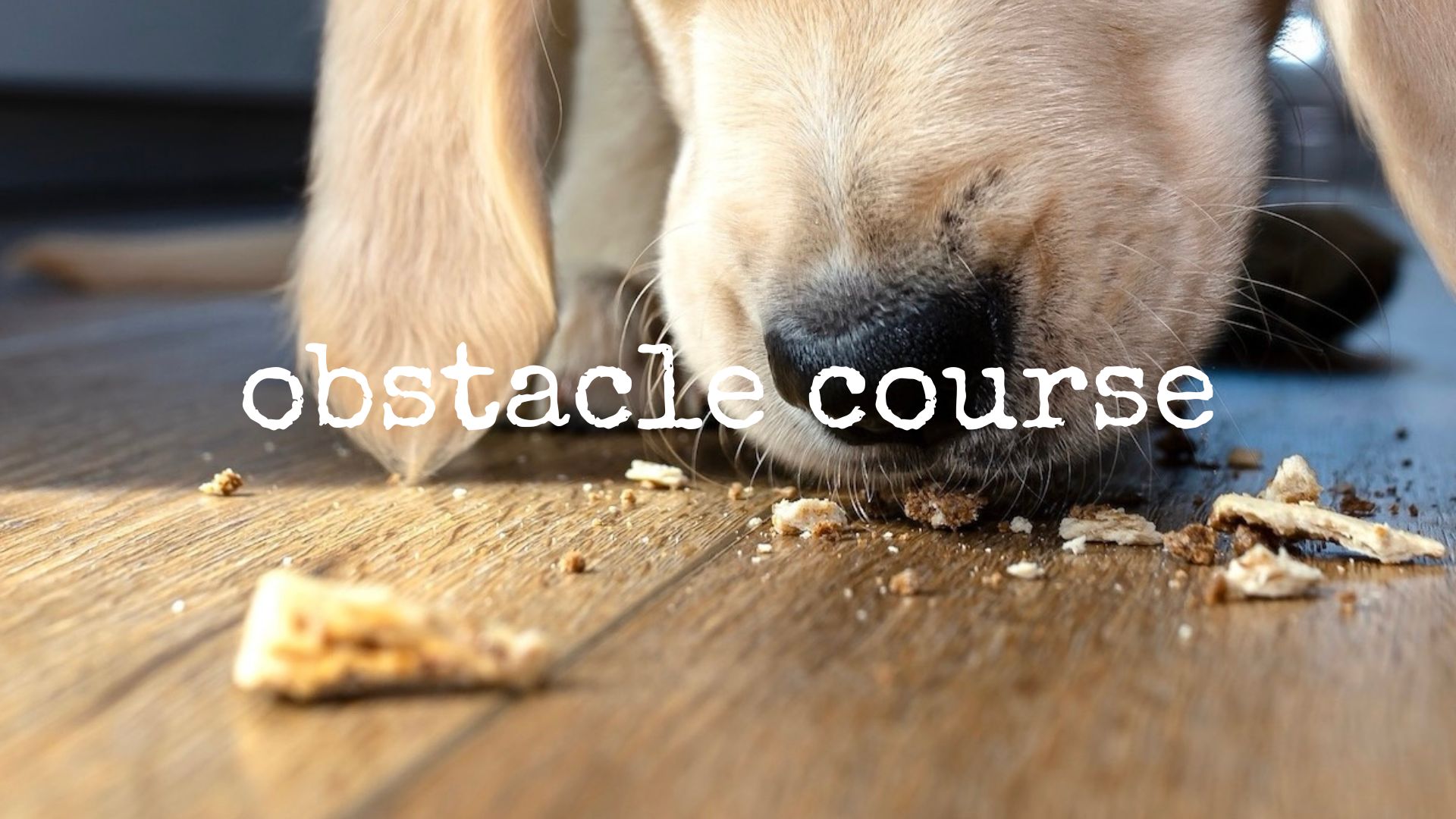
obstacle course
We had more scripture than we could comfortably read in worship this week, so I split it up and read the last part first, which is the account of Jesus and the disciples feeding four thousand people. What precedes it is an encounter between Jesus and a Canaanite woman with a sick daughter, which I read during my sermon. Both of them together took me to what you read below.
My biggest challenge with this week’s sermon was figuring out where to start. I wrote three or four different introductions because I kept finding different ways to look at the story that were alive to me. So let me see if I can take those threads and kind of weave them together.
First, let’s do a bit of geography. After they got the boat to shore, which is where we left them last week, Jesus and his disciples did some traveling. They went north to the cities of Tyre and Sidon, which were thirty or forty miles from the Sea of Galilee, and they were walking. That area was not part of Israel, so the people they encountered there were not primarily Jewish. Matthew records only one encounter that Jesus had while he was there, which we’ll get to in a minute.
My second thread comes from my reading this week. The book I’m in the middle of is called These Wilds Beyond Our Fences: Letters to My Daughter on Humanity’s Search for Home by philosopher and theologian Bayo Akomolafe and he said this:
“This is what I learned: an obstacle is the richest, thickest, densest place in the universe. . . . This is my way of saying it is not empty. This place—an obstacle—is bursting with activity.
“When you meet something fierce, too strong to overcome, too high to climb, to eminent to sidestep, too dark to enlighten, don’t take it too personally—you have merely met an antibody, whose sacred task is to challenge you, discombobulate you, disfigure you, and introduce ‘you’ to the strange vastness of your family. A larger commonwealth of becoming.”
As you know, this has been a rather eventful week for me, so I was intrigued by his takes on obstacles in our lives, that they are chances to learn and grow, and that also took me to my third thread, which was what happened to Jesus right before the verses we read this morning, which tell us of a second time that Jesus feed a whole bunch of people with just a little bit of food because it is a story of Jesus encountering an obstacle of sorts. Let me read those verses from Matthew 15.
From there Jesus took a trip to Tyre and Sidon. They had hardly arrived when a Canaanite woman came down from the hills and pleaded, “Mercy, Master, Son of David! My daughter is cruelly afflicted by an evil spirit.”
Jesus ignored her. The disciples came and complained, “Now she’s bothering us. Would you please take care of her? She’s driving us crazy.”
Jesus refused, telling them, “I’ve got my hands full dealing with the lost sheep of Israel.”
Then the woman came back to Jesus, dropped to her knees, and begged. “Master, help me.”
He said, “It’s not right to take bread out of children’s mouths and throw it to the puppies.”
She was quick: “You’re right, Master, but the pups do get scraps from the master’s table.”
Jesus gave in. “Oh, woman, your trust is something else. What you want is what you’ll get!” Right then her daughter became well.
This is not an easy passage to understand, but Bayo’s words about obstacles drew me to see this encounter this way: Jesus met an obstacle in this Canaanite woman who was determined to get his attention. He was, as we said, out of his normal region in an area populated by non-Jewish people. The significance of the woman being identified as Canaanite meant she was indigenous to the region; her ancestors were those who lived on the land before the Israelites claimed it as their own. She needed help and she was tenacious and persistent in her pleas.
We could spend a lot of time talking about the various ways scholars try to unpack this encounter, because it’s kind of an uncomfortable one. As we often talk about, tone is hard to discern as we read the gospels. I am not making a claim to have the only way of looking at it, nor are we going to get too deep in the weeds here. What I want us to notice is that Jesus is changed by the obstacle of his conversation with this persistent woman.
Which is thread number four: Jesus learned from the Canaanite woman. Their encounter changed the way he looked at things. Changed him.
We spend most every Sunday looking at how Jesus taught those who followed him; this passage gives us a picture of Jesus learning, which may sound a little strange, depending on how you think about Jesus, but if we take his humanity seriously—that he was born and grew from childhood to adulthood, he had to learn, just as we all do. But we also think of Jesus as a Spirit-filled human being. The fancy theological word is the Incarnation of God: God with skin on, so we, like generations of Christ followers before us, hold his divinity and his humanity in creative tension.
This particular conversation gives us insight into the reality of Jesus’ humanity; Jesus learned.
As we often encounter as we read our translations, some words don’t travel easily and humor doesn’t age well. There’s good reason to hear the back and forth about the dogs as kind of humorous and playful, even as it is confrontational. What I mean by that is even though they are kind of butting heads, there is a respect between the woman and Jesus. That said, it’s hard to get around feeling like Jesus wouldn’t have engaged her if she hadn’t been so persistent. When he said, “You don’t give the children’s bread to the puppies,” and she answered, “Yeah, but the pups get the scraps, right?”
This is where we can see he learned something: he saw her in a new light, and saw their interconnectedness in a way he had not before.
And if we take a step back and remember that Matthew is crafting the story he tells in his gospel, we can see he has ordered the events in the way he tells them to help us learn the same lesson: we are all connected and we are here to feed each other. The undertone of the discussion about crumbs was that there might not be enough bread. Matthew drives the lesson home by following this encounter with yet another obstacle for the disciples, and a somewhat familiar one: they had to feed four thousand people with yet another sack lunch. Jesus invited them to learn—again—that there was enough to go around when they understood our fundamental interconnectedness and took the risk of sharing what they had.
God calls us to a life of learning from everything and everyone that is around us, which is an amazing and challenging call, because learning changes us. If we allow ourselves to decide we have it all figured out, we limit the Spirit because we close our hearts to new awakenings and connections. Life is an obstacle course, calling us to a lifetime of learning and growing.
In the novel The Once and Future King, Merlin the wizard (I suppose we could call him a theologian) says these words to young Arthur:
“The best thing for being sad is to learn something. That’s the only thing that never fails. You may grow old and trembling in your anatomies, you may lie awake at night listening to the disorder of your veins, you may miss your only love, you may see the world about you devastated by evil lunatics, or know your honor trampled in the sewers of baser minds. There is only one thing for it then—to learn. Learn why the world wags and what wags it. That is the only thing which the mind can never exhaust, never alienate, never be tortured by, never fear or distrust, and never dream of regretting. Learning is the only thing for you. Look what a lot of things there are to learn.”
Merlin’s give us another way to hear Jesus’ words: over and over he seems to be saying, “Look what a lot of things there are to learn.”
Learning is one of the things at the heart of what it means to be human. We grow as we learn, particularly as we learn from each other. May we be those who take that call to heart and learn from each other. May we be curious and not judgmental. And may we see every person around us as those who are a part of our commonwealth of becoming, even when they appear to be obstacles. Amen.
Peace, Milton
A recent Oprah podcast with a book called “The Obstacle is the Way”. It’s about stoicism. Interesting and timely.