Home Blog Page 54

it was thirty years ago tomorrow . . .

Tomorrow, April 21, 2020, is our thirtieth wedding anniversary. In the course of our marriage we have lived in five cities and four states, Ginger has served four UCC churches, we have had eight residences, eight Schnauzers, and I have had five different careers. I have lost track of how many people have lived with us over the years. Thirty years ago, all I knew is I wanted to be married to Ginger. I had no idea what an incredible adventure it would be. The poem below is a revision of one I wrote a half a marriage ago. It still says how I feel.

signature moves

every so often, when I sign my name,
the person behind the counter says,
“that’s quite a signature,” as though
I’ve done nothing but doodle.
“no one else can imitate it,” is my answer,
“that’s what makes it my signature.”

my morning movements are as much
a signature as my recognizable ,
my hands act from muscle memory:
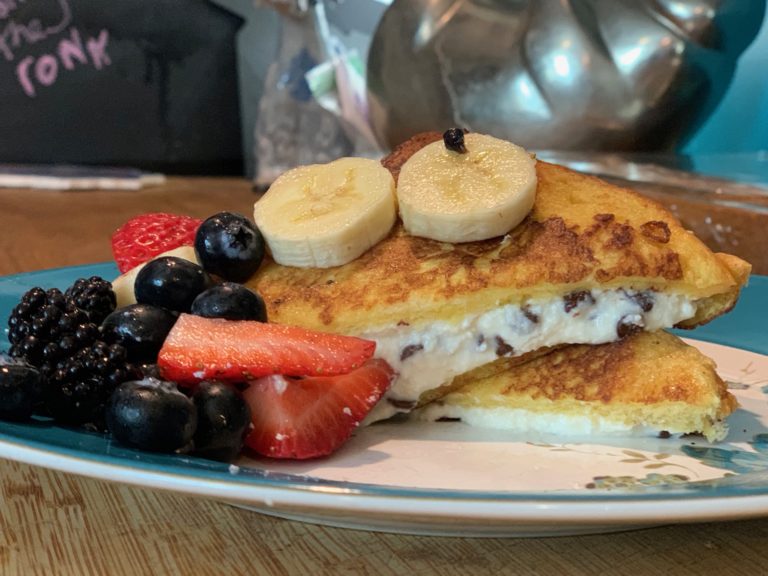
wash and trim the strawberries,
stand them up to slice, and then
spread them out like pages, and
ink them with the blueberries

the fruit sits on a plate we’ve had
as long as we’ve been married,
when I first began to work on a
new signature because my name
changed along with yours,
as we wrote something new together.

and then there’s your coffee:
mostly-milk-one-stevia-put-it-in-
the-microwave-for-one-minute-thirty-
seconds-before-topping-it-off.
my hands move with confidence same
as I show when I sign my name.

this is who I am.
this is who we are.

I can’t think of one without the other.
the daily mixture of fresh and
familiar, what is known scribbled
on the surface of each new day,
held together by a hyphen –
my favorite piece of punctuation.

We were supposed to see the Red Sox play for Patriots’ Day in Boston and then drive up to Maine to stay at the inn where we stayed on the first night of our honeymoon. Instead, we will stay home, probably watch Fever Pitch again, walk once the rain stops, and pick up some Mexican food. (Yes, Connecticut has good Mexican food.) It will not be the day we expected, but then again, we have lived a lot of days like that.

I am grateful for my life first and foremost because of the person I have gotten to spend it with. I love you, Gigi.

Peace,
Milton

these are the days of miracle and wonder

I am still getting used to Sundays being a day with space.

Almost thirty years of being married to a pastor has me well-conditioned to Sunday being a work day, even if it’s not my job. But for the last six Sundays, we have had time to be together for meals, for walks, for whatever we choose. I miss being at church and I am grateful for the unexpected blessing.

We had a sunny Sunday in Guilford. It is April in New England, so it wasn’t warm, but it was sunny. I worked in the garden when I would have been in worship otherwise and then Ginger and I took a long walk late this afternoon. As we walked, I said, “I think I am going to do a music post tonight. It seems like a good day to pass along some some songs.”

So here you go.

Paul Simon is one of my favorite song writers and “The Boy in the Bubble is one of my favorite songs of hope in the midst of hopelessness.

these are the days of miracle and wonder
this is the long distance call
the way the camera follows us in slo-mo
the way we look to us all, oh yeah
the way we look to a distant constellation
that’s dying in a corner of the sky
these are the days of miracle and wonder
and don’t cry baby, don’t cry
don’t cry, don’t cry

Here are Chris Thile and the band from Live from Here with an impassioned cover of the song.

And now for a couple of songs of pure enjoyment. The Petersens are a family bluegrass band that are all good players and have that wonderful family harmony. Here is their cover of Michael Martin Murphy’s “Carolina in the Pines.” No need to print the lyrics; just enjoy.

The next song is like unto the last. Molly Tuttle is another one who grew up playing music with her family and has not gone out on her own. This is her version of a song made famous by Glen Campbell–“Gentle on My Mind.”

We come now to the humorous portion of our program, which is also great music. Steve Martin plays with a great band called the Steep Canyon Rangers. Concerned that not everyone has a song to sing, they offer “Atheists Ain’t Got No Songs.”

Ages and Ages is a band I learned about several years ago. Their song “Divisionary” seems a good anthem for these days.

do the right thing, do the right thing
do it all the time, do it all the time
make yourself right, never mind ’em
don’t you know you’re not the only one suffering

Here is an NPR Field Recording from the 2014 Newport Folk Festival.

Lukas Nelson is the son of Willie Nelson. In late March of this year they recorded a song called “Turn Off the News and Build a Garden.”

turn off the news and build a garden
just my neighborhood and me
we might feel a bit less hardened
we might feel a bit more free
turn off the news and raise your kids
give them something to believe in
teach them how to be good people
give them hope that they can see
hope that they can see
turn off the news and build a garden with me

I want to end with a couple of archetypal feel good songs. Playing for Change is an organization that records songs in a way that connects people over distance, both in playing and listening. Take a load off and listen to their cover of The Band’s “The Weight,” complete with Robbie Robertson playing along.

Grace Potter has one of the great voices of rock and roll. She will close us out with her cover of Bob Dylan’s “I Shall Be Released,” which The Band also sang. The words hold hope for us.

I see my light come shining
from the west down to the east
any day now, any day now
I shall be released

These are the days of miracle and wonder . . .

Peace,
Milton

take heart

I started reading the Gospel of Mark yesterday as a part of my morning reading time.

I got a copy of David Bentley Hart’s new translation and took it as an invitation to dive back into the Gospels once again. Hart is an Eastern Orthodox scholar of religion and a philosopher. In his introduction to the translation, he talks about wanting to create a sense, in English, of what it felt like to read the books in Greek. None of the gospel writers was a wordsmith or a poet. They are not consistent with their verb tenses; their sentence structure is often awkward. They were writing with urgency and passion, and without a style guide.

I thought of Pádraig Ó Tuama’s observation that translation is often colonization: we make the words say what we want to hear.

But what got me this morning was not the big ideas, but a word and a phrase. What follows is a rather rambling account of where they took me.

In Mark 6, Jesus sends the disciples away after the feeding of the five thousand by telling them to row to the other side of the Sea of Galilee, disperses the crowd himself, and goes up the mountain for some alone time before he meets back up with his followers. They were not on the water long before they found themselves rowing into a formidable headwind. They kept rowing, but they weren’t getting much of anywhere. It was after midnight and they were still at sea. Then Jesus came walking by–and I mean they thought he was just going to walk right by them. They cried out.

Hart translates what happens next:

For they all saw him and were disturbed. Immediately, however, he spoke with them, and says to them, “Take heart, it is I, do not be afraid.” And he went up to them, up into the boat, and the wind ceased; and within themselves they were quite overwhelmingly astonished. For they did not understand about the loaves, while their hearts were obdurate.

I had to look up the last word.

Obdurate: stubborn, impenitent, unrepentant, “refusing to change your opinions or plans, in a way that does not seem reasonable.”

Most of the translations I have read over the years read like the NRSV: “And they were utterly astounded, for they did not understand about the loaves, but their hearts were hardened.”

My new vocabulary word made me look back at what led up to Jesus wanting to get away. He had been trying to get away ever since he got word that John the Baptist had been capriciously murdered by Herod, but everyone followed him wherever he went to the point that he and the disciples ended up in the desert outside of town with a teeming, hungry crowd. When the disciples said Jesus needed to send them home for dinner, Jesus’ response was, “You feed them.”

Mark gives no indication of the tone in Jesus’ voice when he said those words. When I think of the rawness of his grief at the loss of his friend, I hear frustration and exhaustion: you do it; quit asking me.

What happened next is the part of the story we all like: a boy had a sack lunch of bread and fish, Jesus blessed it, the disciples started handing it out, and they ended up feeding thousands–with leftovers.

Immediately–while the folks were still finishing dinner–Jesus insisted the disciples get in the boat and head across to the other side, where he said he would meet them. I have never paid much attention to the nature of his insistence. But I keep coming back to Jesus’ grief: go; just go.

The Gospels have a couple of stories that involve, the disciples, a boat, the weather, and Jesus. I have to work to keep them from conflating. On this night, there was no storm, just a vicious headwind. After Jesus came back from where he was praying, he saw them flapping in the breeze and walked toward them–but I already told this part: “Take heart, it is I.”

When Jesus got in the boat and the wind stopped, the disciples were astonished and obdurate. Mark says they “didn’t understand about the loaves, while they were obdurate.”

Miguel de Unamuno says, “There is no proof that the true is necessarily that which suits us best.” What was it about the loaves and fishes that made the disciples dig in their heels, even in their astonishment?

I want to go back to Jesus saying, “You feed them.” I hear more than just grief.

The disciples answered by saying they didn’t have the time or money to go buy for for everyone. Jesus asked, “How many loaves do you have?” And dinner unfolded from there. The second question resonates with the spirit of “Take heart, it is I; do not be afraid,” which came as the disciples were feeling completely overwhelmed for the second time in a half a day.

Maybe they were obdurate not because of Jesus’ questions and requests, nor by the circumstances of the crowd and the wind on the water, but because of a lifetime of believing that nothing was ever really going to change. Miracles and messiahs come and go–they knew that. Their hearts had grown hard because they had spent their whole lives hungry and fighting a headwind. Life felt like a choice between fear and impenitence. They didn’t understand that what Jesus did with the bread was more than a miracle meal. It was an invitation to way more than dinner.

As many of us are learning in new ways in these days, life is not easily explained. Sometimes we stumble on abundance when all we can see is desert. Sometimes Jesus shows up when we are being beaten by a headwind. Sometimes emptiness appears when we are hoping for fulness. Grief shows up and just stays. Questions appear when we thought what we needed were answers.

Take heart. And keep rowing.

Peace,
Milton

the best of us

We have a standing joke around our house: Ginger likes blow-up movies and I like movies where nothing happens. What I mean is I like character-driven movies. I like characters.

Two of my favorite TV shows with great characters are not happening this week.

Schitt’s Creek, which is a Canadian Broadcasting Company show that played in America on the POP network and then on Netflix, is the story of a wealthy family from New York, the Roses, who loses everything to the IRS and is only allowed to keep a motel in the small town of Schitt’s Creek they owned but never knew they purchased. The show started in 2015 and its last episode aired last week.

Over its six seasons, the writers did more than put rich people in a small town and let hi-jinks ensue. I really came to love the characters on the show not only for their quirkiness, but also because everyone was trying. The little town was the embodiment of the Island of the Misfit Toys and the Roses were all pieces of work, but the point of the show wasn’t to make fun of them. The deeper we got into the story line, the more poignant the show became without trying to do anything more than let the characters be themselves.

Fargo is an FX Network show that is inspired by the Coen Brothers’ movie of the same name, which is what pulled me in because I am a huge Coen Brothers fan. The inspiration is all about the vibe and feel of the show. The show has none of the same characters as the movie. Each of the three seasons of the show are freestanding stories without repeating characters–and, over six years, there have only been three seasons. The fourth was set to begin this coming Sunday, but COVID 19 brought the production to a halt.

The show, like the movie, is dark, outlandish, profane, and violent. Really violent. By the time you get to the end of one of the seasons, there are more bodies stacked up than the last act of Hamlet. The stories take place in Minnesota and the Dakotas, so there are a lot of “you betchas.” Those aren’t the things that attract me to the show. What gets me is that everyone in the movie is trying, whether they are gangsters who want all the power they can get, or the small town cops who want to do the right thing, or the folks who get involved by some random connection. Everyone is trying. Everyone has something at stake. Everyone has to deal with things that are out of their control, and a big part of the story is about how they choose to do that.

In one sense, the shows couldn’t be anymore different. Schitt’s Creek leans into the legacy of Waiting for Guffman, Best in Show, and A Mighty Wind–well-written movies that are quirky and gentle and funny. Fargo is quirky and violent and audacious. But both of them see something in humanity worthy of a good story. They show the best of us.

Out in our barn we have a wall hanging with words I first heard Ginger use in a sermon many years ago that are important to both of us:

Be kind because everyone you meet is fighting a great battle.

That is the basic plot line to both shows, as different as they are. That is the heart of our story, too. Fargo reminds me that some folks are way kinder than others. Schitt’s Creek reminds me that not everyone even understands the battle they are fighting. Both remind me that the world we live in carries some of the quirkiness, violence, profanity, humor, hope, despair, and compassion of both, as well as somethings that never make it to broadcast. We live in a world we cannot control full of people we cannot control. We also live in a world where we have to live with and through the consequences of our choices and, often, the consequences of the choices of those around us.

Sometimes when things don’t turn out, or we feel defeated, we will say, “That got the best of me.” The common understanding of that phrase is that we came up short. But maybe not. Whether we live in Fargo or Schitt’s Creek or somewhere in between, life gets the best of us, whether we offer it in kindness, or it takes it from us by circumstance. The world takes the best of us because that is what it needs.

That is what we need from each other.

Peace,
Milton

salted caramel chocolate chip cookies

Tonight’s post is a continuation of my occasional series, “Cookies with Stories.”

As I have mentioned more than once most of my recipes come from my cookie-baking days in Durham, North Carolina. Tonight’s cookie is the first one with a Guilford story attached to it.

We moved to Connecticut for Ginger to become co-pastor of the First Congregational Church of Guilford UCC. Her pastoral partner was Sarah, who was quite enamored of my cookie business. I forget the occasion, but I was going to bake cookies for her and I asked what her favorite cookie was. She said she wanted a salted caramel chocolate chip cookie. I took on the challenge.

The biggest challenge was finding caramel pieces. The traditional Kraft caramels are too big and they are individually wrapped, which is a pain. After searching the internet, I found that Kraft makes Caramel Bits, but they are hard to find. Around these parts, Target is the only place that has them consistently (yes, I have made these with some regularity). The closest Target is about twelve miles from Guilford, so these are a labor of love, but I have also learned to buy several packages so that I have them on hand when I want to make these cookies.

The base of this recipe is my chocolate chip cookie recipe. I will put a note at the bottom that tells you how to adjust the recipe if you just want to make those.

salted caramel chocolate chip cookies

1 cup butter, softened
2 cups brown sugar
2 eggs
2 teaspoons vanilla
2 3/4 cups flour (15 oz, of King Arthur)
1 tablespoon sea salt
1 teaspoon baking powder
1 1/2 teaspoons baking soda
18 oz. chocolate chips
11 oz, Kraft Caramel Bits (1 package)
sea salt for sprinkling

Preheat the oven to 375°.

In a stand mixer, beat the butter and brown sugar until light and fluffy–about seven or eight minutes. Add the eggs and vanilla and mix until they are well combined.

In a separate bowl combine the flour, sea salt, baking powder, and baking soda. Whisk to make sure everything is well mixed and then add the dry mixture to the butter-sugar mixture and turn the stand mixer on medium. When it is about halfway mixed, add the chocolate chips and caramel bits and mix until the dough comes together.

Use and 2 oz. scoop to place the cookies on a parchment-lined baking sheet. Generously sprinkle the tops of the cookies with sea salt. Bake for 12-14 minutes. Makes about four dozen cookies.

NOTE: If you want to make sea-salted chocolate chip cookies, just leave out the caramel bits. If you want straight up chocolate chip cookies, leave out the caramel, reduce the salt in the recipe to 3/4 teaspoon, and don’t sprinkle salt on them.

Peace,
Milton

what matters most?

My family and I left Africa for good on my sixteenth birthday. I turned one somewhere in the middle of the Atlantic Ocean on our way to Africa, so there was some poetry in our departure, but it was hard on all of us. We all thought we were going to be in Africa for many more years.

About a month before we left, my mother sat down with my brother and I and said, “When we get to America, life is going to be very different. So I want you to think about what matters to you about our life here and what you want us to make sure we keep doing together.”

Both my brother and I said what mattered most was eating together. Our family ate breakfast and supper together almost everyday.

When we settled into our new life in Houston, eating breakfast together was not so hard to manage, but dinner was another story. My brother was a better athlete; I was more inclined to the musicals and choirs. Some nights we ate late after his practice, other nights we ate early before rehearsals, but we ate together because it mattered to us.

During my twenties, when my parents and I struggled to connect, the mornings and evenings around the table were a profound memory for me. Somewhere in my late thirties, when my mother and I were reflecting on those more difficult days, she said, “There were days we hung up the phone and I thought I might not ever hear from you again.”

“That never crossed my mind,” I said. “We had eaten together too many times for me to be able to walk away.”

Even though we have no idea when this particular stage of our life together is going to be over, I hear more and more discussion about when we will “be open” again. Sometimes it is phrased as “getting back to normal,” though I think very few of us actually think that is what will happen. We can’t go back to life before Covid-19 anymore than we can go back to life before 9/11. But we will not always be where we are right now.

For all the difficulty–and it has been difficult–the break in our routines has given us the chance to see our lives from a new perspective. I have read the stories about how many people have gotten new puppies because they have the time to train them. I have found new life in getting up early before everyone else and reading, writing, and praying–new ground for an extrovert. I have loved that Ginger is home in the evenings rather than spending twelve to fifteen nights a month at church committee meetings.

In these days, I hear my mother’s question with a new relevance: “When we get beyond these days, life will be very different. What matters to you about life right now that you want to keep doing when life ramps back up?”

The question begs to be answered on a systemic level and a personal one. For “the greatest economy in the world” to come a part at the seams in a matter of a couple of weeks should be irrefutable evidence that a greed-fueled economy is not sustainable. And I want to figure out how to keep getting up to read, write, and pray. I also want to eat dinner with Ginger every night.

These waiting room days are a gift. We have a chance to move into the days ahead with intentionality. We can break normal into a million beautiful pieces. We can put ourselves back together again in a way that actually includes us all.

What matters most to you?

Peace,
Milton

the wheels are still turning

It has been my practice over the last several years to sort of disappear from these pages after Lent. My absence has never been intentional, but it has been consistent. As the reality of our unfortunate isolation became more apparent, I decided several week ago that I would keep writing every night on beyond Easter, which is still my intention. I just needed a couple of days off to sleep and listen to a lot of John Prine songs. That said, I will do my best to meet you here in the days to come.

One of the illusions of human existence is that of discovery. Rarely in human history has anything actually been discovered–as in seen for the first time ever. More often, what is deemed a discovery is nothing more than a new awareness on the part of the one who claims to be the discoverer. The reality is, as the writer of Ecclesiastes wrote centuries ago, there is nothing new under the sun. If we are willing to take an honest look at how we “discover,” we will find a relational trail that lead us to whatever newness has surprised us.

I don’t remember tonight who pointed me to David Whyte, but his book Consolations is rich nourishment–perhaps even more so the second time through. I started a new book–new to me–called A Tragic Sense of Life. It is written by Spanish essayist, poet, playwright, philosopher, novelist, professor, and obvious underachiever, Miguel de Unamuno, who lived about a century ago. I was introduced to him by Miguel De La Torre, who was introduced to me by Phil Snider, an author and Disciples pastor whom I met years ago at the inaugural Wild Goose Festival.

I have been given much; I have discovered nothing.

Sometimes we begin to see things we have not before because someone or something raises our awareness. I have written before about red bicycles and how they are my go-to metaphor for this phenomenon. If someone asks you if you have seen any red bicycles, you may answer no, but their question will give you eyes to see them all around you.

Early on in Lent, I wrote about the specificity of compassion (thanks to something I read in Pádraig Ó Tuama). I was talking about the stimulus bill and I said, “We do not need to stimulate an abstraction (the economy), we need to help people.” The contrast of abstraction and specificity has been my red bicycle, and I saw one again this morning in Whyte and then again in the opening chapter of Unamuno.

Whyte’s word for me today was giving, which he said was “looking for the imaginative doorway that says I know you and see you and this is how I give thanks for you.” A couple of paragraphs later he said, “Giving means paying attention.”

Hold those words and listen to Unamuno, a philosopher who is not particularly enamored of philosophers–particularly Western ones because of their fascination with abstractions.

We all lack something, only some of us feel it and others do not.

And I am convinced that we should solve many things if we all went out into the streets and uncovered our griefs, which perhaps would prove to be one sole common grief, and joined together in beweeping them and crying aloud to the heavens and calling for God.

It is not enough to cure the plague: we must learn to weep for it. Yes, we must learn to weep! Perhaps that is the supreme vision.

One of the ongoing conversations Ginger and I have centers around preaching. Recently we have been talking about the contrast between those who preach like lecturers and those who preach like storytellers. I will admit my preference is for the latter–and the reason is their attention to detail. A good story is filled with details. Even as sparse as the gospels are, they offer details that connect us to the story in ways, perhaps, we don’t even see at first. Unamuno might say that the lecturer deals in ideas–abstractions–and the storyteller communicates in specifics–humanity.

I am not moved by the idea of dinner or the theory of cooking, but by the hands-on preparation and presentation of the meal to those for whom I have cooked. My gift of a meal is attached to a person. Someone specific. I don’t cook things in general and then decide who needs to eat them. It works better the other way around.

I don’t cook with onions in our house (scallions, chives, leeks, onions, shallots) because Ginger is allergic to them. I love onions. I love Ginger more. I have no need for an abstract discussion about the meaning of sacrifice or attachment. I love Ginger. Onions hurt her. I don’t cook with onions. That is one of the ways I give thanks for her.

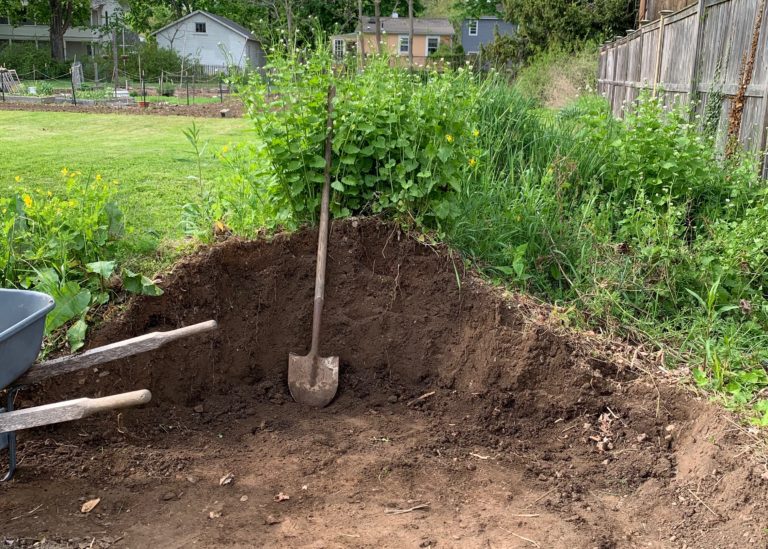
Working in the garden alongside of Tom and the others is my specific response to climate change, and to people I know who need food and cannot afford it. I can’t do much about pollution or policy, and I am not much of a scientist, but I can plant tomatoes and cabbage and zucchini. I can weed and till.

I can’t deal with everyone’s isolation, but I can hear the song of our common grief and find ways to say to those around me, “I know you and I see you.” I can weep with them. And make soup and cookies.

Lent has come and gone, the stone has been rolled away, and I am still riding the same red bicycle: we are all connected. Yet, with each turn of the wheels I am learning (again) that the choir of our common grief is larger than I ever imagined.

Peace,
Milton

lenten journal: still saturday

A Holy Saturday Christian.

I learned the term from Wil Gafney, an Episcopal priest and Hebrew Bible Scholar who teaches at Brite Divinity School in Fort Worth. In a “pastoral letter” she wrote to her students after they had dealt with particularly violent biblical texts she said,

I am a Holy Saturday preacher. I wake in the aftermath – if I have slept – to the knowledge that the Beloved is still dead. And I take comfort in the God who is and has said I AM with you. And I rail and scream and curse at God knowing God hears and is there with me to hear. And I try to sleep one more night to see if it will be easier the next day.

And that is where the sermon ends. It is still too soon to talk about resurrection. But God-with-us sits in her chair grieving with us. Waiting with us, walking with us as we make our way through and make sense of our grief.

As I continue to figure out how to live through these days, I am mindful that the loss of control, sense of isolation, lack of government support, and general uncertainty that are all new to me, at least at the extreme I am living with them, are not new to a large number of people in our country who live at the margins without the effects of the pandemic. For me to say now that Holy Saturday has new meaning is also to say I am aware that there are generations of people whose lives have been nothing but Holy Saturday, as Gafney described.

Often, when we talk about the Realm of God, as in Jesus saying, “The realm of God is among you,” we say things like, “It is both now and not yet,” which is one of those statements like, “The arc of history is long but it bends towards justice.” What comfort we find in them depends on how close we feel to the redeeming end of the arc. For most folks, life feels like we will not be here to get all the way around the bend to the not yet.

Life is, perhaps, more like Holy Saturday than any other day. We hold the promise of the Resurrection, but we live in the middle of the grief.

The irony of this post is most of you will read it on Easter. Actually, thanks to Facebook’s algorithmic distancing, many of you won’t even see it until Tuesday or Wednesday. Easter will have come and gone. And we will still be wearing masks and staying home and doing our best to help the businesses around us keep going. We will keep watching the numbers everyday and hoping that death from the virus doesn’t hit too close. We will keep asking in our own way, “How long, O Lord ?”

Even after Mary saw Jesus in the graveyard and then the others saw the angel in the tomb, those who followed Jesus were not freed from their grief. They were still huddled in the Upper Room with the door bolted from the inside. Even though they had seen Jesus, they feared for their lives. They didn’t know what would happen. He was alive, but that didn’t fix everything. They, too, were stuck in Holy Saturday though they didn’t know to call it that.

I trust that love is stronger than death. I trust that nothing can separate us from the love of God. Nothing. But that doesn’t mean that all that stuff that can’t separate us will leave us unscathed. But, as Wil said, God sits with us and grieves with us. The way we learn to trust that truth is by sitting and grieving with one another.

Alleluia.

Peace,
Milton

lenten journal: photograph

photograph

one of the photographs of Jesus
I keep in the wallet of my mind
is of him looking out over Jerusalem.

the sun is burning the last bits of
Judean blue out of the Palestinian
sky, making room for the night.

the long reaches of the last light
catch the tears running down his face
O, that I could gather you up, he says . . .

I pulled the picture out tonight
because I wish we could be gathered
rather than making a verb out of distance

the gospel accounts would have me think
that I possess a one-of-a-kind-photo:
“Jesus Grieves over the Holy City”

but when I pull down the albums
of my heart to find my friends and
see the grief harbored in their hearts,

I know it could have been taken
on any one of the nights he walked
the earth, at most any sunset.

sorrow and love mingle down all
the days and across the distance
my favorite picture of us

Peace,
Milton

pasta frittata

Order an entree from an Italian restaurant in New England and it will come with a side of pasta.

I don’t mean the entree will be served over pasta. That’s a pasta dish. I mean any entree comes with a side of pasta. Night before last, we ordered from Centro Pizza, one of our regular haunts here in Guilford. Ginger got her usual, Tri-colored Tortellini with Alfredo Sauce, and I ordered a dish I had not had before, Chicken Breast Rollatini, which was a flattened chicken breast rolled and stuffed with spinach, mozzarella, and gorgonzola, with a mushroom sauce. My side of pasta–spaghetti with tomato sauce–was in a separate container. Because I didn’t want to forget the taste of the mushroom sauce and it was way too much food for one sitting, I put the pasta in the fridge to be a part of a meal to be named later.

One of the things I learned how to make soon after we moved to Boston almost thirty years ago was a frittata, which is an Italian word that ought to mean “here’s what we did with the leftovers.” Some people describe it as an Italian omelet, but I think that sells it short. The name comes from the Italian verb friggere, which means “to fry.” Another etymology says it means something like a mess, or even someone who is a little bit unhinged.

When I stumbled across this recipe for a Pasta Frittata, it seemed just crazy enough to work. Now, to say “recipe for a frittata” is a bit of a stretch. Yes, this is one, but once you get the hang of it you can make a frittata out of whatever is in your fridge and some eggs. You beat the eggs, add the stuff, oil a pan, start it cooking, throw it in the oven, and frittata!

But I am getting ahead of myself.

pasta frittata

6 eggs, beaten
1 cup fresh grated Parmesan cheese
1/2 pound leftover spaghetti*
1/4 cup crumbled sausage, cooked
salt and pepper, or other spices
2 tablespoons butter or extra virgin olive oil

Preheat oven to 350°.

Beat the eggs in a large bowl. Add the cheese. Chop up the leftover pasta. Since mine already had the sauce mixed in, I left it that way. Add the pasta and the sausage to the egg and cheese mixture.

Heat a large nonstick ovenproof 10-inch skillet to medium high and melt butter or oil. Pour the egg mixture into the skillet and turn the heat down to medium-low. You can even out top of frittata with a spatula or spoon. Let it cook on the stovetop until the mixture begins to firm up around the edges and then transfer it to the oven. Bake just until top is set, about 10 or 12 minutes. Remove, and serve it hot or at room temperature.

It also makes for pretty good leftovers.

*NOTE: The recipe I found also gave instructions for cooking pasta to make a frittata. Cook 1/4 pound of linguine, fettuccine or other long pasta. Bring a large pot of water to a boil, and salt it. Cook pasta until barely tender, somewhat short of where you would normally cook it. Drain, and immediately toss it in a wide bowl with 2 tablespoons the butter or oil (which would bring the total for the recipe to 4). Cool it a bit. The recipe also gave instructions if you wanted to add bacon or pancetta that had not been cooked: If you are using meat, add it, and cook, stirring occasionally until crisp, 3 to 5 minutes.

Now I’m hungry again.

Peace,
Milton