Home Blog Page 35

pesto and pickles: the metaphors

I know. It’s been a while.

It’s not so much that I have had nothing to say as I have felt it was not my time to speak. I needed to listen and learn. I needed to help amplify voices that were speaking to me. Teaching me. Inviting me to a larger, more loving world. And I have been spending a lot of time in the church’s communal garden behind our barn, which has been both a place to meet life hands on as well as a metaphor for these days.

I love working in the garden because I get to watch food grow and then feed people with it. I garden by the just-plant-stuff-and-see-what-comes-up method, which is to say I have a lot to learn. My gardening buddy Tom is the brains behind our outfit. More than once I have pointed at things growing in one of the beds and asked, “Now what are those?”

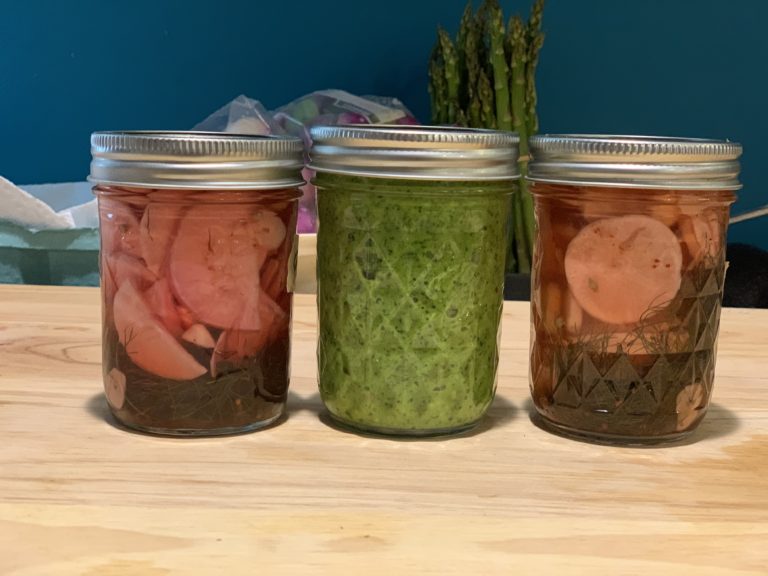
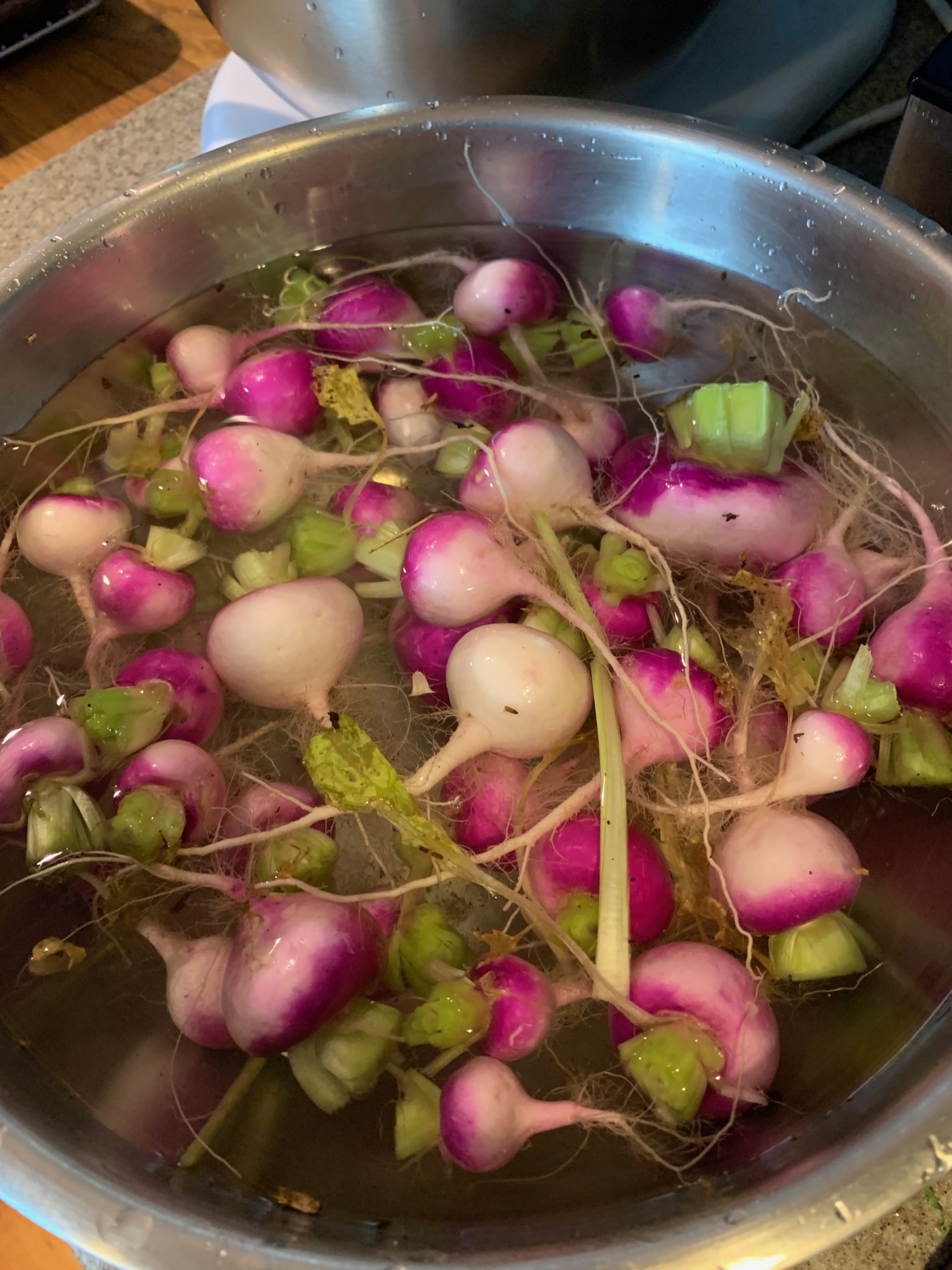
I was the last in the garden the other evening and saw the top of what looked like a radish to me, so I picked it. Actually, I picked several, greens and all, and came inside to look for recipes, which I will share shortly. I sliced the radishes and pickled them and, thanks to encouragement from a couple of different websites, made pesto out of the greens.The next day, I brought out my work to show Tom.

“I made pickles and pesto out of the radishes,” I said.

He smiled. “Those are turnips.” Then he added, kindly, “But they are related.”

The garden, for me, is an humbling place, which is part of the reason I love it. Just when I thought I understood what was happening around me, I realized my perception was lacking. Things were not as I thought. And I also was able to make a small contribution, I suppose, in that I learned baby turnips can be pickled just like radishes and turnip greens make a damn good pesto.

We have a lot to learn in these days–and what we have to learn keeps changing. I’ll stop there rather than turn it into a “You see, Timmy” moment and move on to the recipes.

turnip green pesto

One of my favorite books about cooking is Michael Ruhlman’s Ratio: The Simple Codes Behind the Craft of Everyday Cooking because he does more than share recipes; he teaches you how to understand how things work together. When I started to make this pesto, I went looking for ratios because of what I learned from him, and because I had already learned from others that pretty much any green leafy vegetable or herb can be made into pesto.

The basic relationships between the essential parts of pesto are

8 parts greens
1 part nuts (or seeds)
2 parts oil
2 parts grated Parmesan cheese
plus garlic, lemon juice, and salt to taste

A word about the cheese. Traditional pesto mixes the Parmesan in from the start, which works for me if you are going to use it right then. Most of the time I make pesto, I am not. Somewhere along the line, I started making mine without the cheese for a couple of reasons. First, you can freeze it. Second, I like to have the option to use it without the cheese. But the main reason is I think it tastes better to mix in fresh cheese when you get ready to use the pesto.

On to the recipe.

2 cups turnip greens
1/4 cup almonds
1/2 cup olive oil
fresh garlic
lemon juice
salt

Put the almonds and the garlic in a food processor and pulse until they break up. I used three cloves of garlic because I like garlic. Was and rinsed the greens, tear them and add them to the food processor. Add about a fourth of the olive oil and pulse until the mixture begins to come together. Scrape down the sides. Turn on the food processor and drizzle in the rest of the oil. Add salt and lemon juice to taste. It won’t take much of either.

NOTE: If you want to add cheese, you would add 1/2 cup after you have pulsed the greens.

You can store it in the fridge for a couple of weeks. You can also freeze it.

Pickling is a way of preserving vegetables. Much like making pesto, there is no one way to do it other than to say you need vinegar, sugar, and salt. And something to pickle. My pickling experience has mostly been in making dill pickles when the cucumbers are ripe, with a couple of other less than successful forays into other vegetables. When I thought I had picked radishes, I found several recipes, most of which leaned into Japanese cooking where the pickling is more delicate than what most Americans know.

The more I read, the more I found people telling me to use what I had when it came to flavoring the brine; I could enhance the flavor of the radish/turnips with what else I put in the jar–spices, herbs, and aromatics. Again, I’ll do my best to not explain the metaphor.

pickled baby turnips

The ingredients are what I had in my kitchen (I’m sort of a culinary hoarder), as well as what I brought in from the garden. The amounts are set by how many turnips I picked.

1 lb. baby turnips, trimmed and sliced thinly or quartered.
1/2 cup red wine vinegar
1/2 cup white wine vinegar
1/4 cup sugar
1 tablespoon salt

Heat the vinegars, salt, and sugar in a small saucepan over medium heat until sugar and salt are dissolved. Put the prepared turnips into jars (I used half-pint mason jars–jelly lars–and this recipe filled three of them), packing them in along with the other ingredients. I used

fresh ginger, sliced
fresh garlic (a clove or two in each jar)
fennel fronds (looks like dill, smells like anise)
coriander seeds
mustard seeds
peppercorns

Pour the hot liquid into the jars until it covers the turnips. Shake the jars gently to let things settle and top them off. Put lids on and shake. Refrigerate for two weeks before eating them to get the full effect.

Some other things you could add: dried chiles, turmeric, dill, fresh peppers.

I have poured the pesto over pasta for lunch this week; the pickles are still a week away from tasting. Where these tasty metaphors have taken me is something I will keep chewing on.

Peace,
Milton

passing the mic

Even as I have a lot of thoughts and feelings about what is going on in our country today, I am aware that my best work may be to listen rather than try to speak. I have nor written for a couple of nights because I, like many of us, am exhausted and despairing. Tonight, rather than gather my words, I offer words and images that have been meaningful and challenging to me.

I will start with these words from William Barber.

If we take time to listen to this nation’s wounds, they tell us where to look for hope. The hope is in the mourning and the screams, which make us want to rush from this place. There is a sense in which right now we must refuse to be comforted too quickly. Only if these screams and tears and protests shake the very conscience of this nation –and until there is real political and judicial repentance – can we hope for a better society on the other side of this.

These articles give important historical context.

Ibram X, Kendi, “The American Nightmare: To be black and conscious of anti-black racism is to stare into the mirror of your own extinction.”

Carol Anderson, “In 1919, the state failed to protect black Americans. A century later, it’s still failing.”

Some further reading:

Alex Vitale, “The answer to police violence is not ‘reform’. It’s defunding. Here’s why .”

Kareem Abdul Jabbar, “Don’t understand the protests? What you’re seeing is people pushed to the edge.”

Cornel West, “A boot is crushing the neck of American democracy.“

Andrew Gawthorpe, “America isn’t breaking. It was already broken, and these are just the symptoms.”

And somethings to watch as well.

Otis Moss III

“Black 101,” Frank X. Walker

If you have other voices to share, please provide the links in the comments.

Peace,
Milton

a tale of two scones

I grew up eating scones in Africa because of the British colonial influence. For the most part, they came with afternoon tea–and they were pronounced like the word gone. I’m not sure what got lost in translation when they made it to this side of the ocean, but not only did we change the pronunciation (like own), but we turned them into hockey pucks.

It takes some work–or at least paying attention–to make a good scone.

Over the past few months I have found two recipes that make good scones and both approach it differently. The first caught my attention because of the name: English-Style Scones. I had hopes they wouldn’t make me pine for the Stanley Cup Playoffs when they came out of the oven. The second recipe caught my eye at Smitten Kitchen, one of my favorite sites, because it featured cinnamon and sugar, which are both big hits at my house.

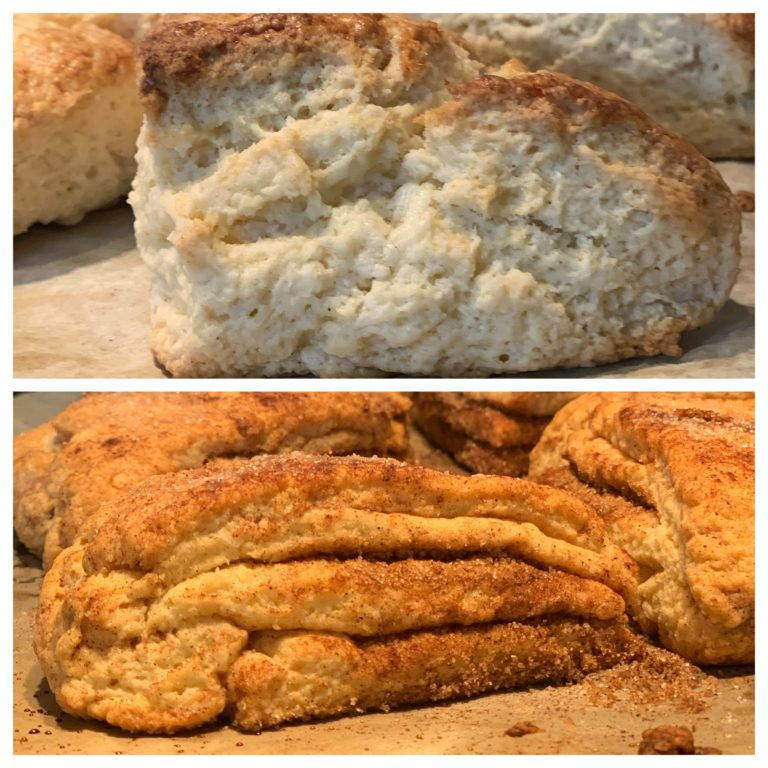
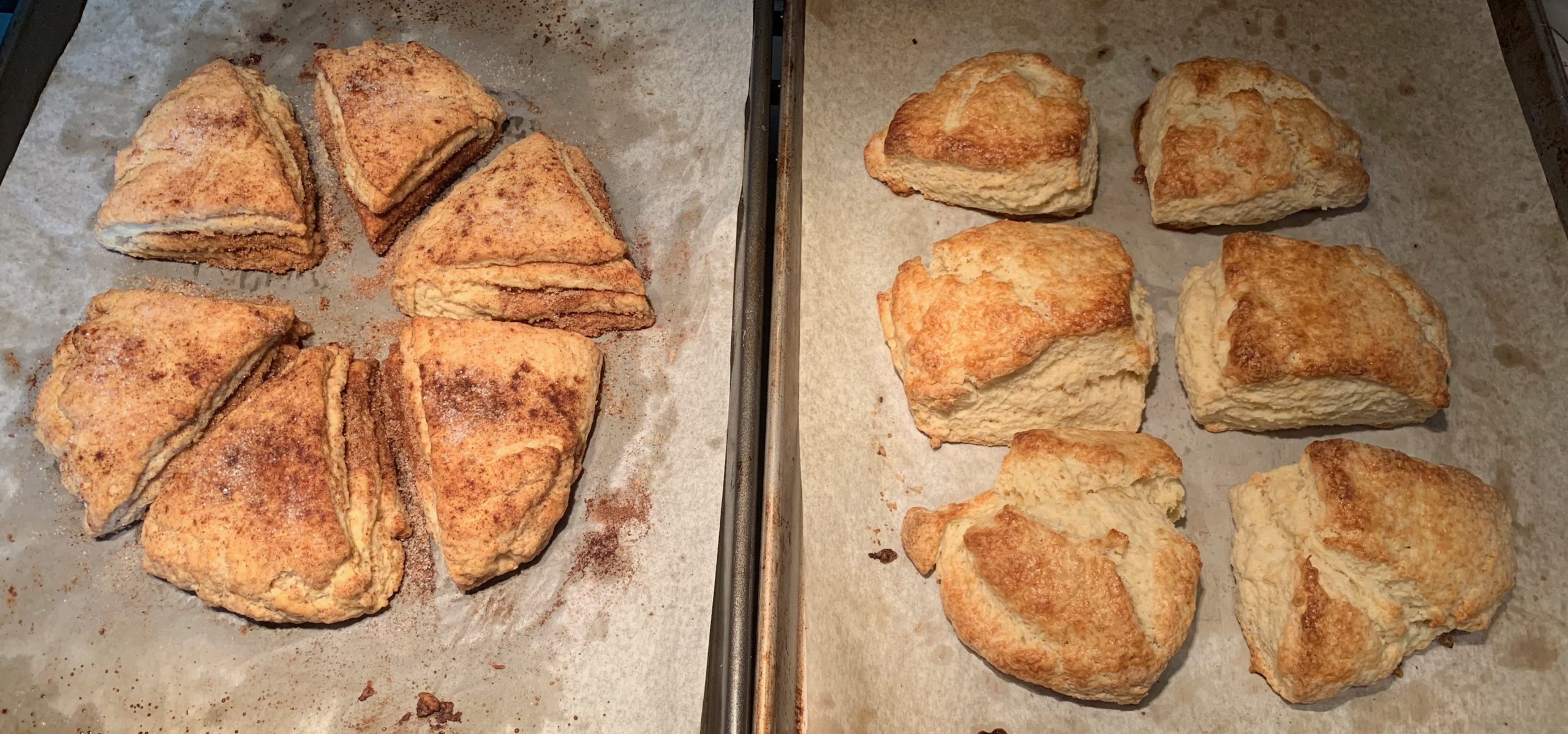
Both of them make great scones–flaky, tasty, buttery. Yet both of them go at it differently. One uses a food processor and room temperature butter; one tells you to cut in really cold butter, for example. One uses more baking powder; the other uses more butter. I thought it was worth sharing my versions of what they did as a way to encourage other Americans to learn how to make a scone worth eating.

english-style scones

2 cups flour (10 ounces)
4 t baking powder
1/2 teaspoon salt
1/4 cup sugar
6 tablespoons unsalted butter, room temperature
2/3 cup milk
1 large egg

Preheat the oven to 425°.

Pulse the flour, baking powder, salt, and sugar in a food processor until mixed. Add butter and pulse seven or eight times, for two or three seconds each time. The mixture will look coarse. Transfer the mixture to a large mixing bowl.

In a small bowl, whisk the milk and egg together. Set aside 2 tablespoons for the egg wash. Make a well in the middle of the dry mixture and pour the milk and egg into it. Mix it all together with a spatula until it starts to take shape and then use your hands to knead the dough until it is a smooth ball. As with biscuits, don’t knead it too much–just enough for it to all come together.

Put a piece of parchment paper or a silpat on a baking sheet. Shape the dough into a rectangle and put it on the baking sheet. Press it out with your hands until it is about a half inch thick. Use a knife or a bench scraper to cut it into nine or twelve pieces, depending on how big you want your scones to be. Separate them so they are about an inch apart.

Brush with the egg wash you set aside earlier.

Bake for 13-15 minutes (if you cut it into twelve scones, lean on the short side; for nine scones, it will be closer to fifteen).

A quick note about the amount of flour in each recipe. As you notice, both give weights as well as cup measurements. My suggestion is to follow the weights. If you don’t have a kitchen scale, get one. It matters. With my cookies, my measurement was 5.5 ounces = 1 cup. That is what made my recipe work. When I read these amounts, I decided to trust them rather than using the weight I was accustomed to and it paid off.

In the recipe below, you will add some flour when you are rolling out the dough, so it will be closer to 2 cups when you’re done, but start with 230 grams. It makes a difference.

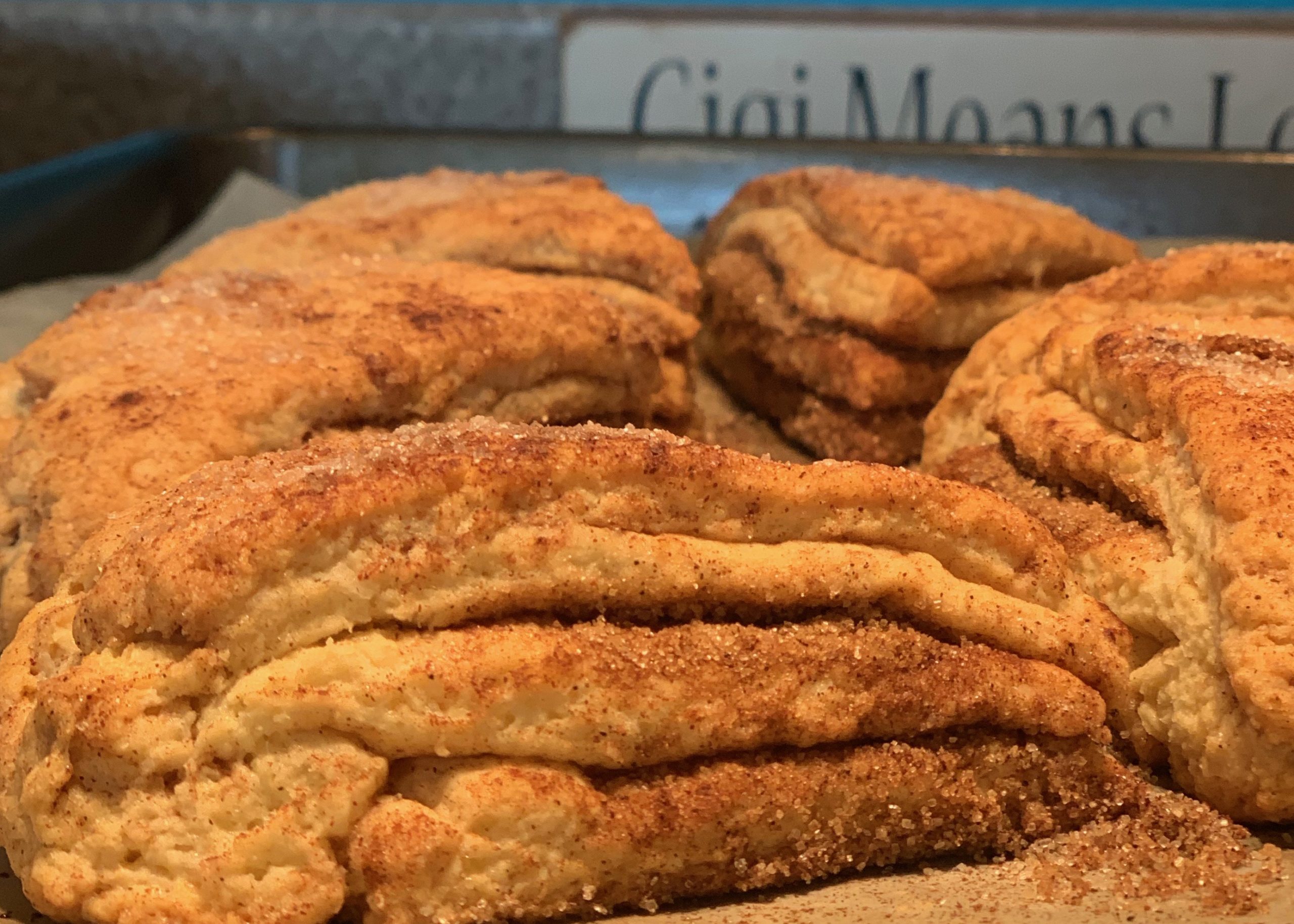
cinnamon sugar scones

1 3/4 cups flour (230 grams)
6 tablespoons sugar, divided
1 tablespoon baking powder
1/2 teaspoon salt
8 tablespoons unsalted butter, cold and diced (1 stick)
1/4 heavy cream or half and half
1 large egg
2 teaspoons cinnamon, divided

Preheat the oven to 375°.

In a large bowl, whisk the flour, 3 tablespoons of the sugar, baking powder, and salt. Cut in the diced butter until the mixture looks like cornmeal or coarse sand.

In a small bowl, whisk the cream and egg together. Make a well in the middle of the dry mixture and add the cream and egg. Use a fork in a whisking motion to mix the two together, then knead by hand until it forms a smooth ball.

Shape into a rectangle and lay on a floured surface. Roll out to about a 12×8 size. Spread 1 tablespoon of sugar and 1 teaspoon of cinnamon on one half of the dough and fold the dry side over. (I mix the sugar and cinnamon together first.)

Roll the 6×4 rectangle out to about to about 8×6 and put the last two tablespoons of sugar and the last teaspoon of cinnamon on one half and fold it over again. Pinch the edges of the open sides as you shape the whole thing into a circle. Place it on a baking sheet lined with parchment or a silpat. Cut it into six pieces and gently separate them so they are about an inch apart.

Sprinkle with a little more sugar and cinnamon. Bake 15-17 minutes.

Start to finish, each of these recipes takes about a half an hour. One of the main things they taught me is there is more than one way to make a good scone. And however you pronounce it, it’s not long before these things are gone.

Peace,
Milton

book news

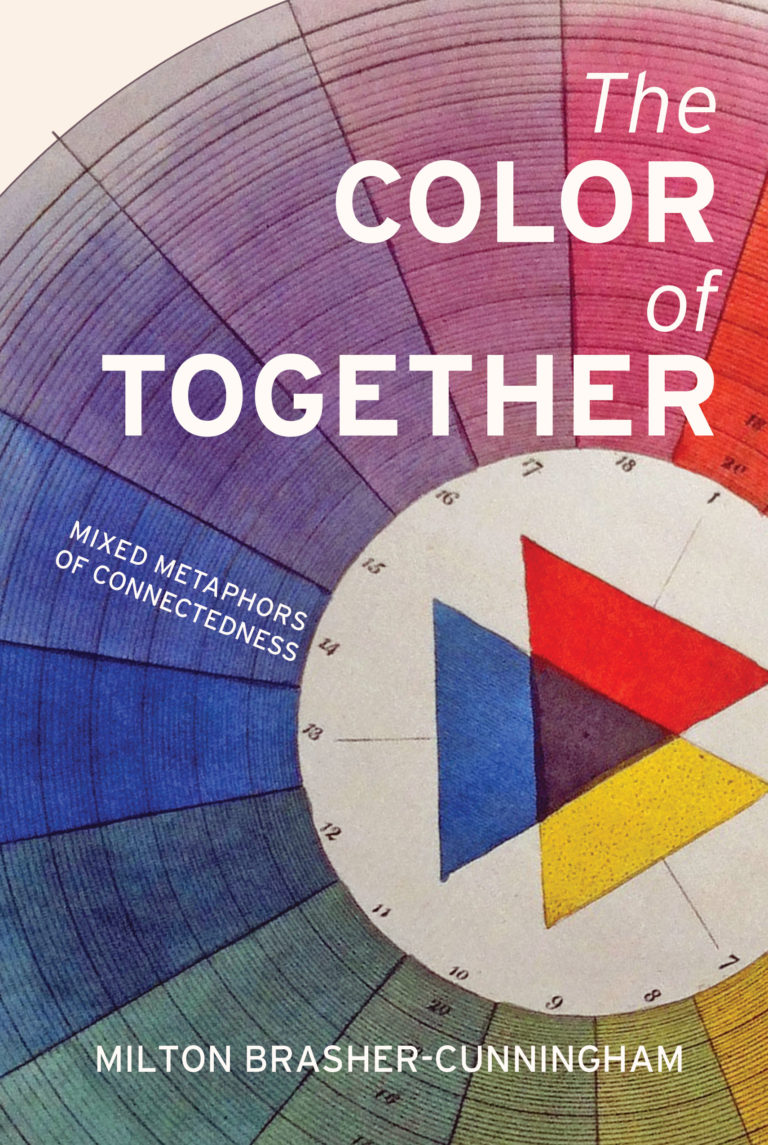
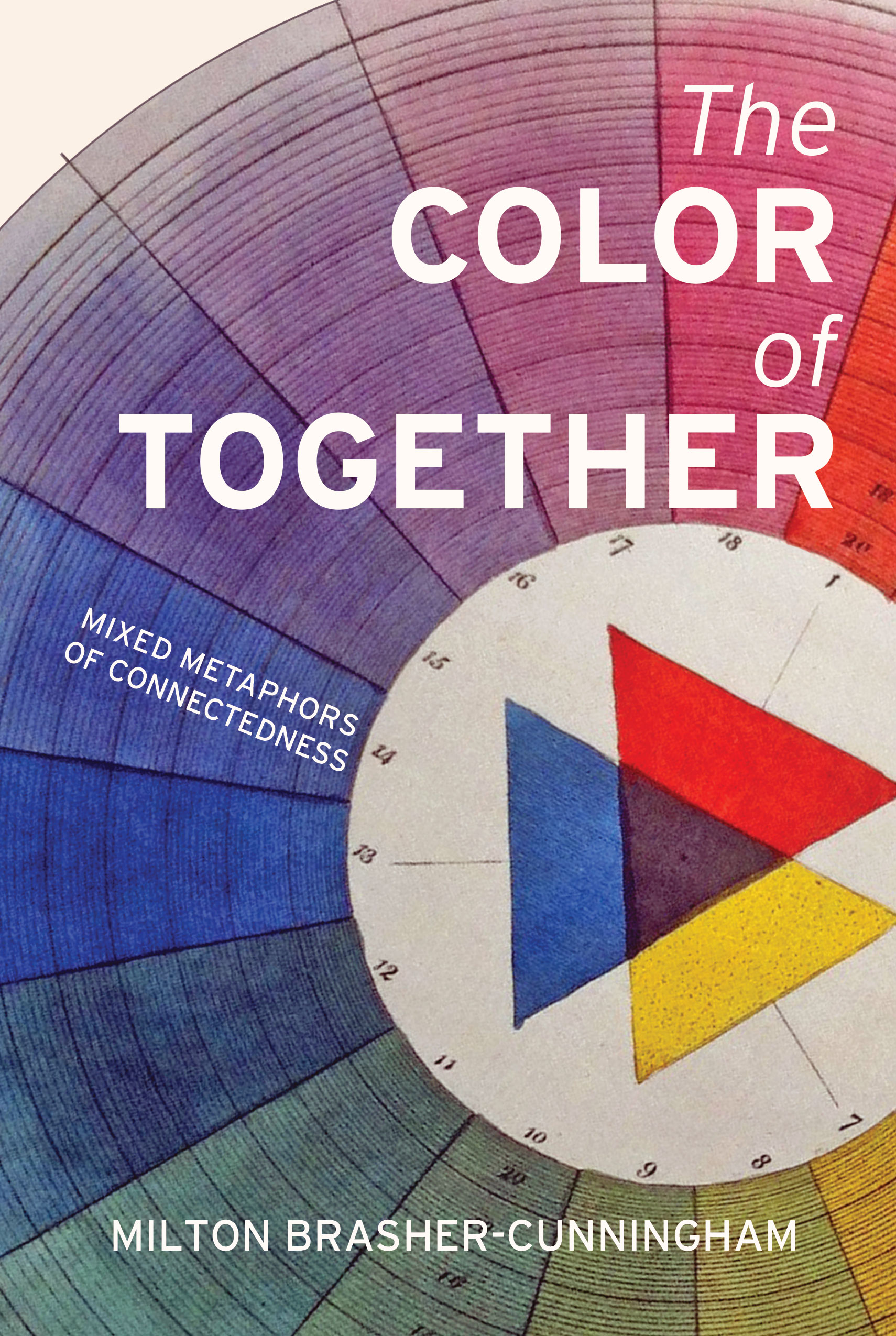
I am going to be laying low for a couple of days because I am down to the wire to get my final edits done for my new book, The Color of Together: Mixed Metaphors of Connectedness, which will be published on October 13, 2020 by Light Messages Publishing.

You can preorder it here.

This one has been a long time coming. I am excited we are moving closer to it being an actual book. Since I have a day job, the next couple of nights are going to be devoted to making a few changes and trying to figure out how to talk about these days of quarantine, which weren’t even something I was thinking about when I started writing.

Thanks for your encouragement. Tell all your friends, please. And when we can move around again and hang out together, I would love to come to your town, eat together, and talk about the metaphors that matter most.

Oh–when you click the preorder link, you will notice that the cover is different than the one I am showing here. This is what the book will look like when you get it. The other, as they say, is a placeholder.

Peace,
Milton

what is it?

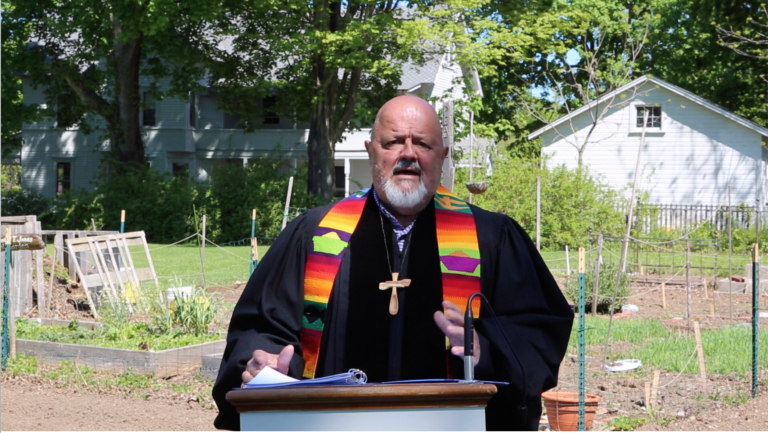
I am preaching for our service this week. We recorded it on Thursday standing in front of our church vegetable garden rather than in the sanctuary, so not only do I have a manuscript of the sermon, I have a recording as well.

The text is Exodus 16:9-21–the story of the manna in the wilderness.

When I was in high school I was in a musical ensemble at my church. Ten or twelve of us were chosen out of the youth choir. The director wanted a name with spiritual significance. What we came up with was Manna, I think because we assumed the word meant something like “God will provide.”

Most of the sermons I’ve heard on this story of God raining bread like dew in the morning and quail into the camp at night have been affirmations that God will take care of us. And that is an important truth–the same one Ginger talked about last week–we belong to Emmanuel: God With Us.

We are not alone.

Here’s the thing. The word manna in Hebrew doesn’t mean anything deeply theological. It means, “What is it?” When they woke up in the morning, the ground was covered with something that looked like coriander seed, was white, and tasted sweet, and they said, “Manna?” They were trying to figure out what was going on. Sound familiar?

They were told to only collect what they needed for the day and trust that there would be more tomorrow. If they tried to save it to make sure they had food for the future, the stuff soured and became full of worms. They had to learn to trust God and take each day as it came.

Most of the sermons that I have heard sermons on this story stop right here. And they were good sermons. Their daily exercise in trusting God was the inspiration for lines in one of my favorite hymns, “Great is Thy Faithfulness”—morning by morning, new mercies I see. Jesus underlined the same point when he talked about considering the lilies and not worrying about tomorrow.

But as I looked at the story this week, I kept reading to the end of the and found something I had not seen before. Verse 35 reads:

And the Israelites ate manna for forty years, until the came to a habitable land; they ate manna until they came to the border of the land of Canaan.

The Israelites had escaped from captivity—from generations of slavery and oppression—only to end up in the wilderness. The desert. Before long, they began complaining and Moses took their complaints to God, who responded with manna. I have this sort of a cosmic image of God handing sandwiches to the kids in the back seat who keep yelling, “Are we there yet?”
“Be quiet and eat.”
“What is it?”
“I said eat.”

I imagine the first few mornings of manna were cause for wonder and even gratitude. Morning by morning, they woke up to food for the day. But then they didn’t get where they were going for forty years. What they expected to change quickly became the way life was. I wonder how long it was before they stopped tasting the thankfulness. Being in the wilderness for forty years meant the ones who had come out of Egypt never knew anything but the wilderness. In fact, most of the people who left Egypt never got to the Promised Land. They woke up every morning in the and said, “What is this?” for the rest of their lives.

Eight weeks in to our lockdown, perhaps we are getting a taste of what they felt. A lot of days I feel like Billy Murray in Groundhog Day, where he is exhausted by having to live the same day over and over and he says, “I’ll give you a weather forecast: it’s gonna be cold and it’s gonna be gray and it’s gonna last the rest of your life.”

What began as something we hoped would be short-term is now something whose ending we can’t predict or control. In my own attempt to begin to understand that we may be in for the long haul, I wrote this poem last week:

maybe it doesn’t get better

you may not want
to read past the title
but hear me out–

we can’t do what we
are doing just because
we think this won’t last
and we can get back
to the way things were

maybe it doesn’t get better

I know–
I already said that
but what if the pandemic
pans out into permanence

or as permanent as
things ever get
what if we what we took
for granted isn’t granted

and we are left with life
and each other
for years, not days
yeah, I’m going to say it again

maybe it doesn’t get better

okay–I’ll say it another way
who knows what will happen
does that help

faith and hope hunger for uncertainty
love knows all you can count on
in life is someone else and let
someone count on you because

maybe it doesn’t get better
then again, maybe it does

The Israelites had to learn how to live in the wilderness as though that was what life was like. Yes, they knew they were supposed to be on their way to the land that God had promised them, but they couldn’t just sit around and wait for the future to come. The truth is the future never gets here for any of us. We cannot live lives that matter if they are based on what we expect to happen next. We can learn from our past and we can prepare for what we think might happen, but we can only live today, whatever the circumstances.

Most every Sunday morning during the quarantine, I have come into the meeting house to take the picture of Ginger and Jake as they send out the worship service e-mail. It feels strange to be in the room without anyone else here. I long for us to see each other, to be able to hug each other, to be able to sing together, and to eat too many snacks at coffee hour. That day may be a long time coming.

The decisions about how and when things will begin to open up, when we will be able to gather in person for worship, when we can go out to eat with friends, or quit wearing masks are not ones we get to make directly. We will respond to those circumstances, not create them.

How spend our days–these days, whatever the circumstances—are our decisions to make. We can decide how we will connect, how we will find ways to say we love one another, how we take care of each other, how we treat one another, how we ask for help. We can choose to make sure we all have what we need to get through the day ahead. We can choose not to wait for normal to return, or for things to get better, but to live today in this strange time as though these are the days we have to live.

One of my favorite stories about Jesus happened on the night before he was executed, when he washed the feet of his disciples. In a culture that knew only sandals and dusty roads, it was an act of servitude and compassion. The way John tells the story, he says that Jesus, “knowing he had come from God and was going to God,” knelt down and washed their feet. He wasn’t waiting for something to happen, or someone to rescue him. He took care of his friends.

We, too, have come from God and are going to God. Whoever we are and wherever we are on life’s journey, we are with God and God is with us. We have today to live, to breathe in the breath of God and breathe out the love of God, to take care of one another, to choose morning by morning new mercies to see.

Maybe things will get better. Maybe they won’t. Whatever happens, we have come from God and we are going to God, and we are traveling together. May we choose to do and say everything we can to remind one another of those things. Amen.

Peace,
Milton

cream biscuits

A good biscuit is hard to make.

I lived–and worked in restaurants–in Durham, North Carolina for five years before I dared to say I knew how to make a good biscuit, and I still know there are those who can make better biscuits than I can. Mike Hacker at Pie Pushers tops the list.

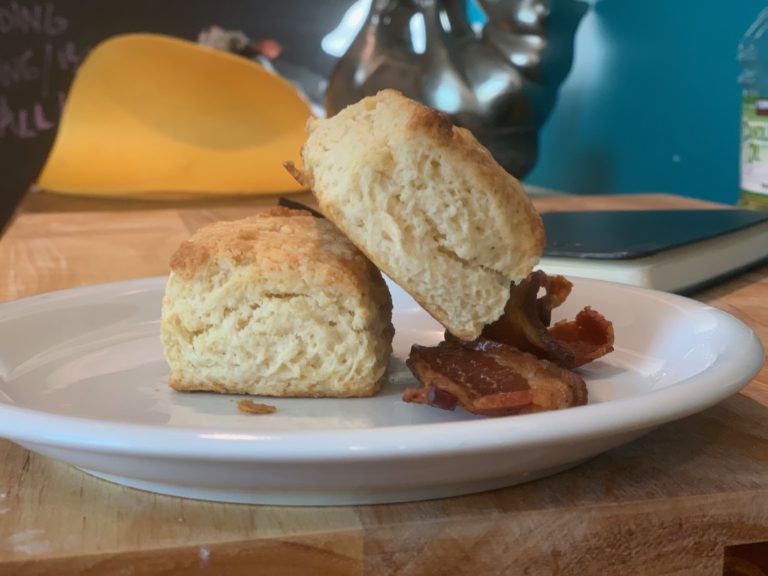
That said, the pandemic pushed me back to a biscuit recipe that is unusual in that it is easy and tasty. It is not an original creation on my part; you can find several versions online. But if you are hungry for a good biscuit and time is short–as in, when your mother-in-law asks when you are going to make biscuits again–these are the biscuits for you.

The other thing I like about them is all you have to have on hand to make them is flour, baking powder, salt, sugar, and heavy cream. Start to finish, you can have these on the table, or should I say in your belly, in thirty minutes.

cream biscuits

2 cup flour
2 teaspoons baking powder
3/4 teaspoon salt
2 i/2 tablespoons sugar
1 1/2 cups heavy cream

2 tablespoons butter, melted

Preheat the oven to 425°.

In a large bowl, mix the flour, baking powder, salt, and sugar together. Make a well and add the heavy cream. Stir until the mixture is combined and then knead the dough with your hands just until it holds together.

Put a piece of parchment paper or a Silpat on a baking sheet. Put the dough on the sheet and shape into a rectangle about a half an inch thick. Cut into twelve pieces and separate them so there is about a half an inch between them.

Cook for fifteen minutes. When you take them out of the oven, brush with melted butter and then dig in.

You’re welcome.

Peace,
Milton

chicken limone

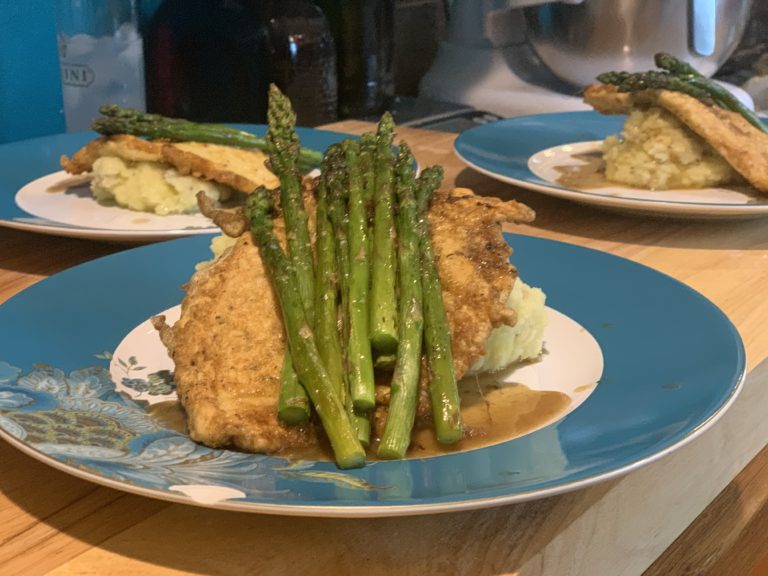
One of the benefits of living in Guilford is Bishop’s Orchards has fresh asparagus every May. I had never tasted fresh asparagus–I mean asparagus that was still growing this morning–until we moved here. I now eat asparagus in May and then wait for next year because I know how it really tastes.

Something about asparagus made me want chicken and lemons.

When we lived in Charlestown, Massachusetts we were just a walk across the bridge to the North End, which is the Italian neighborhood of Boston. We ate this chicken dish in a restaurant there one night and I bought the cookbook so I could learn how to make it. I have since lost the cookbook, but I can still get pretty close to how it tasted.

The unusual thing about this recipe is the chicken is dredged in flour and then put in an egg wash before it goes in the sauté pan–without going back into flour or bread crumbs. It has a light a tasty coating.

1-2 lbs boneless chicken cutlets, pounded thin
4 eggs
1 cup flour
6 tablespoons butter, divided
2 tablespoons olive oil
2 lemons, zested and juiced
salt and pepper

Lay the chicken out on a cutting board and season with salt and pepper. Whisk the eggs well and set a side. Put the flour in a shallow dish.

Heat 4 tablespoons of butter in a skillet over medium high heat. While the butter is getting hot, dredge the chicken in the flour, piece by piece, and then dip each one in the egg wash, and then into the sauté pan.

Cook the chicken about three minutes on each side. If they are pounded thin, this will make sure they are cooked through. (You may have to do this in batches.) Transfer the chicken to a serving platter and keep warm.

Add the remaining butter to the sauté pan and increase the heat. With a wooden spoon or spatula, loosen the particles from the bottom of the pan. Add the lemon juice and the lemon zest. Let the sauce reduce a bit; it will brown also. Pour it over the chicken and serve.

For the record, I spread the asparagus on a baking sheet and drizzled it with some olive oil and some salt. I put it in a 425° oven for about seven minutes. I also made some mashed potatoes. From start to finish, the whole thing took less than an hour before we sat down to eat.

Not bad for a Tuesday night dinner.

Peace,
Milton

love is just a way to live . . .

The last two weeks, as Spring has finally come to Connecticut to stay, the lengthening light of the days has been matched by the growing weight of my depression. This time, thanks to the pandemic, it isn’t all to do with my mental illness but circumstances as well.

I find that I crave being outside. I take my computer out on the patio to write in the morning. When my mind shuts down in the afternoon, I dig in our flower beds or out in the church garden behind the barn. On the weekends there are four of five of us spread out across our 50 x 30 plot, talking through our masks, and working to raise food for whoever needs it.

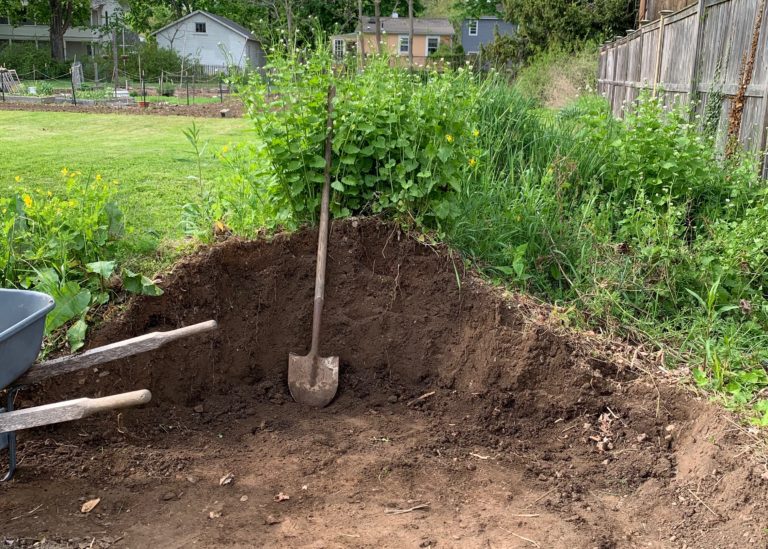
This afternoon late I went out and moved some dirt for an expansion bed that we are getting ready for next year. As I went back and forth with the wheelbarrow, I started singing a song I learned as a kid but really came home to me one night at Club Passim in Boston. I was the volunteer running the sound board one night when Dave Mallett was performing. He wrote the song and I got to hear him sing it.

inch by inch, row by row, gonna make this garden grow
all it takes is a rake and a hoe and a piece of fertile ground
inch by inch, row by row, someone bless these seeds I sow
someone warm them from below, ’til the rain comes tumbling down

In New England we are a week or so away from even being able to plant our tomatoes, much less harvest them. Tomatoes in these parts are a late summer, early fall pleasure. Nonetheless, it’s never too early to sing along with Guy Clark.

homegrown tomatoes home grown tomatoes
wha’d life be without homegrown tomatoes
only two things money can’t buy
that’s true love and homegrown tomatoes

The Indigo Girls’ song “All That We Let In” isn’t so much about gardening or farming, but about everything we digest in life. Digging out in the garden for me is therapeutic in part, I think, because I’ve got my hands in the stuff I’m made of. I’m breathing in life in all kinds of ways. And even though I am the one who cooks dinner when I come in, I know how this verse feels.

I pass the cemetery, walk my dog down there
I read the names in stone and say a silent prayer
when I get home, you’re cooking supper on the stove
and the greatest gift of life is to know love

Lyle Lovett sings about leaving home and worrying that the one he is leaving behind will have significant culinary experiences without him. It’s not about growing food, but it sure is about who you eat with–“Pantry.”

don’t cheat on me with cornbread,
don’t cheat on me with beans
and don’t cheat on me with bacon,
cooked up with collard greens
don’t cheat on me with biscuits
with jelly sweet and blue
keep it in that place where
you know you will be true
keep it in your pantry . . .

One of my favorite John Denver songs tells the story of his uncle who lived with them on a farm in Oklahoma. “Matthew” is full of joy and family.

yes, and joy was just the thing that he was raised on
love is just the way to live and die
gold is just a windy Kansas wheat-field
and blue is just a Kansas summer sky

Rich Mullins’ “First Family” is another song about a family on a farm and paints a wonderful picture of how all that is ordinary is full of wonder.

talk about your miracles
talk about your faith
my dad he could make things grow
out of Indiana clay
Mom could make a gourmet meal
out of just cornbread and beans
and they worked to give faith hands and feet
and somehow gave it wings

I’ll finish tonight’s playlist with “Trouble in the Fields,” a song Nanci Griffith wrote about her relatives who were farmers during the Great Depression. Though I am far from working a full farm, something about digging in the dirt during these days finds resonance in her words.

and all this trouble in our fields
if this rain can fall, these wounds can heal
they’ll never take our native soil
but if we sell that new John Deere
and then we’ll work these crops with sweat and tears
you’ll be the mule I’ll be the plow
come harvest time we’ll work it out
there’s still a lot of love, here in these troubled fields

Take care, my friends. We will keep digging and singing together.

Peace,
Milton

to be in the room

One of the things that has surprised me about myself during these days of quiet isolation is growing disdain for Zoom. Part of it, I’m sure, is that I have to use Go to Meeting for work, which is its own special brand of hell, but there’s more to it than just that. I think it has to do with the disembodied nature of the whole experience: even when it’s in real time, it’s not live.

And live matters.

I was in the room at the Tarrant County Convention Center the night BB King came out for the encore and played “When Love Came to Town” with U2. When it was over, Bono turned to Edge and said, “For a minute I felt like a musician.” I saw BW Stevenson play at The Hop in Fort Worth on a night when only about ten people showed up. During the break, I went up to him and said, “i’ve been following you since college.”

“So you’re the guy,” he answered.

I’ve sat in seven or eight venues to hear Springsteen and wait for the change to sing “Show a little faith, there’s magic in the night. You ain’t a beauty, but, hey, you’re alright” and then cheered when he shouted, “You guys are gonna put me out of a job!”

My friend Ken and I heard Michael Martin Murphy play at East Dallas Community College in an auditorium that held about five hundred people and was so acoustically vibrant that he sang “Geronimo’s Cadillac” without amplification. (Oh, Lord, take me back . . .) Then there was the night, early in our dating life, when I took Ginger to see Linda Ronstadt and as Linda was belting out a song Ginger leaned over and said, “Is that all she’s going to do? She doesn’t dance?”

On our first date I took Ginger to see Lyle Lovett at the Caravan of Dreams in Fort Worth. We have seen him every year since. He sings the same songs and the evening is always fresh and new because none of us is the same person we were the last time we were together.

I heard Beth Wood play at Blue Rock in Wimberely, Texas and Nathan Brown play in the barn behind our house; I sat on the back row at Reunion Arena in Dallas with my friend Patty to see Fleetwood Mac and on the tenth row to watch Dan Fogelberg’s solo acoustic tour. And I have sat in more rooms that I can count for open mics or to hear bands I knew nothing about because it was live. The music became flesh and dwelt among us, within us, between us.

I understand why so many musicians are live-streaming. I am grateful that they are. I have heard some amazing performances. But it is not the same thing as being in the room. Watching James Taylor sing “You Can Close Your Eyes” on Fallon the other night was beautiful, but not the same as sitting in the bleachers at Fenway when he sang it with Bonnie Raitt.

Last night I was talking with my friend Kenny and he said, “You really miss worship, don’t you?” The question was pretty much rhetorical. He went on. “You love live music so much. Live anything. And that’s what you love about worship: being in the room when it happens.”

It’s good to have friends who know you.

I miss being in the room to hear the prayer requests, the celebrations, the moments when kids drop stuffed animals out of the balcony or someone misses a cue, the point in the sermon where I know Ginger has gone “off book” from the manuscript I read the night before and is speaking to what she feels in the moment, in the room. I miss leaning over to Chuck, whom I usually sit next to, and making side comments. I miss hugging the little kids who are unabashedly friendly.

Dave Grohl, the lead singer of the Foo Fighters among other things, has a great article in The Atlantic about not being able to play live and he closes it by saying,

In today’s world of fear and unease and social distancing, it’s hard to imagine sharing experiences like these ever again. I don’t know when it will be safe to return to singing arm in arm at the top of our lungs, hearts racing, bodies moving, souls bursting with life. But I do know that we will do it again, because we have to. It’s not a choice. We’re human. We need moments that reassure us that we are not alone. That we are understood. That we are imperfect. And, most important, that we need each other. I have shared my music, my words, my life with the people who come to our shows. And they have shared their voices with me. Without that audience—that screaming, sweating audience—my songs would only be sound. But together, we are instruments in a sonic cathedral, one that we build together night after night. And one that we will surely build again.

Some promoters are predicting it will be September 2021 before live concerts happen again. Others are saying that congregational singing will be one of the last things churches are able to do as they gather again in person. Till then, I suppose, we will continue to be creative about the ways we find to communicate our affection and connectedness, which matters but it does not measure up to what it means to be live–to be in the room together.

And I am not handling that well. Zoom leaves me feeling more alienated than hopeful, more isolated than included. I don’t completely understand why, I just know that is how it feels. The prospect that it may be the primary way we communicate for a long time is despairing for me.

I know. This should be the part of the post where I start to make the turn towards home and say something hopeful, but I am not hopeful right now. My depression has moved in with a vengeance over the past week and is not remote at all. I am working hard to be creative about my sleep habits and work schedule and how much I walk, trying to make sure I can still do my job and can do more than curl up in a ball in the middle of the bed. As always, I am grateful that the kitchen remains a depression-free zone. At least I can cook and find some relief. Ginger is live here with me, which is the best news I know.

I know I am not alone in my depression. I know I am loved and I am doing all I can to find ways to let people know I love them. But to not be in the room together means we are missing the best part of the show. And I am missing it. Badly.

Peace,
Milton