Home Blog Page 74

lenten journal: an ear to the ground

Last night I went to an ecclesiastical council, which sounds as though I should have been in a fancy robe with a funny hat, but in the United Church of Christ it simply means a gathering of people from the churches in our association to approve someone for ordination pending a call. The candidate told his story, and then people asked questions. One person asked him to talk about the importance of prayer in his life.

That has not been an easy question for me. I am not saying I don’t think prayer is important. I am saying I have wrestled with how it works. I don’t think God waits until there is a critical mass of people asking for a particular thing before someone is healed or some situation resolved. Yet, I pray for healing sometimes. I have struggled with why it matters to pray for Sudan or Somalia or Palestine when I have no apparent contact with anyone in those places. And still I pray.

A couple of months back, I had dinner with one of the authors I worked with and he talked about how he was learning about the ways that trees talk to each other. (Here’s a TED talk about it, if you are interested.) The short version is trees communicate and even share resources through a mycorrhizal network of fungi that can run for miles underground. Our world is full of connections we can’t see. The author went on to say, “It has given me a new way to think about prayer—we are sharing resources through an invisible network.”

His comment helped me. The next morning, I serendipitously came across this poem by Catherine Barnett.

Epistemology

Mostly I’d like to feel a little less, know a little more.
Knots are on the top of my list of what I want to know.
Who was it who taught me to burn the end of the cord
to keep it from fraying?
Not the man who called my life a debacle,
a word whose sound I love.
In a debacle things are unleashed.
Roots of words are like knots I think when I read the dictionary.
I read other books, sure. Recently I learned how trees communicate,
the way they send sugar through their roots to the trees that are ailing.
They don’t use words, but they can be said to love.
They might lean in one direction to leave a little extra light for another tree.
And I admire the way they grow right through fences, nothing
stops them, it’s called inosculation: to unite by openings, to connect
or join so as to become or make continuous, from osculare,
to provide with a mouth, from osculum, little mouth.
Sometimes when I’m alone I go outside with my big little mouth
and speak to the trees as if I were a birch among birches.

I started wearing hearing aids about six years ago. I can remember putting them in and then zipping up my jacket to leave the audiologist’s office. “Did you know that makes noise?” I asked her. In the last year, I have noticed a big change in my hearing, so my audiologist here in Connecticut did the tests again, even though I had them done just a year ago. I have known all along that I cannot hear the higher end of the spectrum without help, but what changed is what they call “clarity of speech.” In one year, my right ear decreased by 20% and my left ear by 40%. The audiologist sent me to see an ENT doctor because the results were unusual. The doctor scheduled me for an MRI to see what they can figure out. He was not alarmist, but said the physical reasons that could cause what is happening could be some sort of blockage, a tumor, or an infection, among other things.

Which brings me to the reason I started off talking about trees. I need to lean into the invisible network that connects us and ask you to pray. Pray that I might feel at ease during the MRI, since confined spaces are not my favorite. Pray that the MRI offers some useful information. Part of me feels like the most difficult answer after the test might be, “We didn’t really find anything conclusive.” Pray that both my frustration at not hearing well and my despair at losing my hearing don’t get the last word, or even the prevailing word. Pray however you want—just send nutrients. I’ll have my ears to the ground.

Peace,
Milton

lenten journal: stop, hey, what’s that sound?

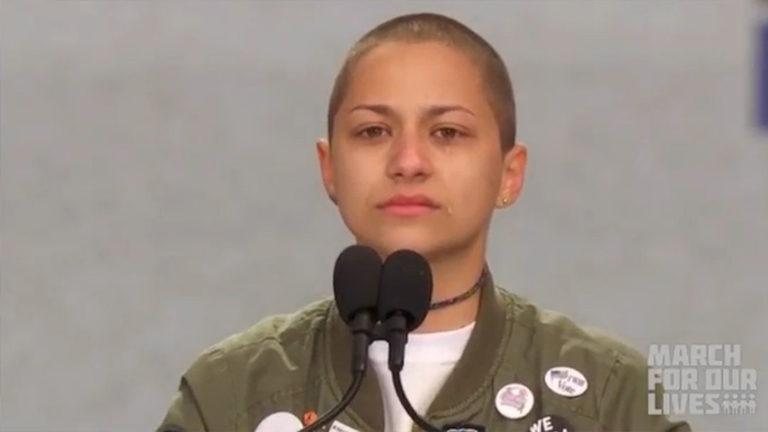
Watching the footage of student protests in response to the deaths in Florida set me to thinking about protest songs and the underlying protest that fuels our Lenten journey. Jesus went to the cross because he spoke truth to power—because he protested against oppression and the marginalization of people. When we stand up and stand together, we are walking in the footsteps of the one who calls us in love to live out that love every chance we get. I offer, then, a soundtrack that is by no means exhaustive, but is full of hope and heart.

Last Sunday, we worshipped at the First African Baptist Church in Richmond, Virginia. It was Children’s Sunday, and the youth choir sang “Glory” from the Selma soundtrack. I will let that be our opening hymn.

The next song came to mind as I read about schools that are preemptively forbidding their students to protest. The first words that came to mind were, “Stop—hey, what’s that sound? Everybody look what’s going down.”

Tracy Chapman reminds us perhaps we are talking about more than protest . . .

Paul Simon wrote “American Tune” in 1974, including these prophetic words:
but it’s all right, it’s all right
we’ve lived so well so long
still, when I think of the road
we’re traveling on
I wonder what went wrong
I can’t help it, I wonder what went wrong

Old Crow Medicine Show covered a David Rawlings tune that is one of my favorites.

And for our benediction, U2 and Mary J. Blige: we’ve got to carry each other . . .

Peace,
Milton

lenten journal: the busses will wait

I missed writing last night because we were traveling back from Richmond. I am still figuring out what to say about what I saw in heard in our days there. I keep coming back to the image of layers that I used in a different context a week ago as I began this year’s version of my Lenten journal. As we traveled, we got word of Billy Graham’s death. As I said on Facebook, I met Billy Graham when he came to Bulawayo, Southern Rhodesia, where we lived, in 1960. That visit started a friendship with my parents that lasted the rest of their lives. The better story has to do with my mother. She was a student at Baylor when Billy Graham came to speak at a campus revival, somewhere in 1948 or 1949. He was still new to the scene, as it were.

My mother was walking across campus when a car pulled up with four young men inside and asked directions to one of the buildings on campus. She answered their question and then invited them to the revival. When they sort of snickered, she asked if they knew Jesus as their savior. Again, they kind of laughed, and so she shared her faith with them—a hallmark of my mother’s life at any age.

That night, when she got to the service and the introduced Graham to the crowd, she realized who she had witnessed to. And then Billy told the story to those who were gathered. The guy sitting next to my mother said, “What kind of crazy person would witness to Billy Graham?”

“I know,” my mother said.

Before we left Richmond yesterday we visited the Maggie Walker house. I did not know anything about her before I got to Richmond. Now I wonder why she is not a nationally known figure. She became the first African American woman to own a bank in the 1920s—in Richmond. She also owned a department store and a newspaper. She was an early leader in the NAACP. She suffered great personal pain even as she became a commercial, political, and even spiritual force in Richmond. “Have faith, have courage, have hope, and carry on,” she said.

Walker’s faith was more grounded in helping people find jobs and homes and education than telling them the buses would wait, yet both she and Graham were living out the call they heard from God. I find more resonance with her expression of faith than I do with Graham’s altar calls, but as I have read those who have been quick to offer a critique of what he did, I find myself reticent to pile on—and not just because his death is so recent.

I came to the place long ago where I ceased to believe that Hell was a place. I think Love is the last word, not just for this life but for eternity. However things go in the dimension that lies beyond this life, I think God is calling, “Olly olly oxen free.” That goes for Billy Graham. He doesn’t have to agree with me for God to love him.

I will let the Lost Dogs sing our benediction: breathe deep the breath of God.

The busses will wait.

Peace,
Milton

lenten journal: no joke

Our trip to Richmond has given me more than I can begin to unpack right now. Those stories will come in the days ahead. Tonight, I offer another poem.

no joke

I once heard a comedian say
the only way to get to the good jokes
was to push past the easy ones: say all
the double entendres, the terrible
puns, and the sex—and then you find
punch lines more profound than predictable.

Perhaps I’m stretching the analogy, but
couldn’t we say that when we set aside
the alleluias for Lent we acknowledge
that praise can sometimes turn to platitude:
get up and do it again. Amen. Say it again . . .

Listen to the birds who are not singing.
Wait for the trains that are not coming.
Dance to music that no one is playing.
Set places for those who have yet to show up.
Rolling the same stones is no preparation
for the belly laugh of the resurrection.

Peace,
Milton

lenten journal: listen, white people

We worshipped today at First African Baptist Church in Richmond. It was a rich and meaningful service and the people there greeted us with extravagant hospitality. I have stories to tell about our day, but tonight, I am still dealing with feelings brought up by what I have seen while we have been here. Here’s a poem that tries to say some of what is going on inside me.

listen, white people

yeah, I’m talking to me
and to you, too
talking to anyone

who never had to worry
about being followed
stopped or accused

because of the
color of our skin

who never thought
twice about a hoodie
making us a threat

listen right now
we need to listen
do you hear me?

don’t speak of
what the boy might
have done wrong

don’t explain
make excuses or
offer solutions

just listen
listen, listen, listen
for a long time

then, when you speak
speak as an ally
not an expert

Peace,
Milton

lenten journal: when is it time?

Before I stared to write tonight, I scrolled through Facebook to see what folks had been up to today and found this video on a friend’s page. The poet in the video is responding to the shootings in Florida and asks, more than once, “When is it time to talk about it?” His question gave me a way to talk about our day here in Richmond.

We began our morning at the Virginia Holocaust Museum which is housed in an old tobacco warehouse in the Shockoe Bottom area of town, where they sold slaves before they sold tobacco. Matt, one of our tour guides, began by answering our first question: why was there a Holocaust museum in Richmond? His answer was because there were over a hundred survivors who lived in the city and some of them wanted to tell their stories. They showed an introductory film that included testimonies from six of the survivors, one of whom helped to found the museum. One of them talked about remembering flames, not smoke, coming out of the smoke stacks of the incinerators because so many bodies were being burned.

At one point, our discussion turned to the people that lived in the towns where the camps were located—those who went to work and ate their meals and sat on their porches while people were being massacred behind the barbed-wire fences. For years. Matt was intentional about saying he was not trying to demonize anyone, but to point out that we often do nothing when we feel helpless or hopeless.

Hold that thought.

This afternoon we met Dolores McQuinn, a member of the Virginia House of Delegates and former Richmond city council member, who has spent years working to make the Richmond Slave Trail a reality. Between 1830 and 1860, Richmond was the largest source of enslaved people on the East Coast. The Slave Trail marks out where the boats filled with people landed on the James, where they were auctioned, where they were imprisoned and tortured, where they went to church, and where they were buried.

She spoke with passion about the development of the trail, the importance of telling the story, and the ways in which her faith had called her to and sustained her in the work of making the Trail a reality. One of the things she said that made it difficult was that many in Richmond, both black and white, had a hard time telling the story because they felt shame, or felt ashamed.

Let’s go back and pick up the first thought about the people in the towns where the concentration camps were located that said nothing and did nothing. And pick up the thought offered by the poet in the video about school shootings who kept saying, “But we don’t want to talk about it.” In our debriefing tonight after dinner, we talked about how many Holocaust survivors have not wanted to tell their stories, or only began to tell them when they thought they were close to dying because the memories remained too vivid and painful. They waited until it hurt worse to hold it in than it did to express it. Perhaps that is part of the reason we are just now getting around to telling the story of enslaved people, even though the Civil War ended a century and a half ago. And we still don’t appear to be ready to tell the true story of what we did to the Native Americans in the name of our freedom.

The film at the Holocaust Museum had one glaring misstatement. At the beginning, a slide came up and the voice said, “This was the darkest chapter in human history.” No. It was a dark chapter, as was the slave trade. Theodore Roosevelt said comparison is the thief of joy. Perhaps it is also the thief of courage and compassion. Our human story has one dark chapter after another. Since the Holocaust happened, we have watched genocides in Rwanda, the Congo, Sudan, and Kosovo, to name a few. And we have allowed ourselves, as Americans, to keep shooting each other. Our shame and silence continue to feed off of each other.

I saw one post tonight that said a movement was growing among high school students to walk out of school on April 20 and not return until significant gun legislation was passed. I hope the post is accurate, and I hope they do it. I’ll volunteer to tutor as many as I can while they wait for Congress to act.

I’ll bet there were a number of people in the towns where the camps were that smelled the burning bodies and thought it was terrible and that they were helpless to do anything that mattered. They even talked about it at church. If they had had a blog, they might have even written about it. When our descendants look back at us in seventy years, I don’t want to be remembered as a well-intentioned bystander.

Peace,
Milton

P. S. Here is the video I linked to above. It’s worth your time.

lenten journal: hope and heartache

I am writing tonight from Richmond, Virginia where Ginger is leading a group from First Congregational Church of Guilford UCC on our second annual Civil Rights Tour. The inaugural trip went to Birmingham, Selma, and Montgomery, Alabama. This year we are here along the James River in the town that was once the capital of the Confederacy.

This afternoon, we toured The Black History Museum and Cultural Center of Virginia that was filled with stories of those who stood up for their humanity in a number of different ways. One of the staff members told us the story of Henry “Box” Brown, an enslaved man in Richmond who got a friend of his to put him in a wooden packing crate that was three feet long by two feet eight inches deep by two feet wide and send him north to Philadelphia. The trip took twenty-seven hours, but he shipped his way to freedom.

Tonight, we went to the Pine Camp Arts and Community Center, which is run by the city of Richmond, to see the play Free Man of Color by Charles Smith that told the story of John Howard Templeton, the fourth African American man to graduate from the University of Ohio in 1828. The college president, Robert Wilson, is grooming Templeton to go and lead the nation of Liberia. What becomes apparent is Wilson doesn’t want Templeton to stay in America as an equal. Templeton completed his education, but never went to Africa. Instead he started schools in Ohio, Virginia, and Pittsburgh. The play was excellent and the performances were wonderful.

So many of the stories today we heard had notes of triumph, but they came in the middle of a melody of sadness and struggle, as well as hope and tenacity. Small stories that loom large, even though many have never heard them. But to see them as only inspirational is to sell them short. Henry “Box” Brown survived an amazing ordeal, but I couldn’t hear the story without thinking of those who have died in packing containers trying to get across the border. John Howard Templeton was highly educated and yet his degree and mastery of Latin, Hebrew, and Greek did not translate into equality. Today I heard the stories of America. Of humanity.

I feel both hope and heartache after hearing the stories I heard today. How can we be so far into human history and not have learned how to treat each other? How can we be almost two hundred and fifty years into our history as a nation and still be so unwilling to offer liberty and justice for all? Why is it so threatening to those of us born into privilege to think of sharing what we have?

One of the ways to think about Lent is to see it as a march to the Cross. I am not the first to say that one of the ways to look at the Cross is to see it as a lynching. Jesus was killed because he was unabashedly for the poor and marginalized. He knew the privileged lived in a house of cards that God would blow down. The hope of Easter is that the lynching was not the last word.

I believe with all of my heart that it will not be the last word in America either. Sam Cooke was right. A change gonna come.

Peace,
Milton

P. S. Here’s Sam.

lenten journal: just get here . . .

I earned how to read the funny papers from my Dad. That’s what he called the comics. One of the characters who lived in black and white in those days was Dagwood Bumstead, husband of Blondie, and lover of the biggest sandwich you ever saw—everything stacked high, one layer on top of the other.

I thought about that sandwich as Ginger and I were driving from Tarrytown, New York to Richmond, Virginia and I realized I was not going to be able to write my Ash Wednesday post to begin another year of my Lenten Journal, which has been my practice for who knows how many years. I thought of the sandwich because I was thinking of how life right now feels stacked, one thing on top of the other. Yesterday was Ash Wednesday and Valentine’s Day and my regular day to go into New York for work and the day we needed to get to Richmond to prepare for those from our church in Guilford who are coming south for a Civil Rights history tour. I got up at four and packed, caught the five-thirty train to New York, worked, caught a late afternoon train to Tarrytown where Ginger picked up me up, ate a Valentine’s dinner at a cute restaurant on the Hudson River, and then drove as far as we could so we could get up this morning and get to Richmond and prepare for the others. A Dagwood of a day—and it feels like there have been a number of those in a row.

I missed getting to write last night because I find great meaning in my lenten discipline. Over the years it has helped me find focus, distill my thoughts and feelings, and connect with those who read it. And I started my discipline by not doing it. The car was quiet for the last hour or so last night. Ginger had gotten sleepy. The road was not crowded. As I thought about writing, the phrase that hit me is the title of this post: just get here.

The phrase hit play in my mental juke box and I could hear Oleta Adams singing,

you can reach me by railway
you can reach me by trail way
you can reach me on an airplane
you can reach me with your mind
you can reach me by caravan
cross the desert like an Arab man
I don’t care how you get here—just get here if you can

The lyrics landed like grace.

The layers of life are stacking up heavily on far more than me these days. It is hard not to feel sandwiched between pain and pain, over and over again. Our postcard town in Connecticut is still reeling from the accidental death of one of our teenagers. I drove last night as Ginger read news of the shooting in Florida. I could spend the rest of the night writing if all I tried to list even a fraction of all those who are hurting in our world.

In his poem, “The Layers,” Stanley Kunitz asks,

How shall the heart be reconciled
to its feast of losses?

A few lines later, he offers,

In my darkest night,
when the moon was covered
and I roamed through wreckage,
a nimbus-clouded voice
directed me:
“Live in the layers,
not on the litter.”

I’m sitting in a hotel room in Richmond, a town, like many, that is struggling to come to terms with its layers, getting ready to see what both the layers and the struggle has to say to me and about me and what the conversation might demand of me. Tonight, we got to eat dinner with an old friend and former roommate who lives here—a serendipitous trip back through some layers of my life for which I am deeply grateful. We could have spent the evening talking about the number of years between then and now that we were not in touch. Instead, we told some stories and then dove into the lives we live now, finding new connections and tightening the ties that bind. What mattered most was that we got here.

Lent has begun and I’m a day late—and, even a day late, pushing it to the last hour to get this posted. But I got here. And I will do my best to keep showing up to talk about how things are stacking up.

Peace,
Milton

PS—Take some time to hear her sing . . .

still listening

I preached at my church today. The person who was supposed to be our speaker for MLK Sunday was ill and Ginger and Sarah asked me to fill in. I am sorry she got sick and I am grateful for and humbled by the opportunity to preach today. Here is the manuscript of the sermon. A recording of the sermon will be posted here in the next day or two.

“Still Listening”
1 Samuel 3:1-10
A Sermon for First Congregational Church of Guilford UCC
January 14, 2018

If we mark time by the liturgical calendar, today is the second Sunday of Epiphany, a word that means “awakening,” and points us to the Magi—the wise ones who followed the star to the manger. Because of their encounter with the baby Jesus and their awareness of the damage King Herod wanted to do to the child, they chose to go home by another way rather than playing into Herod’s hand and telling him where the child was.

If we mark time by our American calendar, this is the Sunday when we honor the legacy of the Rev. Dr. Martin Luther King, Jr. On the night of January 27, 1956, in the middle of the Montgomery, Alabama bus boycott, Dr. King got a phone call at his home telling him if he didn’t get out of town they were going to blow up his house and kill him and his family. He was twenty-seven years old. He went into the kitchen to pray. And he said he heard a voice call him by name: “Martin Luther, stand up for truth, stand up for justice, and stand up for righteousness.” His epiphany that night led him to lead us and to change how we look at and listen to one another, and, perhaps, to God.

Our text for this morning deals with another call in the middle of the night—this one to Samuel, a young boy to whom God spoke out of the darkness. Let us listen to the story together.

Now the boy Samuel was ministering to the Lord under Eli. The word of the Lord was rare in those days; visions were not widespread. At that time Eli, whose eyesight had begun to grow dim so that he could not see, was lying down in his room; the lamp of God had not yet gone out, and Samuel was lying down in the temple of the Lord, where the ark of God was. Then the Lord called, “Samuel! Samuel!” and he said, “Here I am!” and ran to Eli, and said, “Here I am, for you called me.” But he said, “I did not call; lie down again.” So he went and lay down. The Lord called again, “Samuel!” Samuel got up and went to Eli, and said, “Here I am, for you called me.” But he said, “I did not call, my son; lie down again.” Now Samuel did not yet know the Lord, and the word of the Lord had not yet been revealed to him. The Lord called Samuel again, a third time. And he got up and went to Eli, and said, “Here I am, for you called me.” Then Eli perceived that the Lord was calling the boy. Therefore Eli said to Samuel, “Go, lie down; and if God calls you, you shall say, ‘Speak, Lord, for your servant is listening.’” So Samuel went and lay down in his place. Now the Lord came and stood there, calling as before, “Samuel! Samuel!” And Samuel said, “Speak, for your servant is listening.” (1Samuel 3:1-10)

The story from the life of Samuel was one that engaged me as a young boy because I imagined him at my age. I didn’t understand how his mother could have sent him to live in the Temple, but I could see him waking in the night and going to Eli, thinking the old man had called him. “I’m here.”

The drowsy priest said, “I didn’t call you. Go back to bed.” It happened a second time, and then a third. By then, Samuel wasn’t the only one who was awake, and Eli had a sense that more was going on, so he gave Samuel different instructions: “Next time answer, ‘Speak, Lord. Your servant—your follower, your disciple—is listening.’”

Sounds easy enough, doesn’t it. But to actually say to God, “I’m listening”—and mean it—a brave thing to say. God told Samuel to go to breakfast the next morning and let Eli know that his blindness was both a physical reality and a metaphor: he and his sons were going to be punished for their abuse of their office. Not easy news for an eleven-year old to deliver. But he did it.

Shirley Cherry, the Tour Director at the museum in the house where Dr. King and his family lived the night he received that phone call, said, “He had a choice. Dr. King had a privileged life. He didn’t have to do what he did.” Her choice of words jumped out at me: he had a privileged life. He got to study at Boston University. He did have some advantages others did not. Yet, when he came to Durham, North Carolina, just days before he was assassinated, to meet with an interracial group of ministers, they had to meet in the private home of Rev. DeWitt Myers, who was a member of our former church, because there was not a restaurant in town that would allow them to eat together. Yet, she said, he had a choice.

I am a straight, white, male—the trifecta of privilege. And as a straight, white, cisgender male, I am humbled to be speaking on this day when we look again at the legacy of Dr. King, and the call of God on our lives, and see what it means for us, in our time, to answer, “Speak, Lord, for your disciples are listening.”

If you were here last Sunday, you heard Marjorie Colten tell of how she and I figured out that we had met in Zambia when I was about Samuel’s age, I suppose—maybe younger. My parents were missionaries when I was growing up and I lived in Africa until I was sixteen. My stole this morning—which is actually a scarf of the Zambian flag—was a gift from a childhood friend, Wynegood Malunga, His father was the pastor of the church we attended. My heart was grieved by the derogatory and offensive words about Africa and Haiti that came out of Washington this week, not only because I have a deep love for Africa, but also because I want to remind myself that the point of my life is not to make sure I remain a part of a privileged class. Contrary to what some of the voices in our society say, the world does not revolve around me and those who look like me.

When we lived in Durham, I interviewed for a job teaching in an alternative high school for kids who struggled for a number of reasons. All of the staff was white. All of the students were people of color. I had a great interview and spent a wonderful day on campus working with the students, as did one other candidate, who was an African American woman. We were both equally qualified. We both knew we had performed well. And she got the job because she had more in common with the students. They needed to see a mentor who looked like them. A friend in Texas was angered when I told him I didn’t get the job. He felt like I had been cheated somehow, but I did not. Though I would have loved to work there and I think I would have done well there, she was the better choice. I was not wronged or cheated by them choosing her.

There is another, perhaps even more personal way, this passage has affected me, and it has to do with hearing. Some of you know I wear hearing aids. I have worn them for almost seven years. The technology is helpful and frustrating at the same time, because it feels like it amplifies the background noise more than anything else. I have to be mindful of where I sit in a room so I can best hear the speaker. I struggle to understand sales clerks in stores. I say, “Say it again, please” a great deal. It is frustrating, and sometimes embarrassing. In the past year, my hearing has gotten profoundly worse, for reasons I don’t understand—and it frightens me. I can no longer hear my phone ping when I get a text message. I can’t hear the timer go off on the stove. I voiced my fears to my spiritual director and she said, “So what’s the question for you as you deal with this?” We talked a bit more before I could answer, and then I said, “I think the question is, how do I keep listening when I can’t hear?” My life is changing in ways I did not anticipate. My abilities are changing and I don’t want my physical reality to become a metaphor for my life. How, then, do I keep saying, “Speak, Lord, I’m listening”?

Most of us, as members of the United Church of Christ, know our denomination’s slogan, “God is still speaking.” When we hear the stories of Samuel and Martin and their late night calls from God, the truth of our slogan is more disquieting than comforting because we may soon realize that our still-speaking God is in the habit of waking us up night after night to see if we are still listening. The world is changing faster than my hearing, even as the problems of how we live together are as old as humanity. God is still speaking about what is going on in Africa and Haiti, and God is still speaking about poverty in New Haven, and the need for affordable housing in Guilford, and the reality that we live in a state severely divided by race and economics, even though it is easier to point fingers at the South and say it is their problem. God is still speaking about how we are called to do more than agree to disagree, but we are called to compassion and forgiveness and change. God is still speaking and calling us to choose generosity over security, to choose community over individualism, to choose compassion over self-righteousness. We live privileged lives and we have a choice.

God is still speaking and each time God speaks and calls us by name, the question remains the same: are we still listening? Amen.

Peace,
Milton

dress code

I offer an out-of-season weather poem, based on a first line I found in notes for an older version of this poem. Stay warm and dry, friends.

dress code

I dress myself with rain,
shape a hat out of clouds,
make a scarf of the wind,

wrap myself in a coat
of many shadows—
with pockets of light

I know it’s winter—
the frost clings to the
windows like star shine

the low-riding sun slings
its rays across the room,
igniting the dust of hope

that hangs in the air inside,
where I am: caught up
in the weather of my heart

so I dress myself with rain
shape a hat out of clouds,
make a scarf of the wind . . .

Peace,
Milton