Home Blog Page 75

advent journal: tell me a story

Many years ago, Ginger asked me to write a story for the Christmas Eve service at North Community
Church in Marshfield, Massachusetts. What came out was “A Faraway Christmas,” which I have posted here on several other Christmas Eves since. When we lived in Durham, I made a recording, along with harmonica accompaniment by my good friend, Terry Allebaugh. Another good friend, Claudia Fulshaw, did the artwork. Two years ago, my mother went into the hospital on Christmas Day and then on to hospice, where she died on January 15, 2016. Terry’s mother died last week. I was not as acquainted with grief when I wrote this story as I am now. I am grateful that it still rings true.

A Faraway Christmas

As we gather together on this Silent Night,
To sing ‘round the tree in the soft candlelight,

From a Faraway Christmas, from time that’s grown cold,
Comes a story, you see, that has seldom been told.

Of all of the legends, the best and the worst,
From Christmases all the way back to the first,

This little tale isn’t often remembered
From then until now, down through all those Decembers.

But I found an old copy tucked away on a shelf,
And I turned through the pages, and I thought to myself,

Of all of the times between now and then,
This is the Christmas to hear it again.

Once upon a time in a place we might know,
‘Cause their woods, like ours, often fill up with snow,

Was a small little hamlet — a Long Ago Town —
Of no great importance, or no real renown,

Filled with people who seemed fairly normal to me,
With names like Francesca, Francine, and McGee.

They had puppies and children, ate bread and ice cream,
They went shopping and swimming, they slept and they dreamed;

They laughed and did laundry, they danced and they dined,
And they strung Christmas lights on the big Scottish Pine

That grew in the square in the middle of town,
And when Christmas was over, they took the lights down.

They read the newspaper, they sometimes told jokes,
And some of the children put cards in the spokes

Of their bicycle tires, so they made quite a din
Till it came time for parents to call the kids in.

Yet for all of the things that kept people together,
The nice festive feeling, the Christmas Card weather,

For all of the happiness one was likely to hear,
This Faraway Christmas was marked, mostly, by fear.

Well, yes, they were frightened — but that’s still overstated;
What bothered folks most really could be debated.

Some were tired (exhausted), some were sad or depressed,
Some — the best way to say it — well, their lives were a mess.

Some felt pressure from not having paid all the bills,
Some were keeping dark secrets that were making them ill;

Some felt guilty and thought they were headed for hell,
But the town seemed so happy, who could they tell?

So everyone kept all their feelings inside,
And wished they had someone in whom to confide,

To say, “Life is lousy,” or “I’ve made a mistake,”
Or “Sometimes I’m so sad I don’t want to awake,”

Or “I miss my Grandma,” or “I loved my cat,”
Or “I never, no never get my turn at bat.”

Everyone kept it in, no one said a thing
Until once Christmas Eve, when the man they called Bing

Came to turn on the lights on the tree in the square
And nobody — not anyone — no one was there,

And he looked at the lights as he sat on the curb
And he said — to no one — “I feel quite disturbed;

“I know that it’s Christmas, when I should feel warm,
But I don’t think this year that I can conform.

It’s been hardly two months since my friend passed away;
How can I smile when he’s not here to say,

“’Merry Christmas’?” he asked and burst into tears,
And all of the sadness from all of the years

Came out of his eyes and ran down his cheeks,
And he thought he would sit there and blubber for weeks.

When Samantha showed up — she had not been expected —
And sat down beside him ‘cause he looked neglected.

He looked up through his tears, she said, “You look kinda bad.”
And he answered, “The truth is I feel really sad.”

When she heard those words, tears jumped straight to her eyes,
“The truth is,” she said, “I tell too many lies.

I want people to like me, so I try to act cool,
But deep down inside I feel just like a fool.”

So they sat there and cried, like a sister and brother,
And were joined by one, and then by another,

With a story to tell and feelings to free,
And they wept and they hugged ‘neath the big Christmas Tree.

Can you imagine how many tears fell,
After all of the years that no one would tell

How much they were hurting, how broken or mad,
How long they had smiled when they really felt sad.

How long does it take to clean out your heart,
To get it all out, to make a new start?

That answer’s not easy to you and to me,
But they found out that night, those folks ‘round the tree.

They cried until daybreak, till the first rays of dawn
Broke over the tree tops and spread ‘cross the lawn,

In the new morning light Bing could see ‘cross square;
He also could see the whole town was out there.

They had come through the night, first one, then another
To sit down together like sister and brother

To pour out their hearts for the first time in years,
And let out their feelings, their sadness, their tears.

Samantha stood up and then turned back to Bing,
“You started us crying, now help us to sing.”

So he started a carol, the one he knew best,
About joy to the world, and it burst from his chest.

The others joined in, not because they weren’t sad,
But because they’d admitted the feelings they had,

Everyone sang along, both the sad and the scared,
Because true friends are found when true feelings are shared.

There’s more to the story, but our time is short,
Of how life was changed I cannot now report,

But instead I must ask why this story’s forgotten;
It’s not hopeless or humdrum, it’s not ugly or rotten.

Do you think it’s because people said how they felt,
And if we tell the story then our hearts, too, might melt?

What if we spoke the truth, what if we named our fears,
What if we loosed the sadness we’ve tied up for years?

Would we ever stop crying, would the dawn ever come?
And like those in the story, once the tears had begun

Would we sit on the curb, first one, then another,
And talk about life like sister and brother.

Oh, that is exactly why I chose to tell
This lost little tale we know all too well.

Our world is no different; we’re frightened and sad,
We feel helpless and hopeless, and certainly mad,

But none of those words is the last on this Night
That we wait for the Child, that we pray for the Light,

That we sing of the good news the angels did bring,
And we wish for peace, more than any one thing.

Yes, this story that came from a Long Ago Town
Of no great importance, of no real renown,

Could be ours, if true feelings were what we would say;
And we’d find such a Christmas not so faraway.

Merry Christmas.
Peace,
Milton

advent journal: moving on to love

When we mark time by the liturgical calendar, we only count and number the four Sundays before Christmas, which means the fourth Sunday—tomorrow—doesn’t have a week to go with it. We have had days to stretch out with hope, peace, and joy, but love get the short shrift, as far as Advent goes. So I decided to start a day early.

My favorite verse of a carol is the third stanza of “It Came Upon A Midnight Clear”:

and ye beneath life’s crushing load whose forms are bending low
who toil along life’s climbing way with painful step and slow

There’s more, but those two lines are the ones that feel most timeless, and the most true. I don’t mean that as a statement of despair, even as I am weighed down by both grief and my depression. I am also aware of the shared grief with many whom I love and the love I feel from those who keep reaching out that is stronger than all of it. The toil and crush are not the final words.

I’ll send you out into the night with a song that has carried me for many years. Andrew Peterson is the songwriter and performer. “After The Last Tear Falls” is the song. I know about it because of my brother.

after the last tear falls, after the last secret’s told
after the last bullet tears through flesh and bone
after the last child starves and the last girl walks the boulevard
after the last year that’s just too hard

there is love—love, love, love
there is love

after the last disgrace, after the last lie to save some face
after the last brutal jab from a poison tongue
after the last dirty politician, after the last meal down at the mission
after the last lonely night in prison

there is love—love, love, love
there is love

and in the end, the end is oceans and oceans of love and love again
we’ll see how the tears that have fallen
were caught in the palms of the Giver of love and the Lover of all
and we’ll look back on these tears as old tales

’cause after the last plan fails, after the last siren wails
after the last young husband sails off to join the war
after the last, this marriage is over
after the last young girl’s innocence is stolen
after the last years of silence that won’t let a heart open

there is love—love, love, love
there is love

and in the end, the end is oceans and oceans of love and love again
we’ll see how the tears that have fallen
were caught in the palms of the Giver of love and the Lover of all
and we’ll look back on these tears as old tales
’cause after the last tear falls there is love

Even in these short days and long nights, there is love. That’s the last word.

Peace,
Milton

advent journal: ellipses

ellipses

I am fighting hard to hope . . .
Well—now I’m staring at the page
hoping to find a different verb.
I’m not looking for a fight.
why let my word choice turn
to violence over things that matter?

I am fighting hard to hope . . .
maybe the problem has more to do
with the subject of the sentence.
hope only happens in concert:
the shepherds flocked together,
and the angels had a choir.

I’m fighting hard to hope . . .
I keep typing those words thinking
they will take a different turn—
I would like not to fight.
I’ll struggle (that’s different, right)
or wrestle or wonder or wait . . .

I look at the page and see a
series of ellipses: “a trailing off
of thought.” but I’m still here
determined to remember
I am not alone in the dark.
I’m fighting hard to hope.

Peace,
Milton

advent journal: highway song

highway song

here is a well-traveled
metaphor: life is a highway
but not an interstate
more of a two-lane blacktop
that hits all the lights
in every small town
an intentional inconvenience
that makes you decide to stop

at one of those roadside cafés
a filling station of the heart
where whoever comes up
to the table is wearing a
name tag and a smile, yet
holds sadness in their eyes
either one is an invitation
to act like you belong here

we are all people who are
driving through the details
lives without express lanes
unable to see around the bend
to the next stop light of sorrow
working our way back home
full of grief and gratitude
following the broken line

Peace,
Milton

advent journal: passive resistance

passive resistance

more mornings than not I find myself
wishing there was no passive voice.
I lose patience with a world where
things are said, bills are passed,
mistakes are made, women are harassed,
damage is done, and lives are lost,
as though the mistakes make themselves,
the violence happens without perpetrators,
and the shootings without killers—
(apologies were made).
the grammar of grace calls us
to be the subject of our sentences
and know that someone is on the
receiving end, to speak in a voice
other than cowardice, to live a life
predicated on something other than
deflection and defensiveness.
what good is it to say you are loved?
trust can’t thrive in anonymity
let me be clear: I love you—
there’s nothing passive about it.

Peace,
Milton

advent journal: give me ten

I am happy to admit that one of the traditions around our house this time of year is to watch a whole bunch of Hallmark Channel Christmas movies. This year, between my depression, the state of the world, and the fact that pitchers and catchers don’t report for another two months, they have been a solace more than a diversion. It helps to see a happy ending, even when you can see it coming from the opening scene. Though I know the movies are fair game for criticism on a number of levels, I am choosing not to qualify what I’ve said so far. I’ll say it again: I’ve watched a lot of these movies and I have enjoyed them.

But I brought up my Christmas viewing habits tonight for a particular reason. The arc of the endings has given me pause for thought. They all follow the same formula: two disconnected people find each other, become attracted to one another, then something happens just as you think everything is going to work out to derail the love train, until they realize the complication was not the barrier they thought and they live happily ever after. What I noticed is the final turn always happens with ten minutes left in the movie. You can set you watch by it, if you still have a watch you have to set.

The consistency of the ten-minute pattern has given me what I think may be a viable plan for world peace. If we would set our alarms for ten till the hour and, when the alarm goes off, proclaim to whomever is around us, “We have ten minutes to make things right with one another. Let’s get to work,” I think we could change things. Ten minutes of every hour to clear the air, reset expectations, hug it out—whatever it takes.

Maybe I have watched too many movies. And maybe ten minutes could really make a difference.

Peace,
Milton

advent journal: food for thought

food for thought

the bible says
we are made of dust . . .
our bones, perhaps,
but our spirits are
made of the savor
of sautéed garlic,
the hope of rising
dough, the laughter
of bacon frying,the
simmer of friendship—
every morsel of our
mortality a reminder
to remember that we
came from love
and to love
we shall return

Peace,
Milton

advent journal: the courage of joy

On the cusp of the passing of an unfair and unjust tax bill, and a couple of days after the fifth anniversary of the tragedy at Sandy Hook Elementary school, and on the morning that a suicide bomber killed twelve other people at a church in Pakistan, and in the light of what feels like an endless string of suffering, how do we find the flame to light the candle of joy?

Ginger did it this morning by talking about Mary. Every time I hear the story, I am struck by the grit of the young woman as she encounters the angel and stares down both his presence and his proclamation, even as she tries to comes to grips with being “a most favored one.” She listens hard, asks good questions, and then says, “Let it be just as you say.”

Despite the fact that the dictionary treats joy as a synonym for happiness, Mary’s response demonstrates something more profound and and more informed that feeling happy. Joy has resolve and tenacity. Joy is courageous in the way Ginger defined it in her sermon: “Courage is believing something else is more important than fear.” Yes. Most every time an angel shows up in scripture, they lead with, “Do not be afraid.” I used to think they were simply trying to help whomever they were talking to deal with the fact that there was an angel in the room, but perhaps it was a larger challenge: don’t be afraid; be joyful. Learn what is more important than fear.

Ginger summed up Gabriel’s message to Mary in three phrases: God is proud of you; God believes in you, and you have God’s blessing. Then she asked what it would be like if we could all hear that message and take it to heart—and she had us practice. We turned to each other and said, “I’m proud of you, I believe in you, and you have my blessing.” For someone who inherited a legacy of feeling unworthy of love and who has worked hard to hear other voices, her words hit home for me. I found joy in both hearing the words and saying them to those around me. Joy is grounded in our belonging to God and to one another. Joy takes root and grows when we stand together.

Pierce Pettis has a song I have carried in my heart for many years called “God Believes In You.” The bridge says,

oh, everything matters if anything matters at all
everything matters no matter how big, no matter how small
oh, God believes in you, yes, God believes in you

And God is proud of you. You have God’s blessing. Let it be just as I said.

Peace,
Milton

PS—Here’s the song:

advent journal: affirmation

affirmation

let yes be our response
to most any of life’s questions . . .
not an answer as much as
a declaration: yes to the chance,
the hope, the opportunity,
the near-miss, the adventure,
the small gesture, the long shot,
the promise, the possibility,
the unexplainable, the failure,
and even the grief: yes
to love, to one another, to life
together with arms wide open.

Peace,
Milton

advent journal: far afield

far afield

I wonder what the shepherds did
the year after the angels came,
or how the Magi went about
their business when they got back home.

Do you think the innkeeper woke
in the night sometimes and opened
the door, hoping for strangers, or
sat out in the barn for no reason?

How did they keep the story fresh?
Or did they go back hoping for a
return engagement of wonder—
gloria in excelcis ditto

Did they hang that one special night
like an ornament in their hearts,
but lost its shine over the years?
Could they still hear the melody?

Steps away from my sixty-second
Christmas, and the field of my heart
feels far away from the manger.
though I’m out hoping to hear angels . . .

but tonight I have found these words:
Love will not wait till I’m ready;
grace comes, but does not evict grief;
hope runs like a hound for my heart;

peace disquiets as it comforts.
So I gather my sorrows like sheep,
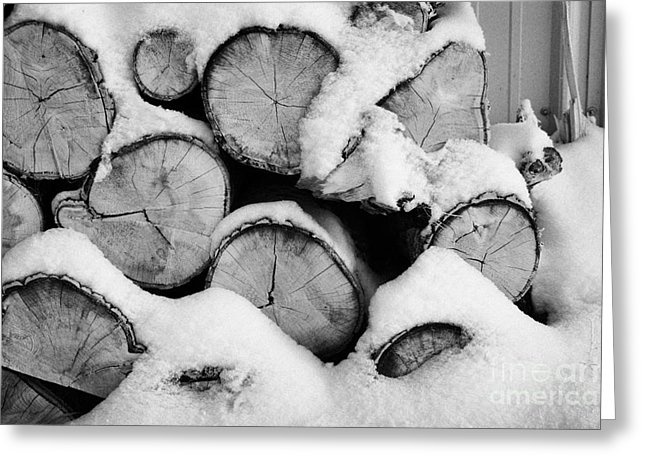
stack these words like wood for a fire,
and strike the match of all that matters . . .

only to find I am not alone.
Can you hear the angels singing?
Do you know the way from here?
If not, we will follow the stars.

Peace,
Milton