Home Blog Page 56

lenten journal: common good

I picked up David Whyte’s Consolations: The Solace, Nourishment, and Underlying Meaning of Everyday Words to begin my morning reading. This time through, I am reading one word–that is, one essay about a word–a day. Each one is so rich that I think I could probably reread them for a week, but for now I’ll read one a day.

Today’s word was ambition. Here is part of what he had to say:

Ambition left to itself, like a Rupert Murdoch, always becomes tedious, its only object the creation of larger and larger empires of control; but a true vocation calls us beyond ourselves; breaks our heart in the process and then humbles, simplifies and, enlightens us about the hidden, core nature of the work that enticed us in the first place.

If you need a more contemporary example than Murdoch, I point to the White House tweet on Monday that said the television ratings for Trump’s daily briefings were larger than those for The Bachelor finale. Tedious. Stories continue about FEMA fully supplying only the states whose governors have been nice to Trump. Larger and larger empires of control.

By contrast, we have friends who are in Spain and have been providing daily updates of what is going on there. Here is their update from this morning.

A third set of emergency economic measures was decreed by the government in its daily briefing today. Among them:

Starting today, freelancers, self-employed people, day laborers, migrant workers, domestic workers (house cleaners, for example), and gig workers in Spain will be treated like salaried workers for the purpose of receiving benefits they are not always entitled to. The payment of self- employment taxes is also deferred without interest charges until after the emergency ends.

Moreover, these workers will be able to get zero interest loans to pay their rent during the official confinement period. The loans will have a 6 –year repayment window. If they are unable to repay in 6, the loan will be restructured and 4 more years added to the repayment period. If after ten years they are still unable to repay the loan, the government will “eat” it.

Additionally, no one may be evicted during the emergency, and landlords may not raise rents. Small landlords who own only one or two rental units will not lose money: the government will compensate them, in part by dunning large real estate and development corporations.

Note: Spain has a Constitutional guarantee of “vivienda digna”–dignified housing. The government spokesperson made a point of reminding the citizenry of that commitment. She also said, “If we are requiring people to stay home, we need to be sure they have homes to stay in.”

“Patriotism,” said Vice-President Pablo Iglesias later in the briefing, “is defending the common good, and especially the most vulnerable.”

The other book I am reading Miguel De La Torre’s Burying White Privilege: Resurrecting a Badass Christianity, who points out:

The basic thesis of Adam Smith in The Wealth of Nations is that individuals should be allowed and encouraged to pursue self-interests. “It is not from the benevolence of the butcher, the brewer, or the baker that we expect our dinner, but from their regard to their own self-interest.” By doing so, all society will benefit, says Smith. But for those who are Christians, the Gospels teach us to place the needs and interests of others before our own. Hence an internal contradiction and an irreconcilable difference exist between capitalism and Christianity.

I know capitalism and socialism are semantic bombshells. I want to move past isms. Watching the rich get richer in the “relief package” makes me realize–again–that we are not a society built to be capable of taking care of those who are most in need. We are driven, even defined, by our self-interest and individualism. (Oops. Another ism.) Spain can do what they are doing because they have a society built for it. They even have names for what they are doing, a vocabulary they can live into: vivienda digna–dignified housing. I am quite sure their system is not perfect, but it is compassionate. We have named social security and welfare as entitlements–without irony.

Our national obsession with wealth and progress has made us the richest empire in the world and yet we do not have a functioning health care system that can take care of everyone. We export food all over the world and yet the biggest crisis when we closed schools was how many children would go without food because school was the only place they knew they could get a meal.

On a human level, not all of those who own businesses do so out of self-interest. Many are committed to the common good as they seek to make a living. Palumbo’s Automotive here in Guilford bought gift cards from restaurants here in town and then advertised that they would give them to those who scheduled service for their automobiles. They also go get the cars, clean them, and return them so the customers do not have to go out. Ninth Street Bakery in Durham, North Carolina posted on their Facebook page that they would feed anyone who came by, regardless of how much they could pay. These and many others are folks whose broken hearts remind them that their vocation is people, not profit.

I wish our national experience with Covid-19 would bring a true rebellion; a profound change. But four hundred years of colonial and capitalistic ambition are not going to die easily. Perhaps we do better to notice those around us who are living their life’s vocation for the common good and support them. Be them. Start the revolution from the ground up.

Working for the common good is the only way through this thing. Through any thing.

Peace,
Milton

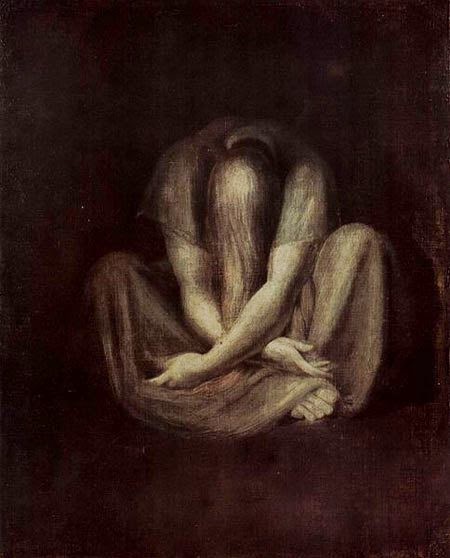
lenten journal: the sound of silence

In the years since I got my hearing aids, I have begun to learn to live with silence. I don’t mean not being able to hear what others are saying. That is frustrating. I mean silence. Quiet. The last time I drove to Durham by myself–an eleven hour drive–I didn’t turn on the radio because I can’t hear the radio unless it’s blaring, which then exacerbates my hearing loss. I drove in silence. I thought about things. I sang. I listened.

I am learning more in these stay-at-home days. I am the first one up at our house on pretty much any given morning. Well, Lila, our middle Schnauzer, often wakes me so she can eat, but I am the first human to get out of bed. I come downstairs, turn on the coffee pot, feed the pups, and then settle in to read and journal in silence. What I hear are the sounds of life underneath what I fill it up with. The ambient music of what is going on around me. The quiet quietens my spirit.

I have learned to love silence.

“Words are the part of silence that can be spoken,” Jeanette Winterson said. (Pádraig Ó Tuama was kind enough to quote her.) The quote made me think of something Frederick Buechner said, which I cannot find tonight, about the day being sandwiched between two nights, implying that the darkness was the real beginning. And it was.

The beginning–the base–is silence and darkness. We have added so much light, noise, and activity to life that a we have come to think of silence and darkness as breaks in the action, but they are our most natural, most basic states of being. They are where we can hear and see what is really going on. Like Annie Dillard said, “If you want to see the stars, you have to go sit in the dark.”

I am learning that the same is true in the universe of my body. I am finding a new resonance with silence. No music. No television. Just open sonic space. Solitude. It’s a new story for me as an extrovert. I have written before about talking to my spiritual director about my hearing loss and her asking me, “How will you listen when you can no longer hear?”

I am beginning to understand the question.

Silence is not absence or void, anymore than darkness is dangerous or foreboding. Both are rich and full. Pregnant. I am not troubled by darkness as much as they grey that haunts the daytime like it does in our New England winters and springs. It is an endless waiting room, an excruciating not yet, a haze that is heavy and starless. It feels link an un-becoming: a day that is never quite born, or that I am never quite born into.

Nighttime–darkness–is a comfort. An expanse. A promise. The darkness is an invitation to see what all the light in the world cannot show. Our days are filled with the details of our small and significant lives and then comes the night when we are all reminded of the expanse that holds us–of all the light we cannot see. No. It’s not the light. It is all we cannot see, cannot imagine, the overwhelming creative context of our little lives.

And so it is with silence, I am learning to hear.

In these days of seclusion, it is an open field. An invitation to do something other than fill in the space. When I first learned the story of Elijah the prophet, I remember reading of his depression and his hiding away in a cave. When God came to call him back into life, Elijah asked for some sign of God’s presence. All manner of hell broke loose and God was in none of it. Then, as the story was translated, Elijah heard God in a “still, small voice.” As poetic as that is, it is not a good translation. The Hebrew word means silence. Elijah found God in the silence.

I am making a similar discovery. I am finding me in new ways, as well.

Of course, I’ll let Paul and Artie sing us out.

Peace,
Milton

lenten journal: thank you, john prine

I had some things in mind when I sat down to write, but then I saw the news that John Prine is in critical condition and on a ventilator with Covid-19. Though I do not know him personally, he feels like a friend because of the impact his words and music have had on my life. So tonight I want to offer a small collection of his songs. I have spent the last couple of hours listening to songs and looking for videos to share. I could go on all night, but I am going to stop and share some of what I have found.

I am going to start with my favorite song. Period. “Angel from Montgomery.” One of my favorite memories of singing this song was that I introduced it by saying, “I think I relate to this song more than any song I know.” Then I sang the first line: “I am an old woman named after my mother.” Even though I had a good laugh at myself I stand by my statement.

there’s flies in the kitchen
I can hear ‘em a buzzin’
and I ain’t done nothin’
since I woke up today
how the hell can a person
go to work every morning
and come home every evening
and have nothing to say

make me an angel that flies from montgomery
make me a poster of an old rodeo
just give me something I can hold on to
to believe in this living is just a hard way to go

Here are Bonnie Raitt and John singing it together.

One of the strengths of his songs is his ability to paint pictures of people. He can make you feel something without telling you to feel it. “Hello in There” is a great example.

we had an apartment in the city
me and Loretta liked living there
well, it’d been years since the kids had grown
a life of their own left us alone
John and Linda live in Omaha
and Joe is somewhere on the road
we lost Davy in the Korean war
and I still don’t know what for, don’t matter anymore

you know that old trees just grow stronger
and old rivers grow wilder every day
old people just grow lonesome
waiting for someone to say, “hello in there, hello”

He can write a pretty good love song, too. Though he seems pretty tough, there is a tenderness to his words that ring true. This is “Long Monday.”

soul to soul heart to heart and cheek to cheek
come on baby give me a kiss that’ll last all week
the thought of you leavin’ again brings me down
the promise of your sweet love brings me around

it’s gonna be a long Monday
sittin’ all alone on a mountain
by a river that has no end
it’s gonna be a long Monday
stuck like the tick of a clock
that’s come unwound again

He also has a good sense of humor that shows up in all sorts of ways, at times more subtle than others. “Fish and Whistle” is one of the softer ones.

I been thinking lately about the people I meet
the carwash on the corner and the hole in the street
the way my ankles hurt with shoes on my feet
I’m wondering if I’m gonna see tomorrow

father forgive us for what we must do
you forgive us and we’ll forgive you
we’ll forgive each other ’til we both turn blue
and we’ll whistle and go fishing in heaven

John released an album of new songs in 2018 called The Tree of Forgiveness. One of the most powerful songs is “Summer’s End,” which is a song of grief. The video speaks to the pain of the opioid crisis on so many families.

the moon and stars hang out in bars just talkin’
I still love that picture of us walkin’
just like that ol’ house we thought was haunted
summer’s end came faster than we wanted

come on home come on home
no you don’t have to be alone
just come on home

Prine was working as a mailman when he first started singing, as me mentions in this clip. He wrote the song “Souvenirs” as a young man, but the older I get the more the words mean to me.

all the snow has turned to water
christmas days have come and gone
broken toys and faded colors
are all that’s left to linger on

I hate graveyards and old pawn shops
for they always bring me tears
I can’t forgive the way they rob me
of my childhood souvenirs

memories they can’t be boughten
they can’t be won at carnivals for free
well it took me years to get those souvenirs
and I don’t know how they slipped away from me

Let last two songs are hymns to me. The first, “Boundless Love,” also from his last album is about as gospel as it gets.

sometimes my old heart is like a washing machine
it bounces around ’til my soul comes clean
and when I’m clean and hung out to dry
I’m gonna make you laugh until you cry

surround me with your boundless love
confound me with your boundless love
I was drowning in the sea, lost as I could be
when you found me with your boundless love

I first heard “The Speed of the Sound of Loneliness” on Nanci Griffith’s record Other Voices, Other Rooms, which was a recording of some of her favorite songs. The metaphor in the title describes how hard we work sometimes to keep others from reaching us.

you come home late and you come home early
you come on big when you’re feeling small
you come home straight and you come home curly
sometimes you don’t come home at all

so what in the world’s come over you
and what in heaven’s name have you done
you’ve broken the speed of the sound of loneliness
you’re out there running just to be on the run

The song became a hymn for me on a road trip when I realized I could sing the words to one of my favorite hymns to the melody of this song and then go into the chorus in a way that expanded both songs.

prone to wonder Lord I feel it
prone to leave the God I love
here’s my heart o take and seal it
seal it for thy courts above

so what in the world’s come over you
and what in heaven’s name have you done
you’ve broken the speed of the sound of loneliness
you’re out there running just to be on the run

I post these songs tonight in hopes we can celebrate his recovery and in gratitude for his words and music. They have been one of the things I have held on to.

Peace,
Milton

black-eyed pea risotto

Sunday mornings are a bit different around our house these days. The elements of the worship service were recorded on Thursday so they could be e-mailed this morning. Ginger doesn’t have to go over for the 8:30 chapel service and we will all stay home at 10 to worship online and visualize all the things that connect our congregation.

It seems like a good time to post a recipe.

This one grew out of a dinner I made for a group of women who gather monthly to build their friendships. They invited me to come cook dinner and talk theology; how could I refuse? (This was pre-virus, by the way.) I made a pimento cheese stuffed pork tenderloin (I’ll post that recipe another time) and black-eyed pea risotto, or New England Hoppin’ John. When I came home and told Ginger the menu, she asked why I didn’t bring any risotto home. Ginger is allergic to onions and the recipe I made had shallots in it. I knew she would want some, so I made a Ginger version here at the house, which brings me to an important truth about risotto: you can add or leave out pretty much anything you want.

If risotto is not something you have cooked, here is a good basic tutorial.

black-eyed pea risotto

Here is a list of the ingredients I used. As I said, you can add or take away according to your own taste.

4-6 slices bacon, chopped (Could also use pancetta)
2 tablespoons butter, or olive oil
2 shallots, sliced thin
1 1/2 cups arborio rice
2-5 cloves garlic, minced (up to you)
1/2 cup white wine
4 cups chicken stock, hot
1 can black-eyed peas, drained and washed
1 can green chiles
2 tablespoons lemon juice
2 tablespoons flat leaf parsley, chopped
salt and pepper

(other possible ingredients: greens (if not cooked, add them early in the process so they will be), parmesan cheese (or other grated cheese), hotter peppers, diced carrots or celery)

Cook chopped bacon in a dutch oven over moderate heat, stirring occasionally, until bacon is crisp–5-6 minutes. Remove bacon with a slotted spoon and set aside to drain. Leave bacon grease in the pot.

Add butter to bacon fat and heat over moderate heat until the foam subsides, then add shallots and cook until they are caramelized and golden–6-8 minutes. Stir occasionally.

In the mean time, heat up the chicken stock in a saucepan. You want it good and hot, but it doesn’t need to be boiling. Open the can of black-eyed peas; wash and drain them and set them side. Open the can of green chiles and add them to the black-eyed peas. Once the bacon is drained, you can add it here as well.

When the shallots are ready, add the garlic and cook for about a minute, then add the arborio rice and cook, stirring, for about a minute. Add the wine and cook over moderately high heat until the wine is mostly absorbed–about two minutes. Then begin adding the chicken stock about a half a cup, or a ladleful, at a time. Stir until liquid is almost completely absorbed and then add another half a cup. You will be stirring almost constantly. This is not a recipe you can walk away from. When you get down to the last cup of broth, add the black-eyed peas, chiles, and bacon. After you add the last of the stock, add the lemon juice. If you wanted to add cheese, add it here.

Salt and pepper to taste. Turn off heat and stir in fresh parsley. Put the lid on the dutch oven and let the risotto sit for about ten minutes before you serve it.

Yes, this takes some work. It’s worth it.

Peace,
Milton

lenten journal: the best of ourselves

One of my favorite stories in the Gospels is in John 8–what is usually called the story of the Adulterous Woman, though adultery is not a solo sport. I’ve known the story for so long that I still hear the King James language in my head: they brought forth a woman “who had been caught in the very act of adultery.”

What that means is the men who dragged her naked into the middle of the village was someone they went looking for. They didn’t care about her or what she was doing. They wanted to make an example of someone. She was dispensable. Invisible. As Pádraig Ó Tuama says, “The woman was about to be stoned because of the addiction of the stoners.”

Here’s the next sentence:

They were addicted to a violent kind of belonging, a kind of community that forges its borders through selective exclusion.

The verb forge can mean hammering away at something or shaping or constructing; it can also mean falsifying or creating a counterfeit.

When I did allow myself a bit of time to read the news today–a time frame that grows shorter everyday for my personal well-being–I read what Trump said about some of the governors:

I say, “Mike, don’t call the governor of Washington; you’re wasting your time with him. Don’t call the woman in Michigan. It doesn’t make any difference what happens.’ You know what I say: ‘If they don’t treat you right, I don’t call.”

I thought to myself, “He’s addicted to stones.” He forges–falsely creates–selective divisions to fortify his violent sense of belonging. No matter how hard he works at it, it is still counterfeit. He is addicted to stoning. To violence. He doesn’t see people, he sees power. And he is not alone.

I also thought back to Bryan Stevenson’s book Just Mercy, which was recently made into a movie. One of the scenes in the book that didn’t make it to the screen is one that had the deepest impact on me. Towards the end of the book, he talks about meeting a woman who said she came to the courthouse everyday to help people. Many years before, her son had been murdered by two other teenagers, all of them African American. The boys were tried as adults and imprisoned as such. She spoke of a woman who had sat with her in those days, and she came each day. Part of what she said was,

All these young children being sent to prison forever, all this grief and violence. Those judges throwing people away like they’re not even human, people shooting each other, hurting each other like they don’t care. I don’t know, it’s a lot of pain. I decided that I was supposed to be here to catch some of the stones people cast at each other.

Ó Tuama uses the word addiction twice in his book. His second reference is the one I mentioned first. The other is his working definition of sin: “an addiction to being less than ourselves.”

I’ve been turning that one over for a few days now. It seems to me that one addiction feeds the other. When we are consumed with being less than ourselves, we can easily become consumed with a violent sense of belonging–that for there to be an us, there has to be a them.

That’s the lie. That is the forgery.

The barriers we create out of fear, or power, or whatever, make us less than ourselves; less than whole. If we can only feel validated at someone else’s expense, we are less than ourselves in a larger sense, a collective sense. To be wholly ourselves is to be united. Together.

Being fully ourselves is not a solo sport. When we take seriously the responsibility of the power of belonging, we make the most of ourselves. That’s what the woman in the courthouse understood. Maybe that’s what Jesus doodled in the sand before he stood up and told the ones without sin to bring the high heat. As Bryan Stevenson says,

But today our self-righteousness, our fear, and our anger have caused the Christians to hurl stones at the people who fall down, even when we know we should forgive or show compassion. . . . [W]e can’t simply watch that happen. [W]e have to be stonecatchers.

Yes, we do, even as the stones are flying hard and fast. We must be ready to offer the best of ourselves.

Peace,
Milton

lenten journal: allergies and anger

I have wrestled with allergies as long as I can remember.

I don’t remember a time in my life when I did not take antihistamines. I have seen a number of allergists over the years and most all of my encounters have ended up with me being dissatisfied and they being upset because I expected more of them.

Last month I started seeing a naturopath here in Guilford in hopes of finding another way to think about my allergies. Her name is Synthia Andrews. When we enlarge our vocabulary about anything we create possibilities. I needed some new words. New metaphors. And she has some.

I can’t say I understand all that she is doing, but I am learning from it, as well as finding some new possibilities. She uses a machine that is in the biofeedback family. It reads the frequencies in my body and spirit and then offers frequencies as invitations too healing. She attaches the sensors to my wrists and ankles and puts a small band around my head. I lay still for about fifteen minutes and then she starts giving me verbal feedback. Some of what she has to say relates to my physical body and some to my emotional and spiritual state. What continues to amaze me is how the two are connected.

Yesterday, one part of the treatment for my allergies involved the machine sending out the frequencies and then sending her words based on what it was reading in me. She said the words could be about me or someone around me, but they were connected to my allergies. I didn’t have to respond, just take them in. As I sat there she said three words over four or five minutes.

ANGER

BETRAYAL

SADNESS

The reality is we live in days when anger, betrayal, and sadness are pervasive, particularly in the irrational and irresponsible way Trump has engaged both his presidency and the pandemic. But aiming all of this at him would be for me to take the easy way out. What she was saying is the anger, betrayal, and sadness are in my cells, my bones.

The way I understand allergies is that they are a reaction to something the body deems a danger. The body produces histamines in hyperbolic amounts trying of offer a defense. The sneezing and itchy eyes are the body’s reaction to the pollen or whatever. That I take five antihistamines daily and still fight allergies means that my body’s histamine production has lost all sense of reality and stays in an unending crisis mode. I am overwhelmed by my own responses. I stop up. I break out. I can’t think. I feel less than myself. The force with which my body responds takes me out. I have to find new frequencies–new resonances–to change my responses.

What a helpful metaphor.

David Whyte has the most helpful words on anger I think I have ever read.

Anger is the deepest form of compassion, for another, for the world, for the self, for a life, for the body, for a family, and for our ideals, all vulnerable and all, possibly about to be hurt. Stripped of physical imprisonment and violent reaction, anger is the purest form of care, the internal living flame of anger always illuminates what we belong to, what we wish to protect, and what we are willing to hazard ourselves for. . . .What we name as anger is actually only the incoherent physical incapacity to sustain this deep form of care in our outer daily life; the unwillingness to be large enough and generous enough to hold what we love helplessly in our bodies or our mind with the clarity and breadth of our whole being.

And then,

. . . anger in its purest state is the measure of the way we are implicated in the world and made vulnerable through love in all its specifics: a daughter, a house, a family, an enterprise, a land, or a colleague.

Anger is compassion at its most profound and, perhaps, most vulnerable. Sadness–grief–is love living with loss. Betrayal is broken trust. In the same way that anger expressed violently is the “incoherent physical incapacity to sustain this deep form of care,” so my allergies are an incoherent and incessant reaction, even as my body is trying to protect itself.

I’m so wrapped up in the metaphor now that I am not sure this makes sense to anyone but me, so I will sing myself out. I recorded a mashup of “Everybody Hurts” (REM) and “Pass Me Not, O Gentle Savior” for use in one of our upcoming virtual worship services.

Keep looking for resonance.

Peace,
Milton

lenten journal: (un)opening day

Today was supposed to be Opening Day for Major League Baseball but, like so many things over the past few weeks, it fell victim to Corvid-19. Or else this is payback for the Red Sox trading Mookie Betts. I grew up as an amazingly average athlete and the son of a man for whom sports was the primary metaphor for life. While we sat up late at night in Africa listening to games on Armed Forces Radio, he taught me to love baseball. And, because he loved the Yankees, I became a Red Sox fan.

Football has become the most popular sport, but baseball is our pastime. And there is a big difference , as George Carlin points out.

Bart Giamatti, who, among other things, was the commissioner of baseball, wrote,

That is why it breaks my heart, that game–not because in New York they could win because Boston lost; in that, there is a rough justice, and a reminder to the Yankees of how slight and fragile are the circumstances that exalt one group of human beings over another. It breaks my heart because it was meant to, because it was meant to foster in me again the illusion that there was something abiding, some pattern and some impulse that could come together to make a reality that would resist the corrosion; and because, after it had fostered again that most hungered-for illusion, the game was meant to stop, and betray precisely what it promised.

Of course, there are those who learn after the first few times. They grow out of sports. And there are others who were born with the wisdom to know that nothing lasts. These are the truly tough among us, the ones who can live without illusion, or without even the hope of illusion. I am not that grown-up or up-to-date. I am a simpler creature, tied to more primitive patterns and cycles. I need to think something lasts forever, and it might as well be that state of being that is a game; it might as well be that, in a green field, in the sun.

In my favorite baseball movie, Field of Dreams, Terrance Mann says,

The one constant through all the years, Ray, has been baseball. America has rolled by like an army of steamrollers. It’s been erased like a blackboard, rebuilt, and erased again. But baseball has marked the time. This field, this game, is a part of our past, Ray. It reminds us of all that once was good, and it could be again.

By the time I came to live in America for good, my chance to play baseball had come and gone–not that I would have ever actually gotten to play. The closest I got was church softball, and even then I ended up in right field. So this song by Peter, Paul, and Mary holds a special place for me.

playing right field, its easy you know,
you can be awkward, you can be slow,
that’s why I’m here in right field,
just watching the dandelions grow

But then along came Steve Earle and sang a song about baseball that has been an anthem for me: “Some Dreams.”

well, just because you’ve been around
and had your poor heart broken
that’s no excuse for lyin’ down
before the last word’s spoken
‘cause some dreams don’t ever come true
don’t ever come true
aw, but some dreams do

If it’s the middle of the eighth inning at Fenway, the crowd is going to sing “Sweet Caroline” and when we do, good times truly never seem so good. This week, Neil Diamond rewrote the words in the wake of Corvid-19; that feels like a good way to close out.

Peace,
Milton

cocoa cinnamon cookies

I became a cookie baker because of a friendship.

I mean, I had baked cookies over the years, but I had never thought about making special cookies. I just followed recipes. When our friends Areli and Leon opened Cocoa Cinnamon in our Old North Durham neighborhood, I wanted to do something to help mark the occasion. They started with a Coffee Bike, making custom coffee drinks at the Durham Farmers’ Market. As Ginger and I got to know them, we learned they had so much more that they wanted to do. Cocoa Cinnamon was coffee, but also Mexican drinking chocolate. Amazing.

As they began getting ready to open the shop, I learned that every move they made had a reason, and an artful one at that. They named the drinks on the menu after people and places that were significant in the history of coffee. They paid their workers a living wage, not a minimum, from the first day. They weren’t just serving coffee, they were creating a community.

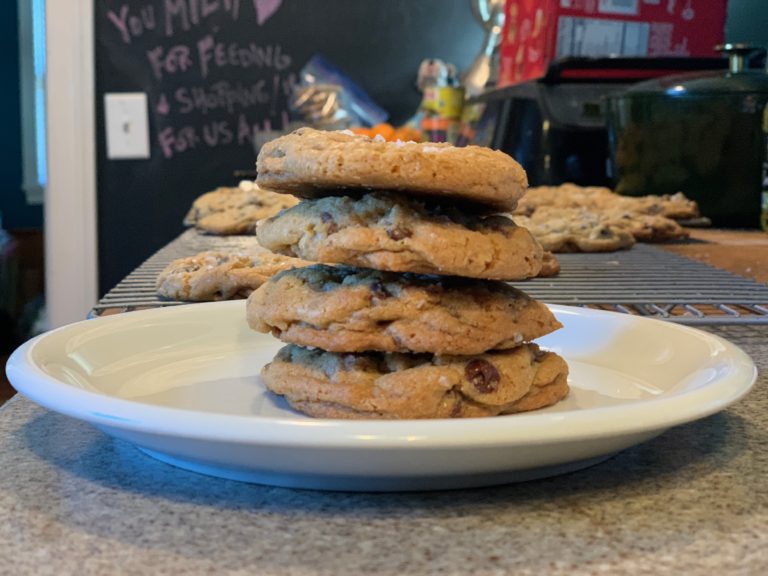
I decided I would surprise them with a Cocoa Cinnamon Cookie for their opening day. I played around with recipes until I came up with the one written below and made a double recipe. The morning they opened, Ginger and I took them down to the shop and gave them the cookies. A couple of days later, Leon said the cookies had been a big hit and wondered if I would bake them regularly so they could sell them.

I did. A few days after that, I was in the shop and saw my cookies in the baking case with the label “Milton’s Famous Cookies,” because, Leon said, they were famous in the shop. When I opened my cookie business, Milton’s Famous, they let me turn the coffee bike into a cookie bike so I could sell at the Farmers’ Market. I wish I could still bake for them.

Today, there are three Cocoa Cinnamon shops in Durham, as well as a coffee roasters. Though they share a name, they are different in that each reflects the neighborhood it inhabits. Areli and Leon continue to pay a living wage and are committed to amazing diversity and community with both their employees and their customers.

The shutdown because of Corvid-19 is a challenge for many. Areli and Leon are working hard to find ways to make money so they can pay all of their staff through this crisis. If they can sell 230 bags of coffee a day, they can make payroll. They ship coffee all over the country. You can be a part of helping sustain their wonderful endeavor by ordering something from Little Waves Coffee Roasters.

When the coffee comes, make the cookies and a fresh pot and you will get a little taste of Durham.

cocoa cinnamon cookies

1/2 c butter
1/2 c shortening
1 c brown sugar
1/4 c sugar
1 large egg
1 t vanilla
2 c flour
1 t baking soda
1/2 t baking powder
1 T espresso powder
1/4 t salt
12 oz semi-sweet chocolate chips
8 oz Heath Bits-o-Brickle (1 package)

1 c sugar
1 t cocoa powder
1 t cinnamon
1/8 t cayenne pepper

Preheat oven to 350°.

Combine butter, shortening, brown sugar, and sugar in a stand mixer and beat until light and creamy–about five or six minutes. Add the egg and vanilla and mix until combined well.

In a separate bowl, combine flour, baking powder, baking soda, espresso powder, and salt. Mix well and add to wet mixture. Mix until mostly combined and then add chocolate chips and Heath bits. Mix until it looks like cookie batter.

In yet another bowl, combine the sugar, cocoa powder, cinnamon, and cayenne pepper.

Using a 2 oz. scoop, scoop the cookies on to a parchment-lined baking sheet or a Silpat. Once you have them scooped out, roll each one in the cocoa-cinnamon sugar and place back on the baking sheet.

Cook for 13 minutes. Makes about two and half dozen cookies.

Peace,
Milton

lenten journal: help somebody

I did my best to stay away from the news today. Instead, I got up early before work and kept my morning date with Pádraig Ó Tuama’s In the Shelter, journaled, prayed, drank coffee, and fed puppies. Actually, the pups demanded they be first on the list and then the rest fell in order.

Pádraig pointed to one of my favorite stories in the gospels in my reading this morning: Jesus’ encounter with the woman who had been hemorrhaging for twelve years. Mark is the gospel writer who tells the story, and his is the gospel of human touch. No social distancing here. The woman had heard of Jesus and was determined to get to him in the crowd. She is not named. But the way Mark tells the story, we know the details of her life. We may not know what to call her, but we are in the crowd with her, we are seeing Jesus as she sees him, we know what she has at stake as she jostles and pushes to get closer to Jesus. All she wants to do is touch his cloak. She is convinced that would do it.

Mark gives us her eyes.

That also means Mark doesn’t tell us about any of the others she pushes past. We are taken by her singleness of purpose; we no nothing of anyone else’s story, just like the disciples who were gathered around Jesus trying to protect him from the crowd–the abstraction.

This evening I dared to open the Times digital front page to find that the Economic Stimulus Bill was being blocked by four Republican senators who are worried that the unemployment compensation is so generous that people will choose not to work. As though that is actually a choice at this point. The fact that we keep using the language of stimulating the economy is troublesome to me because the economy is an abstraction. We do not need to stimulate an abstraction, we need to help people. If people have enough money to pay bills and buy stuff, then those own businesses will be able to stay in business and the communities they live in will be able to thrive. The more abstract the bill is, the more likely it will be abused and the money won’t go to those who need it most.

We need to take care of people. Nurses. Doctors. Respiratory therapists. People working in nursing homes. Restaurant people. Grandparents. School children. Teachers. Folks experiencing homelessness. Single parents. Daycare providers. Shop keepers. Mechanics. Actors. Musicians. Artists. Baristas. Office workers. Sanitation folks. Mail carriers. The list goes on . . .

Let the corporations figure it out from the ground up, not from the perspective of the CEOs and the stock brokers. They can live off of what they have been skimming. (I will admit my bias: I am willing to let them be the anonymous crowd we have to push through to find healing.) Those who are sick and vulnerable are not the abstraction. We have gotten way too used to doing that. Those who live in poverty and who have no health insurance have been anonymous for decades and abstracted as “Welfare Moms” and the “Working Poor” whose benefits can be cut and who can be blamed for our deficits.

But compassion requires specificity. Humanizing. The virus became real to many when Rita Wilson and Tom Hanks were diagnosed. We all wait to hear the names of those we know, because we treasure those we know. They are real. They are reasons to make changes, to stay home, to pay attention. To help.

Mark says that Jesus turned around when the woman touched him and asked who had done it. The disciples were incredulous. All they saw was the crowd.

“I felt power go out of me,” he said.

The woman stepped up and identified herself.

Though Mark never gives us her name, Jesus says, “Daughter, your faith has made you well.” The fact that the woman had been bleeding for twelve years probably means the age difference between her and Jesus was not that big. Jesus wasn’t talking down to her. He was naming her in a relational context: daughter. You belong. Specifically. You are more than a face in the crowd.

Corvid-19 is its own abstraction. I see the numbers going up and I don’t know how to make sense of them. So I look to see what has changed in Connecticut. I check the numbers in Durham, North Carolina. I watch my Facebook feed for names I know. Today, it was Jackson Browne. We need to change our language. We are not trying to stop the virus; we are taking care of each other. You are taking care of me. I am taking care of you.

Trump’s daily ramblings show he sees no one but himself, so he is incapable of seeing beyond the abstractions of power and wealth. He can’t lead. Andrew Cuomo, by contrast, broke through the abstraction by talking about his mother. It gets real when it gets personal.

Pádraig said the Irish words for hug literally mean “to squeeze somebody with your heart.” We can do that across physical distance. We can deal in specifics. We can let the power go out of us, even if we can’t touch.

Peace,
Milton

lenten journal: quarantunes

Inspired by Rita Wilson, who is recovering from Corvid-19 with her husband, Tom Hanks, Ginger asked me to make her a “Quarantunes” playlist to help get us through our isolation. As these days turn into weeks, I thought it might be time for some more music. Most of these songs have been around a while, but they sing like they were written last week.

The first track tonight is a Mark Heard tune recorded by Buddy Miller called “Worry Too Much,” which Heard recorded first in 1991.

it’s the quick-step march of history
the vanity of nations
it’s the way there’ll be no muffled drums
to mark the passage of my generation
it’s the children of my children
it’s the lambs born in innocence
it’s wondering if the good I know
will last to be seen by the eyes of the little ones

sometimes it feels like bars of steel
I cannot bend with my hands
oh oh I worry too much
somebody told me that I worry too much

Bruce Cockburn wrote “Lovers in a Dangerous Time” in the 80s. He and his music are still going.

when you’re lovers in a dangerous time
sometimes you’re made to feel as if your love’s a crime
but nothing worth having comes without some kind of fight
got to kick at the darkness ’til it bleeds daylight
when you’re lovers in a dangerous time
lovers in a dangerous time

Mavis Staples has been singing songs that matter longer than most of us have been alive. Nine or ten years ago, Jeff Tweedy produced a record for her and wrote several songs, one of which is the title cut, “You’re Not Alone.”

you are not alone
I’m with you
I’m lonely too
what’s that song
can’t be sung
by two?

a broken home
a broken heart
isolated and afraid
open up this is a raid
I wanna get it through to you
you’re not alone

Another song from a decade ago is “Nothing But the Whole Wide World” by Jakob Dylan.

was born in a stable and built like an ox
down in the pastures I learned how to walk
mama, she raised me to sing and just let ’em talk
said no rich man’s worth his weight in dust
bury him down same as they’ll do us
God wants us busy, never giving up
he wants nothing but the whole wide world for us

nothing but the whole wide world for us
nothing, nothing
well there’s nothing but the whole wide world for us
nothing, nothing
well there’s nothing but the whole wide, whole wide world for us

The Indigo Girls released Swamp Ophelia in 1994 and since that time “The Wood Song” has remained one of my favorites because of its tenacity in the face of uncertainty.

sometimes I ask to sneak a closer look
skip to the final chapter of the book
and then maybe steer us clear from some of the pain it took
to get us where we are this far yeah
but the question drowns in it’s futility
and even I have got to laugh at me
no one gets to miss the storm of what will be
just holding on for the ride
the wood is tired and the wood is old
we’ll make it fine if the weather holds
but if the weather holds we’ll have missed the point
that’s where I need to go

Pierce Pettis is one of my favorite songwriters. “I Will Be Here” was released in 1993 and is the kind of wonderful statement of solidarity we need to be singing to each other.

it would take a lot of work
to drive me away
I can take a lot of hurt
I’m willing to share your pain
no, you don’t impose
you don’t intrude
I’ll never turn my back on you, no no
I will be here

I am the friend you cannot lose
I am the one you did not choose
I am the friend who loves you still
I am the one who always will be here
I will be here

JD Souther will offer our closing song tonight, “Little Victories.”

in my hometown and family circles
they seem unsure and un-empowered
oh, they don’t understand and you can’t help that
though you can love so hard, that never comes back
till you just can’t take it for one more hour

little victories
I know you need one
iittle victories

I know it hurt sometimes to look around
the sameness of it beats you down
and the best seems all behind
before you start

little victories
oh, I know you need one
little victories of the heart

All of these songwriters are acquainted with both grief and hope, not so much that everything will always turn out alright, but that what matters most is that we are in it together. We are not alone.

Peace,
Milton