Home Blog Page 52

lenten journal: telling time

When it comes to the weekends where we spring forward and fall back, acting as though we can set time and tell time and save time, I think about youth camp years ago in Texas. One of the kids in the youth group lamented that we had to get up so early in the morning—breakfast was at 8. We had a day full of activities and we needed to be up. I couldn’t change that. So I just changed the clock to Camp Standard Time and, since it was before smartphones, I had everyone set their clocks and watches ahead four hours. We had breakfast at noon, lunch at four, dinner at ten, and our evening activities finished up about 3 am.

The sunrises and sunsets that week were nonplussed. They came and went as they pleased. The stars followed their regular routes across the skies. We did nothing but pander ourselves with an illusion of convenience and control. And then we got on the busses and went home.

We can’t save time, or tell time, or even set time, but we can remember, as Tom Waits sings,

and it’s time time time, and it’s time time time
and it’s time time time that you love
and it’s time time time . . .

Peace,
Milton

lenten journal: a wrinkle in my heart

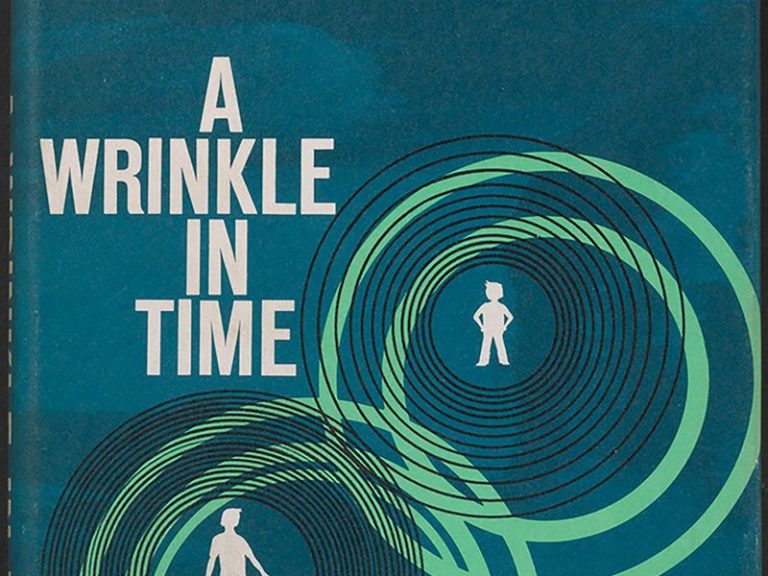
I was in fourth grade at Lusaka International School. My teacher was Mrs. Reedy. One day she came to class with a new book called A Wrinkle in Time and she said she would read to us at the end of the day if we finished our work. All it took was one afternoon of the story—a novel that actually begins, “It was a dark and stormy night . . .”—and we were hooked. We hit the door in the morning asking what we had to get done so she would read to us. I fell in love with the story, I fell in love with books, and I felt connected to Madeleine L’Engle. She was a writer who made physics sound like poetry, who made big things seem small and small things seem big. She started me thinking about time, about life, and about faith in ways no one else did.

I love that story and I love my memory of that story.

When I was a youth minister in Fort Worth, twenty years later, I discovered L’Engle’s theological writings and I wrote her a letter and sent it to her publisher. “Dear Madeleine,” I said, “You have been a friend of mine for a long time, though you don’t know it.” I told her about Mrs. Reedy and about her writings and about me. A few weeks later, I got a letter back, typed with a handwritten signature, and, for awhile, she and I corresponded until I received a form letter after her husband Hugh died. “He became ill at Epiphany,” she wrote, “and he died just after Pentecost,” instead of saying he got sick in January and died in May. Her sentence inspired me to learn how to tell time differently.

Though I had a couple of near misses, I never got to meet her. I have read most all of what she wrote, and most of it more than once. There are several of her books that I return to again and again, Wrinkle being at the top of the list. I love that story. And now there’s a big budget movie version of it coming out and I don’t know how to respond.

I’ve have spent some time on this dark and stormy night reading reviews and watching the trailer of the movie that opens this weekend. The director sounds like someone who loves and values the story. She has worked hard to honor it. That’s not my issue. I get hung up at the clip in the trailer when Mrs. Which, the character played by Oprah says, “Be a warrior.” That has never been the heart of the story to me. Someone will probably write back and give me the page number where she says that line, but that’s not my point. There’s a difference between struggle and war. Meg and Charles Wallace struggle to find their father, they stand up against the evil force, but it’s not war. War answers violence with violence; the power that sustains in the story I remember is love.

My point, however, is not to criticize the movie, as much as it is to be thankful for the book. As one of the characters says,

A book, too, can be a star, “explosive material, capable of stirring up fresh life endlessly,” a living fire to lighten the darkness, leading out into the expanding universe.

I learned that, first, in fourth grade. Because of Mrs. Reedy, I have a story that has marked my life for over fifty years. It is not an exaggeration to say A Wrinkle in Time helped to shape me, to make me Milty. And I am definitely not a warrior.

A quote I carry from one of the other Books That Shaped Milty, The Little Prince, says,

It is only with the heart that one can see rightly. What is essential is invisible to the eye.

I hold Wrinkle in my heart. I think I’ll read it again instead of going to the movie.

Peace,
Milton

lenten journal: soundtrack for the storm

Quinn, the storm, has been making its way across America and gets to the East Coast early tomorrow morning, which set me thinking about storm songs, mostly from a metaphorical sense. I couldn’t help but begin my soundtrack for the storm with Kris Kristofferson’s cover of Bob Dylan’s “Quinn the Eskimo (The Mighty Quinn)”

Dougie MacLean is a Scottish songwriter who wrote one of my favorite storm songs, “I Am Ready for the Storm,” which he sings here with Kathy Mattea.

Somewhere in searching for storm songs, I remembered Julie Miller’s wonderful song, “By Way of Sorrow,” which is covered here by Lucy Kaplansky.

And Patty Griffin sings of weathering life together in “Little Fire.”

John David Souther sings about the “Little Victories” we all need to survive.

And I’ll close my song list with a hopeful word from Mark Heard: “In the eye of the storm, the friends of God suffer no permanent harm”–and that includes us all.

Peace,
Milton

lenten journal: once again, with feeling

First Annual. There’s no such thing. You can have a “first” something—an inaugural event—but it isn’t “annual” until there is at least a second one. You may intend for it to happen every year from the very first time you do it, but it’s only annual when it has happened before.

On Friday, March 3, 1989, I had no idea I was beginning an annual tradition, or that I was even a part of an annual event. What I did know was I was dating an amazing woman and I wanted her to know how amazing I thought she was. So I showed up at her apartment with flowers, a CD, and a theology book, and a card that said, “I’ve never been able to give flowers, music, and a theology book to someone I dated before.” I don’t know how I remembered March 3 the next year, other than it is the day after my parents’ wedding anniversary, but I did remember and it became known as The Day of Gifts for No Reason.

A couple of months ago, Lila, our middle Schnauzer, got out of the yard. I was walking up and down the street calling her name when a woman shouted for the end of the block, “Are you looking for a little black dog?”

“Yes,” I said.

“She’s on the Green.” I ran up to the end of the block, because that’s where the Town Green begins, to see Lila walking the sidewalks in the exact same pattern we follow when we walk her in the evenings. She loves to walk more than anything. She didn’t run away, she just took the chance to do what mattered most. When I called her name, she came running to me, happy as she could be.

One this March 3, I followed the path I have come to know well. I brought Ginger peach roses and purple irises, Couldn’t Keep It to Myself: Wally Lamb and the Women of York Correctional Institution, a book of essays written by women incarcerated here in Connecticut and Magdelene: Poems by Marie Howe, and tonight we are going to see Lyle Lovett and Shawn Colvin in a rare acoustic show up in New London, which counts as the music part of the ritual this year.

In my book, Keeping the Feast: Metaphors for the Meal, I said that ritual was “meaningful repetition.” We do things again and again because it matters that we do them because they remind us of bigger things. The Twenty-Ninth Annual Day of Gifts for No Reason is far more than than flowers and music and books. It has become, for me, an offering of gratitude. How amazing that I have gotten to do this for twenty-nine years.

Not long after we married, I wrote a song called “Well-Worn Love,” imagining a couple who had spent their lives together. I had no idea what I was talking about, other than imagining that love adds layers of meaning as it grows in years and as the rituals are repeated.

he pours her coffee like every morning
she kisses his nose as she passes
his hair is much thinner than back when they started
and she did not always wear glasses

she smiles with her eyes as he butters his bread
they talk about what’s in the news
he heads for the garden she gathers the laundry
and life feels familiar and true

and this is the story of two common hearts
who started out young and grew old
they have practiced a lifetime the waltz of a well-worn love

he takes her hand coming out of the movie
they stop at a sidewalk café
he finds her a chair that is next to the window
‘cause he knows she likes it that way

she smiles with her eyes at the things he remembers
she touches the side of his face
the moments they share in the balance of time
are the heart of redemption and grace

and this is the story of two common hearts
who started out young and grew old
they have practiced a lifetime the waltz of a well-worn love

she wears the ring that he put on her hand
some forty five years ago
and time is defined by the lines of the love they know

winter comes early with how shadows and snowfall
who knows how long it will stay
so he pours her coffee like every morning
‘cause he knows she likes it that way

and this is the story of two common hearts
who started out young and grew old
they have practiced a lifetime the waltz of a well-worn love

Twenty-Ninth Annual. Thank God.

Peace,
Milton

lenten journal: can I get a witness

As Ginger and I traveled home from my father’s funeral, we tried to imagine what life would be like for my mother who had lost her traveling companion of almost sixty years. They loved being together. It was their favorite thing. Then we tried to imagine what we would do without each other. It was more than I could imagine, but I said, “I think one of the hardest things would be not having someone who cared about the details of my day.”

So I made up my mind to do my best to call my mother everyday and ask about the details.

This morning, I was reading a post from my friend Kenny and he reminded me of a scene from the movie Shall We Dance. It was the story of John Clark (Richard Gere), an estate lawyer with a charming wife and loving family. Nevertheless, John felt something missing in his life. One evening on his commute home, John impulsively got off the train and signed up for weekly dance lessons. He didn’t tell his wife Beverly (Susan Sarandon) about his new interest in ballroom dancing, which raised her suspicions to the point that she hired a private investigator. At one meeting, they had a discussion about marriage.

“All these promises that we make and we break, why is it that you think people get married?” Beverly asks.

“Passion,” says Devine.

“No,” she says.

“It’s interesting, bccause I would have taken you for a romantic. Why, then?”

“Because we need a witness to our lives.” Beverly replies. “There are a billion people on this planet. I mean, what does any one life really mean? But in a marriage, you’re promising to care about everything: the good things, the bad things, the terrible things, the mundane things—all of it, all the time, every day. You’re saying your life will not go unnoticed, because I will notice it. Your life will not go unwitnessed, because I will be your witness.”

A witness. As someone who grew up Southern Baptist, the word witness had different connotations. Witnessing meant telling people about Jesus, rather than listening to them. Yet, it seems, when I look at the life of Jesus, he spent his time witnessing in the same way Beverly talked about: caring about everything happening in the lives of those around him. Honoring the details.

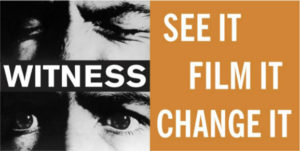
In the early days of the camcorder, before there were smartphones and Youtube, Peter Gabriel and Amnesty International started the Witness, working to help people tell their stories of struggle and oppression and asking those of us who live in privilege to promise their lives would not go unnoticed—to bear witness, the same way we bear a burden, I suppose. To learn, as U2 sang in a song I posted a couple of days ago, “to carry each other.”

One of the things that has crossed my path recently is a song from a Broadway show I have not seen called Dear Evan Hansen. I don’t know much more about it than the title and the song called “You Will Be Found.” The song makes me want to see the show. I found a video of a virtual choir singing the song that made it even more powerful. The opening verses say,

have you ever felt like nobody was there
have you felt forgotten in the middle of nowhere
have you ever felt like you could disappear
like you could fall and no one would hear

well, let that lonely feeling wash away
maybe there’s a reason to believe you’ll be okay
‘cause when you don’t feel strong enough to stand
you can reach, reach out your hand

and oh, someone will come running
and I know they’ll take you home
even when the dark comes crashing through
when you need a friend to carry you
and when you’re broken on the ground
you will be found

You will be found. Your life will not go unnoticed. I will notice it. Let us say those words to the people we love most. Then let us think of ways to say it to those we don’t know quite as well: to the people who pour our coffee, or take in our dry cleaning; to the checkers and servers and people we pass in grocery stores who look lost in the cereal aisle; to the people who sit nearby every Sunday in church, yet whose names we still do not know. Let us be witnesses to one another. Finders, and keepers.

What better way to spend our days than to honor the details of one another’s lives—witnesses to what matters most.

Peace,
Milton

lenten journal: an unreasonable request

I preached this morning at United Churches of Durham, Connecticut as a part of a pulpit exchange between our church and two others. My sermon is my offering for today.

“An Unreasonable Request”—Mark 8:31-38

At the risk of bringing up painful memories for some of you this morning, I invite you to step out of church for a minute and go back to English class. Can someone tell me what a metaphor is?

I’ll help you out: a metaphor is a comparison of two things that are not alike as a way to explain or give meaning to one of them. Examples work better than definitions.

America is a melting pot. (No one is actually melting.)
Life is a rollercoaster. (It has its ups and downs.)
Their home was a prison. (You get the picture.)
The world is a stage. (Not necessarily good news to introverts.)
My kid’s room is a disaster area. (This one might be literal in some cases.)

Metaphors work when people understand both sides of the comparison. If I were in a country that had no amusement parks, saying life is a rollercoaster might not get me too far. Jesus’ teachings are filled with metaphors and similes, and some of them are lost on us because we live in a different time and a different place. Jesus talked about people being sheep because the hills of Galilee were filled with them. When he called himself the Good Shepherd, most everyone in the crowd knew a shepherd personally. Most of us need the metaphor explained to get the full meaning and, in some ways, a metaphor is like a joke: if you have to explain it, it loses something.

That said, when we read the words of Jesus two thousand years after they were written down, what else can we do but try to explain them to one another? We not only have to try and look back to see his words in the context of his culture, but we must also do the work of seeing how the world we live in now affects how we read and hear the words. Two millennia later, and thousands of miles from Palestine, how do we hear these words?

All who want to come after me must say no to themselves, take up their cross, and follow me. All who want to save their lives will lose them.

When we hear the word “cross”—at least in church—we are well-conditioned to think of Jesus’ crucifixion. Yet those who heard Jesus say these words knew nothing of his coming death. He tried to warn them that he was on a collision course with those in power, but they didn’t get it. For those gathered around Jesus, the cross was an instrument of execution—and a brutal one at that. Imagine Jesus saying, “You have to go to the electric chair,” or “You have to take a lethal injection.” So what did Jesus mean by the metaphor?

The conversation between Jesus and the disciples that we read this morning took place after they had seen him feed four thousand people when there appeared to be hardly any food at all. After lunch, Jesus warned them “to be on guard for the yeast of Herod and the Pharisees”—another metaphor they didn’t get. They thought he was literally talking about bread. Jesus became frustrated and peppered them with questions:

“Why are you talking about the fact that you don’t have any bread? Don’t you grasp what has happened? Don’t you understand? Are your hearts so resistant to what God is doing? Don’t you have eyes? Why can’t you see? Don’t you have ears? Why can’t you hear? Don’t you remember? When I broke five loaves of bread for those five thousand people, how many baskets full of leftovers did you gather?”

They answered, “Twelve.”

“And when I broke seven loaves of bread for those four thousand people, how many baskets full of leftovers did you gather?”

They answered, “Seven.”

Jesus said to them, “And you still don’t understand?”

Soon after, Jesus healed a blind man, but it happened in stages. Mark says Jesus rubbed spit on the man’s eyes and asked what he could see. “People are walking around like trees,” the man answered. So Jesus touched his eyes again and the man could see clearly. Yes, another metaphor—this time in the form of a miracle.

Then Jesus asked two more questions. First, he asked, “Who do people say I am?” The disciples mentioned Elijah and John the Baptist, among others. Then Jesus asked, “Who do you think I am?”

Peter answered, “You are the Christ.”

Jesus then told them he was going to suffer at the hands of those in power and die. Mark says, “He was speaking clearly.” No metaphors. Peter, who had just made his triumphant claim about Jesus being the Messiah, would have none of it. He responded forcefully, even violently. The gospel says Peter “took hold of Jesus and, scolding him, began to correct him.”

Jesus responded in what is most often translated as, “Get behind me, Satan,” but he wasn’t calling Peter the devil. The Greek word was used to describe a legal adversary, or prosecutor—someone who spelled out the letter of the law. That’s right: another metaphor. Jesus was saying, “Don’t fight me on this. Don’t reason with me. Listen.” Peter was trying to protect Jesus—and himself—and Jesus responded by saying, take up your cross and follow me. Lose your life to find it.

Jesus spoke those words in his context and we hear them in ours. How then do we hear Jesus’ call to lose our lives in the wake of the latest school shooting? What do we see in Jesus’ words that the last shall be first in a culture that has little use for anyone but winners? What does it mean to take up our cross in our time and our culture?

This past week I was part of an exchange on a Facebook thread with someone I don’t know—a friend of a friend. I was writing about banning assault weapons and he was arguing that people had a right to guns. After we went back and forth a couple of times, he said, “Please argue from reason and not emotion.” It strikes me that he was saying the same thing Peter was saying to Jesus. Let me be clear: I’m not saying I’m Jesus in this scenario. I am saying that Jesus’ call to take up our cross is not a reasonable request. It is a call of passion, compassion, and emotion. It is a call to choose love over fear is neither logical nor dispassionate. Choosing love is not a reasonable act, and it is also more than an emotional response. Love is an act of will, an intentional decision to defy all that pulls us apart. Whatever the conversation is, if we lead with, “I have a right to . . . ,” we miss the call of Christ on our lives.

Well, let me make an exception to that statement. If you are in an abusive situation, it is not God’s will for you to stay there and “lose your life.” Abuse, in any form, is not a cross to bear. That is not what I am talking about here.

If we begin talking about gun violence by saying, “I have a right to bear arms,” or we begin talking about the need for affordable housing in our communities by saying, “That will affect my property value if they build next to me,” or we begin the immigration discussion by saying, “I was here first,” or we begin the discussion about economic justice with, “Well, I worked hard for what I have,” then we are missing the meaning of Jesus’ metaphor.

Lose your life to find it, Jesus said. He wasn’t being literal there either. We cling to what is ours when we think we are not safe, or when we think we will not have enough. To lose our lives—to choose to respond to the brokenness of the world out of love rather than fear—means to trust that God’s love is stronger than fear.

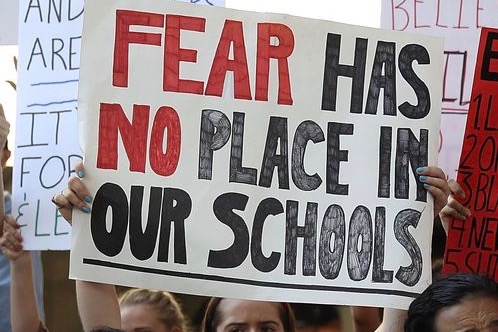
When students around the country began planning protests and walkouts to break the stalemate in our discussion about gun violence, a number of school districts banned the protests and said any students that participated would face detention or suspension. Getting zeros for four or five days of classwork might change someone’s GPA or affect a semester grade. It could, I suppose, affect college admissions for some. School officials thought they could scare the students into compliance. The students are still walking out. They are living metaphors, losing something to find something far more valuable. And they are offering us a chance to see with new eyes.

To take up our cross means to embrace the unreasonable truth that the primary point of faith and of life is not to make sure we are safe and taken care of before we act on someone else’s behalf. The metaphor is clear: to live a life of faith in Christ will cost us our lives as we offer them to one another, but, like the handful of loaves that fed thousands, our willingness to share more than our leftovers creates abundance. Our willingness to voluntarily share each other’s pain brings peace that cannot be explained. When we lose our lives in one another, we find life more abundantly. Don’t be reasonable. Choose love. Amen.

Peace,
Milton

lenten journal: stop, hey, what’s that sound?

Watching the footage of student protests in response to the deaths in Florida set me to thinking about protest songs and the underlying protest that fuels our Lenten journey. Jesus went to the cross because he spoke truth to power—because he protested against oppression and the marginalization of people. When we stand up and stand together, we are walking in the footsteps of the one who calls us in love to live out that love every chance we get. I offer, then, a soundtrack that is by no means exhaustive, but is full of hope and heart.

Last Sunday, we worshipped at the First African Baptist Church in Richmond, Virginia. It was Children’s Sunday, and the youth choir sang “Glory” from the Selma soundtrack. I will let that be our opening hymn.

The next song came to mind as I read about schools that are preemptively forbidding their students to protest. The first words that came to mind were, “Stop—hey, what’s that sound? Everybody look what’s going down.”

Tracy Chapman reminds us perhaps we are talking about more than protest . . .

Paul Simon wrote “American Tune” in 1974, including these prophetic words:
but it’s all right, it’s all right
we’ve lived so well so long
still, when I think of the road
we’re traveling on
I wonder what went wrong
I can’t help it, I wonder what went wrong

Old Crow Medicine Show covered a David Rawlings tune that is one of my favorites.

And for our benediction, U2 and Mary J. Blige: we’ve got to carry each other . . .

Peace,
Milton

lenten journal: the busses will wait

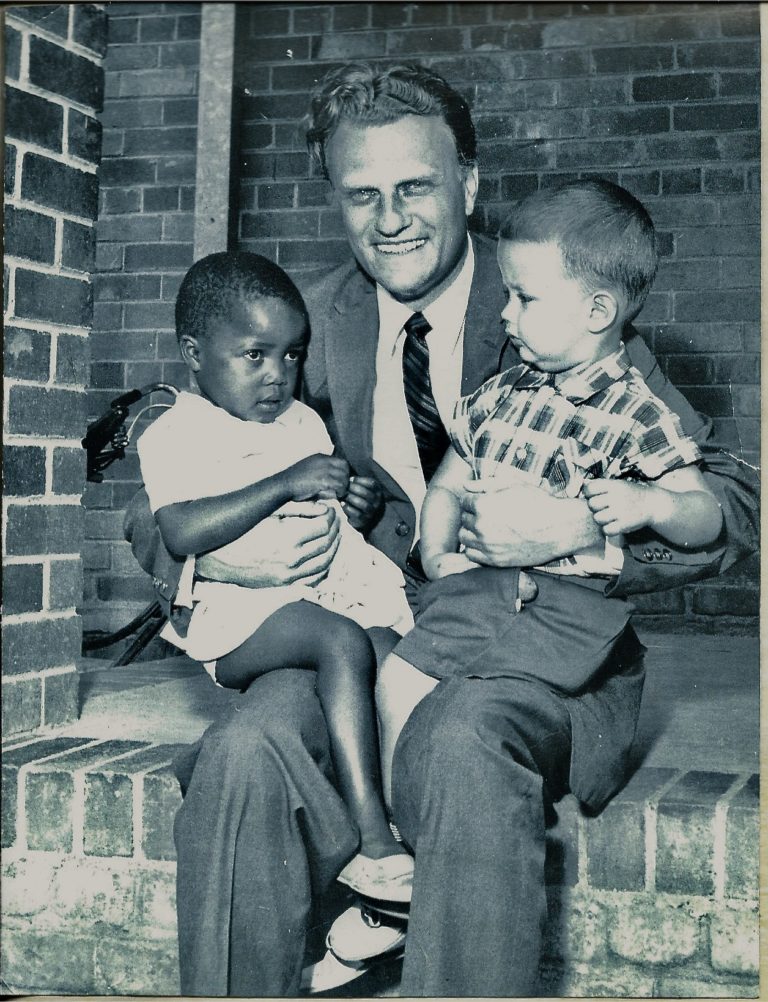
I missed writing last night because we were traveling back from Richmond. I am still figuring out what to say about what I saw in heard in our days there. I keep coming back to the image of layers that I used in a different context a week ago as I began this year’s version of my Lenten journal. As we traveled, we got word of Billy Graham’s death. As I said on Facebook, I met Billy Graham when he came to Bulawayo, Southern Rhodesia, where we lived, in 1960. That visit started a friendship with my parents that lasted the rest of their lives. The better story has to do with my mother. She was a student at Baylor when Billy Graham came to speak at a campus revival, somewhere in 1948 or 1949. He was still new to the scene, as it were.

My mother was walking across campus when a car pulled up with four young men inside and asked directions to one of the buildings on campus. She answered their question and then invited them to the revival. When they sort of snickered, she asked if they knew Jesus as their savior. Again, they kind of laughed, and so she shared her faith with them—a hallmark of my mother’s life at any age.

That night, when she got to the service and the introduced Graham to the crowd, she realized who she had witnessed to. And then Billy told the story to those who were gathered. The guy sitting next to my mother said, “What kind of crazy person would witness to Billy Graham?”

“I know,” my mother said.

Before we left Richmond yesterday we visited the Maggie Walker house. I did not know anything about her before I got to Richmond. Now I wonder why she is not a nationally known figure. She became the first African American woman to own a bank in the 1920s—in Richmond. She also owned a department store and a newspaper. She was an early leader in the NAACP. She suffered great personal pain even as she became a commercial, political, and even spiritual force in Richmond. “Have faith, have courage, have hope, and carry on,” she said.

Walker’s faith was more grounded in helping people find jobs and homes and education than telling them the buses would wait, yet both she and Graham were living out the call they heard from God. I find more resonance with her expression of faith than I do with Graham’s altar calls, but as I have read those who have been quick to offer a critique of what he did, I find myself reticent to pile on—and not just because his death is so recent.

I came to the place long ago where I ceased to believe that Hell was a place. I think Love is the last word, not just for this life but for eternity. However things go in the dimension that lies beyond this life, I think God is calling, “Olly olly oxen free.” That goes for Billy Graham. He doesn’t have to agree with me for God to love him.

I will let the Lost Dogs sing our benediction: breathe deep the breath of God.

The busses will wait.

Peace,
Milton

lenten journal: no joke

Our trip to Richmond has given me more than I can begin to unpack right now. Those stories will come in the days ahead. Tonight, I offer another poem.

no joke

I once heard a comedian say
the only way to get to the good jokes
was to push past the easy ones: say all
the double entendres, the terrible
puns, and the sex—and then you find
punch lines more profound than predictable.

Perhaps I’m stretching the analogy, but
couldn’t we say that when we set aside
the alleluias for Lent we acknowledge
that praise can sometimes turn to platitude:
get up and do it again. Amen. Say it again . . .

Listen to the birds who are not singing.
Wait for the trains that are not coming.
Dance to music that no one is playing.
Set places for those who have yet to show up.
Rolling the same stones is no preparation
for the belly laugh of the resurrection.

Peace,
Milton

lenten journal: when is it time?

Before I stared to write tonight, I scrolled through Facebook to see what folks had been up to today and found this video on a friend’s page. The poet in the video is responding to the shootings in Florida and asks, more than once, “When is it time to talk about it?” His question gave me a way to talk about our day here in Richmond.

We began our morning at the Virginia Holocaust Museum which is housed in an old tobacco warehouse in the Shockoe Bottom area of town, where they sold slaves before they sold tobacco. Matt, one of our tour guides, began by answering our first question: why was there a Holocaust museum in Richmond? His answer was because there were over a hundred survivors who lived in the city and some of them wanted to tell their stories. They showed an introductory film that included testimonies from six of the survivors, one of whom helped to found the museum. One of them talked about remembering flames, not smoke, coming out of the smoke stacks of the incinerators because so many bodies were being burned.

At one point, our discussion turned to the people that lived in the towns where the camps were located—those who went to work and ate their meals and sat on their porches while people were being massacred behind the barbed-wire fences. For years. Matt was intentional about saying he was not trying to demonize anyone, but to point out that we often do nothing when we feel helpless or hopeless.

Hold that thought.

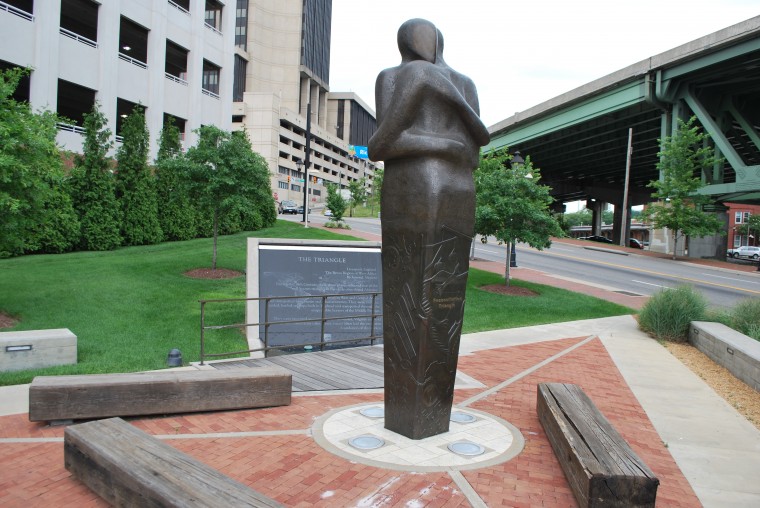
This afternoon we met Dolores McQuinn, a member of the Virginia House of Delegates and former Richmond city council member, who has spent years working to make the Richmond Slave Trail a reality. Between 1830 and 1860, Richmond was the largest source of enslaved people on the East Coast. The Slave Trail marks out where the boats filled with people landed on the James, where they were auctioned, where they were imprisoned and tortured, where they went to church, and where they were buried.

She spoke with passion about the development of the trail, the importance of telling the story, and the ways in which her faith had called her to and sustained her in the work of making the Trail a reality. One of the things she said that made it difficult was that many in Richmond, both black and white, had a hard time telling the story because they felt shame, or felt ashamed.

Let’s go back and pick up the first thought about the people in the towns where the concentration camps were located that said nothing and did nothing. And pick up the thought offered by the poet in the video about school shootings who kept saying, “But we don’t want to talk about it.” In our debriefing tonight after dinner, we talked about how many Holocaust survivors have not wanted to tell their stories, or only began to tell them when they thought they were close to dying because the memories remained too vivid and painful. They waited until it hurt worse to hold it in than it did to express it. Perhaps that is part of the reason we are just now getting around to telling the story of enslaved people, even though the Civil War ended a century and a half ago. And we still don’t appear to be ready to tell the true story of what we did to the Native Americans in the name of our freedom.

The film at the Holocaust Museum had one glaring misstatement. At the beginning, a slide came up and the voice said, “This was the darkest chapter in human history.” No. It was a dark chapter, as was the slave trade. Theodore Roosevelt said comparison is the thief of joy. Perhaps it is also the thief of courage and compassion. Our human story has one dark chapter after another. Since the Holocaust happened, we have watched genocides in Rwanda, the Congo, Sudan, and Kosovo, to name a few. And we have allowed ourselves, as Americans, to keep shooting each other. Our shame and silence continue to feed off of each other.

I saw one post tonight that said a movement was growing among high school students to walk out of school on April 20 and not return until significant gun legislation was passed. I hope the post is accurate, and I hope they do it. I’ll volunteer to tutor as many as I can while they wait for Congress to act.

I’ll bet there were a number of people in the towns where the camps were that smelled the burning bodies and thought it was terrible and that they were helpless to do anything that mattered. They even talked about it at church. If they had had a blog, they might have even written about it. When our descendants look back at us in seventy years, I don’t want to be remembered as a well-intentioned bystander.

Peace,
Milton

P. S. Here is the video I linked to above. It’s worth your time.