Home Blog Page 51

you are my friends . . .

I preached again today at the First Christian Church, Congregational of East Haddam, Connecticut—a wonderful congregation. My text for today was John 15:9-17.

I was a high school English teacher for about ten years. One of the things I was determined to differently than those who had taught me was the way in which I helped my students encounter plays. My teachers had assigned us reading to do at home as preparation for class discussion, much the same way they did with novels; that approach works well for novels, but not for plays because you don’t read a play you watch it, or you perform it to fully engage the story. So when we came to Shakespeare in my classes, I assigned parts each day and got the kids up out of their seats and thinking about how they would move and encounter one another in the drama. I even taught them how to stage a sword fight using wooden dowels, which quite surprised my principal one day when he turned the corner and we were all out swashbuckling in the hallway.

I wonder sometimes if we need to take the same approach with scripture readings. Much like reading a play, we have to pay attention to the context to get a sense of how the words were being offered and received. Matthew 5-7 gives us what we have come to call the Sermon on the Mount. Matthew said when Jesus saw the crowds, he went up to the top of a mountain, sat down, and began to teach his disciples. Imagine them following him up the slope of the hillside from the Sea of Galilee until he came to a place where they could gather. Perhaps there was a gentle breeze blowing off the water. Jesus sat down and they gathered around him. At the very end of the sermon, Matthew says the crowds were astounded. People had continued to gather as he spoke, by the time the sermon was over, the hillside was covered with people.

Our reading from John 15 this morning is a part of a five-chapter discourse Jesus gave his disciples on the night before his crucifixion. It reads, in many ways, like his words in Matthew unless we put ourselves in the play, if you will. John doesn’t offer any stage direction, or give us any scene descriptions other than we know they moved from the familiar security of the Upper Room after what became their last supper together to the somewhat sinister sacredness of the grove of olive trees in the Garden of Gethsemane, their twisted branches casting shadows down into the Kidron Valley. There was very little light other than the moon. Perhaps Jesus sat down as he had done on the hillside. Or maybe they walked among the trees as he talked.

Jesus was not preaching to them. He was imploring them to pay attention. He was working hard to see if this ragtag group of followers had grasped what he had been telling them. So he gave them metaphors, he prayed for them, he prayed with them, he washed their feet, he gave them the bread and the cup that we will share this morning, and he spoke as clearly and directly as he could: “This is my commandment, that you love one another as I have loved you.” Then he gave them another word picture: there is no greater love than this—when a person lays down their life for a friend. I imagine he paused to let his words sink in, and then looked around the circle so he saw each person’s face. Then he said, and you are my friends.

What does it mean to be a friend?

A number of years ago, I heard an African pastor who was a guest preacher at a church in Texas. He began his sermon by pointing out a significant difference in the way Africans and Americans use the word “friend.” He said, “I was in a church recently where they welcomed visitors by saying, ‘There are no strangers here, only friends.’ as though an acquaintance is the same as a friend. In my country, friendship is something borne out of struggle, something that is demonstrated over time.”

Those in my life whom I call friend are people I can trust, people I can call on when I need help, people who let me share in their lives, people who work to stay connected. My definition is by no means exhaustive. We could go around the room this morning and add to it, I’m sure. I am also sure what would happen is we would soon be telling stories rather than offering adjectives or descriptions about what it means to lay down our lives for one another, much like I talked about how acting out a play was better than reading it. Our stories make our pictures of love come to life. Like this:

My father died almost five years ago in Waco, Texas, where he lived. He died early in the morning. I began to send out text messages to friends somewhere around 7:30, as best I can remember. Two friends from North Carolina, where Ginger, my wife and I lived at the time, happened to be in Dallas, which was about two hours away from Waco. They met me for breakfast in Waco before ten o’clock that morning. They laid down their plans for the day and came to find me.

Laying down our lives is not as much about dying for one another as it is about living for one another. It is going through our days looking for ways to lay down our lives, to live out our love for those around us in Jesus’ name by loving one another as Christ loves us. It means choosing to be connected over anything else. True friendship has some miles on it. Jesus didn’t call them his friends until the end. Friendship is love that has stood the test of time. It’s like James Taylor and Carole King sing,

you just call out my name
and you know wherever I am
I’ll come running to see you again
winter, spring, summer, or fall
all you have to do is call
and I’ll be there—you’ve got a friend

Jesus said he was telling his disciples all of these things so their joy would be full. The word for joy is the same one used to describe how the shepherds felt when they saw the baby in the manger, and how the women felt when they discovered the tomb was empty. When we love one another—when we befriend one another—we connect with the expansive and creative love of God that is at the heart of the story of our faith. In the middle of all that is wrong around us and within us, in these days of difficulty and uncertainty, in all that we have done and left undone, we are called to be friends, to love one another, so that we might know the joy of the Risen Christ in the dailiness of life—in the simple interactions that build trust between us.

As we gather once again to pass the bread and the cup to one another, let our gestures be promises that we will pass love to one another just as intentionally. Amen.

Peace,
Milton

PS—Since I quoted the lyric, how can I not include the song?
this is what love looks like

I preached this morning at the United Churches of Durham, Connecticut–a lovely congregation. Here is my sermon, “This is What Love Looks Like.”

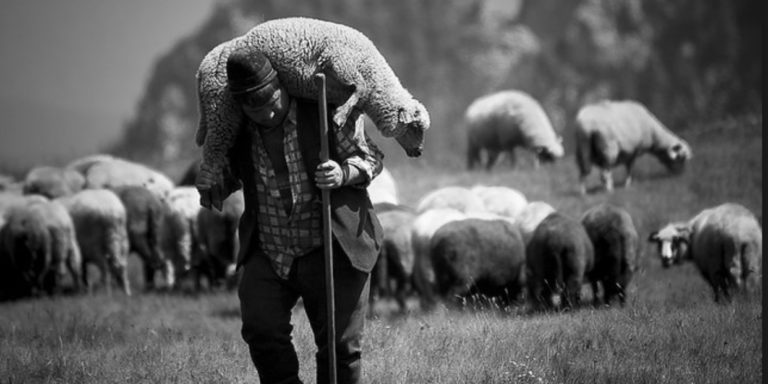
Our choice of scripture today follows the Revised Common Lectionary, which offers a psalm, an Old Testament reading, a reading from one of the gospels, and a New Testament reading. Out call to worship this morning was based on the Twenty-Third Psalm, which is, perhaps, one of the most well-known passages of scripture: the Lord is my shepherd, I shall not want. It is a profound statement of faith and hope. Both the psalm and the Gospel reading are about shepherds. The verses from the tenth chapter of John, which we are not reading in full this morning, quote Jesus: “I am the good shepherd. The good shepherd lays down his life for his sheep.”

It was a metaphor that would have spoken clearly to those gathered around Jesus. They knew shepherds. Some of them were shepherds. They understood what it meant to take care of a herd of sheep, particularly in the semi-arid climate of Palestine. On this bright Sunday morning, I bet it is fairly safe to say most of us do not have first-hand experience tending sheep, so our understanding of what it means to say, “the Lord is my shepherd” is a bit more romanticized, or at least has become more of an idea than an experience.

Our New Testament reading this morning is from 1 John, one of the letters written to the churches in Europe and Asia Minor. Like many of the letters we have in our Bible, it is full of practical advice on how to live a hands-on faith. Listen to our reading for this morning.

We know what true love looks like because of Jesus. He gave His life for us, and He calls us to give our lives for our brothers and sisters. If a person owns the kinds of things we need to make it in the world but refuses to share with those in need, is it even possible that God’s love lives in them? My little children, don’t just talk about love as an idea or a theory. Make it your true way of life, and live in the pattern of gracious love.

There is a sure way for us to know that we belong to the truth. Even though our inner thoughts may condemn us with storms of guilt and constant reminders of our failures, we can know in our hearts that God is greater than any accusation. God knows all things. My loved ones, if our hearts cannot condemn us, then we can stand with confidence before God. Whatever we may ask, we receive it from God because we follow God’s commands and take the path that pleases God. The command is clear: believe in the name of Jesus and love one another as God commanded. The one who follows this teaching and walks this path lives in an intimate relationship with God. How do we know that God lives in us? By the gift of the Holy Spirit. (I John 3:16-24)

I know. No shepherds. Not even any metaphors. Instead, there is a rather pointed question: “If a person owns the kinds of things we need to make it in the world but refuses to share with those in need, is it even possible that God’s love lives in them?” I guess neither poetry nor subtlety was John’s strong suit. So I spent some time this week wondering what made those who created the Lectionary put these passages together, as well as trying to see what connections I could find, since I was preaching this morning.

Reading the passages about shepherding made me think of my father, who was a pastor and loved to joke that Jesus calling himself a shepherd was not a compliment to his followers since sheep are not known for their intelligence. In my studying this week, I looked up some of the recent research on sheep, which is showing sheep are not quite as dumb as we have thought they were—there is more to them than their “herd mentality” that means they will just go wherever the flock is going. They adapt to their surroundings, form relationships, and pay attention to details. Their tendency to flock together is not out of stupidity, but out of an understanding of the importance of community. They can learn and grow. So can we—and I think that is what John assumed when he wrote to tell the young churches how to take care of each other. They didn’t need metaphors. They needed practical advice. They needed specific images of what love looked like in their lives. So he said, it is as simple as this: if you have what people need, share. He didn’t say, if you have more than you need, share, but if you have what others need, share it. Be like sheep. Realize that without the flock all of us are vulnerable. Unless we take care of each other, we will not survive.

I am not a shepherd, and I don’t know any first hand. The closest I have gotten to farming recently is I went out last week to a friend’s farm to play with their baby goats. She and her husband have a small farm where they are growing vegetables and raising goats for milk and chicken for eggs. Even my limited agricultural experience helps me to understand that it is practical work. You feed the animals. You make sure they have shelter. You clean up after them. You protect them. While we stood in the goat pen, a bald eagle flew overhead, checking out the goats and chickens. You care for your animals in hands-on, tangible, even visceral ways.

John may have said nothing about sheep when he wrote his letter, but I think I see the connection with the other passages because he spoke in practical and tangible terms. Share what you have with those who need it. Live as though you trust that God will see you through, rather than living a life of scarcity and fear. Of course bad things will happen. Of course things will not go as expected. But you are not alone. God is never not with us. So share. Ask for help. Lean into one another in Jesus’ name. Love one another.

I am one of many in the world who live with depression. I first began to come to terms with it in my life in 2001. A couple of years later, a singer named Patty Griffin released a song called When It Don’t Come Easy. The chorus says,

if you break down, I’ll drive out and find you
if you forget my love, I’m here to remind you
and stand by you when it don’t come easy

I listened to that song over and over. One day I said to Ginger, my wife, “This song says what you do for me. Each day, I feel like I break down and you drive out and find me. That is how I am making it through.” She didn’t come find me because life was great for her and she was being generous. I think it’s harder for the person living with the one who is depressed than it is to be depressed. She finds me everyday because she loves me. That’s what love looks like.

Yesterday was our twenty-eighth wedding anniversary. We went to the Bronx Zoo and had a wonderful time. On the way there, we stopped and at breakfast at Poppy’s Diner in Rye, New York and then walked around the little downtown there. We wandered into a little market and saw one of those wooden art pieces that has a saying written on it that said:

Life is simple, it’s just not easy. Be kind because everyone is fighting a hard battle.

The quote has been important to us since Ginger used it in a sermon years ago. The sign became our anniversary gift to one another, and it is a word I pass along to you in the spirit of the psalmist and John, in both the gospel and his letters. To be a follower of Christ is simple, but it is not easy. Both life and faith are team sports. If we have what someone else needs, we are called to share it. And we have what others need because we can love them. We can drive out and find them. We are all in this together. That’s what love looks like. Amen.

Peace,
Milton

PS–Here’s Patty . . .

first breakfast

I preached at my home church yesterday and afterwards we shared a pot luck meal called “Every Dish Tells a Story . . . .” We asked people to bring food that had a story attached to it, and then we ate together and talked about our lives. We had a great day. Here’s the sermon; you can also listen to it here.

“First Breakfast”
John 21:1-17
A Sermon for First Congregational Church UCC, Guilford, Connecticut
April 8, 2018

I learned a lot of important things from my father.

A number of them had to do with food—but I’ll have to save those for another time. I learned to love to read by watching his example. He devoured books. And he remembered them. As a child, Doctor Seuss was a favorite at our house, and of the one he loved best was called On Beyond Zebra. The story centered around one boy telling his younger friend how much more he could imagine if he refused to be confined by the prescribed alphabet: there were words and worlds to discover if one kept going “on beyond zebra.” Dad read it as a metaphor of faith. He was on to something.

“In the places I go there are things that I see
“That I never could spell if I stopped with the Z.
“I’m telling you this ’cause you’re one of my friends.
“My alphabet starts where your alphabet ends!”

For us to show up today to mark the Second Sunday of Eastertide is kind of like coming to terms with a new alphabet. Up until Jesus’ resurrection, our alphabet ended at death. But Jesus’ life and death and resurrection requires language that is new to us, as we can see in the gospel stories of those who encountered Jesus after his resurrection. Listen, now, to one of the stories on beyond Easter.

After these things Jesus showed himself again to the disciples by the Sea of Tiberias; and he showed himself in this way. Gathered there together were Simon Peter, Thomas called the Twin, Nathanael of Cana in Galilee, the sons of Zebedee, and two others of his disciples. Simon Peter said to them, “I am going fishing.” They said to him, “We will go with you.” They went out and got into the boat, but that night they caught nothing.

Just after daybreak, Jesus stood on the beach; but the disciples did not know that it was Jesus. Jesus said to them, “Children, you have no fish, have you?” They answered him, “No.” He said to them, “Cast the net to the right side of the boat, and you will find some.” So they cast it, and now they were not able to haul it in because there were so many fish. That disciple whom Jesus loved said to Peter, “It is the Lord!” When Simon Peter heard that it was the Lord, he put on some clothes, for he was naked, and jumped into the sea. But the other disciples came in the boat, dragging the net full of fish, for they were not far from the land, only about a hundred yards off.

When they had gone ashore, they saw a charcoal fire there, with fish on it, and bread. Jesus said to them, “Bring some of the fish that you have just caught.” So Simon Peter went aboard and hauled the net ashore, full of large fish, a hundred fifty-three of them; and though there were so many, the net was not torn. Jesus said to them, “Come and have breakfast.” Now none of the disciples dared to ask him, “Who are you?” because they knew it was the Lord. Jesus came and took the bread and gave it to them, and did the same with the fish. This was now the third time that Jesus appeared to the disciples after he was raised from the dead.

When they had finished breakfast, Jesus said to Simon Peter, “Simon son of John, do you love me more than these?” He said to him, “Yes, Lord; you know that I love you.” Jesus said to him, “Feed my lambs.” A second time he said to him, “Simon son of John, do you love me?” He said to him, “Yes, Lord; you know that I love you.” Jesus said to him, “Tend my sheep.” He said to him the third time, “Simon son of John, do you love me?” Peter felt hurt because he said to him the third time, “Do you love me?” And he said to him, “Lord, you know everything; you know that I love you.” Jesus said to him, “Feed my sheep.”

Alright—I’m going to begin with pointing out my favorite detail: Jesus did something on beyond Easter that he had not done before: he cooked. He carried out his earthly ministry, endured the cross and the grave, came back from the dead, and made breakfast. I love that.

Jesus had made three or four other appearances to those whom he loved before we get to this moment on the shore, but his followers were still reeling. He spoke with Mary in the grave yard, walked along the Emmaus road, and showed up twice in the room where everyone was gathered—the second time to make sure Thomas got to see him. Each time, including our story for today, they didn’t recognize him at first. Things were not as they had been before his death. He was alive, yes, but they weren’t hanging out or taking trips together. He wasn’t with them all the time. The Resurrection had not erased the grief. They were all indelibly marked by the Crucifixion and all that had happened around it. Judas was dead. Peter still carried the weight of his denial. There was Before; this was After. They had the memory of their last supper with Jesus, but that things had not been right since. They had run out of letters in their alphabet of hope. So they went fishing. They went back to what they knew how to do, hoping something would make sense.

They fished all night and had nothing to show for it as the sun was coming up. Who knows why they didn’t catch anything, but the futility of their enterprise appears to have been excruciating. Things were broken and they couldn’t be fixed. Life was never going to be like it was before ever again.

Then they heard a voice call out from the shore, asking if they had caught anything. When they reported their failure, the person told them to cast the net on the right side of the boat. They had nothing to lose, so they followed the instructions that came our of the fading darkness and came up with a net so full that it almost sank them.

Peter said, “It’s the Lord.” No one, it seems, had recognized who was calling out to them until that moment. He dropped his net and swam to shore, where he found Jesus cooking fish on the beach over an open fire.

Maybe it mattered that the last time a charcoal fire showed up in the story, Peter was in the courtyard denying he had anything to do with Jesus, or, perhaps, he had been around one of those fires at every day since. Maybe it mattered that Jesus served bread and fish, much like the lunch the little boy had offered when they ended up feeding over five thousand people and had baskets and baskets of leftovers, or, perhaps, they ate fish at most every meal. Maybe it mattered that they caught one hundred and fifty three fish and, perhaps, they just caught as many as the net would hold. Maybe it mattered that Jesus asked Peter if he loved him three times — as many times has Peter had betrayed him — or, perhaps, it mattered, mostly, that Jesus made breakfast and fed the friend who had disowned him, offering him the grace to know his betrayal was not the last word, and to know that there was something on beyond the courtyard, the cross, and the cemetery, even on beyond the fretful night they had just lived through.

The gospel writers offer us two incredibly important meals that happen within days of each other. One we mark regularly. The Last Supper became the Lord’s Supper and is, for many Christians, both primary meal and metaphor. It is the one thing that happens across denominational and cultural divides. We have come to the Table in an unbroken line since that night when Jesus first broke the bread and poured the wine and said, “As often as you do this, remember me.”

In the first couple of hundred years after Jesus, the communities of faith gathered around a meal. The shared supper was less like the silver trays we pass and a lot more like the pot luck meal we will share together after worship. They told old stories, new stories, and remembered—they put themselves back together again in Jesus’ name, much like Jesus did with Peter and those gathered around the fire that morning. Paul even wrote to the church in Corinth and said, if you have something wrong between you and someone else, make it right before you come to the table. Give yourself a story to tell.

I want to tell you a story about the dish I brought for lunch today: my mother’s taco salad.

As many of you know, I grew up in Africa. My mother was willing to give up lots of things to move ten thousand miles away from her Texas home, but I think the thing she missed most were Fritos corn chips. After three or four years, she wrote the president of Frito-Lay, whose headquarters were in Dallas, and told him her story and we received two boxes of Fritos, in vacuum-packed in coffee cans. There were eight cans to a box. She gave each of us two for our personal consumption and kept the rest in the kitchen to make Taco Salad.

When we moved back to the States for good, we had it every Saturday.

When I was in my twenties, my parents and I had a hard time finding a way to communicate effectively. However distant I felt from them, or even angry, I was reminded of what I needed to remember every time I walked down the potato chip aisle. Now that they have both died, the meal offers healing in a different way, on beyond Saturdays, on beyond Fritos, and on beyond being an adult orphan.

Though pretty much every one of the disciples bailed out in one way or another when Jesus was arrested, the two that get the spotlight are Peter and Judas, the denier and the betrayer. Such harsh words. I don’t think either one was malicious. Peter was in the courtyard because he was trying to stay close to Jesus and he just outran his courage. I think Judas expected Jesus to actually take on the oppressive government and was trying to call Jesus’ hand and make him act. Whatever their motivation, the biggest difference between the two is Judas never made it to breakfast. If he had, there would have been forgiveness for him as well.

Each time Jesus asked Peter, “Do you love me?” and Peter answered, “Yes, Lord,” Jesus said, “Feed my sheep,” leaning into a metaphor Jesus used throughout his ministry. What I hear in his words is, you know what it feels like to completely screw up; you know what it feels like to feel hungry for hope; you know what it feels like to be fed by grace, and to be loved back into being. Now go do that for someone else.

Our story today makes me wish we observed not only the Last Supper but also the First Breakfast as a part of our sacraments and rituals. We don’t need more silver platters, and we don’t necessarily have to grill fish. But we do need to hear the call to go on beyond Communion, on beyond the Cross, on beyond Easter, and meet each other for breakfast, lunch, and dinner to re-member one another in Jesus’ name, to keep looking for new ways to say, “I love you,” “I forgive you,” and “Forgive me”—“Now pass the potatoes.” Amen.

Peace,
Milton

they were terrified . . .

Here is my Easter sermon from this morning at First Church of Christ Congregational of East Haddam, Connecticut.

“They Were Terrified . . .’
Mark 16:1-8

When the sabbath was over, Mary Magdalene, and Mary the mother of James, and Salome bought spices, so that they might go and anoint him. And very early on the first day of the week, when the sun had risen, they went to the tomb. They had been saying to one another, “Who will roll away the stone for us from the entrance to the tomb?” When they looked up, they saw that the stone, which was very large, had already been rolled back. As they entered the tomb, they saw a young man, dressed in a white robe, sitting on the right side; and they were alarmed. But he said to them, “Do not be alarmed; you are looking for Jesus of Nazareth, who was crucified. He has been raised; he is not here. Look, there is the place they laid him. But go, tell his disciples and Peter that he is going ahead of you to Galilee; there you will see him, just as he told you.” So they went out and fled from the tomb, for terror and amazement had seized them; and they said nothing to anyone, for they were afraid.

It’s an odd way to end the story, don’t you think?

Listen to the last sentence again: “So they went out and fled from the tomb, for terror and amazement had seized them; and they said nothing to anyone, for they were afraid.”

The oldest copies of Mark’s gospel that we have end there. Others came back later and tried to add some closing thoughts, but Mark stopped at the empty tomb, with everyone trying to figure out what happened. Though we have two thousand years of explanations, in many ways every Easter morning leaves us trying to figure out what happened, and what it means to say Christ is risen indeed.

The first words of Mark’s gospel read, “The beginning of the gospel of Jesus Christ.” I have a friend who says the words are the title of the gospel rather than the opening sentence. The whole story of Jesus’ life, death, and resurrection is the beginning of the gospel. We are still writing it.

If we go back to the ending with that in mind, then it is not such an odd thing that Mark ends with their fear and amazement at the empty tomb. Perhaps he never intended to wrap things up neatly. He wrote the beginning of the story, and then he left room for what was to come after it. Mark wanted to make sure we understood coming to terms with Jesus’ resurrection was not as simple as a happy ending. Whatever the women had thought of Jesus, the fear that gripped them when they found the empty tomb tells us it might have been the last thing they were expecting. And the trembled in fear and amazement.

An acquaintance told me a story about her neighbor’s dog. She said she was sitting on the front porch of her duplex, when the next door neighbor’s Labrador came out of the yard across the street with a rabbit in its mouth. The across-the-street neighbor had a rabbit she kept in a cage. She called the dog’s owner and he got the rabbit away from the Lab, and they talked about how to tell the neighbor who was not yet home from work. They decided to clean the rabbit up and put it back in the cage. Then, when the woman came home, they would go across and tell her.

They watched the woman pull in her driveway and go in her house. They heard her back door open as she went outside. And then they heard a horrific scream. They ran across the street, trying to act surprised. “What happened?” they asked her.

She almost couldn’t talk. “I don’t know,” she said. “My rabbit died two days ago and I buried it. Today I came home and it was back in the cage!”

Trembling and amazement.

The women came to the tomb because they thought Jesus was dead. They came to mourn. When they got there, the tomb was open and someone other than Jesus was inside, telling them Jesus had gone on to Galilee. They didn’t see him. Jesus had told them what was coming time and again, but it had not sunk in. They had not been able to hear it. Instead, they were shocked and scared, and then silenced by their fear.

And yet, here we are telling the story. Someone spoke up. Someone kept telling the gospel of Jesus Christ that Mark began. Fear and trembling were not the last words. Jesus did meet them in Galilee—in the flesh. He was risen. Risen indeed.

A number of years ago, Ginger, my wife, and I were in Greece as they were celebrating Orthodox Easter. When we got to our hotel, the concierge greeted me by saying, “Christos anesti.” Then he leaned over the desk and said, “And you must answer, ‘Alethos anesti.’ I am saying, ‘Christ is risen,’ and you answer, ‘He really did it.’”

Yes, he really did.

So what, then do we do? How will we respond?

That those who were close to Jesus were devastated by his death is no surprise. We could go around the room here telling our stories and find that most us are acquainted with grief. But to come to the tomb and find that Jesus had really done what he said—that he was alive—changed everything.

Once resurrected, Jesus went back to Galilee. “He’s gone on ahead to meet you there,” the messenger said. Jesus had already gone back to daily life. He was waiting to see what they would do next. Maybe that is part of what terrified them. As hard as it was, they knew how to go back to life in the face of loss, but how could they stay the same if Jesus was alive? What did it mean for them to know that the love of God was stronger than death, or desperation, or hopelessness?

On this Resurrection Day, the questions are the same for us. How will we turn our terror and amazement into compassion and courage in the name of the Risen Christ? To say the love of God is stronger than fear or death doesn’t make either of them go away. To be courageous is not to be fearless, but to act through our fear. To trust God is not to be unquestioning, but to act without demanding certainty. To be hopeful is not to be optimistic that everything will be okay, but to make meaning in our suffering. The empty tomb did solve everything. Maybe that’s what Mark stopped where he did. Or, maybe, he stopped there so that we would have to be the ones who showed, by the way we live out our faith in Christ, that fear is not the last word.

Christ is risen. He is risen indeed. Amen.

Peace,
Milton

lenten journal: love in every move

My meditation for our Maundy Thursday service tonight at First Church of Christ in East Haddam, Connecticut.

_________________________________-

For I received from the Lord what I also handed on to you, that the Lord Jesus on the night when he was betrayed took a loaf of bread, and when he had given thanks, he broke it and said, “This is my body that is for you. Do this in remembrance of me.” In the same way he took the cup also, after supper, saying, “This cup is the new covenant in my blood. Do this, as often as you drink it, in remembrance of me.” For as often as you eat this bread and drink the cup, you proclaim the Lord’s death until he comes. (1Corinthians 11:23-26)

Our scripture passage for tonight are words that are the basis for what we call the “Words of Institution”—the words that take us to the Communion Table. Paul wrote to the church in Corinth to give them instructions on how to come to the Table, and what to say and do when they got there. Paul wanted to make sure the Corinthians understood the power of the meal and the story behind it, so he said, “I received this from Jesus and I am handed it on to you . . . ,” much like we might pass the potatoes from one to another at dinner. The story of our faith—of why this night matters, and tomorrow, and, most certainly, Sunday—has been passed person to person across the centuries.

Then Paul begins the story he is handing down by saying, “On the night he was betrayed, Jesus took the bread and he broke it . . . .”

We all have ways of identifying significant memories in our lives. We can sit around the family table and say, “Remember the day I got my first bicycle?” or “Remember the day you got your driver’s license?” or “Remember the night of the accident?” or “Remember the night that Mom died?” We name the day by its most significant occurrence. And Paul says of Jesus’ last night with his disciples, “On the night he was betrayed . . . .” Not arrested. Not, on the night Jesus prayed in the Garden of Gethsemane. Not even, on their last night together. What named the night was that Jesus was handed over to the authorities.

The story of this Supper was handed down, and Jesus was handed over. In Greek, the verb is actually the same word. It can mean both to hand over something or someone to be taken care of or used, and it can mean handing over someone as a betrayal, to be judged, punished, or even put to death.

On the night he was betrayed, Jesus shared this meal as a memory, an altar, a reminder that God is with us, that Love is stronger than death. Jesus broke the bread and poured the wine and handed them to his disciples. They they went out to the Mount of Olives where Jesus was handed over to the soldiers. The same motion had profoundly different consequences.

In his letter to the church at Corinth, Paul goes on to caution them about eating and drinking “in an unworthy manner.” He wasn’t talking about having to earn our way to the Table. God loves us and welcomes us here, period. What I hear in his words is a call for us to look at what we are handing over, if you will, what we are passing along. The same motion can be what betrays us or what saves us. As we pass the bread and the cup, what else are we handing to one another? The bread and the cup are symbols of God’s undying love for us. How we will live out that love in every move we make? Amen.

Peace,
Milton

lenten journal: my generation . . .

Woodstock happened the summer before I started high school.

I was living in Nairobi, Kenya. Later that fall, I got a copy of the soundtrack, and then my first guitar that Christmas. Some of the first songs I learned were off that record: “Drugstore Truck-Drivin’ Man,” “Wooden Ships,” and “I Feel Like I’m Fixin’ To Die Rag.” I never got good enough to play Hendrix’s “Star Spangled Banner.”

Though I was a long way from America, I followed the protests and saw the footage of flag-draped coffins being unloaded. I knew the war was wrong. Many years later, my brother was living in Stow, Ohio, next to Kent, and sent me a Kent State sweatshirt. “Of anyone I know,” he said, “if you could have been there, you would have been there.”

I really thought our generation would grow up and change the world. We didn’t. I thought our passion for peace would drive us to do things that had gone undone for too long. It didn’t. We lost hope and found cynicism. We gave up and sold out.

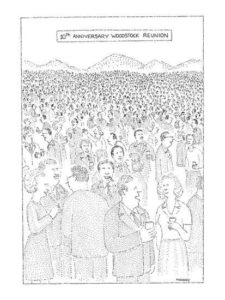
The ten-year anniversary of Woodstock was the summer of my second year in seminary. I remember seeing this New Yorker cartoon. It wasn’t funny then. It’s tragic now, particularly as I listen to self-righteous Baby Boomers complain about the students who have stepped up and called for a reckoning on gun violence. And my generation’s condescension didn’t start with March for Our Lives. We’ve been bashing Millennials for awhile: they’re entitled; they want a trophy for participating; they are too connected to their devices. Blah, blah, blah . . .

Maybe be accuse them of self-absorption because we know it so well. If any generation has settled for getting-what’s-mine-first, it’s us. Not them. We make fun of the participation trophies because we traded our quest for peace for mutual funds and stock options. The increasing inequity in our country lies at our feet. Our generation has been the one in charge while the rich get richer and the poor get screwed. Some of us may have championed women’s rights and civil rights, but only for a season. We suck on our follow through.

I want to stand up as an unabashed supporter of the Millennials and Gen-X and Gen-Z. They are offering a different style of leadership, a different way of looking at each other than anything we came up with. I wish everyone of our elected officials over the age of fifty would be driven out of office in the next elections. I know that is drastic. But we need drastic. Most of us Baby Boomers can’t see past our comfort zones.

But I don’t mean to focus on us. We blew it. The best we can do now is play a supporting role for these young people who are willing to work to bring real and meaningful change. We were once, too, but we didn’t do it. Of course, there are reasons that we could name for why things happened as they did, and one of those is the generations before us didn’t do much to encourage us. Now we are the older ones. We are the self-described “ones who know.”

Remember what it felt like when we protested and people said we were communists, or radicals, or crazy, or evil? Let’s not do that to the generations who have followed us. Let us, instead, follow and support them not because they are young and idealistic, but because they are hopeful and determined and true. As David Bowie sang,

and these children that you spit on
as they try to change their worlds
are immune to your consultations
they’re quite aware of what they’re going through

There is something happening here, and it’s not because of us. It is because our children are tired of the world we handed them and they are taking charge. We can choose to insult them, to create obstacles for them, or we can choose to participate and support them. Alas, we will not get trophies–only a better world than the one we gave them.

Peace,
Milton

lenten journal: by heart

I came home from working in my window seat at the Marketplace and found a post from a friend who talked about being “smacked in the face again by some serious meanness.” As I was digging through some old notes tonight, I found a short story I wrote a long time ago. I don’t write them often. Somehow, it feels like a good word for tonight.

___________________________

By Heart

Cal realized he had forgotten his reading glasses when he sat down in his second row pew and opened his worship guide. He could read the bold print, but he couldn’t decipher some of the smaller instructions. He wasn’t worried though. He had been in church all of his life and things weren’t that different from week to week. The best news for him was he didn’t have to worry about the hymns because he knew his favorites by heart. When he came to words he didn’t know, he just sang the word “watermelon” over and over so it looked like he knew what he was singing.

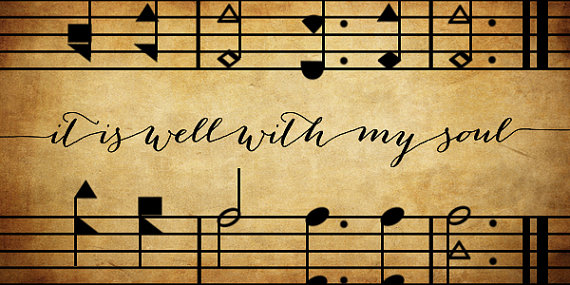
When the accompanist began to play the introduction to “It Is Well With My Soul,” Cal was transported; it was one of his favorites. Since the song was reflective, the instructions in the worship guide were for the congregation to remain seated. When the introduction finished, he began to sing,

When peace like a river attendeth my way
When sorrows like sea billows roll
Whatever my lot thou has taught me to say
It is well, it is well with my soul

He lost himself in the song and was only slightly aware of how quiet the people were in the pews around him. He could hear one, maybe two, voices from the choir loft. When the chorus came, everyone joined in.

It is well (it is well)
With my soul (with my soul)
It is well, it is well
With my soul.

When the hymn was over, Dave leaned up from the pew behind Cal and said, “Nice job, buddy. That first verse was supposed to be a solo from the choir.”

Cal tried to laugh it off—and did as far as Dave knew, but he felt like an idiot. When the service was over, he slipped out the side door before the choir came back to hang up their robes. Maybe folks would forget by next week.

Brenda took her solos seriously. She didn’t feel like she did a lot of things well, but she knew she could sing. And she loved to sing. When Roscoe, the choir director, asked her to sing the first verse of “It is Well With My Soul” as a solo to lead the congregation into prayer time, she jumped at the chance. She loved the hymn and even knew the story behind it, which she promptly told to the rest of the choir as they rehearsed before worship,

“Horatio Spafford lost all of his possessions in the Chicago Fire and then lost all four of his daughters when their ship crashed into another as it crossed the Atlantic. Only his wife survived. A few weeks later, while he was on a ship going to meet her, he said he passed near the place where his daughters died and the Holy Spirit gave the words to him. “

For full effect, Roscoe chose to play the hymn on the piano. Brenda quietly cleared her throat and then began to sing precisely on cue. But she was not singing a solo. There was another voice—another voice not in the choir loft. The voice was singing well, but the problem was that they were singing at all. She looked around until she spotted a man in the second row, singing with his eyes closed. Since the choir sat in the back of the small sanctuary, she couldn’t get his attention to wave him off. She also couldn’t set the mood she wanted for worship because he hadn’t paid attention to the instructions in the bulletin. Despite all of her hard work, what people would remember was the guy in the front singing when he wasn’t supposed to. Her attempt to make worship more meaningful with her voice was shattered by the phantom singer. The song was ruined, she thought as she sat down at the end of the hymn. She felt a hurt, slighted, and disregarded, but mostly she felt like a failure. She had one gift to bring to worship and someone sat on it. What good was a broken gift?

Charley always got to church on time and he always sat in the balcony, which, in his little church, was a single row of chairs. He mostly came to church because he had nowhere else to go and the folks here didn’t seem to mind him being around. In fact, they were pretty good at including him in things, even though faith was new to him. He had only been coming for six or eight months. He liked to come early to hear the choir practice. Soon after he sat down, he heard someone telling a story about one of the songs and how it had been written because a man lost all his children.

Charley knew that feeling, too. Since his ex-wife had moved, he didn’t even know where his children were. She made it clear he did not deserve to see them because of all he had done. He didn’t know what else to do but agree with her.

When it came time for the song, the lady who had told the story stood up to sing. Charley had heard her before. She had a beautiful voice that was strong and soft at the same time. But when she started singing, it wasn’t just her. There was a male voice coming from the front of the church. Even though he never turned around, the two singers were right together and sounded beautiful. Charley was sure they had practiced a lot to be able to sing so well without being able to see what each other was doing. He read the words as they sang and tried to join in with the rest of the congregation, but never mastered more than the chorus: it is well, it is well with my soul.

He wondered if the writer really felt well in his soul as he stared into the sea that had swallowed up his daughters, or if he was trying to convince himself he could feel that way. All Charley knew was the words felt true when he heard them and he needed something to feel true, even if only for a moment.

Charley was coming down from the balcony just as Brenda was moving to hang up her choir robe in the closet next to the stairs.

“I liked the way you and that guy did the hymn this morning,” he said. “It touched me.”

“It was supposed to be like that,” she said before she could catch herself.

He smiled and shook her hand.

“Thank you.”

Peace,

Milton

lenten journal: metaphors in motion

“Metaphors in Motion”—Mark 11:1-11
A Sermon for First Church of Christ, Congregational of East Haddam, Connecticut
Palm Sunday, March 25, 2018

When we talk about it, we make it sound like a parade: Jesus’ “triumphal entry” into Jerusalem. We picture crowds lining the streets, even throwing down their garments like a red carpet, waving palm branches, and shouting, “Hosanna! Blessed is he who comes in the name of the Lord.” The heading for this passage added by the Bible translators reads, “Jesus Enters Jerusalem as King.”

But look at the story.

Jesus and his disciples were traveling from Galilee to Jerusalem to celebrate Passover. If we look back in Mark 10, we can see a lot of things were going on. The religious leaders were tried to trick him into a doctrinal trap by asking him questions about divorce. When the disciples tried to keep a group of children from bothering Jesus, he not only welcomed them but said they understood how to open their hearts. “Be like the children,” he said, “and you will understand what it means to follow me.”

After the kids left, a man we have come to know as the rich young ruler came to Jesus looking for validation. “I obey all the law and the prophets,” he proclaimed, even though I think he knew he was missing something. Jesus told him if he wanted to understand what discipleship was about, he would need to give up all his stuff. The man couldn’t do it. He liked his privileged life. So he walked away.

Not long after that, James and John asked Jesus if they could sit on either side of him when they all got to heaven. Though it’s not in Mark’s gospel, Jesus’ response to them almost sounds as though he said, “You did hear what I just told that last guy, right?” He spelled it out clearly: God calls us to serve, not to be served. What am I going to get out of this? is never the first question. And then, when they got to Jericho, he restored the sight of a blind man named Bartimaeus who called out to him as he entered the city. Mark says, once Bartimaeus could see, he followed Jesus, both literally and figuratively; Mark says Bartimaeus “followed Jesus down the road.” Bartimaeus could see what the rich young ruler could not.

When they got to Jerusalem, Jesus gave the disciples rather mysterious instructions about going to someone’s barn and untying their donkey. “If someone asks what you’re doing, tell them, ‘The Master needs it.’” When I was a kid, I thought this story made Jesus sound magic—like he had some sort of mind controlling power. Once the disciples used the magic words, they could have walked off with almost anything. I asked my dad about it one day and he said, “I think Jesus just knew the guy with the donkey.” I had never thought that Jesus might have planned ahead, or had friends other than those listed in the gospels. But Jesus had planned ahed. His ride into town was not spontaneous. He knew how he wanted to enter the city.

The disciples came back with the donkey, made a seat for Jesus out of their coats, and he rode into town. Mark says, “many people” spread their coats on the ground and “others” waved palm branches. Our collective Christian imagination over the centuries has turned this into a city-wide celebration, but I’m guessing it was on a much smaller scale, and not very royal at that. It was a metaphor in motion. A real king would have ridden into town in a chariot, or at least on a fine stallion. He would have been flanked by protection. The point would have been a presentation of power.

Jesus rode bareback on a mule. A farm animal. A beast of burden. And he entered the city with all the pomp and circumstance of a neighborhood parade, except parade implies a procession of some sort. He was not proceeced, protected, announced, or even accompanied. It was just him. Those who lined the street shouted, “Hosanna,” which comes from a Hebrew word that means “save us.” Like Bartimaeus, most everyone was looking for healing.

Yesterday, in at least eight hundred cities and towns across America, millions of people participated in the March for Our Lives, a protest calling for a serious and meaningful discussion about how we deal with firearms in our country. My town, Guilford, was the location for the Shoreline gathering because the Guilford Green is large and because our town has been affected directly by gun violence in recent days. In late January, one of our teenage boys was accidentally killed by a gun belonging to a friend’s father, who failed to keep it locked up.

I have no idea how many people were there, but it was the largest crowd I have ever seen on our green. I saw reports this morning that estimated two to three thousand gathered to hear speakers and singers. The organizers worked hard to make our informal gathering a meaningful one. And it was. The march itself was rather ceremonial: we walked a little less than a mile and ended up back where we started. But it, too, was a metaphor in motion: it was a wake-up call, an incarnational statement that we trust if we show up and listen to each other, we will find healing.

Ginger, my wife, was one of the speakers and she made a point of recognizing the privilege of those of us gathered there. Last night, I listened to Naomi Wadler, an eleven-year old who spoke at the March in Washington. She said she wanted to speak for the African-American women and girls who are victims of gun violence but never make the front page. Then she said,

It is my privilege to be here today. I am indeed full of privilege. My voice has been heard. I am here to acknowledge their stories, to say they matter, to say their names, because I can, and I was asked to be. For far too long, these names, these black girls and women, have been just numbers. I’m here to say, “Never again” for those girls, too. I am here to say that everyone should value those girls, too.

Jesus saw most everything around him. Because Jesus was astute and perceptive, I think he knew his entry into Jerusalem was anything but triumphant. He knew he was on the wrong side of the religious leaders; he knew the government considered him a menace, an instigator. And he knew his disciples were still struggling to understand who he was and what was happening. He knew he was not walking into a happy ending. It would have been easy for him to despair, or to become cynical. He had poured his life into his disciples, and they wanted him to pick a favorite. As the crowd shouted, “Hosanna,” I wonder if Jesus felt encouraged or defeated. It’s hard to tell. He doesn’t say a word.

At our march in Guilford, speaker after speaker went back over the list of mass shootings: Columbine, Sandy Hook, Las Vegas, Orlando, Parkland—I know I am not listing them all. Almost all of them lamented that after each one there has been a cry for something to be done and nothing has happened. This time, it seems, the teenagers of this “mass shooting generation” are old enough to respond and to take action. They bring energy and hope when those of us who are older have settled for cynicism and despair. They are taking to the streets of our towns and cities and call us to believe that things can change, that we can be healed.

I am not saying these kids are our messiahs as much as they offer us a lens through which to see Jesus. The people who lined the streets to welcome him came to Jerusalem every year for Passover, and every year the Romans were still in charge. That they were remembering their deliverance from Egypt while they were under Roman occupation was a bitter irony that was not lost on the Jewish people, I’m sure. And, when they shouted, “Save us,” to Jesus, I’m not sure they expected much.

But Jesus did. He believed it mattered that he was riding into town. He planned for everything down to the donkey and then he set things in motion. As he had said to James and John, he had come to serve—to give his life for others. Now he was showing them what that looked like.

If Bartimaeus did follow Jesus all the way to Jerusalem, maybe he was one of the first ones to begin to shout, much as he had done in Jericho. “Hosanna. Save us.” On this Palm Sunday, two thousand years of sadness and violence later, we are still singing the same song. “Hosanna. Save us.” As I stood on the Green yesterday, and listened to person after person call for things to change, I could hear it in our voices. “Hosanna. Save us.”

When Bartimaeus first cried out for help in Jericho, Jesus asked, “What do you want me to do for you?”
“I want to see,” Bartimaeus answered.
“Go,” Jesus said, “your faith has healed you.”

What Bartimaeus saw was that healing is hard work. The next few chapters in Mark’s gospel are filled with Jesus’ words, and most of them are not easy to take, or even to understand. There’s a good chance some of the people shouting “Save us” as Jesus entered Jerusalem were crying “Crucify him” by the end of the week. Once we are given eyes to see our world as Jesus does, we are called to be healers too.

To heal the violence in our country will take more than gathering on the Green. It will be hard work. That’s what we have to plan for. That’s what we have to choose to do. We cannot walk away like the young ruler and take shelter in our privilege. In our world of violence and grief, we need to offer not just our thoughts and prayers, but our thoughts, prayers, and actions. We need to move beyond our privilege and risk losing to serve those around us. We need to open our hearts like the children we saw and heard at the marches yesterday. Jesus is calling us to wake up, stand up, and follow him down the road—to be metaphors of motion, incarnations of God’s love, carriers of hope and healing. Let’s follow him down the road. Amen.

Peace,
Milton

lenten journal: not so black and white

It’s astonishing to see the swirl of hope and energy around the March for Our Lives, which will happen across the country tomorrow. In our little snow globe town of Guilford, Connecticut, we are having a march of our own, rather than going to one of the larger ones because our community was touched deeply by the accidental death of one of our teenagers, who was also a part of our church. For us, the issue is more than just the mass shootings; we want to address our gun culture on a larger scale.

My perspective on tomorrow has also been altered by the shooting of Stephon Clark, who was shot twenty times by two Sacramento police officers because they thought he had a gun. It was his smartphone. Stephon Clark was African-American and joins a list that is far, far too long of men and women of color who have been killed by law enforcement.

I know Clark’s shooting is not the same as a mass shooting in a school, and yet the violence feels connected to me. One of the reasons given for why police fire so many rounds is the quick response of the triggers on their guns. Perhaps they, too, need less fire power. But, lest my point get lost in that argument, what stands out to me here has to do with race.

David Hogg, one of the students who survived the shooting at Parkland, has been challenging the media for “racial parity” in governing gun violence. We all need to hear these words. If pictures help, here is the cover of TIME magazine this week, as we prepare for the March for Our Lives.

Here is the cover after the marches in Ferguson.

The reality is that the white people marching tomorrow will not face a response from militarized riot squads. We will not be tear-gassed, or considered a threat. And, most of us who are marching tomorrow did not take to the streets after Ferguson, or any number of other tragedies caused by gun violence.

Perhaps we should keep our walking shoes on.

Peace,
Milton

lenten journal: snakes on a plain

I am going to be preaching several times at the First Church of Christ, Congregational of East Haddam, Connecticut over the next few weeks as they line up an intentional interim and begin looking for a new pastor. It is a lovely congregation. I got to preach there a couple of times last summer. Here is my sermon from this morning, drawing from Numbers 21:4-9 and John 3:14-21.

“Snakes on a Plain”

I must start with a disclaimer this morning: I hate snakes. Everything about them. They scare me.

I grew up in Africa, where my parents were missionaries, and I was deliberately taught to be afraid of and stay away from snakes—and for good reason. Most of the snakes we were around were deadly poisonous. I say all of that because our first reading this morning from Numbers 21 is about snakes. I am happy someone else is reading it. But before she comes to do so, I want to give you a little bit of background. The defining story for the Hebrew people is the Exodus, when God freed them from slavery and led them out of Egypt. But then they spent forty years wandering in the desert of the Sinai peninsula. Moses and his brother Aaron were their leaders. Life was unsettled and transitory. They were still figuring out who they were as a people, since that they were no long defined by their enslavement. Then Aaron died, leaving only Moses. So, yes, the people were whiny about their situation, but they were also grieving. Listen to the story.

From Mount Hor they set out by the way to the Red Sea, to go around the land of Edom; but the people became impatient on the way. The people spoke against God and against Moses, “Why have you brought us up out of Egypt to die in the wilderness? For there is no food and no water, and we detest this miserable food.” Then the Lord sent poisonous serpents among the people, and they bit the people, so that many Israelites died. The people came to Moses and said, “We have sinned by speaking against the Lord and against you; pray to the Lord to take away the serpents from us.” So Moses prayed for the people. And the Lord said to Moses, “Make a poisonous serpent, and set it on a pole; and everyone who is bitten shall look at it and live.” So Moses made a serpent of bronze, and put it upon a pole; and whenever a serpent bit someone, that person would look at the serpent of bronze and live. (Numbers 21:4-9)

Our Gospel reading from John 3 is part of Jesus’ encounter with Nicodemus, a Pharisee—a Jewish religious cleric—who came to see Jesus one night to ask questions because he was trying to figure out who Jesus was, and what Jesus was up to. Jesus was doing things that looked like things God would want done, but he didn’t act like the God Nicodemus imagined. In his answer, Jesus referenced the story from Numbers. Listen. Jesus is speaking:

“And just as Moses lifted up the serpent in the wilderness, so must the Son of Man be lifted up, that whoever believes in him may have eternal life. For God so loved the world that he gave his only Son, so that everyone who believes in him may not perish but may have eternal life. Indeed, God did not send the Son into the world to condemn the world, but in order that the world might be saved through him. Those who believe in him are not condemned; but those who do not believe are condemned already, because they have not believed in the name of the only Son of God. And this is the judgment, that the light has come into the world, and people loved darkness rather than light because their deeds were evil. For all who do evil hate the light and do not come to the light, so that their deeds may not be exposed. But those who do what is true come to the light, so that it may be clearly seen that their deeds have been done in God.” (John 3:14-21)

In the middle of Jesus’ words you heard one of the most well-known Bible verses of all: John 3:16—“For God so loved the world that God sent God’s only son that whoever believes in him will not perish but have eternal life.” But before we go to those words, let’s look at why Jesus talked about snakes to Nicodemus.

Life for the Hebrew people was a mixed bag after they left Egypt. They were no longer enslaved, which was great, but they were nomads. They had no home, no place to go. They lived in the desert, so food was not easy to find. Yes, God sent manna from heaven every morning, but God sent manna from heaven EVERY morning. The menu didn’t change. Life didn’t seem to be changing. Whatever was coming next never seemed to arrive. Then Aaron, one of their two beloved leaders, died. They began to lose hope, even to the point of wondering if God had brought them out of Egypt as some sort of cruel joke. Uncertainty. Difficulty. Failure. Tragedy. Grief. Sound familiar?

And then came the snakes.

God told Moses to make a bronze sculpture of a snake and put it on a tall pole where everyone could see it. If those who were bitten would quit looking at the ground and look up at the bronze snake, they would be healed. They would live.

Jesus and Nicodemus both knew that story. It was at the heart of their Jewish faith. Though Jesus was a long way from being crucified when he talked bout being “lifted up,” by the time John’s gospel was written, the read the words as an allusion to Jesus being “lifted up” on the cross was reasonable, but what kind of cross are we talking about?

God told Moses to make the snake so people could look at it and be healed. If I am lifted up, Jesus said, I will bring healing. The cross is not about punishment, or judgment, or payment of a debt. It is about healing. About life.

Jesus goes on to talk about judgment, or at least that is how the word has been translated, but the Greek word is krisis. Sound familiar? It is the root of our word crisis—a decisive moment, a turning point. The crisis of the snakes caused the Hebrews to look up at the sculpture, to trust the promise of God’s presence, or to get so mired down in the snakes that they saw nothing but fear and death. God’s love made flesh in the lifting up of the Jesus, the visible sign of God’s grace poured out for the world, creates a crisis, a turning point, a decisive moment for us—a receive God’s redemptive, life changing love. We can get lost in the heaviness of life or we, too, can look to Jesus for hope and healing.

If we took time this morning to name all of the things that burden our hearts, to talk about the pain we live with, to talk about our friends and loved ones who are hurting, to talk about parts of the world that are enduring unimaginable suffering, we would be overwhelmed by sadness. Maybe that’s how you feel today. You hear the story of the snakes and you think, “I know just how they feel.” We aren’t going to tell all our stories out loud, but we can bring them to the Table. We come to the Communion Table together to remember Jesus’ words to his disciples on the night before he was executed.

“This is my body, which is broken for you,” he said to those gathered.

“This is my blood poured out for you,” he told them. “As often as you do this, remember me.”

Remember. There is a centrifugal force to life that pulls us all apart. There is not a person here who is not touched by tragedy or difficulty. If we listen to the news for longer than a few minutes, it looks like our country is coming apart at the seams. We are reminded everyday that life isn’t fair.

And we come to the Table again in this decisive moment to choose to re-member ourselves—to put ourselves back together in Jesus’ name, rather than be bitten by bitterness. We lift Jesus up here at the Table and to find healing once again. If we get to a place where we cannot imagine that God comes bringing love rather than punishment we will get lost in our despair and confusion because all we can see are the snakes on the ground. And so we need to also remind one another that God’s love is the last word. We need to tell the story again: for God so loved the world . . . . Amen.

Peace,
Milton