Home Blog Page 38

lenten journal: figs and feasts

We mark the days of Holy Week as though Jesus was on a schedule that culminated in his execution on Good Friday. We give ourselves one or two things to think about each day and then move on to the next.

John wrote that if he had written down everything that happened in Jesus’ life the world would not have been able to contain the books. Though John’s sense of the world was much smaller than ours, it still seems a rather outlandish statement about someone who was killed at thirty-three.

I was in Memphis in February with a group from our church on our annual Civil Rights History Tour. As we came out of the National Civil Rights Museum housed in what once was the Lorraine Motel, I remarked to Ginger that I wondered what our nation might have been like had King, Malcolm X, and Robert Kennedy all lived to be old men. King was already moving to an emphatic denouncement of the Vietnam War. Kennedy shared much of King’s vision for equality and inclusion. Malcolm was going through his own changes and had so much to say.

But all we have are what they did in their short lives and what they wrote and said.

The world loses when people’s lives are cut short. I can think of several friends who lost not just loved ones but those they loved the most. Their lives were drastically changed. Their story has never been the same. Part of the impact of the pandemic will be many of us will have to learn this truth over and over.

Jesus didn’t come to teach us how to burn out, or to see how quickly we could get ourselves killed. Sometimes the way we read the story of Jesus’ life makes it sound like he was the embodiment of Edna St. Vincent Milay’s poem “First Fig.”

My candle burns at both ends
It will not last the night;
But ah, my foes, and oh, my friends –
It gives a lovely light.

What if Jesus had had a chance to grow old? What more would we have learned about what it means to be fully human?

It is hard to believe that the one who preached the Sermon on the Mount and healed people with a word or a touch had done and said everything he had to do or say in his early thirties. What sermons did we miss because the Romans wanted him dead?

I remember someone talking aboutDietrich Bonhoeffer and saying that people of varying theological perspectives ally with him because he died before he had a chance to say everything he had to say. I don’t know that any of us get to say everything, but I wonder if we couldn’t say the same thing about Jesus.

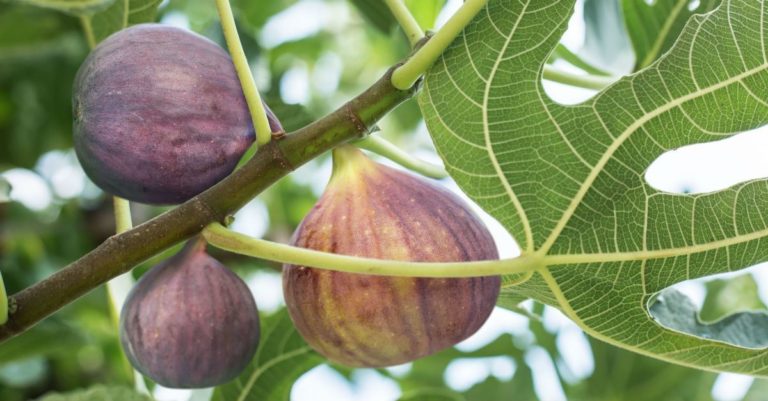
On this Holy Monday, as we call it liturgically, the story we tell about Jesus is that he cursed a fig tree for not bearing fruit. Some traditions read the story of Jesus “cleansing the Temple” (talk about your polite euphemisms) on this day as well. We might do better to lean into the blues and call it Stormy Monday, but we never really get to know what Jesus had on his mind.

What would we have learned about Jesus, and about ourselves, had he lived long enough to bury more friends than just Lazarus, to visit Jerusalem for more than a Passover or three, to share more experiences with his disciples than a handful of seasons on the Sea of Galilee?

Stanley Kunitz is a poet who lived a long time. Late in his life, he wrote a poem called “The Layers,” part of which says,

When I look behind,
as I am compelled to look
before I can gather strength
to proceed on my journey,
I see the milestones dwindling
toward the horizon
and the slow fires trailing
from the abandoned camp-sites,
over which scavenger angels
wheel on heavy wings.
Oh, I have made myself a tribe
out of my true affections,
and my tribe is scattered!
How shall the heart be reconciled
to its feast of losses?

As we work our way through our schedule to the Last Supper, I wonder what our lives and our faith would be like had we gotten to share in a larger feast of losses with Jesus.

Peace,
Milton
chocolate, olive oil, and sea salt cookies

Some of my cookies can be made on demand. These take some time.

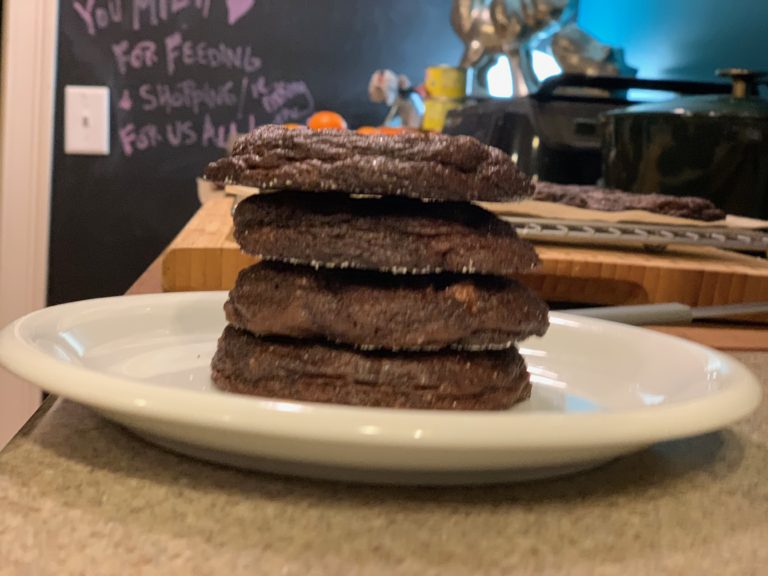
These cookies came about as we began exploring new flavors to add to our repertoire. Early on in the Milton’s Famous days, we began to say we wanted our cookies to tell a story: there was a beginning taste, a middle, and an end. These cookies start strong, run deep, and tell a seriously rich chocolate story the whole way with a salty finish.

They are a close second to the Peanut Butter Sriracha Cookies as Ginger’s favorite.

chocolate, olive oil, and sea salt cookies

1 c olive oil
2 c brown sugar
4 eggs

1 1/2 c flour
1 1/2 c unsweetened cocoa powder
1 t sea salt
2 t baking soda dissolved in
2 T hot water
2 t vanilla

24 oz. semi-sweet chocolate chips
sea salt

Mix olive oil and brown sugar in a stand mixer. The oil will not emulsify with the sugar in the same way butter does. Scrape down the sides of the bowl and add the eggs. Beat the mixture until it looks creamy.

In a separate bowl, combine the flour, cocoa powder, and sea salt. Add it to the wet mixture to combine and then add the dissolved baking soda and the vanilla. The batter will be thick, but should be smooth. Add the chocolate chips and mix well. Chill the batter at least a couple of hours. I usually let it sit in the refrigerator overnight.

Preheat the oven to 350°.

Scoop the cookies on to a parchment lined baking sheet. The batter is sticky. I spray my scoop with Pam every two or three cookies. Generously sprinkle sea salt on the tops of the cookies. Cook for 12-14 minutes for 2 ounce cookies.

These take some time, and they are worth it.

Peace,
Milton

lenten journal: palmdemic sunday

Palm Sunday has come and gone without a parade.

Here in Guilford we have three churches on the Green: St. George Catholic, Christ Episcopal, and ours–First Church, since in 1643 you had to have a Congregational Church with a settled pastor to constitute as a town in New England.

For the Palm Sundays we have been in town, all three congregations gather on the Green together to bless the palms and then we recess to our respective houses of worship to continue. The only folks on the Green today were people walking themselves or their dogs. Ginger and Jake set out palm fronds and self-contained Communion cups in our Memorial Garden for people to pick up (coming to the garden alone, of course) and use as they watched out online worship. I noticed that St. George had some sort of drive through set up. Christ Church was live streaming.

Palmdemic Sunday is a new experience for all of us.

For me, Judas and Peter are the main characters in Holy Week, alongside of Jesus. Judas get the bad rap because of the way the gospels are written. None of the gospel writers can help themselves. From the start, any time Judas shows up they describe him as, “The one who betrayed Jesus.”

It seems to me that Judas’ image of what the Messiah would do was that of one who would bring the Roman house down. He was the New Testament version of Malcolm X, looking to Jesus to change things by any means necessary. He grew weary of waiting for Jesus to make his move, so he pressed the point. Perhaps the kiss in the Gethsemane was less a betrayal than a misguided challenge.

On the other hand, Peter flat out lied. Three times, as he stood in the courtyard outside the place where Jesus as being interrogated, he lied about being with Jesus. The last time, he swore violently as he lied. Then the rooster crowed and Peter burst into tears.

Judas didn’t lie, but when he realized what he had done he couldn’t bring himself to risk forgiveness. Peter lied, yet somehow managed to wait around long enough to be surprised by both forgiveness and breakfast on the beach.

But I am getting ahead of myself.

When I think about Jesus’ entry into Jerusalem on a borrowed donkey, it strikes me that the crowd seems to have made the same assumption Judas did. Some scholars imagine that across town the Romans were staging a military parade and Jesus’ entry was a paradoxical answer to it. I have no doubt that whatever Jesus did was more subversive than we understand, but I am not sure the people waving palms understood the implications of their–or Jesus’–actions. Like Judas, I think they thought he was coming into town to kick ass and take names. Things were going to change. The Romans was finally going to get what was coming to them.

Jesus, however, was riding into town to die. To be executed, in fact. To be publicly humiliated. Made an example of. Jesus rode into town to incarnate what he had been preaching all along. The crowd didn’t get it. By the end of the week, most of them were willing to settle for Barabbas. If Jesus wasn’t going to fix things, then let him die.

Even in a “normal” year, I am torn by Palm Sunday. I feel uncomfortable as we stand and wave our palms because I am not sure we understand who we are identifying with. To be Palm Sunday Christians, it seems to me, is to wave our branches and cry, “Save us, tell us it will be alright. Make things better.”

That is not how this is going to go down.

Neither the gospel not the story of our lives is a fairy tale. We are not headed to a happy ending. Easter does not take away the pain. This year on Palmdemic Sunday, in a way we have never been able to in our lives, we have a chance to grasp a hint of what the disciples felt as they self-isolated in the Upper Room: we don’t know what will happen.

Trump said one true thing this week: “There is going to be a lot of death.”

Easter Sunday was never the public event that Palm Sunday was. The big event played to a much smaller crowd. No palms. No parade. Just Mary in the garden, alone. Then some of the others. Even when the news had spread among those who knew Jesus, they still self-isolated in fear. No one was out in the street shouting, “Christ is risen.” Even after the Resurrection, it took some time to get over the fact that Jesus didn’t turn out to be who they hoped he would be. He was alive, yes, but the Romans were still stepping on their necks.

We will live through this week of death and Easter will come and usher in another week of death. Christ will be risen and people we know and do not know will die by the thousands, maybe even tens of thousands. The Resurrection doesn’t change that. Before we rush to say that everything is going to be better, let’s just stay here and tell the truth.

For a week, at least.

Peace,
Milton

lenten journal: who was that masked man?

One of the reasons I know that I am in the “high risk” age group is I am old enough to remember The Lone Ranger television show. Each week, he and Tonto saved somebody from something dangerous and then they would ride off into the sunset leaving someone to ask, “Who was that masked man?”

The other would reply, “I don’t know, but I wanted to thank him.”

Virus or no virus, I am the grocery shopper in our family, mostly because I am the cook. When I was growing up, my mother played the same roles. From time to time, she would need something from the store and be too busy to go and my father would volunteer. She would tell him to get two onions and some olive oil and he would come back with cookies and Fritos. When they would visit Ginger and me, my dad would take Ginger to the grocery store and they would come back as though they had been to an amusement park with a bag filled with their discoveries.

As I said, I am the grocery shopper in our family.

One of the most difficult and frightening things about Covid-19 is that we can be carriers without showing any symptoms. Though I will admit that the primary motivation behind my physical distancing is I don’t want to get sick, it matters that I learn to shift my thinking to realize I need to communicate that I am working hard not to be a contributor to the spread of the virus. I don’t imagine anyone I saw in the store this afternoon went in thinking they were contagious, but what the hell. They looked at me the same way I looked at them: we both saw each other as the threat. The recent call from the CDC that we wear masks when we go out adds a new wrinkle to life.

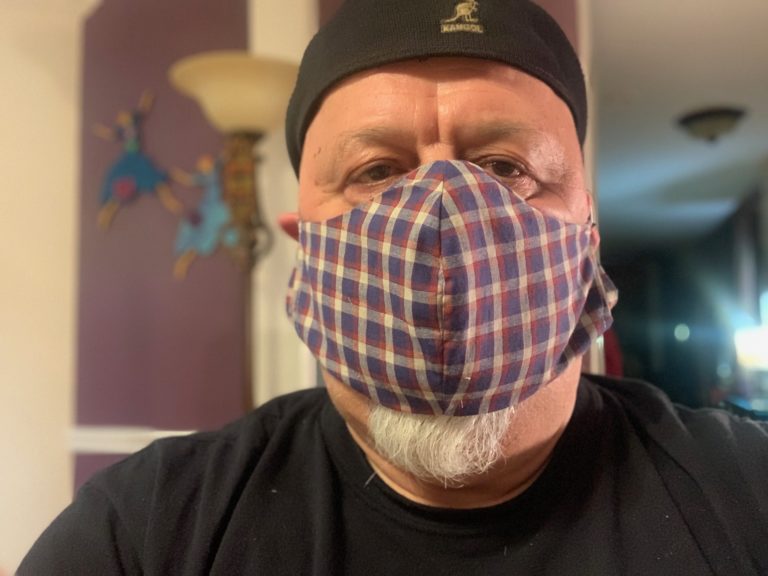
Since no one in our house knows anything about sewing, we are not going to make our own. A church member who is talented in those ways was kind enough to bring us three cloth masks, and another brought by some of the manufactured ones in an envelope carrying the inscription:

may the wind, the rain, the waves, and the roar of silence share their strength with you.

I felt goofy getting out of the car like I was an extra on M*A*S*H. In putting on the mask, I learned, once again, that hearing aids complicate everything, but I got the straps settled in and I went into the store. As I said, I quickly saw I was not the only one. The Fresh Market here in Guilford has done a good job taping arrows to the floor to make the aisles one-way streets to limit contact and marking off six-feet intervals at the butchery and bakery counters. I found the things I needed, with the exception of pinto beans, which are an item to hoard, evidently, paid for my groceries, and came home.

I know. Good story, bro.

Our words and actions all work on a metaphorical level alongside of our intention. We have heard so much about physical distancing that when someone steps off the sidewalk to create space between us I find myself saying, “Thank you,” because the distance has become a metaphor of solidarity and care. When the Lone Ranger wore his mask, the point was to hide his identity. It was some kind of chivalry for him to help people and not let them know who he was, and then he rode off as a hero without attachments.

Before Corona, I was an everyday grocery shopper. I like to buy fresh stuff. I like going to the store. The people at the Fresh Market and Bishop’s Orchards know me because I’m in there a lot. Several of the Fresh Market people make a point to learn the names of regulars, so some of them really do know who I am. One woman thinks my name is Marvin and greets me so enthusiastically that I don’t have the heart to correct her, so I just smile and return the greeting.

Part of what I have to get over with the mask is that it hides my face. People can’t see me smile. It makes me less visible. it is separating. It’s uncomfortable. And it is protection. It, too, is a metaphor of solidarity. To wear the mask is to say I am doing my best to not be a threat. And it gives me the chance to ask the person at the checkout, “Who was that masked man?”

I hope–just once–that one of them will answer, “I don’t know, but I wanted to thank him.”

lenten journal: how can I keep from singing

April 2

Today has been a day much like any other day. It’s a little hard to keep track. One of the things that makes Thursdays different around here is they are the new Sunday–at least, that is when we do the recording for Sunday’s service. Over the past couple of weeks, I have recorded some songs for worship services to be named later. Some of them are already on Facebook, but tonight I feel like singing. So I offer to you some of what I have sung in church, going back before the virus until now in hopes that the words and music may offer some comfort and companionship.

The first song is a Pierce Pettis cover, “Family.” I sang it in church about three years ago.

can you fix this its a broken heart
it was fine then it just fell apart
it was mine but now I give it to you
‘cause you can fix it you know what to do

let your love cover me
like a pair of angel wings
you are my family
you are my family

David Wilcox’s song “Show the Way” has been a personal anthem of mine for many years because of these words:

look–if someone wrote a play
to just to glorify what’s stronger than hate
would they not arrange the stage
to look as if the hero came too late?
he’s almost in defeat
it’s looking like the evil side will when
so on the edge of every seat
from the moment that the whole thing begins

it is love who mixed the mortar
and it’s love who stacked these stones
and it’s love who made the stage here
although it looks like we’re alone
in this scene, set in shadows,
like the night is here to stay
there is evil cast around us
but it’s love that wrote the play
for in this darkness love can show the way

One of my favorite songs is Stephen Foster’s “Hard Times Come Again No More.” One of the college students at church is a wonderful violinist, so we took our shot at it together.

let us pause in life’s pleasures and count its many tears
while we all sup sorrow with the poor
there’s a song that will linger forever in our ears
oh, hard times, come again no more

’tis the song, the sigh of the weary
hard times, hard times, come again no more
many days you have lingered all around my cabin door
oh, hard times, come again no more

What started out as a song for youth camp about thirty years ago has become a connection with all kinds of folks over the years. This is one I wrote with my friend, Billy Crockett. It is called “Traveling Mercies.”

and for the weary
and for the hopeless
and for the faithful
here is my prayer

go in peace
live in grace
trust in the arms that will hold you
go in peace
live in grace
trust God’s love

One night I was putting songs together for an open mic in Durham and realized REM’s “Everybody Hurts” fit with “Pass Me Not, O Gentle Savior.” Both songs have been hymns for me for a long time.

when your day is long
and the night is yours alone
when you’re sure you’ve had enough
Of this life
well hang on
don’t let yourself go
‘cause everybody cries
and everybody hurts sometimes

o, pass me not, o gentle savior
hear my humble cry
while on others thou art calling
do not pass me by

The last song for tonight is one that has moved my heart for many years. I love to sing this song.

why should I feel discouraged
why should the shadows come
why should my heart feel lonesome
and long for heaven and home
when Jesus is my portion
my constant friend is he
his eye is on the sparrow
and I know he watches me

I sing because I’m happy
I sing because I’m free
his eye is on the sparrow
and I know he watches me

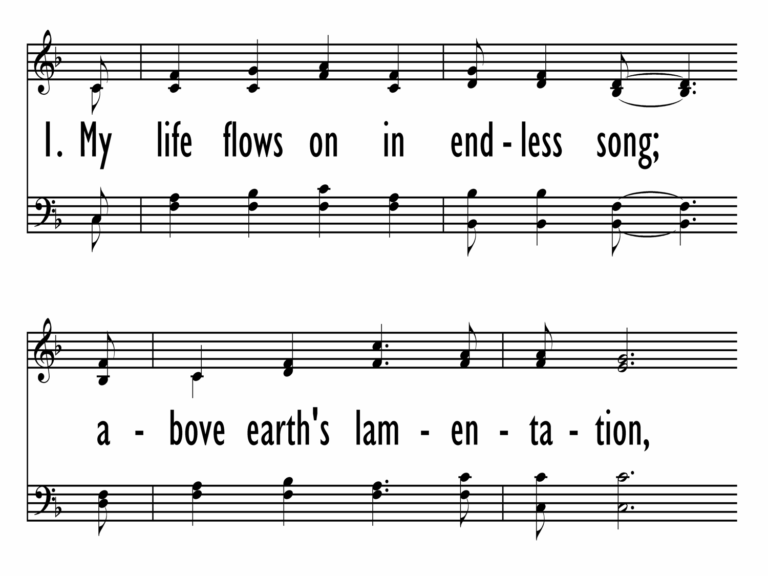
My life goes on in endless song . . .

Peace,
Milton

lenten journal: the harvest of the present

As we flip to a new month, I don’t think I have ever been more aware of the arbitrary nature of the calendar. The date makes no difference. Hell, the day makes no difference. It’s tempting to say it’s like Groundhog Day, except we are not living the same day over and over. Things are changing, even as the days run one into the other. More death. More unknowing. More distance.

I grew up being told that heaven was our ultimate hope. Time was moving towards a final scene and then eternity . . . a wide open ellipsis. I feel like these days are teaching us the difference between eternal and unending. Eternity has no sense of time–another dimension, perhaps. Unending understands that he have to do this again tomorrow, for all we know: an infinity of finitude. To paraphrase C. S. Lewis, always Lent and never Easter.

Years ago, when I was a kid in Africa, I was in the car with my dad and we were listening to the radio. Zambia’s climate is divided into rainy seasons and dry seasons, rather than the seasons we name here. In the dry season, it is dry. In the rainy season, it rains nearly every day. It was the dry season. The voice on the radio said, “And now for today’s weather report.” What followed was about ten seconds of dead air where all we could hear were papers rustling. Finally, the voice said, “I cannot find today’s forecast. I will just read yesterday’s.”

The virus challenges any sense we have that time is linear, that it is going somewhere. In this world where time is no longer much of a marker, at least in the way we are used to defining it, how do we mark our days in ways that matter?

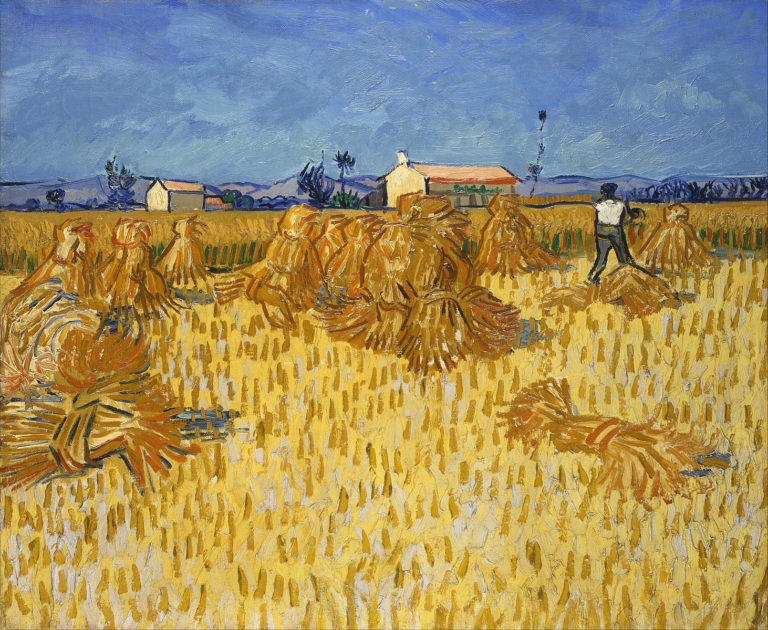
in the middle of all of this, I read David Whyte: “Beauty is the harvest of the present.”

Present: at this time, now.
Present: offer.
Present: gift.
Harvest: the gathering of the crops, of what we have grown.

Beauty is in what we have grown in these days.
Beauty is in what we have to offer one another.
Beauty is the gift of where we are right now.

About four o’clock I got a text from Tom, my gardening buddy, saying he was going to be out in our plot behind the barn. I went out to join him. The late afternoon sunlight fell across the garden in long, warm shafts like movie lighting. Gardening in New England right now mostly means getting ready. We are raking leaves, clearing and marking beds, and pulling up the skeletons of some of last year’s plants, as well as a few weeds. There is work to do and there is plenty of time to wax both philosophical and theological. Tom and I are pretty good at all of it.

The leaves that were cover for the winter will become the paths between the beds for the spring. The things we pulled out of the ground will go in the compost bins. The compost we have from all that rotted from last year will be food for what we grow in the days ahead. The things growing on their own–weeds and volunteer mustard greens–invite pollinators to get an early start. Our contribution, as humans, is our labor and attention. Everything is connected.

Beauty is the harvest of the present.

I was up just before the sun this morning to read and journal. Part of where the morning took me was reading through a list of names of people I love that I want to contact in the days ahead. As I read over the names, an old song came to mind in a sort of single-song playlist of the mind, so much that I wrote down the words.

love is but a song I sing
fear’s the way we die
you can make the mountains ring
or make the angels cry
though the bird is on the wing
we may not know why

come on people now
smile on each other (that’s my edit)
everybody get together
try to love one another right now

No matter what day it is, it’s always time for that.

Peace,
Milton

lenten journal: common good

I picked up David Whyte’s Consolations: The Solace, Nourishment, and Underlying Meaning of Everyday Words to begin my morning reading. This time through, I am reading one word–that is, one essay about a word–a day. Each one is so rich that I think I could probably reread them for a week, but for now I’ll read one a day.

Today’s word was ambition. Here is part of what he had to say:

Ambition left to itself, like a Rupert Murdoch, always becomes tedious, its only object the creation of larger and larger empires of control; but a true vocation calls us beyond ourselves; breaks our heart in the process and then humbles, simplifies and, enlightens us about the hidden, core nature of the work that enticed us in the first place.

If you need a more contemporary example than Murdoch, I point to the White House tweet on Monday that said the television ratings for Trump’s daily briefings were larger than those for The Bachelor finale. Tedious. Stories continue about FEMA fully supplying only the states whose governors have been nice to Trump. Larger and larger empires of control.

By contrast, we have friends who are in Spain and have been providing daily updates of what is going on there. Here is their update from this morning.

A third set of emergency economic measures was decreed by the government in its daily briefing today. Among them:

Starting today, freelancers, self-employed people, day laborers, migrant workers, domestic workers (house cleaners, for example), and gig workers in Spain will be treated like salaried workers for the purpose of receiving benefits they are not always entitled to. The payment of self- employment taxes is also deferred without interest charges until after the emergency ends.

Moreover, these workers will be able to get zero interest loans to pay their rent during the official confinement period. The loans will have a 6 –year repayment window. If they are unable to repay in 6, the loan will be restructured and 4 more years added to the repayment period. If after ten years they are still unable to repay the loan, the government will “eat” it.

Additionally, no one may be evicted during the emergency, and landlords may not raise rents. Small landlords who own only one or two rental units will not lose money: the government will compensate them, in part by dunning large real estate and development corporations.

Note: Spain has a Constitutional guarantee of “vivienda digna”–dignified housing. The government spokesperson made a point of reminding the citizenry of that commitment. She also said, “If we are requiring people to stay home, we need to be sure they have homes to stay in.”

“Patriotism,” said Vice-President Pablo Iglesias later in the briefing, “is defending the common good, and especially the most vulnerable.”

The other book I am reading Miguel De La Torre’s Burying White Privilege: Resurrecting a Badass Christianity, who points out:

The basic thesis of Adam Smith in The Wealth of Nations is that individuals should be allowed and encouraged to pursue self-interests. “It is not from the benevolence of the butcher, the brewer, or the baker that we expect our dinner, but from their regard to their own self-interest.” By doing so, all society will benefit, says Smith. But for those who are Christians, the Gospels teach us to place the needs and interests of others before our own. Hence an internal contradiction and an irreconcilable difference exist between capitalism and Christianity.

I know capitalism and socialism are semantic bombshells. I want to move past isms. Watching the rich get richer in the “relief package” makes me realize–again–that we are not a society built to be capable of taking care of those who are most in need. We are driven, even defined, by our self-interest and individualism. (Oops. Another ism.) Spain can do what they are doing because they have a society built for it. They even have names for what they are doing, a vocabulary they can live into: vivienda digna–dignified housing. I am quite sure their system is not perfect, but it is compassionate. We have named social security and welfare as entitlements–without irony.

Our national obsession with wealth and progress has made us the richest empire in the world and yet we do not have a functioning health care system that can take care of everyone. We export food all over the world and yet the biggest crisis when we closed schools was how many children would go without food because school was the only place they knew they could get a meal.

On a human level, not all of those who own businesses do so out of self-interest. Many are committed to the common good as they seek to make a living. Palumbo’s Automotive here in Guilford bought gift cards from restaurants here in town and then advertised that they would give them to those who scheduled service for their automobiles. They also go get the cars, clean them, and return them so the customers do not have to go out. Ninth Street Bakery in Durham, North Carolina posted on their Facebook page that they would feed anyone who came by, regardless of how much they could pay. These and many others are folks whose broken hearts remind them that their vocation is people, not profit.

I wish our national experience with Covid-19 would bring a true rebellion; a profound change. But four hundred years of colonial and capitalistic ambition are not going to die easily. Perhaps we do better to notice those around us who are living their life’s vocation for the common good and support them. Be them. Start the revolution from the ground up.

Working for the common good is the only way through this thing. Through any thing.

Peace,
Milton

lenten journal: the sound of silence

In the years since I got my hearing aids, I have begun to learn to live with silence. I don’t mean not being able to hear what others are saying. That is frustrating. I mean silence. Quiet. The last time I drove to Durham by myself–an eleven hour drive–I didn’t turn on the radio because I can’t hear the radio unless it’s blaring, which then exacerbates my hearing loss. I drove in silence. I thought about things. I sang. I listened.

I am learning more in these stay-at-home days. I am the first one up at our house on pretty much any given morning. Well, Lila, our middle Schnauzer, often wakes me so she can eat, but I am the first human to get out of bed. I come downstairs, turn on the coffee pot, feed the pups, and then settle in to read and journal in silence. What I hear are the sounds of life underneath what I fill it up with. The ambient music of what is going on around me. The quiet quietens my spirit.

I have learned to love silence.

“Words are the part of silence that can be spoken,” Jeanette Winterson said. (Pádraig Ó Tuama was kind enough to quote her.) The quote made me think of something Frederick Buechner said, which I cannot find tonight, about the day being sandwiched between two nights, implying that the darkness was the real beginning. And it was.

The beginning–the base–is silence and darkness. We have added so much light, noise, and activity to life that a we have come to think of silence and darkness as breaks in the action, but they are our most natural, most basic states of being. They are where we can hear and see what is really going on. Like Annie Dillard said, “If you want to see the stars, you have to go sit in the dark.”

I am learning that the same is true in the universe of my body. I am finding a new resonance with silence. No music. No television. Just open sonic space. Solitude. It’s a new story for me as an extrovert. I have written before about talking to my spiritual director about my hearing loss and her asking me, “How will you listen when you can no longer hear?”

I am beginning to understand the question.

Silence is not absence or void, anymore than darkness is dangerous or foreboding. Both are rich and full. Pregnant. I am not troubled by darkness as much as they grey that haunts the daytime like it does in our New England winters and springs. It is an endless waiting room, an excruciating not yet, a haze that is heavy and starless. It feels link an un-becoming: a day that is never quite born, or that I am never quite born into.

Nighttime–darkness–is a comfort. An expanse. A promise. The darkness is an invitation to see what all the light in the world cannot show. Our days are filled with the details of our small and significant lives and then comes the night when we are all reminded of the expanse that holds us–of all the light we cannot see. No. It’s not the light. It is all we cannot see, cannot imagine, the overwhelming creative context of our little lives.

And so it is with silence, I am learning to hear.

In these days of seclusion, it is an open field. An invitation to do something other than fill in the space. When I first learned the story of Elijah the prophet, I remember reading of his depression and his hiding away in a cave. When God came to call him back into life, Elijah asked for some sign of God’s presence. All manner of hell broke loose and God was in none of it. Then, as the story was translated, Elijah heard God in a “still, small voice.” As poetic as that is, it is not a good translation. The Hebrew word means silence. Elijah found God in the silence.

I am making a similar discovery. I am finding me in new ways, as well.

Of course, I’ll let Paul and Artie sing us out.

Peace,
Milton

lenten journal: thank you, john prine

I had some things in mind when I sat down to write, but then I saw the news that John Prine is in critical condition and on a ventilator with Covid-19. Though I do not know him personally, he feels like a friend because of the impact his words and music have had on my life. So tonight I want to offer a small collection of his songs. I have spent the last couple of hours listening to songs and looking for videos to share. I could go on all night, but I am going to stop and share some of what I have found.

I am going to start with my favorite song. Period. “Angel from Montgomery.” One of my favorite memories of singing this song was that I introduced it by saying, “I think I relate to this song more than any song I know.” Then I sang the first line: “I am an old woman named after my mother.” Even though I had a good laugh at myself I stand by my statement.

there’s flies in the kitchen
I can hear ‘em a buzzin’
and I ain’t done nothin’
since I woke up today
how the hell can a person
go to work every morning
and come home every evening
and have nothing to say

make me an angel that flies from montgomery
make me a poster of an old rodeo
just give me something I can hold on to
to believe in this living is just a hard way to go

Here are Bonnie Raitt and John singing it together.

One of the strengths of his songs is his ability to paint pictures of people. He can make you feel something without telling you to feel it. “Hello in There” is a great example.

we had an apartment in the city
me and Loretta liked living there
well, it’d been years since the kids had grown
a life of their own left us alone
John and Linda live in Omaha
and Joe is somewhere on the road
we lost Davy in the Korean war
and I still don’t know what for, don’t matter anymore

you know that old trees just grow stronger
and old rivers grow wilder every day
old people just grow lonesome
waiting for someone to say, “hello in there, hello”

He can write a pretty good love song, too. Though he seems pretty tough, there is a tenderness to his words that ring true. This is “Long Monday.”

soul to soul heart to heart and cheek to cheek
come on baby give me a kiss that’ll last all week
the thought of you leavin’ again brings me down
the promise of your sweet love brings me around

it’s gonna be a long Monday
sittin’ all alone on a mountain
by a river that has no end
it’s gonna be a long Monday
stuck like the tick of a clock
that’s come unwound again

He also has a good sense of humor that shows up in all sorts of ways, at times more subtle than others. “Fish and Whistle” is one of the softer ones.

I been thinking lately about the people I meet
the carwash on the corner and the hole in the street
the way my ankles hurt with shoes on my feet
I’m wondering if I’m gonna see tomorrow

father forgive us for what we must do
you forgive us and we’ll forgive you
we’ll forgive each other ’til we both turn blue
and we’ll whistle and go fishing in heaven

John released an album of new songs in 2018 called The Tree of Forgiveness. One of the most powerful songs is “Summer’s End,” which is a song of grief. The video speaks to the pain of the opioid crisis on so many families.

the moon and stars hang out in bars just talkin’
I still love that picture of us walkin’
just like that ol’ house we thought was haunted
summer’s end came faster than we wanted

come on home come on home
no you don’t have to be alone
just come on home

Prine was working as a mailman when he first started singing, as me mentions in this clip. He wrote the song “Souvenirs” as a young man, but the older I get the more the words mean to me.

all the snow has turned to water
christmas days have come and gone
broken toys and faded colors
are all that’s left to linger on

I hate graveyards and old pawn shops
for they always bring me tears
I can’t forgive the way they rob me
of my childhood souvenirs

memories they can’t be boughten
they can’t be won at carnivals for free
well it took me years to get those souvenirs
and I don’t know how they slipped away from me

Let last two songs are hymns to me. The first, “Boundless Love,” also from his last album is about as gospel as it gets.

sometimes my old heart is like a washing machine
it bounces around ’til my soul comes clean
and when I’m clean and hung out to dry
I’m gonna make you laugh until you cry

surround me with your boundless love
confound me with your boundless love
I was drowning in the sea, lost as I could be
when you found me with your boundless love

I first heard “The Speed of the Sound of Loneliness” on Nanci Griffith’s record Other Voices, Other Rooms, which was a recording of some of her favorite songs. The metaphor in the title describes how hard we work sometimes to keep others from reaching us.

you come home late and you come home early
you come on big when you’re feeling small
you come home straight and you come home curly
sometimes you don’t come home at all

so what in the world’s come over you
and what in heaven’s name have you done
you’ve broken the speed of the sound of loneliness
you’re out there running just to be on the run

The song became a hymn for me on a road trip when I realized I could sing the words to one of my favorite hymns to the melody of this song and then go into the chorus in a way that expanded both songs.

prone to wonder Lord I feel it
prone to leave the God I love
here’s my heart o take and seal it
seal it for thy courts above

so what in the world’s come over you
and what in heaven’s name have you done
you’ve broken the speed of the sound of loneliness
you’re out there running just to be on the run

I post these songs tonight in hopes we can celebrate his recovery and in gratitude for his words and music. They have been one of the things I have held on to.

Peace,
Milton

black-eyed pea risotto

Sunday mornings are a bit different around our house these days. The elements of the worship service were recorded on Thursday so they could be e-mailed this morning. Ginger doesn’t have to go over for the 8:30 chapel service and we will all stay home at 10 to worship online and visualize all the things that connect our congregation.

It seems like a good time to post a recipe.

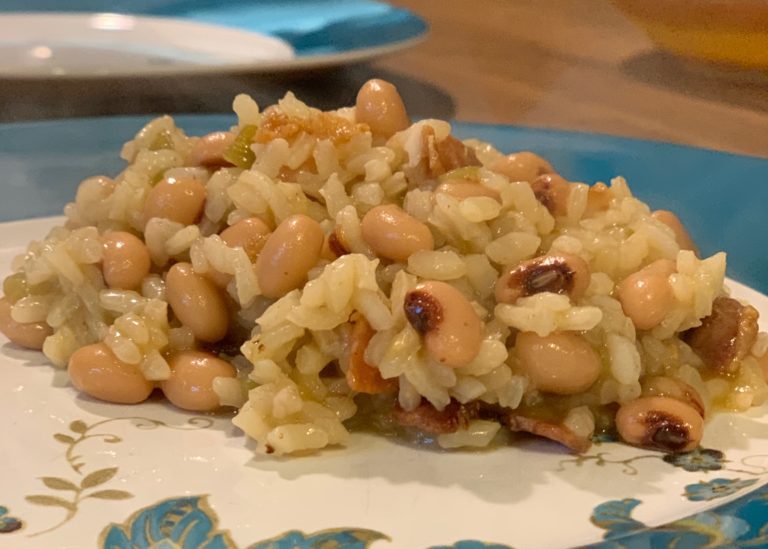
This one grew out of a dinner I made for a group of women who gather monthly to build their friendships. They invited me to come cook dinner and talk theology; how could I refuse? (This was pre-virus, by the way.) I made a pimento cheese stuffed pork tenderloin (I’ll post that recipe another time) and black-eyed pea risotto, or New England Hoppin’ John. When I came home and told Ginger the menu, she asked why I didn’t bring any risotto home. Ginger is allergic to onions and the recipe I made had shallots in it. I knew she would want some, so I made a Ginger version here at the house, which brings me to an important truth about risotto: you can add or leave out pretty much anything you want.

If risotto is not something you have cooked, here is a good basic tutorial.

black-eyed pea risotto

Here is a list of the ingredients I used. As I said, you can add or take away according to your own taste.

4-6 slices bacon, chopped (Could also use pancetta)
2 tablespoons butter, or olive oil
2 shallots, sliced thin
1 1/2 cups arborio rice
2-5 cloves garlic, minced (up to you)
1/2 cup white wine
4 cups chicken stock, hot
1 can black-eyed peas, drained and washed
1 can green chiles
2 tablespoons lemon juice
2 tablespoons flat leaf parsley, chopped
salt and pepper

(other possible ingredients: greens (if not cooked, add them early in the process so they will be), parmesan cheese (or other grated cheese), hotter peppers, diced carrots or celery)

Cook chopped bacon in a dutch oven over moderate heat, stirring occasionally, until bacon is crisp–5-6 minutes. Remove bacon with a slotted spoon and set aside to drain. Leave bacon grease in the pot.

Add butter to bacon fat and heat over moderate heat until the foam subsides, then add shallots and cook until they are caramelized and golden–6-8 minutes. Stir occasionally.

In the mean time, heat up the chicken stock in a saucepan. You want it good and hot, but it doesn’t need to be boiling. Open the can of black-eyed peas; wash and drain them and set them side. Open the can of green chiles and add them to the black-eyed peas. Once the bacon is drained, you can add it here as well.

When the shallots are ready, add the garlic and cook for about a minute, then add the arborio rice and cook, stirring, for about a minute. Add the wine and cook over moderately high heat until the wine is mostly absorbed–about two minutes. Then begin adding the chicken stock about a half a cup, or a ladleful, at a time. Stir until liquid is almost completely absorbed and then add another half a cup. You will be stirring almost constantly. This is not a recipe you can walk away from. When you get down to the last cup of broth, add the black-eyed peas, chiles, and bacon. After you add the last of the stock, add the lemon juice. If you wanted to add cheese, add it here.

Salt and pepper to taste. Turn off heat and stir in fresh parsley. Put the lid on the dutch oven and let the risotto sit for about ten minutes before you serve it.

Yes, this takes some work. It’s worth it.

Peace,
Milton