It’s only Thursday night and it has already been a long week.
I feel fairly safe saying I think I speak for a majority of people and not just for the way things feel at our house. As I said last night, life is hard right now. One of the advantages of living on the Shoreline, as folks call it around here, is that we are close to the water and close to restaurants that look out over the water, so Ginger and I drove down to Lenny’s in Branford, the next town over, to sit on their deck and enjoy the late afternoon.
We were talking on the way and I made a comment about an article from The Atlantic that I posted today that said–well, it’s titled “America’s Self-Obsession Is Killing Its Democracy.” The feel good read of the summer, I assure you, and worth your time. In response, Ginger said, “I need someone to write something hopeful.”
“I’ve been writing something hopeful,” I replied.
“Have you been reading your blog posts?” she said with a laugh.
We both laughed. And I started thinking about what hopeful thing I could say tonight, which made me start thinking about recipes.
Last night we had a chance to have dinner with friends who were only in town for a couple of days. We didn’t decide to eat together until kind of the last minute and it was too hot to want to cook a big meal, so I decided to do a variety of salads and dips, hoping to use stuff I had on hand. I had made hummus a couple of days ago; I had a couple of avocados and had just picked some cherry tomatoes and jalapeños from our garden, so I made guacamole as well. I roasted some zucchini from the garden also, and a a smoked trout dip (smoked trout, capers, celery, creme fraiche, lemon zest) but the main thing I made was chicken salad.
I love my chicken salad, in part because the recipe grew from stuff Ginger likes.
As I have said before, I learned how to cook from my mother. Not only that, I learned how to think about cooking from her. I learned how to open the fridge and see possibilities, how to adapt when you don’t have time to get more stuff, and how to see a recipe as a suggestion rather than a demand.
There is no one way to make chicken salad. I found a great article on the history of chicken salad, only to learn that it has been a rather interesting culinary journey to the variations we have now–and that the deli that claimed to be the first to serve it the way we Americans have come to expect was just up the road in Wakefield, Rhode Island.
I have called my recipe “gigi’s chicken salad” because it started with the fact that she is allergic to onions and doesn’t like “green stuff” in her salad (celery, herbs). What she does like are Granny Smith apples and dried cranberries. Over the years, rather than using roasted chicken, I started cooking the chicken breasts in a cast iron skillet first so they had good flavor and some crunch on the outside. Like any good salad (other than a tossed one), it’s better on the second or third day. It has become something I make on the fly, as I did last night, and that I also make on purpose, whether it goes on a sandwich or is accompanied by a sleeve of Ritz crackers.
For the purposes of this blog post, I am renaming it “hopeful chicken salad.”
hopeful chicken salad
(the amounts are not prescriptive; make as much as you want)
2 full boneless, skinless chicken breasts
1 Granny Smith apple
1/2 cup dried cranberries
2 tablespoons Dijon mustard
1 teaspoon lemon juice
1/2 cup Duke’s mayonnaise
salt and pepper to taste
Cook the chicken the way you like it. I like to put it in a really hot skillet with just a little bit of oil so it has that grilled taste. Let it cool and then dice it in small chunks and put it in a big bowl.
Dice the apple in chunks about the same size as the chicken and add it to the bowl. Add the cranberries and toss everything to mix it well. Add the mustard, mayonnaise, and lemon juice and mix with a spatula until everything is coated. I add the mayonnaise a 1/4 cup at a time so I can get the right feel to the salad. Season with salt and pepper.
It’s nothing fancy, but it tastes good, you know, like hope.
Last week as Ginger and I walked around the Guilford Green, I noticed the flag was at half mast. I wondered out loud who it was for, in part because I had not paid attention to the news for a day or two, but also because the recent spate of shootings gave me pause to think it could be for quite a number of folks. Turns out that day it was to mark the life of former Japanese Prime Minister Shinzō Abe who was assassinated.
When we got back home, I spent some time researching the tradition of lowering our flags as a sign of mourning and respect. The tradition goes back a little over four hundred years, as best anyone can tell, when the captain of the British ship Heart’s Ease died on a journey to Canada. When the ship returned to London, it was flying its flag at half-mast to honor the departed captain.
The flag was flown exactly one flag’s width lower than its customary position to make room for the “invisible flag of death.”
Over the last four centuries, the rules and traditions around flying the flag at half mast (or half staff, as it is sometimes called) have taken different shapes from country to country. For instance, Title 4, Chapter 1, Section 7 of the United States Code outlines strict guidelines for how long the flag is flown at half-staff following the deaths of various members of the government.
I found one website that lists all the half mast alerts across the country. Some are for nationwide remembrances and some are more local. I learned that last week in Connecticut, our flag was lowered to honor the life of Sandy Hook Fire Chief William Halstead who died in the line of duty.
Just reading the name Sandy Hook made my heart ache for that community because they live with such grief. Today I also read about those who died because of extreme heat, about raging fires in Europe and in the western US, along with the continued horror of all that is happening in Ukraine, in Somalia, in Sudan–the list is unending, and we haven’t even begun to talk about the ground level grief we carry that never makes the news.
The truth is there has never been a day when we did not need to make room for the invisible flag of death. We live half mast lives, lives acquainted with grief, no matter what we say we can see by the dawn’s early light.
Everything hurts, Our hearts shadowed and strange, Minds made muddied and mute. We carry tragedy, terrifying and true. And yet none of it is new; We knew it as home, As horror, As heritage. Even our children Cannot be children, Cannot be.
Everything hurts. It’s a hard time to be alive, And even harder to stay that way. We’re burdened to live out these days, While at the same time, blessed to outlive them.
This alarm is how we know We must be altered — That we must differ or die, That we must triumph or try. Thus while hate cannot be terminated, It can be transformed Into a love that lets us live.
May we not just grieve, but give: May we not just ache, but act; May our signed right to bear arms Never blind our sight from shared harm; May we choose our children over chaos. May another innocent never be lost.
Maybe everything hurts, Our hearts shadowed & strange. But only when everything hurts May everything change.
It is a hard time to be alive. We don’t need to qualify that statement to decide if it is the hardest; let us just take it as it is: it is a hard time to be alive. Gorman is right: we are both burdened and blessed to be here.
Let us raise the invisible flag of death and claim it as our own, not as a sign of invasion or occupation, but as a banner of our humanity, our courage, our compassion, our sadness, and even our hope. Whatever flag flies below it is colored by conflicting allegiances. We will not find our unity there. But to see see the invisible flag is to know our days are numbered.
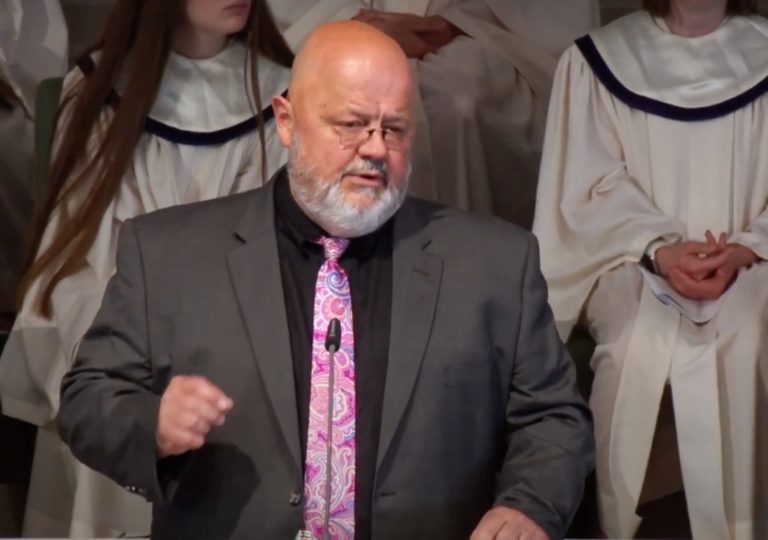
I preached again this morning, moving into the last few weeks of my bridge pastorate at the church in Westbrook. The passage today was Jesus’ first encounter with Mary and Martha, one that most people know as a story that juxtaposes the doers and the contemplatives. I kept looking for a way into the story that got behind the comparison and found some help in articles here and here.
That’s the thing about a good story: there is always more to find.
_________________________________
Thursday evening Ginger and I took a walk around the Guilford Green after dinner, as we often do. As we passed the church, which is next door to our house, Ginger said, “The shutters on the CE building are white and the shutters on the sanctuary are black. I’ve never noticed that.”
Neither had I. We have lived next door to the church and walked by it every day for almost seven years and had never seen the white shutters because the black ones that hang on the more predominant white building were what caught our attention. One little detail changed what we saw.
I had a similar experience with our scripture passage for today.
It’s a story I know well—or thought I did, much like I thought I knew what our church building looked like, but three details stood out to me in ways I had not seen before. The first is the preposition in the opening sentence: they—as in, “Now as they went on their way. . .” We have to go back to the beginning of the chapter to figure out who “they” are. Luke 10 begins with Jesus sending out seventy-two disciples in pairs “to every town and place where he himself intended to go,” giving us some indication that Jesus knew he was not long for this world. They came back full of stories to tell and Jesus was elated.
As all of that was going on, a lawyer asked Jesus, “What must I do to inherit eternal life?” and Jesus answered with a question: “What do you read in the law?” The lawyer said, “You shall love the Lord your God with all your heart and with all your soul and with all your strength and with all your mind and your neighbor as yourself.” When Jesus told him he had his answer, the man asked, “Who is my neighbor?” which led to the parable of the Good Samaritan, which ends with Jesus asking another question: Which of these three, do you think, was a neighbor to the man who fell into the hands of the robbers?” The lawyer said, “The one who showed him mercy,” and Jesus said, “Go and do likewise.”
Then THEY went on their way—the lawyer, the seventy-two travelers—and Jesus went into the village where Martha welcomed him. Not them. Him. Jesus was by himself—or might have been. Martha wasn’t cooking for a crowd. We are not told if they already knew each other, but it feels like a reasonable assumption. Jesus entered the house and Mary was there, which brings me to the second detail: Mary sat at his feet.
The phrase is more metaphor than description. It means she took the posture of a student—a disciple. She wanted to soak up whatever Jesus had to say, to talk about important things, to learn and to grow. The detail is crucial because women in Jesus’ time were not allowed to touch the scriptures, much less study them. Jesus was widening the circle.
Meanwhile, Martha was “distracted by her many tasks,” and that brings me to the third detail. The word that is translated as “tasks” or “work” is the Greek word diakonia, from which we get our word deacon. It means works of service, or ministry. Theologian Karen Gonzalez says,
The work that Martha is doing is probably not housework but the work of that a deacon of her worshipping community might have done–this work might include hospitality but is not limited to that duty alone.
Martha, too, was acting like a disciple. All three of them—Jesus, Martha, and Mary—were focusing on ministry.
Mary and Martha are mentioned three times in the gospels. This is the first, when the home is identified as Martha’s and Mary is mentioned second. In John 11, we also learn of their brother Lazarus, who died, and Jesus went to their village. Mary stayed home when Jesus got there and Martha went out to meet him and then went back to get Mary. In John 12, Jesus was in their home again, this time identified as Lazarus’ house, and while Martha fixed dinner for the crowd and Mary anointed Jesus’ feet with perfume.
If the point was for Martha to stop her work and act like Mary, she never got the point and Jesus did not appear to see the need to belabor it. If Martha’s point was for Mary to pick up the slack, she didn’t appear to get the message either. Maybe neither of those things was the point.
Jesus challenged Martha to stop comparing her ministry with that of her sister.
I have to listen hard to that statement because hospitality is what I love. I love to cook elaborate meals and serve lots of people, part of which means I have to get up from the table in the middle of good conversations and work on the next course. I have had to learn that sometimes real hospitality can happen when I open a package of Cabot Cheddar and a sleeve of Ritz crackers and do my best to not miss a word.
Then again, I get Mary because I can spend the day reading theology books or talking big cosmic ideas when there is housework and clean up that needs to be done. I have stacks of t-shirts that need to be put away and weeds that need to be pulled who will all attest to that fact.
Some moments call for the ministry of presence and some call for the ministry of action. Again, this is not a story about comparison. Jesus was not picking a favorite. This is a story about grace.
Jesus said, “Martha, Martha”—I love that he called her name twice; it carries such affection—“you are worried and distracted by many things.” I think that is a sentence where we can all find ourselves. We are worried and distracted by many things, and in the middle of all of that worry it is easy to think if only other people would pick up the slack things would be easier. I get that. I feel that way sometimes.
Do you know what I mean?
You know: If people would just look at the world the way we do and do the things we wish they would do the way we want them done, this world would be a better place. Right?
However, none of us has been appointed Organizer of the World—though we all volunteer for the job from time to time, just like Martha. And, just like her, we can’t pull that off with the people in our own house, much less all across the planet.
Here’s the thing: Martha saw Jesus and welcomed him into her home without expecting him to do anything but be there, yet she struggled to welcome Mary, her sister, in the same way. That’s why Jesus called her out. He wasn’t telling her to quit doing what she was doing. He was asking her to welcome Mary as well. To give Mary grace.
We, like most congregations, talk a lot about how we can be more welcoming, which most often means how we can attract new people. Perhaps we begin by welcoming one another to come in and find the grace and the space to listen to God and feel at home with ourselves and with one another. No one is made more valuable to God because of what they do or how much they do, why then should we put those stipulations on one another? We are not the Body of Christ because we have earned our way in; we are all a part of the God’s incarnation of love in the world because of who we are, not because of how we compare to everyone else.
May God give us the grace to see beyond our expectations of one another and choose the better part of belonging—relishing one another’s gifts and making room for all of us to belong, just as we are. Amen.
Strawberry shortcake has been a Fourth of July tradition at our house for a long time. The recipe comes from my great grandmother–my father’s grandmother–who died not long after I was born. When my mother asked my father what recipes he wanted to make sure she knew how to make, he said, “Ma’s strawberry shortcake.” My mother went to his grandmother to ask for the recipe and all she offered was a list of ingredients and instructions like, “Add two glugs of oil.” (You turn the bottle over and let it “plug” twice.”
When we lived in Kenya, our house was around the corner from a strawberry farmer and we had shortcakes fairly regularly during harvest time. Mom made them so large that they were the meal, not the dessert. And she always brought the mixing bowl of leftover whipped cream to the table.
One night, my mother, my brother, and I were finishing dinner (Dad was out of town), Miller was slopping the spoon in the whipped cream when he looked across the table and caught my mother’s gaze.
“Don’t you dare,” she said, and as she finished speaking a dollop of whipped cream hit her right between the eyes. Nobody moved. She didn’t say a word, and she didn’t wipe the whipped cream off of her face as it slid down her nose and chin. She picked up her spoon, reached in the bowl for a scoop and threw it back at my brother. Then we started laughing–and we had about five minutes of the best whipped cream food fight ever known.
I love this recipe.
Over the years, I have adapted what was handed down to me. I put fresh basil in the shortcakes (they’re sweet biscuits, really), add a little cinnamon to the whipped cream, throw some blueberries in, and macerate the berries in sugar, lemon juice, and a little balsamic vinegar.
And I still bring the extra whipped cream to the table–unless my brother is in town.
strawberry shortcake
Start with the berries. But first, put your mixing bowl and whisk from your stand mixer in the refrigerator until you are ready to make the whipped cream.
1 pound strawberries, trimmed and sliced
1 tablespoon balsamic vinegar
1/4 cup brown sugar
2 tablespoons lemon juice
Macerating means softening the berries with liquid, and the process is simple, though the word makes it sound far more violent than it deserves. Start here and let the berries rest for about thirty minutes to create a lovely syrup.
Next, the shortcakes.
2 cups all-purpose flour (280 grams)
4 teaspoons baking powder
1/2 teaspoon salt
4 tablespoons sugar
1/4 cup chopped basil
1/2 cup (one stick) cold butter, cubed (this takes the place of the glugs of oil)
3/4 cup milk
Preheat oven to 425°.
Combine the dry ingredients and then cut in the butter until the mixture looks like small pebbles. Add the milk and mix (by hand or with a wooden spoon) until if forms a dough. Don’t overmix. Dump the dough out on a lightly floured surface and roll to a rectangle about a half–inch thick. Cut into eight pieces and place on a parchment lined baking sheet. Bake for 12-15 minutes, or until tops are browned.
And now, the whipped cream.
1 pint heavy whipping cream
1/2 teaspoon cinnamon
1/4 cup confectioner’s sugar
1 teaspoon vanilla
I don’t make the whipped cream until I am ready to serve the shortcakes. When you are ready, take your mixing bowl and whisk out of the refrigerator and add the ingredients. Take plastic wrap and cover the top of the mixing bowl so you don’t inadvertently redecorate your kitchen. Turn the mixer on high and let it whip until the cream looks the way you like it.
To serve, cut the shortcake in half. Put a small dollop of whipped cream on the plate; put the bottom of the shortcake on top of the whipped cream and then add berries and more cream. Invert the top of the shortcake so the cut side is up and press it into the whipped cream and then add another layer of berries and cream. Take the leftover whipped cream to the table.
Since I am headed to youth camp with Wilshire Baptist Church this week, we had our shortcake on Saturday. It won’t be the last time this summer.
I have been away from much of the media in my life for a few weeks, much of it related to dealing with changes in my life that have taken a toll on me mentally, emotionally, and spiritually. Posting my sermon this week is a way of saying to you and to myself that I want to be more present here. Thanks for sticking with me. The text is Galatians 5:1, 13-25.
______________________________
When I work on my sermon each week, I try to start early.
To give Zoe some time to think about music selections, I select the scripture passage far ahead of time, usually from the Revised Common Lectionary—or at least I try to. On Monday, I look up the passage and read through it and begin to jot down ideas. I read commentaries, other sermons, and then begin the chase the theological rabbits that show up until things begin to come together. If all works well, I hope to have some sort of draft by Thursday or Friday because sermons, like fruit, need some time to ripen.
That didn’t happen this week because the events of the week overwhelmed me and kept changing what I saw in our passage for today. Three things—one public and two more personal to me—kept me grappling with what to say. So here it goes.
The first verse of our passage is puzzling to me because it is so circular: “It is for freedom that Christ has set us free.” It feels a little like the kid who came into class after the bell had rung and the teacher asked, “Why are you late?” The kid answered, “Because I’m not on time.”
What does it mean that we have been set free in Christ for freedom?
And what do we mean by freedom anyway?
Another translation reads, “It is to freedom that you have been called, my brothers [and sisters]. Only be careful that freedom does not become mere opportunity for your lower nature.
Paul then goes on to say freedom is not a license to self-indulgence. To be free does not mean we have the right to do what we want regardless of the consequences or the effect on others. Freedom in Christ is being free to love our neighbor as ourselves. And then he warns, “If, however, you bite and devour one another, take care that you are not consumed by one another.”
I said I had three things that affected what I wanted to say this morning.
The first is that I am leaving my job this week. Thursday is my last day at my job as an editor—a job I have dearly loved. Because I am sixty-five, the verb they use to describe what is happening in that I am retiring, but that is not the whole story.
I did plan to retire from this job, but not for several more years. A change in leadership about a year and a half ago made it apparent that I was not included in the long-range plans for the company—not just me, but a number of my colleagues who have worked there a long time. As I have struggled, a friend said to me, “We either choose our losses or we lose our choices.” I chose to resign rather than stay in a situation that fosters anger, strife, and resentment in my heart.
When I can get beyond my stuff, I can see that my boss is help captive by her woundedness and her ambition. I think she is more miserable than I am. I can’t always get to that place of compassion, but when I do I better understand the kind of freedom Paul describes as the fruit of the Spirit: love, joy, peace, patience, kindness, generosity, faithfulness, gentleness, and self-control.
I don’t mean that I am just letting this all roll off. I have my exit interview this week and I will speak frankly about the damage that has been done because it needs to be called out. I do mean that I am working hard to want something other than vengeance. I don’t want to respond to her relational violence with violence of my own. I want to be free of it. I don’t want to be remembered for my retaliation. I want to be remembered for my relationships. I don’t want to be consumed by my situation.
That brings me to the second thing—the public thing.
We live in a country where many appear to think that freedom means the right to devour one another. We have seen that again this week. The Supreme Court said it is unlawful to put limits on where people can carry weapons but it is lawful to put restrictions on the choices a woman makes about her healthcare and her body. Emotions run high on both issues, I know. I feel deep sadness and anger that the several of the justices framed their decisions in the context of faith, as though forcing pregnancy and taking away a woman’s right to make choices about her life and her body was the “Christian” thing to do.
Wielding power to make others do what we want them to do is not loving one another as we love ourselves; how can that be the Christian thing to do?
In the contrast Paul sets up in the passage he makes a list of what he calls the works of the flesh. When we read the list, it is easy to focus on the more salacious stuff, but in the middle of it all he mentions “enmities, strife, jealousy, anger, quarrels, dissensions, factions, envy.”
Then he says, “By contrast, the fruit of the Spirit is love, joy, peace, patience, kindness, generosity, faithfulness, gentleness, and self-control. There is no law against such things.”
The way we can change the world by living out our faith is not by plotting to gain political power so we can enforce our idea of morality. We change the world by loving our neighbor as ourselves, by choosing to let the Spirit free us from our fears and woundedness and arrogance to be able to live compassionately—to share the pain and grief of those around us rather than adding to it.
Where he listed the works of the flesh, he talks about the fruit of the Spirit. The word translated as fruit carries the connotation of what we give birth to in our lives: what comes into existence as a result of our way of being in the world—and that brings me to my third thing.
Yesterday Ginger and I participated in a memorial service for our dear friend, Eloise Parks. She and Ginger met their first week of seminary thirty-seven years ago and shared a lifetime together. Eloise died eight months ago. The service yesterday was at Pilgrim Church in Duxbury, Massachusetts where she served as Associate Pastor ten years ago. They reached out to Ginger to say they wanted to do something to mark the impact she had on their lives. We spent a little over an hour yesterday telling stories, singing hymns she loved, and giving thanks for what she gave birth to in our lives. Ten years later, the love they felt from her and for her is vibrant and fresh.
If our words and actions do not foster relationships and do not breed compassion and kindness then we are not free: we are not living as Christ calls us to live. If we are not choosing relationship over doctrine, over partisan allegiance, over fear, over ambition, over self-importance, over however you want to fill in the blank, we are not free: we are not living lives that give birth to love.
“Love your neighbor as you love yourself” is not a requirement; it’s an invitation. In a world that is addicted to divisions and dissentions, we are invited to be free to love.
As Paul said, “Let us not become conceited, competing against one another, envying one another.” And we might add let us not become divided, attacking one another; let us not become self-righteous, imposing our wills on one another; let us not become defensive, projecting our fears on one another.
My siblings in Christ, let us love one another, offering love, joy, peace, patience, kindness, generosity, faithfulness, gentleness, and self-control. Amen.
I preached last Sunday at Wilshire Baptist Church in Dallas, a church with which I have a long and meaningful connection, so my sermon is personal for me and for them. Even so, sometimes something that speaks to the particular also has a wider reach. Thanks to their awesome AV team, I have video as well.
My text was John 13:34-35: “I give you a new commandment, that you love one another. Just as I have loved you, you also should love one another. By this everyone will know that you are my disciples, if you have love for one another.”
____________________________
For the first time in many years, I have preached weekly through the seasons of Lent and Eastertide. I have been a bridge pastor for a church a couple of towns up from ours on the Connecticut shoreline. We, like you, have followed the lectionary, and the timeline of the stories held together pretty well, telling stories of Jesus’ ministry, then his trial and death, then his resurrection, and then his appearances to those whom he loved and who loved him. But the last couple of weeks, the passages in the lectionary have jumped back to before the resurrection. Our text today takes us back to the night before his death, the night when both Judas and Peter betrayed Jesus, the night when he ate with his disciples and washed their feet.
When we gather for services on the night we have come to call Maundy Thursday–which is Latin for “Mandate or Commandment Thursday”–we can tap into the solemn nature of the service and the rich significance of our rituals, but what we can’t reproduce is the uncertainty of what it felt like to be in that upper room, with little more than an ominous sense that life as they had known it was over. For me it carries the same kind of power as Holy Saturday, the day between Jesus’ death and resurrection, when those who had walked with him had no real sense that Sunday would come.
I learned a term from the Rev. Dr. Wil Gafney, an Episcopal priest and Hebrew Bible Scholar at Brite Divinity School: Holy Saturday Christian. In a “pastoral letter” she wrote to her students after they had dealt with particularly violent biblical texts in one of her classes she wrote,
I am a Holy Saturday preacher. I wake in the aftermath— if I have slept—to the knowledge that the Beloved is still dead. And I take comfort in the God who is and has said I AM with you. And I rail and scream and curse at God knowing God hears and is there with me to hear. And I try to sleep one more night to see if it will be easier the next day.
And that is where the sermon ends. It is still too soon to talk about resurrection. But God-with-us sits in her chair grieving with us. Waiting with us, walking with us as we make our way through and make sense of our grief.
Maybe that is why we are going back in the story. Even in the shadow of the resurrection, we still have to make sense of our grief. Jesus’ words indicate that grief, like life and faith, is a team sport. Here I am this morning, second in line to fill a pulpit left vacant by one who loved you and talked to you and walked with you for a long time. Christ is risen. Christ is risen, indeed.
And the grief just keeps on coming.
Jesus was speaking to that reality when he said, “I give you a new commandment, that you love one another. Just as I have loved you, you also should love one another.”
God gave the first ten commandments to the Hebrew people to help them learn how to live in the wilderness. In the upper room, Jesus offered his commandment to help his loved ones learn how to live in their own uncharted territory. But what makes it new? Isn’t loving one another singing the same old song?
As Ginger and I both worked on sermons this week, she came across an observation that what was new was Jesus called the disciples beyond loving our neighbors as ourselves and said, “Love one another: the people right here in the group. Be known for how you love each other. “Love one another as I have loved you,” he said, which begs what feels like a rather obvious question: how did Jesus love?
The first person that comes to mind when I think of how Jesus loved is Zacchaeus because the way Jesus loved him was to say, “Come down because I am going to your house for dinner.” Jesus let Zacchaeus be the host. Jesus was going to let him offer what he had.
Several years ago, I was at Downtown Presbyterian Church in Nashville, and learned that the way they began their services was to allow anyone in the congregation to offer whatever they wanted in the ten minutes that preceded the beginning of worship. The Sunday I was there, one of the men who was experiencing homelessness and came to the breakfast they offered each week had signed up to sing. Both his voice and his guitar were beaten up, and he sang with all his heart—and it was not good. The room was hushed and attentive. When he finished, there was a chorus of amens. “We had to learn to give up being perfect,” the pastor said.
The second thing I think about is how many people were changed by what seemed to be incidental contact with Jesus. Most of his ministry took place in the context of interruptions: people who stopped him, or called out to him, or just reached out to touch him because they knew he would listen.
Before the pandemic, I rode the train from Guilford, Connecticut, where Ginger and I live to New York City one day a week for in-person meetings. I work as an editor, so I was working remotely before the pandemic since I read for a living. On my walk from Grand Central Station to my office, I always stopped at a little stainless-steel trailer at the corner of Madison Ave and E. 35th Street to get a cinnamon raisin bagel.
From March 2020 until April 5 of this year, I didn’t go to New York. My first day back, I wondered if the cart would be there—and it was. When I stepped up to the window, the man in the cart smiled and said, “Cinnamon raisin bagel!”
He remembered me. To say I felt loved is not an overstatement.
But beyond that, I started to realize that I had bought bagels from him for a couple of years and had never stopped to learn about him. The next time, I said, “May I ask you name?”
“Caesar,” he said. “Tell me yours.”
A couple of days later, I asked about his cart and he told me more of his story. I had always assumed he was a poor guy at the mercy of someone who owned a bunch of carts and that he was probably overworked and underpaid. Turns out Caesar owns his cart and has been on that corner for seventeen years. And he bought if from a man who sold bagels and coffee from it for thirty years before that. “It’s good,” he said, “I have about 40,000 customers a year.” And he remembered me.
I have been changed by my incidental contact with Caesar, or perhaps I should say choosing to make the incidental intentional is what has opened my heart a bit more.
Another thing that comes to mind about the way that Jesus loved was that for him love was an end unto itself. Jesus was not recruiting to staff an organization or setting best practices for greater effectiveness; he was not trying to bump up the membership numbers for the annual report, or make sure there were enough giving units to meet the budget.
He loved those around him just because they were wonderfully and uniquely created in the image of God and worthy to be loved.
When Paul wrote about love, he said
Love is patient; love is kind; love is not envious or boastful or arrogant or rude. It does not insist on its own way; it is not irritable or resentful; it does not rejoice in wrongdoing but rejoices in the truth. It bears all things, believes all things, hopes all things, endures all things. Love never ends.
Jesus said, “Love like that.” Choose relationship over doctrine; choose relationship over history; choose relationship over anxiety about the future, over uncertainty, over legacy, over comfort. Love one another like it’s what matters most.
When I started preparing for today, the biggest challenge was to not make the sermon about me because of how I feel about you. I have family connections to Wilshire. My grandmother was on staff here. Bruce McIver officiated at my parents’ wedding, just as George did at mine. The first retreat I did for Wilshire was for Neal Jeffries in 1982, as best I can remember, and I think this summer may be my twentieth camp. I tell people that Wilshire feels like my home church even though I have never been a member—I’ve rarely been inside the building for that matter.
I feel like I belong because one summer long ago a seventh-grade boy who had just lost his father let Ginger and I comfort him. I feel like I belong because I can’t hear the song “I Would Walk Five Hundred Miles” without seeing your faces. I feel like I belong because of Darren and what our friendship means to my life. I feel like I belong because of Collin and Ellen and Tyler and Anne and Marilu and Mindy . . . and I could spend the rest of the day naming names and telling stories because you have loved me like Jesus: you made me belong.
Keep doing that. Keep making room, keep growing and changing, keep taking care of each other; keep singing the same old song that never gets old. We are not going to last forever; Wilshire is not going to last forever; may our legacy be that we loved each other with all our beings. Amen.
The reading for today is one of my favorite passages: Jesus cooking breakfast for Peter and the others who had been fishing all night. For all the times I have read and written about these verses, I saw new things, thanks to a conversation with Ginger. I hope you find some new things, too.
______________________________
When it comes to how Peter, James, and John ended up with Jesus, it all goes back to a day when they had just finished fishing and were preparing their nets for the next time out and Jesus stopped and said, “Follow me and I will teach you how to catch people.” One of the ways to read the gospels, then, might be to look at all of Jesus’. words and actions as lessons towards that end. Jesus didn’t come to establish a religion, or overthrow a government, or even create some sort of movement. He walked through the towns and villages eating with people, talking with people, listening to people, feeding them, and healing them.
Then he said, “Love everyone as I have loved you.”
How much the disciples truly grasped what Jesus was trying to say appears to be a little hit and miss. Over and over, Jesus said and did things to show that love–God’s love–is what catches people, and it is over flowingly abundant. “Look at the lilies,” he said. “They don’t worry about tomorrow. They are content to bloom today–and they only bloom three weeks a year. Be like the lilies.” When Peter asked how to feed the thousands on the hillside, Jesus took a sack lunch and showed them there was more than enough to go around. He told parables about fathers who embraced lost sons and banquets where everyone could eat. All the words and deeds pointed to the truth that the way to catch people is to let them know they were wonderfully and uniquely created in the image of God and worthy to be loved–and nothing could change that.
There was enough love to go around. More than enough.
One moment they sounded like they had a sense of the extravagant love of God that included everyone, and then the next they were back to asking who among them was the most important. At times they seemed to grasp that the way God was going to change the world was through people who loved each other, and then their fear–fear of that love wasn’t enough–got the best of them. Though none of the gospel writers ever notes it, I imagine he must have shaken his head a lot.
This final scene in John’s gospel finds Peter, James, and John back in their boat; this time, Thomas and Nathaniel were with them. They had seen Jesus twice, but still nothing felt secure. They didn’t know what was going on. Peter was still carrying the guilt of his denial of even knowing Jesus. They didn’t know what to do, so they went back to what they knew: they went fishing. All night long. And they didn’t catch a thing.
They were still on the water at daybreak when Jesus called out to them. Our translation says, “Children, have you caught anything?” but the Greek word means something closer to, “Hey, boys, any luck?”
The nets were as empty as their hopes.
Jesus told them to try the right side of the boat and they pulled up almost more fish than they could handle. John says someone even counted: they caught one hundred and fifty three fish.
I have always been puzzled by that detail. They didn’t realize it was Jesus on the shore when he called out, and then Peter figured it out when they pulled the nets in, and then everyone rushed to shore to see Jesus, and somehow in all the commotion and excitement, they took time to count their catch?
Why does John want us to know about the one hundred and fifty three fish?
(Hold that thought.)
When they came ashore, Jesus told them to bring some fish, but breakfast was already cooking. Somehow, he had fish of his own. Whatever they brought from the boat was extra–sort of like the leftovers from the feeding of the five thousand. They ate together and then Jesus began asking Peter questions–well, one question three times:
Simon, do you love me?
After each time Peter said, “Yes,” Jesus said, “Feed my sheep,” or “Feed people.” Take care of them. Make sure everyone knows there is enough love to go around.
The metaphors of catching fish and feeding people were laying in the nets right in front of them. They were surrounded the fish they had just caught before being called to breakfast. In a time when there was no refrigeration or cold storage, a net full of fish meant they needed to get to market to make sure their catch got to the people who needed food. There was more than enough for today, but the fish wouldn’t keep. They needed to be eaten today and then they would go catch some more. Even the biggest catches don’t last forever, but what matters is people can eat right now.
If you want to catch people, feed them.
We can hear the word catch a couple of ways. You can catch a fish with a net or a hook, but we also use the word to say things like, “I’ll catch you if you fall.” Jesus was talking about the way you help someone, not how you hook them.
When Peter denied even knowing Jesus to the point of swearing about it, he went into free fall. When he heard the rooster crow, he wept. He had charged into the courtyard thinking he could do something, but his fear got the best of him. At breakfast on the beach, Jesus caught him. He kept Peter from falling deeper into despair and shame. On that beach, in front of his friends, Jesus gave Peter the chance to say out loud that he loved Jesus. He caught him.
Perhaps that image is so powerful to me because it reminds me of my favorite passage from the novel Catcher in the Rye. (I taught high school English, so I have read it far too many times.) Holden Caulfield, who is a troubled teenager and not particularly likeable, has a tender moment as he talks with his sister Phoebe about what he wants to do with his life, and it all swings on a line from a Robert Burns poem that has stuck with him: “If a body catch a body comin’ through the rye.” But Phoebe tells him he’s got the line wrong. The line was “if a body see a body comin’ through the rye,” not catch a body.
“I thought it was ‘If a body catch a body,’” Holden said. “Anyway, I keep picturing all these little kids playing some game in this big field of rye and all. Thousands of little kids, and nobody’s around–nobody big, I mean–except me. And I’m standing on the edge of some crazy cliff. What I have to do, I have to catch everybody if they start to go over the cliff–I mean if they’re running and they don’t look where they’re going I have to come out from somewhere and catch them. That’s all I’d do all day. I’d just be the catcher in the rye and all. I know it’s crazy, but that’s the only thing I’d really like to be. I know it’s crazy.”
Holden may have mis-remembered what Robert Burns wrote, but he seems to understand what Jesus was saying to Peter—and to us. The third and final time Jesus asked Peter if he loved him, Peter felt hurt. “Lord, you know I love you,” he said. Jesus’ words to feed others feels like he was saying, “You know what it feels like to mess up so badly you don’t think there is enough love to bring you back. But there is. I caught you. Your betrayal of me is not the last word. This is: I love you and you love me. Now go catch others who are falling and feed them full of love.”
In some of my writing, I have talked about the ways I think Judas is treated unfairly in the gospels. None of the writers can mention him without reminding everyone that he betrayed Jesus. Thomas is the other disciple that gets misrepresented, I think, more by the generations that followed than by the gospel writers, perhaps, because he continues to be “Doubting Thomas,” and there’s so much more to the story.
Here’s what I found this week as I read about him again.
__________________________________________
When I was a kid, the family that lived next door to us had four boys. My brother and I fell in the middle of them age wise, so we spent a lot of time together. The youngest was name Richard, but everybody called him Chubbs. But he wasn’t fat. I think it had started when he was little. He grew tall and thin as a preteen, but he never lost the nickname.
He was always Chubbs.
I think about him whenever I read about Thomas because most all of my life I have heard him called “Doubting Thomas,” which I have never felt was a fair take on the guy. When it comes to gospel portrayals, Thomas and Judas are probably not treated fairly. Since the stories were written down years after Jesus had gone, none of the gospel writers can mention Judas without making sure we remember he was the one who betrayed Jesus. Truth is all the men around Jesus betrayed him in one way or another. The women were the ones who stayed true, but they got written out of the story for the most part. And then, the one story about Thomas is this one, and he ends up being called Doubting Thomas–a name that has outlived him by centuries.
This is the last story in John’s gospel. It immediately follows Mary’s encounter with Jesus that we talked about last week and then John signs off, hoping we will find faith in Christ. Because of that, I want to cut the gospel writer a little slack because I don’t think he meant to stick Thomas with the nickname anymore that Richard’s parents thought Chubbs would last for life. I say that because this is the closing scene of the book and not just another episode.
The first part takes place on the evening of the day they found the tomb empty–Easter night, if you will. Even though they knew Jesus was alive, they had not seen much of him. They were back in the upper room with the doors locked. They were still scared. They weren’t sure of anything. And Jesus came through the door–literally–and said, “Peace be with you,” and then blessed them with a calling to go and love others; actually, to forgive others.
For whatever reason, Thomas wasn’t there. When he came back, they told him they had seen Jesus and he said, “I need to see for myself to be able to trust the story.” Though John doesn’t give us details, it feels like they must have given him a hard time about not trusting what they had seen. But remember, these people had locked themselves in a room out of fear because they hadn’t trusted the story either. They didn’t have room to talk when it came to hassling Thomas about trust.
I hope you are picking up that I am using the word trust instead of believe because the distinction matters to me. The Greek word means more than what the word believe means to us. We have made belief an intellectual assent, a heady thing. I think trust is a better translation because trust is a risk. Something is at stake when we trust someone else.
Thomas wasn’t trying to make sure he was right in his belief; he wanted assurances that he could trust that Jesus was alive, so he said, “I want to see him and touch him.”
A week later–so, on this very day–all of them were back in the same room and this time Thomas was with them. Since Jesus came through the door without opening it, I am going to assume they were still locking themselves in. Nobody in the room was living into their trust quite yet. Jesus offered peace to them and then turned to Thomas. He didn’t admonish him or shame him or make a speech. He just said, “You wanted to touch me. Here I am. Trust instead of distrust.”
Thomas didn’t life a finger. He just said, “My Lord and my God.”
Jesus then said words that have taken on a life of their own, even outside the world of faith: “Blessed are those who have not seen and still believe.” I want to rephrase those words in terms of trust. Blessed are those who have not seen and are still willing to trust.”
Instead of Doubting Thomas, I think we would do better to call him Honest Thomas, if we want to give him a nickname, because trust is hard work.
If we are going to share in Thomas’ confession, “My Lord and my God,” then we have to learn how to live in trust, and the way Jesus us taught us to live teaches that to live out our trust in God means to learn to trust one another in Jesus’ name.
One of the things that strikes me about this story is that Jesus came looking for Thomas, which means Jesus had gotten word that Thomas was having a hard time. Instead of talking around Thomas, or telling someone else to tell him what he was doing wrong, Jesus showed up in the room, looked Thomas straight in the eye, and said, “Put your finger in my side. Look at my hands.”
He dealt directly with Thomas.
If we want to grow as a community of faith “passionately committed to Christ,” as we say in our mission statement, it starts right here: we commit to building trust with one another.
I want to say again that to follow Christ is not about intellectual belief in something, it’s about trusting God and one another. A faith that matters, that changes lives, is one lived out in relationships, which means one committed to building trust.
Thomas was open about what he was struggling with, and when he said he couldn’t trust without physical proof, he didn’t say, “But don’t tell Jesus I said that.” He was open and honest and he showed up in the room with the others so Jesus could find him. Jesus, as I said, didn’t send word to Thomas, he came and found him so they could talk face to face.
Perhaps you are thinking, “This is the second Sunday of Easter and he’s talking about direct communication?
Yes. Yes, I am.
If we are passionate about living out our faith, it will show in the way we relate to each other. If we don’t trust each other to speak the truth in love, then we will find it hard to trust God, too, because God is not off somewhere looking down, God is here among us. If we want to find new life in Christ, we will find it in building trust with one another. If you want to see this congregation grow spiritually and numerically as you get ready for a new pastor, then work on trusting each other. Speak directly. Don’t give or take anonymous feedback. Feedback that does not offer the possibility of conversation and understanding is sniper fire. It destroys trust, and thus destroys community.
To be a part of the Body of Christ together means to choose each other over the history of the way things have been done, over personal preferences, over opinions. To choose life together in Christ means asking questions rather than jumping to conclusions, listening first and then speaking, and assuming positive intent when we don’t understand what is happening.
The difficulty of the past couple of years has left us all tired. We are all exhausted. We are all hurting. We are all doing what we can. Locking ourselves in a room like the disciples did sounds like it might be an option worth considering. However, they hid in fear, not trust, and Jesus found them to say, “I called you to more than this.” Then he came back for Thomas so that he knew he belonged as well.
When Jesus said, “Blessed are those who have not seen and are still willing to trust,” he was talking about us. He is not going to come barging in the room while we are all here so we can be sure it’s him. If we want to see Jesus, we are going to have to trust each other. We are going to have to incarnate the love of Christ in what we do and say and think if we want to see Jesus.
“Love one another as I have loved you,” Jesus said. And you remember what love looks like, don’t you? We read those words again two weeks ago:
Love is patient; love is kind; love is not envious or boastful or arrogant or rude. It does not insist on its own way; it is not irritable or resentful; it does not rejoice in wrongdoing but rejoices in the truth. It bears all things, believes all things, hopes all things, endures all things. Love never ends.
Let us love one another in hope and trust. Let us speak the truth in love, but first, let us learn to listen in love, to ask compassionate questions, to do everything we can to let love burst in and chase out fear. Amen.