Home Blog Page 27

let justice flow down like wine

Every three years in the lectionary cycle, the story of the wedding at Cana (John 2:1-12) is the suggested passage for the Sunday before the MLK holiday. Since neither the gospel writers nor the lectionary committee knew anything about the King commemoration, many churches turn to King’s words in their worship. This year, as I explored the story of Jesus’ first miracle, I found a connection that fed me. Here’s my sermon for this week: “Let Justice Flow Down Like Wine.”

__________________________

We don’t know why they ran out of wine at the wedding. Perhaps people drank more than they thought. Perhaps they had planned poorly. We don’t know the relationship between Jesus and the guests. Pretty much everyone in the story remains anonymous except Jesus. Even Mary is not named; she is referred to as “his mother.”

Of all the stories in the Gospels, the story of the wedding at Cana probably ranks as one of the best known for a couple of reasons: one, it was Jesus’ first recorded miracle, or sign, as John refers to it; and two, Jesus turned water into wine to help a wedding party keep going. He didn’t heal anyone or raise anyone from the dead. He made wine for the party.

From a preaching standpoint, the story is interesting because of the various ways people interpret the details. Rebecca Solnit says, “To tell a story is always to translate the raw material into a specific shape, to select out of the boundless potential facts those that seem most salient.” Though she was not talking specifically about scripture, I think she describes well what we do when we come back to these stories again and again and find fresh understanding. What’s on the page may be the same, but we are not. What we notice about life, about the biblical accounts, about ourselves are all things that stay in motion.

We don’t know why Mary knew about the problem, or why they were even at the wedding, but she wanted Jesus to do something about it. She finds him and says, “They have no wine.” In most versions Jesus’ response is translated, “Woman, what does that have to do with me?” but in the Greek it reads, “What does that have to do with you and me?” When the question includes them both, I hear it differently: why did the wedding party’s problem have to be their problem too?

In that light, it almost feels rhetorical, but then I think of Jesus sitting at the table with his disciples and I wonder if it wasn’t a teaching moment. Perhaps I read it that way because that’s where I found myself in the story this time around sparked by one commentator in particular who turned the question on himself:

In what way are others essential to my relationship with God? In what way are they indispensably present? Other people are obviously crucially important and integral, irreplaceable. I spend most of my life with them and (hopefully) much of it for them. They enclose relationships of friendship, love, and wisdom that make up much of the richness of life. This seems obvious. But how are they absolutely essential and indispensable to my hope for a relationship with God—so much so that if they were not present, I would have no relationship with God at all? That is what I mean by “absolutely essential.

Even in the few weeks I have been here, I have said more than once that life and faith are team sports. Jesus’ question underscores that truth. We are essential to one another. The answer to his question about who the wedding party was to him and his mother was everything. So, Jesus went to work.

He told the servants to fill up the six big clay pots or pitchers that were there with water. Each one held about thirty gallons of water. Their usual purpose was to hold water for Jewish purification rituals—not just handwashing, but rituals that symbolized internal cleansing—repentance. The servants did as they were instructed and when the caterer drew from the pots he found wine. Good wine. Really good wine. And a lot of it: those six pots would have the equivalent of somewhere in the neighborhood of 750 bottles of wine as we know them. I don’t know how big the wedding was, but whatever size the crowd, that is an incredible amount of wine. The only ones who ever knew about it were the catering staff, Mary, the disciples, and Jesus. No one else knew who saved the party, only that the wine never ran out.

Another commentator focused on the extravagance of Jesus’ miracle:

This is a miracle of excess, and we’re generally more comfortable with moderation in all things. Even grace. There are rules we’d like to see God follow, actually. Jesus comes around and messes with the rules—no wonder the religious authorities wanted to kill him. He seems genuinely dangerous to almost any system, to any plans we might have intended to implement. Jesus turns the purification water into wine. Is he going to turn our laws into gushing streams, our boundaries into blossoms, our principles into feasts for everyone to attend?

Her description of the miracle being one of excess made me think about coffee hours I have seen where the kitchen is full of things people brought to share but those serving the food put it out a little a time to make sure it isn’t all eaten. It’s what we might call a hospitality of scarcity: they mean well, but they don’t know how to trust an extravagant God.

Her question—is Jesus going to turn our laws into gushing streams—helped me find a connection between the story and the fact that the lectionary lets it land on the weekend when we commemorate the life of Dr. Martin Luther King, Jr. In my notes I wrote, “Let justice roll down like wine.” And then when I returned to Dr. King’s “I Have a Dream” speech I heard echoes of both extravagant love and our essential connection to one another. Listen again to what he had to say:

I have a dream that one day every valley shall be exalted, and every hill and mountain shall be made low, the rough places will be made plain, and the crooked places will be made straight; “and the glory of the Lord shall be revealed and all flesh shall see it together.”

This is our hope, and this is the faith that I go back to the South with.

With this faith, we will be able to hew out of the mountain of despair a stone of hope. With this faith, we will be able to transform the jangling discords of our nation into a beautiful symphony of brotherhood. With this faith, we will be able to work together, to pray together, to struggle together, to go to jail together, to stand up for freedom together, knowing that we will be free one day.

As Americans, we are immersed in a culture of scarcity, sort of like the folks running coffee hour. We have been trained to expect that things are going to run out, so we had better take care of ourselves before we care about anyone else. That was true before the pandemic, and it seems to have only gotten worse. I am not saying that as a judgment as much as to say the world we live in makes this a hard story to take to heart because we are inundated with reminders that there is not enough.

It’s a lie.

One of the consistent arguments raised when people talk about living into Dr. King’s dream and creating a more just and equitable society is that there is not enough for everyone to be taken care of. Jesus’ consistent message was that God changes the world—changes us—through relationships. We—together, essentially connected—are enough if we are willing to take care of each other.

Christ calls us to look at our world, our country, our town, our church, our family and ask, “What are they to you and me?” and then to hear the answer that Jesus embodied: “Everything”—an answer that leads to lives, as Dr. King said, that are able to work together, to pray together, to struggle together, to go to jail together, to stand up for freedom together, knowing that we—all of us–will be free one day.

John finishes the story be saying that the disciples believed in Jesus. They put their faith in him. They trusted him. But it wasn’t long before they were on a hillside covered with over five thousand people who had followed Jesus all day wanting to hear him speak. You know this story, too—about the boy with the loaves and fish. When the disciples noticed the massive crowd was hungry, Jesus didn’t ask a question; instead, he just said, “Feed them.” The disciples were incredulous. “Where would we ever find enough food—or money to pay for it?” They may have trusted him at the wedding, but they had forgotten by the time it came to take care of the crowd. Jesus took the loaves and fish and fed thousands. Even though they walked with him every day, Jesus’ followers had a hard time really trusting the extravagant grace of God that Jesus kept showing them.

In these days, what we need to remember about this story is God dreams bigger than we do. God loves bigger than we do. God welcomes bigger that we do. And God wants us to grow into all of it. God wants us to revel in the audacity of excess, in boundless love, and unfettered grace.

That’s why we keep coming back to this story, and to the life of Dr. King—to allow the Spirit of God to keep telling us that we are essential to each other, not just because we are connected but also because we are each other’s best way to experience the extravagant, unrelenting love that lets justice roll down like wine. Wine enough for every last one of us. Amen.

Peace,
Milton
a blessing story

One of the characteristics of recipe blogs, as opposed to a recipe site, is that you generally have to read through a long story to get to the recipe, so if you are trying to find a recipe in a hurry, you have to scroll for a while to find what you want. But the front part is more than just filler. The writers tell their stories for a reason: they want to connect with their followers, to make it about more than just the recipe.

As I have been preaching more regularly, I’ve started to feel the same way about my sermon posts, since often they include stories I have told before (well, pretty much everything I say and write contains stories I have told before) and I write them for the congregation, so sometimes they are fairly specific and need a little context. This is the Sunday that commemorates the Baptism of Jesus. I love preaching from this passage because it talks about blessing: the unabashed love of God that names us all. I spent a lot of my life looking for a blessing that felt like enough. I have also spent a lot of my life telling other people they were beloved children of God that brought God delight. Embracing that blessing in my own life has made me more determined to pass it along.

Here is my latest version.

_____________________________

About a month ago, on the Second Sunday of Advent, the scripture for the day pointed us to John the Baptist and we talked about his calling people to a baptism of repentance and forgiveness. During Advent, John felt a little out of place, but he helped us prepare the way of the Lord. Today, as many congregations across the wider Church commemorate Jesus’ baptism, the story fits a little better into the timeline of Jesus’ life.

Of course, the timeline is spotty, as far as the details go. We know John and Jesus were cousins, but we don’t have any accounts of how they grew up together or what brought them to this moment. Because of the connection of the families, it is a fair assumption that they were a part of each other’s lives and Jesus showing up at the Jordan was something John saw coming, even if he was surprised by Jesus’ request to be baptized. Their life stories were already intertwined.

One of the most meaningful metaphors we use for life is to say we are telling–or living–a story. Each life, like a story, has a beginning, a middle, and an end. And it is peopled with characters. One of my favorite quotes (that I never can remember exactly) says something like, “My life is filled with wonderful characters, I’m just not sure about the plot.”

The reality is life is not a story–or not a cohesive narrative–until we begin to shape it by our retelling. And when we do, we think of ourselves as the main character. Rebecca Solnit says,

We are all the heroes of our own stories, and one of the arts of perspective is to see yourself small on the stage of another’s story, to see the vast expanse of the world that is not about you, and to see your power, to make your life, to make others, or break them, to tell stories rather than be told by them. (The Faraway Nearby 29)

It is stating the obvious to say both John and Jesus are part of a larger story, but I think it matters that they both knew that. John got a lot of attention, but he knew he was not the main event. He appeared to understand that in the way he welcomed Jesus, as well as in the way he called people to forgiveness and repentance. Both those words call us to remember we are not the main character but are a part of a web of relationships. Jesus understood as well. He asked to be baptized to “fulfill the Law,” which means more than saying, “We have to obey the rules.” At the heart of the Hebrew faith was a sense of justice, as in the prophet Micah saying what God requires of us is to do justice, to love kindness, and to walk humbly with God.

His actions challenge our thinking about who he was. If he was sinless, why would he submit to a baptism of repentance and forgiveness? Perhaps because he knew the story was not about him, even if he was the Messiah. He was joining the larger story of God’s love and justice, and that opened him up to receive God’s blessing: “This is my dearly loved child in whom I am well pleased.”

Theologian Cornel West says, “Justice is what love looks like in public.”

In public, Jesus joined the story of repentance and forgiveness that leaned into the love of God and found blessing. We all need the blessing to be able to practice the art of perspective that reminds us we are not the main character. This is an ensemble production.

What does it mean to be blessed?

In French, the word blesser means to hurt or to wound; and in English, we could say, I suppose, that it means to heal. The two languages remind us that to love someone comes with the risk of injury. Opening ourselves to love means being willing to be hurt. Whatever brought Jesus to meet John at the Jordan led to God proclaiming, “That’s my child in whom I delight.” Those words launched Jesus into the next chapters of the story, which carried its share of pain even as he went forward with a blessing.

Who doesn’t need to hear a blessing?

One of the stories of my life is my relationship with my father. He died eight and a half years ago, but the story is still unfolding. Life with my father was not perfect; we lived through several stretches where it was difficult for both of us. I was his namesake, which often made things even more complicated. When we were living in Boston, I went back to Baylor University for Homecoming and learned that my father, who was the university chaplain, had preached that day on campus. I did not hear the sermon, but a friend told me that he had used me as an illustration.

My father said, “In life you have to learn the difference between a problem and a predicament. A problem you can fix. A predicament is something you have to learn to live with.” He paused. “I used to think my eldest son was a problem. Now I see he is a predicament.”

I told that story at his funeral and then I added, “I learned he was a predicament, too.” We loved each other and had worked hard to learn to live with and love each other as we were, which was a good thing. While he was still alive, we found a rhythm as predicaments that let us both be ourselves and be together; we were able to bless one another. Since his death, that blessing has meant my ongoing predicament is I am not going to get over missing him. And I don’t want to.

My mother, who died six years ago this coming week, blessed me in the kitchen. She is the reason I love to cook. As a young boy I asked a lot of questions about what she was doing as she prepared meals and she invited me to help. Then she would say, “You watched me do this last time. You can do it.” And I believed her. I don’t step into the kitchen without being aware of her blessing.

Many years ago, my friend Burt, who was then a pastor in Waco, Texas was preaching on this passage and asked me to write a poem for his sermon. In the way a good story comes together, I had just seen a billboard on my way home to our house in the Charlestown neighborhood of Boston that had already set me to thinking. I wrote these words.

daily work

The crush of afternoon traffic finds me
in an unending stream of souls staring
at the stoplight. From my seat I can see
the billboard: “Come visit the New Planetarium
You Tiny Insignificant Speck in the Universe.”

When the signal changes, I follow the flow
over river and railroad yard, coming
to rest in front of our row house, to be
welcomed by our schnauzers, the only
ones who appear to notice my return.

I have been hard at work in my stream
of consciousness, but the ripples of my life
have stopped no wars, have saved no lives––
and I forgot to pick up the dry cleaning;
I am a speck who has been found wanting.

I walk the dogs down to the river and wonder
how many times I have stood at the edge
hoping to hear, “You are My Beloved Child.”
Instead, I skip across life’s surface to find
I am not The One You Were Looking For.

I am standing in the river of humanity
between the banks of Blessing and Despair,
with the sinking feeling that messiahs
matter most: I am supposed to change
the world and I have not done my job.

Yet. . . if I stack up the stones of my life
like an altar, I can find myself in the legacy
of Love somewhere between star and sea:
I am a Speck of Some Significance.
So say the schnauzers every time I come home.

I don’t know where you find yourself in the story of our lives this morning. Maybe you need someone to bless you, to tell you that you are a child of God, wonderfully and uniquely made and worthy to be loved. Perhaps you need the new beginning offered by repentance and forgiveness, both on the giving and receiving ends. Maybe you hold the blessing someone else desperately needs. Or maybe you are just trying to figure out what the story is in these difficult and exhausting days. Whoever you are and wherever you are in life’s story, you are God’s beloved child in whom God delights. And you are not alone.

Let that sink in: you are loved, you are loved, you are really, really loved. Amen.

Peace,
Milton

follow the science

Since we don’t have a service on January 6, I traveled with the magi today for my sermon, a passage I have looked at many times because it often comes up the Sunday after Christmas—a Sunday I often preach. Though my “go to” sermon is about learning how to go home by another way (thanks to both the magi and James Taylor), I found another way to look at the story. I hope you find something here, too. Happy New Year.

____________________________

Our season of Christmastide comes to a close this week with the celebration of Epiphany, which marks the visit of the Magi who came to visit Jesus. Like so many stories in the gospels, we only get a sketch of what happened and are left to fill in the blanks.

We don’t know much about the ones who came to find Jesus. We know they came from east of Palestine–maybe Persia, which is Iran today. We know they watched the stars, so we assume, as our translation did this morning, that they were astrologers or astronomers. In Jesus’ time, the two words were synonymous. As tradition built up around the story, they began to be referred to as kings because the gifts they bought were expensive. Not just everyone can show up with gold. Tradition also decided that there were three of them because there were three gifts, assuming, I suppose, that nobody would show up at the manger without a present. The King James Version translated the Greek word magios as “wise men” and the name stuck, even though their gender is not identified in Matthew’s account.

We have been reading this story with some imagination for centuries it seems. As I was working to see these folks in new ways this year, I came across an article written by a scientist named Roger Barlow who imagined the details differently. He said:

At this point we realise that we have a better word to translate magoi – a word not available to the translators of the Authorised Version of the Bible in King James’ reign, as it was only invented in 1833.

The word is scientists.

Looking back 2,000 years, they and we are not so different. They used their understanding of the universe to predict what would happen in the world – and, working as a group, they investigated their predictions, despite the cost and trouble and hardships. This is something any scientist today can recognise and identify with. Their understanding of the universe is crude and primitive in our eyes – but what will today’s scientific theories look like in 2,000 years time?

So, when we see pictures of the three kings at Christmas, we should spare them a thought, as colleagues who believed in their theories and followed through the consequences, despite the trouble and expense and personal effort involved. The strength of their conviction and their resolution to follow it, 2,000 years ago, can be an example to us today.

I do not have a scientific mind in the sense that I understand equations and so forth. I am drawn to the world of science because of the way scientists are trained to ask questions and to understand failure as part of the process on the way to new knowledge. In fact, when a scientist thinks they have made a discovery, one of the first things they do is put it our for peer review and ask others to help them see what they are missing. They want to know if they have made a mistake or if they failed so they can try again. Though they want to be accurate, the point is not to be right for the sake of being right, as much as it is to keep learning.

The Magi—the scientists–did not make the journey because they were sure of what they were going to find. They paid attention to the night sky and planned their actions to the best of their knowledge. Then they followed their theories and their hearts across the desert to find the child.

The shepherds, we are told, ran into town fueled by joy and amazement. They were serenaded by an angel choir in the middle of the night. What else could they do but run into town and find the baby? The Magi were a different story. They were motivated by more than impulse. What they saw in the sky was not so easily identifiable. They studied the stars nightly and noticed the changes. When they saw whatever astronomical event piqued their imaginations, they planned a journey and then they set out to see who they could find. Their decision to find the child was fueled by inquisitiveness, imagination, hope, courage, and tenacity.

This trip that has fed the imaginations of our Christmas traditions was risky and ripe for failure. They traveled to a country that was under foreign occupation and had the audacity to go ask the king for directions. They traveled on remote desert roads carrying expensive gifts. They traveled a long way without knowing what or who they would find. And then they had to flee for their lives after they saw the child because the king felt threatened by their news.

And so we mark the end of the Christmas season with a reminder that, even though our lives may not take us across the country in the middle of the night, we can learn to be inquisitive, to pay attention to details, to ask good questions, and to be willing to move in unfamiliar directions.

In a world where we have a lot that we don’t understand and so much that feels difficult, it is tempting to hold on to what we know or what feels comfortable rather than risking the journey to see what else God might have in store for us. In a world where things change so quickly and we feel flooded by information, it is tempting to decide we know what is right and dig in there. In a world where so much feels uncertain, it is tempting to decide we have to take care of ourselves first, rather than making sure everyone has enough.

In my article for the Bell Buoy this month I quoted a poem from Quaker theologian and mystic Howard Thurman that has been the benediction for Christmastide since I learned of it several years ago.

The Work of Christmas

When the song of the angels is stilled,
When the star in the sky is gone,
When the kings and princes are home,
When the shepherds are back with their flock,
The work of Christmas begins:
To find the lost,
To heal the broken,
To feed the hungry,
To release the prisoner,
To rebuild the nations,
To bring peace among others,
To make music in the heart.

One of my favorite songwriters, Jason Isbell, wrote these words that have played in my head more times than I can recall and carry a similar tenacity:

I know you’re tired and you’re not sleeping well
uninspired and likely mad as hell
but wherever you are
I hope the high road takes you home again
to the world you want to live in

As we journey together to find Christ in 2022 may we have the inquisitiveness, imagination, hope, courage, and tenacity to take the high road to build a world we want to live in, to do the work of Christmas so that everyone belongs, and to risk being wrong in the name of Love. Amen.

Peace,
Milton

retelling the story

Many years ago, Ginger asked me to write a story for Christmas Eve. I wrote something called “A Faraway Christmas,” which has made an appearance on this blog a number of times. Last year, when I was the bridge pastor for United Churches of Durham, Connecticut and we couldn’t meet in person, I recorded an updated version. This year, Ginger asked me to read the story for the Christmas Eve service here in Guilford, so I tweaked it once again and retitled it “This Faraway Christmas.” I am now the bridge pastor at Westbrook Congregational Church. The story found its way into my sermon this morning.

_____________________

One of the puzzling things about the gospels for me is that they give us so little information about how Jesus grew up. How Jesus became Jesus. Luke takes Jesus from zero to thirty in fifty-two verses, with one brief story when Jesus was twelve and in the Temple. Luke even says the family made the trip every year, but we only get one story.

But none of us comes into life fully evolved, including Jesus. We are shaped by our relationships and our experiences. We become, which is another way of saying we grow and change. Sometimes we are particularly marked by our experiences in ways that alter how we grow.

The book of Isaiah begins with the prophet saying, “In the year that King Uzziah died, I saw the Lord,” which is to say that the death of the king changed the way he looked at God and the world. How we learn to grieve has a huge impact on how we live in the world. We can open up or we can wall ourselves off or find a mixture of the two.

With that in mind, I want to read you a story I wrote many years ago and updated around the pandemic. It was written for Christmas Eve, but you will still be able to follow along. It isn’t about Jesus in the Temple, but it is about growing through our grief.

This Faraway Christmas

Since we’re scattered about on this Silent Night,
and can’t all be together to pass candlelight,

It’s hard to find Christmas–to get in the spirit
This year did have promise, but, oh, what a year it

has been: full of sadness, of violence and virus—
how can Christmas encourage, unite, and inspire us?

If we tell the old stories, will they sadden and stress us,
if we say what we miss, won’t that just depress us?

I don’t know–maybe so–but it seems worth a try
to do more than just sit by ourselves and, well, cry,

so I’ll tell you a story, though for some it’s recorded
and hope that my effort will somehow be rewarded.

“Twas a Faraway Christmas in a Long Ago Town
of no great importance and no real renown,

filled with people who seemed fairly normal to me,
who worked and who played and seemed happy and free.

They had puppies and children, ate bread and ice cream,
they went shopping and swimming, they slept and they dreamed;

they laughed and did laundry, they danced and they dined,
and they strung Christmas lights on the big Scottish Pine

that grew in the square in the middle of town,
and when Christmas was over, they took the lights down.

They read the newspaper, the dads told bad jokes,
and some of the children put cards in the spokes

of their bicycle tires, so they made quite a din
till it came time for parents to call the kids in.

Yet for all of the things that kept people together—
that great small town feeling, the Christmas Card weather—

for all of the hope one was likely to hear,
the hearts of so many were held captive by fear.

Others always felt tired, some were down or depressed,
;nd then some–put quite simply–their lives were a mess.

Some felt pressure from not having paid all the bills,
some were keeping dark secrets that were making them ill;

some felt guilty and thought they were headed for hell,
but the town seemed so perfect, who could they tell?

So everyone kept all their feelings inside,
and wished they had someone in whom to confide,

to say, “Life is lousy,” or “I’ve made a mistake,”
or “Sometimes I’m so sad I don’t want to awake,”

or “I miss my Grandma,” or “I loved my cat,”
or “I never, no never get my turn at bat.”

Everyone kept it in, hardly ever spoke up
until one Christmas Eve, when an old man named Buck

came to turn on the lights on the tree in the square
and found no one, not anyone, I mean no one was there.

He stared up at the tree and the lights shining bright,
and alone on the square he talked back to the night,

“It’s Christmas,” he said, “when I should feel warm,
but I don’t think that this year I can conform.

It’s been hardly two months since my friend passed away;
how can I smile when he’s not here to say,

’Merry Christmas’?” And right then he burst into tears,
and all of the sadness from all of his years

Came out of his eyes and ran down his cheeks,
And he thought he would sit there and just weep for weeks.

His wailing was heard by someone walking by,
“Hi,” my name is Jenn–and I don’t mean to pry . . .”

Buck looked up at the voice and the kindness he heard
Somehow she had helped with just two or three words.

“I’m Buck,” he replied, “and I’m tired and mad,
but I think most of all I just feel really sad.”

She wasn’t quite ready for the truth that he told,
but it helped her feel brave standing there in the cold.

“Thanksgiving was lonely, my birthday was, too.
I guess I could say that I feel just like you.”

So they poured out their hearts, like a sister and brother,
then someone else joined, and then came another,

with a story to tell and feelings to free,
and they all sat and cried ‘neath the big Christmas Tree.

Can you imagine how many tears fell,
after all of the years that no one would tell

how it hurt just to live, how they felt terrified
of saying out loud what they carried inside.

How long does it take to clean out your heart,
to get it all out, to make a new start?

They cried until daybreak, till the first rays of dawn
broke over the tree tops and spread ‘cross the lawn,

in the new morning light Buck could see ‘cross the square;
he smiled up at Jenn ‘cause the whole town was out there.

They had come through the night, first one, then another
to sit down together like sister and brother,

to pour out their hearts for the first time in years,
and let out their feelings, their sadness, their tears.

Jenn started a carol, the one she knew best,
about joy to the world, and it burst from her chest.

The others joined in, not because they weren’t sad,
but because they’d admitted the feelings they had;

everyone sang along, both the sad and the scared,
Because true friends are found when true feelings are shared.

Perhaps it’s not fair to tell you this story
since we’re all kind of trapped in a strange purgatory;

the holiday’s here and we can’t be together
around a big tree in some Christmas card weather;

we can’t drop our masks to sing Silent Night,
or turn to each other to pass candlelight,

our world is no different: we’re frightened and sad,
we feel helpless and hopeless, and certainly mad,

but none of those words is the last on this Night
that we wait for the Child, that we pray for the Light,

that we hope for the best, even stuck in our homes,
and we try to remember that we’re not alone.

The virus and violence will not define us,
and our grief and our sadness will not resign us;

we’ll find ways to say that we love one another,
though we must keep our distance and our faces are covered.

The walls that surround cannot keep us apart
if we speak truth in love and we open our hearts.

We are all full of feelings, these are difficult times,
but let’s see past the sorrow and look for the lines

that connect everyone, even if we can’t touch;
let’s look for new ways to say “I love you much.”

Our hopes for this year may have turned to dismay,
but that doesn’t mean Christmas is so faraway.

There’s a scene in the second book of C. S. Lewis’ Chronicles of Narnia that stays with me. The children had returned to Narnia for a second time and Lucy saw Aslan, the lion—who is the Christ figure in the book–and ran to meet him.

“Aslan, Aslan. Dear Aslan,” sobbed Lucy. “At last.”

The great beast rolled over on his side so that Lucy fell, half sitting and half lying between his front paws. He bent forward and just touched her nose with his tongue. His warm breath came all round her. She gazed up into the large wise face.

“Welcome, child,” he said.

“Aslan,” said Lucy, “you’re bigger.”

“That is because you are older, little one,” answered he.

“Not because you are?”

“I am not. But every year you grow, you will find me bigger.”

When we grow, God gets bigger. I keep coming back to that truth in these difficult days, because the weight of these times makes tempting to hunker down with a smaller God that sees me as the center of the universe. But God grows bigger in our grief and uncertainty when we are willing to share them with one another—because that is the way we grow: together. Amen.

Merry Christmas.

Peace,
Milton

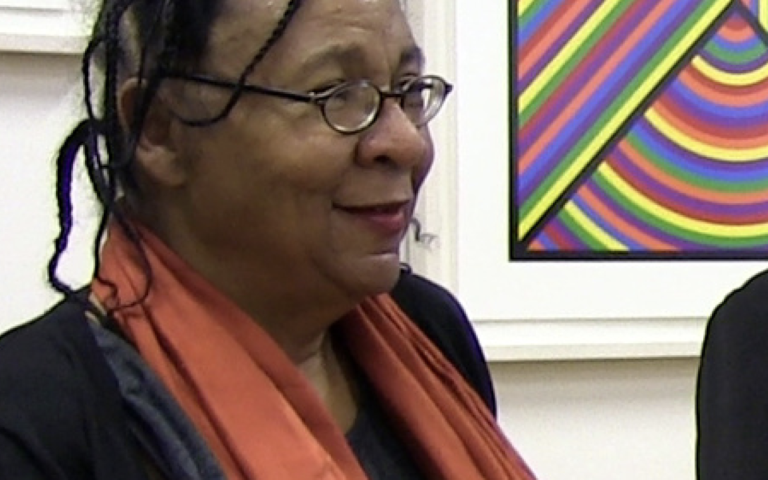
advent journal: bell hooks

I think I was working on my Masters in English when I first learned of bell hooks, noticing first that she chose not to use capital letters in her name. The English department at UMass Boston was full of professors who were intent on introducing us to people who changed the way we thought about language and communication. I met Pablo Freire, Toni Morrison, and Jimmy Santiago Baca on the page there as well, among others.

bell hooks died last week.

I was taking care of a sick friend and out of the news loop and didn’t find out until the weekend. Though I read a good bit of her stuff in graduate school, it was years later–in the spring of 2015–that I really dug in. I was working on my book This Must Be the Place: Reflections on Home and someone pointed me to her book Belonging: Building a Culture of Place, where she tells her story of leaving Stanford to return to rural Kentucky where she grew up to teach at Berea College. I listened as she talked about going back to her roots, to the soil–the ground–that made her. And I realized I that place did not exist for me. And yet, when she talked about home, I understood.

All my life I have searched for a place of belonging, a place that would become home . . . . Home was the place where the me of me mattered. Home was the place I longed for, it was not where I lived.

Even as she talked about the ground that grew her, she offered a bigger sense of what it means to belong.

In my childhood I dreamed about a culture of belonging. I still dream the dream. I contemplate what our lives would be like if we knew how to cultivate awareness, to live mindfully, peacefully; if we learned habits of being that would bring us closer together, that would help us build beloved community.

Some of the obituaries have painted her as a trailblazer and activist, which she was, but what is missing in many of the tributes is the tenacious love that fueled her activism. Three Christmases or so I was wandering through the Strand Bookstore booth at the Bryant Park Holiday Market and I found her book All About Love: New Visions. Her words made the train ride home go quickly.

A generous heart is always open, always ready to receive our going and coming. In the midst of such love we need never fear abandonment. This is the most precious gift true love offers – the experience of knowing we always belong.

An exercise I learned from Pádraig Ó Tuama’s book In the Shelter is to think of the first sentence of your autobiography. We did the exercise with a group one night and the sentence I came up with was, “He was just trying to find his way home.”

bell hooks was not consumed with only finding her way home. She was convinced we need to all know we belong if we are going to survive this thing called life. She helped me feel like I belong, and helped me learn how to pass that along.

I am grateful.

Peace,
Milton

advent journal: an inconvenient time

When I last posted on December 8, it was not my intent to wait eleven days before I wrote again. The last couple of weeks have been a symphony of emotions from my sixty-fifth birthday to a health scare for one of our chosen family. I tried to get here, but it seems like I needed the quiet, even though it meant not keeping my Advent promises.

Today, I am here because I preached, so I have something to post. The sermon is from Luke 2:1-7 and is called “An Inconvenient Time.”

I will do my best to get here tomorrow.

__________________________

Last weekend, as many of you know, I was away because I was celebrating my sixty-fifth birthday. Ginger, my wife, took me to Durham, North Carolina, where we lived before we moved to Connecticut to spend the weekend surrounded by friends and loved ones. As we were preparing to leave town on Friday, we got word that our friend Jay–who is chosen family–was going into the hospital in Boston because they couldn’t control his heart rate.

When I say he is chosen family, I mean he has spent pretty much every Thanksgiving and Christmas with us for the last thirty years. He had planned to come to Durham as well before his heart began acting up. It felt strange for us to be getting on a plane going south as he was headed to Mass General Hospital.

Saturday night, we had a big dinner party at COPA, one of my favorite restaurants in Durham. I was surrounded by people whom I love deeply. It was such a night of joy. And in the middle of it, my phone rang. Jay was calling to say they we’re going to put him in an induced coma for three or four days. As Jay put it, they needed to quiet his brain so they could quiet his heart. The medical explanation made sense, but the thought of them putting him under sedation on Saturday night and not waking him until Tuesday morning scared me. It scared us all.

There in the middle of the restaurant, I felt love and joy and fear and sadness all at the same time.

But then, life rarely gives us one feeling at a time. Even in the Christmas story. I know the passage I read jumps ahead a bit, as far as Advent is concerned, but these verses about Jesus’ birth coming in the middle of everything else have been meaningful this week.

After we got home from Durham, I drove to Boston on Tuesday night and stayed at Jay’s place, took care of Ollie, his dog, and helped Jay get home from the hospital Friday evening. They were able to quiet both his mind and his heart. The story of what lies ahead has yet to be written, but the crisis has passed, just as the official celebration of my birth has passed as well. Yet, I continue to age daily, and Jay’s heart keeps beating—and everything that is a part of life keeps coming at us, all at once.

The verses for this morning spoke to me because of the picture that Luke paints–the setting he creates for Jesus’ birth. We talked a couple of weeks ago about how Luke introduced John the Baptist by listing all the people in positions of power before he got to the prophet on the edge of town. Luke starts the account of Jesus’ birth in the same way, naming the emperor and the governor, and underlining their power by describing how they could demand for all the world to be registered—to be counted for a census—and make people travel to do it.

It didn’t matter that Mary was days away from delivering her child. It didn’t matter that it was ninety miles from Nazareth to Bethlehem. They had to go to Joseph’s ancestral home to be counted, and so they did. Then comes the part of the story we all know well. When they got to town, they couldn’t not find standard lodging, so Mary gave birth to her baby in a barn and used a feed trough for a crib.

No matter how long the journey, or how inconsiderate the demands of those in power, or how inconvenient the circumstances, Love still came into the world.

The world changed because Jesus was born. God poured God’s self into human form. Divine Love became incarnate in the person of Jesus, who grew into a man who lived out that love so fiercely that the same political powers listed at the top of Luke’s first two chapters had him executed. Love is not always welcomed by those who crave control.

The world changed, yes, but most of the circumstances around Jesus did not. Life was just as full of pain and grief and hope and fear and joy as it had been. Mary was ninety miles from home with a baby and a man she had not yet married. But she held the child they named Emmanuel–God with us.

God with us—no matter what is going on.

The big stained-glass word for all of this is Incarnation–made into flesh. It’s the fancy way to say God came in human form. One writer I read said at its root the word means “with meat,” as if to say God wanted to make sure we understood that love was not an idea. For love to be real, you have to have some skin in the game.

As I have carried the story of Mary making her way to the manger this week, I have been mindful of how I have seen love incarnated in my own life. Those gathered around the tables at my birthday gatherings have incarnated God’s love to me in so many ways through job changes, address changes, the deaths of my parents, two knee replacements, as well as countless shared meals and dreams. They didn’t have to come to dinner. They came to show me that they loved me.

My driving up to Boston on Tuesday was the best way Ginger and I knew to incarnate love for Jay as they worked to quiet his heart and his mind. I didn’t have to go, but why would I miss the chance to say I love you?

When Mary climbed on the donkey to make her way to Bethlehem, I imagine her thinking the census could not have come at a more inconvenient time. I imagine they spent their days on the road wondering if the child would be born on the side of the highway. But even if they had stayed in Nazareth, there would have never been a day that was convenient for the baby to be born.

Perhaps we could also say there is never a convenient time to incarnate love.

The first Sunday in Advent, I quoted the mystic Meister Eckhardt, who said:

What good is it to me that Mary gave birth to the son of God fourteen hundred years ago, and I do not also give birth to the Son of God in my time and in my culture? We are all meant to be mothers of God. God is always needing to be born.

God is always needing to be born into the mess that is our lives. God is always needing to be born in the midst of inconvenience and struggle, in the middle of our questions and fears and dreams– right where we are. Life is not either-or. I’m not sure it’s even as simple as both-and. If we could go around the room and tell our stories this morning, we would remind ourselves that we carry all our feelings at once; we hold grief and joy and hope and sorrow all together. No matter what the circumstance, no matter what the occasion, God is always needing to be born, which is another way of saying God is calling us to incarnate love to one another: to offer one another something—someone–we can hold on to.

As we prepare to celebrate our second COVID Christmas, the wear and tear of the long road of the pandemic is taking its toll. We are all tired and exhausted. Just when we think that maybe things are getting better, the case numbers go up again, or someone close to us gets the virus. We are also feeling the social and economic impact of two years of distance and difficulty, along with the shared grief of over 800,000 deaths. And COVID is not the whole story. Each one of us carries what is going on in our families, at our jobs, here at our church.

This is the world—our world—where God needs to be born, where Love needs to be incarnated, made flesh by our choices of words and actions. Let us quiet our minds and our hearts in this inconvenient time and do all we can to make sure those around us know that Love is stronger than any circumstance. Amen.

Peace,
Milton

advent journal: no comparison

One of the things I often find is when I become aware of something I begin to notice it everywhere, which leaves me wondering if I see it everywhere because I’m looking for it or if I am just slow to the switch when it comes to catching on to stuff.

The last couple of weeks as Advent has begun, what I have noticed is not new to me. I’ve written about it before. But the pervasiveness of it has been much more apparent this year. I’m talking about the metaphors of light and dark, where light is good and dark is bad or troublesome or something not good. What is also not new to me is that the metaphors are problematic in our day because of the many ways the same metaphor we lean into during Advent has been used to justify racism over many centuries of Western expansion and colonial oppression.

I know. That took a turn, didn’t it?

Once again this year, I have spent some time searching for articles and books that talk about the impact of the metaphor and how to engage the biblical accounts in a way that doesn’t do damage to a large number of our siblings in Christ. Once again, I have found a lot of white people trying hard to deal with the problem, but struggling because they appear to enter the discussion determined to redeem the metaphor rather than beginning by listening to the impact of the words on those who are not light skinned.

Let me go ahead and say right now I am not writing because I found something no one else has thought of. I’m writing because I want to learn more about how to use my words to create solidarity and I figure the best way to do that is talk about it out loud and learn from what I miss in the process.

For me there is more at stake than just the biblical or philosophical metaphor. As one who lives with depression, I have found it there as well. William Styron’s book on his mental illness is called Darkness Visible: A Memoir of Madness. Matthew Johnstone wrote a book called I Had a Black Dog about his depression. Maybe that’s one of the reasons I liked Andrew Solomon’s The Noonday Demon: An Atlas of Depression because he changed the metaphor. My depression mugs me in broad daylight. Nighttime–sleep–has always been an escape, a hiding place. When it comes to my depression, I am grateful for the dark.

“Comparison is the thief of joy” is a quote attributed to Teddy Roosevelt. It came to mind as I was thinking about this today, alongside of working on a worship service for the Third Sunday of Advent, which is traditionally the Sunday of Joy.

Perhaps one of the issues in the metaphors of light and dark is that we use them comparatively almost all of the time without stopping to think of what we are leaving out in the process. One of the articles I found today that was new to me was written by someone named Catherine Bird. The site did not give any information about her. From her writing and her use of the word whilst, I gleaned that she was thoughtful and probably British. She said,

Whilst I would not like us to lose light as a positive metaphor, it is important to recognise that it is not universally helpful – light has many harmful and destructive qualities – and if we deny that Darkness can also describe God we are perhaps missing some very important characteristics of God, as well as being rather unfair on darkness. George Orwell said, “uncritical acceptance of existing phrases can shape thinking and hinder new thought.

Then she offered “A Dark Creed.”

A Dark Creed

I believe in God
The creator of darkness,
Who conceived of its potential,
And allows it to live.

I believe in Jesus Christ,
The prince of darkness,
Who raises a canopy of grace
to shade the startled ones.

I believe in the Holy Spirit,
The inner shadow,
Who clings to our soul
and distorts the shape of our sorrow.

And she offered another thought:

If you find the image of Jesus as ‘the Prince of darkness’ concerning, then I ask you to reflect on the term Lucifer – which actually means ‘bearer of light’ or ‘Morning Star.’

During the Exile of Israelites to Babylonia, there they encountered the King, who was the son of Bel and Ishtar, associated in local mythology with Venus, the Morning star (so called because of its closeness to the sun and appearance in the sky just before sunrise) So, the King of Babylon became known as the ‘Morning Star’ or Lucifer.

As she went on to talk about how Lucifer and Satan ended up as synonymous, it made me think of other words and phrases that live on separated from their dubious history. I had to learn to quit saying “rule of thumb” when I learned it came from a law that allowed a man to beat his wife as long as the stick was not larger than his thumb in circumference. I chose to quit using father as a metaphor for God not only because it assigned gender to a God who transcends it, but also because I know too many people with problematic relationships with their fathers and I didn’t want them to be alienated by my choice of words.

And if I want to tell the story of the birth of Christ in a way that invites everyone to the manger, I need to learn how to do it without comparing light and darkness. Let there be light, yes, but not at the expense of the dark.

My favorite Texas songwriter, Guy Clark, wrote a song called “The Dark.”

In the dark you can sometimes hear your own heart beat
Or the heart of the one next to you
The house settles down after holding itself up all day
Shoulder slumps, gives a big sigh

You hear no one’s foot fall in the hall
That drip in the kitchen sink keeps markin’ time
June bug on the window screen can’t get in but he keeps on tryin’
One way or another we’re all in the dark

Fireflies, sparks, lightning, stars
Campfires, the moon, headlights on cars
The Northern Lights and The Milky Way
You can’t see that stuff in the day

When the earth turns its back on the sun
The stars come out and the planets start to run around
Now they call that day is done
But really it’s just getting started
Some folks take comfort in that

And how dark is it?
It’s too dark for goblins
And how dark is it?
It’s so dark you can smell the moon
How dark is it?
It’s so dark the wind gets lost
How dark is it?
It’s so dark the sky’s on fire
How dark is it?
It’s so dark you can see Ft. Worth from here

I love the song because he’s describing somewhere I want to be. Just as the cycle of our lives takes us from sunset to sunrise and back again, so must our theology and our language make room for the whole spectrum of existence, the shadows and sunshine, the clouds and clear blue, not because they are opposites but because they are partners. Siblings.

John wrote that the light shines in the darkness and the darkness does not comprehend it. I’m guessing it works both ways: the light doesn’t always understand the dark either. But that does not pit them against one another, that just means they both have some learning to do, as do I. Rather than cling to an old rugged metaphor, I’ll trust that the God who made the dark is larger than light.

Now I just have to find the words.

Peace,
Milton

PS–Here’s Guy, if you follow the link.

advent journal: cold comfort

I have offered music posts most every Advent that I have been writing, so I thought I would keep up the tradition here in the middle of the season. These are not Christmas songs, or specifically Advent songs, but they are songs that speak to me in these days, songs that offer cold comfort. Most of them are new to me, since I went looking for them rather than counting on old favorites. The one exception is the first one, “That Kind of Love” by Pierce Pettis.

love rejected and ignored
held in chains, behind closed doors
stuff of legend and of songs
and deep down everybody longs for that kind of love
oh, that kind of love

some people never know that kind of love
though it only takes a child to show that kind of love
widows smile and strong men weep, and little ones play at its feet
the deaf can hear and the blind can see that kind of love

Most all of these songs talk about what love looks like, or what it takes to love. Any Gullahorn titled his song, “If You Want to Love Someone” and he says,

in every heart there is a hollow
locked against the pain
if there’s a key the key is sorrow
only a trusted hand can hold

if you wanna love someone
search their soul for where it’s broken
find the cracks and pour your heart in
if you wanna love someone

Ilse DeLange is a new name to me. She puts hands and feet to love in “I’ll Hold On,” her way of saying what love looks like.

on and on, I go
down the beaten path
with all the things I know
and all the things I have

I’m walking, always walking
back to you, my friend
with a song inside and them tears to hide
I’m on my way again
I’ll hold on
I’ll hold on

Glen Hansard has a habit of intertwining hope and heartache in his songs. “Cold Comfort” is a wonderful example; it also supplied the title for this collection.

the streets are quiet but for
the sound of birdsong
there’s no rush upon us now
well, it’s slow going
and it’s slower still here
but we’ll get through if we pull together now

and it’s little comfort, I know
but it’s raining down on everybody now
and the worst is over
and it’s little comfort, I know
but it’s raining all over the world right now
and it’s little comfort, I know
but the worst will soon be over

Tyrone Wells is going to close out the post with his song “And the Birds Sing,” a song that will worm its way into your heart and your ear, reminding you that love lifts us all.

the poor man and the millionaire
both sharing the oak tree shade
not stressing over money made

the preacher and the atheist
both jumping in the ocean waves
today they both feel saved

say what you gonna do when the clouds come
you gonna hold your head high
say what you gonna do when the storms come
keep your eyes to the sky, and I’ll tell you why

cause one day…
the sunshine will shine again
shine all over the world
on every man, woman, boy and girl

These days are still growing shorter and colder, but listen for the birds and remember we’ll get through if we pull together.

Peace,
Milton

advent journal: rifts and faults

For about twenty-five Advent seasons, I opened the services at our church (whichever church that was) with “Prepare Ye the Way of the Lord” from Godspell. That tradition didn’t make the move to Guilford, but the song is tattooed on my heart. The scripture passage for my sermon today alludes to Isaiah’s words, and it connected me with my youth in Kenya. (And yes, the video of the song is at the end of the sermon.)

______________________________

As I told you last week, I grew up in Africa. Part of that time, I lived in Nairobi, Kenya. I think about living there often, for different reasons. This week my memories were sparked by Luke quoting Isaiah’s words about mountains being leveled and valleys being filled in because one of the great geological sights in Kenya is the Great Rift Valley. Actually, it runs from the Red Sea down into Malawi.

The sides of the valley are steep because it was caused by a fault, so it looks like the whole middle section just dropped hundreds of feet. As I read more about it, I learned the term Great Rift Valley is used to refer to a series of contiguous rifts that connect from Lebanon to Mozambique, one of which includes the Jordan River, which means the valley I saw in Africa was connected to the valley where Isaiah and John the Baptist both stood.

Listen to our passage from Luke 3:1-6.

In the fifteenth year of Tiberius Caesar, Pontius Pilate was governor of Judea, Herod tetrarch of Galilee, Philip his brother tetrarch of the region of Ituraea and Trachonitis, and Lysanias tetrarch of Abilene. In those days, during the high-priesthood of Annas and Caiaphas, the Word of God came to John, ben-Zechariah, in the desert. John went through the entire region of the Jordan proclaiming a baptism of repentance for the forgiveness of sins, as is written in the words of Isaiah, the prophet:

“A herald’s voice in the desert, crying,
‘Make ready the way of our God;
clear a straight path.
Every valley will be filled,
and every mountain and hill will be leveled.
The twisted paths will be made straight,
and the rough road smooth—
and all humankind will see the salvation of God.’”

We read this passage during Advent because it talks about John the Baptist preparing the way for Jesus. If you know the musical Godspell, you know the musical opens with John the Baptist singing, “Prepare ye the way of the Lord.” For many years in the churches where my wife served, I sang that song to open our Advent services. But John never says or sings that. In fact, if we look closely at the passage, all Luke says about John is that he was preaching a gospel of repentance and forgiveness. The rest of the verses talk about who was in power at the time and then he quotes Isaiah—well, sort of quotes him.

I spent some time thinking about road work this week and then it struck me that Luke starts off by listing all the people in power, both politically and religiously and ends up focusing on a prophet ranting in the wilderness–a voice on the margins calling people to repentance and forgiveness. He says that John’s presence reminded people of a passage from Isaiah that people were used to hearing at the synagogue.

If we go back to the Hebrew Bible, Isaiah calls people to make a highway for God. The image is one of serious road construction, which often means the topography has to be changed to make the road viable.

One time Ginger and I were in the car together and we survived the slow snake of trafficcaused by highway construction. When we saw the “End Road Work” sign that set us free I remarked, “I think that ought to be a protest sign.”

We all want better highways and bridges, but if you have ever been stuck on I-95 because they are working on it, you know that any improvements in our infrastructure will come at a cost. Building and rebuilding are time consuming and inconvenient. Often to build means first something has to be torn down or torn out to prepare for what is to come, and then, as I said, it takes time to build the new thing.

The visual Isaiah created makes it sound like the world God wants looks a lot like West Texas, which is not appealing to me. West Texas looks like land that inspired people to build things like tables and countertops. It is flat and flat and endless and flat. The stars at night look big and bright because there is nothing else to see. Can you tell it’s not my favorite place.

But Luke isn’t just quoting Isaiah, he is paraphrasing him. Where the ancient prophet talked about a highway, Luke talked about a path when he said John was embodying Isaiah’s words. But I don’t think Luke intended for his readers to get caught up in trying to picture the epic landscaping project Isaiah proclaims. John wasn’t quoting Isaiah either. Isaiah is mentioned because Luke wanted us to get a picture of what it felt like when people living in Palestine under the mountain of oppression brought on by the names listed wandered to the outskirts of town and found John the Baptist in all his strangeness.

Luke says, when they saw John they thought, “Hey, this is like that verse about a voice crying in the wilderness.” They heard the passage often in the synagogue, but they had not imagined the live action version of it–except John wasn’t saying anything about mountains or valleys. He was preaching was repentance and forgiveness. If what prophets were supposed to talk about was the mountains coming down and the valleys being filled in, John was calling people to do it with a shovel, not large earth moving equipment.

Hold that thought and let’s go back to the Great Rift Valley because sometimes words build bridges that help us get from one place to another. As I was reading about it, I came across this sentence:

“While the name continues in some usages, it is rarely used in geology as it is considered an imprecise merging of separate though related rift and fault systems.”

Rifts and faults—words we use to talk about broken relationships. And the brought me back to the one sentence Luke says about John:

John went through the entire region of the Jordan proclaiming a baptism of repentance for the forgiveness of sins . . .

In a world where those in power used their privilege to oppress others, in a world where prophets had been crying out for centuries for people to trust that God could change the landscape if they would listen, in a world where people were just trying to figure out how to get through a day, John wandered the country preaching about repentance and forgiveness.

The word we translate as repentance has a stronger meaning, more along the lines of conversion–a turning, a new direction. It is deeper than changing our minds or feeling regret over something we have done. It is choosing to go in a new direction, to do things differently, to tear down what is there and build something new.

The Greek word we translate as forgiveness can also mean being freed from bondage, which is interesting to me when I think about the power of both asking for and offering forgiveness.

Both words call us to profound change. Perhaps knocking down a mountain is not a bad metaphor, and it’s an even better when we are willing to consider the rifts and faults in our own hearts. We can profoundly alter the landscape of our lives if we are willing to risk repentance and forgiveness. The straightest path from one heart to another, from one person to another, is the most direct one.

When we choose to trust one another with difficult conversations rather than gossip or talk around one another, we prepare the way of the Lord. When we choose to assume positive intent when someone does something that angers or hurts us rather than reacting without offering room for conversation, we prepare the way of the Lord. When we choose to forgive rather than allow resentment to build a mountain in our hearts, we prepare the way of the Lord.

Isaiah had been dead a long time when John showed up. His transformative words had become familiar things that you heard in synagogue. John the Baptist has been dead a long time, too, and we mostly think about him during Advent as we talk about preparing for the birth of Jesus. Their words, however, are more than decorations. They show us how to love one another.

Prepare the way of the Lord. John may not have ever said those words, but it is exactly what he called us to do. Amen.

Peace,
Milton

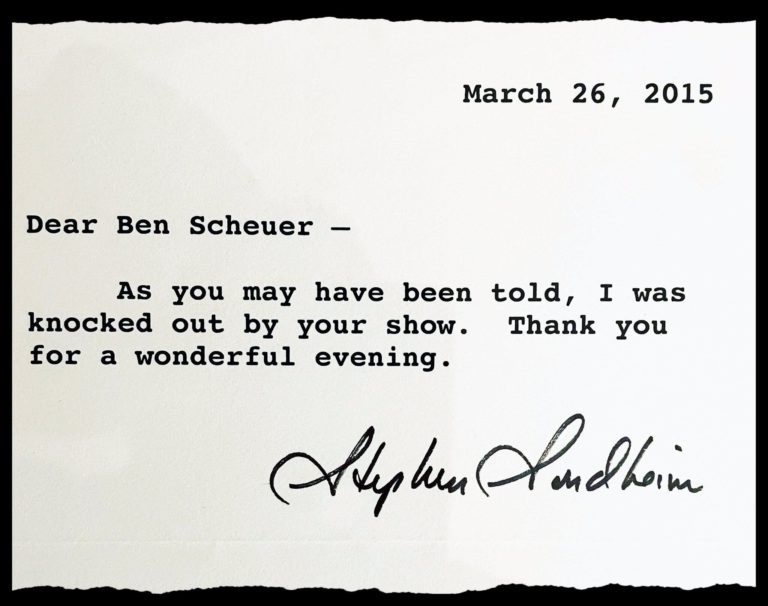
sustenance and sondheim

Stephen Sondheim died last week, as you probably know.

His death last week affected me in several ways, not the least of which was taking me back to an afternoon in the Spring of 1988 when my friend Billy Crockett and I wandered up to the TKTS booth in Times Square and scored two half-price tickets to Into the Woods. I will confess I knew very little about Sondheim and nothing about that particular show. Billy was the one who suggested it. I can out of the theater changed by that one evening. From there, I began to learn more about Sondheim and his amazing body of work.

What I learned this morning, thanks to this article in the New York Times, was that for all of his composing and lyric writing, he spent a great deal of time encouraging: showing up for other people’s shows, and then writing notes of support afterwards. Laura Collins-Hughes writes,

To a legion of fans Sondheim was and is the be-all and end-all. But his own horizons as a theatergoer were significantly broader than that. In an art form that is so much about being present for the unrepeatable moment, he not only showed up, but he also often did so to experience work that was offbeat and obscure, challenging conventions just as his own work did.

The phrase in the middle of the paragraph is what caught my eye:

In an art form that is so much about being present for the unrepeatable moment . . .

She was talking about theater, but I read her words and thought, “That’s life: being present for the unrepeatable moment,” because we live days filled with them, rolling by one after another. Much like an actor who must inhabit a character to be convincing, we are called to be awake and aware in our existence because so much of it is made up of you-had-to-be-there moments. Even the things we repeat day after day are not the same from one day to the next. Perhaps the biggest difference between a life and a theatrical production is that life offers no chance to rehearse. We can remember, regret, redo, or even repent, but there is no practice life; this is it.

If we are not intentional, all that I just said can lead us to think the point is our performance. We are better at life when we remember that’s not the only point. Back to Sondheim:

It was part of Sondheim’s gift to understand not only the encompassing job description of great artist but also his singular effect on his colleagues—how even a few words of appreciation, or moments of attention, could prove enduring sustenance over the long slog of a career in an often pitiless field.

It was unglamorous work, and Sondheim did it exquisitely.

My father carried a story with him from his days as president of the Baptist General Convention of Texas. After one of the conventions, he received a letter from a young pastor who said he had tried to engage Dad after one of the sessions and really needed to talk to him, but just as he got my father’s attention someone Dad knew better came up and my father turned away and never turned back to the man. “I needed your help that day,” the man wrote, “and you turned away because someone you knew better or who mattered more got your attention. I am writing in hopes that my letter will help you do differently next time.”

What the young pastor didn’t know about my father was that they shared an inferiority complex. For all of the things my father did, he never felt worthy. He thought he had to prove himself everyday–mostly to himself. The letter stung him. He didn’t forget. I can’t say he never was distracted by attention again, but the story stayed fresh, and he encouraged a lot of people.

Beyond the importance of backing one another up, as I wrote last night, and being aware of unexpected opportunities to affirm one another, as my father learned, what I see in Sondheim is someone who intentionally inserted himself to put himself in a position to encourage and affirm. He didn’t wait for people to come to him.

One of the people Sondheim touched with his encouragement was Jonathan Larson, the man who created RENT. The new Netflix movie Tic Tic Boom tells the story of Larson finding his way in New York, and Sondheim plays a critical role, simply because he reaches out and offers support.

One of my favorite poems, Zen of Tipping by Jan Beatty comes to mind:

My friend Lou
used to walk up to strangers
and tip them—no, really—
he’d cruise the South Side,
pick out the businessman on his way
to lunch, the slacker hanging
by the Beehive, the young girl
walking her dog, and he’d go up,
pull out a dollar and say,
Here’s a tip for you.
I think you’re doing a really
good job today. Then Lou would
walk away as the tipee stood
in mystified silence. Sometimes
he would cut it short with,
Keep up the fine work.
People thought Lou was weird,
but he wasn’t. He didn’t have much,
worked as a waiter. I don’t know
why he did it. But I know it wasn’t
about the magnanimous gesture,
an easy way to feel important,
it wasn’t interrupting the impenetrable
edge of the individual—you’d
have to ask Lou—maybe it was
about being awake, hand-to-hand
sweetness, a chain of kindnesses,
or fun—the tenderness
we forget in each other.

Because I love to cook and I’m pretty good at it, people are sometimes afraid to cook for me, as though I will come to the table as a critic rather than a guest. But eating other people’s food is also one of my favorite things. I know what it takes to prepare a meal, I am happy to honor the offering. I also know what it feels like to have people love your food; I am happy to share that feeling as well.

Life may be a team sport, but it is not a competition. No one wins when we get our affirmation at the expense of someone else. Life is hard. May we remember what Sondheim knew well–that a few words of appreciation or moments of attention can be enduring sustenance to those around us.

We will all be remembered more for our affections and affirmations than our accomplishments.

Peace,
Milton