Home Blog Page 20

advent journal: this is why we gather

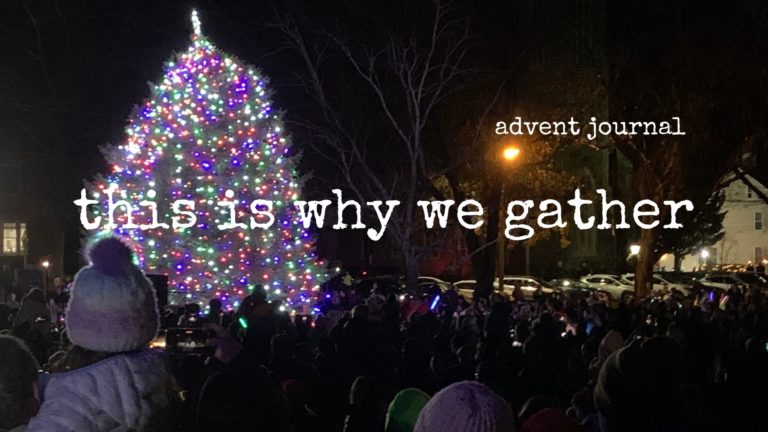
I have no idea how long Guilford has hosted a tree lighting on the Green, but we have managed to be there with several hundred of our closest neighbors for all but one of the seven Christmases we have been in town, the one exception being 2020. You remember 2020.

Our first year was also the first year for the tree that was being lighted because the one that had been used grew to big for the Parks and Rec folks to string the lights. The young one had been growing for several years as an understudy and finally came of age. Seven years later, it is a teenage tree that stands sixteen or eighteen feet tall, I would guess. Over the past week, the workers have strung the lights on the tree and put up a temporary wooden fence around it, along with a couple of lighted reindeer. Yesterday they moved the trailer that opens into a stage into place, and tonight the Green filled up with people, and beyond those surrounding the stage were people on the sidewalks and in the stores and cafés that had stayed open late.

The weather appeared to understand the importance of the evening, offering a clear, crisp night that began about five o’clock, thanks to the short days of the season. About 5:45 the festivities began, which always include performances from local dance classes and choirs, local musicians, and a word from our First Selectman, which is another way of saying Town Mayor, all of it designed to make the five seconds it takes to flip the light switch turn into an hour long event. I felt like I was in the cast of a Hallmark Christmas movie.

We were far enough from the stage to be out of reach of the sound system, surrounded by people who had brought their children and their dogs, though both seemed like poor decisions to me based on the barks and minor meltdowns. Even so, most of the kids were happy to run around with their glory-sticks, and most of the dogs content to peddle for affection from any passer-by. Meanwhile the choirs sang on in pantomime to most of the crowd and a good time was had by pretty much everyone.

We were getting close to seven before Santa showed up to lead us in the countdown–5,4,3,2,1–and the lights went out on the stage and came up on the tree. We all cheered and started walking to our cars and houses. We had done what we came to do and had had fun doing it.

Even before the pandemic, before most all of us developed a longing for most any reason to be around people, the Green has filled up on this night. It is a night full of activity. High school students line the sidewalks with luminaria, the high school choir and orchestra perform their holiday concert in our church for two nights (and four performances). But the night is known for the tree lighting. That is why we gather. And our little town is not alone.

Why do we do that?

Please hear my question in a tone of wonder. On a night when I was not particularly feeling the season, I walked home in wonder that we, as humans, are built to need each other, to think up reasons to be together.

My friend Christopher Williams wrote and sings one of my favorite songs that answers my question:

to be known, to feel safe
to be honest and unafraid
to leave the past, run into hope
to find together we are not alone

I need you
you need me.
this is why we gather
to remember why we matter
this is why we gather

to share our story, silence the noise
to hear the wisdom in the tremble of a voice
to carry healing for all the scars
to know we’re more than our broken hearts

I need you
you need me.
this is why we gather
to remember why we matter
this is why we gather

This is why we gather: to remember why we matter. People practiced and performed songs and dances, vendors packed shopping carts full of gloves-sticks and light sabres, the Boy Scouts sold hot dogs and hot chocolate to raise money to send care packages to soldiers, the men at St. George’s Catholic Church sold soup and pretzels, the strollers on the sidewalks crowded out the Goldens and Labradoodles, and children chased each other in the darkness–all of it so someone could flip a switch and light the tree.

It was a lot of work for a moment that mattered, but moments that matter always take a lot of work, even when we don’t realize it. We live for these moments, again, even when we don’t realize it, because they help us remember why we matter. Why WE matter.

I need you. You need me. So say the Labradors, the little ones, and the lights on the town tree.

Peace,
Milton

Two things: The e-book version of The Color of Together is 99 cents at Amazon (and other ebooks sellers) for the month of December. Please check it out. Secondly, thanks for reading. My website is free and ad-free because of the support of my readers. If you would like to become a sustaining member, click here. You can also subscribe to my free weekly newsletter, mixing metaphors.

advent journal: we can get to christmas

Here is a story I haven’t told in a while.

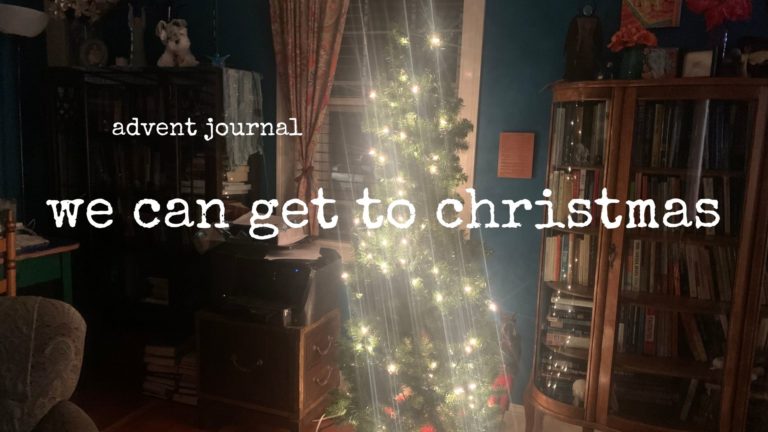
In December of 1983 I was working as a chaplain at Baylor University Medical Center in Dallas. My roommate, Bruce Reece, owned the condo we shared in North Dallas–well, then it was North Dallas; now it is almost downtown. Bruce traveled a lot with his work and that December was no exception. What was exceptional was the weather. In the evening of December 18 the temperature dropped below freezing and stayed that way until the afternoon of December 30. In between those dates, five Arctic cold fronts hit the region.

It was cold.

Some time a week or so before Christmas, the weather took a turn that meant that those of us at the hospital stayed there for several shifts. My extended stay coincided with Bruce’s travel, so when I finally got home after being at the hospital for three days, I came into an empty apartment and when I stepped on the carpet it squished. The living room had about an inch of water from a broken pipe. We had dripped our faucets, but the people in the adjacent condo had not and their pipe burst into our place, or so it was explained to a person by the management company, who also said they would be by the following day to pull up the carpet and we would need to take down our Christmas tree.

I was handling everything as best I could until he said the tree had to come down. Christmas that year, for me, meant working a half day on Christmas Eve, flying to Houston to see my parents, and then flying back Christmas night to work on the 26th. Bruce’s holiday was about as joyous and we had worked hard to celebrate the season together in a way that gave us both hope. I couldn’t imagine losing the tree.

I was exhausted, and I knew Bruce would be in that night around 1 a.m., so I showered and got ready for bed and then stretched out on the couch so I could explain what had happened. As Bruce tells it (I was too sleepy to remember), as he opened the door and stepped on the carpet, I raised up and said, “The pipes broke from the other people’s place and they are coming to pull up the carpet tomorrow and we have to take down the tree.” Then I fell back asleep and he went on to bed.

The next morning, I had to be back at work, so I was up and gone before he woke up. He had already sent word that he was taking a day off to deal with the mess in the house. I went through my day trying to prepare myself to go home to a concrete floor and no Christmas tree.

This time, Bruce greeted me when I opened the door. He was sitting on the couch where I had been sleeping. The carpet was gone, exposing the concrete slab, but the furniture was still there, as was the Christmas tree, still lighted and decorated.

I don’t remember what I said, but I do remember I began to cry.

“After I saw the look on your face last night,” Bruce said, “I knew we had to keep the tree. I spent the whole morning right here as they were pulling up the carpet, reminding them what was at stake. There was no way I was going to lose that tree.”

It was another two weeks before the freeze finally let up, and a couple of weeks after that before we got new carpet, and through it all that tree held its place and we got to Christmas, mostly because my friend did what good friends do.

Life is hard, I know, and all of us have broken pipes of some sort that are flooding our lives. I also know not everyone reading this celebrates Christmas, but we are all trying to figure out how to keep going. I don’t need to wrap it up more than that; it just seemed like a good time to tell this story.

Peace,
Milton

Thanks for reading. My website is free and ad-free because of the support of my readers. If you would like to become a sustaining member, click here. You can also subscribe to my free weekly newsletter, mixing metaphors.
advent journal: widen out the boundaries

For the Advent season, I am returning to a book I have not finished–The Impossible Will Take a Little While: Perseverance and Hope in Troubled Times, edited by Paul Rogat Loeb. The nearly five hundred page book is an expansive collection of essays and poems intended to inspire us “to join the community of those who work to create a better world.”

One of the essays I read this morning was a short reflection written by the poet Pablo Neruda who recalled standing in the back yard of his house when he noticed a hole in the wooden fence. When he moved closer to investigate, a boy’s hand reached through from the other side and handed him a small white sheep. He never saw the boy again. Neruda said he kept the sheep for many years until it was lost, and then he never passed a toy shop without hoping to find another one. Then he wrote,

pablo I have been a lucky man. To feel the intimacy of brothers is a marvelous thing in life. To feel the love of people whom we love is a fire that feeds our life. But to feel the affection that comes from those whom we do not know, from those unknown to us, who are watching over our sleep and solitude, over our dangers and our weaknesses–that is something still greater and more beautiful because it widens out the boundaries of our being, and unites all living things.

Such is the power of kindness. It widens out the boundaries, expands our comfort zones, illuminates the connections between us. Neruda’s story reminded me of one of my favorite poems: “Zen of Tipping” by Jan Beatty

My friend Lou
used to walk up to strangers
and tip them—no, really—
he’d cruise the South Side,
pick out the businessman on his way
to lunch, the slacker hanging
by the Beehive, the young girl
walking her dog, and he’d go up,
pull out a dollar and say,
Here’s a tip for you.

I think you’re doing a really
good job today. Then Lou would

walk away as the tipee stood
in mystified silence. Sometimes
he would cut it short with,
Keep up the fine work.
People thought Lou was weird,
but he wasn’t. He didn’t have much,
worked as a waiter. I don’t know
why he did it. But I know it wasn’t
about the magnanimous gesture,
an easy way to feel important,
it wasn’t interrupting the impenetrable
edge of the individual—you’d
have to ask Lou—maybe it was
about being awake, hand-to-hand
sweetness, a chain of kindnesses,
or fun—the tenderness
we forget in each other.

I know the poem doesn’t contain any sheep or children, but I found resonance between the boy offering his sheep and Lou tipping random strangers: both found ways to be kind, to communicate connection through rather ordinary acts. And neither Lou nor the boy were the ones telling others what they did.

I think I will sleep on that.

Peace,
Milton

Thanks for reading. My website is free and ad-free because of the support of my readers. If you would like to become a sustaining member, click here. You can also subscribe to my free weekly newsletter, mixing metaphors.
advent journal: get here, if you can

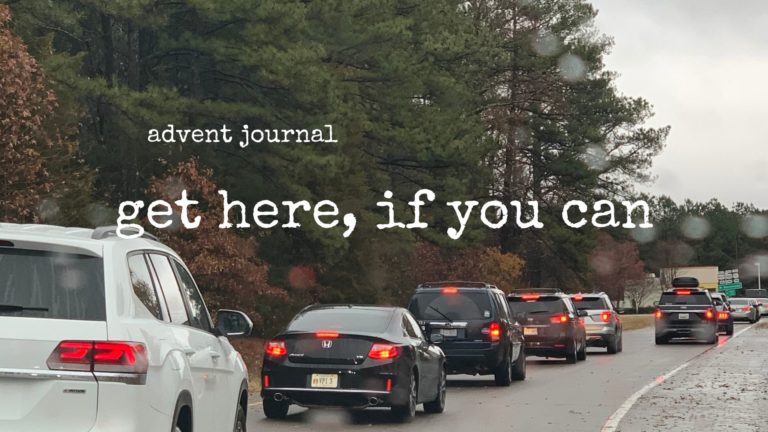
Ginger, Rachel, the pups and I spent the better part of this first day of Advent traveling from Durham, North Carolina, where we spent Thanksgiving, to Baltimore, our halfway stop on the way back to Guilford. We were on the road with several thousand travelers, both coming and going from their holidays, all of us sharing the joys of road construction and thunderstorms. Beyond each other, we have talked only to the people who fixed our sandwiches and checked us out at the WaWa and the hotel clerk and the bartender at the Aloft, a hotel that welcomes pets–oh, and the woman who brought out our food at the pickup spot at the Longhorn Steakhouse.

When we travel, Ginger and I create impromptu playlists that consist of responding to each other’s selections, each of us, in turn, asking Siri to play a song. Since it was raining, Ginger started off with “Rainy Days and Mondays” and we rode the rain theme for about two and a half hours until we stopped just outside of Richmond. When we got back in the car, it was her turn again and she switched to a desert theme choosing “Horse with No Name.” Four or five songs with deserts later, the one that came to mind for me was a favorite from Oleta Adams–“Get Here”

you can reach me by railway
you can reach me by trailway
you can reach me on an airplane
you can reach me with your mind
you can reach me by caravan
cross the desert like an Arab man
I don’t care how you get here
just get here if you can

A couple of hours later, things got quiet in the car and I started thinking about what I would write when we finally got to the hotel because my practice of an Advent Journal is a promise I like to keep and also because I am a long way from feeling like Advent is here, or, perhaps better said, that I am here for Advent. The heart of the season has to do with preparing–with getting ready–and I think I am going to spend most of it just trying to get here.

I don’t mean that statement to sound as dire as it might. In fact, I may not even be saying it well.

What has been going through my mind is we often talk about the season as if something new is happening, like we are waiting or preparing for someone who has not already been born. Yes, I quote Meister Eckhart most every year about Christ being born in our time and our culture, but tonight I keep feeling that we are not waiting on a new birth; we know who is coming. We know who has been born already. We are not preparing for him, we are preparing ourselves to be able to be caught by surprise.

But surprise is not always easy; neither is waiting, one of the other verbs we use often at Advent. Both have rather violent roots. The earliest meaning of wait was “to watch with hostile intent.” The root of surprise is “unexpected attack or capture.” The earliest meaning of surprise party was more akin to an ambush than a celebration. The word preparation carries some of that history as well. We, as human beings, hold a long history of suspicion, it seems, and yet all of those words have grown to mean more than violence. Waiting now carries a sense of expectation, preparation means making room, and surprise harbors hope at least part of the time. However ambushed we may feel, the story is not over.

Many of those associated with the story of Jesus’ birth traveled–some of them significant distances. Mary and Joseph had to deal with holiday traffic to get from Nazareth to Bethlehem, the Magi crossed the desert like Arab men, and the shepherds came running into town in the middle of the night. All of them moved through pain and uncertainty. They all came from complicated situations and Jesus’ birth solved none of them. Still, they got there.

Twenty one centuries later, the story we tell has been layered with life, crowded by the marginalia of tradition and theology, colored by companion stories of compassion and hope, colonized by institutions and patriarchy, midwifed by voices of liberation and diversity, among other things. I find it hard to hear it simply as Love came down at Christmas, true as that may be. I want to hear a version of the story that is more than nostalgia, more than repetition or even ritual, more than being glad we can finally do things like we did before the pandemic.

It will never be before the pandemic again. Do we have the courage to speak up if the way we used to do it doesn’t speak to us anymore? How can we get here if our maps no longer lead us?

As I read over what I have written so far, I am aware it is not particularly linear. I didn’t start with a point in mind other than I feel caught up in the traffic of life and wonder how I will get here for Christmas. Perhaps that makes sense for you, too.

Let’s travel together.

Peace,
Milton

tahini, fig, and almond cookies

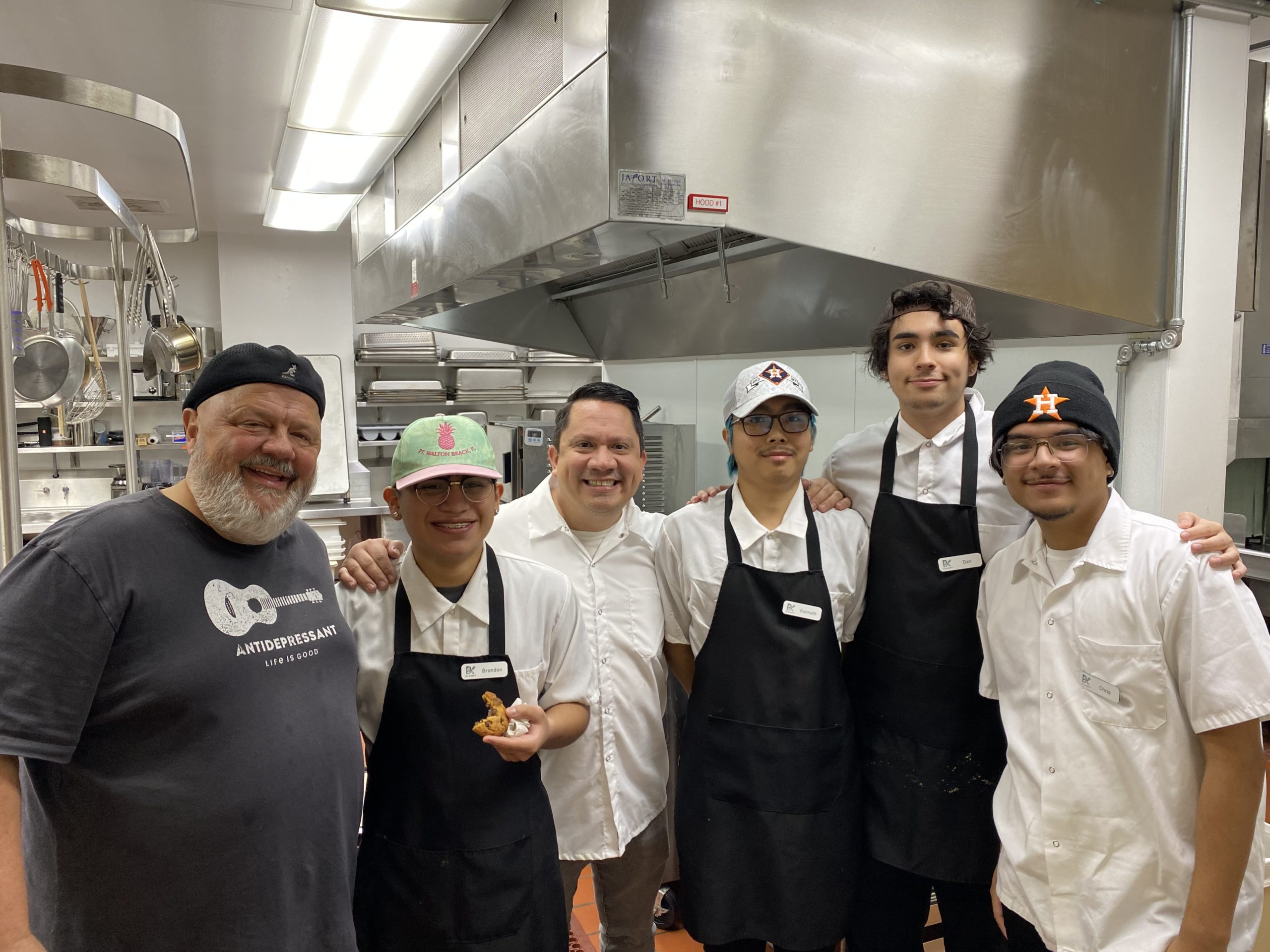
I had a rare opportunity this week to a part of Project PX, an amazing program sponsored by St. Luke’s UMC in Houston. My friend Sid Davis asked me to come do a house reading and concert on Saturday and then connected me with Meredith Davis, his daughter, who runs Project PX along with Chef Adam Garcia.

Project PX is “a workforce development training program in a culinary setting” that takes a group of “fellows” into an eighteen-week full-time program that centers not only around culinary skills, but also life management skills and mental health. Each cohort has four or five fellows. They get a full-time wage and serve lunch twice a week to folks in and around the church. Meredith describes the program this way:

We are not a culinary school; our graduates can enter into any field of their choosing. And our holistic approach sets us apart as we include social/emotional health and financial literacy in our curriculum. We also have the unique opportunity to practice skills in real time as we serve meals, cater events, and very soon will have a full cafe that the fellows will help run.

Part of our mission is to give young people a place to learn and hone skills that will serve them regardless of the career path they choose. We pay our fellows for their full-time work, giving them a space to learn while still helping sustain their families. It is a place to discover talents and skills, and figure out how to make those gifts work for you long-term.

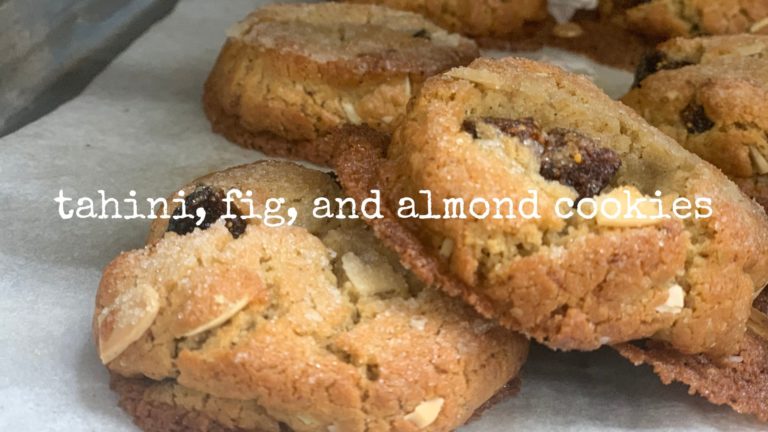
My task was to bake cookies with the fellows–Brandon, Chris, Dan, and Kenneth–and to talk with them about how I got into cooking. Our collaboration and conversation also gave  me the privilege of hearing some of their stories. I brought two recipes–Peanut Butter, Chocolate Chip, Sriracha; and Tahini, Fig, and Almond. The recipes go together for me because, at their base, they are the same cookie in that they both use plant-based butters. Then, because of the different flavors of peanuts and sesame seeds, they go in different directions.

Over two hours, we compared recipes, prepared the doughs, shaped the cookies, baked them, talked a bunch, and ate the fruits of our labors–and we shared some as well. Chef Adam sets a tone of kindness and attentiveness in his kitchen. The guys worked hard, listened well, and made good cookies. We all had a good time. If I lived closer, I would be there everyday.

One of the lessons I learned (again) from Project PX is that the best way to change the world is in small actions rather than grand gestures. The guys I worked with are the fifth cohort for Project PX. Meredith and Adam and all those who work with them are changing the world one eighteen-week cohort after another. What makes the difference in everyone’s life are relationships, which means the energy runs both ways: everyone in the room is teaching and learning, everyone is giving and receiving, everyone matters in the mix.

Alongside of Brandon, Chris, Dan, Kenneth, Adam, and Meredith, I got to change the world with cookies.

I got to see the plans for the new building that will open in a year in the Sharpstown area and will allow for the program to grow as well as to offer a community center and other things. I hope one day I get to bake cookies there as well.

I have posted the recipe for the Peanut Butter, Chocolate Chip, and Sriracha cookies before, but the tahini cookie is a cookie I have only made one other time, when we did the Milton’s Famous popup in Durham in August of last year. I wanted to make something new and kept thinking about what could replace the peanut butter. Thinking of tahini made me think of Mediterranean, North African, and Middle Eastern flavors, so I used orange extract instead of vanilla, added cardamom and black pepper to the dough and then finished with sliced almonds and chopped dried figs.

All of it sounds a bit odd, but they really taste good.

tahini, fig, and almond cookies

1 cup butter (2 sticks) room temperature
16 oz, tahini, mixed well
2 cups (17 oz.) brown sugar
2 eggs, room temperature
1 tablespoon orange extract

3 cups (16.5 oz.) all purpose flour
1 teaspoon baking powder
1 1/2 teaspoon baking soda
1/2 teaspoon salt
2 teaspoons black pepper
1 teaspoon ground cardamom

8 oz, dried figs, chopped
3 oz. sliced almonds
granulated sugar

Preheat oven to 375°.

In a stand mixer using the paddle, mix the butter, tahini, and brown sugar until well emulsified. In general with my cookies, I let the mixer run for about ten minutes at this stage to make sure the fat absorbs the sugar and it takes in a lot of air.

Add the eggs and orange extract and mix until combined, scraping down the sides of the bowl as needed.

In a separate bowl, combine the flour, baking soda, baking powder, salt, and spices. Whisk them together and add them to the wet mixture in the mixer. Mix until combined, but don’t mix it to death. Scoop the dough into a large bowl and work the figs and almonds in by hand so they are scattered throughout the batter.

Using a 2 ounce scoop, drop the cookies on a parchment-lined baking sheet. Shape each ball into a sort of mini hockey puck that is about an inch and a half across and dip the tops in granulated sugar and return them to the baking sheet. Bake for 9-10 minutes. I usually turn the cookie sheet halfway through.

Let them sit on the baking sheet–on a cooling rack–for about five to ten minutes before removing them.

As I said, these taste good. The next time I make them they will even taste better because they will also hold the memory of my day with Brandon, Chris, Dan, and Kenneth.

Peace,
Milton

Thanks for reading. My website is free and ad-free because of the support of my readers. If you would like to become a sustaining member, click here. You can also subscribe to my free weekly newsletter, mixing metaphors.
no, more sad songs

We were in the kitchen this morning kind of goofing around and Ginger said, “Hey, Siri, play sad songs.” A couple of seconds passed and the voice from our HomePod said, “Okay, now playing sad songs.” Two or three tunes played and Ginger smiled and said, “This sounds like what you listen to all the time.”

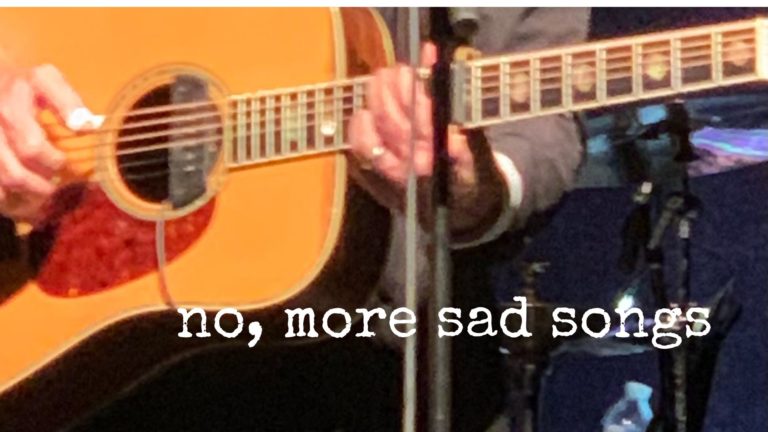
She’s right. I love sad songs. I love songs that sound sad even when they aren’t. What I love are songs that offer hope, or talk about how we help each other keep going. That said, I couldn’t help but start with one that spoke to our time in the kitchen–Pierce Pettis’ “No More Sad Songs,” which, slightly altered, gave me my title for tonight’s post. I also love the power of punctuation.

sing the one about the guy that lost his true love
play the one about the girl he left behind
everybody wants to hear the sad ones
and for the life of me I don’t know why

no more sad songs, no more sad songs

“Fleet of Hope” by Indigo Girls starts with a beautiful image of two people with different ideas of what fishing means and then carries the metaphor on into the chorus.

the fisherman comes up
puts his two poles in the sand
he stares out at the sea
just exactly like me
but I’ve got a book in my hand
we will have caught on to something by the end of the day
but mostly we think about the one that got away.

‘cause the fleet of hope is so pretty
when she’s shining in the port
and the harbor clings to the jetty
for protection and support
out in the choppy waters the sharks swim and play
you’re all washed up when Poseidon has his day.

Kate Campbell embodies an informed hope in her song, “Hope’s Too Hard,” drawing sustenance from the bird song around her.

I’ve been chattering all night long
like a crag or swallow on and on
I’ve lost my voice from all this crying
and I’ve lost my will to sing

hope’s too hard and I’m too weak
and I don’t know if I can keep
holding on beyond my reach
love can you sing for me

“Keeping Hope Alive” is a song by John Fulbright that has both a haunting melody and a haunting lyric.

Days
Cliches and throw aways
Trying to learn better ways
But it’s getting harder to survive

Change
Moments that rearrange
And the only fight that remains
Is called keeping hope alive

Glen Hansard writes wonderful songs that speak to all that is beautiful and difficult about life. “The Song of Good Hope” is one of my favorites.

And watch the signs now
You’ll know what they mean
You’ll be fine now
Just stay close to me
And may good hope,
walk with you through everything
May the song of good hope,
walk with you through everything

Nightbirde is the one artist in playlist whose song doesn’t have hope in the title. Nevertheless, “It’s OK” belongs here.

I moved to California in the summer time
I changed my name thinking that it would change my mind

I thought that all my problems they would stay behind
I was a stick of dynamite and it was just a matter of time, yeah

Oh dang, oh my, now I can’t hide
Said I knew myself but I guess I lied
It’s okay, it’s okay, it’s okay, it’s okay
If you’re lost, we’re all a little lost and it’s alright
It’s okay, it’s okay, it’s okay, it’s okay
If you’re lost, we’re all a little lost and it’s alright

It’s alright, it’s alright, it’s alright, it’s alright

If you have listened down the list, you might make a case for all of these being sad songs in their own way–and you might be right. The melodies are quiet, even melancholy, even as their lyrics reach for more. Still, for me, these are hopeful songs, so, I say, “No, more sad songs.”

Peace,
Milton

goodbye/hello

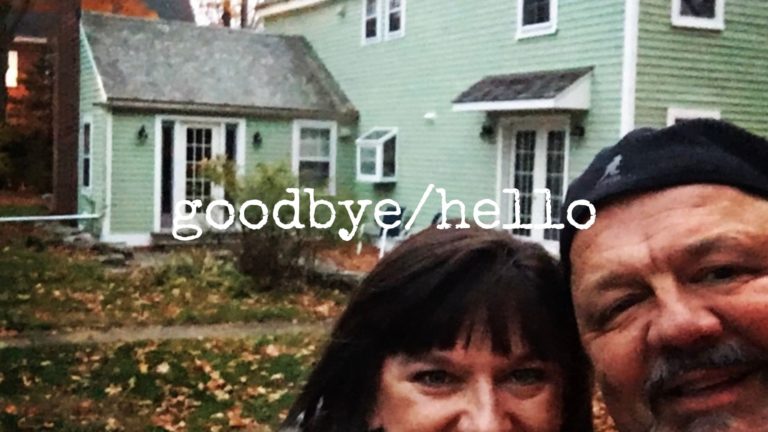
November begins with two anniversaries in our household: on the first day of the month, seven years ago, we said goodbye to Durham, North Carolina, and then on the second we said hello to Guilford, Connecticut, arriving in town on the fiftieth anniversary of the day Ginger and her parents moved into the house where her parents lived for forty-five years when they moved in with us.

In my reading this morning, Amy Leach wrote, “. . . for there has never been a perfect goodbye, not one . . .” Perhaps it is also true that there has never been a perfect hello. Both of them are a little messy because both of them are a part of relationships.

Our move to Connecticut has been unusual for me because, as I have come to say, Durham didn’t let go of me. Our friendships there have stayed current. When my mother entered hospice two months after we got to Guilford, she made Ginger and I promise that we would use the money she was leaving us to buy a house because we were living in a parsonage and weren’t building equity, and we bought one in Durham, partly because of the difference in housing prices and also because we love Durham.

Our hello to Guilford has created connections as well. Tonight I went to Confirmation Class because I am a mentor for one of the participating high schoolers. In that first couple of months after we arrived I met her and her family. She was in second grade. We used to talk to each other at coffee hour. I got sick that winter and she made me a card and she and her mother brought it by. Over the years, we kept talking. This summer, she sent me an email asking if I would be her mentor.

Both the goodbye and the hello have had longer stories to tell; like I said, both are a little messy. And rich.

In his book In the Shelter, Pádraig Ó Tuamá tells of an exercise he did with a group of high schoolers, asking them to think of the first sentence of their autobiography. I have borrowed the exercise on a few occasions. I think it is a wonderful question. So far, the sentence I have come up with is,

He was just trying to find his way home.

I suppose one way to think about home is it is somewhere between (among, within) goodbye and hello, maybe along the lines of getting caught between the moon and New York City. You know–the best that you can do is fall in love.

Peace,
Milton

Thanks for reading. My website is free and ad-free because of the support of my readers. If you would like to become a sustaining member, click here. You can also subscribe to my free weekly newsletter, mixing metaphors.
chain reaction

I learned a new word today: concatenation.

–the act of linking together in a chain; concatenating;
–the state of being concatenated; connection, as in a chain;
–a series of interconnected or interdependent things or events.

I read the word in Vesper Flights by Helen Macdonald, who was writing about her migraines what they had taught her about how we understand who we are together as a society.

I’ll come back to her in a minute, but first I want to tell you about the memory the word awakened in me.

When we first moved to Guilford, one of the folks in the church who is a font of historical knowledge about pretty much everything, as far as I can tell, offered to give me a tour of the town. As we walked around, he told me stories about Guilford, including that at one time there were five foundries in this little town. Some of the buildings that housed them are still standing, though they are now condominiums and other businesses.

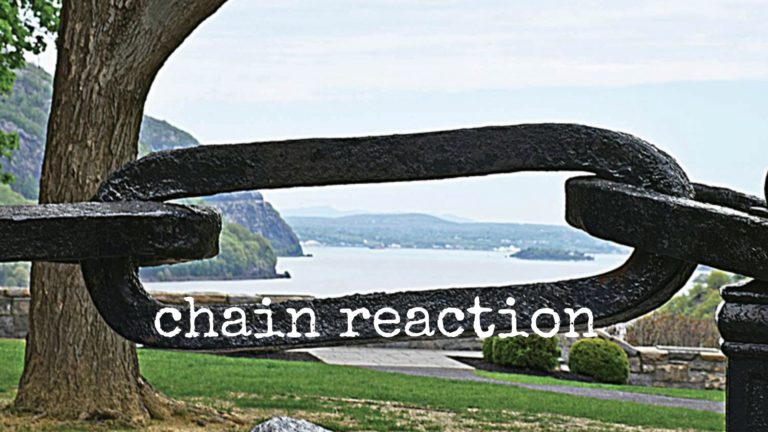
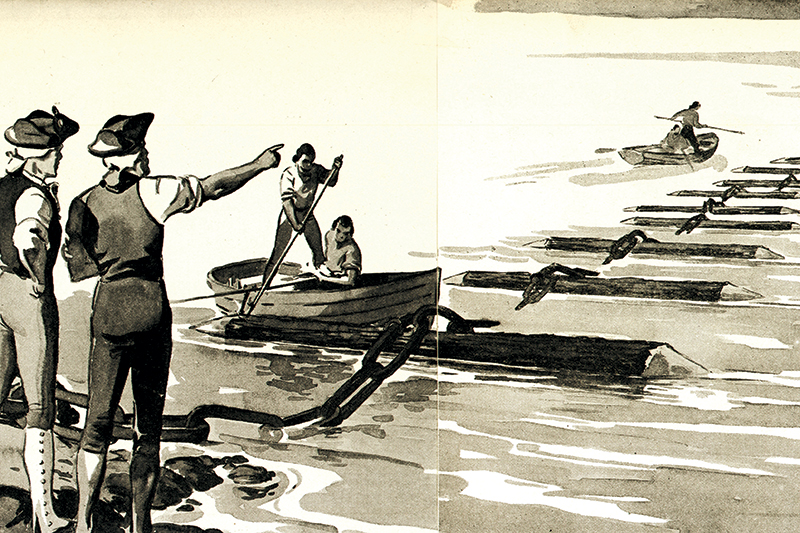
As he talked about the metal work done in town, he told me about the effort to put a chain across the Hudson River during the Revolutionary War to prevent the British from attacking by ship from Canada. (He also pointed me to Chaining the Hudson: The Fight for the River in the American Revolution by Lincoln Diamant.) The reason the story mattered to Guilford was that the built the chain by calling on foundries all over New England to build the links, which were then transported by horse drawn wagons to a town on the Hudson and the chain was assembled there. Though the links were not uniform, each one weighed about 100 pounds; the whole chain was seventy or eighty tons. It was carried out into the river by barges.

And it worked, thanks to the concatenation of not only the chain but also the foundries that connected to make it a reality.

I have this mental image of blacksmiths all over New England making chain links as best they knew how–and probably larger than they had ever made–and then I can see a whole bunch of wagons working their way to the river to connect all of their contributions into something that was probably more than anyone imagined and certainly connecting people in ways they didn’t see coming. They even turned an image on its head, creating a chain that was a symbol of freedom.

As Macdonald talked about What she had learned about what happened before she a migraine set in, she talked about having to learn how to recognize connections that weren’t apparent, and then carried that metaphor to links we need to learn to see.

My migraine symptoms are a concatenation of unrelated things that seem to have nothing to do either with each other or with the pain that follows them: beet-root, banana milk, yawning, phonophobia (fear of sound–another new word), exhaustion. It’s hard to imagine how those things relate, or how they could fit together into a whole. And it’s just as hard for us to comprehend that things we have been taught are unrelated got each other, that seem only incidentally connected to the workings of the world–things like agricultural production, food distribution, international trade agreements, global corporate culture, among a thousand others–its hard fur us to comprehend that such things might be causal symptoms of the climate emergency. We’ve been conditioned by our times not to process some types of problems and solutions because they do not fit with how we’ve been taught to think about society. (72)

That last sentence made me wonder whether it would even be possible to create the kind of cooperation that built the chain across the Hudson if we had to do it today. We seem to have lost most of our ability to see the power of the common good. No wonder I didn’t know what concatenation meant. I don’t have much need to use it.

In the middle of those thoughts came an email from Ginger sent to the church leadership about the rat problem in Guilford. Yes, I said rats. For some weeks now, our part of town has been infested with rats. Not mice. Rats. We have seen them in our backyard. The people whose fence backs up on the lot where our kinship garden, and who had chickens, have killed twenty of them.

Part of trying to deal with the problem is learning about the connections that are not apparent. We have two folks in our neighborhood who have had chickens. One woman has had them for years. The chickens have not attracted rats before, but now that the rats are here, the chicken feed is a magnet. So is our giant pile of leaf mulch in the back corner of the garden–or so it seems since they found tunnels in it. We are also mindful that poisoning the rats requires we think of connections to wildlife that might catch and eat a sick rat, creating a toxic chain we do not intend.

I know, I’ve wandered a long way from the banks of the Hudson, but it seems that our town is once again having to learn how to work together to keep the enemy out of town, if you will. (I make that sound like we haven’t done that since the Revolutionary War, but you get my drift.) I realize that’s dramatic and I also wonder why it seems that most often we need someone or something to be against in order to come together, but that is a discussion for another time.

For now, I learned a new word that has to do with linking together. I hope I get to use it a lot.

Peace,
Milton

My writing here and in my newsletter are offered for free, thanks to the help of my members who help to support me. You can subscribe to my weekly newsletter (which is also free) and become a member. Thanks for reading.

the math of discipleship

I preached this morning at our church in Guilford, and it was another peach of a passage as far as the lectionary is concerned. I had to write the sermon in traffic, as I like to say, because it was a hectic week, but some of those things became part of what helped me to see the verses in a new light. Since my interim is over, this is my last scheduled sermon for a while. I hope you find something here that speaks to you.

________________________________

Last week, I started publishing an online newsletter called “mixing metaphors.” Actually, Ginger was the one who came up with the title because, she said, it’s what I do. I like to mash up ideas and images that offer the chance for imaginative conversation about what it means to be human.

As long as my mother was alive, she admonished me to be like Jesus. After dealing with today’s passage and the parables that surround it, I wish I could tell her I think I’m pretty close because in the eight verses we read Jesus gives us a festival of mixed metaphors.

First, he said, those who did not hate their families could not be disciples. Then he said those who did not carry their cross couldn’t either–and they knew nothing about his upcoming crucifixion, so what that metaphor meant to them is up in the air. Maybe it had more to do with the weight of empire, since Rome used crucifixion as punishment for crimes, than our image of great sacrifice. Then he switched to talk about counting the cost of building a tower and counting the cost of going to battle against a more formidable opponent, and then he said, “Therefore, none you can become my disciple if you do not give up all of your possessions”–and then, in the following verses that we did not read, he said we were like salt. He hit everything from siblings to seasonings as he talked about what it means to be human.

Look, Mom, I’m like Jesus . . . ?

At least, I hope so.
But I have to tell you, when I read phrases like “must hate your family” and “renounce all your possessions,” I wonder what to do with them even though Jesus said them.

I have watched, for example, as some maliciously use the two stories about counting the cost to castigate those who have had their student loan debt forgiven, and part of me wishes those words of Jesus weren’t even written down so they could not be weaponized.

Though the gospel writers rarely give us any indication of Jesus’ tone when he spoke, I have been turning these words over all week listening for something that offers more than Jesus telling everyone they were a huge disappointment to God.

Then I saw something I had not seen before. Listen again:

For which of you, intending to build a tower, does not first sit down and estimate the cost, to see whether they have enough to complete it? Otherwise, when they have laid a foundation and are not able to finish, all who see it will begin to ridicule them, saying, ‘This person began to build and was not able to finish.’

Jesus said the reason the person had for making sure they could finish the tower was so they would not be ridiculed for a half-built tower. And the second story:

Or what king, going out to wage war against another king, will not sit down first and consider whether he is able with ten thousand to oppose the one who comes against him with twenty thousand? If he cannot, then while the other is still far away, he sends a delegation and asks for the terms of peace.

The result of the king measuring his army against his opponent’s was to decide the battle wasn’t worth it and to send a peace delegation instead.

The characters in both stories are examples of vulnerability, not victory. The first had a big idea that got knocked down by things they didn’t see coming, and the second had delusions of grandeur that were cut down to size in a moment of reflection.

The way Jesus talked about the kind of commitment it took to be a disciple, he seemed to say that there is not a way to communicate just how much it costs.

We can give lip-service to putting our commitment to God above family and possessions, or anything else for that matter, but living that out is a different thing, as is figuring out what that looks like. The truth is our lives are littered with lots of half-built towers and battles we didn’t fight. And most all of us are attached to our stuff.

These verses read, it seems, as if hardly anyone measures up as a disciple. But these verses don’t stand alone.

Just before this mess of metaphors, Jesus told three parables about banquets. One is about someone who goes to a banquet and tries to switch place cards to worm their way up to the head table only to be moved to the back (and Jesus said don’t be like that); one is about someone who hosts a banquet and only invites people they think will invite them back only to learn that doesn’t pay off (and Jesus said don’t be like that); and one is about someone who sends out invitations to a banquet to people who were used to going to banquets, and everyone responds with silly excuses, so the host instructs their servants to go out and find anyone who is hungry enough to come and eat (and Jesus said be like that).

In the chapter that follows our verses, Jesus tells three parables of people who appear to not count costs: a shepherd who leaves his flock of ninety-nine sheep to go out in the night to find one that had gotten lost; a woman, who loses one of the ten coins she possessed, tears up her house looking for it, and then blows her whole budget throwing a party for the neighborhood to celebrate; and a father who pulls out all the stops when his son, who had disowned him, comes home after losing everything because he has nowhere else to go.

The traditional reading of these last parables is that God is the extravagant one—and that is true about God. But what if we put ourselves in the place of the shepherd or the woman or the father? What if we think of these parables in the light of Jesus’ call to give up our possessions?

Perhaps what is missing in our understanding of what Jesus was saying in these parables is that Jesus understood most of us spend their lives counting costs. We measure our steps and choose our words; we run scenarios in our minds and make forecasts and predictions. We want to make sure we are safe. We want what is coming to us. We don’t want to get taken advantage of. We want to share, but we don’t want to give up too much.

The truth is that kind of math doesn’t add up because we can’t see what’s coming. What we can see are the invitations life is offering us right now—invitations to incarnate the love of God to those around us in tangible ways.

Our friends Jena and Marc felt compelled to pay for a student from A Better Chance (ABC) to go to college. When Julie became our foster daughter, they also gave us one of their cars because they knew we were going to need a second vehicle. They had the means to do both—and they were willing to do them.

Sometimes, the call to respond is more celebratory. Our goddaughter Ally and her partner Pete opened a restaurant in Athens, Georgia this week. As you can imagine, the opening was the result of years of dreaming and planning. Thanks to Avelo Airlines, we were able to figure out how to get there—and it mattered to her that we did.

At the same time, Ginger’s cousin in Alabama is facing a housing crisis and has nowhere to go, so we are in the process of adjusting some of our plans to buy a small place so he will have somewhere to live.

As I was working on my newsletter and trying to figure out life after my editing job, a person who I know through my blog but have never seen face to face spent two or three evenings after work helping me sort through some technical stuff I did not know how to do just because I asked.

I wish we had time to let the people here tell stories because I am sure this room holds many tales of ways people have been extravagant to us and ways in which we have counted the cost of what it means to be family or friends and then paid the bill.

Take some time to think of those stories and tell them to one another. They are stories of discipleship, if you will.

Jesus told these parables in response to questions that came from those who were critical of him: Why did you heal that man on the Sabbath? Why do you hang out with tax collectors and sinners?

Jesus’ answer was basically to say, “Why not spend my life on them? What else is going to add up to a life worth living?”

As followers of Christ—disciples—we are called to pay the cost of noticing one another, of witnessing one another, and attending to one another, of loving one another. We are called to offer our half-built towers as shelter, to share our daily meals as if they were banquets, to find one another no matter why we got lost in the first place for no other reason than that’s what Jesus did. And, like my mother said, we ought to be like Jesus. Amen.

Peace,
Milton

My writing here and in my newsletter are offered for free, thanks to the help of my members who help to support me. You can subscribe to my weekly newsletter (which is also free) and become a member. Thanks for reading.

out of tune voices

This has been a rollercoaster of a week. It started, for me, with finishing up my nine-month bridge pastorate in Westbrook and sending out the inaugural issue of my newsletter, mixing metaphors. On Wednesday morning, Ginger and I went to Athens, Georgia to celebrate the opening of Puma Yu’s, a new restaurant that is the realization of the dream of Ginger’s goddaughter, Ally (though I claim her too) and her partner Pete. Getting there on short notice meant we flew from New Haven to Savannah and then drove from Savannah to Athens. We got to eat at the restaurant both Wednesday and Thursday nights and then came back to Guilford on Friday, also by way of Savannah. As we drove, Ginger was talking to a realtor in Sylacauga, Alabama about a small house we found that we are trying to buy so her cousin (that I mentioned earlier this week) will have a place to live. Ginger led a memorial service this morning and then I rode with her to Wallingford, Connecticut so she could visit a severely injured parishioner who is in a rehab hospital there.
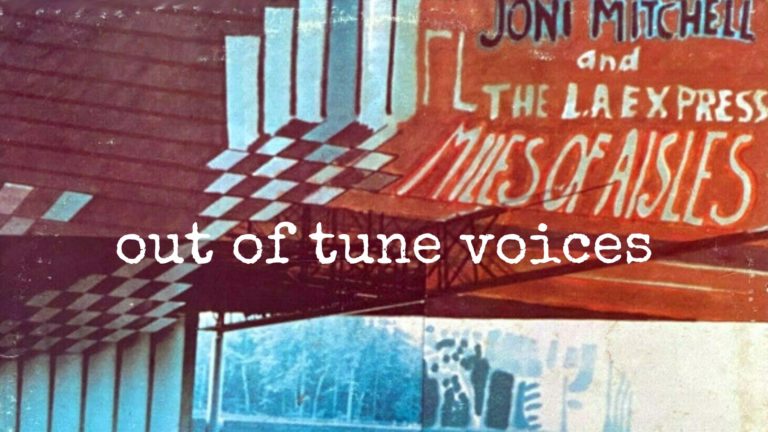
As I sat in the car while she was in the hospital, I let Apple CarPlay choose a random collection of songs. About thirty minutes in, a Joni Mitchell song came on from a 1974 live album called Miles of Aisles. I saw her on tour a year or so later at Reunion Arena in Dallas. her band was Tom Scott and the L.A. Express. The stage was in the middle of the arena and faced a horseshoe of fans. It is the only time I have ever seen her live.

The song was “The Circle Game,” and she introduced it by saying,

This song doesn’t sound good when sung by one lonely voice. It’s sounds good–the more voices on it the better and the more out of tune voices the better. It was made for out of tune voices, this song.

My guess is you know the song, or would know it if you heard it. The chorus says,

and the seasons they go round and round
and the painted ponies go up and down
we’re captive on the carousel of time
we can’t return we can only look
behind from where we came
and go round and round and round
in the circle game

As I listened to the song, I couldn’t help but think of the clips from the Newport Folk Festival of Joni singing the same song almost fifty circles later surrounded by an amazing array of voices on stage–including Brandi Carlile, Allison Russell, Shooter Jennings, Wynonna Judd, Taylor Goldsmith (Dawes), Marcus Mumford, and Phil and Tim Hanseroth–and a whole audience of out of tune voices who couldn’t believe what they had a chance to be a part of. Joni was not on the list of performing artists for the festival. Brandi Carlile was the one who made it happen. Instead of using her set to sing her songs, she made room for Joni and the others so that we all got a chance to hear Joni sing again.

Even when we are out of tune, it matters when we harmonize.

The opening nights at Puma Yu’s were for those who had supported Ally and Pete in their Kickstarter, which meant it was a room filled with back up singers, with out of tune voices that came to sing the songs of friendship and encouragement. Ginger first met Charles and Jennifer, Ally’s parents, when they were in seminary together. I met them even before Ginger and I got married. Soon after Ally was born they came to Boston and we took Ally to Fenway. Her younger brother, Samuel, is my godson. He’s been to Fenway, too. The realtor Ginger talked to lives in the Birmingham area and, though they have never met in person, figured out they know some of the same melodies. When the songs go like that they feel so good, so good, so good.

But those aren’t the only songs we sing.

Though the melodies of grief and struggle are often familiar to many of us, sometimes they are hard to sing together. When life takes a minor key, we don’t always show up for each other, or we don’t always think of how we could show up. We don’t recognize the harmony part. The hospital in Wallingford is thirty minutes from Guilford. It is a great hospital for spinal cord injuries, but the distance means the person Ginger saw isn’t getting many visitors. They are singing mostly alone right now. As Joni said, the song doesn’t sound good when sung by one lonely voice.

I think that’s true of any of the songs in the key of life. They are made for out of tune voices.

Peace,
Milton

Thanks for reading. What I write here is free because of those who support it. You can find out about membership here and subscribe to my newsletter here. And here’s Joni: