Only us:
across the table,
behind the wall,
sharing coffee,
passing the green beans,
throwing stones,
breaking curfew;
armed to the teeth
biting back with rubber bullets,
cheering for little leaguers,
praying for peace,
marching in the night,
hiding behind official jargon;
joining in song,
crying out for explanations,
flying drones in acts
of faceless violence,
dousing ourselves with ice water,
struggling to learn
that life is more than
a series of self-inflicted wounds.
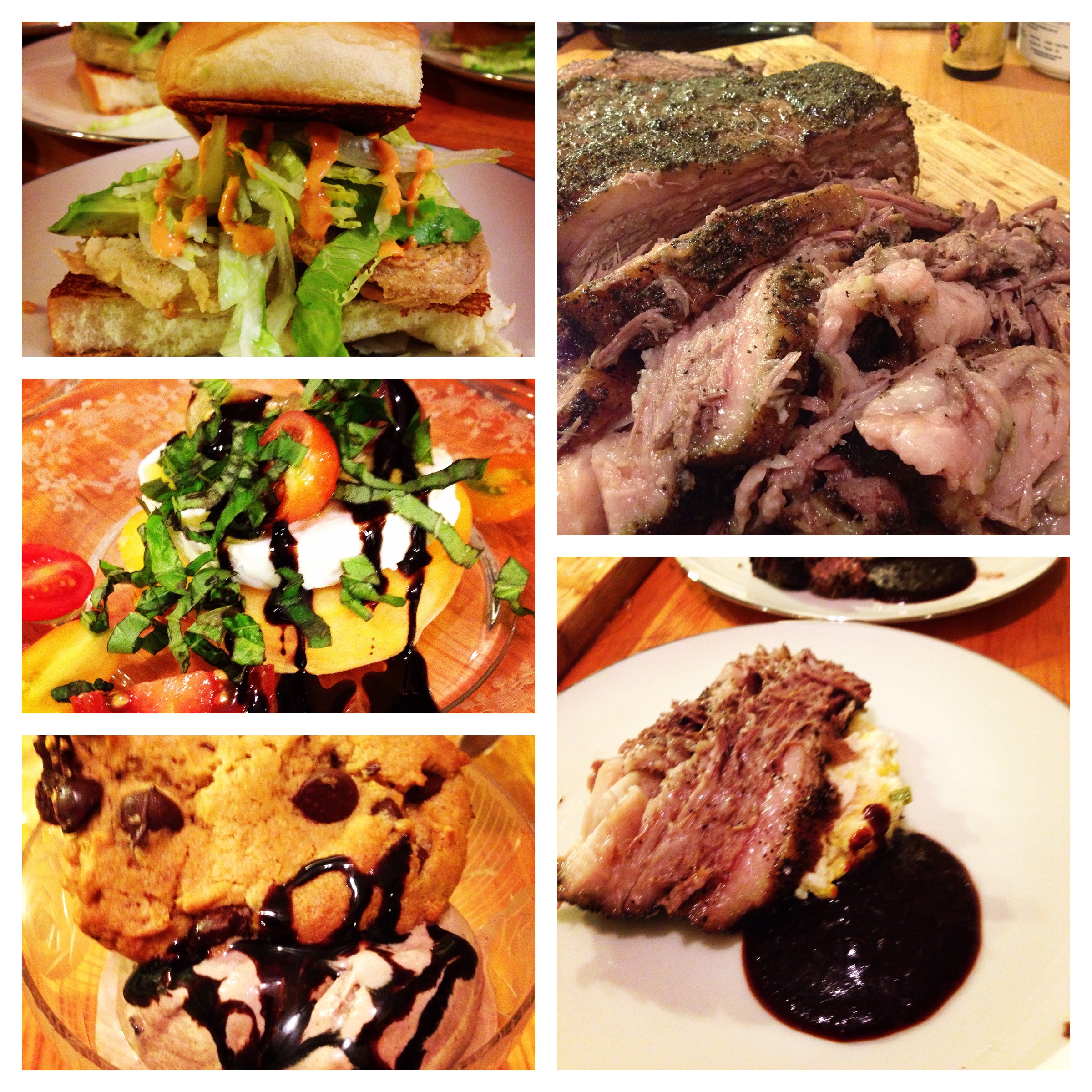
My friend John moved to Okinawa for a year. He’s on an academic sabbatical. He is also a master meat smoker. When he left he gave me a whole frozen packer brisket, ready for me to try my hand at smoking it. My friend Roberto, who owns Old Havana Sandwich Shop along with his wife Elizabeth, may cook meat better than anyone I know. Between the tips I learned from the two of them, the brisket came out tasting really good.
You will notice in the links below I don’t have a brisket recipe. That’s because I’m still figuring it out. But what I did yesterday was rub the brisket with equal parts salt, pepper, and brown sugar. I preheated the smoker to 225˚ and put the meat in, keeping track of the internal temperature. When it reached 160˚, I wrapped the brisket in foil and lowered the smoker temp to 205˚ and let it cook several more hours until the internal temperature of the meat was about 195˚.
Then we cut it and ate it.
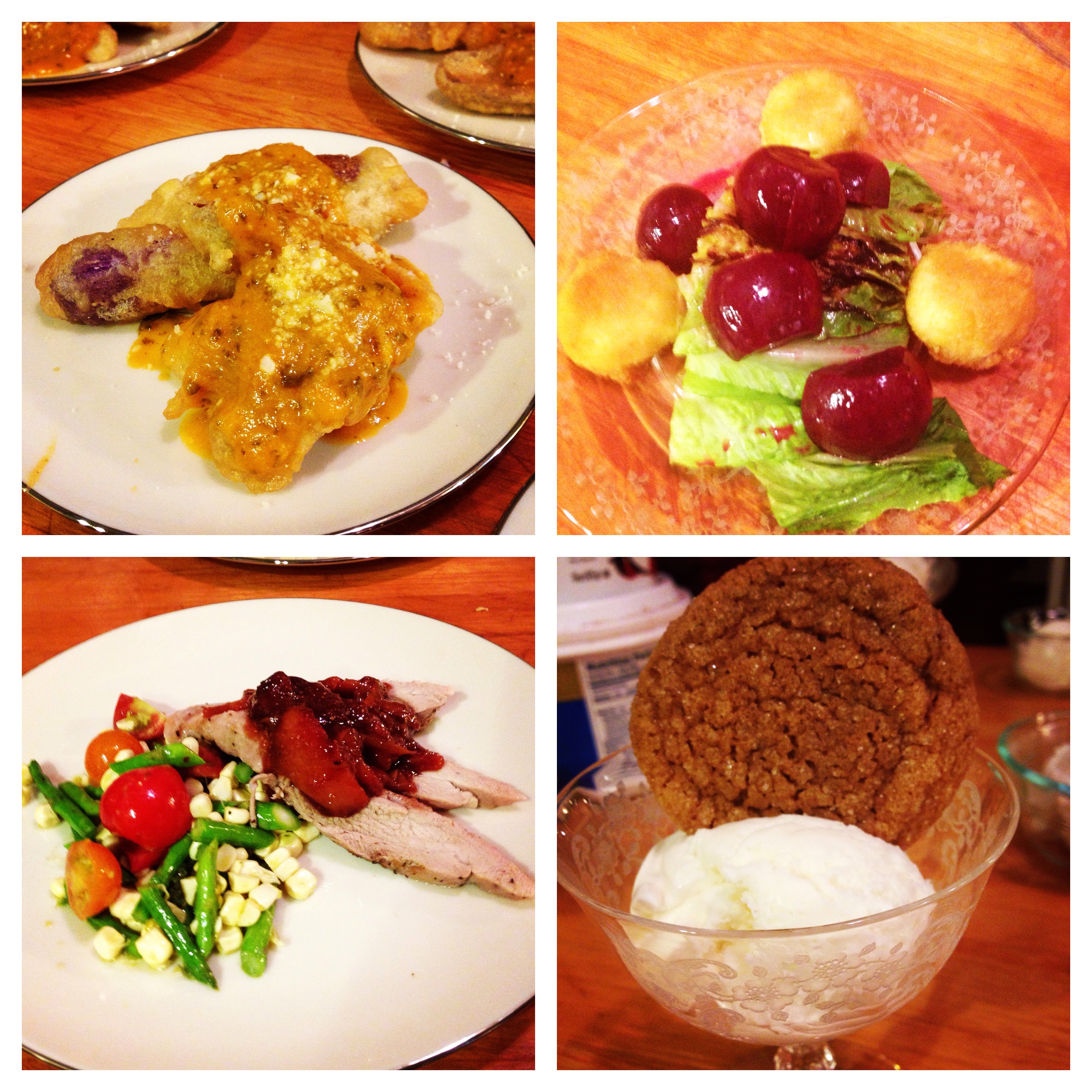
Here’s the rest of what we had for dinner this past Thursday Night:
For almost as many years as we have been married Thursday Night Dinner has been a significant ritual in our lives. We invite folks over for dinner, I cook, and then we sit around and talk until we get tired. Over the past couple of years, thanks to Facebook and Twitter and my iPhone camera, I’ve been able to share pictures of my food. I’m not sure why it took me so long to think of this, but one day this week it also dawned on me I could use this blog to share the recipes. I have a recipe blog where they will actually live, but I will print the menu here and link to all of them on one page.
. . . from Norman Jameson for Associated Baptist Press.
‘Don’t eat alone’ is metaphor for healthy Christian life, says minister-chef
photo by Norman Jameson
By Norman Jameson
Forty-two years ago Milton Brasher-Cunningham first heard the words that rescued him, like a strong arm lifting a drowning person to safety.
He was 16 and the new missionary kid from Africa in a big Houston school, plopped into the middle of his junior year. His family came to Houston to lead a Baptist church, but details had not been finalized so Brasher-Cunningham — ordinarily an extrovert — could not connect in school with youth from that church.
He didn’t talk to a single other student outside of a classroom for two weeks, dreading every lunch hour sitting alone in a boisterous cafeteria, a stone in the river of laughter flowing around him.
Until one day he heard, “Here’s the guy I’ve been looking for.” A missionary-kid friend from Africa, whom he hadn’t seen for years, scooped up Brasher-Cunningham’s tray and set it down in the midst of others from his home church.
“That changed my whole world. Someone knew my name. I started being greeted in the halls. It changed everything.”
It’s been a while since I did a music post. Tonight, at the end of a hot summer day, I thought I might offer some of the songs that have been the soundtrack of my summer — mostly old friends, and certainly worth a listen.
The Decembrists have become a favorite band over the last couple of years and “June Hymn” is one of the best.
When my dad died last year, Patty Griffin’s “Go Wherever You Want to Go” was bread for the journey. This summer it has made a return and let me sing along as we observed the first anniversary. The more I hear it, I find deep hope in this song.
Here’s hoping you find something with which you can sing along.
After my father died last year, Ginger and I were at my mother’s apartment and we saw two or three bags of little white
powdered donuts in the pantry. When we asked about them,my mother said, “Every morning we got up and I made a pot of coffee and we had a couple of donuts and talked about what we were going to have for breakfast.”
This morning — the first anniversary of my father’s death — Ginger left the house early and returned with two sleeves of little white donuts from our local convenience store. I made a pot of coffee and we, too, ate our don
uts and talked about what we wanted for breakfast. All my food today has been in his memory: cornbread and milk for breakfast, BBQ ribs and sausage for lunch, peach pie for dinner. I remembered him well.
I am the last of three Cunninghams who were given the name Milton. The first, my grandfather, was a big, determined, and sometimes divisive man who died before I was born. I know him only in stories. My dad was a shorter man than his father, more diplomatic, and with a better sense of humor. I split the difference between them, height wise. All three of us bear a physical resemblance along with our common name. I was born in Corpus Christi, Texas. My mom tells of Pop Soles, who was one of the laundry men at the hospital and a member at Second Baptist Church, where my parents attended. Everyday as he made his rounds, he would stop and look through the window at the newborn babies. The morn
ing after I was born he said to the nurse, “I didn’t know Barbara Cunningham had her baby.”
The nurse said, “Now Pop, you can’t tell whose baby is who the first day.”
“Oh, yes I can,” he said. “That is Milton Cunningham right there. I wou
ld put money on it.” The nurse didn’t believe him and went in to check. He was right. I was Milton.
One of the lectionary passages in church today was the story of Jacob wrestling with the angel — or whomever he wrestled that night. The story is one of the most evocative and mysterious stories in the Bible, and one to which I continue to return. I have always loved the idea of taking on a new name when we meet God in a significant way. That part of the story gave me vocabulary to describe why it mattered to me to change my name to Brasher-Cunningham when Ginger and I married. The most compelling part of the story for me, however, is Jacob’s desperate holding on until he got a blessing. The blessing. From his childhood he had manipulated and cheated and cajoled and there beside the river, aware that come morning he would have to face his brother whom he had so deeply wounded, he hung on for dear life that he might feel blessed. Forgiven. Validated. Loved.
He got the blessing, along with a wound. The man touched him, as the older versions say, in the hollow of his thigh and left him to limp the rest of his life. He had a new gait to accompany his new name. With every twinge came the memory of his blessing. The two were inseparable. His limp, I imagine, also made him recognizable. Someone would look down the road to see the sort of stumble in his walk and say, “There comes Jacob.”
Along with our names and our physical resemblance, the three Miltons have all shared a quest for blessing: some sort of validation that we were enough, that we mattered, that we were worthy to be loved. All of us preached grace better than we appropriated it. When I look at the two who preceded me, I also see that each offered his namesake less of a burden. My grandfather gave his son a better life than he had known; my dad did the same for me. I still remember looking in the coffin a year ago and saying, “Well, Dad, you finally know what it feels like to be enough.” That thought still makes me smile.
My father and I spent more than a couple of nights wrestling with each other as I tried to figure out what it meant to be Milton and we both tried to sort out what it meant to be Miltons together and who we were to each other. We left some scars and we figured some stuff out as well. For most of my life, particularly during my days in Texas, I was often recognized as my father’s son before I even had a chance to introduce myself. Sometimes that opened doors and sometimes it annoyed me. It never closed a door. It often led to a story: “I remember when your dad was here . . . .”
I’m a marked man: marked by my name, by my appearance, and by the legacy of my father who did the best he could. Part of grief appears to be coming to terms with the fact that the things you hoped might happen will not. Marking this day, however, reminds me of the ways I am marked by him; even as I miss him being here, I feel him in my limp, if you will — I incarnate the legacy handed down to me in the way I look, the way I repeat stories, the way I look for humor, the way I love to read, the way I feel called to make a difference in the world, the way I love a good piece of pie.
I am blessed, and I will keep my name. I am Milton.
I can see them
coming over the tops
of the trees
the lights at the
old ball park
the roof tops of
the old warehouses
the clouds pile up
some white as anger
behind them a grey wall
as deep as darkness
here comes the rain again
falling on my head like a memory
what I can’t see
is when the storm
will be over
if I am living through
a flash flood of
feelings and grief
or if the darkness
is settling in to stay
all I can do is keep
looking past the ball park
for any sign of light
the southern summer
is not personal:
the onslaught of heat
and humidity
falls on the just and
unjust the sacred
and the sweaty
gets under your skin
refusing to relent
in its drive to
depletion as you
dart from one cool
remove to the next
more afternoons than
not the swirl and stack
of clouds fills the sky
with the promise of
rain — perhaps relief —
and then delivers
the promised storm on
some and not others
it’s raining in your
lane of life’s highway
your windshield wipers
pull the water across
the glass like a rake
in a sand garden
then erase and try
again without sense
of gain or failure
the best they can do
as the flash flood steams
you like vegetables
healthy though tasteless
left limp by the heat
put in a cool place
to save for tomorrow
— John Berger — And Our Faces, My Heart, As Brief As Photos
Life has a certain centrifugal force. In both large and small ways we are thrown to the edges, away from one another. The companion force is one that draws us to one another, that compels us toward together. The first force is a reality; the second, a choice. I live in a town where people — many people — make that choice on a daily basis, looking for ways to connect, for new eyes with which to see ourselves in new ways. Durham is the most encouraging place I have ever lived.
One of the most recent labors of love is the Bull City Sculpture Show, which was put together by the artists who make up Liberty Arts and who describe themselves as . . .
a nonprofit arts community whose collaborative practice reflects the dynamic personality of Durham, North Carolina. Our mission is to expand access to three-dimensional art and share the skills required to make it. All are welcome to take part through hands-on classes, public events, mentorships, and commissions. Liberty Arts believes in community outreach and encourages visionary thinking.
Part of their vision was to create space for sculptors to give us some new things to look at in and around downtown and, by doing so, give us new eyes with which to see ourselves and our city. They ran a successful Kickstarter campaign to raise enough money to offer artist grants and to build the necessary platforms and now there are twelve sculptures scattered across the downtown area, which means they are all in walking distance of our house.
Twice now — once with Ginger and once with my friend, Leon — I have walked around town to take in the sculptures. I won’t feign to be an art critic or even say I know that much about sculpture, and I was moved by what I saw on the streets where I live. On both sojourns I learned some things, saw things in new ways. I offer things I learned from the Bull City Sculpture Show — in no particular order.
Looking at things you don’t completely understand is expansive. Seeing the sculptures did more than make my mind work; I felt a physical change as well, as though my lungs expanded. I could breathe deeper. I know it sounds dramatic, and it’s what happened. The pieces of metal and wood that swirled and reached and clung to each other stretched me and invited me to rest and ruminate rather than rush on by. The specific offerings of the artists made my world larger.
Context matters. As we walked around town, I could see the folks who put the show together had worked hard to think
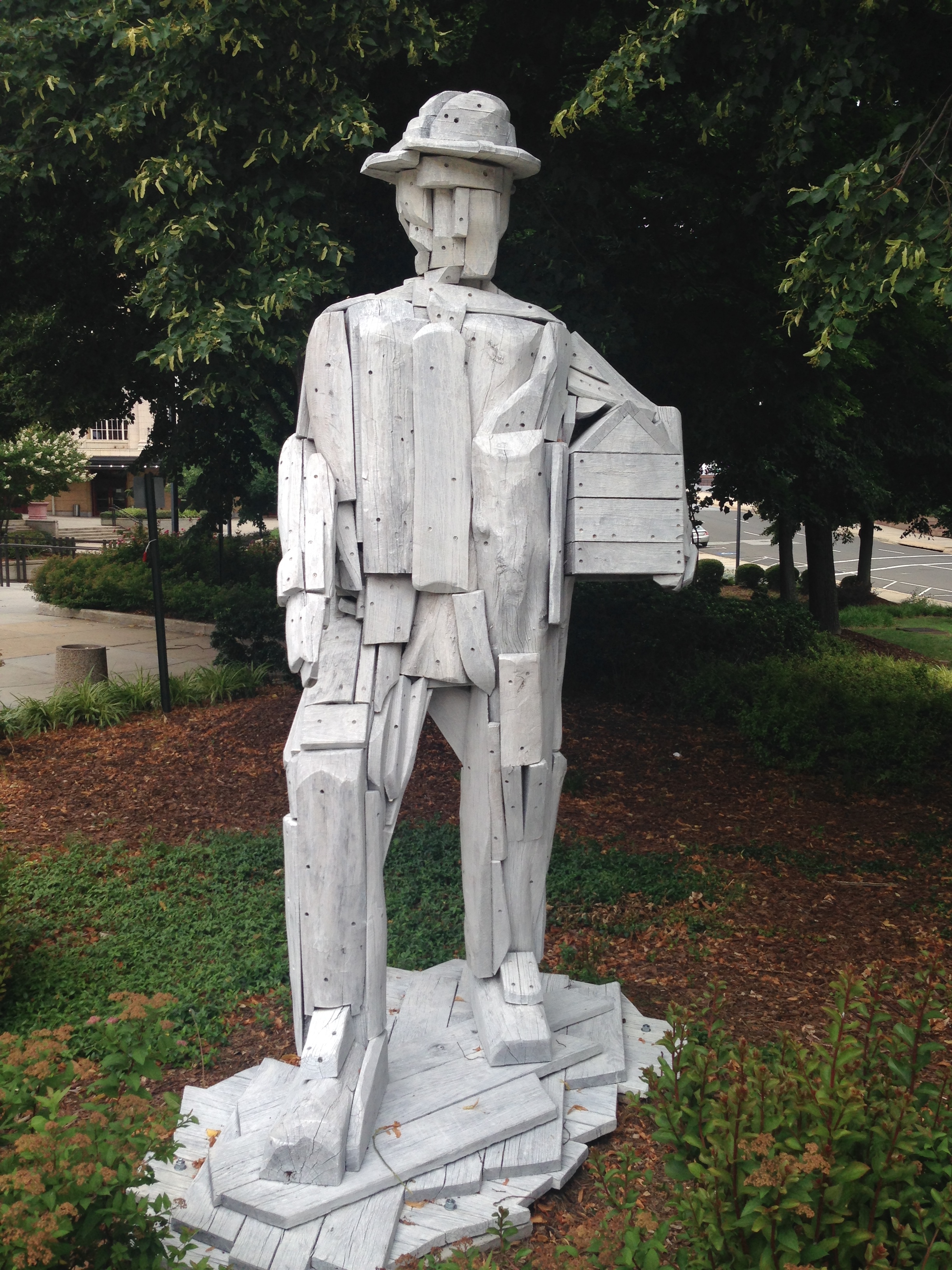
Pursuit of Happiness
about where each piece should be placed. In some cases, the theme of the piece was tied to its location. In others, the shape of the space seemed to have been taken into account. Even so, some of the pieces were enhanced by their placements and some were diminished. Where we are makes a difference. My favorite piece in the show is my favorite in part because of where it was. “Pursuit of Happiness” is a wooden sculpture of a man carrying a box that is shaped like a bird house. He is made out of white wood and is wearing a hat. He is in a stand of trees next to the Carolina Theater, so he looks as though he is coming out of the forest, as though he is in motion, even though he is standing still. The “forest” made me wonder if he were homeless in his pursuit, or if he could be a fairy tale character. Had he not been in the trees I would not have seen him in the same way.
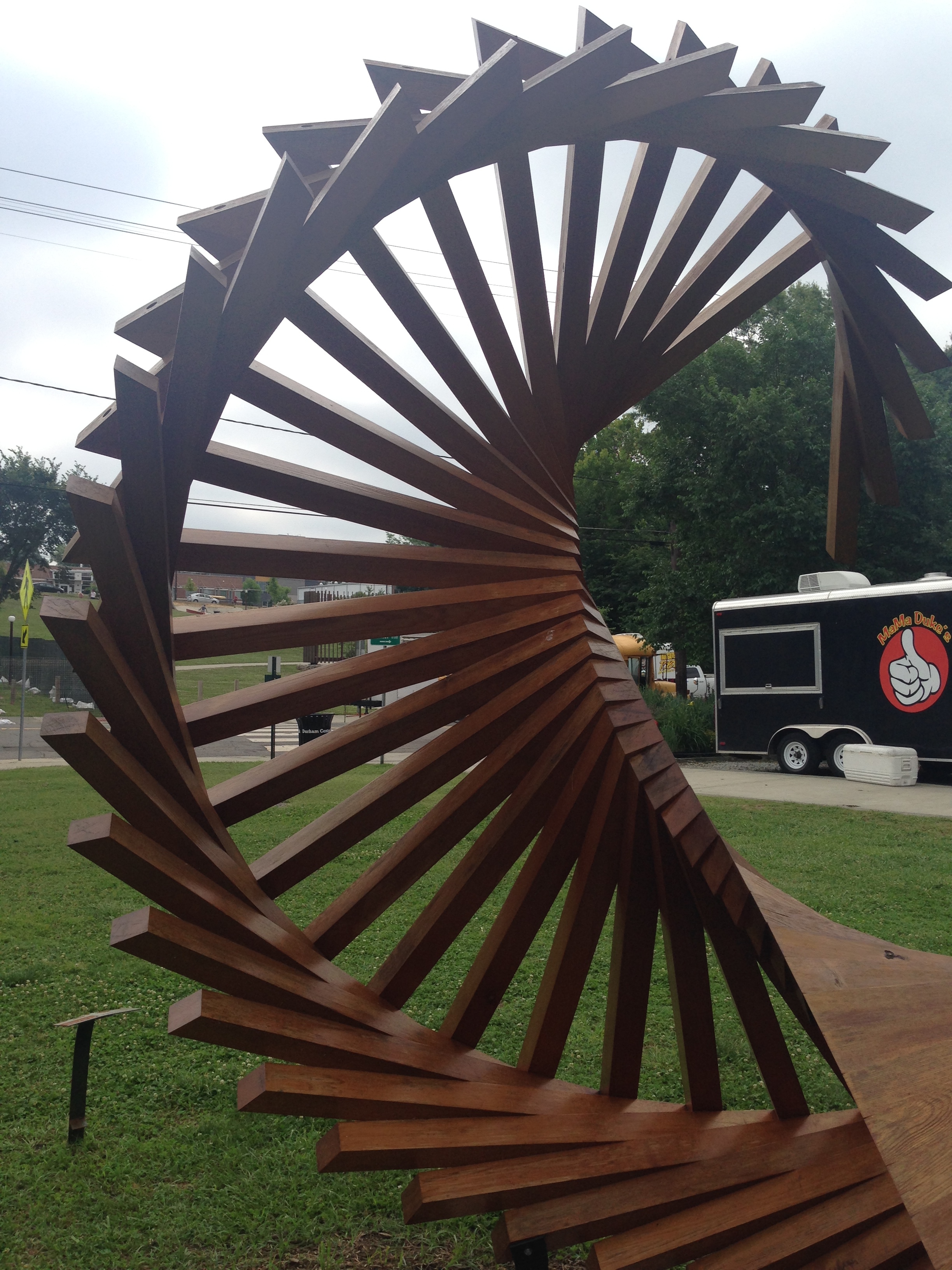
Things look different when seen from different perspectives. All of the sculptures in the show were placed so that we could walk around them and see them from all sides. Most of them changed as my perspective changed. “Winding Out”
Winding Out
looked like a turbine or a helix or a carnival slide depending on where I was standing. Saturday at the Farmer’s Market, I looked over to see a parent who had spread a blanket under the sculpture for her baby to get out of the sun and the spiral became a shade tree. There’s more than one way to look at most everything.
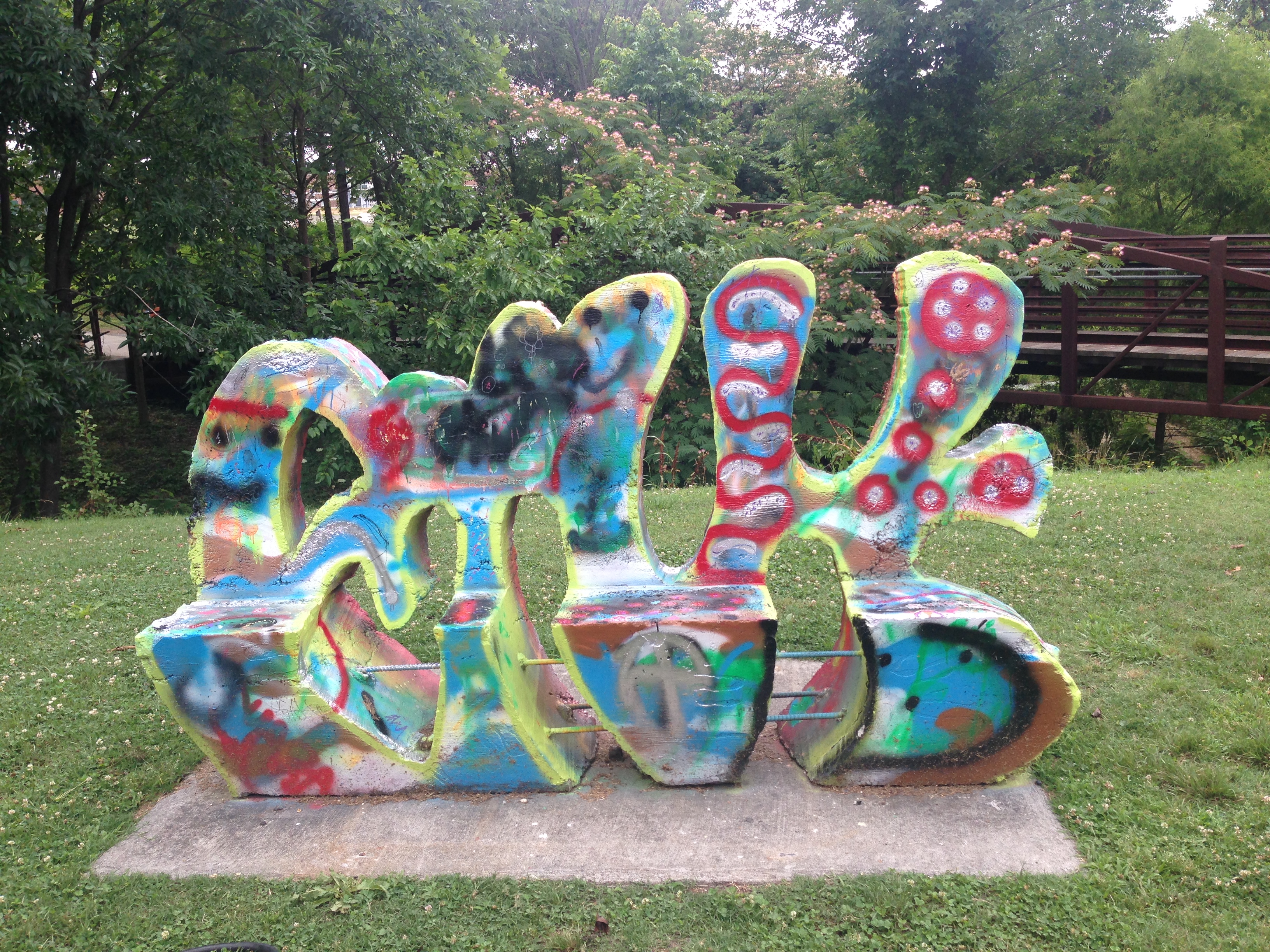
To be attentive is to see everything with new eyes. Most of the time we see what we are looking for. If we go looking for the same old things, we often find them. If we go looking for adventure, we find that, too. “Amuk” is a concrete bench made to be used. When Leon and I sat down, I looked across at the empty Farmer’s Market pavilion and saw the lines and angles as if it were a sculpture. As we walked through town, everything around me turned into art. I had never looked at the buildings that way. I’m not sure those intent on building edifices had art in mind in the same way as the sculptors intent on building community, but the art bled through nonetheless. The more we looked and talked and walked, all of us — Ginger, Leon, Durham, me — became part of the art show, part of the connectedness.
Amuk
In some sense, I suppose, the lessons I learned are an exercise in stating the obvious. Then again, a day never goes by without Ginger and I telling each other, “I love you,” which is stating the obvious as well. When it comes to closing the distances between us, stating the obvious becomes a crucial act. We need to say again and again that we are all in this together. We need to remind one another to expect to find wonder and adventure as we go through our daily routines. We need to say out loud and over and over that there is work to be done to make sure everyone knows they belong.