it rained enough last night
to let us waken to a
fresh-scrubbed morning
a diamond of a day
offering me the chance
to cook on a Thursday
for the first time since
I left our porch full of
friends who gathered weekly
I was cooking for a group
at church—Ginger invited
all those over seventy
to tea in the parish hall
I cooked and baked in my
new kitchen, made two trips
to the grocery for items
I didn’t have and dropped crumbs
hoping to find my way home
the night has now crept in
the day slipped away without
losing its sparkle, passing its
glow to the candles in the
windows, and I am cleaning
up the kitchen and baking
the last of the cookies to
take to work tomorrow . . .
another tradition I have
carried with me—not to
repeat or recreate, but
to connect all that matters
We got our Christmas tree up today, along with the candles in the windows in good New England fashion. And it’s halfway through Advent. As I was working on things this afternoon, I listened to my friend Billy Crockett’s song “Coasting Into Christmas” and found a helpful and hopeful resonance, which led me to think this might be a night to share some of the songs that feed me through the season. We’ll start with Billy. The song, by the way, is found on this wonderful record, A Very Blue Rock Christmas.
Coasting Into Christmas
coasting into the holiday season
why don’t we drive around and see some lights
buy some eggnog for no good reason
singing carols may be up all night
this year we’ll take it slow
and savor every part
feel the ancient wonder
as it penetrates our heart
but the lines were so long
and the car was so dead
and the mystery thing happened
with the pumpkin bread
and we’ve got extra second cousins coming over
can we find them a bed
and I know this holiday can handle
all things great and small
but I guess we won’t be
coasting into Christmas after all
coasting in with the holiday spirit
I think I’ll sharpen up the turkey knife
but they’re killing each other down at the galleria
but here at our house it is a wonderful life
this will bring the season in with perfect flow
champagne and candlelight
and Mr. Perry Como
but the credit cards maxed
and we still don’t have a tree
and the packages came back
with a postage fee
and grandma’s been detained
by airport security
and they are skating right now
at Rockefeller Plaza as I recall
but I guess we won’t be
coasting into Christmas after all
and just by chance I glance
at these small figures in the round
and think about the story
that’s been so long handed down
how the pregnant girl takes to the road
on a rented donkey with her boyfriend Joe
and there ain’t no inn in Bethlehem
seems to have gotten the memo
now they’re hunkered down exhausted
in some two bit barnyard stall
and they said, I guess we won’t be
coasting into Christmas after all
no I guess we won’t be
coasting into Christmas after all
James Taylor at Christmas gets a good bit of play around here, and the song that seems to have particular meaning this year, in the face of so much xenophobia, is “Some Children See Him.”
Some Children See Him
some children see Him lily white,
the baby Jesus born this night.
some children see Him lily white,
with tresses soft and fair.
some children see Him bronzed and brown,
the Lord of heaven to earth come down.
some children see Him bronzed and brown,
with dark and heavy hair
some children see Him almond-eyed,
this Savior whom we kneel beside.
some children see Him almond-eyed,
with skin of yellow hue.
some children see Him dark as they,
sweet Mary’s Son to whom we pray.
some children see him dark as they,
and, ah—they love Him, too
the children in each different place
will see the baby Jesus’ face
like theirs, but bright with heavenly grace,
and filled with holy light.
o lay aside each earthly thing
and with thy heart as offering,
come worship now the infant King.
’tis love that’s born tonight
If you’ve followed this blog through other Advents, you know one doesn’t pass without me mentioning Patty Griffin and “Mary.”
Mary
Mary, you’re covered in roses you’re covered in ashes
you’re covered in rain
you’re covered in babies, covered in slashes
covered in wilderness, covered in stains
you cast aside the sheet, you cast aside the shroud
of another man, who served the world proud
you greet another son, you lose another one
on some sunny day and always you stay, Mary
Jesus says, “Mother I couldn’t stay another day longer”
he flies right by and leaves a kiss upon her face
while the angels are singing his praises in a blaze of glory
Mary stays behind and starts cleaning up the place
oh Mary, she moves behind me
she leaves her fingerprints everywhere
every time the snow drifts, every way the sand shifts
even when the night lifts, she’s always there
Jesus says, “Mother I couldn’t stay another day longer”
he flies right by and leaves a kiss upon her face
while the angels are singing his praises in a blaze of glory
Mary stays behind and starts cleaning up the place
Oh Mary, you’re covered in roses
you’re covered in ruins
you’re covered in secrets
you’re covered in treetops, covered in birds
who can sing a million songs without any words
you cast aside the sheets, you cast aside the shroud
of another man, who served the world proud
you greet another son, you lose another one
on some sunny day and always you stay
Mary, Mary
The next song is another repeat performance, this time by Steve Earle.
Nothing But A Child
once upon a time in a far off land
wise men saw a sign and set out across the sand
songs of praise to sing, they traveled day and night
and precious gifts to bring, guided by the light
they chased a brand new star, ever towards the west
across the mountains far, but when they came to rest
they scarce believed their eyes, they’d come so many miles
and this miracle they prized was nothing but a child
and nothing but a child could wash those tears away
or guide a weary world into the light of day
and nothing but a child could help erase those miles
so once again we all can be children for a while
now all around the world, in every little town
every day is heard a precious little sound
and every mother kind and every father proud
looks down in awes to find another chance allowed
and nothing but a child could wash those tears away
or guide a weary world into the light of day
and nothing but a child could help erase those miles
so once again we all can be children for a while
nothing but a little baby
nothing but a child
the garment of life, be it tattered and torn
the cloak of the soldier is withered and worn
but what child is this that was poverty-born
the peace of Christmas Day
the branch that bears the bright holly
the dove that rests in yonder tree
the light that shines for all to see
the peace of Christmas Day
the hope that has slumbered for two thousand years
the promise that silenced a thousand fears
a faith that can hobble an ocean of tears
the peace of Christmas Day
the branch that bears the bright holly
the dove that rests in yonder tree
the light that shines for all to see
the peace of Christmas Day
add all the grief that people may bear
total the strife, the troubles and care
put them in columns and leave them right there
the peace of Christmas Day.
the branch that bears the bright holly
the dove that rests in yonder tree
the light that shines for all to see
the peace of Christmas Day
I’m going to send you off with one more video from James Taylor that doesn’t need lyrics. All you need to do is share the joy.
I finished a book and started a book today. It was a good day.
The first was Bandersnatch: An Invitation to Explore Your Unconventional Soul by Erika Morrison, which I began reading before we left Durham, packed it by accident, and just got back to it this week. By redefining four words—avant-garde, alchemy, anthropology, and art—she issues a rather vibrant call/invitation to engage God and the world in some fresh and challenging ways. As I reached the final pages, I found myself glad to know she lives in New Haven. I hope we can find some time for conversations that might serve as sequels to my reading.
Morrison reframes anthropology as
a radical way of seeing everyone as if you lived inside their skin and everything else for its full potential. . . . The kingdom anthropologist will always see the stuff of earth as an artery to the kingdom of heaven. The stuff of earth and the stuff of heaven were made for each other. Each gets us to the other. (126)
I love the last sentence in particular. The interconnectedness. And she continues,
The most fundamental premise a kingdom anthropologist holds is this: We are all connected. . . . I start to wonder if most of society lives under the basic assumption that we are all separate, that we are not connected at any level, let alone fundamentally. . . . The anthropologist sees that all people are instrinsically linked not just with one another, but with the entire created order, and seeks to generate a spirit of connection instead of division throughout the land. (153-54)
She then spends some time talking about the food pantry where she and her family volunteer, and she says:
Somehow we all know we’re chained into one another’s lives, stale dreams and broken seams and all. Our individual ships are sinking, but together we manage to stay afloat one more day. (166)
Another last sentence to fall in love with. Knowing I would finish her book on the train to New Haven this morning, I grabbed an old friend off the shelf to read once again: Walking on Water: Reflections on Faith and Art by Madeleine L’Engle. As I started the section on Art in Morrison’s book, she quoted from the L’Engle book that was sharing space in my backpack. I put one down and picked up the other. A chapter or so into reading, I came across a section I have quoted on several occasions without being able to remember exactly where it was:
But I am a story-teller and that involves language. . . . When language is limited, I am thereby diminished, too. . . . In time of war language always dwindles, vocabulary is lost; and we live in a century of war. . . . The diminution is world-wide. (37-8)
Then she moves to a powerful warning:
We think because we have words, not the other way around. The more words we have, the better able we are to think conceptually. . . . We cannot Name or be Named without language. If our vocabulary dwindles to a few shopworn words, we are setting ourselves up for takeover by a dictator. When language becomes exhausted, our freedom dwindles—we cannot think; we do not recognize danger; injustice strikes us as no more than “the way things are.” (38-9)
Though I love a good hashtag, the combination of war as common circumstance, technology, and social media have caused our expectations and understanding of language to dwindle. One of my favorite episodes in Ken Burns’ The Civil War was the one that contained Sullivan Ballou’s articulate and heart-wrenching letter to his wife. Today his letter might be reduced to “luv u 4ever. #windonyourcheek.”
The awareness that our vocabulary is shrinking even as our world becomes more complex alongside of the challenge to reclaim and reinterpret words we have know a long time has been energizing to me. One of the things that gets lost when our vocabulary is reduced is a way to express the ambiguity and nuance at the heart of what it means to be human. There is more to life, and to most any issue or topic, than two polarized extremes. L’Engle quoted the Spanish philosopher Unamuno:
Those who believe they believe in God, but without passion in the heart, without anguish of mind, without uncertainty, without doubt, and even at times without despair, believe only in the idea of God, and not in God himself. (32)
My mind is going in a number of different directions with all of this swirling around. The tether between them all goes something like this: the stuff of heaven and the stuff of earth were made for each other—we are all connected—our individual ships are sinking, but together we manage to stay afloat one more day—we cannot Name or be Named without language—and then I ended up at an old Bee Gees song from a record I bought in 1969: its only words, and words are all I have to take your heart away.
One of my brother’s maxims is “the one who frames the question wins the argument.” Morrison pointed out that the perspective that we are all connected runs counter to the societal claim that we are different and at odds with each other. Rather than framing life as a conflict fed by the language of exclusion and division, let our chosen words shine a light on all that connects us. Rather than allowing war to be our primary metaphor and fear our chief currency, let us choose words that paint a picture of the world as a giant artists’ colony, exploding with creativity and cooperation. Rather than using words as weapons, let us choose a healing vocabulary.
When the worst of my depression hit in the fall of 2001, I quit reading the newspaper. For years my morning ritual was to go from front to back, soaking up as much as I could. As I worked to learn how to live through the darkness visible, one piece of advice I found was to give myself a break from the daily news. I did, and it helped. Before too long, my daily reading was replaced by a daily listening to NPR, which kept a kind tone in its reporting and did more than repeat headlines.
At our house in Durham, I had a radio/CD player that lived under the wall cabinets and gave me the chance to listen everyday. I could tell you the name of pretty much every host for every show on NPR’s playlist. When I installed the radio, I stripped the screws, so it stayed behind when we moved north and I replaced the technology with a portable Bluetooth speaker that allows me to play music from my iPhone. NPR does have a station in iTunes, but I have chosen not to tune in because these days are heavy enough. I have a lot of contact with media in different forms, and I have decided to let the news find me, rather than seeking it out. Find me it does, and I am finding a respite—some room to think and reflect on things other than the standard diet offered by the twenty-four hour news cycle.
I’m not trying to hide from it. I just want some space. We are bombarded with so much that we are expected to somehow be able to respond immediately and move on to the next thing. We hardly had a week to figure out what Ferguson meant before we were on to the next thing. There are ways in which I feel now is the time we should be talking about the implications of what happened in Charleston, but that is ancient history to the news cycle. We will be fortunate if anyone is mentioning any of the recent mass shootings in January or February. The world may be getting smaller, but we are not being offered a global view. We have allowed ourselves to be convinced that we are a nation constantly at war, and that we are the Ones Who Are Right.
In her book The Rise, Sarah Lewis recounts a Yoruba myth of the trickster diety Eshu-Elegba.
Disguised as a man, Eshu-Elegba strolled through town in a cap topped with a crimson parrot feather, half painted white and the other half red, bisected by a line from the middle of his forehead to the top of his spine. Some in the town thought that they saw him walk by in a red cap. Others thought it was white. One person who had swept through the entire town knew that the cap was both colors. Chinua Achebe described the lesson of the myth in reference to an Igbo festival masquerade: “If you want to see well, you must not stand in one place . . . If you’re rooted to a spot, you miss a lot of the grace.” (187)
I keep reading Achebe’s words again and again: if you’re rooted to a spot, you miss a lot of grace. If we are hunkered down in fear we won’t find any sense of true perspective.
My current train book is Bandersnatch by Erika Morrison, who happens to live here in New Haven. On the ride in this morning, as she reacquainted me with one of my favorite passages from Frederick Buechner:
If the world is sane, then Jesus is mad as a hatter and the Last Supper is the Mad Tea Party. The world says, Mind your own business, and Jesus says, There is no such thing as your own business. The world says, Follow the wisest course and be a success, and Jesus says, Follow me and be crucified. The world says, Drive carefully—the life you save may be your own—and Jesus says, Whoever would save his life will lose it, and whoever loses his life for my sake will find it. The world says, Law and order, and Jesus says, Love. The world says, Get and Jesus says, Give. In terms of the world’s sanity, Jesus is crazy as a coot, and anybody who thinks he can follow him without being a little crazy too is laboring less under a cross than under a delusion. (112)
Most all of Jesus’ words were invitations. He took stuck in people like the woman at the well and let them find the room to move so they could also find the grace they needed. In our time people like Donald Trump and Jerry Falwell, Jr. and Franklin Graham are using the language of faith as an incendiary device to frighten people to root themselves in hatred; their invitation is to a graceless existence. I am not making a political point here. We cannot lose these words to war. To paraphrase Indio Montoya, these words don’t mean what they say they mean. Words are not meant to be weapons.
When I started writing tonight, I went looking for the clip from the movie with Indio saying those words. It was, as you can see, quite short. The next clip that began playing almost automatically was one of Mandy Patinkin talking about his favorite lines from the movie and he told a story of seeing the movie many years later and hearing a line in a way he had not before. When they get to the end and the Man in Black is talking with Indio about become the Dread Pirate Roberts, Indio says, “You know, I have been in the revenge business so long, now that it’s over I do not know what to do with the rest of my life.” Patinkin goes on to say he loved the line because the purpose of revenge is “completely worthless and pointless” and the purpose of existence is “to turn the darkness into light.”
I know—from no newspapers to Yoruba legends to Buechner to Indio Montoya: it’s a meandering path. Then again, if we’re rooted to a spot, we miss a lot of the grace. Let us side and far in the name of Love. Finding and sharing the grace. Let’s do that with the rest of our lives.
At our church here in Guilford, Ginger is one of two pastors who share the responsibility of ministering to our congregation, and part of what that means is they alternate preaching from week to week. Today it was Sarah’s turn. The introduction of her sermon reminded me of what the conductor had said at the beginning of the High School Choir and Orchestra Concert on Friday night. Before he said much of anything else, he quoted Leonard Bernstein:
This will be our reply to violence: to make music more intensely, more beautifully, more devotedly than ever before.
Both the conductor and Sarah mentioned Bernstein’s remarks came in response to the assassination of John F. Kennedy. I took some time this evening to read this account of that time from Bernstein’s website and learned that he was friends with Kennedy, and found a great supporter of the arts in the President. I also found the paragraph that was the context of the quote:
We musicians, like everyone else, are numb with sorrow at this murder, and with rage at the senselessness of the crime. But this sorrow and rage will not inflame us to seek retribution; rather they will inflame our art. Our music will never again be quite the same. This will be our reply to violence: to make music more intensely, more beautifully, more devotedly than ever before. And with each note we will honor the spirit of John Kennedy, commemorate his courage, and reaffirm his faith in the Triumph of the Mind.
I’ve read it through several times this evening and find deep resonance with the first two sentences, even before I get to the quote. The first one has an odd structure, so it took me a minute to realize he is saying “we are numb with sorrow and rage . . . .” At first I wondered how one could be numb with rage (I understand how grief numbs), and then I realized it is exactly what the weight of violence and war has done to us. Yes, we flame up on Facebook and talk about how to respond, yet we are numbed. Perhaps it is less about not feeling anything and more about feeling numb to the possibility that life could be something other than this. Why, for example, spend the energy on contacting our elected officials in Congress (I can’t bring myself to call them leaders) when they have made it clear they aren’t going to do anything? I struggle to feel hope when I think about them.
Bernstein’s response, however, doesn’t begin with thinking of who else he needed to put into action. He speaks for himself, and for other artists:
But this sorrow and rage will not inflame us to seek retribution; rather they will inflame our art. Our music will never again be quite the same.
Then comes the most quoted line:
This will be our reply to violence: to make music more intensely, more beautifully, more devotedly than ever before.
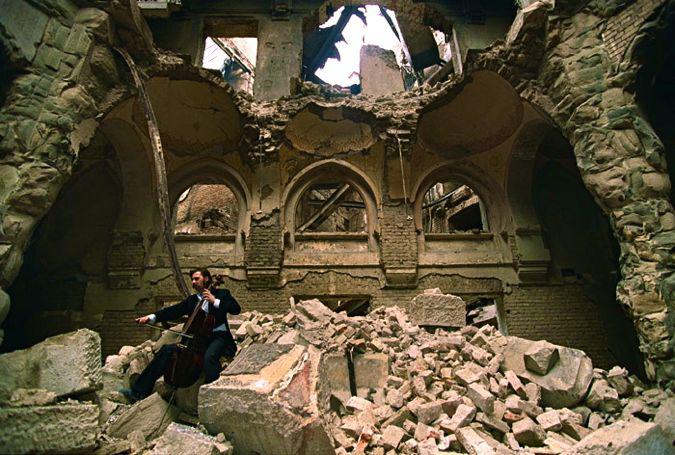
Whatever he expected of others and their response, he knew what he would do, which was to double down on his calling, to let there be no discards. His words helped me remember the story of Vedran Smajlović whose response to the four-year Siege of Sarajevo in the 1990s was to climb into the craters left by the bombs and into the shells of the buildings and play his cello. When he was asked why he was doing it he answered,
You ask me am I crazy for playing the cello? Why do you not ask if they are not crazy for shelling Sarajevo?
What both men are saying involves more than music. Yes, art has transformational power in our lives and we do well to sing back to the night, and there call is also about being true to who we are in the face of violence and fear and grief. The violence may affect us, but it does not get to define us. Our reply will be to do whatever we do more intensely, more beautifully, and more devotedly than ever before.
the birds they sang at the break of day start again I heard them say don’t dwell on what has passed away or what is yet to be ah the wars they will be fought again the holy dove she will be caught again bought and sold and bought again the dove is never free
ring the bells that still can ring forget your perfect offering there is a crack in everything that’s how the light gets in
we asked for signs the signs were sent: the birth betrayed the marriage spent yeah the widowhood of every government signs for all to see
I can’t run no more with that lawless crowd while the killers in high places say their prayers out loud but they’ve summoned they’ve summoned up a thundercloud and they’re going to hear from me
ring the bells that still can ring forget your perfect offering there is a crack in everything that’s how the light gets in.
you can add up the parts but you won’t have the sum you can strike up the march, there is no drum every heart, every heart to love will come but like a refugee.
ring the bells that still can ring forget your perfect offering there is a crack, a crack in everything that’s how the light gets in
The day has been long, not because of anything other than the passing of time, I suppose. I worked at the computer store and came home tired. I have searched for words for a couple of hours now and found them already written by others. I offer three poems that spoke to me tonight, all of them familiar (and a couple of them previously posted here).
Kindness (Naomi Shihab Nye)
Before you know what kindness really is you must lose things, feel the future dissolve in a moment like salt in a weakened broth. What you held in your hand, what you counted and carefully saved, all this must go so you know how desolate the landscape can be between the regions of kindness. How you ride and ride thinking the bus will never stop, the passengers eating maize and chicken will stare out the window forever.
Before you learn the tender gravity of kindness you must travel where the Indian in a white poncho lies dead by the side of the road. You must see how this could be you, how he too was someone who journeyed through the night with plans and the simple breath that kept him alive.
Before you know kindness as the deepest thing inside, you must know sorrow as the other deepest thing. You must wake up with sorrow. You must speak to it till your voice catches the thread of all sorrows and you see the size of the cloth. Then it is only kindness that makes sense anymore, only kindness that ties your shoes and sends you out into the day to gaze at bread, only kindness that raises its head from the crowd of the world to say It is I you have been looking for, and then goes with you everywhere like a shadow or a friend.
Thanks (W S Merwin)
Listen with the night falling we are saying thank you we are stopping on the bridges to bow from the railings we are running out of the glass rooms with our mouths full of food to look at the sky and say thank you we are standing by the water thanking it standing by the windows looking out in our directions
back from a series of hospitals back from a mugging after funerals we are saying thank you after the news of the dead whether or not we knew them we are saying thank you
over telephones we are saying thank you in doorways and in the backs of cars and in elevators remembering wars and the police at the door and the beatings on stairs we are saying thank you in the banks we are saying thank you in the faces of the officials and the rich and of all who will never change we go on saying thank you thank you
with the animals dying around us taking our feelings we are saying thank you with the forests falling faster than the minutes of our lives we are saying thank you with the words going out like cells of a brain with the cities growing over us we are saying thank you faster and faster with nobody listening we are saying thank you thank you we are saying and waving dark though it is
Remembering That It Happened Once . . . (Wendell Berry)
Remembering that it happened once, We cannot turn away the thought, As we go out, cold, to our barns Toward the long night’s end, that we Ourselves are living in the world It happened in when it first happened, That we ourselves, opening a stall (A latch thrown open countless times Before), might find them breathing there, Foreknown: the Child bedded in straw, The mother kneeling over Him, The husband standing in belief He scarcely can believe, in light That lights them from no source we see, An April morning’s light, the air Around them joyful as a choir. We stand with one hand on the door, Looking into another world That is this world, the pale daylight Coming just as before, our chores To do, the cattle all awake, Our own frozen breath hanging In front of us; and we are here As we have never been before, Sighted as not before, our place Holy, although we knew it not.
There times in our new town of Guilford feels as though I live in a postcard or a movie set. The town is quaint and beautiful and steeped in its traditions. Like many places across the country, we had our Tree Lighting tonight, but ours was on the Town Green, bordered by shops and offices with snacks for passersby, a string quintet of eighth grade girls playing in the coffee shop, and luminaria lining the sidewalks. One of the folks standing with us remarked that if felt a bit like the happy version of the crowd gathered in the movie Groundhog Day.
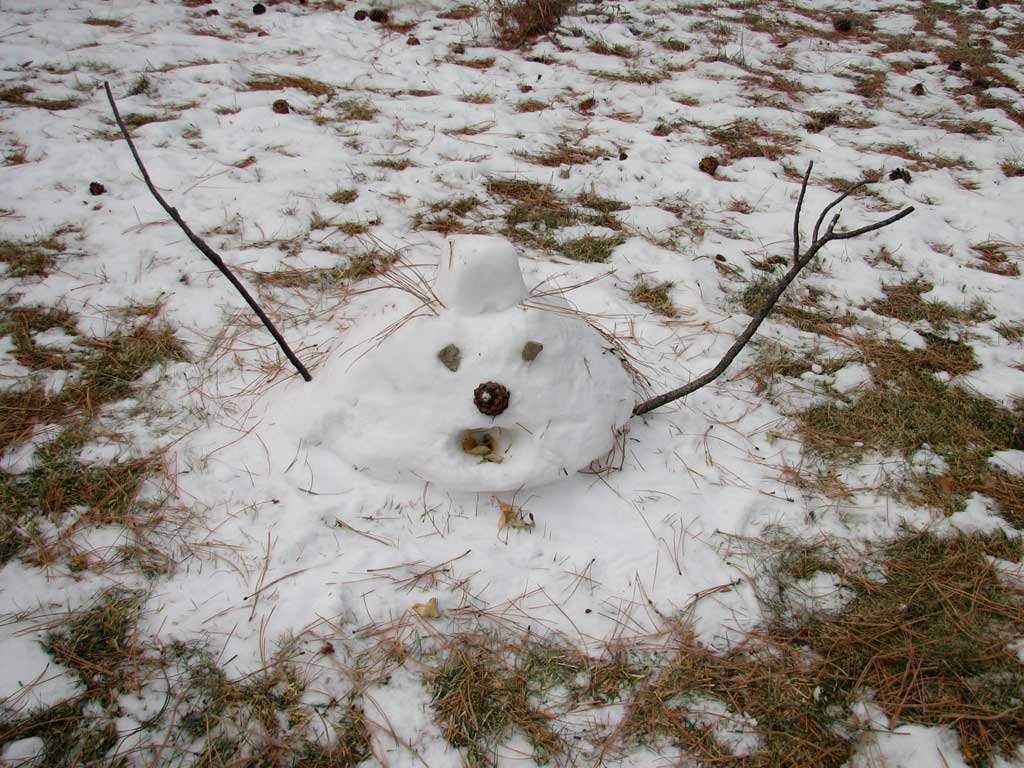
One of the songs we all sang together as we waited for them to illuminate the tree was “Frosty the Snowman.” For the first time it struck me that the song is not as lighthearted as its melody. In the last verse he’s running around trying to get to his Snowman Bucket List before he melts. His days are numbered and his options are shrinking. But don’t you cry . . . .
After the the lights were turned on, many wandered back across the Green to the sanctuary of our church where the high school choirs and orchestra carried on an almost three decade tradition of their holiday concert. When I say choirs and orchestra, I’m talking about over two hundred students filling the horseshoe balcony that wraps all the way around the room and the orchestra stretched across the front. They were well prepared and offered a wonderful almost ninety minute program of everything from “Jingle Bells” to the “Hallelujah Chorus.”
As the students sang and played, you could feel the pride in the room. When it was over, smiling parents and relatives found their favorite students and congratulated them. The way our cultural story goes, these kids are the ones with possibilities. The world, as the saying goes, is their oyster. They know nothing of snowmen.
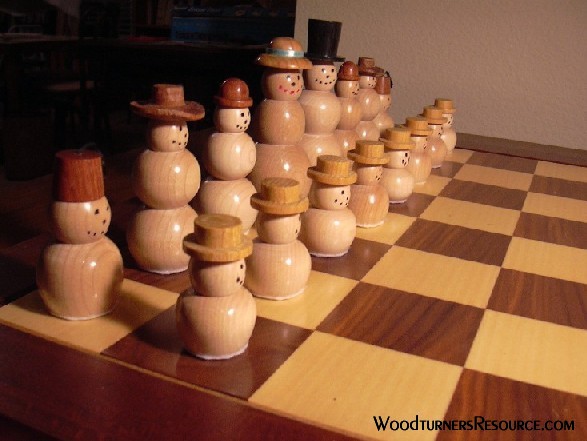
I came home to an email from a friend who takes time to send his thoughts about life and the things that matter, and he was talking about how his uncle taught him to play chess, and how his uncle told him there were more possible chess moves than there were grains of sand. My friend said he finally went and looked it up.
After each player has moved once there are 400 possible moves. After two moves there are 70,000 possible moves. After three moves more than 9,000,000 possible moves. After four moves 288+ billion moves. The average number of moves in a game is 40.
I figured the opposite would be true. That you have the greatest number of possibilities before you move anything; and the longer you play, the fewer the possibilities.
This is true of faith and future, too. The more Christ-moves you make, the greater the number of possible moves God can make. Maybe that’s why Jesus told us not to worry. Watch.
This has changed my understanding of “watch” in Advent. It has always seemed more like a warning. “Brace yourself!” “Sleep with one eye open.” But what if “watch” means: Look at this! You think a baby in a manger was something? You ain’t seen nothing yet! Watch the Lord of the Dance bust a move!
My point is less about how short life is and that we need to make the best of our days than it is about how we choose to look at the day we have in front of us. Are we counting down, or opening up new possibilities. Are we waiting or watching? I overhead two men talking in the grocery store this afternoon. One asked the other how things were going and he answered, “I’m just counting down the days until I can retire?”
“How long do you have left?” asked the other.
“Two and a half years,” he said.
As she neared eighty, my mother decided she wanted to learn something new, so she took up piano lessons. I’ll ask again: are we waiting or watching?
Part of the reason I enjoyed the concert tonight was it connected me with my days in the chorus at Westbury High School in Houston. Our teacher was Ms. Smith who was hard and a bit moody and absolutely amazing. I was dropped into that high school the middle of my junior year and choir was one of the things that helped me find my place there and be able to begin to think of what the next move might be. Forty-one years later, life has more layers than it did then. It’s more interesting and more challenging.
If the baby in Bethlehem was the whole story, we wouldn’t be lighting lights and singing carols. We mark the birth because of who the baby became, because of the dance he taught us, because of who he calls us to be.This life we’re living is not a dirge, but a dance. Girls, hit your hallelujah.
One of the things that helped me today was a blog post by a woman named Katherine that made the rounds on a couple of Facebook feeds that I follow offering ways to respond to the mess of a world we live in these days. Here are some of the suggestions that stuck out to me.
3. Google a small-business florist near the site of any recent tragedy. Call and explain that you’d like to pay for flowers to be sent to, say, the staff of the Planned Parenthood in Colorado Springs (3480 Centennial Boulevard, Colorado Springs, CO 80907), or to Hope Church (5740 Academy Blvd N, Colorado Springs, CO 80918), where slain police officer Garrett Swasey and his family were members. When you leave a note, don’t make it about you, or your political or religious beliefs. Leave it anonymous, or simply say, “From a stranger who thought you might be sad today.”
5. There are several Dunkin’ Donuts within the general area of Sullivan House High School, the alternative school in Chicago’s South Side where Laquan MacDonald was enrolled. It’s probably a tough week for teachers and students both. Buy an e-gift card. Send the link to the faculty. Tell them a stranger bought them coffee.
6. Leave a copy of your favorite book in a public place. Trust that the right person will find it.
8. Here’s a link to Amazon, where you can buy a ten-pack of socks for $9.99. Click the link. When you are asked for your shipping address, find the address of a homeless shelter in your community. If you don’t have a homeless shelter in your community, here’s mine.
12. Go to a diner. Order a milkshake. Tip ten dollars.
13. Get a pile of index cards and a sharpie. Write down, “You are Important,” or “Breathe.” Carry them with you as you go about your day, leaving them in waiting room magazines, on car windshields, in elevators, in bathroom stalls. Keep one for yourself. We all need the reminder sometimes, too.
What I love about the list is how handmade it is, how incarnational. Words made flesh. Here’s what kindness and compassion and even justice look like with skin on: flowers, socks, coffee, affirmation, and extravagant tips. And it is what takes me to Bethlehem every year, and then on into the stories of how Jesus interacted with people, fleshing out love and joy and hope and compassion and forgiveness with his words and his hands. He never held a national convention, developed a global marketing strategy, lobbied for his position, or hired consultants. He thought he could change the world with a meal, a touch, and a kind word. Even when he talked about things in a more eternal sense it came down to
I was hungry and you gave me food to eat. I was thirsty and you gave me a drink. I was a stranger and you welcomed me. I was naked and you gave me clothes to wear. I was sick and you took care of me. I was in prison and you visited me. (Matt. 25:34-36, Common Bible)
Jesus noticed people others had chosen to allow to become invisible. He noticed things in people others missed. He saw beyond anger and responded to the woundedness that lay behind it. He chose belonging over blaming at every turn, and acceptance over accusation.
I know I’m not saying anything new, but then again, there’s nothing new to say, so I’m going to go back over the old, old stories and remind myself that kindness and love and forgiveness and hope are older than violence and death. I’m going back to remember the way I have felt love has been hand to hand and face to face far more than any grand gestures. I may not be able to do much for anyone in Syria or San Bernardino tonight, but I can do something for the homeless people on the New Haven Green as I walk to work from the train station, and to make sure the kindness I wish to show the world pours out first within the walls of our home and covers those closest to me. The Kindness that Became Flesh in Bethlehem calls me to do the same with every motion, every word.
My friend Bob Bennett wrote a song some time ago called “Hand of Kindness,” which you can find on this great collection, A Very Blue Rock Christmas. It feels like a good closing hymn tonight.
I have no need to be reminded of all my failures and my sins or I can write my own indictment of who I am and who I’ve been I know that grace by definition is something I can never earn but for all the things that I may have missed there’s a lesson I believe that I have learned
there is a hand of kindness holding me, holding me there is a hand of kindness holding me, holding on to me
forgiveness comes in just a moment sometimes the consequences last and it’s hard to walk inside that mercy when the present is so tied up to the past and this crucible of cause and effect I walk the wire without a net and I wonder if I’ll ever fall too far that day has not happened yet
‘cause there’s a hand of kindness holding me, holding me there’s a hand of kindness holding me, holding on to me
and in the raven dark shines a distant light it seems to point at me it burns away the night familiar figure on the horizon moving closer now I see his heart is shining like the sun he’s reaching out for me
there is a hand of kindness holding me, holding me there is a hand of kindness holding me, holding on to me
I feel small in the face of
overwhelming violence:
another killing, another
killing, another killing . . .
it’s as hard to be hopeful
as it is to be poetic.
How can our kindness
afford to be random when
the violence is intentional?
This can’t be the last word.
Perhaps it was the mention of constellations in the quote from Sarah Lewis last night, and the mention of W. S, Merwin’s poem that got me thinking about the dark, which features prominently in both. Perhaps it was a friend who wrote, “I have been to the heart of darkness and found it groundless.” Whatever it was set me thinking again about darkness and stars and poems, all of which have circled around and through each other for centuries.
Darkness is an interesting word. We use it to describe several different things that carry some sense of mystery and unknowing, and often some sense of pain. We are scared of the dark. We get lost in the dark. Darkness is a metaphor for depression, for sin, for the undiscovered, for the hidden, for the mysterious. We listen to the dark. We wait until dark. I went back through old notes and bookmarks to find some of my favorite quotes and poems about darkness. Here is a small sampling.
I have been one acquainted with the night. I have walked out in rain—and back in rain. I have outwalked the furthest city light.
I have looked down the saddest city lane. I have passed by the watchman on his beat And dropped my eyes, unwilling to explain.
I have stood still and stopped the sound of feet When far away an interrupted cry Came over houses from another street,
But not to call me back or say good-bye; And further still at an unearthly height, One luminary clock against the sky
Proclaimed the time was neither wrong nor right. I have been one acquainted with the night.” ― Robert Frost, West-Running Brook
You do not have to sit outside in the dark. If, however, you want to look at the stars, you will find that darkness is necessary. But the stars neither require nor demand it. ― Annie Dillard, Teaching a Stone to Talk
“Once upon a time,” he said out loud to the darkness. He said these words because they were the best, the most powerful words that he knew and just the saying of them comforted him.” ― Kate DiCamillo, The Tale of Despereaux
My favorite, however, is the lyric to Guy Clark’s song entitled, “The Dark.”
in the dark you can sometimes hear your own heart beat or the heart of the one next to you the house settles down after holding itself up all day shoulder slumps, gives a big sigh you hear no one’s foot fall in the hall that drip in the kitchen sink marking time june bug on the window screen can’t get in but he keeps on trying one way or another we’re all in the dark
fireflies, sparks, lightning, stars campfires, the moon, headlights on cars the Northern Lights and The Milky Way you can’t see that stuff in the day when the earth turns its back on the sun the stars come out and the planets start to run around now they call that day is done but really it’s just getting started some folks take comfort in that
and how dark is it it’s too dark for goblins and how dark is it it’s so dark you can smell the moon how dark is it it’s so dark the wind gets lost how dark is it it’s so dark the sky’s on fire how dark is it it’s so dark you can see Fort Worth from here
I love the images in the song about the house that has held itself up all day and that one way or another we’re all in the dark, but I think the tune hung with me today because it asks another question: how dark is it?
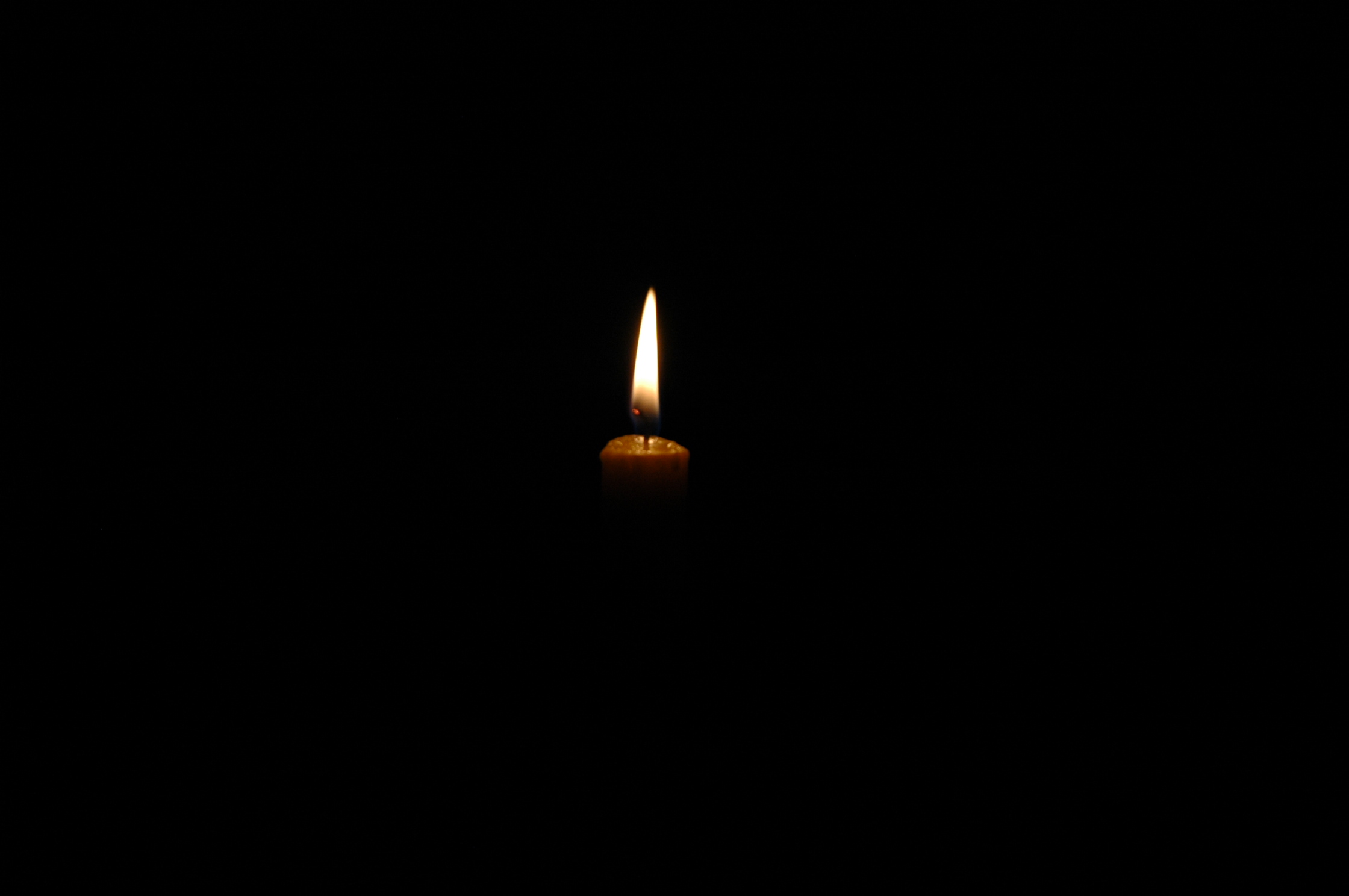
The sun was up for less than nine and a half hours here in the Shoreline, as this region is called, and it was cloudy and rainy to boot. The days will continue to shrink for another three weeks. The darkness is not yet at high tide. I got up in the dark and rode the train home in the dark—at 4:30. Though I quickly find the romance of now being able to stand in our backyard and see a sky full of stars at night, thanks to the dark, I also know its weight and seemingly unending depth when the darkness stands for depression. I. too, have been one acquainted with the night. And on this night, I found a Mary Oliver poem in the dark that was new to me:
The Uses of Sorrow (In my sleep I dreamed this poem)
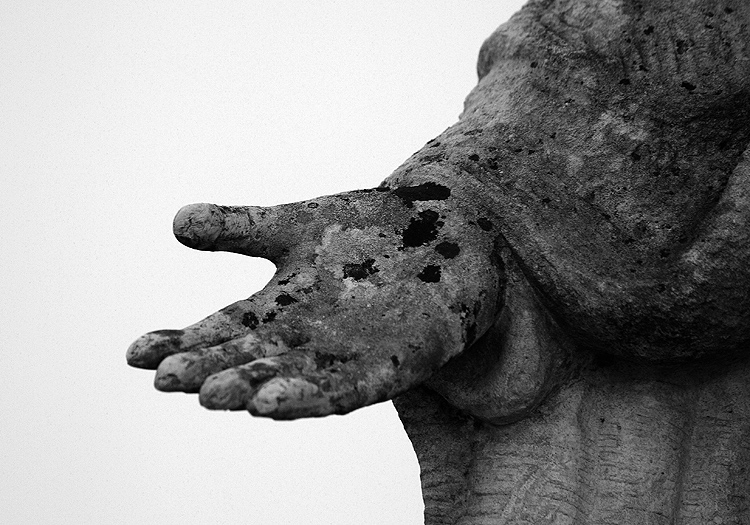
Someone I loved once gave me a box full of darkness.
It took me years to understand
that this, too, was a gift.
The last line of the song unwraps a gift for me: it’s so dark you can see Fort Worth from here. When I look backwards through my life, I can see the seedlings of my depression beginning to grow when I lived there. I didn’t know what it was then. I recognize it now, the way you see foreshadowing in a novel you’re reading for the second or third time. Even so, my memories of Fort Worth are infused with the joy that came from those days as Youth Minister at University Baptist Church, for the young people who taught me how to be a part of a group, and we all learned how to love one another.
Tonight, it’s also dark enough to see Charlestown and Winchester and Marshfield, too; and it’s dark enough to see Durham as well. How dark is it? It’s dark enough to be reminded of the love of friends scattered across the country—even the world, of the hope that continues to catch me by surprise, of the gifts of grief and gratitude and grace.


 gets a good bit of play around here, and the song that seems to have particular meaning this year, in the face of so much xenophobia, is “Some Children See Him.”
 by Erika Morrison, which I began reading before we left Durham, packed it by accident, and just got back to it this week. By redefining four words—avant-garde, alchemy, anthropology, and art—she issues a rather vibrant call/invitation to engage God and the world in some fresh and challenging ways. As I reached the final pages, I found myself glad to know she lives in New Haven. I hope we can find some time for conversations that might serve as sequels to my reading.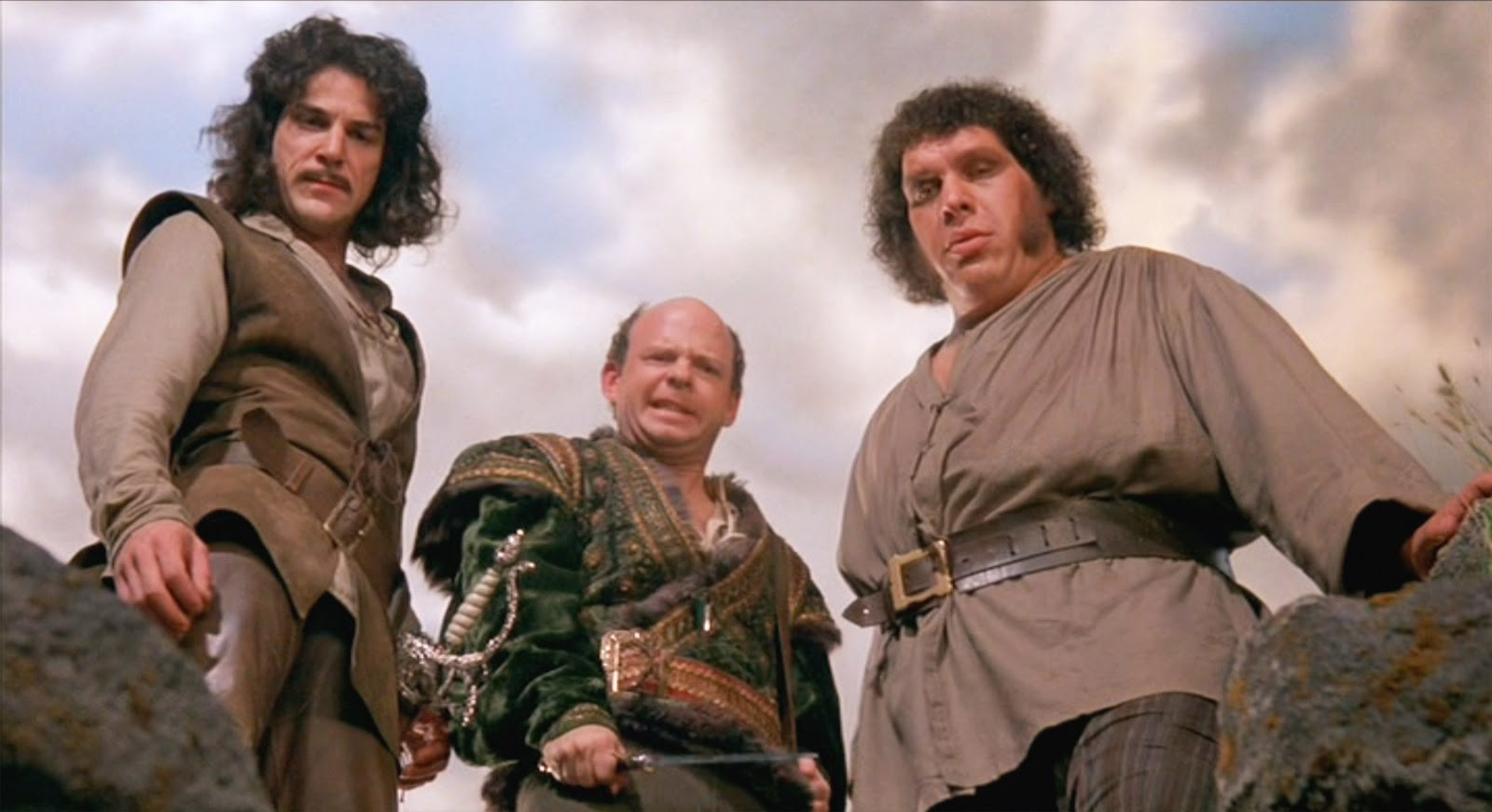
 , Sarah Lewis recounts a Yoruba myth of the trickster diety Eshu-Elegba.




 in the dark that was new to me: