Home Blog Page 92

lenten journal: so what?


Because my Lenten practice is to write everyday, I have found that means I must also read. I need to find fellow 9780807010297travelers — generally those who have walked the road ahead of me leaving something of a path to follow. What cooking and theology share in common is there’s not much that is new; we are at our best when we are retelling the old, old story in our own way. The paradox is the new light that breaks forth even as we tell the well-worn stories of our faith.
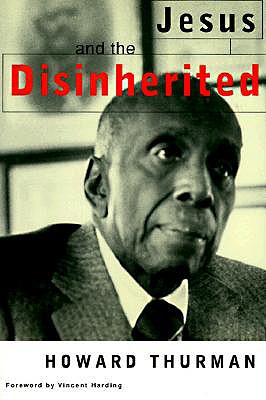
The book I started reading — or should I say re-reading — is not an old book in the scope of Christian history, but is one of the early books of the modern Civil Rights movement, and one Martin Luther King, Jr. is said to have carried with him most everywhere he went: Jesus and the Disinherited by Howard Thurman. It was originally published in 1949. My edition, printed in 1996, has a foreword written by Vincent Harding, who has been instrumental in connecting faith and human rights in this country for many, many years and is a truly hopeful and gentle soul.

I began feasting on the book during my lunch hour at the computer store. Hardly a page into his piece, Harding says that Thurman’s book could best be described “as a profound quest for a liberating spirituality, a way of exploring and experiencing those crucial life points where personal and societal transformations are creatively joined.” In the margin beside the paragraph I wrote, “Lent,” because the thought connected me back to what Chuck Campbell said yesterday about the season being “more social, political, structural, and systemic” than giving up something as a statement of personal piety.

For many years now, I have felt the final word in most any theological discussion, or most any worship service for that matter, should be, “So what?” Whether we are talking about the veracity of the miracles or the Sermon on the Mount or whether we should paint the Fellowship Hall blue or green, we do well to ask, “So what?” How will what we are talking about now make a difference later? Or, as Harding put it, what will be our personal and societal transformation? So what?

After lunch today, I talked with a woman who is working on a project to teach high school students about World War One by studying graveyards. She has traveled to three of the main graveyards in Europe and had picture after picture of tombstones and monuments. She had stories to go with the stones. I remembered from my study with Facing History and Ourselves the brutal statistics recording the thousands upon thousands who were killed by machine guns — new technology in that war. In one battle, nearly 20,000 fell in a little over fifteen minutes. And it was to be the War That Would End All Wars. The next thing we knew, the world was engaged in the sequel: The Good War. The two centuries my life will span will be marked as those beholden to what Walter Wink calls “the myth of redemptive violence.” So what?

Even as I refrain from writing more about my own views about faith and violence, I realize anything I say is written from a position of privilege and power. I don’t mean I have access to the rooms and meetings where decisions are made. In fact, when it comes to influencing anyone on a governmental level, I feel quite helpless because I don’t have enough money to get anyone’s attention. Nevertheless, when I think about the title of Thurman’s book, Jesus and the Disinherited, I realize I don’t think of myself as one of the disinherited or marginalized. I realized that even more as I began reading because he was writing, not to me, but to those for whom the book was named — those who live with their backs against the wall — and concluding, even as he began,

To those who need profound succor and strength to enable them to live in the present with dignity and creativity, Christianity has been sterile and of little avail. (11)

How do we connect the personal transformation we seek in this season with the corporate transformation we so desperately need? When I look at how I am living out these days, what is my answer when I ask, “So what?”

I wish it were an easier answer than I have been able to find. But Harding and Thurman are good voices in my ear. Harding finished his preface by pointing out that what Thurman wrote in 1949 focused primarily on the needs of African-Americans as representatives of the disinherited in this country has a wider application a half century later.

Latinos, Native Americans, Southeast Asians, and many women and gay and lesbian people are only the most obvious additions to Thurman’s community of the wall. For the pressures of the post industrialist capitalist world order have pushed many other people against a great variety of unfamiliar and unexpected walls (and glass ceilings), and we are all hounded by the inner demons of fear, hypocrisy, and hatred. . . . Shall we gather at the wall?

This week, I found out one of the folks I used to cook with here in Durham was taken in by INS for questioning. Turns out it was a case of mistaken identity. He was not the one they were looking for, but, as long as they already had him in custody they decided to check his papers. He has been in this country almost ten years, has been gainfully employed all of that time, and he is undocumented. So they are preparing to deport him without much of a conversation with anyone, including his employer who is will ing to stand up for him. I’m committed to writing everyday as my spiritual practice during Lent. So what?

Peace,
Milton

lenten journal: roux the day

My friend David Gentiles knew how to make gumbo. His mama taught him how to do it and he used her recipe. I IMG_4078never had a chance to let him teach me how to do it before he died, but on more than one occasion I would call him from Boston and say, “I tried to make the roux, but I burned it.” And he would laugh, not to make fun of me, but a laugh that came out of the deep joy of his existence, out of the heart of our friendship, a laugh that let me know my failure was by no means the last word.

Even with his comforting chuckles, I haven’t attempted a gumbo in years. Until last night. I make lunch for the local UCC clergy gathering the first Thursday of every month and the proximity to Mardi Gras put me in a gumbo state of mind, along with reading Michael Ruhlman’s Ratio, which has helped me to rethink how I look at certain things when it comes to cooking. So I pulled a couple of cookbooks off the shelf, both of which had been given to me by Cherry, another Cajun friend, and figured out what I wanted to do and then I prepared to make the roux. According to the cloud of witnesses gathered round, what I needed was

1 cup of flour
1 cup of vegetable oil
1 cast iron skillet or dutch oven
time

I put the skillet on the stove and set it on medium heat. I measured the flour and poured it in a bowl, added the oil and whisked them into a slurry.Then I poured the mixture into the skillet and began to stir. As it cooked, I worked on other things. I diced celery, onions, and peppers; I sliced the chicken and the andouille; I gathered spices; and, about every three or four minutes, I stirred the roux. The oil began to cook into the flour so the two were not so easily separated. And then the color began to change from light beige to a deeper tan, finally ending up almost looking like molten chocolate — without being burned, which is what the recipe said a good roux would do. And it took forty-five minutes.

What the roux needed most was time.

Perhaps I should say, what the roux needed most was for me to take time: to watch, to listen, to stir rather than rush to see how fast I could get on to the next step, to get past the preparation and get the soup going. Beyond even the flour and oil, the most essential element to the whole thing was time. Perhaps I will learn it won’t always take forty-five minutes, but there ain’t no shortcut. It takes time.

As we ate the gumbo for lunch today, we listened to Chuck Campbell, preaching professor at Duke, who had come to talk to us about preaching through the upcoming season. He was enthusiastic and engaged, and I could tell he had taken time to let the texts simmer in both head and heart. I came away with several things on which to ponder, but what I want to mention here is his sense that we have lost the communal nature of Lent, the corporate sense of what the season means. We each have our list of what we are giving up, but there is more to these forty days than saying no to chocolate or caffeine. Lent, he said, is “more social, political, structural, and systemic”: our faith is about challenging the “principalities and powers,” about interrupting institutional injustice with Love. Reinhold Niebuhr said, “Justice is what love looks like in public.” In the hungering dark of these days, we are to remember, as Martin Luther King, Jr. said, that “the arc of the moral universe is long, but it bends towards justice.” It bends towards love.

And it takes time. Not the kind of it-will-happen-someday time, where we go on about our lives and leave the work to someone else, but pay-attention-so-the-roux-doesn’t-burn kind of time, where we keep stirring things up, where we keep the heat on, where we call injustice by name, where we love without fear.

Last Sunday I preached at our church. The passage was the Transfiguration. I was captured by Jesus’ words to Peter, James, and John after they fell to the ground in fear when they heard God’s voice from the clouds: “Do not be afraid. Get up.” David Lose points out the Greek here is the same as the angel’s words to the women when they come to the Tomb after Jesus’ resurrection: “Do not be afraid. He is risen.” Jesus was saying the same thing: be raised up. Be alive, not afraid.

Fear is the common currency of American culture. Almost every voice that speaks from amongst the institutions that populate our existence, the call is to be afraid, to be very afraid. Our Lenten journey offers us the chance to take the time to remember they are lying to us. Fear is not the bedrock of our existence. Fear is not what motivates us. Fear is not what is most natural. Much like Jesus stared down the temptations in his forty days, we have time, if we will take it, to let the Spirit stir in our hearts and remember the heart of humanity is not found in an institution, nor even in an individual: life, love, faith are all team sports. We are in this together not to build fortresses or monuments, but to, well, be together.

And while we’re together, we might as well eat. I’ll make gumbo.

Peace
Milton

lenten journal: digging in

my job tonight was IMG_4065
to mix the ashes
and the oil making
from the charred remains
a paste of penitence

the sacred soot stared
from the bottom of
the plate as I poured
olive oil from home
and began to stir

the ashes stuck to
me like skin like they
knew me turning the
lines across my palm
into an ancient

map of heart I looked
as though I had been
digging in the dirt
even now my nails
are outlined by an

ashy shadow a
call to dig a grave
to plant a new bulb
in the same motion
a farmer of faith

Peace,
Milton

ginger in the snow

IMG_3583who knows how many

pictures of you I’ve taken

how many times we’ve walked

down our street — in sun

and snow — on our way


to coffee and conversation

yet you still steal my heart

in the simplest of ways

the singlest of frames

the hope and ache


of a lifetime caught

in this crystal moment

and me right behind you

out in the storm and

on our way to everything


Peace

Milton


P. S. — There’s a new recipe.

old growth

I have work to do this morning

but I keep running into poems

that give me pause and pull

my gaze out my second-story

window to the dance of

sunshine and shadows on

the fence line, the blanket

of dead leaves turning to soil

and the trees, their bare branches

reaching or — perhaps — offering


their despair and determination

without a leaf to show for it.

My heart knows the same song

the trees are singing in their

slumber — they are not skeletons;

dead and dormant are not the same.

It’s what you said as we walked

yesterday in the fading light:

“The trees never quit growing.”

I want to say the same of me.


Peace,

Milton

christmastide: the morning after

I wrote this poem several years ago, and I thought of it this morning.

the morning after

Mary rose before sunrise;
the baby was still sleeping,
as was Joseph and most of
the animals, except for one cow
who looked a little sheepish.

The shepherds were long gone.
In their excitement, they had not
cleaned up well after themselves.
The Magi were resting somewhere,
waiting for night and the Star.

But Mary did not yet know
of gold and myrrh and frankincense,
neither did she know much about
motherhood, messiahs, or
life beyond this nativity.

I am up early with a cup
of coffee and a donut
of a dog asleep in my lap;
the house is quiet. Christmas
has come and is settling in.

I know little of parenting, or
babies, or what to do with
swaddling clothes. I do know
Christ is born again, for the
fifty-eighth time in my life.

In my mind’s eye I watch
Mary turn back to the stable
when she hears her little one cry
for the first time on his first
morning; she is smiling.

My dog perks up her ears,
as though she, too, hears
the crying, and looks up at me.
“Merry Christmas,” I say, wondering
what gifts have yet to be opened.

Peace,
Milton

advent journal: snowed in

The first time you

came to Boston

it was so cold;

the wind bit us

at the bus stop.

You pulled me

close and asked, “Am

I still wearing pants?”

then you laughed.


When you first

came to Durham —

our first Christmas

in our new home —

we were snowed in.

You looked out and said,

“I’ve never had

a white Christmas”

and you smiled.


Tomorrow will be

in the sixties when

we pick Mom up

at the airport:

no snow; no you.

We’ll smile and say,

“Now let me tell

you something . . .”

and miss you.


As our house fills

up with empty

chairs, I don’t

know how to

prepare for absence.

I am snowed in

by sorrow, grateful

for those who keep

digging me out.


Peace,

Milton

advent journal: waltz

when we lived by the ocean

I learned to tell time by the tides

(I guess I should say I couldn’t

tell time a thing — or keep it)

there was no second hand . . .

no sense of calendar —

just the giving and taking

away of the beach twice a day:

a waltz to the rhythm of the moon


on this spring tide of sunshine

and darkness, this longest night

I am mindful of what has washed

up and washed away on the beaches

of my heart, a waltz of my own

to the metronome of missing:

the giving and taking away —

the giving and taking away . . .

the giving and taking away.


Peace,

Milton

advent journal: that kind of love

At the end of the last century, Ron Howard directed a movie called “Ed” that tried to take a look at the preposterous idea that people would watch a TV show that was simply filming someone’s everyday life. I don’t know that even Howard understood how prophetic he was, or perhaps even suggestive. One of the powerful messages of the film  was found in the way the camera changed the lives of those being filmed. They acted differently. In the long run, they became caricatures of themselves all because the camera was running and the filmmakers and the viewers were complicit in the transformation. As reality television has increased, so has my sense that most of it is akin to gawking as you drive by an accident.

My disclaimer: I have never watched an episode of Duck Dynasty. I’ve seen the beards and a few clips of the show here and there and have watched Facebook blow up over the last few days because of the statements one of the guys — Phil — made in an interview in Esquire magazine. Beyond what I read and heard, I know nothing about him or his family other than their duck call business is a multi-million dollar operation, at least in part thanks to the show. I know that both A&E and the family involved are making lots of money. And I know Phil has been suspended from the show, even as the cameras keep rolling on the rest of them. I also know reality television is not real at all; it’s contrived. Created. Fabricated. The genre of shows like Duck Dynasty basically make fun of the people they put on film. A&E wants you to think these people are crazy, just as the others do with shows about kiddie beauty pageants and dance recitals. This is the television equivalent of paying a dollar at the carnival to see Jo Jo the Monkey Boy. The controversy is designed to make the news, however briefly, and then to move on to the next spectacle. Facebook will simmer down, Phil will go back to work, and A&E will keep making fun and making money. This morning, the story made it to NPR’s Morning Edition, and I listened as I made coffee, then I went online and found his quotes about gays and African-Americans. To say I disagree with him would be an understatement.

I was just finishing my coffee when I heard a second story this morning, which was not new to me, about Frank Schaefer, a Methodist minister who was defrocked this week for performing the wedding of his son, who is gay. The wedding took place in 2007 in Massachusetts, where equal marriage is legal. When Frank did the wedding, he also knew he was breaking the rules of his denomination. The trial shone a light on the division within Methodism over how to come to terms with the gay and lesbian people in their number.

By now there are thousands upon thousands of people who have thrown in their two cents about Phil and Frank and what the Bible says and what the Constitution says to the point that we have created a cacophony none of us can listen to. Then again, there aren’t that many of us listening; we are all talking. Or shouting. The reason I am writing tonight is because I have a whole slew of people whom I love who are gay and lesbian. I also have a great deal of people who are profession Christians whom I love as well. The two groups overlap quite a bit. I want them to know I am saddened when their existence as human beings requires somehow that they are always introduced with a preceding adjective. I want them to know I don’t think they are broken or tainted or sinful for being themselves. Jesus didn’t call us to keep the rules; he called us to keep each other and remind each other nothing — not death or life or judgment or ecclesiastical councils or reality television — can separate us from the love of God. I’ll let Pierce Pettis take it from here.

That Kind of Love


Can’t be bought or sold or faked

That kind of love

Always gives itself away

That kind of love

Wiser than the wisest sage

It’s innocence makes me ashamed

Til I’m not sure I can take

That kind of love


Pride and hatred cannot stand

That kind of love

Greater love hath no man

Than that kind of love

Won’t be kept unto itself

Spreads it’s charm, casts it’s spell

No one’s safe this side of hell

From that kind of love


Love rejected and ignored

Held in chains, behind closed doors

Stuff of legend and of songs

Deep down everybody longs for

That kind of love . . . oh, that kind of love


Some people never know

That kind of love

Though it only takes a child to show

That kind of love

Widows smile and strong men weep

Little ones play at it’s feet

Deaf can hear and blind can see

That kind of love


Love triumphant, love on fire

Love that humbles and inspires

No conditions, no restraints

That kind of love . . . oh, that kind of love


How could anyone deny

That kind of love

Every heart is measured by

That kind of love

Even stars fall from the sky

Everything will fall in time

Except those things that cannot die

That kind of love

Oh, may you be remembered by

That kind of love

Love that does not hesitate

We are loved, we are loved, we are really, really loved — every last one of us.

Peace

Milton