Home Blog Page 68

a forgiving air

I am a few days late posting my sermon from last Sunday, but here it is.

“A Forgiving Air”
Genesis 32: 3-12, 22-32
A Sermon for The United Churches of Durham, Connecticut
August 6, 2017

To say their relationship was difficult would be an understatement. Jacob, the younger brother, had cheated Esau out of the blessing due him as the oldest son. Then Jacob fled, at his mother’s urging, because Esau was so angry. The air, you might say, was thick between them. Jacob changed his location, but not his conniving ways. He always seemed to feel he had to play the system, somehow. It was in his name: Jacob means supplanter—which is not a word we use often these days—how about circumventer, overreacher, deceiver. Almost from the beginning he thought that if he was going to get what he thought he deserved, he was going to have to make it happen. No one was going to give it to him. He was last in line, even though it was a line of only two. He had to get to the front so he could grab it all. Even though he ended up quite wealthy, and married to the woman he loved, it was not enough. There was never enough.

Esau’s name means hairy; some say it’s Hebrew word play on the word red, like the desert soil. He was an outdoors guy, a man of the desert. A hunter. Things were what they were. There was not a lot of ambiguity in the desert. He gave up his paternal blessing for breakfast because he was hungry. Only later did he realize Jacob had stolen him blind.

Where we join the story, Jacob and his whole family are on the move again—this time because of a “misunderstanding” with his father-in-law Laban. The whole crew—family, servants, livestock—are in flight when some of the servants bring word that Esau is on his way to meet him. With four hundred men. As far as Jacob was concerned, that could only mean Esau was coming for his long-awaited revenge. Jacob tried to think of some sort of deception, and ended up sending an overflow of gifts in Esau’s direction and then sending everyone else in the opposite direction to camp across the river Jabbok. Then, he settled down for the night to wait for daylight and the coming confrontation with his brother.

As we read, some time in the night an unidentified man showed up and began to wrestle with Jacob. They struggled the remainder of the night, under whatever star shine there might have been, until—at daybreak— the man yanked Jacob’s hip out of joint and Jacob hung on for dear life to the point that the man pleaded to be released.

“Not until you bless me,” said Jacob.

The man responded by saying, “You are no longer Jacob; you shall be called Israel.” Jacob had a new name. He was no longer to be known as the deceiver, but as one who had prevailed with God. One who hung in there. One who didn’t hit and run. The man disappeared—we are not told anything else about him. Jacob built an altar because, he said, he had seen God face to face. He walked away broken and blessed.

Most of the time, as with our lectionary passage this morning, this is the point where we stop and talk about what the story means; we often talk about how God works through our suffering, how we struggle to come to repentance, or how our woundedness deepens our faith and compassion. All of those thoughts have merit and meaning, yet the story between Jacob and Esau doesn’t end in the dusty dawn on the banks of the Jabbok.

As the night air turned to dawn, Jacob looked up and saw Esau and his whole entourage coming across the desert. There was nowhere to go. No other cards up his sleeve. Instead of wrestling, he fell to the ground in apparent submission. Esau picked him up and hugged him. Hard. There was no trace of anger in the man. No bill to pay for all Jacob done to his older brother. Esau asked about the family he could see gathered on the other side of the river. He asked why Jacob had sent all the stuff, and Jacob was honest enough to say he was hoping to buy favor with his brother. I love Esau’s reply:

“I have enough, my brother; keep what you have for yourself.” (33:9)

Enough. I’m not sure that was a word Jacob understood. He had never had enough. He had never been enough. Even with his flocks and family in abundance, he had—only hours before—been begging desperately for a blessing. Now, face to face, his brother was offering one without a struggle. And Esau had more to say: “Let us journey on our way, and I will go alongside you.” (33:12)

Let’s do this together—you and me.

“You go ahead,” Jacob said. “I’ll catch up.” He watched his brother move off in one direction and, once he was out of sight, Jacob went another. Esau’s blessing was more than Jacob could was willing to receive. Rabbi Rachel Barenblat offers this take on the moment in her poem, “Encounter.”

When Esau saw him he came running.
They embraced and wept, each grateful
to see the profile he knew better than his own.

You didn’t need to send gifts, Esau said
but Jacob introduced his wives and children,
his prosperity, and Esau acquiesced.

For one impossible moment Jacob reached out.
To see your face, he said, is like seeing
the face of God: brother, it is so good!

But when Esau replied, let us journey together
from this day forward as we have never done
and I will proceed at your pace, Jacob demurred.

The children are frail, and the flocks:
you go on ahead, he said, and I will follow
but he did not follow.

Once Esau headed out toward Seir
Jacob went the other way, to Shechem, where
his sons would slaughter an entire village.

And again the possibility
of inhabiting a different kind of story
vanished into the unforgiving air.

The unforgiving air. What a phrase. It was the only air Jacob knew how to breathe. Whatever had happened the night before, new name or not, when he looked into his brother’s eyes and saw God face to face he couldn’t take it. He didn’t hang on; he let go. It was far easier to see God in the stranger than in the unabashed forgiveness of his brother.

How could he talk it all in? How could he enter a new atmosphere? How could he draw from a new life source?

The companion gospel passage from the lectionary today is what we commonly call the Feeding of the Five Thousand. A multitude of people had followed Jesus out into the desert, hoping for words that mattered, and without much thought, it seems for their personal well being. They were hungry and isolated and there was no food. Even the disciples were convinced it was a suffocating crisis. There was not enough. All Jesus said was, “Feed them.”

They found one boy with a sack lunch of fish and bread. Not enough, for sure. They brought him to Jesus anyway. Jesus blessed the lunch and they started serving. The little boy’s offering changed the atmosphere. People relaxed, ate, shared, and when the had finished there were leftovers. They all breathed in the forgiving air.

My friend Kenny reminded me that years ago Jason Robards was interviewed on Inside the Actor’s Studio and he said, “The actor’s job is to rearrange the molecules in the room.” Another way to say it might be to change the atmosphere. The change the air. Esau tried with his invitation to a new relationship, but Jacob refused. The little boy offered his lunch and everyone ate. Both made small gestures that loomed large.

Our Communion Table is set with small gestures. As people often prone to expect scarcity, perhaps we do ourselves a disservice by setting our table with these tiny morsels of bread and miniature cups. Like the little boy’s lunch, it doesn’t look like much. Our meal hardly qualifies as a tasting, yet the love it represents in overflowing and abundant. When we take and eat, we rearrange the molecules of our lives in Jesus’ name.

The apostle Paul challenges us to set things right with others before we come to the Table: to commit to travel together for the days to come; to fill our lungs with a forgiving air. We can walk away hungry, like Jacob, or we can fill our hearts with our life together in Christ.

The hymn we sang just before the sermon, “O Love That Will Not Let Me Go,” was one of my father’s favorites because of the story behind it. George Matheson was engaged to be married when he found out he was going blind. When he told his fiancé, she broke the engagement. And then he wrote,

O love that will not let me go
I rest my weary soul in thee . . .

It is that love that brings us to this meal together, that fills our hearts and lungs with a forgiving air. Each Sunday morning, my wife Ginger begins our service in Guilford by saying, “Breathe in the breath of God; breathe out the love of God.” Her call to worship is our call to the Table: breathe in the forgiving air of God; breathe out the love that feeds one another, the love that will not let us go.

Come, all is now ready. Amen.
no easy way out

I’m taking a break from miracles this week and posting, instead, the manuscript of the sermon I preached Sunday at North Haven Congregational Church in North Haven Connecticut. I hope you find something here that speaks to you.

“No Easy Way Out”
Genesis 21:8-21, Matthew 10:24-39

We have sparrows in our barn.

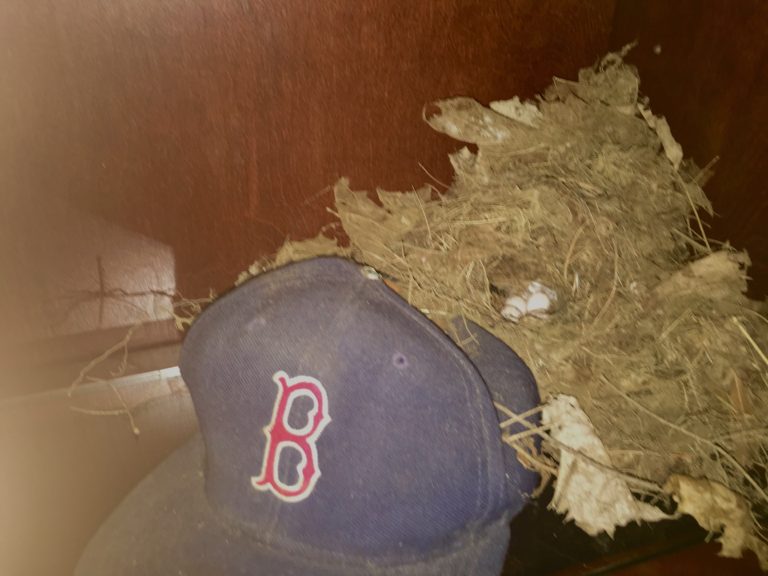
Behind our house is an old barn that we have worked hard to fix up. I use it as a writing space, and we also use it for social events when the weather cooperates. Last night we hosted a hymn sing. As we were setting yesterday afternoon, Ginger, my wife, called me over to see the sparrow’s nest she had found on an empty bookshelf, tucked into an old Red Sox hat. There were eggs in it. This year, instead of having to worry about who was going to find her nest outside, our little sparrow tucked it away on an empty shelf in a mostly empty barn. Life must have felt safer.

Little does she know we could sweep it all away in one motion. Safe, it seems, doesn’t last for long. I looked at that little nest—so much effort put into creating a place where her eggs could hatch, her new little ones grow to build nests of their own—and I thought of Jesus’ words in our passage for this morning:

Are not two sparrows sold for a penny? Yet not one of them will fall to the ground apart from God. . . . So do not be afraid; you are of more value than many sparrows.

Hagar, the one at the center of our first reading, was a sparrow—a person perceived to have little human value. She was enslaved woman owned by Abraham and Sarah, as much as Sarah could own anything, being property herself. Some versions translate the word as servant or concubine, but Hagar had no choices of her own in her life. She was enslaved. She was forced to have a son with Abraham without her consent because Sarah thought she couldn’t have children and the custom of the day said Hagar’s son would be Abraham’s legal heir. Then Sarah got pregnant and became jealous of Hagar and her son, Ishmael. She told Abraham to banish them to the desert—to send them out to die. The wandered around, finding nothing to eat or drink, until finally Hagar left her son to die under a bush and walked away, trying to get out of earshot of the boy’s crying—and that is where God found them.

Many years ago, Scott Peck wrote a book called The Road Less Traveled. The subtitle was, “A New Psychology of Love, Traditional Values, and Spiritual Growth.” It’s a good book. It helped me. One of the things that helped me most was his opening sentence:

Life is difficult.

He was not saying something new. To say life is difficult is to state the obvious. Hagar knew it. The little sparrow in our barn knows it. Both our biblical passages for this morning speak to the truth of those three words: life is difficult. Then Peck goes on to say,

Life is difficult. This is a great truth, one of the greatest truths. It is a great truth because once we truly see this truth we transcend it. Once we truly know that life is difficult—once we truly understand and accept it—then life is no longer difficult. Because once it is accepted, the fact that life is difficult no longer matters.

Once again, he is not saying something new. He is saying something important. Something true that bears repeating. When we face difficulty in our lives—tragedy, grief, sorrow, hardship (our list could go on)—we are not facing something other than life. Let us say it again: life is difficult because it’s life.

There’s an oddly humorous moment in Hagar’s story. She, as we said, had come to the place where she had abandoned her son because she couldn’t watch his suffering, and an angel showed up and says, “What troubles you, Hagar?”

I picture her turning around and saying, “Are you kidding me? What troubles me?”

The angel goes on, “Do not be afraid; for God has heard the voice of the boy where he is.”

God has heard the voice of the boy right where he is. You can’t bear to hear it anymore, but God hears the boy. In your difficulty. In your pain. Do not be afraid. The story was not over.

Jesus’ words about in Mark’s gospel point to another side of the same truth: life is difficult, sometimes, because of the choices we make. You have probably heard a parent say to their teenager as he or she leaves the house, “Make good decisions.” Our poor choices can make life harder, but that is not what Jesus was talking about.

Our good choices–our right choices—can make life difficult. On purpose. We make choices we know are going to cost us. I think about Rosa Parks refusing to get up from her seat on the bus. Nelson Mandela spent twenty-seven years in prison because he was committed to freedom for everyone in South Africa. Those are big picture examples. Our lives are filled with moments—small intersections—where we can choose to put someone else before our safety or our comfort. A spouse, a friend, a stranger.

Jesus told those who were listening that following him was a difficult choice: lose your life to find it, he said. He wasn’t trying to be witty or poetic. The call of God on our lives is to choose to make it more difficult for the sake of others.

I get the impression that, somehow, Hagar was not as surprised by her difficulty as those around Jesus were. Perhaps Jesus was spelling it out because he could tell those around him thought they were signing up to be a part of an inside circle: the chosen ones. Jesus was quick to say choosing to live a life centered in God was not the way to the top, or even to easy street. It was a choice to engage life, to complicate our relationships, to choose to make picky details matter, to make our comfort something we don’t satisfy first. To not allow fear to be our primary value.

Sometimes, being blessed by God feels like a backhanded compliment. We are chosen to live through the pain, to let God make something out of all the broken pieces, which, of course, means we have to be broken first. It does not mean God is the one doing the breaking.

Recently, I’ve been up close to two extreme difficulties. One friend took her seventeen year-old son to have his wisdom teeth removed. He had an allergic reaction to the anesthetic that left him brain dead within a week. His funeral was this past week. Another friend just found out she has ovarian cancer. She had no symptoms. She went to her doctor on a hunch, for which we are grateful, but she still has cancer. I’m sure you have stories to tell as well.

God didn’t choose them to suffer. God didn’t cause the allergic reaction or the cancer. God didn’t engineer circumstances so Hagar and Ishmael would end up desperate in the middle of the desert to prove a point. When the biblical accounts say they were chosen by God doesn’t mean they got the same deal as Sarah and Abraham and Isaac. Chosen doesn’t mean privileged, or even protected. it means intended.

Remember, Jesus never says anything about God catching the falling sparrows. He says God knows when they fall. God knows. God is there. It’s in Jesus’ name, Emmanuel: God With Us. And even when the angel came to tell Joseph what to name the boy, he began with words we have heard twice this morning already: do not be afraid.

We are all chosen by God. We are intended–created–for God to incarnate through us, if you will, and that activity will be disturbing, both for us and for the world around us. The point of being chosen or intended or called is not to be on the inside track or to come to power or to get to take the easy way out. There is no easy way out. Life, remember, is difficult. And remember also that God is with us. Paul said it this way ;

Can anything separate us from the love of Christ? Can trouble, pain or persecution? Can lack of clothes and food, danger to life and limb, the threat of force of arms? , , , I have become absolutely convinced that neither death nor life, neither messenger of Heaven nor monarch of earth, neither what happens today nor what may happen tomorrow, neither a power from on high nor a power from below, nor anything else in God’s whole world has any power to separate us from the love of God in Jesus Christ our Lord. (Rom. 8:35, 38-9 Phillips)

Whatever our circumstances, and leaning into a love that will not let us go, let us choose to make life more difficult: to be the ones who call attention not to ourselves but to those who cannot speak up; to call attention to relationships, both personal and systemic, that are dehumanizing and destructive; to become agents–disturbers, agitators–for compassionate change; and to carry one another’s pain willingly.

Life is difficult. Do not be afraid. Thanks be to God.

Peace,
Milton

lenten journal: thank you

In a staff meeting recently, we were discussing ways to improve our daily processes—ways to make things more effective and, well, easier on everyone. E-mail is our primary means of communication, since not everyone is in the same office. We all get lots of e-mail. In the course of the discussion, one person suggested that we go back to something they had done previously, which was to not send thank you notes when someone completed a task or answered a request. “We know we’re thankful; we don’t need to say it.”

I’ve been thinking about those words for a week.

My previous corporate experience, working at the computer store, we were trained to say thank you at every turn. The only thing we were taught to assume was positive intent. Any word of gratitude or praise was worth saying out loud or writing down, both as words of encouragement and also to grow the trust necessary for more difficult feedback, should the need arise. Letting the thanks go unsaid sets the stage to let other things go unsaid as well—things that need to be said, but are not said easily. After five years in that environment, it’s not surprising that I was startled by the idea for foregoing saying thank you for the sake of a few seconds and one less e-mail or two, but what has haunted me about the suggestion runs on another level.

Life has a centrifugal force that pulls us apart. The flow of our days, from e-mail to errands, from schedules to surprises, draws us away from each other unless we choose differently. The day to day demands can lead us to see those around us as little more than furniture. We don’t need to know the names of the people at the dry cleaners, or the grocery store line. We just need them help us get our stuff done. Closer to home, we each have our family roles to play, or our work roles, with people we know and love, yet life pulls us apart just the same. When Paul wrote, “Give thanks in all circumstances; for this is the will of God in Christ Jesus for you,” in 1 Thessalonians, who he was calling us to thank is not specified. Thank God? Certainly. Over the past few days, it has also struck me that I am not misreading the text to think he might also be calling us to a more extravagant expression of our gratitude: say thank you every chance you get.

Thank you for making the bed. Thank you for pouring my coffee. Thank you for opening the door. Thank you for filling my water glass. Thank you for doing you job. Thank you for answering my e-mail. Thank you for picking up our trash. Thank you for doing a job I would never want to do. Thank you for showing up. Thank you for—well, just thank you.

Every little gust of gratitude blows against the centrifugal force of life, pulling us closer together. It is not a waste of time, nor is it merely meeting an expectation or an obligation; to say thanks is to recognize our shared humanity, to relish in the resonance of being created in the image of God. Don’t think for a minute that it doesn’t matter.

Thanks
by W. S. Merwin
Listen
with the night falling we are saying thank you
we are stopping on the bridges to bow from the railings
we are running out of the glass rooms
with our mouths full of food to look at the sky
and say thank you
we are standing by the water thanking it
standing by the windows looking out
in our directions

back from a series of hospitals back from a mugging
after funerals we are saying thank you
after the news of the dead
whether or not we knew them we are saying thank you

over telephones we are saying thank you
in doorways and in the backs of cars and in elevators
remembering wars and the police at the door
and the beatings on stairs we are saying thank you
in the banks we are saying thank you
in the faces of the officials and the rich
and of all who will never change
we go on saying thank you thank you

with the animals dying around us
taking our feelings we are saying thank you
with the forests falling faster than the minutes
of our lives we are saying thank you
with the words going out like cells of a brain
with the cities growing over us
we are saying thank you faster and faster
with nobody listening we are saying thank you
thank you we are saying and waving
dark though it is

Peace,
Milton

lenten journal: at a loss for words

I think it was the early Nineties when I first started keeping a Lenten Journal as a spiritual practice. It was before I had e-mail or any kind of web access. For the first few years, I would choose one friend and write him or her an entry everyday without their even knowing I was doing so. On Easter Monday, I printed it all out, went to Kinko’s and had it bound, and then mailed it to them. When I began using e-mail, I widened the scope and sent it out nightly. In December 2005, I started writing this blog and made it a part of what I did here, along with continuing to send it to the e-mail list. Every year there are a few days when, for one reason or another, I don’t get to write.

This year has been different. I am doing well. There are no major crises in my life. When I sit down to write, however, I haven’t been able to find the words. Since I started my new job last summer, I have read more than I have in years. My heart and my mind are full. It’s not that I don’t have ideas. I even jotted some notes this afternoon. Yet, when I come to this page, I feel compelled to be quiet. It’s not writer’s block. There are things to say; it’s just not time for me to say them. I want to listen, right now, more than I want to speak, which may be one of the most uncharacteristic sentences I have ever written.

Someone sent me a note today to make sure I was alright, so I decided to write about why I have not written, mostly to say this year turned out differently than I expected. My silence is not a crisis; it’s just silence. It—like the twenty-five years of Lenten Journals, I suppose—is not permanent. I will write again soon. That’s about all the schedule I have.

Thanks for sharing the journey.

Peace,
Milton

lenten journal: changing my daily grind

I’m learning to drink my coffee black.

As far back as I can remember, I have put cream in my coffee. I have often said that if the day came that the doctor told me I couldn’t use half and half, I’d cash in my chips right there. But the doctor wasn’t the one who said it. I did. I am making some choices to work on my health—specifically my weight, which I had allowed to set a world record for The Amount of Milton on the Planet. The program I chose has called me to examine my relationship with food, and to make some choices about what I eat and drink for the near future.

Jesus said we did not live by bread alone. Right now, I’m living without bread at all. Or cream. Or butter. But I digress . . .

One of the lessons I am learning (again) is how comfortable I can become with my choices, even when they aren’t getting me where I want to go. One of my favorite miracle stories is Jesus’ encounter with the man at the pool of Bethsaida who had been trying to beat everyone to the water everyday for thirty-eight years without success—and he kept doing the same thing. Jesus saw him and asked, “Do you want to get well?”

Once again, the tone is difficult to discern, but it’s one of my favorite questions.

I cook healthy food. I work hard to open as few packages as possible, to eat fresh, to eat local, to use up what I have and not waste, and I have eaten my grief for the past few years. Even when the food is good for you, if you eat too much it leaves its mark. In some ways, I suppose, the weight is more symptom than problem. I have felt alright, but not at my best. I have felt like myself. And there’s the part about my doctors saying my weight would have a direct effect on things like my blood pressure, my sleep apnea, and the possible return of my atrial fibrillation.

To find my way back to health means, when it comes to food, I am having to tear the house down so I can rebuild it. Everything needs to be up for examination, for negotiation. And so, I am learning to take my coffee black. I will not have to live at these extremes forever, but this is the call for mow. It sounds more dramatic than it feels to live it. The biggest challenge for me has been coming to terms with how this program differs theologically with how I think about food. They aren’t making a theological case, but that’s how it hits me. “You eat to live, not live to eat,” they say. Though I understand the idea that I don’t want to be driven by my appetites, I do live to go to the table because of who else gathers there. The point of the meal is the fellowship more than the food, but I live to eat, and not eat alone. Check the masthead on the blog. The most difficult part of keeping my promises these days is the program most all of the social and spiritual meaning of mealtime as gone the way of the half and half in order for me to answer the call to better health.

I don’t think the two will always remain at odds, but so it is for now. Maybe that’s it: we are called to answer for now, and then called to renegotiate and reconsider when tomorrow comes, responding to new calls, to new hopes, to new expressions of the creative work of God in our lives. God’s call is not necessarily to stick with the familiar or the comfortable, though that would be nice. The call—or at least part of it—is to repent. To come to terms with what we learn and what we see and reorient our lives in response. When Jesus asked the man if he wanted to get well, the man responded by telling him that he didn’t have anyone to help him get to the pool. He didn’t answer the question. Jesus listened and then said, “Get up and walk.”

Rachel Held Evans says,

[Life] is just death and resurrection, over and over again, day after day, as God reaches down into our deepest graves and with the same power that raised Jesus from the dead wrests us from our pride, our apathy, our fear, our prejudice, our anger, our hurt, our despair. (21)

I trust her list is not exhaustive. I look down in my empty coffee cup and realize what I am about here is a slow resurrection, but a coming to a new life nonetheless. I don’t mean to be overly dramatic, but my cream-less coffee offers me hope. I look forward to the day when we can talk about it over dinner.

Peace,
Milton

lenten journal: your name here

Sunday morning I got up early and drove about an hour down I-95 to hear Rachel Held Evans preach at Christ Church in Greenwich, Connecticut, where she was speaking as a part of their very cool Courage and Faith series. Her sermon came from the story of Jesus healing the blind man in John 9. It is one of the stories from the gospels that most intrigues me beginning with the way the disciples start talking about the guy as if he were some sort of prop for their theological inquisitiveness: “Rabbi, who sinned, this man or his parents, that he was born blind?” I halfway expect the man to say, “Hello—I may be blind, but I can hear you. Sitting right here.”

Rachel did a great job with her sermon—I took good notes—and her words sent my mind places her homily didn’t go. I went back to my ongoing fascination with what the gospel writers say and what they leave out. This story goes on for a whole chapter, and covers some time as well. The man keeps going back and forth between the authorities, his family, and Jesus, then back to the authorities. And we never know his name.

After church, Rachel spoke more informally in the chapel, and talked a little about the book she is writing currently that has to do with how we look at the Bible, and she said,

Because the Bible is the Bible, we get talked out of our intuitive understanding of what genre of literature we are reading.

In the margin of my notebook I wrote three questions: How did they remember the story? How long did it take to make meaning out of the moment? What sent them back looking for it?

Those aren’t the only things I wonder. John’s gospel didn’t become an actual thing for sixty or seventy years after the man received his sight. What made this story one of the ones they remembered? How did they get the quotes from his meetings with the authorities? And, as I most always wonder when I read the gospel stories, with what kind of tone did he deliver lines like, “I have told you already, and you would not listen. Why do you want to hear it again? Do you also want to become his disciples?”

Over the past several weeks, I have immersed myself in “The Art of . . .” series by Graywolf Press. I’ve almost gotten through all these little gems on writing. The one I finished the day after I drove to Greenwich was The Art of History: Unlocking the Past in Fiction and Nonfiction by Christopher Bram. Rachel’s words made me think of some things he said about how we look at the past. First he said,

“The past is a foreign country,” L. P. Hartley famously wrote in The Go-Between: “they do things differently there.” . . . We experience this historical difference most keenly through details, the odd objects or striking moments or alien bits of behavior that snap another world to life. (35)

And then,

I believe the past is different but similar enough for us to see ourselves reflected there. . . . We see ourselves new in the fun-house mirror of history. (56)

In the margins, I wrote another question: Can we say we see ourselves new in the fun-house mirror of scripture?

We remember stories—Bible stories, stories from literature, stories about our family and friends that we lived through or have heard about—because that is how we remember who we are, who God is, what we all mean to each other. Maybe they kept telling the story because of the disciples’ question about the cause of the man’s disability. In recent days, I have come to remember this story differently because of the way my friend Kenny tells it. The change has to do with punctuation. As much as I like this story, one verse—Jesus’ answer to their question—has been a bit of stumbling block because it reads:

“Neither this man nor his parents sinned; he was born blind so that God’s works might be revealed in him. We must work the works of the One who sent me . . . .

Kenny offers a different way of punctuating that offers a different way to remember:

“Neither this man nor his parents sinned; he was born blind. (PERIOD) So that God’s works might be revealed, we must work the works of the One who sent me . . . .

It helped me see the story with new eyes. Everyone in the story but Jesus and the man kept looking for reasons or something other than simply seeing he was no longer blind. That was the news. Rachel said,

When God does something through someone unexpected, it’s still God—even when God doesn’t follow the script.

What matters most in the story is the man was blind and then he could see, and he could see he was loved by Jesus. When I look at this story in my Bible fun-house mirror, I have one more thought about why the guy is never named. Perhaps it’s an invitation. There in the mirror—can you see it? It says, “Your Name Here.”

Peace,
Milton

lenten journal: light matters

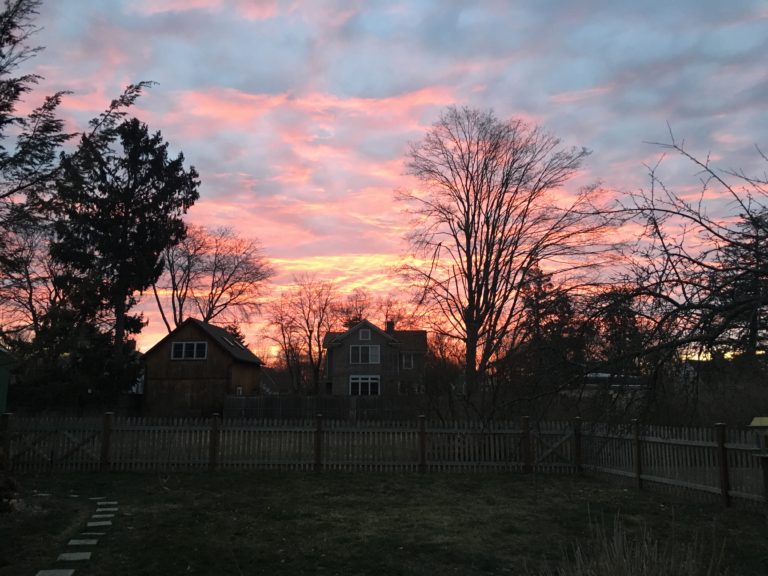
light matters

I stopped at the sink to rinse out my coffee cup
at the very instant that the rising sun shot

anticipatory flames of color from below the horizon,
igniting the clouds with incendiary hope for just a minute . . . .

Before I could call you to the window the fire had flattened into
the familiarity of sunshine—light all around us—not just promises.

A friend told me about a man whose dog left the yard
everyday at dusk . . . . one evening he followed,

and found the hound sitting on a hill watching the sunset.
He followed again the next day, and the day after that—

sitting,each night, next to the dog as the fading daylight
colored itself into the gathering dark. No one said a word.

And it dawns on me that life is made up of missed moments,
of unseen sunsets and empty early morning kitchen windows.

I don’t say that as lament, but to name the grace that offers
a sunrise and and the kindness of those we can follow.

Peace,
Milton

lenten journal: there is a river

I didn’t write over the weekend because I made a trip back to Durham, North Carolina to take care of some business and see some friends. I am grateful that the necessity of the former offered the gift of the latter. Since I had some things that needed to get from Guilford to Durham, I drove. From our house here in Connecticut to the house we own in Durham is not quite seven hundred miles, door to door–at least, taking the route I chose.

The mapping programs say the best way is to go straight down I-95, but that means going through New York City, Philadelphia, and Washington DC. No, thank you. I chose a to go around, if you will: I crossed the Hudson on the Tappan Zee Bridge, wandered through New Jersey, Pennsylvania, quick swatches of Maryland and West Virginia, cut down in Virginia to Richmond, and then shot down I-95 (to I-85) into Durham.

The drive is beautiful, even with a late-winter landscape. I drove all the way back on Monday, and I left early enough for it to drive in the daylight most all the way. The mountains got bigger the closer I got to the Hudson, but it was the rivers that really pulled me. My eight-state-one-day jaunt took me across rivers with history, rivers of poetry, rivers of great names: the James, the Shenandoah, the Potomac, the Delaware, the Susquehanna, the Hudson. A couple of them were wide enough to feel detached from either side as I crossed. These are rivers that shaped people, that carried people, that hindered people, that killed people. These are waters with wisdom I will never know. I’ve flown over them many times. Monday, I was grateful to be crossing them, to be noticing them. I was thankful I took the time to travel.

I woke up this morning still thinking about those rivers, and on the train ride I looked up a river poem I remembered, Langston Hughes’ “The Negro Speaks of Rivers.”

I’ve known rivers:
I’ve known rivers ancient as the world and older than the
flow of human blood in human veins.

My soul has grown deep like the rivers.

I bathed in the Euphrates when dawns were young.
I built my hut near the Congo and it lulled me to sleep.
I looked upon the Nile and raised the pyramids above it.
I heard the singing of the Mississippi when Abe Lincoln
went down to New Orleans, and I’ve seen its muddy
bosom turn all golden in the sunset.

I’ve known rivers:
Ancient, dusky rivers.

My soul has grown deep like the rivers.

Something in those words reminded me of a T-Bone Burnett song from the 90s called “River of Love.”

there’s a river of love that runs through all time
but there’s a river of grief that floods through our lives
it starts when a heart is broken into
by the thief of belief in anything that’s true
but there’s a river of love that runs through all time

I was in my thirties when I first heard the song. I hear the second line differently now, because I have felt the flow of the river of grief quite profoundly in the last few years. But Burnett goes on to name other rivers as well, all of which feed and flood our lives along the way.

Several years ago, I learned of Peter Mayer, a wonderful singer-songwriter who has several songs that speak to me, and I have written of him before. The one that came to mind as I thought of my journey is called “God is a River.”

in the ever-shifting water of the river of this life
I was swimming, seeking comfort; I was wrestling waves to find
a boulder I could cling to, a stone to hold me fast
where I might let the fretful water of this river round me pass

and so I found an anchor, a blessed resting place
a trusty rock I called my savior, for there I would be safe
from the river and its dangers, and I proclaimed my rock divine
and I prayed to it protect me and the rock replied

God is a river, not just a stone
God is a wild, raging rapids and a slow, meandering flow
God is a deep and narrow passage and a peaceful, sandy shoal
God is the river, swimmer, so let go

After years of singing “on Christ, the Solid Rock, I stand,” the metaphor exploded with resonance the first time I heard it, and Monday, as I drove back to Connecticut, feeling as though I was driving from home to home and still learning what all of that means for our lives, I felt grateful to be caught in the flow of love, of grief, of God.

Peace,
Milton

P. S. In searching for my river songs, I found this one by Leon Bridges, simply called “River.” The video is compelling; the song is beautiful. You’re welcome.

lenten journal: no locks

Uncle Howard and I met for breakfast again this morning, as has been my lenten custom thus far, and he woke me with these words:

Again and again, we are impressed with the fact that little things can make big differences. A little act of kindness at a moment of great need makes all the difference between sunshine and shadows. . . . There is always a place for the graceful gesture, the thoughtful remark, the sensitive response. It is what may be called “living flexibly.” (117)

Living flexibly. I turned that phrase over in mind for awhile after I read it, working to catch its meaning in the light of his remarks. What I see in those two words is a call to live outside of myself. If I am not flexible enough to look up from what fills up my day—my life—to see an opportunity for a graceful gesture, as he called it, then I am too busy, or too stressed, or too structured to be a conduit of kindness. But he wasn’t through:

It is easy enough to be gracious and sympathetic with other people when they are in need or facing some great tragedy. . . . But it is a far greater test of what a [person] lives by when, in the midst of the monotony of the daily round, he [or she] keeps alive a sense of wonder, awe, and glory. (118)

I was working from home today, so I didn’t ride the train into New York, but the first person who popped into my head was Joe, the conductor on my car. Yes, I ride in the same car everyday—and it’s because of Joe. I’m sure I have spoken of him before, yet he is worth mentioning again because he is one who incarnates what Thurman was describing. This man rides a train for a living, walking up and down the aisles of the cars asking for and punching tickets; he announces the stops, and then opens the doors when we reach each one. All day. I see Joe in the morning on my way to work and in the evening as I am coming home, and his daily demeanor doesn’t change. He is indiscriminate in the way he distributes his goodwill, even in the middle of a bunch of drowsy, even surly, communters. He has an amazing ability to remember who is on the car, along with details about their lives. I’ve heard him ask about first days of school for children of the commuters, about job interviews. He cares and he remembers. He doesn’t wait for a crisis to be helpful or graceful; he has chosen to be that way on a daily basis.

I’ve noticed Joe because I have not experienced another conductor who does their job in the same way. He doesn’t engage people as he does because of job training, he does it by personal intention: he means to be kind.

After I finished reading my daily Thurman, I moved on to The Writer’s Almanac for my morning poem and found these lovely words of William Stafford:

Our father owned a star,
and by its light
we lived in father’s house
and slept at night.

The tragedy of life,
like death and war,
were faces looking in
at our front door.

But finally all came in,
from near and far:
you can’t believe in locks
and own a star.

I was so—what’s the word I want?—haunted by the images in the poem, I didn’t wait to make it a part of this post; I put it straight on Facebook. I think it’s the last two lines that grabbed me by the heart the most:

you can’t believe in locks
and own a star.

But when I backed up to the second verse, I began to see Stafford understood the flexibility and wonder Thurman was talking about:

The tragedy of life,
like death and war,
were faces looking in
at our front door.

What Stafford is saying about his father was “in the midst of the monotony of the daily round, he keeps alive a sense of wonder, awe, and glory.” Day in and day out, there were people at the door because the one who lived inside had a star and was willing to share. Stafford’s words took me back to a favorite song of mine, written by Bill Mallonee, called “Look At All The Stars.”

father often brought me here and I loved to see him smile
it was hard to tell which one of us was the little child
he would stretch his arms out wide he would hold me to his heart
and he’d say, “look at all the stars”

life is never a path that’s straight there’s so much gets in the way
yeah, from here to kingdom come there’s so much can make you numb
still I’ll always have that light ever-etched inside my heart
as I recall myself at night as I stood out in the yard
yeah, look at all the stars . . .

In 1951, Thurman wrote that gracious living “is the antidote to much of the crudeness and coarseness of modern life. Our reputation for bad manners and for rudeness is unenviable.” (117)
Though he might be shocked at just how coarse things have become, he still has a point: we have a choice in things both big and small. We can contribute to the coarseness and isolation, or we can find ways to unlock our lives as little lights of hope and grace–and fill the sidewalks with star shine.

No locks, just love.

I’ll let Bill take us out . . .

Peace,
Milton

lenten journal: the waiting

I read some more of Howard Thurman’s Deep is the Hunger on the train to New York this morning, and found myself trying to imagine what he sounded like by the tone of his writing, which has a centering nature about it. I called my friend Kenny tonight, who studied with Thurman in the late seventies in San Fransisco. When I asked what his voice sounded like, Kenny said, “Deep—rich and deep;” just as I imagined. Kenny also talked about the way he told stories about things he noticed or engaged. I looked back over what I had read today and a story in the middle of one of the pieces that spoke to me. It was about waiting, which is the hardest part.

We are waiting for a storm that has been named Stella.

Thurman was talking about waiting as a synonym for patience. Here’s the story I was talking about, which has to do with a snow storm:

Several years ago, I spent three wintry days visiting Dalhousie University in Nova Scotia. A young medical student drove me in his car to keep various appointments. I was impressed with the fact that, despite the huge snow drifts, he refused to use chains. There was quite a ceremony every time he started out. First, he would let his clutch out slowly, applying the gas very gently as he chanted, “Even a little energy applied directly to an object, however large, will move it, if steadily applied and given sufficient time to work.” Not once during our experience was his car stalled in the snow. Of course, he knew how to wait. (53)

As I wait for the storm, I am waiting for the inevitable. I am waiting for something to happen to me. I have prepared as I can—bought groceries, cleared the driveway for the snow plow, brought wood into the house, charged up everything should the power go out—but waiting for a storm is mostly a passive thing. Thurman’s waiting is not the same.

Waiting was not inactivity; it was not resignation; it was a dynamic process, what Otto calls “The numinous silence of waiting.” Sometimes I think that patience is one of the great characteristics that distinguishes God from [humans]. God knows how to wait, dynamically; everybody else is in a hurry. Some things cannot be forced but they must unfold, sending their tendrils deep into the heart of life, gathering strength and power with the unfolding days. (53)

You’ve picked up, by now, that my mind works with a soundtrack. I wasn’t too far along in the quote when I heard John Mayer singing “Waiting for the World to Change.”

me and all my friends we’re all misunderstood
they say we stand for nothing and there’s no way we ever could

now we see everything that’s going wrong with the world and those who lead it
we just feel like we don’t have the means to rise above and beat it

so we keep waiting . . . waiting on the world to change
we keep on waiting . . . waiting on the world to change

From almost the first time I heard that song, I could hear that Mayer was leaning into those who had come before him. The chord progression is the same as Curtis Mayfield’s “People Get Ready.” I have no doubt that he did it on purpose. He leaned into to someone who knew more about how to change the world than he did.

But while Mayer keeps on waiting, Thurman calls us to keep on moving. He understood that his statements on patience could be interpreted to say those who are waiting for change have to just live with injustice until things turn around. So he kept writing:

There are situations that must be changed, must be blasted out, there is a place for radical surgery. Patience, in the last analysis, is only partially concerned with time, with waiting; it includes also the quality of relentlessness, ceaselessness and constancy. It is the mood of deliberate calm that is the distilled result of confidence. (54)

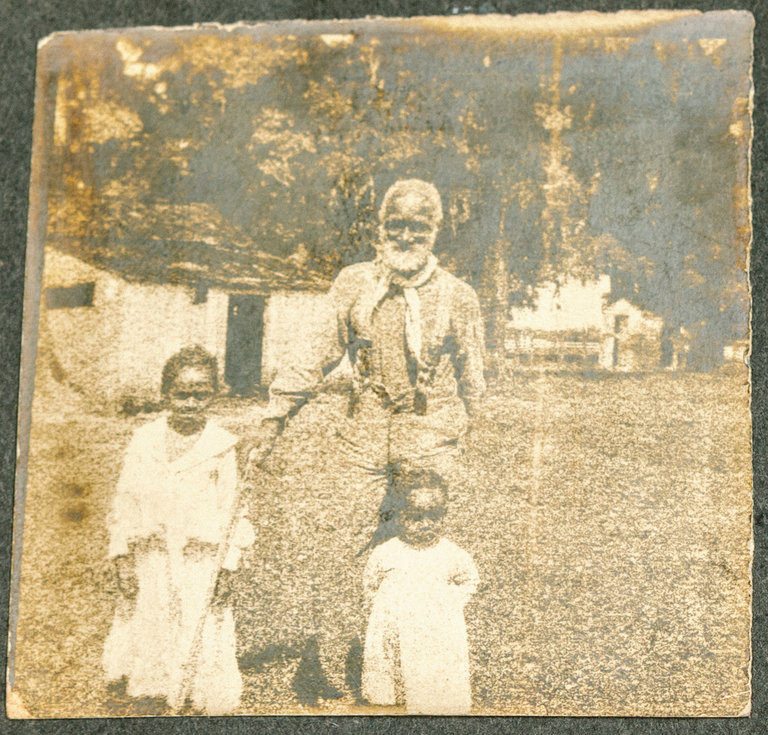
I read a story this morning in the New York Times about a group of alumni and others at Georgetown University who founded the Georgetown Memory Project. In 1838, the Jesuit university sold 272 slaves to Louisiana. The GMP site says, “University folklore says they perished without a trace, but hundreds survived the Civil War. Thousands of descendants are alive today.” They are working now to find those descendants and find out as much as they can about the people who were sold to help the stories that have been waiting to continue. The article in the Times tells the story of Frank Campbell, one of those who was enslaved.

A little later in the morning, I received an e-mail message from Sarah, Ginger’s co-pastor, introducing us to a teacher at the high school who has been doing research on slaves in Guilford and Madison, the town just east of us. So far, they have discovered over eighty people who were enslaved here.

I am grateful for the folks at Georgetown and the teacher here in Guilford who are working to tell these stories that have been waiting to be told. I am thankful for their tenacity. Their determination. And I am reminded of how many folks in our country wait patiently—that is Thurman’s definition of patience: with relentlessness, ceaselessness, and constancy—for those of us who live by a more privileged timetable to see the injustice and to help change things. The truth is we need to be more restless, more ceaseless, more vocal (That’s not new information, that’s just me waking up.)

In another place, Thurman says, “We do not sin against humanity; we sin against persons who have names, who are actual, breathing, human beings.” (99) Like Frank Campbell. It would not be hard to name others. And they are waiting to be named.

Peace,
Milton