Home Blog Page 26

bread and water

The sermon below is one I preached for a church on the other side of New Haven to candidate to be their Bridge Pastor for the next five or six months. I started not to post it because it is kind of “teachy” (as I described it to Ginger) and, therefore, felt like it might not have much reach beyond those in the room Sunday, or on their Facebook feed. I came across an article—“Here Be Sermons”—written by a non-church person who saw a sermon as saw the audience as a community. He contrasted them this way:

Suppose you and I are listening to a physics lecture. Although we share the same goal — learning physics — we’re pursuing it more or less independently from one another (and from all other students in the lecture). If you happen to fail the class, it’s no real skin off my nose, and vice versa.

In contrast, suppose we’re listening to a sermon — on the virtue of kindness, say. In this case, I do have a stake in whether you learn the lesson, because unlike physics, if you fail at kindness, I’m going to suffer. Put differently, there are positive externalities to the act of listening to a sermon. When you internalize a sermon’s message, I stand to benefit, and vice versa.

The other reason I started not to post it is I’ve said pretty much all of it before. Then I read a Billy Collins interview where he said the most important thing about teaching is repetition. Even though a sermon and a lecture are different, I think what he is saying still applies. I know you’ve heard this before, but it’s good to hear it again: we are wonderfully and uniquely made in the image of God and worthy to be loved—and we’re all in this together.

Shoot, now you don’t need to read the sermon.

__________________________

We don’t know how long John had been baptizing people when Jesus showed up. All we are told is that John was at a part of the Jordan River that felt like it was out in the middle of nowhere–some twenty miles from Jerusalem–telling people it was time for a change. A big change. If they wanted to be a part of that change, they could demonstrate it by being baptized. “Repent” is the word he used: turn around, go in a new direction. He was a person literally and figuratively on the fringe of society telling people that business as usual was not the way God wanted them to live their lives.

In Matthew’s description, John comes across as rather righteously indignant. He goes hard after those who supported the political and religious establishments. John was talking not only about personal change but also, and perhaps more importantly, systemic change. When we think of what it means to repent–to go in a new direction–we think first about personal changes and decisions we can make individually, but we are also called to explore the choices we make together.

We can infer that John had been out there for a good while when Jesus showed up wanting to be baptized. We can also infer that this is not the first time they had met. John recognized Jesus and his understanding of Jesus made him hesitant to baptize, but Jesus said, “We need to do this to bring about God’s justice in the world.” So, John walked with Jesus into the river and baptized him. It was an act of consecration and an act of solidarity. It mattered to Jesus that he was baptized. He was making a public statement about who he was in the world.

Many years ago, I got to visit Israel and Palestine. I stood on the bank of the Jordan River with a group of UCC folks from a church in Massachusetts. We knelt at the water’s edge to “remember our baptism” as the ministers sprinkled water from the river on our foreheads. In the middle of our quiet, reflective moment a bus pulled up and from it flowed a group of Pentecostal folks in white robes who came running down the hill led by their pastor who was shouting, “Gloria a Dios!” over and over at the top of his lungs. When he reached the small landing at the water’s edge, he didn’t stop. He took a flying leap and belly flopped into the water, robe and all, closely followed by pretty much everyone else behind him. They splashed in the water as they sang and laughed and cried. I think I can speak for many in our group when I say we looked over and wished that was the way it felt to remember our baptism.

Jesus didn’t jump into the river shouting, but he was making a bold public statement. Alongside of that, his baptism was also a personal affirmation. Matthew says Jesus experienced the Holy Spirit like a dove landing on him and he heard a voice say, “This is my dearly loved son in whom I delight.” It does not appear that anyone else heard the voice or saw the dove. John went on baptizing, people kept coming, and Jesus went further out into the wilderness to fast for forty days.

We mark Jesus’ baptism as the beginning of his public ministry. The event is so significant that it has become one of the two sacraments of our denomination, along with Communion, which grows out of the last meal Jesus had with his disciples before his execution. The two sacraments are bookends to his time on earth, in a way. Today, thanks to New Year’s Day falling on a Sunday and pushing our monthly observance of Communion back a week, we get to look at the two of them together.

Baptism, for us, has taken on a different look than what Jesus experienced. John didn’t sprinkle water on Jesus; he dunked him. Over the centuries, the sense of blessing and affirmation that Jesus received has been translated to baptizing infants as a way of affirming that we are all wonderfully and uniquely created in the image of God and worthy to be loved. Likewise, our Communion table is open to anyone who wants to share in the meal as another way of affirming that God’s love does not require prerequisites.

Both sacraments are communal acts—things we do together as tangible reminders of something we need to hear again and again: nothing can separate us from the love of God.

Over the centuries, our sense of the magnitude of both things has led us to make them formal and solemn, when neither of them were, in their inception. Jesus waded out into a river in the desert and was baptized by a guy who wore animal skins and ate bugs. He shared the bread and the cup from the meal he was eating with his disciples that last night. It was more improvised than instituted.

When we come to the table together in a few minutes you will hear me talk about re-membering, as in putting ourselves back together in Jesus’ name, following Jesus’ words, “As often as you do this, remember me.” One way to hear the words “as often as you do this” is that he was talking about any time we sit down to eat. Similarly, I read one person this week who said they take the daily act of washing their face as a chance to remember their baptism and to remember they are God’s beloved child. I thought about that as I walked in the rain on Friday and the water hit my face.

We don’t observe the sacraments as a way of being more holy or more worthy of God’s presence. We don’t follow these rites because the form has some sort of magical power that protects us, or because they are some kind of initiation ritual. We reenact these scenes as tangible reminders to us that we are God’s beloved ones and as tangible promises to God that our lives will reflect God’s presence.

It’s a bit puzzling to think that Jesus somehow needed to go into the water and then hear that God delighted in him. He wasn’t just going through the motions of joining the club, he was aligning himself with John’s call to live into God’s justice and inclusion. At the end of Matthew’s gospel, just before the meal, Jesus talked about how those who followed him would be recognizable: “I was hungry and you fed me. I was thirsty and you gave me a drink. I was naked and you clothed me. I was imprisoned and you visited me.” Another set of bookends, this time with words. At the end of his ministry, he was saying the same things he heard John say at the beginning.

The sacraments of baptism and Communion pull us into the middle of each other’s lives and the lives of those around us to find any way we can to remind each other that we are wonderfully and uniquely created in the image of God and oh, so worthy to be loved.

We may not be jumping in the river this morning, but that doesn’t mean we can’t come to the table full of joy as we re-member Christ in the waters of our baptism and in the meal that is before us. Jesus said the bread represented his body; the apostle Paul used the Body of Christ as his favorite metaphor for who we are together. In the middle of a world that feels torn apart, let us move to the table to re-member ourselves in Jesus’ name—to put the Body of Christ back together again. Amen.

Peace,
Milton

Thanks for reading. I write a free weekly newsletter, mixing metaphors that comes out every Tuesday. I would love for you to subscribe. If you would like to support my writing, you can become a sustaining member or buy me a cup of coffee.
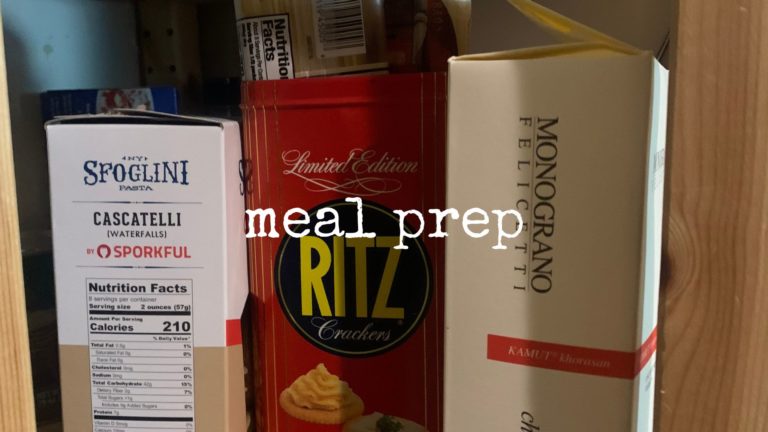
meal prep

meal prep

the boxes of dried pasta
in my pantry are harbingers
invitations to improvisation
promises that dinner can
be something even on nights
when I don’t know what to cook

set a pot of water to boil
and then open the fridge and
find what wants to be cooked
leftovers whose time has come
mushrooms garlic baby spinach
last night’s chicken some peppers

salt the water drop the noodles
heat a sauté pan on another burner
as the pasta softens the sauce
turns fragrant and promising
the last of the white wine and
a little butter brings it home

I learned to drain the pasta and
add it to the sauce while it’s still
in the skillet and let it all sit
so the noodles can soak up the
sauce and everything meld
all that’s left is to get a big spoon

the way to get ready for a good
meal is never leave the pasta aisle
empty-handed to shop without
a list and listen to the foods that
know you that will wait for the
chance to make dinner a memory

Peace,
Milton

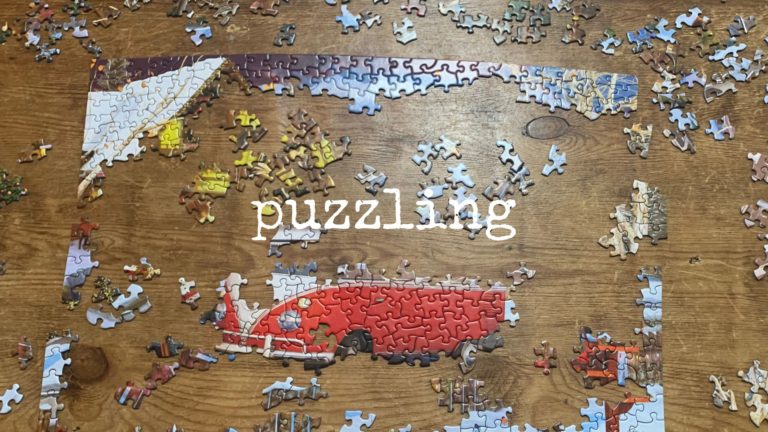
puzzling

puzzling

the last time I saw a puzzle
spread out across the table
was at my mother’s apartment
some time after my dad died
we sat across from each other

she and I like we did when I was
in high school each of us choosing
a section the picture to complete
but we never kept to ourselves
it was easier to find her piece

than it was to see mine it seemed
or perhaps it was the way she said
my name in fake disgust when I
said “I think this fits right in there”
last night I started a puzzle that

Ginger gave me seven years to the
day that Mom went into hospice
and I flew to Texas to sit
with her as she played her last piece
confident that everything fit

the image I am trying to
put together is a VW bus
(she knows I’ve always wanted one)
set in a winter scene of trees
lights wild life and wooden fences

some pieces shout their connection
while others are more shy and wait
to fit in until I give them
the opportunity leaving
scattered shapes left lost and alone

but I will find where they belong
the pieces will fall into place
you know life is not that easy
but maybe that is the good news
life is nothing like a puzzle

Peace,
Milton

I write a free weekly newsletter, mixing metaphors that comes out every Tuesday. I would love for you to subscribe. If you would like to support my writing, you can become a sustaining member or buy me a cup of coffee. Thanks.
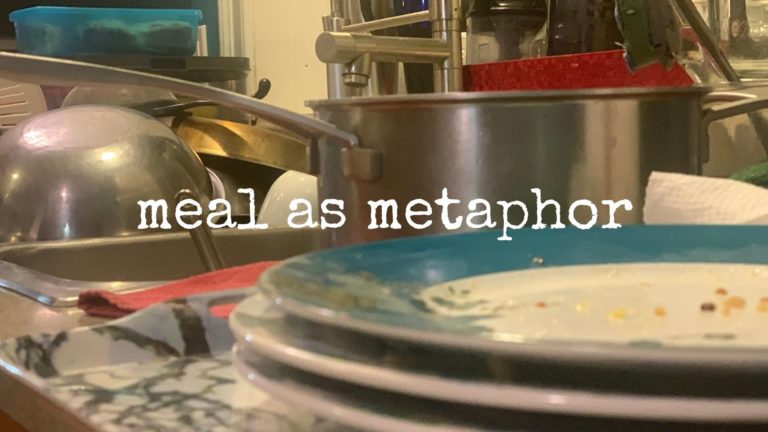
meal as metaphor

meal as metaphor

this penultimate night of the
year was the night to make
something out of everything
to use up–no–to make the best
out of a few things whose
refrigerator visas had run out
a pork tenderloin baby potatoes
and green beans all had promise
the supporting cast included
olive oil cornstarch buttermilk
panko bread crumbs lemon
juice dijon mustard butter
always a little butter
I cut the pork in pieces big
enough to pound into cutlets
breaded and fried them
steamed the green beans
with some lemon juice
boiled the potatoes to halfway
done and then smashed and
pan fried them then I made a
quick sauce with the butter
mustard lemon juice and a little
limoncello that made it all taste
like I’d planned it no like I meant it
meals are not always metaphors
but tonight felt like this year
full of perishable ingredients and
things that didn’t go as planned
another one without a recipe
would that it tasted as good to
say I meant it about the year
as it did to sit down to dinner

Peace,
Milton

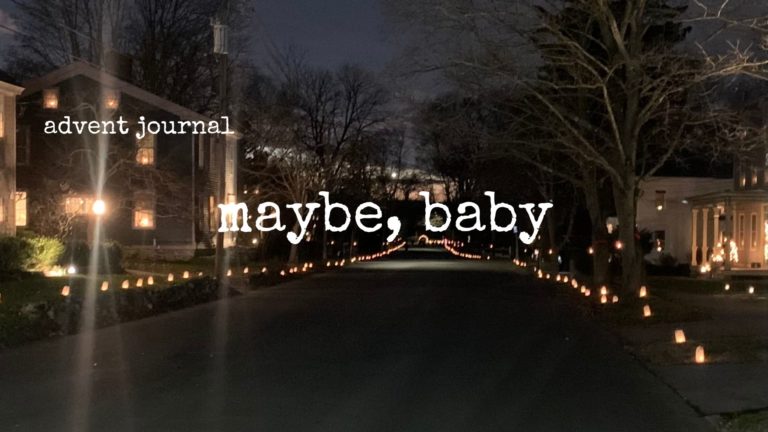
advent journal: maybe, baby

I’m writing tonight between our two Christmas Eve services. The early one at five is described as the family service so that folks know it may be a little louder than the ten o’clock service, which is candle light and Communion. For the first time in three Christmases, the room felt full. We sang the same carols you probably sang at your place and, as we sang “Hark, the Herald Angels Sing,” I was caught once again by the line

risen with healing in his wings.

Carols often leave me thinking English was built for Christmas. Just look at the rhymes in this song: king, bring, sing, wing. The whole thing comes gliding in on rather confident rhymes. The angels were making a joyful noise, after all, and Charles Wesley, the hymn writer, penned a victorious image.

After the carol, we read the opening verses of the second chapter of Luke that juxtapose the political machinations of emperors and governors with the birth of Jesus in a cattle stall, far away, at that point, from palaces or power or even angel choirs.

Sitting here at my computer, I turned to rhymezone.com–a site I have often found helpful–and typed “baby” into the search bar. The results were

babie, cabey, day be, gayby, haby, layby, mabey, maybe, may be, may bee, nabi, rabey, raby, sabey, slaby, smaby, taibei, taibi, they be, way be (emphasis theirs).

The best rhyme for baby is maybe, as far as rhymes go; they also share some harmony in meaning because both words speak of possibilities, or what might happen. The possibility born with the baby was that he would grow up, that he would become someone.

That possibility–that hope–is what is sustaining me this season. This year. I can’t find much sustenance in the certainty of kings, no matter how well they rhyme, but maybe, baby, in the throes of all we don’t understand and all the grief that we carry, we have something to sing about.

That’s enough for now. Merry Christmas.

Peace,
Milton

Thanks for reading. For the month of December, my book, The e-book version of The Color of Together is 99 cents at Amazon. Please check it out. Also, You can also subscribe to my free weekly newsletter, mixing metaphors. It comes out every Tuesday. Both my newsletter and blog are free and ad-free. If you would like to support my writing, you can become a sustaining member.

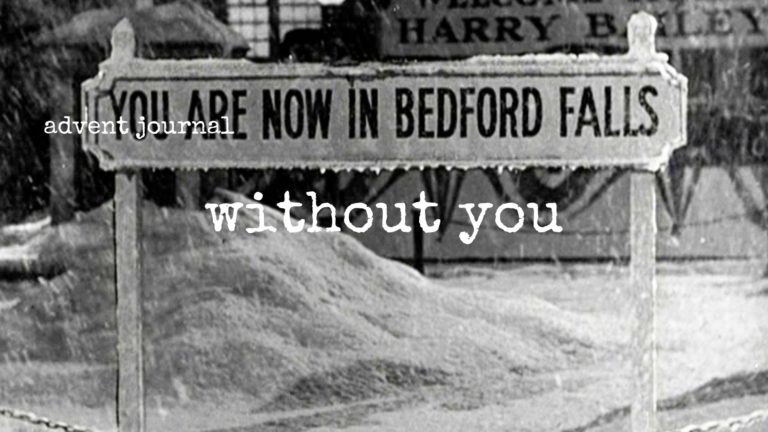
advent journal: without you

without you

if I quote the words you can
probably say them with me
“you’ve been given a great gift
George: a chance to see what the
world would be like without you”

but the gift of without that
most of us get comes wrapped
as grief the chance to learn
what the world is like without
someone we are used to seeing

yet the presence of their absence
is still not enough to persuade
us that the fingerprints we leave
are more than evidence of our
failures faults and near misses

the real gift was not that George
saw a world without him but that
Mary was out looking for him
his dream of absence was a reality
she was not willing to abide

we all have that to offer one
other to say life without you
is hard you have been on my
mind down all these years
I am not me without you

we are a collage of compassion
shaped by incidental contact
the daily gestures that grant
us access to each other’s lives
that make us friends and family

Peace,
Milton

Thanks for reading. For the month of December, my book, The e-book version of The Color of Together is 99 cents at Amazon. Please check it out. Also, You can also subscribe to my free weekly newsletter, mixing metaphors. It comes out every Tuesday. Both my newsletter and blog are free and ad-free. If you would like to support my writing, you can become a sustaining member.

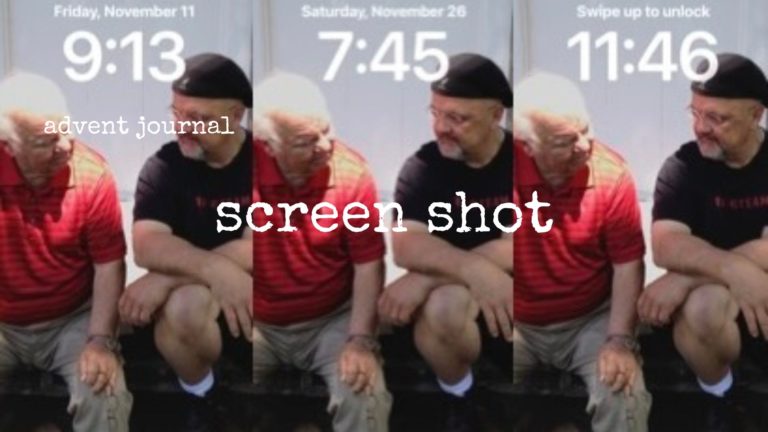
advent journal: screen shot

It turns out that the shortest day of the year is also the birthday of a number of people who matter to me, and two of them live Guilford. Ginger and I went to celebrate them and then stopped on the way home to celebrate some time together. It was only after we got home did I find out that CBS had aired “Homeward Bound: A Grammy Salute to the Songs of Paul Simon.” Tonight, as I sat down to write, I searched for it and found the entire concert at CBS.com and put off writing for awhile.

Paul Simon has been writing and performing songs my entire life. Literally. He and Art Garfunkel started singing together in 1956, when Simon was fifteen. By the time I was fifteen, they had released Bridge Over Troubled Water, their last album together, and I was trying to learn how to play his songs on the guitar I got that Christmas. I learned quickly that even though he sang the truth, he used way more than three songs.

As I listened to a wide variety of artists perform Simon’s songs tonight, I thought a lot about my father, which caught me by surprise a bit. The more I thought about it, however, it made sense because Simon and Garfunkel were the soundtrack of my growing up. I loved the harmonies to begin with and grew into the lyrics. And Dad liked a number of the songs as well. Because of the years we spent together as a family in Zambia and Kenya, he loved Graceland.

Maybe I also thought about my father because he had already showed up a couple of times today. The cover photo on my phone is a picture of the two of us talking as we sat on a stone step at a park of some sort near Princeton, New Jersey where the family had gathered for my nephew’s graduation from Princeton Theological Seminary in May, 2012. Neither of us knew that Ginger took the picture. When Dad died the following summer, I made it the cover photo on my iPhone and it has stayed there ever since. Quite regularly, I manage to take a screen shot as I put my phone in the tech pocket of my jeans. My photos have random copies of the picture with specific times and dates.

I did it twice today, making it look as though my father and I were together 11:46 and again at 1:15. When I scrolled back through my pictures I found four or five more, and then almost that many in the “recently deleted” file. Nine and a half years later, Dad keeps showing up.

I’m grateful.

Just recently I made the comment that I feel closer to my father now than I did when he was living. What I mean by that is, though he is physically dead, our relationship is still alive in my life. That a periodic photo of him shows up in my camera roll is an apt metaphor. The power of our memories are in how we remember them. He and I had a number of tough years and I wish he had found room in his theology to be more inclusive than he was. I don’t mean I am glossing over that. What I am trying to say is I keep going back to those moments where we found each other, or the places where I can feel his influence on my life, and I dig in there, mining the memories for new insight and sustenance.

The opening and closing tracks to Simon and Garfunkel’s Bookends album were versions of the same song, also called “Bookends.” It was a simple, rather haunting guitar line and these words:

time it was
and what a time it was
it was
a time of innocence
a time of confidences
long ago it must be
I have a photograph
preserve your memories
they’re all that’s left you

Simon was probably twenty-five or so when he wrote them, along with a line from another song on the record called “Old Friends.”

can you imagine us years from today
sharing a park bench quietly
how terribly strange to be seventy

I suppose it’s terribly strange to be most any age, and often difficult to put ourselves where we have yet to be, or perhaps where we were long ago. We live from one screen shot to the next, stitching them together into a life, tethered to our memories.

When I was twelve listening to Bookends, I couldn’t imagine my father and I as men sitting side by side on a stone step next to the Delaware River, yet we somehow managed to get there, together.

I am grateful he keeps showing up.

Peace,
Milton

Thanks for reading. For the month of December, my book, The e-book version of The Color of Together is 99 cents at Amazon. Please check it out. Also, You can also subscribe to my free weekly newsletter, mixing metaphors. It comes out every Tuesday. Both my newsletter and blog are free and ad-free. If you would like to support my writing, you can become a sustaining member.

advent journal: christmas in connecticut

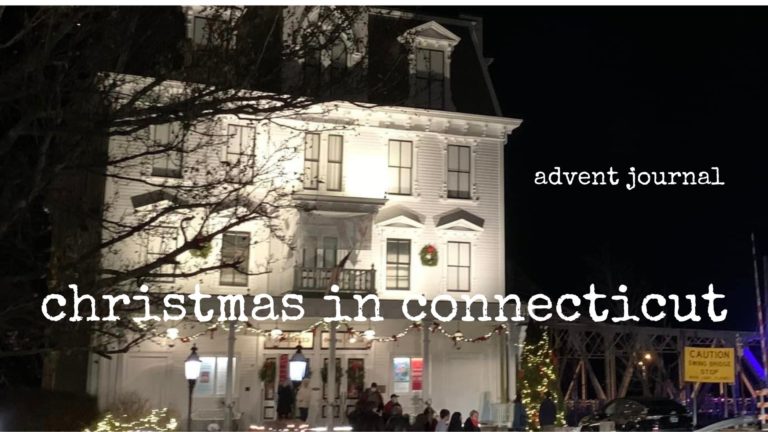
The Goodspeed Opera House in East Haddam, Connecticut is a building full of stories. The building itself goes back almost one hundred and fifty years when it first opened as a theater. When the original owner died a few years later, so did his vision for the place and the building became a militia base, a general store, and then a storage facility for the Connecticut Department of Transportation. Around 1960, someone caught sight of the original dream. They looked at the building and saw an opportunity others had missed, so they raised money and worked to restore it. Since 1963 it has hosted musical theater. Annie and Man of LaMancha both began there and went on to worldwide fame.

Last night, the Goodspeed hosted Ginger, Rachel, and I for a performance of a new musical, Christmas in Connecticut, which is based on the 1945 movie of the same name starring Barbara Stanwyck and is one of our holiday favorites. The tickets were my early Christmas gift to Ginger and her mother. None of us had been in the building before.

The first floor of the Goodspeed–at least what you can see when you walk in–is a grand staircase that leads to a mezzanine level that is a small lounge, restrooms, and more stairs. The theater itself is on the second floor. For the uninitiated, such as we were, it is hard to notice that behind the grand staircase is a bar with snacks and drinks. We were upstairs and in our seats before we realized we had missed getting water and coffee.

The show was good. The way they adapted the storyline from the movie to work on the stage was well done. The actors had strong voices. The plot was engaging. And by intermission, we were thirsty. I ventured back down the stairs to the main floor where I saw a staff person selling bottled water for $2. Cash only. I didn’t have two dollars. I climbed back up to our seats and reported to Ginger and Rachel and Ginger said she had two dollars. Cash in hand, I went back downstairs. A man and a woman were in front of me. The man swapped his money for water and smiled as he passed me. The woman turned and walked away and when I stepped up the attendant said, “I’m out of water.”

I dropped my shoulders and sighed. Then I worked my way back to the bar, but the line was about ten deep. I climbed my way back to our seats and reported to Ginger what had happened. As I was talking to her, a man a couple of rows back stepped close to me and said, “You were looking for water and I got the last one. I heard you sigh as I walked off. I had a drink before the show. You need this more than I do, so give me your two dollars and you can have the water.”

I thanked him, handed him the money, and took the water bottle.

I didn’t realize he had been in front of me, or that he heard me. I didn’t see him standing near me when I came back to my seat. His act of kindness only happened because he was paying attention and saw a chance to take care of someone else.

That’s the only contact we had. When the play finished, everyone began moving the same direction and then funneled to single file to go the stairs and out into the clear Connecticut night. It was incidental contact, but that’s what makes up most of our days–a series, or perhaps a collection, of brief exchanges that add up to a day or a month or a life much like a sequence of steps becomes a dance or a pilgrimage and an ordering of words becomes a sentence or a scene.

What stories do our lives tell by the way those exchanges unfold?

When Jesus tried to explain what it meant to live compassionately, he said, “I was thirsty and you gave me a drink.” That statement makes more sense to me tonight than ever before because I was thirsty and a guy who didn’t have to gave me his water in the middle of a musical called Christmas in Connecticut.

You can’t make this stuff up.

Peace,
Milton

Thanks for reading. For the month of December, my book, The e-book version of The Color of Together is 99 cents at Amazon. Please check it out. Also, You can also subscribe to my free weekly newsletter, mixing metaphors. It comes out every Tuesday. Both my newsletter and blog are free and ad-free. If you would like to support my writing, you can become a sustaining member.

advent journal: the work of the people

the work of the people

the liturgy of our life together
begins with breakfast or a
walk certainly a coffee

some days the invocation
is offered by NPR or TODAY
a podcast or an old song

we exchange the reading
of our calendars, listing our
obligations and appointments

we go through motions
intending to make a difference
perhaps to make amends

and talk of when we will
come home to one another
answering the altar call

to return and to remember
our hope is built on something
as simple as promises kept

whatever we have bound
or set free whatever we
have done or left undone

we are blessed in our goings
out and our comings in
live well be well rest well amen

Peace,
Milton

Thanks for reading. For the month of December, my book, The e-book version of The Color of Together is 99 cents at Amazon. Please check it out. Also, You can also subscribe to my free weekly newsletter, mixing metaphors. It comes out every Tuesday. Both my newsletter and blog are free and ad-free. If you would like to support my writing, you can become a sustaining member.

advent journal: reading list

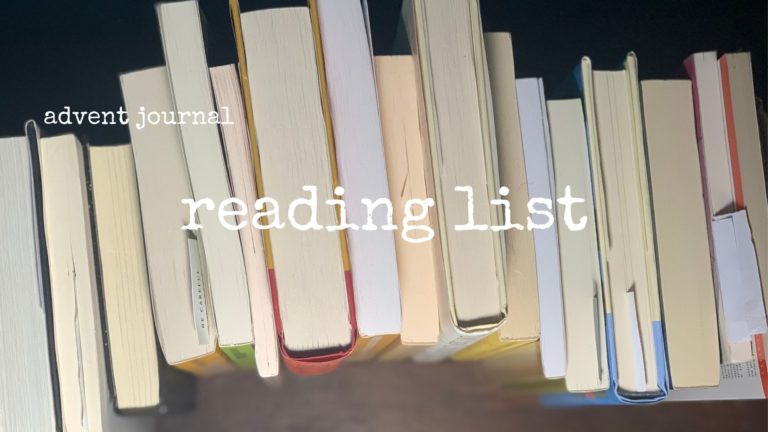
For my birthday Ginger gave me The Reading List by Sara Nisha Adams. I did not know of the book. From the back cover I learned it is Adams’ debut novel–at least in print–and the premise is a teenage girl who is working in a library finds a reading list in a returned copy of To Kill a Mockingbird and decides not only to work her way down the list but also to share it with others she meets–or so it says in the synopsis on the back cover. I am only a couple of chapters in.

But I’m hooked. The writing is engaging, the characters are intriguing, and I imagine I may work my way down the reading list as well once I get through the book. The reason I bring it up tonight, however, is a paragraph that is part of the prologue. The book opens with someone named Aidan entering the library branch.

He wanders over to the fiction shelves, the crime section, and runs his fingers over the spines, landing on Black Water Rising by Attica Locke. He has read it before, years ago. Maybe even more than once. As he starts to turn the pages, looking for an escape, memories rush in . . . of Attica Locke’s Houston, the city alive, vibrant, dark, full of contradictions and contrasts. Today he needs that kind of familiarity, he needs to step back into a world where there are scares, twists, turns, but a world where he knows how everything will end.

He needs to know how something will end.

In the years I taught high school, I read a lot of novels beyond the ones I read repeatedly with students. One reason was I wanted to read some new sentences other than those that were required, even though many of those books I still love. The other reason was I wanted to be a writer, which meant (I thought) I needed to write the Great American Novel, so I read as many novels as I could get my hands on, trying to learn how to tell a story.

Fiction or nonfiction, it is good practice to read while you write. In my work as an editor, that was my consistent advice to my authors. Beyond the research they were doing for their book, they needed to read things that made them believe in good writing, read sentences and paragraphs that caught their breath, read writers they wanted to emulate.

While I was teaching at Charlestown High School in Boston, I wrote a novel–Destiny–about the son of a Texas preacher who was trying to figure out who he was. Thanks to the folks at the Humber School for Writers and Timothy Findley, a Canadian author who was my mentor, I managed to figure out how that story ended and got it down on paper, but it never made it past the copy I turned in at the end of the course.

As I kept writing, I began to realize that what flowed out of me most easily was nonfiction–the stuff that fills my blog and my three books–and I also found my way into poetry, but I have not written more fiction. I don’t know if that is why my novel reading dropped off. It was not a conscious decision on my part. But the two novels I got for my birthday (the other one was Horse by Geraldine Brooks) have nudged me into deciding that the new year will begin with fiction, whether or not I write another novel, and beyond these two books I may go back to some old friends much like Aidan did when he picked up Black Water Rising.

And that leads me to thinking of my own reading list. I won’t give away the list in Adam’s novel, other than to say it holds eight books and is titled, “Just in Case You Need It.” Without claiming my list to be exhaustive or even permanent, here is a list of books that have been lifelong friends.

Cry, the Beloved Country by Alan Paton

Frankenstein by Mary Shelly

A Passage to India by E. M. Forster

The Illusion of Separateness by Simon Van Booy

Saint Maybe by Anne Tyler

A Wrinkle in Time by Madeleine L’Engle

The Bluest Eye by Toni Morrison

A Prayer for Owen Meany by John Irving

As soon as I publish this post I know I will think of revisions, mostly additions, to the list, but that’s alright.

Perhaps the power of a good story is that is offers us a chance to experience a real ending. Whatever happens between the covers of the book, there is a last page, a last sentence, a last word. Life, as you know already, is not like that. All of our endings are in the middle of something else that is continuing. Wherever we are, we are sustained by stories, whether printed ones we carry with us or those we tell each other when we stop to listen to one another as we move from middle to end to beginning to middle to whatever has yet to happen.

Reading lists make good guides for the journey. Who travels with you?

Peace,
Milton

Thanks for reading. For the month of December, my book, The e-book version of The Color of Together is 99 cents at Amazon. Please check it out. Also, You can also subscribe to my free weekly newsletter, mixing metaphors. It comes out every Tuesday. Both my newsletter and blog are free and ad-free. If you would like to support my writing, you can become a sustaining member.