Home Blog Page 25

lenten journal: the scent of a funeral

The way the story unfolds in John’s gospel, I think the disciples got increasingly nervous every time Jesus went to Jerusalem because each trip seemed to up the ante, as far as those in power were concerned. As long as he stayed in Galilee, the crowds didn’t matter so much. But when he came to Jerusalem he was right in the face of those intent on control and oppression. They couldn’t ignore him. It also appears that most all of them were beginning to realize that things were escalating, as far as the official response to Jesus’ words and actions. I mean, he had always talked about dying, but it began to feel more real. In John 11, the chapter just before our passage for today, Jesus gets word that his friend Lazarus had died and decides to go to Bethany, which is walking distance from Jerusalem, and Thomas says to the other disciples, “Let us also go, that we may die with him.”

Death was in the air.

As I mentioned, Jesus had been in Bethany–at this same house that belonged to his friends Mary, Martha, and Lazarus–because Lazarus had died. Actually, the sisters sent word that their brother was sick, but by the time Jesus go there he had already been buried. When Jesus asked them to open the tomb, they were quick to say, “He’s been in there four days; he is going to stink!” (This is one of the places I still love the King James Version: “He stinketh!”) But Jesus was undaunted. He called Lazarus by name and Lazarus walked out of the tomb, still wrapped in the cloth they used to cover bodies.

The incident created publicity, which set the authorities on edge, so Jesus and the disciples left town for a while (we don’t know how long), but the next thing it says in the gospel is that it was time for Passover, so they returned to Bethany so they were close to all that was going on in Jerusalem. This time Mary, Martha, and Lazarus hosted a dinner for him and the disciples. Based on this and other stories, their house must have been known as a place of hospitality because they seemed to always have a crowd gathered there.

We might even assume the last time a crowd was there was when Jesus called Lazarus back to life. Several commentators I read this week noted that if Lazarus had been in the tomb for four days he would have already started to decompose and there is nothing in the story that alludes to Jesus healing those scars, so he would have looked like he had been, well, to hell and back.

As I said, death was in the air.

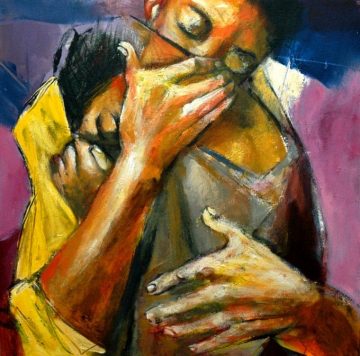
In the middle of it all, Mary came in with a big clay jar of perfume, broke it open, and washed Jesus’ feet in it. The Roman measure used means she poured about twelve ounces of perfume on his feet. To say the smell went everywhere would be an understatement. It brings to mind the lesson I had to learn as a teenager about how much cologne it took to make me smell good. And then she let her hair down and used it like a towel to wipe his feet, which means that she probably carried that aroma for several days after this happened.

My guess is the room got quiet as people caught wind of the perfume and began to realize what was happening. Then Judas critiqued the whole scene by saying she would have done better to spend the money feeding poor people than pouring a Costco-sized bottle of perfume on Jesus’ feet, and Jesus responds by saying, “You always have the poor with you, but you do not always have me.”

In the next verse, John moves on to people gathering palms to wave at Jesus as he entered Jerusalem. He doesn’t wrap up the story or tell us what anyone else said, he just moves on.

On the surface, Jesus’ words sound almost callous, as though he is saying, “You can help poor people any day you want,” but there’s more going on here. Those gathered would have been familiar with Deuteronomy 15, which talks about the year of jubilee when all debts were forgiven–every seven years. God said, “Since there will never cease to be some in need on the earth, I therefore command you, ‘Open your hand to the poor and needy neighbor in your land.’”

Jesus was saying the two expressions of compassion were not mutually exclusive. Generosity is not an either-or proposition, but a pervasive way of life. Extravagance is God’s calling card. What Mary did resonated with the three hundred bottles of wine Jesus made from water for the wedding, or the parable the four hundred cups of flour that were transformed by the yeast that Jesus told to illustrate the extravagance of God’s presence, or the prodigal love of the father we saw in last week’s parable of the two lost sons.

Mary got it. The proper way might have been to wash Jesus’ feet and then put a light rub of perfume on them afterwards, but she poured it all over him and her. Evidence of her compassion ran across the floor and got on everyone’s sandals. The aroma filled everyone’s nostrils. She had prepared herself to respond to the moment when she saw the chance.

To celebrate her eighty-fifth birthday this year, Rachel, my mother-in-law, decided to put together bags to hand out to those experiencing homelessness. As she and Ginger planned what to do, they thought about more than handing out a bottle of water or a snack. They really thought about things people need. They got some large Ziplock bags and filled them with granola bars and other healthy snacks, but also a wash cloth, a pair of socks, toothbrush and toothpaste, and a bottle of Gatorade.

Thursday, I was coming out of the Big Y parking lot and a man was standing at the traffic light holding a cardboard sign. Because of Rachel’s preparation and compassion, I had something to offer him. I was ready for the moment.

What Judas was talking about was hypothetical: “Well you know what you could have done . . .” To follow his logic means that neither Jesus nor the poor people around them would have been taken care of.

One other things strikes me in this story. Our passage this morning was the first twelve verses of John 12. The first twelve verses of chapter 13 are John’s account of Jesus’ last night with his disciples before his execution. Instead of the last supper, John says that Jesus got up from the table, much like Mary had done a few nights before, wrapped a towel around his waist, and washed the feet of his disciples–even Judas; and then he asked, “Do you know what I have done to you?”

Mary’s actions did more than just make Jesus cared for, more than foreshadow his death. We have no idea how much Jesus had that last evening planned out, but I wonder if what she did affected how he thought about the ways he would show his love for his followers that last night as, once again, the smell of death was in the air.

We seem to end up here each week, reminding each other that life is temporary and death is sure. At the start of Lent we talked about “practicing resurrection” as our theme for the season, and the reality is resurrection requires death. We can’t have one without the other.

One of the benedictions I have heard often in UCC services is attributed to a French philosopher named Henri-Frédéric Amiel who said, “Life is short. We don’t have much time to gladden the hearts of those who walk this way with us. So, be swift to love and make haste to be kind.” I will admit that I have heard it so many times that it has started to sound more like something on a greeting card rather than a benediction, but Mary’s extravagant generosity gave me fresh ears for those words.

Death is in the air. We don’t have much time. But to be able to respond to the moments where we have a chance to show our love, we must prepare to be generous, to be extravagant, whether we are caring for friends or helping strangers. We will not always have each other. Let’s not miss our chances to love one another. Amen.

lenten journal: not alone

We have had a grey and misty day around here, with a few moments of sunlight, but not many. The dampness in the air makes it feel colder than it is. When I sat down to write, it felt like a good night to share some songs that have found me over the past weeks, which is probably as close to a theme as I’m going to get tonight except that I would say all of the songs are about what it means to be here together in one way or another.

After my post about being exhausted, a friend reminded me of Nick Drake’s “‘Cello Song,” which then sent me on a Nick Drake afternoon and I landed on this song, “The Time of No Reply,” that seems like a good subtitle for Lent.

time goes by from year to year
and no one asks why I am standing here
but I have my answer as I look to the sky
this is the time of no reply

Another friend sent me a CD that is a collaboration between Art Garfunkel, Buddy Mondlock, and Maia Sharp. The title track is “Everything Waits to Be Noticed,” which is a title begging for a sermon.

twenty-eight geese in sudden flight
the last star on the edge of the night
a single button come undone
the middle child, the prodigal son
everything waits to be noticed
a trickle underneath a dam
the missing line from the telegram
everything waits to be noticed

Vance Gilbert’s latest record is called Good, Good Man and he is. Ginger and I first saw Vance at Club Passim when we first moved to Boston in the early nineties. His voice, his guitar playing, and his songwriting have only gotten better. His take on our mortality is “Pie and Whiskey.”

you can live on pie and whiskey
but you surely won’t live too long
one is as sweet as your very first kiss
the other gonna go down strong
neither one will sustain you
when the other make your belly lame
and go all wrong
you can live on pie and whiskey
but you surely won’t live too long

Kathleen Edwards’ debut record, Failed, made me a fan long, long ago. She’s another one that has kept up the good work. “Options Open” is the tale of a well-worn love, a beautiful reminder of the power of keeping our promises.

you do, you say, you speak, you wear, it just works for me
but I blame it on the weekly flyer
that took me down to Crappy Tire
‘cause you were smiling when I looked up
I guess we’ll always have a parking lot
tor thirty-nine years I’ve been keeping my options open
I’ve been keeping my options open

I just realized I came upon some great singer-songwriters in the eighties and nineties who have remained musical companions because Billy Bragg is next on my list. I think I saw him at Poor David’s Pub in Dallas in the mid-eighties when he was promoting his record Talking to the Taxman about Poetry. He, too, is still at it. “I Will Be Your Shield” is a powerful anthem of love and friendship.

In the notes on the YouTube page he says, “To me, ‘I Will Be Your Shield’ is the heart and soul of the album. I’ve come to the conclusion that empathy is the currency of music – that our job as songwriters is to help people come to terms with their feelings by offering them examples of how others may have dealt with a situation similar to that in which the listener finds themselves. After what we’ve all been through, the idea of being a shield – physically, emotionally, psychologically – resonates beyond the pandemic.”

when things start to unravel
and days fill you with dread
when commenced in your confidence
confiding me instead
when every little setback
just makes you want to cry
when the whole world seems against you
and you don’t know why

in the battle against your demons
I, I will be your shield
when the world has lost all meaning
together, we’ll stand for our love
is the one thing that’s real

The Infamous Stringdusters are a new band to me, but they are not new and they are really good. They will sing us out with something we all need to keep saying, or singing, out loud: “I’m Not Alone.”

am I just the sum of all my wondering?
will I see the beauty of the years?
can I peel away the layers of longing?
can I learn to live with all my fears?
I have painted all these walls
trim to ceiling
I have waited for so long
still the feeling that I’m
not alone
I’m not alone
I’m not alone
I’m not alone

Whatever the weather is at your house, we are not alone.

Peace,
Milton

lenten journal: outside the frame

It’s an odd connection, I suppose.

I was reading Rebecca Solnit’s Orwell’s Roses and she was describing a painting of one of his English ancestors–a painting of “gentility”: an English country house and the men clothed in their privilege–and then went on to talk about what was “outside the frame of the painting,” which was that the money that got them their houses and finery was made through the slave trade. To leave all that outside the frame meant they could see themselves as gentle men rather than brutal ones.

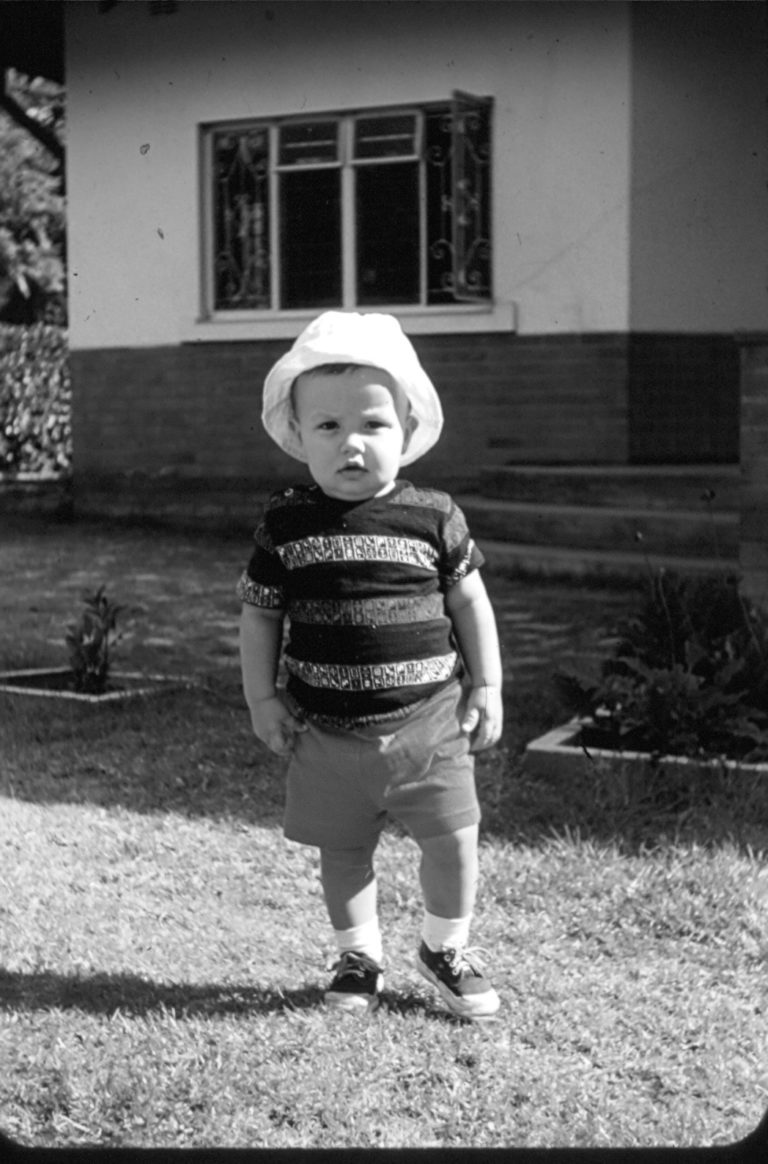
Her point notwithstanding, I kept seeing frames in my head and the edges of photographs that define the picture. And I thought of this picture, one I keep coming back to when it comes to thinking about who I am. It was taken in the front yard of our house in Bulawayo, Southern Rhodesia (now Zimbabwe). I have no idea how old I was, except that I lived there between the ages of one and five. I’m guessing this is somewhere in the middle of all of that.

I wrote about this picture in my book This Must Be the Place: Reflections on Home. Here is part of what I said after I wrote, “The history we construct doesn’t use facts for bricks.”

Before my beginning, my parents had stories of their own and their parents before them. My family across generations, however, have not been good record keepers. One of my mother’s uncles joined the Mormon Church and did a good deal of genealogical work as an expression of his faith, but beyond that none of us has explored much of our family tree. From the time I was small, I can recall my father telling the story of how his mother died in childbirth. He recounted how his father said the doctor offered his parents a choice: Either the mother or the child could live. She chose her son. I was in my thirties and my father in his sixties when the woman I knew as “Grandma C”—his stepmother—gave him a binder full of newspaper clippings and other things about his birth mother that she had saved over the years. From what I could tell, Dad knew nothing of the notebook until that moment. There in the brittle black and white of the aging newsprint was her obituary—she had died almost a month after he was born. After six decades, his creation story changed. How he came to be happened differently than the story he had trusted with his life. I’ll never forget the look on his face.

My parents and my birth certificate say I was born in Corpus Christi, Texas, but I had my first birthday on a trek from Texas to New York City, on our way to Africa; my first memory of myself is the picture of me standing in the front yard of our house at 15 Dale Carnegie Road in Bulawayo, Southern Rhodesia. I was about two. I don’t remember the photograph being taken, or standing in the yard, or even much of living in Bulawayo. I hold the memory because I have seen this snapshot so many times—the shorts, the striped T-shirt, the white hat, the little sneakers, the one lifted foot—to the point that I feel like every picture I remember of that house on Dale Carnegie Road had me standing in the front yard as though I were some sort of yard art. I’ve imagined people driving by and thinking, “There’s that little boy again. Don’t they ever let him go inside?” The moment is so specific it has become timeless: I am always in the yard on Dale Carnegie Road. Milton starts here.

I remain fascinated that the photograph catches my left foot in the air. I wonder where I was going.

Outside of the frame were my mother, my father, my baby brother, Nina, my nanny, and a big Collie whose name I can’t remember. Far outside the frame and across the ocean were grandparents and an aunt and uncle I knew nothing about, along with a nation that called me a citizen but wasn’t home.

These days, we talk about reframing issues or situations as a way of getting a fresh look at them. It creates an image of taking off the fancy gold frame and replacing it with a more modern acrylic one, or vice versa. Perhaps a fresh look is changing the frame, or looking beyond it; moving the borders to include a larger view that makes visible connections that had been cut off.

Like I said, it’s an odd connection between a painting of an English country house and a picture of little Milton in the front yard, always on his way to somewhere outside the frame.

Peace,
Milton

lenten journal: exhausted

exhausted (adj.) mid-17c., “consumed, used up; of persons, “tired out.”

So says the etymological dictionary. The verb exhaust (“to use up completely”) goes back to the 1530s, but I think it is probably more than coincidence that the use of the adjective lines up with the beginning of the Industrial Revolution, along with the Enlightenment, European colonization, and the general growth of the acceptable level of greed we have come to know as capitalism.

That’s not exactly how I thought this post was going to go, but once I looked up the root of the word I couldn’t help but notice the connections.

Three hundred years later, perhaps its not such a far-fetched connection. My company goes back into our offices next week, which means I start going back to New York, except now the expectation is that I go in three days a week instead of one. Door to door, my commute is three hours each way. When I asked about the reason for the change, I was told they were seeking uniformity.

Again, not the direction I thought I was going with this post.

My sister-in-law’s mother has spent her whole life in Kansas and Oklahoma. She is a wonderful woman who looks like Ms. Claus and has her own way with words. She and her husband stayed with Ginger and me once when they were vacationing. After a long day trip, she came in one evening and said, “I’m so tired I feel like I’ve been hit in the back with a dead rabbit.” Somehow, I knew just how tired she was.

I’ve thought a lot about her lately, not just because I am weary but because exhaustion feels so pervasive. We are all worn out, hit with dead rabbits, HR manuals, pandemics, grief, supply chain issues, family struggles, wars, bills, questions . . . the list goes on and on.

If you’re tired, you go to sleep. If your exhausted–depleted, used up, consumed–how do you get re-hausted? Even more, how do we live these days without being eaten up by them?

Man, I wish this next paragraph had words that offered some sort of meaningful response to that question. In the same way I didn’t know where the post was going to go, now I am not really sure how to wrap things up, so I tell a story, or at least, I’ll borrow one.

I have been reading The Hours of the Unviverse: Reflections on God, Science, and the Human Journey by Ilia Delio (whose name is awesome to say out loud). In it she tells of being in a DC Metro station, running to catch a train, when she fell on some concrete steps and busted her chin open. She was by herself. A young man stopped to see if she was alright and then, when he realized she was bleeding, he called for help and then sat with her until the paramedics arrived. She says,

He looked at my bruised face and asked, “Are you hurt?” It was not so much what he said but how he said it, as if in that moment I was the sole concern of his entire life. I was deeply touched by his compassion and care. . . . He helped me up and brought me into the Metro police quarters ; he waited with me until the ambulance arrived, assuring me I would be properly cared for. The hands of time because the hands of love; he ditched his plans and waited with me for about forty-five minutes before I was whisked off to the emergency room.

The hands of time became the hands of love.

Whether we are exhausted by bunnies or bosses or bad news or something else that starts with a b, we have a chance to let the incidental contact of our lives translate time into love, to create room for one another to rest, to replenish, to re-haust (who knows, maybe that word will catch on.

The talk about time brings me to a musical close for this post–a Tom Waits song called “Time.” That is fitting because, based on his amazing lyrics, I think he would completely understand what it means to be hit in the back with a dead rabbit. He wrote, in part,

and the band is going home it’s raining hammers it’s raining nails
and it’s true there’s nothing left for him down here
and it’s time time time
and it’s time time time that you love
and it’s time time time

Yes. Yes, it is.

Peace,
Milton

PS–Here’s a beautiful cover of the song from the Tom Waits tribute record, “Come On Up to the House: Women Sing Waits”.

lenten journal: be a prodigal

Comedian Steve Martin had a routine in his early days where he talked about how much names matter. He said, for instance, you wanted you bank to be named First Amalgamated Federal National Bank so you felt like your money was safe. If it was called Bob’s Bank you would be less likely to invest because it sounded like you were going to keep their money in your pocket.

When I was in high school, my mother was reading a novel called Christy and she was sure I would like it, but I wasn’t willing to give it a chance. In frustration, she said, “I’ll bet if it was called Joe Fang and His Gang you would read it.” I laughed and said, “I probably would.” When I got home from school that day, there was the book with a handmade cover titled Joe Fang and His Gang.

And she was right: I loved it—once I got past the name.

Jesus never named his parables. The titles were added later by translators and preachers. I’m not actually sure when the names were added. Our passage today is part of three “lost and found” parables that are all named after the thing that was lost and found: the lost sheep, the lost coin, and the prodigal son.

I’ll come back to that word prodigal later.

The names set our vision before we even start reading. We are led to believe that the stories are about the sheep, the coin, and the son, but we need to work hard to see past that filter because it’s not that simple; there’s so much more going on.

Our passage started with some religious leaders, who were people of privilege, criticizing Jesus for welcoming “sinners.” Well, actually, the chapter starts with Luke saying that “tax collectors and sinners” kept coming to Jesus. Even Luke had a hard time grasping Jesus’ love for all humanity, perhaps.

And Jesus did not ignore or shun people of privilege. He hung out with them as well. In Luke 14, the chapter just before our passage, he is eating dinner at one of their houses, which happened quite often. But they couldn’t figure him out, and when they asked questions, he answered in parables, which, as we know, don’t explain anything.

A shepherd loses one of his hundred sheep and doesn’t sleep until he finds it, and then wakes up all the neighbors to celebrate with him. A woman loses one of ten coins and tears up the house looking for it, and then spends who knows how much to throw a party to celebrate. And then, a son asks for his inheritance way ahead of schedule, while his older brother keeps doing what he thinks his father wants so he will get all that is coming to him and maybe more. The younger sibling takes off with his fortune and blows it so badly that he ends up feeding pigs.

The young man then plots a scheme to come home and play humble—just let me be one of your servants; I know I don’t deserve to be a son—because he imagines his father has been angry at him since he left and that’s the only way to get back in the house. But the dad has been watching the road every day, hoping he would come home. As soon as he sees his boy, he welcomes him home without waiting for an explanation.

Before we go on, I want to notice two key difference between this parable and the two that preceded it.

The first two started with questions: Which one of you, having a hundred sheep and losing one of them, does not leave the ninety-nine in the wilderness and go after the one that is lost until he finds it? Or what woman having ten silver coins, if she loses one of them, does not light a lamp, sweep the house, and search carefully until she finds it?—which inclined the readers to see themselves as the shepherd and the woman—sort of a “if you were in this situation . . .”

Then our parable begins, not with a question, but with, “Once there was a man who had two sons . . . ,” which was a familiar way to start a story, sort of the Aramaic equivalent of “A priest, a rabbi, and a minister walk into a bar . . .” But Jesus doesn’t point them to which role to play.

The second thing is that the father doesn’t go looking for the boy the way the shepherd and the woman went looking for what they lost. And the boy was not really lost, for that matter, at least not like the sheep and the coin. He left on purpose and lost sight of himself.

That points me to a third difference. This parable has two lost boys. The older brother might have never left home, but he certainly didn’t feel found. While his brother was away, the older son went to the field every day, made sure things were done right, and worked hard to stay in his father’s favor. When he saw his dad go so completely overboard with his brother came home, he couldn’t take it.

Much like the father had gone out the front door to embrace his youngest son, he went out the back door to find the oldest one when he didn’t show at the party.

The older son had his own ways of trying to manipulate the father: “I’ve been here the whole time and you never let me have a barbeque with my friends.” And the father said, “This is not about you. This about us. Your brother came back. Why wouldn’t we throw a party?”

And that brings me back to the word prodigal. It means “given to extravagance, wasteful, giving on a lavish scale, spending recklessly.”

The word gets attached to the younger son who wastes his life and his fortune, but I think the father is the real prodigal in this story. He is the one who offers extravagant, we might even say reckless love.

Because of the names we have given these parables, we often read them as though they were fables or analogies: the shepherd, the woman, and the father all symbolize God–and God is recklessly extravagant in the way God loves us–but if we look at the context of Jesus telling the stories in response to questions about why he hung out with tax collectors and sinners, I think he wanted us to imagine what life would be like if we were the prodigals: if we were the ones who loved extravagantly.

When we put ourselves in the story—well, I’ll speak for myself. When I try to put myself in the story, the most attractive roles are those of the sheep, the coin, and the kid who got to run wild and then was welcomed back because they are on the receiving end of that crazy kind of love. In real life, I am an older brother, though I was the more experimental one in some ways, but in others I have been true to the role working hard to earn love, to earn a sense of self-worth instead of trusting I was worthy of being loved because I was breathing.

That said, I will make a we statement now.

I think for most, we want to picture ourselves as the younger boy at the end of the story, but
we are, more likely, the older one. I don’t mean that we all wish we would run off and do anything we want until we run out of money. I mean we picture ourselves as the one someone is waiting for, the one who gets celebrated no matter what, but we live like the older brother, acting as though the truth is that love is earned.

But the truth is God’s love is not earned. Real love is not earned.

That is great news that is sometimes hard to take because we work hard and we would like all that work to mean something—and it does mean a great deal, but it doesn’t earn us love.

The parable reminds us that life is not about getting our due. The younger son wanted his inheritance and the older one wanted his recognition. If we direct our gaze away from the brothers to the father, we see that he went out to both. He went out the front to meet the wanderer and he went out the back to find the dutiful one. He was pouring out love, regardless of circumstance.

Jesus’ response to those who questioned the kind of people he cared about was to tell parables about a shepherd who dropped everything to find the lost lamb, or the woman who spent half her budget celebrating the change she found in the couch cushions, and a father who loved his children with reckless abandon. That is where we are invited to find ourselves in these stories: as the one who is looking for every reason to love prodigally, to welcome outlandishly, to drop everything to look for those waiting to be found.

In that sense, to be a prodigal sounds like a pretty good way to live. Amen.

Peace,
Milton

lenten journal: anything can happen

To reference the Mark Knofler song that shows up at the end of this week’s sermon, this has been a week when I felt like the bug rather than the windshield. I’m hanging in there, and I found helpful insights in Jesus’ parable about the fig tree (Luke 13:1-9). Perhaps they will help you, too.

__________________________________

One of the persistent questions that followed Jesus had to do with who was responsible for the bad things that happened. When the disciples saw a man who had been blind from birth, they asked Jesus, “Who sinned that this man should be born blind?” In our passage this morning, people wanted to know what certain Galileans had done that caused great tragedy to befall them.

Jesus responded by asking them if they thought the world really worked that way. Then he said, “Repent,” which is one of those words that doesn’t sit easily on our ears. What it means is to “turn around:” to intentionally change your mind, your actions, your heart.

Though I’m sure if we went around the room most of us would say that we do not think that suffering is some kind of judgment, that notion lives all around us. Do you remember the fundamentalist preachers who said AIDS was God’s judgement on gay people? That’s not just crazy talk, it’s damaging and destructive. We don’t live in a cause-and-effect world when it comes to tragedy and difficulty, or even when it comes to blessing and good fortune.

Maybe our experience of the pandemic is the chance to put that kind of damaging thinking out of our minds for good. COVID is not a result of someone’s sin. Let’s let that ripple out a bit more. People are not poor because they did something wrong and God is punishing them. Suffering is not payback. Bad storms are not indicators of God’s disdain. Being rich doesn’t mean we are Jesus’ favorite.

As I said, the human tendency to want to explain suffering by blaming or shaming someone–usually someone else–comes through in this passage. It’s a hard habit to break. The folks around Jesus were talking about some Galileans who were victims of Pilate’s power. The assumption of the non-Galileans was that those folks must have done something to incur his wrath. Jesus stepped in to say that we don’t make meaning out of suffering by blaming or gossiping. What is worth talking about, rather than who is at fault, is how we can participate in grace, so repent: change your heart.

Then he said, basically, “Face it: you are all going to die just like the Galileans did.”

After that rather startling truth-telling, he told a parable about a fig tree that had not grown any figs for three years. The landowner saw the tree as useless and told the gardener to cut it down. The gardener asked him to let the tree grow for another year and he would tend to it. And that’s where the story ends. We don’t know the landowner’s response or if the tree finally grew figs.

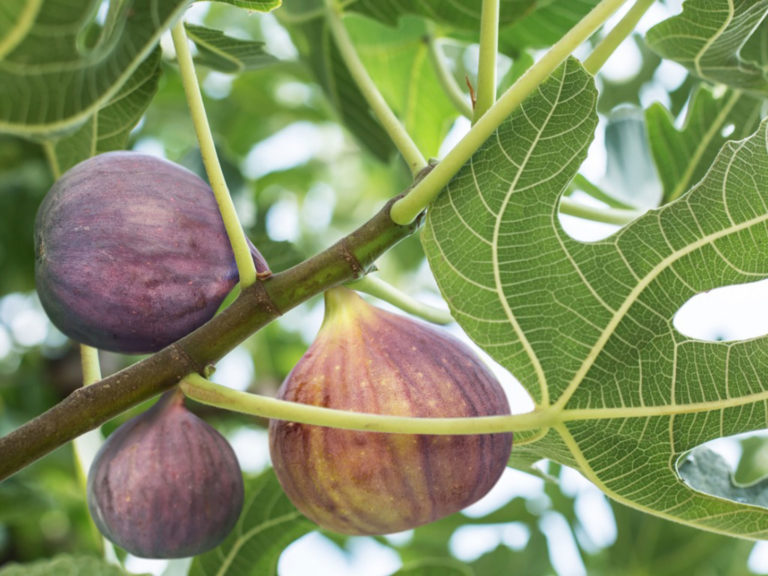
When Ginger and I first moved to New England, I wanted to plant a fig tree, mostly because we had one in our yard in North Carolina and I love figs. I talked to gardeners who either said it a fig tree couldn’t survive the winter or gave me a detailed list of the things I would have to do to help it survive. We had friends in Guilford who lived down by the water and they had one, but the problem was the summer here is so short that the figs never had a chance to ripen. Nevertheless, I planted a fig tree our first spring here and did some of the things people told me to do to help it survive the winter, but it died.

One day, I will, too. And so will all of you. Like Mavis Staples sings, “Death is slow, but death is sure. Allelu, allelu.

Aren’t you glad you came to church today?

What can I say? How about: since life is short, let’s use some of the time we have left to look a little more at the parable. One of the ways to look at a story like this is to imagine ourselves as each of the characters in the story.

Let’s start with the fig tree. It was alive. It was growing. But it wasn’t producing figs. It wasn’t that old of a tree, so perhaps it was still getting settled in. Maybe it had dealt with some sort of disease. My fig tree in North Carolina grew big and had lots of figs and for five summers the squirrels came the night before I was going to pick them and took all the fruit off the branches.

In the parable, the landowner was frustrated that the tree was not bearing fruit. He had expectations and things didn’t turn out like he planned, so he told the gardener to chop the tree down. His perspective is not unwarranted. Sometimes we need to let things die; we need to move on–to clear the ground and plant something else. It is healthy to remember that nothing lasts forever–not even us. We are all going to die. The man had waited three years for the tree to bear figs and it had not. He was ready to dig it up and plant something else.

The gardener said, “Give it one more year.” He said he would tend to the tree–fertilize it, work the soil, take care of it. “Let’s see what happens.” The way the parable unfolds, it doesn’t appear that the gardener is new, so he would have been a part of planting the tree and would have been the one caring for it. While the owner was ready to do away with it, the gardener still had hope.

Jesus ends the story without a resolution. We don’t know what happened a year later. Perhaps the tree was laden with figs. Maybe it died like mine did. We aren’t told if the landowner’s heart was softer a year later, or if he had the day marked on his calendar to show up with his saw. The gardener didn’t offer a cause-and-effect solution or make any promisers of figs. All he knew was the only way the tree had a chance was for someone to care for it. We don’t know what happened. We aren’t told how to feel about the characters in the story or what to do as a result of hearing about them, only to repent, maybe to replant.

Where then, can we find ourselves in the parable?

Maybe you feel like the tree. You feel rooted and you’re doing the best you can, but you are not bearing the fruit you feel expected to bear. You keep doing what you are doing, you keep working to do what you think is right, and life isn’t turning out like you thought.

Maybe you feel like the landowner. You’ve had enough of things not going like you expected, so you’re cutting your losses. Time to shed the things and the people who have let you down. Time to dig things up and plant something else. Life is not working the way it is. It’s time to make drastic changes.

Or maybe you feel like the gardener. Life isn’t what you hoped, but you don’t want to give up. If you keep trying and helping and taking care of those around you, there’s always a chance things will start to grow.

The reality is we are all the characters in the parable, depending on the day or the situation–sort of like the Mark Knofler song that says,

sometimes you’re the windshield
sometimes you’re the bug
sometimes it all comes together
sometimes you’re just a fool in love
sometimes you’re the Louisville slugger
sometimes you’re the ball
sometimes it all comes together
sometimes you’re gonna lose it all

Yup. Someday we’re going to lose it all. The fact that life is short is not anyone’s fault. In fact, the reality that life is temporary is what infuses it with meaning. Rather than look for someone to blame (including ourselves) let us repent—turn in a new direction, change course, trust God. We are not defined or trapped by our circumstances. By the grace of God, life is full of surprises. Grow. Replant. Nurture and hope.

Because anything can happen. Amen.

Peace,
Milton

lenten journal: opposition

opposition

“If war has an opposite, gardens might sometimes be it . . .”
–Rebecca Solnit, Orwell’s Roses

I used to have a poster that said
“peace, like war, is waged”
and it made sense then
but now I don’t want to be a
part of anything like war

so when solnit says gardens
are sometimes the opposite
of war I want to plant but
is it enough to say, “I see your
war and I’ll raise a tomato”

our ground is too cold for
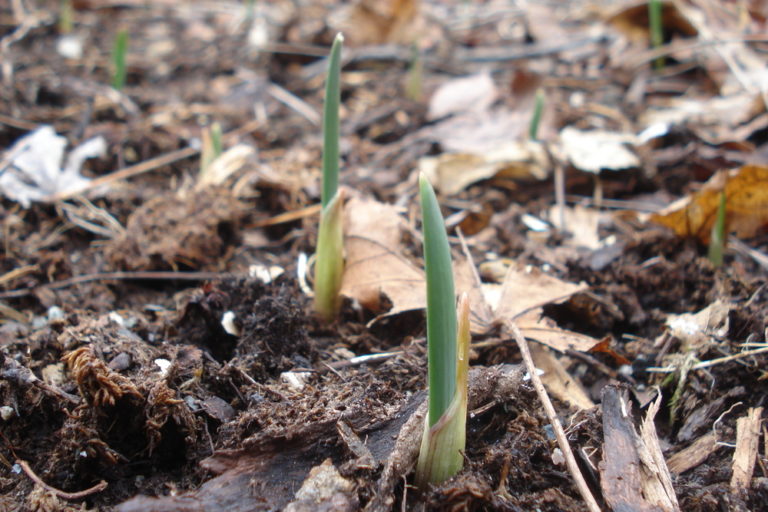
seedlings but the garlic
we planted last november
has begun to peek through
the layers of dead leaves

one variety is a red garlic
with roots that run to lands
not far from the fighting
a taste of together in the
middle of all that is broken

what the garden knows
that war does not believe
is that we are all connected
it matters to pray and plant
even if I am far away from

those who are huddled
in basements or hoping to
be transplanted to safety
I don’t know how it matters
but I want to trust the flowers

a garden will not stop a war
that’s not what opposites do
they paint a different picture
a hope that grows and feeds
midst the shrapnel in the soil

Peace,
Milton

lenten journal: morning glories

Barely a week into my Lenten Journal and I am already missing days.

One of the reasons is good. A longtime friend came to town for a few days and I spent the evenings talking with him instead of writing. But he’s been gone a couple of days and my depression took over responsibility for my absence. These are heavy days for a number of reasons, work in particular, and I am doing what I can.

I am grateful for my interim pastorate in Westbrook for several reasons, but today I am grateful because it gets me back to writing since I have to have a sermon for tomorrow. None of the lectionary passages inspired me so I chose a passage from Luke between last week and next week that is not included in the lectionary cycle: the parables of the mustard seed and the yeast (Luke 13:18-21).

It ended up being a helpful journey for me.

_____________________________

One of the things I love to do is dig around in our vegetable garden. When I say “our,” I’m talking about the plot behind our house, which is adjacent to the church parking lot, where a group from First Church Guilford dig and plant and harvest in our communal garden, which is available for anyone who either wants to work or needs some of what we are growing. Last summer we shared close to three hundred pounds of vegetables with folks fr/om our community and local food banks. And we ate well ourselves. We also grow flowers in the middle of the vegetables not only because they are pretty but also because they are necessary to attract the pollinators that help keep the garden healthy because the garden is a lot like our lives: it is never about one plant; the health of everything depends on everything else. The garden is an incredible web of relationships–just like life.

Tom has been my gardening buddy for the last five summers. My standard line is I put things in the ground and hope for the best, but Tom actually knows what we are doing. I’ve learned a great deal from him over the years. One of the things I’ve learned is that creative is better than perfect. We have beds marked out and we think about where and what we plant from season to season, but it’s not pristine. If a volunteer tomato plant comes up in the middle of the green beans, we just stake it and let it grow. Three or four years ago, he carried around a little container of morning glory seeds and planted them here and there. Each summer since, more and more of them have shown up without us having to plant anything new. They are everywhere.

I thought about those morning glories as I pondered our passage for today.

Right before Jesus told these two parables, people were questioning both his method and his motives. He wasn’t playing by the rules. He didn’t pay attention to the things that good holy people should be doing. To return to my gardening example, they seemed more concerned that the beds were clean and weed free than they were about what was growing in them. Finally, Jesus said, when it comes to the way God works in the world, think of a mustard seed. It’s small, but it grows into something big that gives birds a place to land. Or think about yeast. It only takes a little to leaven “three measures” of flour. (By our measurements today, that would be over four hundred cups of flour. I’m not sure what the woman was baking.)

In both examples, something small has huge implications.

I can’t tell you how many sermons and commentaries on this passage that stayed right there: one small act of kindness (or one seemingly small insult) can make a huge difference. And that’s an important word to live by, but Jesus is never that straightforward in his parables, and he didn’t tell these two stories in response to someone saying the details didn’t matter. In fact, he was responding to people who were incredibly picky about the details. They didn’t think he should have healed a little girl because it was the sabbath and healing counted as working.

Which brings me back to the morning glories in our garden.

The mustard plant Jesus was talking about was as invasive as the morning glories. It didn’t stay in nice neat rows. It blew with the wind. It traveled with the birds who perched on it when it was grown. It persisted in the soil and showed up wherever it wanted to. Though it had some medicinal uses, it was not an essential plant to the people of Jesus’ time. As much as I love seeing the morning glories, I will confess that after three or four summers of their being in the garden they come up in lots of places where we don’t want them to be, and no matter how much we pull them up, they just keep coming.

Jesus’ use of yeast as an example of how the realm of God spreads in the world is the same kind of story. The woman in the story wasn’t tearing open a little package like we get at the grocery store. She had a little mess of fermentation that she added to the flour. The difference in this story is she meant to put the yeast in the flour, whereas no one was planting mustard.

But in the Hebrew scripture, yeast is a symbol of sin. That’s why at Passover Jewish people remove it from their houses and eat unleavened bread. Perhaps Jesus imagined the yeast affecting such a large amount of flour not because the woman ran a bakery or something, but because, once again, he was saying that the Spirit of God runs over, spills out, goes all over the place.

My first memory of the power of yeast happened when I was a boy. As I have told you, I grew up in Africa. My mother decided she was going to make hamburgers, but they didn’t sell hamburger buns in the grocery store in Lusaka, Zambia. So she decided she would make them. She found a recipe in one of her cookbooks and made the dough, but the detail she missed was how much the dough would rise. She made each bun the size she wanted them to be when they were finished cooking. Instead, she ended up with four really big hamburger buns–big enough that she was able to cut one of them into quarters to make the burgers for her, my dad, my brother, and me. What she thought would make four buns fed us for days, which was not something she was expecting.

But then, we are getting a good bit of practice living with the unexpected.

After two years of the pandemic and some hint that we may be coming out from under the worst of it, one of the unexpected things is that we have a lot of reasons to be despondent about the future of the church right now. And when I say we I am speaking about a much larger group than the folks in this room or the members of this congregation. As we look at the days ahead, congregations across this country are unsure of what is going to happen. Many are wondering if they will survive for much longer or wondering if they will recognize themselves in a year or two.

The difficult reality is we don’t know the answers to those questions.

What the parables offer us is hope—an uncomfortable hope, but still hope—and that is that God’s presence in the world will keep showing up like yeast and mustard and morning glories. That presence may not be in the places where we have always found it, and God may not show up in ways that are comfortable. It may mean some things that we value and love will have to run their course for us to see where God is leading us. That’s another way of saying death has to come before resurrection. Sometimes God’s presence will feel nourishing like fresh-baked bread, and sometimes it will feel challenging, like uninvited morning glories, but what these parables say is that the realm of God is coming up all over the place. And Jesus said it as though it was good news and hard news all at the same time.

After he told these parables, one of the disciples asked him how many people would be saved and Jesus told another parable about the wide road and the narrow gate and how few people would choose the narrow gate, as if to say that even though they were drawing big crowds only a few folks would be the ones to catch on to the way God was at work in the world. His analogy makes me think of Elizabeth Barrett Browning’s words:

Earth’s crammed with heaven, and every common bush afire with God. But only [those] who [see take] off [their] shoes; The rest sit round it and pluck blackberries.

God is at work in wonderful, imaginative, and subversive ways. We must choose if we will perceive God’s presence as invasive or invitational. We have to choose if we will be those who disrupt our world like mustard plants and yeast, whether we will be those willing to let the Spirit of God to catch us by surprise.

Maybe this is a better way to say it: let us choose to be morning glories. Amen.

Peace,
Milton

lenten journal: and now, the temptations

As I say in the opening paragraph of my sermon for the first Sunday in Lent, to preach about the temptations made me want to listen to the Temptations.

so, round and around and around we go
where the world’s headed, nobody knows
oh, great googa-looga, can’t you hear me talking to you
just a ball of confusion
oh yeah, that’s what the world is today

I’m not sure I cleared up much of the confusion, but here’s the sermon.

_______________________

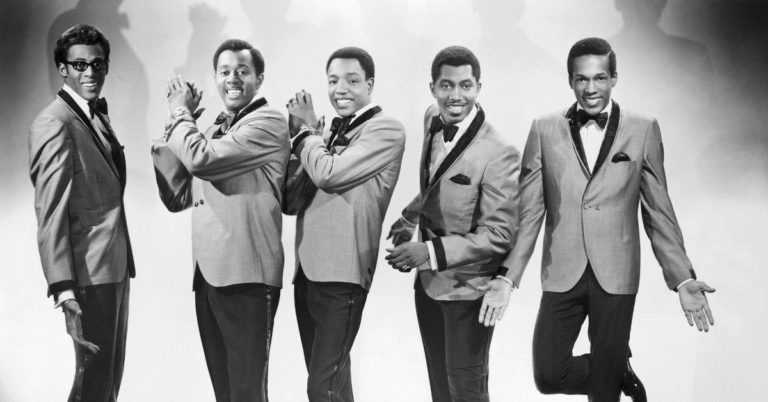
One of the great things about working on a sermon about the temptations of Jesus is that just about any time I sat down to read or think about it, I had a sudden urge to listen to Motown music. The Temptations have played in my head all week: “My Girl,” “Ain’t Too Proud to Beg,” “Ball of Confusion,” and “Papa Was a Rolling Stone.” I had an image of Jesus in the wilderness with backup singers.

It’s not how it actually went down in the desert, but it was a fun trip for me.

Luke says, “Jesus, full of the Holy Spirit, returned from the Jordan (from his baptism) and was led by the Spirit in the wilderness, where for forty days he was tempted by the devil.”

It’s an odd sequence of events: the Spirit led him into the desert to be tempted by the devil. The word “tempted” can also be translated as “put to the test” or “put through a trial.” That helps me because “tempted” sends my mind thinking about how much I think about getting an ice cream cone whenever I shop at Bishop’s Orchards, or how I can hear the Salt and Vinegar potato chips calling me when I’m in the supermarket.

Jesus has more at stake in this text than blowing his calories for the day.

We have talked several times about how often Jesus seems to be trying to get away from the crowds to pray. Perhaps that desire came from these days in the desert. On the heels of his baptism, he went off by himself to be with God and, in the process, he had to come to terms with himself.

The genius of the temptations is not that they offered Jesus a whole different life, or even a chance to run away from responsibility. What they offered was a different version of himself–a lesser version. Instead of one who would use his miracles to heal and to teach, he could use them for personal gain. Instead of speaking truth to power, he could ally with those in charge to gain power for himself. Instead of facing suffering, he could use his privilege to avoid it and be on easy street.

And the temptations were not a one-time occurrence. It was not as though Jesus never had to stare down these options again once he returned to town. We might stay the temptations stayed with him for the whole tour. The tests he faced in the wilderness were examples of what he faced almost every day: to use who he was and what he could do as a way to make his life more comfortable and powerful.

And, though we may not be able to make bread out of rocks, they are temptations we face as well because they are invitations to live as though life doesn’t cost us anything.

One of the shows I like to watch is Top Chef. It is a reality shows that brings young chefs from all over the country and they go through various cooking challenges to see who can come out on top. At the end of every episode, one chef is eliminated until only one is left standing. Each episode starts with a “Quickfire Challenge” that focuses on a particular skill or ingredient. The winner of that challenge gets immunity in the following “Elimination Challenge,” which usually involves preparing a larger dish.

It’s a big deal to have immunity, I’m sure. But here’s what I have noticed: the chef who has immunity rarely does well in the Elimination Challenge. Either they just kind of coast along or they decide to risk so much that they lose their sense of who they are. The chefs that shine are those who have something at stake.

We are truer to God and to ourselves when we live as though something is at stake.

Because something is at stake. The temptation to think otherwise is a lie.

After he came out of the wilderness, Jesus went to Nazareth, his hometown—another place where people had ideas about who he should be—and read these verses from Isaiah:

The Spirit of the Lord is upon me,
because he has anointed me
to bring good news to the poor.
God has sent me to proclaim release to the captives
and recovery of sight to the blind,
to let the oppressed go free,
to proclaim the year of the Lord’s favor.

By the time the service was over, they ran him out of town because he was not who they wanted him to be. Jesus went back to Galilee and, as the crowds gathered again and again, kept trying to get off by himself to pray.

He had to keep listening to the Spirit to remember who he was and what he was called to do.

I was talking with a friend this week because we are both facing challenges at work that are leaving us with some tough decisions. He quoted wisdom from another friend who said, “We either choose our losses or we lose our choices,” which resonates with Jesus’ words that we have to lose our lives to find them. When we are willing to risk beyond what feels safe or comfortable, we see things in ourselves and in our world that we did not see before. We create possibilities. One of the ways we plot the resurrection is by letting things die so something new can come to life.

That sounds simple and it’s not. To choose our losses is messy and painful and hopeful and scary. But it is also true and beautiful and hard. The forty days of Lent are symbolic of Jesus’ forty days in the wilderness. May these days define us as much as those days defined him. Amen.

Peace,
Milton

lenten journal: I’m glad we’re friends

When I woke up this morning, I had notification of a text message a dear friend had sent while I was sleeping. She had written about my blog post from Ash Wednesday and she closed her note with these words:

Your words helped me. You have a wonderful heart and brain, even though I know they give you trouble sometimes. I’m glad we’re friends.

I wrote back to say how much her words meant and explained,

I have been reading about the ways in which both Isaac Newton and Albert Eistein’s revelations were fueled by their pathologies, if not mental illnesses. had Newton not been so wracked with anxiety, he might not have seen what he saw. What one biographer called Einstein’s “schizoid personality” fueled his sense of wonder. I don’t claim to live in their neighborhood, but it helps me look for the eyes my depression offers along with the weight of it all.

The reason I know about Newton and Einsten is I am in the middle of Angela Tilby’s book Soul: God, Self, and the New Cosmology.

As she lays out an historical overview of how our scientific understandings have developed, she points out that Isaac Newton was interested in history more than science and was fascinated by how he could use the Bible to make predictions. “To make sense of this,” she says, “we have to come to terms with the fact that the primary force of Newton’s life was an attempt, though science and religion, to relieve immense personal anxiety.” She later says,

Newton had ample cause to resent his mother who had abandoned him and his stepfather who had failed to replace the real father he had never known. [Newton’s birth father died when he was a boy.] If creativity has any relationship with childhood loss, then there were plenty of looses for the creative instinct to work on. Science, for Newton, was a spiritual exercise, a way of contemplation and meditation. (56)

And what we remember him for is his uncovering the binding force of the universe.

Albert Einstein’s biographer, Anthony Storr says,

Einstein really did provide a new model of the universe; and, in order to create this, he had to detach himself from the conventional point of view to an extent which is only possible for one who, early in his life, made “leaving out everything subjective” his supreme aim. Such detachment can only be achieved by a person with a predominately schizoid psycho-pathology.

Neither description is complete. Both men were more than the sum of their pathologies or the sum of their successes, or even the mix of both. And I don’t want to romanticize mental illness as happens sometimes when we make a connection between depression and creativity, for instance. Part of me wants to say our wounds offer us the chance to see more compassionately, and perhaps more creatively, but I think that implies some self-reflection and I have no idea how much either scientist was conscious of what was going on inside them.

Then again, I’m not always sure I understand what is going on inside of me. When I read their stories, what hits me is that neither one of them felt like they fit in. That realization takes me from their science to my days in the classroom.

In one year of tenth grade English, I had two students, Joe and Mark, who had grown up together. They sat together in class. Neither one was particularly popular. Joe was like a Labrador puppy of a boy. He came bouncing into class and almost literally bouncing off the walls. About a week into the school year, he pounced into the classroom and asked if he could stand on his head. I figured letting him get the energy out was better than trying to bottle it up, so I told him he could do it until the tardy bell rang, which he did. And then he stayed at his desk the rest of the class. Other days he would come in and ask, “Mr. B-C, can I tell a joke to the class?”

“Tell the joke in your head first and see if you really want me to hear it,” I would reply. I would watch as he told it to himself. Somedays he smiled and said, “Yeah–I can tell this one.” Other days, he smiled and said, “Probably shouldn’t.”

Mark lived with a deep depression that could turn sinister and attacking. Most days, he fumed quietly, but on others I might ask for his homework and he would swear at me. Joe, who sat next to him, would say, “That’s okay, Mr. B-C, I’ll help him.”

That was the only year either of them were in one of my classes. One afternoon during their senior year, I met them in the hall. They were both getting close to graduation. Joe had grown into himself a bit more, and Mark had as well. When I asked how he was doing, he told me therapy and meds had made a difference.

I pointed to Phil and said, “I think your friend here saved your life. He took good care of you.”

Mark nodded. “Yes,” he said. “I know.”

Joe grinned at his friend. I wanted to stand on my head.

That memory brought me full circle to the text from my friend this morning. In a world that is more than we can comprehend, sometimes even more than we can take, I’m grateful for these words:

I’m glad we’re friends.

Peace,
Milton