At the risk of sounding like a lackey for the Durham Chamber of Commerce, I want to talk about our great neighborhood. Our street is actually on the border between three neighborhoods – Old West Durham (where we actually reside), Watts-Hillandale, and Walltown. Our local weekly newspaper, The Independent, publishes a list of The Best of the Triangle. Here is everything that made the list that is within walking distance (I’m talking three or four blocks here) of our house.
Dogstar Tattoo (finalist) Best tattoo studio Best place to get pierced
Whole Foods Best retail cheese selection Best green business Best place to people watch (finalist) Best outdoor dining in Durham County Best business lunch Best salad Best comfort food (finalist) Best brunch/breakfast (finalist) Best bagel (finalist)
Dain’s Place — I can vouch for all of these Best burger in Durham County Best neighborhood bar in Durham County (finalist) Best place to watch televised ACC in Durham County (finalist) Best bar food in Durham County (finalist)
From burgers to bicycles, tattoos to tiramisu, with all kinds of ethnic food, coffee shops, an old school pool hall, and a great pub with a great burger, all I can say is I love where I live.
One of the food blogs I read regularly is Smitten Kitchen. I don’t know who writes it, but it is among the most beautiful and accessible of the blogs that take food seriously. In one of her recent posts, she asked people to talk about why they were afraid to cook. Her list set me to thinking about fear in general and, for some reason, my thoughts fell into rhyme.
Fear Factor
It’s my favorite room, but that’s not true for some; when it comes to the kitchen, those some come undone, who’re afraid to sauté or to simmer or sear, who’d opt for some take out and grab a cold beer.
We’re all scared of something – it doesn’t have to be cooking that makes our palms sweat or sets us to looking with eyes of suspicion and stares of disdain. No, it’s much more than food that sets our fears aflame.
The things that are scary go past breads and béarnaise, beyond cupcakes and corn (you know some call it maize), to the questions and quandaries that fester and foment in both fears for a lifetime and fears of the moment.
Some fears are big, like tornadoes or earthquakes; some fears are small—think of hangnails and toothaches. A snake or a spider can send some running to hide, while a few are afraid of things battered and fried.
Some are scared of the dark, or of turbulent weather And others that N’Sync might just get back together Some are frightened of hula hoops, hot wings, and horses, Others scared of their marriages, some of divorces,
Some are scared of Al-Qaeda, some of Al Roker, Or that they might be doused with their kid’s Super Soaker; Some are scared of the new, some afraid of the old, Others fear that their neighborhoods should be more patrolled.
Some are scared they will die, some are scared they will live; Some are frightened the blood drive will ask them to give. Just the thought of a needle can give others a chill, and then there’s the terror of the credit card bill.
The climate is changing, gas prices are rising – perhaps, that we’re fearful is not so surprising: nuclear warheads can make us afraid — that Celine Dion songs are allowed to be played;
Cat-burglars, kidnappings, foreign attacks, cockroaches, coal mines, that mole on your back; Outsourcing, outside, and some outboard motors, slick politicians and party-line voters;
Insurgents, incumbents, wifi, and water, on particular days – your own sons and daughters; foreclosures and Fox news, dark streets at night, lumberjacks, lawyers, and airplane flights;
Kleenex and Clorox, Keanu Reeves movies, people who still say things like “far out” and “groovy,” botox and beetles, eviction, ebola, satellites, cell phones, and sugar-free cola;
Loneliness, failure, new places, old wounds, arthritis, amnesia, rejection, blue moons, chemicals, cholera, downed power lines, clear cutting, kudzu, signs of the times;
TV evangelists, late night news anchors, hankers and flankers and cankers and bankers, being buried alive or left somewhere for dead, hybrids and hotheads and the not-so-well-read;
I’m fearful of stopping lest I leave something out; I’ve yet to mention Google or gout, or governments – see, there’s so much to fear: the Yankees, umbrellas, poodles, cashmere.
Whatever our fears, we all have our reasons for running and hiding, for living in seasons of conflict and doubt, of turmoil and stress because of the things that make life a mess.
The fears are quite real, and so are our choices to push through the scared and find other voices To speak to our fears without acquiescing to all that is frightening, but instead keep ‘em guessing.
Whether frightened of food, or afraid of the dark, of undersea monsters or dogs that don’t bark, one simple reminder can keep us prepared: before you can be brave, you’ve got to be scared.
Once a month a few of us gather at church for a potluck dinner and discussion. Sometimes we have specific topics; sometimes we don’t. Tonight we were looking at Joy Jordan-Lake’s book, Why Jesus Makes Me Nervous; Ten Alarming Words of Faith. I was fed by the meal, the book, and the discussion.
Joy is a good writer who also happens to be a dear friend. Three of my godchildren live at her house. The book is full of great stories that help to move the discussion of what it means to be a follower of Christ beyond the academic and doctrinal into the messy relational reality of our lives. Though she didn’t tell any stories about me (Ginger makes a bold appearance in the chapter on Holiness), I think Joy has written a hopeful and challenging book.
I had to smile this week when my package of books came from theooze.com, because one of them – titled, if you can believe it, Oh Shit! It’s Jesus!: The Relevance of Jesus Without All the Religious Crap – only wishes it could be Joy’s book. (The review book is nowhere as edgy as it was trying to be with its title, which does little more, I think, than shock. I have no idea what marketing genius thought that cover would get people to buy it.) Though I think the review book is destined for the remainder bin from Day One, I can only hope Joy’s book gets the reading it deserves, even though the publisher has done little or nothing to promote it.
She works down her top ten list – resurrection, community, abundance, wisdom, holiness, peace, blessedness, worship, forgiveness, hope – with candor and compassion and left all of us sitting around the table talking about how her stories had helped us better articulate our own. Here. she writes about her disappointment in trying to open a food and clothing pantry, which appeared at the time to be futile:
Aware that we had no funding to speak of, and that our opening day had been reason enough to close the world’s finest food pantry for homeless people altogether, I walked home in despair.
I was not meditating on the word worship. Or how it derives from worthship, the th being dropped in the fourteenth century. Or how it’s because God is worthy of our adoration that we worship, and because those made in the image of God are worthy of our respect that we serve. And the –ship of the worth/worship: the understanding that this is something we’re on board with together. This same ideal caused the architects of medieval cathedrals to build sanctuaries in the long shape of a ship – even naming these main sections “naves” from the Latin, navis, for ship: all of us journeying together, with God, to God.
All this I’d managed to forget in one single morning – just me, journeying alone. Sulking. (96)
Somewhere in our discussion, our associate pastor asked, “What word about Jesus makes you nervous?”
Though I didn’t answer first, I knew right away what it was: small.
My world started big when I was little. I grew up in Africa, the son of missionaries. I’ve traveled on three continents and seen amazing things. This summer, my brother and sister-in-law have been in Guatemala and Greece, one of my nephews has been in India, and my dad runs a foundation sending students all over the world on mission. I walk a block to work every morning here in Durham and come home to Ginger. We’re going to Texas next month to lead a retreat, but other than that, I’ll be here in my neighborhood.
It’s hard to take and I’m happy. Both things are true.
One of my recurring thoughts as I was reading The Tangible Kingdom was, “I’m not an evangelist.” One of the things both Ginger and learned in four years of trying to plant a church in Boston was evangelism is not our gift. Sharing the love and grace of God matters to me, but I wear away at you the way the hands of children wear smooth the tail of the library lion: it takes time. This week, I saw a message on the neighborhood listserv from someone new to the neighborhood asking to borrow a lawnmower. I lent them ours and invited them to dinner Sunday night.
Hospitality is my thing.
And, in terms of scale not importance, hospitality works best as a smal thing. As much as I’m tempted to be drawn into the quest for The Grand Gesture of my life, that is not the life to which I’ve been called. I find myself in this line: “I was hungry and you fed me.”
That’s me. My blogging friend Simon, who lives in Australia, has a book whose title I love: God Next Door: Spirituality and Mission in the Neighbourhood. I haven’t read the book because it’s not available in America. Too bad. It’s just been nominated for Christian Book of the Year down under. I would love to go see Simon in Australia. I want to get to Morocco and Prague. I want to go back to Istanbul and Paris. I wish I could do something about what is happening in Darfur or the Congo or Zimbabwe. I look forward to hearing my family’s stories of the things they saw and did on their mission trips and, these days, I’m finding God here in the ‘hood.
My world is small. My God is not. It’s hard to fit those two sentences together sometimes, in similar fashion to Joy’s walking home alone from the food pantry in her then neighborhood in Cambridge, Mass., particularly when I look at my life in comparison to friends who are getting to do things – big things – I wish I could do. And they are doing great things. They are not, however, making muffins, sharing lawnmowers, or having my neighbors over for dinner.
This is the life to which I have been called.
Joy, again:
To worship is to prepare for the uncomfortable. For God’s showing up, often not when and how we expect.
To dig out, make room for change and birth and re-birth.
Worship with cymbals and the clatter of clothes-closet racks. In stained-glass cathedrals and dark basements.
Everything we have and we are on the altar, laid down with awe for a God whose ways are not our ways but whose face is all around us.
With gratitude for a God whose love flows like the deep end of the ocean, and whose power is bound to catch us up short, knock us clear down to our knees.
Though it was almost thirty years ago that I was on a mission trip in the interior of the Yucatan peninsula, in a little village called Hoctun, I can still see the man vividly.
Our task was to dig wells and put in water pumps to help the subsistence farmers do more than, well, subsist. The ground was covered in rocks and the vegetation was almost as sparse as the rainfall. When we got to our first site, the man was standing in his small field, a cloth bag draped over his shoulder and a pointed stick about five feet long in one hand. He would wedge the stick in between the rocks and twist it to make a small space, reach the other hand into the bag and drop two or three kernels of corn in the hole, and then cover them by scraping the dirt back over with his foot.
“What’s he doing?” I asked. “Planting corn,” replied the missionary who was our team leader. “That won’t work,” I said.
The man came to mind again this morning as soon as the gospel reading began: “A farmer went out to sow his seed.” Ginger began her sermon by describing how the Palestinian farmer of that time would have had the bag over his shoulder and would have broadcast the seed by the handful over the ground around him, letting the seed fall wherever it might.
(A short break so you can watch the best telling of this parable I know – and the song is killer, too.)
It makes for great theater, but my feeling about that farmer is the same I felt back in Mexico: it won’t work, which makes the fact that it was Jesus’ metaphor for how the Community of God (I’m still chasing a better word for kingdom) grows downright perplexing, particularly when I take myself back to what we went to do for those three weeks in the Yucatan.
We went to teach them to farm differently. We brought diggers (by that I mean people to dig), tools, water pumps, and all kinds of things to offer them the chance to not have to live on a stick and prayer. Underneath the rocks was fertile soil. The water would mean they could grow vegetables they had grown before. They could also keep chickens and rabbits. Part of our message was, “If you want your farming to be productive, you’ve got to use more efficient technology and practices.”
Don’t get me wrong. They needed the help. I think we did good work during those three weeks. I think we helped to save some lives. But I’m thinking in metaphor here. Jesus uses the image of a subsistence farmer to represent how the Community of God takes root and grows, or doesn’t in us. I find deep comfort, somehow, in knowing our God whose name is Love, is full of grace and hope and even power, and is marvelously inefficient. If the world is a farm, then God doesn’t appear to think a tractor’s sexy. The crop, instead, gets planted one randomly dropped seed as a time.
The whole of Matthew 13 is filled with parables that are somewhat counter intuitive by most current standards. Jesus talks about a farmer doesn’t pull any weeds and just harvests everything, then of the Community of God being like mustard seeds and yeast (both rather mysterious in their workings), then on to treasure hunters on land and sea willing to give up everything for their quest, and then a fishing version of the inclusive farmer, with the fishermen hauling everything into the nets. We read the stories and then we, like the disciples come looking for explanations. Much of the time, the explanations I’ve heard move to the parts of the parables that deal with who gets left out: the soils that don’t measure up, the tares to be bundled and burned, the fish to be tossed out.
I’m not sure the culling comes quite so easily.
The folks at theooze.com sent me some books to read and write about (who am I to turn down free books?). I was a couple of chapters into The Tangible Kingdom: Creating Incarnational Community by Hugh Halter and Matt Smay when I heard Ginger’s sermon on the Sower, and I got a little past halfway sitting at Panera yesterday afternoon. The authors live up in the Pacific Northwest and are working out a new model for Christian community that has more incarnation and less institution than the church. Rather than sitting in sanctuaries waiting for people to join them, they are out in the pubs with the public, working hard to incarnate Christ’s love to those who have been burned by religion or who know nothing of faith. Though much of their critique is aimed at the evangelical church and uses a vocabulary with which I’ve lost much of my familiarity, I appreciate their passion and their willingness to work out their faith in public. The book is giving me much on which to ruminate and I think it’s worth the read.
As far as where some of their words took me, I got hung up on one sentence. In the midst of their great stuff on how ministers and other Christians needed to get out of the building to share Christ’s love and how they needed to build relationship rather than connect to convert, they wrote of the people with whom they found resonance:
They think the homosexuals’ struggle for sexual clarity isn’t that much different in God’s sight than the heterosexuals’ struggle against pornography.
Man, there’s a lot to unpack in that sentence.
First – and to the point: there’s a big difference between homosexuality and pornography. Being gay or lesbian doesn’t destroy relationships and individuals; pornography does.
Second, what the hell is “sexual clarity”? My gay and lesbian friends are struggling because they aren’t accepted, not because they’re confused.
Third, when we don’t welcome everyone with the love of Christ, we’re missing what it means to be a part of the Community of God. There’s a lot of good gay and lesbian soil out there folks where God’s love is growing strong, in spite of the rejection and ridicule that comes from many of those who call themselves Christian.
One of the themes in the parables is God’s willingness to scatter love everywhere and to take in every growing thing. Yes, the parables talk about sorting things out at the end. I struggle with those parts of the stories because I think it’s completely consistent with the image of God we’re given through Jesus for God to get to the sorting out and just yell, “All ye, all ye, ox in free.” (At least I know I’d be foolish to count on God to agree with me on who should be asked to leave.)
I’m not trying to rail on the guys who wrote the book. I highlighted the sentence because it hurt. Two thousand years on and we still don’t know how to love one another very well. What I know about love is it is fundamentally who God is; it looks the same when it is shared between two people, whether they are gay or straight; and it feels the same to me as I give love and receive love from both my gay and straight friends. When we speak of Jesus, we often say he was “fully human.” I think he loved people in a way that allowed them to be fully human as well. If our call is to create incarnational community, then we are called to love each other into wholeness, which mostly means I love you into becoming the person you feel called to be, not who I imagine you could become.
When it comes time for the sorting, if God says to me I missed the point because I let too many people in, I will smile and take the hit. What would break my heart would be if God said, “I had room for everyone. Why did you keep closing the door?”
When I leave church on Sunday, The Splendid Table is playing on our local NPR station. The show is sometimes a little too don’t-we-all-love-our-villas-in-Tuscany for me to take, but most of the time they offer interesting conversations and recipes. It’s great for a Sunday afternoon.
Today the host, Lynne Rossetto Kasper, gave a brief excursus on “how to eat like a gourmet for less money” that I found interesting. It seemed worth passing along.
Look for the sell by date and if it’s today barter; ask for 50 % off – they have to sell it. Then either use it that day or freeze it.
If you don’t cook, learn to do three simple easy things: make a simple salad with a homemade dressing; learn to boil up some grains; or learn to grill vegetables. If you can do those three things you can put together a meal that is low on the food chain, super cheap, and super healthy.
Every steak or chop starts out as a roast; buy the roast and cut your own steaks or chops and you can save some money.
If you want ethnic ingredients, go to the neighborhoods where these cultures shop. You’ll save money and get a good lunch out of the deal.
Buy imported food and wines where the dollar still has some strength and real estate is still inexpensive like Chile or Argentina.
I know we don’t all want to eat like gourmets and I like the idea of thinking creatively about how good food and affordable food don’t have to be mutually exclusive. Again, not terribly profound, but worth passing along.
GIve me a couple of days and I’ll t ry to come up with some accompanying recipes.
Two things have spoken to me this week: music and muffins.
As I’ve mentioned before, part of my daily ritual at the restaurant is to make the English muffins that serve as the buns for our hamburgers and shrimp burgers. The recipe takes time, so as I’m walking in at eight each morning I start picking up bowls and whisks and measuring cups so I can get the dough going immediately. The recipe breaks into five periods of activity, with corresponding periods of waiting:
I mix warm water, yeast, and honey; then mix in four cups of flour and then two more; then I mix together the eggs, salt, and oil and add that to the flour mixture; then I mix in another cup and a half of flour.
Then I wait for about thirty minutes until it gets bubbly.
The second period of activity involves adding five more cups of flour and stirring for about three minutes (to activate the glutens).
Then I wait until the dough doubles – also about a half an hour.
Stage three involves kneading the dough, which includes probably adding another four to six cups of flour and working the dough for five or six minutes.
Then I wait until the dough doubles again, also about thirty minutes.
The next step is to roll and cut the muffins and put them on baking sheets.
Then I wait about fifteen minutes to let them rise again.
Finally, I toast the tops and bottoms of the muffins on the flat top (with a bit of butter) and put them in the oven for about eight minutes. If all goes well, the muffins are ready when the kitchen opens at eleven for lunch. Though the recipe is clear, each stage calls for choices. I have to decide when the dough looks and feels right; when I stop mixing or kneading has an effect on the final product. This week I have paid particular attention, trying to make the muffins better. Yesterday and today I achieved a muffonic convergence, as I like to call it: pretty damn perfect muffins.
“This is why I love this job,” I said to my cooking partner, Cort. “You get to feel like you’ve done something well and then move on to what you need to do next.”
Even though the art I create is incredibly temporary – I put the plate together and you eat it, all in the span of minutes – it is also incredibly gratifying because it is quantifiable: I know what a great plate of fish tacos ought to taste and look like (in that order) and, even though I make about twenty taco plates everyday at lunch, each one requires attention as its own unique creation.
I work in a kitchen, not on an assembly line.
As I’ve also mentioned before, much of our non-culinary conversation during the day swirls around music, either bouncing off the songs playing on the boom box, or rising up out of our past experiences. Somewhere in the course of the day, Billy Joel took his turn as our topic and about the time I was going to say that my brother, who is a musician, said way back in the early eighties that he thought Joel’s music would be enduring, Dave said, “You know the reason he keeps touring and trying so hard is he’s pissed he’s never gotten the recognition as one of the great guys of rock and roll.” (Which makes this clip interesting.)
I never told the story about my brother. I spent the rest of the shift thinking about Billy Joel feeling as though he has somehow come up short. I thought about his song, “Angry Young Man”:
I believe I’ve passed the age of consciousness and righteous rage I found that just surviving was a noble fight I once believed in causes too I had my pointless point of view And life went on no matter who was wrong or right
And there’s always a place for the angry young man With his fist in the air and his head in the sand And he’s never been able to learn from mistakes So he can’t understand why his heart always breaks And his honor is pure and his courage is well And he’s fair and he’s true and he’s boring as hell And he’ll go to the grave as an angry old man
OK, one more thing I’ve mentioned before in this blog: I live with my own sense of worthlessness, with not feeling as though I’m enough. One of the big reasons I’m no longer a high school teacher is I hated giving grades. The essential element of teaching, for me, was the relational connection I made in the classroom. I asked the kids to take risks, to be themselves, to trust me.
And then I gave them a grade: “Thanks for trying; you get a C.”
I couldn’t do it because of the way I internalized the grades I received along the way – and I do mean I received: they weren’t grading the paper; they were grading me. Cooking is different for me. I realize those for whom I cook may not like everything, but they aren’t grading me. The payoff, for me, is in the creation and presentation of the dishes (when I’m at work) and in the sharing of the meal as we sit together around the table when I’m at home.
The difference is as subtle and as profound as my typing grace when I meant to type grade in the previous paragraph. One letter changes everything.
Everything.
The grace is find in my job comes from being able to claim my competence, to to grow and learn, and to both flourish and fail with abandon. It not that failure is without consequence it’s that I’m doing what I love, so I can weather the storm. And so I heard Dave’s words about Billy Joel with sadness because he’s doing what he loves and lives with grades more than grace. In his biggest hit, Joel wrote:
Don’t go changing to try and please me You never let me down before . . . I took the good times, I’ll take the bad times I love you just the way you are
Billy, if you’re listening, you’ve given some of the best words and music to the soundtrack of our lives. Your songs are alive at our house in ways I can’t even begin to tell you. I hope you can get from grades to grace.
Where there’s a restaurant kitchen, there’s a radio that, for whatever reason, tends to end up on the “Classis Rock” station, if not one that plays “the Oldies.” Having graduated from high school and college in the Seventies, much of what passes for “classic” was the soundtrack of my adolescence (this was the number one song my senior year in high school) and, though some of it is worth repeating, I had not planned to ever again have to hear
because love grows where my rosemary goes and nobody knows like me
My current kitchen is filled with cooks who know and play music, so the old songs provide us with conversation starters, comic relief, trivia questions, and the chance to both critique and sing along. We’ve had a couple of good laughs listening to lyrics that, well, sound kind of creepy in today’s world:
I’m the friendly stranger in the black sedan won’t you hop inside my car
My favorite unexpected use of a word in a rock and roll song goes to Rick Springfield for “Jesse’s Girl”:
I feel so dirty when they start talking cute Want to tell her that I love her but the point is probably moot
I know it’s only rock and roll, but I like it.
One of my favorite things about our conversations is how we each have had to own up to some guilty pleasures. For all the superiority we can so easily muster, we’ve all had to come clean about the songs we love to hear, even when they aren’t necessarily cool to own up to. After all, pop music is about infecting our brains and hearts with melodies (sometimes cheesy) that won’t let go. I have to own up to this one and this one, at least. Oh – and this one. OK, one more.
One of the things that has struck me is how often I can sing along with the songs – even the ones I don’t like. Maybe it’s the power of radio and repetition, maybe there’s some deeper reason, but my mind is full of the words and music that have filled my days from then until now. I’m also struck with how hard it is to say I like these old songs in a room full of guys who need to make sure we all know we’re above that sort of thing. It’s easier to be a snob than it is to be one of the general public. I want to feel cool, not common.
The truth is while the Beatles were coming apart the Carpenters were only just beginning and I owned both records. I bought Joni Mitchell and Neil Diamond and stayed up late in the dorm room playing America songs with friends, even though we had no idea what it meant that “there ain’t no one for to give you no pain.” But in the hierarchy of hipness, it’s cooler to talk about Tommy, or to know the deep cuts on albums by the Kinks, or to be able to dive off and talk about the Plimsoles and the Pogues. I can keep up for awhile, but I’m just not that cool.
One of the dangers of life on the liberal end of the theological spectrum is falling prey to thinking that our end is where the cool, enlightened people are. That sentence carries a stronger air of superiority than I intend to convey, but I can’t come up with another way to say it. And it may feel the same way at the other end of the continuum. I don’t know because I don’t live there.
The guys in the kitchen aren’t trying to belittle anyone, in fact, our combined musical tastes run the gamut, yet there’s a certain level of musical acumen expected if you want to be taken seriously as a part of the conversation and that, ultimately becomes at least somewhat exclusive. When it comes to what I sing while I’m slicing onions, the ramifications of rock don’t really matter; they’re going to play the same ten songs again tomorrow. When it comes to life in the larger context, how easily I make it to sing along with me or how willing I am to join in with someone else becomes more critical. Harmony and humility, it seems, are essential partners.
I’ve ended up getting a little heavier than perhaps the story of our kitchen singing can hold. Somewhere during the day today, we moved from snarping on the songs to singing along. It just seemed like something worth noting and carrying home.
Our house sits on the border between two neighborhoods, Old West Durham and Watts-Hillandale. The latter has a Fourth of July parade that goes back about sixty years. We even made the news:
The line that stuck with me from the piece was the parade is “an unintentional tradition.” The couple that started it were looking for a way to keep their kids from getting bored during the summer and read an article in a parenting magazine that suggested a parade. Sixty some years ago, they were trying to do something fun with the kids and this year over eight hundred people showed up to march and watch and hang out and eat cupcakes. Though we were closed this week for vacation and general maintenance, our restaurant handed out almost seven hundred cupcakes (we made them at the catering shop) to help celebrate the day and the neighborhood. Here we are in action:
(The Chef-Owner of the restaurant is handing out the vanilla ones, her daughter is in the middle, and I’m in charge of the chocolate.)
We had Communion today, as we do the first Sunday of every month, which is, perhaps, my favorite part of worship. I did wonder as I ate and drank today if Jesus might have instigated an unintentional tradition as he served the bread and wine to those with whom he had shared most intimately. The question is valuable to me because the meal is all the more meaningful if it grew out of the power of the present tense — those disciples eating together to remember and passing on the memory — rather than as planned repetition: The First Annual Communion Celebration.
I just finished reading The Shack (which I will talk about more along the way). One of the things God says to Mack, the protagonist, at the end of the book is, “It’s not about rituals.” The comment caught me because I’ve often spoken of the value of ritual (“meaningful repetition”) over tradition (“meaningless repetition”). What comes to me in all of this is unless what we share in the present, whether cupcakes or Communion, is resonant and relational in the present, all the ritual and repetition in the world won’t breathe any life into it. Last year’s loaves are stale, any way you look at it.
I’m not much of a Fourth flag waver; handing out cupcakes to little kids and watching them dive into the icing was what made the day for me. I even saw some of them at the Farmers’ Market yesterday and somehow felt connected. What grabs me most about Communion is it is a table where all Christians have eaten, eat now, and will eat the meals to come. More than ritual, it is about connection. A place for everyone, and food, too.
Many years ago, my friend Ken Hugghins talked about reading the gospel accounts and, after reading Jesus saying, “I will not drink of this cup until I drink it with you in the kingdom of God,” thinking we should all raise our glasses and say, “Here’s to the day.” That phrase led my friend Billy and I to write a song with that title. It comes close to being one of my favorites of what I have written.
pieces of life laid on the table here is the blood poured out in love fill this cup raise it up here’s to the day my friend
time draws a line down innocent faces tears mark the dreams that never came home so you’ll say goodbye say goodnight here’s to the day remember
can you say it for the ones whose voices are silenced can you say it for the ones who’ve never been free can pray for peace ache for peace here’s to the day that’s coming God speed the day
gather in close now cling to each other sing to the night you don’t sing alone fill this cup raise it up here’s to the day remember
The intention of ritual that matters most is not in the ones at the beginning, but in those of us who keep handing down what we were given, as Paul says, “I will tell it to you as it was told to me . . . .” Would that we could eat and drink around the Table with the abandon and joy of those kids with icing from ear to ear.
When we moved to Durham, we didn’t buy a house right away, mostly because we still owned in the free-falling New England housing market that we had to sell. We rented a place for the first three months that, in hindsight, ended up letting us get to know our new hometown before we decided where we wanted to live. We spent many afternoons driving up and down streets, trying to get a sense of what was available, what connected to what, and what felt like it could be home. We ended up in the perfect place for us: an urban neighborhood within walking distance from almost everything with a variety of people, a house that didn’t require too much work, and room for the pooch to run in the back yard. I thought about our process last week when I read an article in The Economist called “The Big Sort” that talks about how many of us Americans – at least the ones with means – are segregating ourselves into like-minded communities:
Americans move house often, usually for practical reasons. Before choosing a new neighbourhood, they drive around it. They notice whether it has gun shops, evangelical churches and “W” bumper stickers, or yoga classes and organic fruit shops. Perhaps unconsciously, they are drawn to places where they expect to fit in.
Where you live is partly determined by where you can afford to live, of course. But the “Big Sort” does not seem to be driven by economic factors. Income is a poor predictor of party preference in America; cultural factors matter more. For Americans who move to a new city, the choice is often not between a posh neighbourhood and a run-down one, but between several different neighbourhoods that are economically similar but culturally distinct.
For example, someone who works in Washington, DC, but wants to live in a suburb can commute either from Maryland or northern Virginia. Both states have equally leafy streets and good schools. But Virginia has plenty of conservative neighbourhoods with megachurches and Bushites you’ve heard of living on your block. In the posh suburbs of Maryland, by contrast, Republicans are as rare as unkempt lawns and yard signs proclaim that war is not the answer but Barack Obama might be.
The article goes on to describe some of the consequences of our grouping:
Because Americans are so mobile, even a mild preference for living with like-minded neighbours leads over time to severe segregation. An accountant in Texas, for example, can live anywhere she wants, so the liberal ones move to the funky bits of Austin while the more conservative ones prefer the exurbs of Dallas. Conservative Californians can find refuge in Orange County or the Central Valley.
Over time, this means Americans are ever less exposed to contrary views. In a book called “Hearing the Other Side”, Diana Mutz of the University of Pennsylvania crunched survey data from 12 countries and found that Americans were the least likely of all to talk about politics with those who disagreed with them.
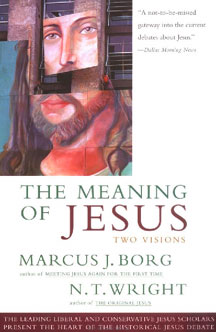
I can’t help but think talking about faith with those who disagree with us can’t be far behind. With the notable and wonderful exception of Borg and Wright’s book, The Meaning of Jesus, which grew out of both their faith and their friendship, I don’t know of many models of mutuality and maturity when it comes to talking across fences to one another. We know how to yell. We know how to cast stones and aspersions. We even know how to blog. And we struggle to embrace each other as disciples of Jesus together. It’s easier to stay within our smaller circle, though I’m not sure that’s all there is to it.
Here’s what I know about me. I grew up Southern Baptist and have found my way to the United Church of Christ, which comes pretty close to running the gamut of the American Christian continuum. I haven’t been a member of a Baptist church in almost twenty years. This summer, thanks to relational connections that have weathered well over time, Ginger and I are going back to Texas to lead the Baptist Laity Institute with Gordon and Jeanene Atkinson. Though I’m moving back into circles of my past, I’m also moving into unfamiliar territory in many ways. I’m a bit scared, actually.
How odd to think about entering into Christian community and wondering how I will welcome and be welcomed. I should not be so out of practice.
Many years ago, I was leading a small group on a youth retreat and asked the kids to write down the names of those they knew who were not Christians. One girl – a senior in high school – looked perplexed and said, “I live in a Christian family, I go to a Christian school, and I go to church; I don’t know anyone who isn’t a Christian.”
I felt sad because she was missing so much of life.
I live in a Christian home, go to work in (how shall I say?) an environment that doesn’t particularly fosters more profanity than prophecy, and I go to church – my church. I try to catch up with the vocabulary that blows around on the blogs – missional, emergent, incarnational – and I recognize some of it, wrestle with some of it, resonate at times, and wonder how reading and listening to people who profess the same faith as I feels like working with a foreign language?
Each Sunday in our worship, as we move from, as we say, “having gathered to preparing our hearts for worship,” Ginger says, “Take a deep breath – now let it out; breathe in the breath of God, breathe out the love of God.” There’s a place to start. The next step, it seems to me, is to listen before I begin staking my claim. If we are one in the Spirit, I must trust I am, like everyone else in the room, coming from God and going to God. I am not God’s defender or chief spokesperson; I am called to welcome everyone with the same open arms Jesus held out to all comers.
Now, I need to get out of my neighborhood and live out my words.
I’ve been trying to think about what to write off and on all day. Tonight, after the Durham Bulls game, they had fireworks to “patriotic” music — Springsteen’s “Born in the USA,” Lee Greenwood’s “I’m Proud to be an American,” Ray Charles singing “America,” Louis Armstrong’s “What a Wonderful World,” and Toby Keith’s “I am a Soldier — played sequentially without any hint of irony. The songs made me think of my post last year at this time and, at the risk of being either redundant or self-indulgent, I’m re-posting it tonight, mostly because not a whole lot feels different between then and now.
________________________________
I do a fair amount of listening to country music, but I’m always a little gun shy of my radio this time of year (no pun intended) because the closer we get to the fireworks the more often they play Toby Keith singing about putting a boot up anyone’s ass who disagrees with our government, or – inevitably – I’ll hear Lee Greenwood sing about being proud to be an American.
I’m not proud to be an American.
I can’t be since I had nothing to do with my being an American. I can take pride in things I’ve cooked or written because I did those things, but I’m an American by circumstance, by geography, by fortune. I feel grateful. I feel responsible. But I’m not proud.
Another way to think about pride is to define it as arrogance: rather than it being a sense of accomplishment, it is a sense of entitlement. I’m concerned for our country because I think the latter is the image we project to much of the world, whether we intend to or not. We come across as though we see ourselves as The One Who Know Everything or The Ones Who Are Convinced Everyone Wants To Be Just Like Us.
The analogy that comes to mind is a scene from The Breakfast Club after all the kids (Brian the science nerd, Andrew the athlete, John the angry kid, Allison the outcast, and Claire the popular girl) have become vulnerable with one another:
BRIAN: Um, I was just thinking, I mean. I know it’s kind of a weird time, but I was just wondering, um, what is gonna happen to us on Monday? When we’re all together again? I mean I consider you guys my friends, I’m not wrong, am I? ANDREW: No… BRIAN: So, so on Monday…what happens? CLAIRE: Are we still friends, you mean? If we’re friends now, that is? BRIAN: Yeah… CLAIRE: Do you want the truth? BRIAN: Yeah, I want the truth… CLAIRE: I don’t think so… ALLISON: Well, do you mean all of us or just John? CLAIRE: With all of you… ANDREW: That’s a real nice attitude, Claire!
The scene continues:
BRIAN: I just wanna tell, each of you, that I wouldn’t do that…I wouldn’t and I will not! ‘Cause I think that’s real shitty… CLAIRE: Your friends wouldn’t mind because they look up to us…
Brian laughs at her.
BRIAN: You’re so conceited, Claire. You’re so conceited. You’re so, like, full of yourself, why are you like that?
To turn the world into a high school detention hall may seem simplistic, but hear me out. We are a lot like Claire: she’s not mean or vindictive; she is uninformed and arrogant. She has been taught she’s better than others and has not heard voices telling her otherwise until that Saturday in detention. (Wouldn’t that make a great Security Council ice-breaker: OK, if your country was a character in The Breakfast Club, which one would it be?)
When we were in Greece and Turkey last year, almost every hotel had CNN International on the television. The same alleged news organization that fills our homes with endless teen drama queens and pontificating pundits has an international channel that is informative and articulate. I can only assume they don’t want us to see it lest we become informed and realize the world is not what we think it is. We are being taught not to question, not to act, even not to care.
Almost twenty five years ago Little Steven Van Zandt, of E Street Band and Sopranos fame, wrote a song called “I am a Patriot,” which I first heard on Jackson Browne’s wonderful 1989 record, World in Motion. In the video clip I found of Little Steven, he makes an impassioned and linguistically colorful introduction to the song, imploring his audience to question everything and then he sings:
And the river opens for the righteous, someday
I was walking with my brother And he wondered what was on my mind I said what I believe in my soul It ain’t what I see with my eyes And we can’t turn our backs this time
I am a patriot and I love my country Because my country is all I know I want to be with my family With people who understand me I got nowhere else to go I am a patriot
And the river opens for the righteous, someday
I was talking with my sister She looked so fine I said baby what’s on your mind She said I want to run like the lion Released from the cages Released from the rages Burning in my heart tonight
I am a patriot and I love my country Because my country is all I know
And I ain’t no communist, And I ain’t no capitalist And I ain’t no socialist and I sure ain’t no imperialist And I ain’t no democrat And I ain’t no republican either And I only know one party and its name is freedom I am a patriot
And the river opens for the righteous, someday
I love the honesty of the song: “I am a patriot and I love my country because my country is all I know.” Van Zandt names our love of family and want of security right along with our call to question what is going on and work for justice. My friend Gene pastors a church that talks about Life Mission Questions, which I find wonderfully resonant. The answers we find, my friends, are only as good as our questions. In that spirit, I have a few I think we need to ask more emphatically.
How can we hold people indefinitely at Guantanamo Bay without telling them or anyone else why and then talk about human rights to other countries?
How can we complain about countries seeking nuclear power and/or weapons, even threatening war if they continue, when we have them and intend to keep them?
How can we continue to staff military bases in countries all over the world when we would never let anyone set up a base on our soil?
How can we spend a billion dollars a week on war and not have universal health care our citizens?
How can we work to end terrorism without working passionately and relentlessly to end poverty?
Why do our presidential candidates have to raise millions of dollars to get elected?
Why don’t we think of the other countries of the world as colleagues rather than subordinates?
Why aren’t the voices of healthy dissent louder in our country?
Why are all our issues described as polarities?
Why must everything be either red or blue?
Where are the courageous leaders who are willing to do something other than raise money, worry about being electable, and pander to multinational corporations?
Where are the real journalists?
Feel free to add your own.
I am a patriot and I do love my country, even though it’s not all I know. I do think the river will open for the righteous someday and, as Martin said, justice will roll down like water. Liberty and justice for all – all the world.