Home Blog Page 13

I think it’s about . . .

On the way to church Sunday I listened to Don Henley singing “Heart of the Matter” because I was preaching on forgiveness—the line in the Lord’s Prayer about sins or debts or trespasses. I ended up adding the lyrics to the end of my sermon. I also listened to the Lyle Lovett song I had already planned to mention, “God Will,” which has a different take on the idea. Ultimately, I think Henley is spot on: it’s about forgiveness.

___________________________

One of the challenges of preaching is deciding how much of the story to tell, or perhaps I should say how much of it to read. Wherever we start in the Bible, we are starting in the middle of the story. The context is larger than the passage we read. This morning, for example, we split one long reading into two rather than read two different passages because I wanted you to get a fuller picture, and even then, we are still picking up the story in the middle of the action.

The translators divided the Bible into chapters and verses, which helps when we need to find something in particular, but it gives a false sense of order. Sometimes verses begin in the middle of a sentence or a thought, and much of the time a new chapter begins in the middle of a story, leaving us to think things are less connected than they are.

Matthew 18 begins with a question I think is worth noting, even though we didn’t read it this morning. Verse one says,

At that time the disciples came to Jesus and asked, “Who is the greatest in the kingdom of heaven?”

It was a question the disciples asked more than once even though they walked with Jesus everyday as he talked about loving God with all that we are and loving our neighbor as ourselves. They watched the way he listened and loved people, they heard him talk about living with compassion and humility—and still, when they had a chance to ask a question they wanted to know who was going to be first in line.

It makes me think of a t-shirt I saw one time that said, “Jesus loves you, but I’m his favorite.”

Jesus answered by calling a child to come to him and then he said,

“I assure you that if you don’t turn your lives around and become like this little child, you will definitely not enter the kingdom of heaven. Those who humble themselves like this little child will be the greatest in the kingdom of heaven. Whoever welcomes one such child in my name welcomes me.”

Then he told the parable about the shepherd leaving all of his flock in their pen so he could go and look for the one sheep who had gotten lost, which led into the section we read about being intentional to keep our relationships with each other current and constructive and forgiving one another four hundred and ninety times, and then to the parable about the ruler who forgave a huge debt only to see the forgiven one show no mercy at all to another who owed him pocket change.

Like I said, it’s hard to know how much of the story to tell.

This morning, let’s start with what someone called to First Rule of Theology: “There is a God and it’s not me.” It’s a statement of appropriate insignificance: I’m not the center of the universe. But there’s more than one way to think about it. Lyle Lovett sings:

who keeps on trusting you when you’ve been cheating
and spending your nights on the town
who keeps on saying that he still wants you
when you’re through running around
and who keeps on loving you when you’ve been lying
saying things ain’t what they seem

God does but I don’t
God will but I won’t
and that’s the difference between God and me

“There is a God and it’s not me” is drawing a different distinction. It’s a good paraphrase of the first line of the Lord’s Prayer actually—another way of hallowing God’s name. It even ties in with the next line—our request that the love of God would be as pervasive and visible on earth as it is in heaven. When we start by affirming that God is the Ultimate Priority of all creation—our Creator, our Center, the One to whom we owe our very existence, the One who calls us into relationship—then the reality that all of us—and by us, I mean every living thing—have small parts to play in the grand scheme of things. It matters that we are here, but we don’t matter more than anyone else.

Yes, Jesus said God knows every hair on our heads (which is a bit more of a challenge for some than others), and Jesus also said that God knows when a sparrow falls from its nest. God counts both feathers and hairs as appropriately insignificant. We are all wonderfully and uniquely created in the image of God and worthy to be loved and so is every living thing. We are vital participants in creation, but God is the center, the source.

There is a God and it is not us—which brings us to forgiveness.

“Forgive us our sins (or debts or trespasses) as we forgive those who sin (or trespass) against us (our debtors).”

This sentence is the one with the most options, when it comes to church traditions. In my church life, I have been in churches that used all three words, mostly because that is the way the prayer had been handed down to them.

The word trespass entered the prayer thanks to William Tyndale’s translation in 1525. In his day, the word carried a sense of transgression or wrongdoing that is not a part of the way we use the word today, other than in the Lord’s Prayer. Debt came into English around the same time as trespass and has continued to carry the idea of both a financial obligation and a wrongdoing. Sin is the oldest of the three words and it has always meant pretty much the same thing.

Without wearing you out with language stories, it’s worth noting that Matthew and Luke use different Greek words for sin in their versions of the prayer. Maybe the takeaway should be in the course of human history we have figured out lots of ways to do damage to one another. Whether it is a sin, a debt, or a trespass—how do we forgive?

So, for a minute, let’s leave those words out and listen to the sentence: “Forgive us as we forgive others,” and as we do, I want you to notice the preposition: as. We can take that little word in several directions:

forgive us in the same way we forgive others;
forgive us while we are forgiving others;
forgive us provided that we forgive others;
forgive us because we forgive others.

When we look at the parable, it seems the ruler forgave the debt of the servant without any preconditions, but when he heard that the servant had not shown the same compassion to the one who owed him money, the ruler reconsidered.

It’s important to remember that a parable is not an allegory where every character lines up with someone in real life. The story is not as simple as God is the ruler and we are the one who had his debt forgiven. The meaning runs deeper than that. Sometimes, we may be the ruler; we may be the one who has the chance to show gratuitous grace to someone else, to forgive a debt to one who feels overwhelmed by what they owe. It doesn’t happen every day, but we all have the power to forgive.

Sometimes, we are the one who had their debt forgiven. We get a fresh start, but not because we earned it. Again, it doesn’t happen every day, but those “resurrection stories” can be life changing.

Then, as hard as it is to admit, sometimes we are that same person who holds on to what we feel is due to us so tightly that we can’t see beyond ourselves. We make our satisfaction our priority. We choose to turn a relationship into a transaction that puts us as the center of it all, that makes us the priority: you owe me and you have to pay now.

But we can’t live like that. We can survive—maybe—but we can’t flourish. Again, by we, I mean every last one of us. As Gandhi said, “An eye for an eye will leave the whole world blind.”

The only way we truly understand forgiveness is by passing it along, by doing unto others as God as done for us, so we pray, “Forgive us our sins, debts, and trespasses so that we can show our gratitude and our grasp of our place in the world by forgiving others.”

Forgive us when we decide we are the center, when forget there is a God and it is not us.

As I have said before, if you or someone you know is in an abusive or damaging relationship, Jesus was not saying you have to stay there. Forgiveness does not mean agreeing to be victimized or traumatized by someone else. Forgiveness from afar is not the same as trust.

Forgiveness does not necessarily mean forgetting. We all live with scars. Healing does not always mean there is no trace of the injury. What it does mean is to keep things in perspective, to remember we are not the center of the universe. We are significant specks in a universe that is a wondrous web of relationships. When we forgive one another of our sins and debts and trespasses, we create life, we create possibilities because we foster our relationships with one another. When we receive forgiveness, we foster our connectedness as well.

So, let me ask this question: what has been unforgiveable in your life? What are you holding that needs to be released, that needs to be forgiven in the same way that God forgives you?

As we hold those hurts, perhaps we can begin by reminding ourselves that violence is never a solution for violence. Nothing is solved by striking back. Our woundedness will not be healed by inflicting other wounds. There is no such thing as redemptive violence or compassionate revenge. Forgiveness breaks the vicious circle that destroys relationships. Forgiveness creates possibilities of living beyond things that feel insurmountable. Forgiveness is a tangible way of choosing relationship, of choosing one another, of saying, “You are more important to me than my feeling like I got even.” Forgiveness is how we stay alive in this world, how we remember we are all in this together.

As one of my favorite hymn writers, Don Henley, sings,

I’ve been trying to get down to the heart of the matter
but my will gets weak and my thoughts seem to scatter
but I think it’s about forgiveness . . . Amen.

Peace,
Milton

PS—I might as well let you sing along . . .

give us this day . . .

We made it to the daily bread this week in my series on the Lord’s Prayer. To aid our thinking, we read the story of the manna God provided for the Hebrew people (Exodus 16:9-21) and the Feeding of the Five Thousand (Luke 9:10-17). In putting the sermon together, my mental travels took me to Morocco, Dallas, and back to Hamden. No matter where we are, we hunger.

___________________________

Several years ago, Ginger, our friend Jay, and I had the chance to go to Morocco. It was an amazing trip. One of the places we visited was the city of Fes, which sits at the base of the Atlas Mountains in the center of the country. It is an ancient city; it was founded in 789 and the university there, which is still educating students, began in the late 800s.

As we walked through the narrow streets of the old city, we came upon a neighborhood oven. It was wood burning, like some of our favorite pizza places (I mean apizza places), and one man was there baking bread. Next to him was a huge wooden rack where he placed the loaves, but they were not his loaves to sell. The people in the neighborhood brought their unbaked loaves each morning and then came back in the afternoon and picked them up. Their houses were too small and the general temperature too hot for them to bake at home, so the neighborhood baker did it for them. Our guide told us stories about bringing his mother’s bread to that very baker on his way to school. The historical marker on the wall of the bakery said that oven had been working since the 1200s.

As I watched him work, I imagined the women rising early in their kitchens to prepare the dough, which meant being up early enough to knead the dough and let it rise, and then sending it to the oven with their children, where it proofed on the shelf until it was time to go in the oven. Then it went back on the shelf until the kids picked it up and took it home for the family meal. It truly was daily bread—and it took a lot of time and effort.

When we pray, “Give us our daily bread,” I think of those who shaped the loaves and that man who pulled the fresh bread from that hot oven and I am mindful that the roots of those words are sunk deep in the awareness that it takes a lot of time and effort to prepare food every day. We live in a time and place where meals are much more convenient than has been true for most of human history. Even today, most of the world lives more like the folks in Fes, making what they need each day rather than being able to swing into Stop and Shop and grab what we need.

But neither the bread not the dailiness of it are the most crucial part of the prayer. The heart of the prayer lies in the pronoun: us. Give us our daily bread. Not me. Us. I am not simply praying that I will not go hungry, I am praying that there will be enough for everyone.

Let’s remember, first, how we got to this point in the prayer. We have asked that God would make us mindful that God is the Universal Priority, the one who both imagined all of creation and holds it together. Then we prayed that God’s will—God’s intent that all of creation would flourish in relationship with one another—would be a reality in our world just as God dreamed it. And now we are praying that everyone of us would be nourished daily.

Last week we sang the hymn “Great is Thy Faithfulness,” which has one of my favorite lines: “Morning by morning new mercies I see.” The person who wrote that hymn had in mind the story we read earlier about God raining bread on the Hebrew people in the wilderness “morning by morning,” offering them new mercies to see. The only instruction they were given was to take what they needed for the day and no more. To follow those instructions meant they had to trust God that they had enough, and they had to have an awareness of those around them, that they weren’t the only ones who needed to eat.

Our gospel passage was the story most of us know as the Feeding of the Five Thousand, which makes it sound like Jesus ran an amazing catering service, but the event was not that planned. Once again, it was a bunch of hungry people in the wilderness. They were not quite as isolated as the folks in the earlier story, nor had they been there as long, but they had been following after Jesus for most of what appears to have been a pretty hot day and Jesus could tell people were hungry, so he told the disciples to feed them.

The disciples were frustrated by his request because they were in the middle of nowhere and they were not workers in the food industry. All they were able to find was one boy with a sack lunch of bread and fish. Jesus divided the crowd into groups of fifty and had them sit down together. Then he blessed what food they had, and the disciples began to distribute it. Luke doesn’t give us many details about how the dinner went down, other than to say everyone ate and they had twelve baskets of leftovers.

I am convinced that a big part of what happened was that those who had food and were keeping it for themselves began to share with those in their group once the disciples started passing out food. People began to realize they were part of an us rather than just a me. When people shared, they had more than enough. They fed everyone.

Hear me clearly. I am not saying it wasn’t a miracle. I think that is the miracle. Our world would be transformed if we truly lived into the reality that we are all connected and there is enough to go around.

Many years ago, I belonged to a church in Dallas, Texas. One of their traditions was a Wednesday night meal and prayer service. One Wednesday, as a part of a world hunger awareness emphasis, we had a Hunger Meal, which meant before we got to the serving line, we had to draw a ticket that was marked with an indicator of what we would eat. The meals were divided into those who simply got some rice, those who got rice and beans, and those who got rice, beans, ham, and cornbread. The percentages of who got what meal were based on the percentages of who goes hungry in our world, so most of us got rice, a few less got rice and beans, and only a handful got a full meal.

I sat down at a table where one man was being quite vocal about being cheated out of his midweek dinner because he only had rice. Others at the table tried to explain, but he wasn’t having it. About that time, a kid who was seven or eight sat down next to him. The boy had the full meal. The man got quiet. The boy, who knew nothing of the man’s complaints, looked at his plate and said, “You hardly got anything to eat. Take some of mine.”

No one else had to say a thing.

Perhaps a paraphrase of “give us our daily bread” might be “teach us to share.” The root of our English word companion means “with bread,” which speaks a deep truth. God created us to live in relationship. We don’t begin as individuals and then figure out how to connect, we are born connected—first, to our birth mothers, and then to our families–and then learn who we are as our connections grow to include others We are created for companionship. God’s will is for us to feed one another, to nourish one another—and that is not just figurative language. We are called to make sure we—in the largest sense of that word—have enough to eat.

As we think about these words we say every week, let us also think about who in Hamden isn’t getting daily bread and how we can be companions. What are the things, the people, the organizations that keep us connected and feeding one another?

At our deacon’s dinner last Thursday night, Lisa and Nancy told Ginger about their quilting and how that connect with veterans of our community. The prayer shawls offer another tangible means of connection with people who are hungering to know they are not alone. Many of us ate well this week because of the vegetables that Anna and Bill share so generously from their garden. We lots of other people we could name who are making daily bread for those around them.

How do we deepen the connections between those of us in this congregation and those of us outside of these walls so that we not only pray the words that Jesus modeled for us, but we can also be part of the answer to the prayer. As we go from worship to share coffee and snacks—our weekly bread—may we keep dreaming together about how we can be a part of taking care of all of us. Amen.

Peace,
Milton

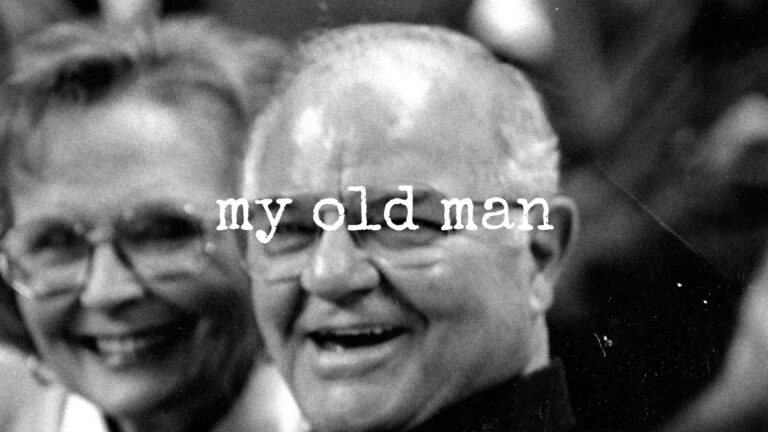
my old man

I was driving home from church on Sunday when a song crossed my mind I had not thought of in a long time.

“Hey, Siri,” I said, “play ‘My Old Man’ by Steve Goodman.”

She repeated my request and the song began. The version I have is from a live album, so it started with Steve talking about his dad and then saying he wrote the song after he died. Then he began picking his guitar and singing.

I miss my old man tonight
and I wish he was here with me
with his corny jokes and his cheap cigars
he could look you in the eye and sell you a car
that’s not an easy thing to do
but no one ever knew a more charming creature
on this earth than my old man

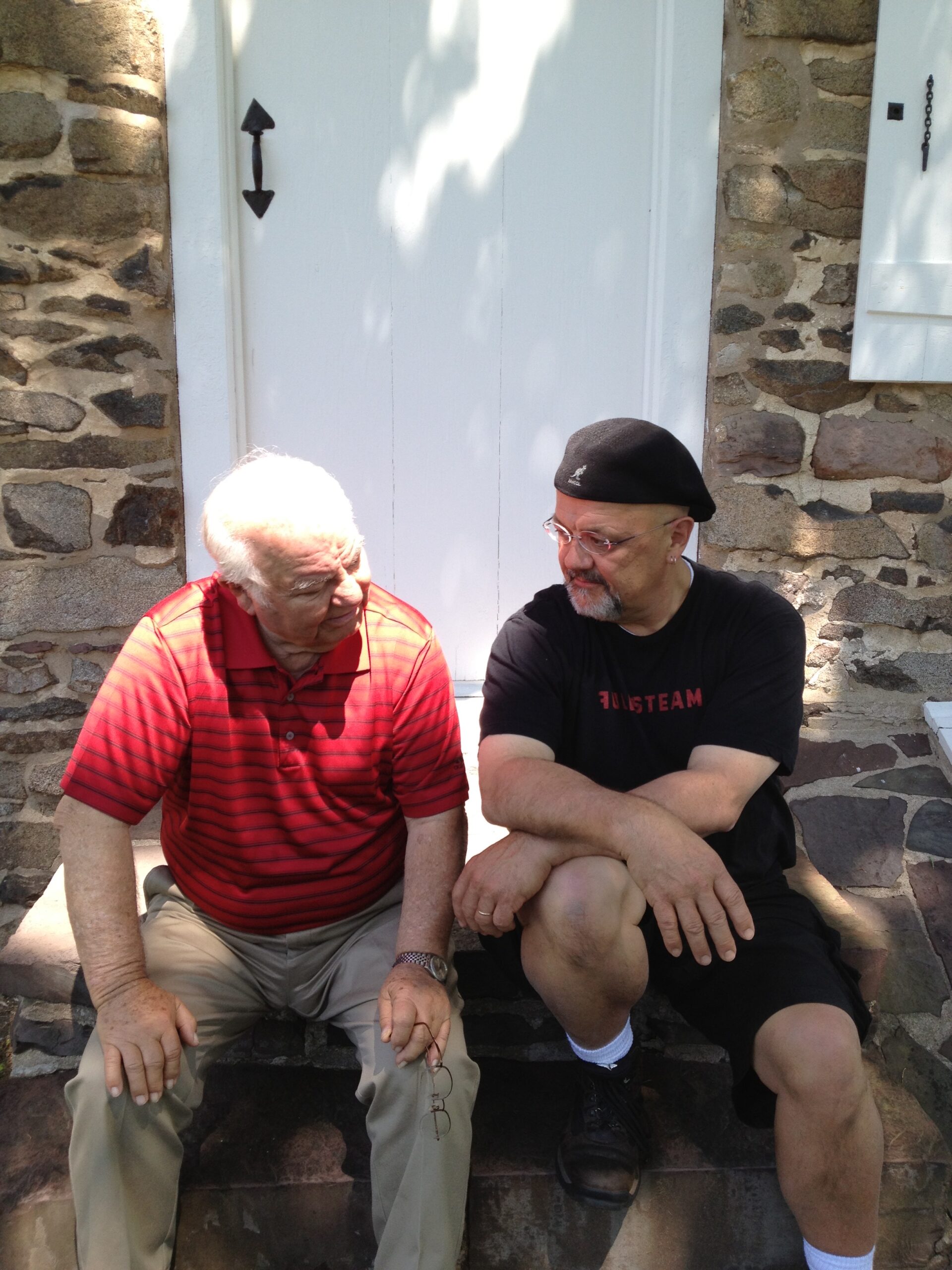
Our fathers were not that similar, as you will see if you listen to the whole song, but I find resonance in Goodman’s grief. I, too, miss my old man tonight, and I have in particular over the past few days because (as I realized driving home on Sunday) it was during these last days of July ten years ago that Dad suffered the strokes that eventually killed him. He died on August 3, 2013.

It was not random that the song came to mind as I worked my way home.

Dad and Steve Goodman had their own connection. My father loved “You Never Even Call Me by My Name,” a song Steve wrote with John Prine, though my father knew the David Allan Coe version. He kept the CD cued up in his car and listened to the song over and over.

(A brief aside: Goodman also wrote “The City of New Orleans,” “Banana Republics,” and–if you’ve ever been at Wrigley Field when the Cubs have won–“Go, Cubs, Go.” He died of leukemia in 1984 at the age of 36.)

I was in my late thirties before my father and I began to figure out how to talk to each other. I credit Ginger with being the one who gave me a way to move beyond the stalemate that existed, but that’s a longer story for another time. For reasons I don’t know, as our phone conversations grew more frequent and affectionate, I called him Pop, which I had never done growing up and I don’t know that it was something I did face to face, but when I picked up the phone I said, “Hi, Pop.”

Perhaps I needed a new name for a fresh chapter in our relationship. That chapter lasted over two decades before he died. I am grateful. I thought of the way we found each other as Goodman sang,

and oh the fights we had
when my brother and I got him mad
he’d get all boiled up and he’d start to shout
and I knew what was coming so I tuned him out
and now the old man’s gone, and I’d give all I own
to hear what he said when I wasn’t listening
to my old man

Eva Meijer writes,

Memories are much more fluid than data, more tangible too. Perhaps stories are a better metaphor for memories. Stories also change over time, and because of who tells them; stories that people tell themselves and others change with them. And they change us too, whether they’re our own stories, or those of others.

If he were alive, we would both be setting our alarms to wake up at 3 am to watch the Zambian women play their first World Cup game, or maybe we would record it and watch it together (by phone) over breakfast. That the competition falls over these weeks is serendipitous for me as I remember him.

I miss the old man tonight
and I can almost see his face
he was always trying to watch his weight
and his heart only made it to fifty-eight
for the first time since he died
late last night I cried
I wondered when I was gonna do that
for my old man

Peace,
Milton

on earth as it is . . .

I’m three sermons into my series on the Lord’s Prayer and it is already changing how I hear and say the prayer. Reciting the words every week is playing with dynamite. Preaching through the prayer is opening up a spiritual journey for me that I was not expecting. I hope you find something here as well.

________________________

God’s will.

When I put those two words into the search window of my web browser I found pages and pages that were willing to tell me what “God’s will” meant, but most of them were not helpful. One listed “twelve things that are definitely God’s will for your life,” and another had “the top ten lies about God’s will.” A couple of them said God had a secret will, a revealed will, and a discerned will, which made me think they were describing some kind of theological “three bears” story. The online thesaurus listed these words as synonyms: destiny, God’s plan, predestination, what is written, inevitability, and “the way the cookie crumbles.”

I think Mr. Roget has some work to do.

Understanding God’s will is not easy, yet one of the things that Jesus prayed—and that we say every week—is “your will be done on earth as it is in heaven.”

What was he saying? What are we praying for?

One of the reasons those questions are difficult is they are often tied to how we think about suffering. We would like to understand—as the book title says—why bad things happen to good people, why life is tough when we feel like we are trying hard to be good. People we love get sick. People we love are in pain. People we love get crushed by life, even when they are people of faith. Does that mean those things are God’s will just because they happen? Does God intend for us to suffer as some sort of lesson? Is suffering payback for our not doing what God wanted?

Another idea that is problematic when it comes to God’s will is predestination—the idea that God has destined us for certain things and already knows what will happen, which then means when something happens, it must be God’s will.

My mother looked at life this way, particularly when it worked in her favor. She was scheduled to be on a flight many years ago that ended up crashing. Her plans had changed at the last minute and she was not on the plane. She was convinced it was because it was God’s will for her to live. We spent more than one conversation with me asking if that meant she thought God willed those on the plane to die.

I grew up being told that God’s will was like a map of my life—that God had things planned out and it was up to me to make sure I stayed on track. It’s a variation on predestination, in a way, and it creates another problem. The mental image I carried was the map at the shopping mall that showed the whole place and then had a red X and a bubble that said, “You are here,” but I never could tell where I was on the map or where I was supposed to go next. What if I made a wrong turn when I was in second grade and I never realized my mistake?

What all those perspectives share is they make God’s will mostly about the circumstances of our lives, but Jesus’ words have a broader reach: “Your will be done on earth as it is in heaven.” He was talking about a more expansive understanding. To get a sense of that, let’s look at his life and some of the other things he said.

At Jesus’ first sermon after his baptism, he stood in the synagogue and read from Isaiah:

The Spirit of the Lord is upon me, because the Lord has anointed me. God has sent me to preach good news to the poor, to proclaim release to the prisoners and recovery of sight to the blind, to liberate the oppressed, and to proclaim the year of the Lord’s favor.

Later, when someone asked him about the greatest commandment, which might be another way of asking about God’s will, he answered,

You must love the Lord your God with all your heart, with all your being, and with all your mind. This is the first and greatest commandment. And the second is like it: You must love your neighbor as you love yourself.

He also told a parable about a final judgement, which was depicted as a king rewarding those who had followed his instructions:

Then the king will say to those on his right, “Come, you who will receive good things. Inherit the kingdom that was prepared for you before the world began. I was hungry and you gave me food to eat. I was thirsty and you gave me a drink. I was a stranger and you welcomed me. I was naked and you gave me clothes to wear. I was sick and you took care of me. I was in prison and you visited me.”

Then those who are righteous will reply to him, “Lord, when did we see you hungry and feed you, or thirsty and give you a drink? When did we see you as a stranger and welcome you, or naked and give you clothes to wear? When did we see you sick or in prison and visit you?”
Then the king will reply to them, “I assure you that when you have done it for one of the least of these brothers and sisters of mine, you have done it for me.”

Jesus’ ministry was revolutionary because he was determined to love everyone, and that is what he called his followers to do—and we are some of those followers. To follow Jesus—to do God’s will—is to love others in his name, to look for ways in our daily lives that pull us into the lives of others, to say and do things that liberate, comfort, and build relationships. That is how God’s realm flourishes on earth as it does in heaven.

When Jesus talked about earth and heaven he was talking to people who had a layered or tiered view of the cosmos: earth was down here and heaven was up there. Some of that thinking is still a part of us, but in more recent times we have learned that everything in the universe is made up of the same stuff, the same energy, and it is all connected in ways we are barely beginning to grasp. We are, literally, stardust.

The more we learn, the more we see what we have yet to comprehend, but what is becoming clearer is the universe—what people in Jesus’ time meant by “heaven and earth’—is made up of relationships. God created ev everyone and everything to depend on and support and affect everyone and everything else.

Too often we talk about science and faith as if they were adversarial, but cosmology and physics resonate what God has been saying all along: we are made for each other. We can’t live like that is not true. We know too much. We can’t unlearn our vital connection to one another.

Jesus talked about coming to give us abundant lives. He talked about living like the lilies and the wildflowers that grow and bloom and spread gratuitous and seemingly random beauty just being themselves. He talked about trusting that God is with us even when we cannot feel God’s presence. And the last prayer he prayed was for his followers to love one another so intently that they were unified in their love of the world.

Too often across history, when religious leaders other than Jesus have talked about God’s will they have weaponized it to control people or to shame them. Those are the roots of some of the ideas about suffering and blame that I referenced at the start of the sermon. Thankfully, they have not been the only voices. Also, across history, there have been those who have embodied the will of God by following Jesus and have spent their lives loving those around them. They are the ones who are doing God’s will.

God’s will is living with open arms, not closed fists.

We talked last week about hallowing God’s name, about God being our priority and the Priority of the Universe. God’s priority is Love. God’s name is Love. To pray for earth to feel like heaven is to pray that all of creation would live into our connectedness, that would embody love.

To pray for God’s will to be done is to pray that love would be the dominant energy in the world. For that to be true, we will need our actions to undergird our prayers. If we pray for God’s will to be done on earth like it is in heaven, we have to live like we mean it. As the old songs says, they will know we are Christians by our love. Amen.

Peace,
Milton

limit less

I was just finishing up at the gym on Monday when I got a text from Ginger asking if I wanted to meet her for coffee at RJ Julia and read for a while. My answer, of course, was yes–the one catch being I didn’t have a book with me, but I was going to a bookstore, so that problem was easily solved. She already had a window seat in the cafe, so I perused the shelves and tables and was captured by this title: The Limits of My Language: Meditations on Depression. I felt like Eva Meijer, whoever she is, had written a book personally to me.

Once I had my coffee and Ginger and I had talked for a few minutes, I opened the book about the limits of language and found this paragraph:

An ending. An encasing, a world within a world (a self inside a self), thoughts that thrust themselves into a nest of other thoughts and ruthlessly push out their healthy foster-brothers and sisters (like baby cuckoos), an ever-present shadow (even in the light), a confirmation, a truth , an illusion, heavy sand where the shore turns to sea, a fungus that a manages to worm its spores into everything, static noise, fading away, a greenness that sucks up every colour, until all that’s left is the memory of colour.

I read it twice to myself and then out loud to Ginger. One way to talk about the limits of language is to start by showing what our words can do, I suppose. Meijer is a philosopher, as well as an author and musician and artist, and her words took me back to a quote by another philosopher, Wittengenstein, who wrote,

“The limits of my language are the limits of my world.”

I learned of those words from The Dictionary of Obscure Sorrows by John Koenig who went on to say after the quote,

Words will never do us justice. But we have to try anyway. Luckily, the palette of language is infinitely expandable.

Koenig embodied his claim by creating a book of newly coined words for situations and feelings that had no words for them; Meijer keeps reusing and repurposing the ones we have. Both of them encourage us to remember we can do far more with our words than we do.

When I started working as a trainer at the Apple Store at Southpoint in Durham, North Carolina, one of my tasks was to teach introductory workshops for people getting new iPhones. The new phone then was the 4S. It was at the same time that the Voyager 1 spacecraft reached the edge of our solar system. Voyager was launched in September 1977, as I was beginning my senior year in college. I am not a big science guy, necessarily, but there was a certain poetry to the space exploration of those days that captured me, so when I read about the spaceship leaving the solar system it stuck with me, as did the note in the article that the computer in the new iPhone was 250 times stronger than the computer that put Voyager into space.

I shared that information with the people in my workshop and then said, “You could launch satellites with your phone. Quit playing Candy Crush and go change the world.”

Eva Meijer seems to issue a similar challenge with the way she launches her words from the page:

Imagine carrying a sea inside your body. It moves at every step, just enough to let you know you’re made of water. You know the water is dangerous, that people have drowned in it, that you can’t live beneath it. You also know you;’re stuck with that sea, and there’s no escaping it. Sometimes the water rises, and then it falls again, like the tides, although not as regularly. Till one day it rises and rises and you slowly start to panic. You can’t escape it, because it’s inside you. No one sees it from your exterior, although your eyes fill with tears more than usual. You’d better lie down somewhere and wait till the water drops and you can move again. You’d better not lie down, because if you do you’ll probably drown–and meanwhile the water is rising and you’ve already been holding your breath for a minute.

That sea is familiar to me; I know what it feels like when the water rises. I am grateful to say that the tide has been out in recent months, so I have not had to hold my breath, to stay with her metaphor, and I know some who have been overwhelmed. Beyond the descriptive and poetic power of her metaphor–and she has more that are just as evocative–I keep going back to her title and wondering where the limits are when it comes to how we choose our words.

I don’t know that language is limitless, but I trust that we could limit less in the way we speak and write, the way we talk to and about one another, the way we express what it means to be in the world. Maybe it’s making up new words like Koenig does, and then maybe it is taking the time to find the word we already know that gives birth to new possibilities, the way God spoke the universe into existence from stars to flying squirrels, from sea scapes to friendships.

Maybe the limits of my language have a lot to do with the limits of my world. I know there are more ways to say “I love you” than I have learned to say, and more ways to say “I need help” as well, among other things. Words may not say everything, but we have far from exhausted what they can do if we choose them well.

Peace,
Milton

hallowed

Today was the second Sunday in my sermon series on the Lord’s Prayer and we talked about the opening sentence: “Our Father who is in heaven, hallowed by your name.” As I say in my opening, it was harder to prepare the sermon than I had anticipated. I was a bit surprised where the sermon took me and I was grateful for the way the sermon was received. I hope you find something that speaks to you.

______________________

Back in May, when I was thinking about our services for the summer, preaching a series on the Lord’s Prayer seemed like a good idea: to take it phrase by phrase and look at the things we pass by when we recite it together each week. Sounds simple enough, right? Yeah–not so much.

As I turned the opening phrase over and over in my head, I thought about a standup routine where comedian Gary Gulman described a (fictitious) documentary about how we got the mailing abbreviations for states. He told as though people thought it would go quickly:

What’s first?
Alabama.
AL. That was easy. We’ll have this done before they stop serving breakfast in the hotel lobby. What’s next?
Alaska.
Okay, set that aside and we’ll come back to it. What’s next?
Arizona.
AR. Now we’re rolling. What’s next?
Arkansas.

It wasn’t as easy as it seemed. As you can tell by the hymns we have sung and the title printed in the order of service, “Hallowed Be Thy Name,” I thought it was going to be about the names we use for God–and it is, in part–but what has challenged me most this week is the word we use almost exclusively in this prayer, other than on October 31: hallowed.

Hallowed be thy name.

I can’t hear that phrase without thinking about the little boy who responded to his Sunday School teacher who said that no one knew God’s name. He raised his hand high and said, “I do. It’s Harold.”

The teacher was puzzled and said, “I don’t think that’s right,” and the kid said, “Sure it is. It’s in the prayer–Harold be thy name.”

Harold is easier to understand than hallowed, which is an old word that saw its best days in the mid-1800s and has been on the decline ever since, unless you go to a church where we recite it every week. My guess is none of us uses the word hallow in conversation with any regularity. King James used it as the English translation for a Greek word that connotes sanctification and reverence. Once the prayer became standardized, we’ve had trouble letting ourselves use a different word.

What do we mean when we pray “hallowed be thy name” or “your name be hallowed?”

The words holy and health (as in wholeness) come from the same root as hallow, which leads to other helpful words–sacred, unique, primary–that can give us some handles. And saying God’s name should be revered is another way of saying God is the sacred, unique, and primary one. A name represents the being, as it does with the names we call each other. To pray “your name is hallowed” is saying “you are The One above all.”

My friend Taylor shared something he had learned from someone else that has stuck with me. He said the word priority should never be plural because it means the first thing or the most important thing. Since we can’t have multiple first things, we can’t have priorities. Something–or someone–matters most. Philosopher Søren Kierkegaard said, “Purity in heart is to will and to do one thing,” which is the philosophical version of ther same idea.

When I think of my priority, I think of Ginger. My marriage is the most important relationship in my life. I have others that matter but none as much as my marriage. Another way to think about it is perhaps you have been in work situations where you were given multiple responsibilities. Often part of the task was to figure out which one mattered most. Something almost always does.

To say God’s name is hallowed is to say God is our priority and, more than that, God is the world’s priority. The universe’s priority. That’s cosmic stuff, yet it comes at the end of a sentence that begins by calling God a parent, a father, which is an intimate and personal name. In one statement, God is as close as family and as cosmic as the Universal Priority.

And that brings us to the names we use for God. The Sunday School teacher was right: no one knows God’s name. Hebrew tradition and theology say that no one should speak God’s name aloud. Our English word lord, which we often use for God, comes from a Hebrew work around, if you will–adonai–that was used as a replacement name. Though we as Christians do not keep that same tradition, we have many names for God. Father–the one used in this prayer is one of God’s names; but it is not God’s name.

That’s a subtle but crucial distinction.

Historically, it is a name that has been overused in most Christian circles. It can be a rich metaphor of caring and compassion. But if you grew up with a father who was unavailable or absent or abusive and the only name you hear for God is father, you may have a hard time hallowing that name. My father was a good man, and he had a hard time showing his affection because of how his father raised him. My father was also a pastor—since I went to his church throughout my childhood and teenage years, he held the role of my pastor. I had a hard time separating God and my father, so that metaphor is not always meaningful to me.

My mother is the one who taught me how to be hospitable, how to cook, how to help those around you feel welcome. She was also a tenacious and determined person. For me, mother is often a helpful name for God. But our names for God are not limited to parental metaphors. At different times in Christian history different metaphors have come to the forefront. The Hebrews often thought of God as a king, a royal ruler, in part because they saw themselves as God’s subjects and they were subjects to kings and queens themselves. Jesus talked about God in many different metaphors that went beyond both parenting and gender, all of them pointing to a God who regards us–at all of creation–as worthy of love and care.

I was thinking about this sermon while I was in Ireland and talked to a friend about the words that we have considered this morning. They have struggled with father as a primary metaphor for God, so the prayer is often hard for them, but they said they were talking with someone they trusted and that person said, “I just pray, ‘Hallowed be thy names,’ and that leaves a way for me to bring my names too.”

Mother. Creator. Compassionate Life-giver. Father. Holy One. Great Spirit. All these names people have used in other versions of this prayer in hopes of expanding who can feel connected to our loving God who is the Universal Priority—our God who is Love. That’s as close to God’s name as I think we can get. God is Love.

When we talk about how to make our language more inclusive, or we change words to hymns and prayers we have known forever, we do so to widen the circle of belonging in the name of our God, who is Love.

Every week Ginger reads the draft of my sermon. You should be grateful; she is a good editor. Her critiques usually have to do with making things clearer: I need more examples, I need to rephrase something, I need to explain how I got from A to B. I take her advice because I want to get my ideas across to you as clearly as possible.

The words we say and sing in worship should have the same kind of clarity and intent. We want whoever walks in here to feel welcomed, to feel like they belong, like we are speaking to them in a language of love, whether they are new or they have been coming here their whole lives. Saying familiar things is one of the ways we feel at home, so sometimes changes are unsettling. That is when we need to talk to one another to make clear our intentions and to take stock of our impact to make sure we are prioritizing our relationships.

Some are skeptical of churches because over the history of the church, even down to these days we are living, the priority of God’s love has far too often been buried by those who say they are acting in God’s name, but their words and deeds show their true priority as power or judgment or conquest. Let me be clear: God is never the priority when the words spoken and the actions taken destroy or diminish or dehumanize others.

God is Love.

God is Love, and when we pray “hallowed be thy name” we are saying love will be our priority over tradition, over theology, over politics, over prejudice, over all that would keep us from loving one another in God’s name. That’s what we pray every week. May we be people who live into that prayer. Amen.

Peace,
Milton

My weekly newsletter, mixing metaphors is free and comes out every Tuesday, which means if you click the link and subscribe you will get it this week. I would love that. If you would like to support my writing, you can become a sustaining member or buy me a cup of coffee.

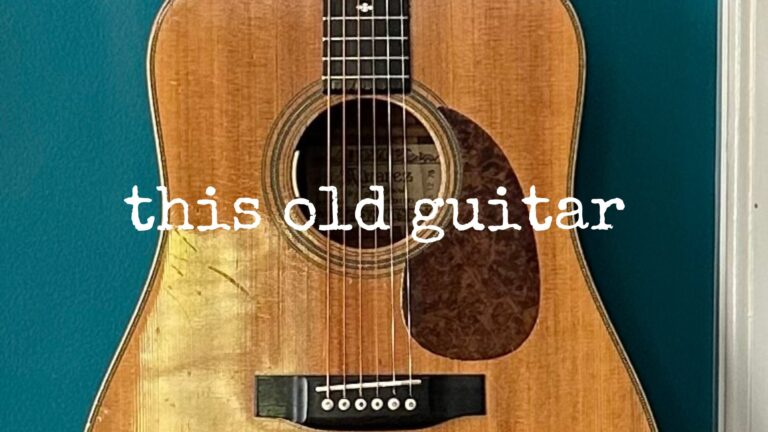
this old guitar

Last January I wrote about one of the articles in the New York Times’ “7-Day Happiness Challenge” where one writer described “The Secret Power of the Eight Minute Phone Call” in rekindling a friendship. Someone she had not heard from in a long time asked for an eight minute phone call. The writer agreed, as much out of curiosity as anything. When they got on the phone together, her friend said the eight-minute limit was a way of saying not all the ground had to be made up at once. They knew they were friends; they trusted that. Why not pick up in the present tense and keep going?

I have three or four eight-minute rituals that have become a part of my life since then and I am richer for them. What was required to make them happen was mostly the commitment to make them happen.

It was a lesson worth learning, and I am beginning to wonder if it might be more far reaching.

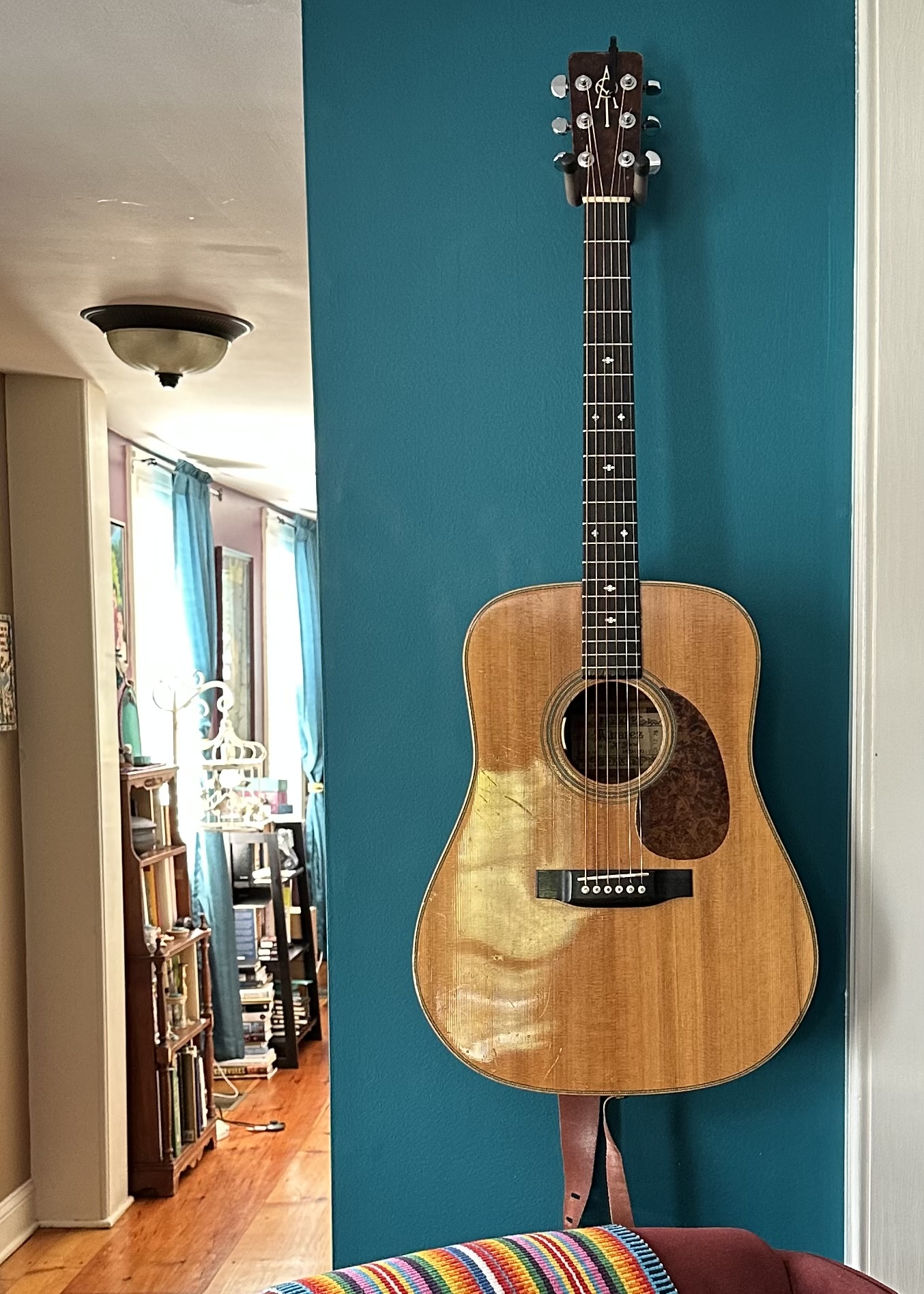
Since we moved to Guilford (seven and a half years ago), my guitar has never really found a place to hang out. It lives in its case most of the time, which then has to be tucked in behind the chair that Ginger uses when she works from home. As a result, I have played a good deal less over the past seven years–not by choice as much by convenience, I guess.

But I love my guitar. As I was thinking about this post, it struck me that we have been together for forty years. I bought it from another chaplain when I was doing CPE at Baylor Medical Center in 1983. He had bought the Alvarez Yairi to learn how to play guitar–a rather expensive beginning–and then decided it was too much work, so he sold it to me. My guitar has gone with me to close to forty youth camps, caught the glow from campfires, traveled to living rooms and church auditoriums, as well as being handed off to anyone who asked if they could play it.

It has been a good friend, though far too often in recent years I have only picked it up when I was asked to sing, rather than fostering the friendship by playing for the sake of playing.

Through the kindness of another friend, I got a brace that allows me to hang the guitar on the wall so it will be in within reach, rather than tucked behind Ginger’s chair. I’ve had the brace a while as well because I couldn’t find enough open space on a wall in our little 1795 house to hang it. Then still other friends came with a request that changed things. She asked if I would sing Spencer LaJoye’s “Plowshare Prayer” at their wedding in October. I love the song, but I don’t know it by heart. I told Ginger I wanted to start playing it regularly so I would know it well by the wedding. She asked what kept me from playing my guitar more often and I said to her what I have already told you.

We began trying to figure out how to move a few things around so we could create wall space enough from my guitar to be within reach, which required a domino run of moving pictures here and there, as well as rearranging some of thekeepsakes we have on our mantle and other shelves. In all, it took about an hour–and that included walking to the hardware store to get the screws and wall anchors I needed to hang the brace.

One of the early songs I learned on a guitar that preceded my Alvarez was by John Denver and gave me the title for this post. The first verse says,

this old guitar taught me to sing a love song
it showed me how to laugh and how to cry
it introduced me to some friends of mine
and brightened up some days
and helped me make it thru some lonely nights
what a friend to have on a cold and lonely night

When I said I wanted to sing the song all summer to get ready, I wanted more than just to get prepared for a performance–at least it feels that way now. Something in me was asking for the guitar version on an eight-minute phone call: an almost nightly commitment to play and sing at least one song to remember who we are to each other.

Whether the songs are old or new, it will be good to be together.

Peace,
Milton

learners

I’ve been back from Ireland for a week and it has taken me that long to get back in the rhythm of the life I know. I preached on Sunday but am just now posting my sermon; my newsletter for the week will follow shortly.

I am starting a summer sermon series on the Lord’s Prayer, looking at it phrase by phrase. I began this week by looking at what it means to pray and why ritual (meaningful repetition) matters. My Ireland connection was the Red L that marks a learner’s permit for a new driver.

_________________________

If you were wondering if I was going to tell any stories about my time in Ireland, let me answer that question by starting my sermon with one—and I am quite sure it will not be the last as we work our way through the summer.

Last week the group who gathered for the Peace Retreat visited the Clonard Monastery in West Belfast, which is the Catholic section of the city. We had eaten lunch at St. Christopher’s Larder, a small congregation that houses a food pantry in East Belfast, which is the Protestant neighborhood. As we crossed through the city center to get from one to the other, Gareth Higgins, one of the leaders of the retreat, commented that we were making a journey no one in Belfast makes. The two worlds stay quite separated.

Clonard Monastery is significant for many reasons, but one near the top of the list is that the Good Friday Agreement that ended the sectarian violence in Northern Island was signed there in Parlor #4, which is a rather innocuous meeting room made famous only because of what happened there. We got to stand around the table, but more importantly we got to hear from a couple of people who have given their lives to waging peace where they live.

One of those was a man named Ed who has worked at Clonard for over twenty years. He is not a priest and he was not a part of the Good Friday negotiations; he came to Clonard soon after. This summer marks the twenty-fifth anniversary of its signing. Ed talked to us about his vocation and his faith. At one point, he held up a white piece of paper with a red “L” (like this one) and told us it was what you had to tape to your car window when you got your learning permit to drive so people could identify you.

Then he said, “When it comes to faith, we should all wear red Ls because we are always learning more about what it means to be a Christian.”

As he was speaking, I made a few quick notes on my phone because it was the image I had been looking for as I thought about today and the weeks ahead as we look at prayer through the lens of what we have come to call “The Lord’s Prayer.”

It is one of the few things that many people who have attended church can recite from memory, though we publish the words each week in case someone isn’t that familiar. Though I think most of us assume there is a standardized version, those who learned it in Catholic worship did not learn the ending lines about the kingdom and the glory—and they know the prayer, mostly, as the “Our Father”—and the Episcopalians add an extra “and ever” where most Protestants settle for just “forever.” Then, of course, there is the whole debts, sins, and trespasses discussion, which can turn into a sort of Red Sox-Yankees divide if we aren’t careful.

The heart of the words said in most congregations goes back to the translation authorized by King James I of England in 1611, just five hundred years ago. If we were to count up how many times we have said the prayer, it would number in the tens of thousands, I’m sure. The words are familiar. They ground us in a way; they make it feel like real worship because we said them. They offer familiar comfort in their persistent presence.

But what if we were to pray them—and think about them—not as words we know by heart or that have to be said a certain way, but as words we want to learn from? What if we approached the prayer the way a new driver approaches an intersection, wearing a Big Red L and open to learning new things about streets we may think we knew well?

The version of the prayer we read this morning (and that we say every week) is from Matthew’s gospel, where it is a part of the Sermon on the Mount. As we saw, it sits in the middle of a whole section on prayer as honest conversation with God rather than a means to other ends. In Luke’s gospel, Jesus’ offering of the prayer is a response to a request from the disciples: teach us to pray. Even Jesus might have repeated the words, it seems.

Over the next few weeks, we will discover—or remember—this short prayer offers much to think about; yet the biggest question it raises, perhaps, is what happens when we pray?

If there is a question that leaves most all of us feeling like learners, that may be it: what happens when we pray? Some think we pray to find God’s will for a situation, which leads to a whole other theological discussion. Some of our situational prayers are for healing, wisdom, comfort, even hope. We pray for one another, even when those for whom we pray can’t hear us or may not even know we prayed. I prayed for you every day I was away, for example, even though I don’t have a grasp what that meant to your lives. I know what it came to mean to me. Lastly, we repeat these words—this prayer—week after week, yet I wonder how often we think of it as a real prayer instead of a ritual.

Over the next six or seven Sundays, as we look at the prayer phrase by phrase, I am going to leave the red L hanging on the pulpit to remind us we don’t have it figured out. I hope the little red letter gives us the freedom to see beyond our familiarity and focus on how we talk to God and how God responds.

Being a learner is risky business because sometimes we don’t know what we don’t know. Then again, faith is risky business, too, because the God we trust is larger than our knowledge and our imaginations. But, to paraphrase C. S. Lewis, one of Belfast’s finest, when we grow God gets bigger.

Come, let us learn together. Amen.

listen

Yesterday was Pentecost Sunday, which pretty much determines the passage for the day: Acts 2:1-21. What most people remember about the story is the gale-force winds and tongues of fire that defined the presence of the Holy Spirit, but the thing that always grabs me is that people understood each other across language barriers. Here’s my sermon.

____________________________

It had been fifty days since Passover, which meant it had been fifty days since Jesus had been executed, and forty-seven days since his resurrection; even less since he had left them. Fifty days after Passover was another feast day on the Jewish calendar—Shavout, the “Festival of Weeks,” which was a pilgrimage festival (that’s why everyone was in Jerusalem) to celebrate God’s generosity by bringing the first fruits of the harvest to the Temple. The name of the feast was translated into Greek as Pentecost, which means fifty, because it happened fifty days after Passover.

A hundred years or so before Jesus, the festival also became tied to God’s giving of the Torah to Moses. One of the scriptures read during the festival is the Book of Ruth, which is an immigrant story—a story about welcoming the stranger. Ruth comes to Israel in need of food and shelter, but she was not of Hebrew descent. To make a long story way too short, she was given space to be by Boaz and his mother Naomi, and she ended up marrying Boaz and making her home in Israel and was an ancestor of King David. At the heart of the festival were these two things: the giving of the Torah, a defining moment for the Hebrew people, and the story of Ruth, which was about including those who are not like us.

Many of the followers of Jesus had gathered in Jerusalem for the festival because they practiced Judaism. They had not gathered to wait for the Holy Spirit; they were not there in protest, or trying to set up something new; they were there to celebrate God’s generosity and inclusiveness with Jewish people from all over the known world. They were not a church. Remember, it had only been a month and a half since the crucifixion and resurrection. They were gathering and working at being together, but no one had it figured out.

When the whole thing with the wind and fire started happening, Luke says they were all together in someone’s house. We don’t know how many people were there, or exactly how things went down except that the noise from the wind and fire was so loud that it drew a crowd, and a multi-cultural one at that, and they all marveled because they knew the people talking were Galileans using the language Galileans used, yet everyone heard their words in their own language.

And there were lots of languages. Since I managed to get through the list of all the nationalities gathered in Jerusalem relatively unscathed when I read the passage, I won’t try to repeat all the names, and I know the wind and fire drew the crowd, but I think the real miracle is right here: that everyone who was listening was able to hear what they were saying in a language they could comprehend. That’s hard enough to do when we are speaking the same language. And each year as I ponder this story, I am reminded of a story my father used to tell.

As I have told you, I grew up in Africa. My parents and I moved there in 1957—I was one—and we moved to Bulawayo, Southern Rhodesia (which is now Zimbabwe). Neither of my parents had ever lived outside of Texas.

My father said soon after we moved into our house the toilet clogged up and he couldn’t get it unstopped, so he called a plumber. The man asked what the problem was and my father said, “My commode is broken.”

The plumber said, “We don’t work on commodes,” and hung up.

Dad called back and the same thing happened again. So he called a third time and this time he said, “Don’t hang up. I know what is broken at my house is something you fix. I’m just not using the right word. What do you think a commode is?”

“No,” said the plumber, “you first.”

Dad said, “It’s the thing in the bathroom that you sit on. Now it’s your turn.”

The plumber laughed and said, “It’s a bedside table. And you’re right, I do fix what is broken at your house. What’s wrong?”

My dad said, in his best Texas accent, “It won’t swallah.”

“I’ll be right there,” the man said. When he got to the house, he told my dad he usually sent one of his workers on jobs like that, but he wanted to be able to go home and tell his wife he fixed a commode that wouldn’t swallow.

Both men knew what they were talking about, and they assumed whomever they were talking to understood it the same way. But we all have to continue to remind ourselves that we way we look at and explain the world is not the way everyone else sees and understands it—and that is true even with people who grew up like we did and speak the same language.

Therapists often talk about the difference between intent and impact, which is to say just because I mean well in what I say or do doesn’t mean that is how my words or actions will be received. Because of my hearing loss, I regularly answer questions that I heard, but that weren’t the questions being asked. Most of the time, that makes for a humorous moment, but not all my miscommunications have led to funny anecdotes. That’s why I think that the real miracle of Pentecost was that everyone heard in their own language—in a way they could understand, in a way that made them feel included. And even then, not everyone got it. Some folks thought the disciples had been up early drinking—enough of them that Peter had to start his speech by saying, “We’re not drunk—it’s nine in the morning!” Then he went on to say they were experiencing the outpouring of God’s Spirit, God’s presence. They were sharing a holy moment that was available to anyone who would stop and listen. Still, some of the crowd heard him and others walked away puzzled.

Learning how to speak in a way that others can hear is hard work. So is listening in a way that opens our minds and hearts to things we might not have been expecting. Both are acts of trust and generosity, even hospitality.

Pentecost was an amazing day with the wind and fire, but it didn’t solve all the problems of the church. You don’t have to read much farther into the Book of Acts to find conflict and struggle among the young community of faith. Many of Paul’s letters were written to respond to specific issues in different congregations as they tried to figure out how to live together in Christ. Over and over, they had to keep coming back to how they listened and spoke to one another. And here we are two thousand years later still working on it—and still together, even as the world so often feels on fire around us.

Last week as I spoke to folks after the service, three of you quoted a sentence from my sermon back to me: being unified does not mean being uniform. I’m glad that stuck with you. That reality means that unified and diverse are not opposites. We are not united because we all say the same thing; we are united because we are committed to each other, and part of that commitment is listening: asking good questions, making space to think before we respond, and moving to understand rather than to judge.

Just a bit later in the Book of Acts, Luke says that when people looked at the way the followers of Christ treated each other, they said, “Look how they love one another.”

I wonder what people say when they look at us. I hope it’s the same thing.

Though the story of Pentecost, with the wind and fire, is a good one to tell, what created communities of belonging and kept the message of Christ alive in the world was the way they loved each other—the way they listened and spoke and paid attention to one another.

May we be filled with that Spirit. Amen.

Peace,
Milton

show up

I was back in the pulpit this morning after having a week away to celebrate Ginger’s birthday with some dear friends. (I’m sort of blowing the intro to the sermon, but so be it.) The passage for today was John 17:1-11, which is part of Jesus’ prayer the night before he died.

___________________________

As most of you know, I was not here last Sunday because I was with Ginger in Savannah, Georgia celebrating her sixtieth birthday. When we began making plans for it several months ago, she said she wanted to pick a place where some of those closest to her over the years could gather. Savannah was a geographical fit—and we could fly from Tweed on Avelo Airlines! We found a VRBO rental that could sleep up to twelve and sent out invitations. Over the course of our week there, sixteen different people came to celebrate. If you were to lay the friendships end to end, they added up to almost four hundred years of relationships.

The point of the time was to just to be together. We didn’t have a list of sights to see or anything that had to be accomplished. We ate together, walked together, cooked together, laughed and sang and stayed up late telling stories. We were not productive or efficient. We had nothing to show for the week other than the memories we made together.

We came back from the week feeling restored and rejuvenated. It was a sacred time—and it was a lot of fun, as well.

Even though I wasn’t at work, I had in my mind that this passage from John was going to be the text for today. It is John’s account of Jesus’ prayer on the night before his death at the hands of the Romans. He could see that his life was coming to an end. The disciples knew things were changing but couldn’t see the bigger picture. When they had asked questions, they asked things like who was going to sit closest to Jesus in heaven. Jesus kept telling them to keep loving people. By the time they got to the Garden of Gethsemane that night, the disciples were so exhausted that they fell asleep while Jesus prayed—and he was praying for them.

What I said about friendship was also true about Jesus’ relationships with his disciples: they were not productive or efficient. They spent three years walking from town to town without much of an itinerary, meeting people mostly by accident and interruption, and listening to Jesus tell stories. Jesus did not leave any sort of mission statement or business plan or five-year projection—and still he prayed and said to God, “I have glorified you on earth by finishing the work you gave me to do.”

What Jesus had done was love people. That was all he came to do.

Then he prayed for his followers who would remain after he was gone and what he asked was that God would “watch over them so that they will be unified—that they will be one,” which is another way of saying that they would love one another enough to stick together.

He didn’t say anything about mass evangelism or big buildings or denominational infrastructure or doctrinal purity or political perspective or endowment funds. He said, love them so they will love one another.

Over the years, as Ginger and I have reflected on our friendships, we have commented that we (and by we I mean pretty much everybody) put up with things that our friends do that we do not tolerate as easily when people who are not our friends do them. Let me say that long sentence again: Over the years, as Ginger and I have reflected on our friendships, we have commented that we put up with things that our friends do that we do not tolerate as easily when people who are not our friends do them. We still may get irritated or frustrated, or even hurt, but we don’t bail on the relationship because we have chosen to be friends.

I have a book I bought back in the 80s by Martin Marty simply titled Friendship, and he starts the book by saying, “We have friends, and we are friends in order that we do not get killed”—another way of saying we need each other to thrive and belong.

The same dynamic works in a marriage and in a family. And in church. We come together here because we have chosen to put up with each other, to love each other, and when we do we answer Jesus’ prayer by choosing relationship over doctrine and opinion and personal preference and politics and whatever else might divide us. We choose each other over, well, pretty much anything.

As though they knew what I was preaching about, there was an essay in the New York Times this morning titled, “For People to Really Know Us, We Need to Show Up.” (NYT gift link) The author, Brad Stulberg, wrote:

For people to really know us, we need to show up consistently. Over time, what starts out as obligation becomes less about something we have to do and more about something we want to do, something that we can’t imagine living without. The spiritual teacher Ram Dass once wrote that “we’re all just walking each other home.” But that’s only true if we don’t constantly cancel our walking plans.

Not canceling plans means, essentially, showing up for one another. If we commit to certain people and activities, if we feel an obligation to show up for them, then it’s likely that we will, indeed, show up. And showing up repeatedly is what creates community.
To be together doesn’t mean we agree on everything, or that life is all sunshine and roses. Community is not efficient or necessarily productive. We are made for each other. We belong together. And when we hit rough spots, we show up, we stick together, and we get through it. The point is not to all be alike, it is to be together—and to make room for others to join us because this kind of love is hard to come by.

We lived out what I am talking about two Sundays ago when we sat down after worship and talked about the possibility of placing the Witness Stone in our church yard. I learned a lot listening to the various responses voiced as we talked together. We listened well to each other, and we didn’t make anything more important than our connection to each other. Our commitment to one another runs deeper than our questions, our anxieties, and our opinions.

I hope we keep saying that out loud to each other: Our commitment to one another runs deeper than our questions, our anxieties, and our opinions. That’s good stuff. When we love one another, we are doing what God made us to do, pure and simple. What an amazing reason to be alive.

To be unified doesn’t mean we are uniform. To be together—to belong to each other—means we start by listening and then by sharing our stories. To love one another means to pay attention to the details beyond opinions, beyond what is comfortable to share; to stick together through difficulty, through anger, through misunderstanding, through successes, through mistakes, through life; to show up. That’s what love looks like.

And when we live like that together, we are the answer to Jesus’ prayer. Amen.

Peace,
Milton

Ps–It’s been a while since I added this postscript, but since Tuesday is the day I publish my free weekly newsletter, mixing metaphors I thought it was worth asking you to subscribe. I’m almost to 400 subscribers. Click the link above or the button in the sidebar. If you would like to help support my writing, you can become a sustaining member or make a one-time donation. I am grateful that you take time to read.