Home Blog Page 82

advent journal: this is us

“This is Us”
A Sermon for First Congregational Church of Guilford, UCC
Matthew 11:2-11
December 4, 2016

Back in my days as a high school English teacher, one of my favorite essay questions was to ask them to describe their favorite sidekick in literature. You know what I mean: the one who is always there with the main character. For Don Quixote, it was Sancho Panza. The Great Gatsby had Nick Caraway. Pooh had Piglet. You find them in film and television as well: Lucy had Ethel, Andy Griffith had Barney Fife.

When we come to John the Baptist, it may be tempting to see him in the same light: the sidekick of Jesus. Yet, other than Jesus’s baptism, they aren’t even in the same scene. Yes, John pointed to Jesus as the One We’ve Have Been Waiting For, but he didn’t drop what he was doing and follow along with the others. You remember from Ginger’s sermon last week, John was living in a camel hair suit down by the river, calling people “broods of vipers” and telling them to repent. Where we join the story today, a good bit of time has passed. Jesus has established his own ministry, with his own disciples. John is in prison because the powers that be got tired of being called names and being called out for their oppression. His disciples came with word of all that Jesus was doing—without being arrested, and John sent them to Jesus to ask a question.

Listen now to the account from Matthew’s gospel:

Now when Jesus had finished instructing his twelve disciples, he went on from there to teach and proclaim his message in their cities.

When John heard in prison what the Messiah was doing, he sent word by his disciples and said to him, “Are you the one who is to come, or are we to wait for another?” Jesus answered them, “Go and tell John what you hear and see: the blind receive their sight, the lame walk, the lepers are cleansed, the deaf hear, the dead are raised, and the poor have good news brought to them. And blessed is anyone who takes no offense at me.”

As they went away, Jesus began to speak to the crowds about John:

“What did you go out into the wilderness to look at? A reed shaken by the wind? What then did you go out to see? Someone dressed in soft robes? Look, those who wear soft robes are in royal palaces. What then did you go out to see? A prophet? Yes, I tell you, and more than a prophet. This is the one about whom it is written,

‘See, I am sending my messenger ahead of you,
who will prepare your way before you.’

Truly I tell you, among those born of women no one has arisen greater than John the Baptist; yet the least in the kingdom of heaven is greater than he.” (NRSV)

I have to say I think this is an odd passage for Advent. Here in these weeks before Christmas, as we prepare for the birth of Jesus, shouldn’t we be reading about the angels coming to Joseph telling him to “Fear not!” Isn’t this the time for the Elizabeth and Zacharias to learn of the birth of their son, John, or time for Mary to sing, “Let it Be,” while we wait for shepherds and magi to arrive? Yet, we now have had two weeks of stories that needed to have spoiler alerts: the kid grew up and had quite an impact. Why these stories now?

There’s a Christmas song that begins,

Baby, lying in a manger, slumbering so sweetly
What are you going to be?

Reading these stories of John and Jesus remind us that our journey to Bethlehem is not as much about the baby as it is the person he became. If there were not stories of Jesus as an adult, as the one who fleshed out the love of God until it killed him, we would not need to sing “Away in a Manger.” And as we look at the Love Candle alight in the wreath here at the front, we get a chance to see what love looks like all grown up, on beyond Bethlehem.

John had incarnated a rather fierce gospel. This guy was intense. It struck me this week that to say he was eating wild honey means he had to go into the hive to get food. He was edgy and fearless, to say the least. He had been out in the desert by the Jordan river preaching like the prophets of old, which meant he was speaking truth to power; he was not delicate about it, which got him arrested. Besides his righteous indignation, I’m sure he went through a symphony of emotions evaluating whether or not it had all been worth it, including some doubt about what Jesus was up to. If Jesus was the Messiah, why wasn’t he in trouble with the authorities? He wasn’t who John thought he was going to be, so he sent his people to ask directly, “Are you the One?”

Jesus answers the question rather cryptically: go and tell John what you see and hear, and then he talks about his interactions with individual folks, about his healing work with people. He finishes by saying John is good as they come and he’s not any better than anyone else. Somewhere in the middle of it all, Jesus adds, “Blessed are those who take no offense at me—a better translation is “who are not scandalized by me.”

Why would healing be a scandal?

I’ve been reading Annie Dillard’s book Pilgrim at Tinker Creek over the past week and she used the word scandal, as well, as it relates to Jesus. Listen.

That Christ’s incarnation occurred improbably, ridiculously, at such-and-such a time, into such-and-such a place, is referred to—with great sincerity among believers—as “the scandal of particularity.” Well, the “scandal of particularity” is the only world that I, in particular, know. What use has eternity for light? We’re all up to our necks in this particular scandal. (80)

Yes, we are. We are living with the grief and self-doubt of our own lives; we know what John means by calling us vipers. We are marking the days of Advent like many who have come before us, trying to make meaning of the Incarnation and the birth of Christ twenty-one hundred years later. We are coming to terms with our own need for repentance, and our own desire to know if Jesus is the one in whom we can find hope and healing in our particular time and in this particular place.

From our particular vantage point, we can hear John’s question in another light.

Perhaps from his prison cell John just wanted to know if Jesus was going to keep the promise of his birth, his person, and his calling. As we walk through this particular Advent, is our question any different? We, as Americans, are facing outbursts of racism and sexism and all kinds of hatred that kind of leave us feeling snakes. And we are so wrapped up in our particular problems that we hardly have time to hear that there are no longer any working hospitals in Aleppo, Syria, or that thousands upon thousands are starving in Yemen. And we don’t know what to do about any of it.

The birth of Jesus carries the promise of peace on earth and goodwill to all, and yet it feels like that promise is just as faraway as it was when John first asked Jesus, “Are you the one, or should we look for someone else?”

Does it matter that we follow Jesus, or should we be looking for other options?

Let us listen again to Jesus’s answer: “Go and tell John what you see and hear: the blind receive their sight, the lame walk, the lepers are cleansed, the deaf hear, the dead are raised, and the poor have good news brought to them. And blessed is anyone who is not scandalized by me.”

Jesus wasn’t any less eccentric than John, or any less aware or in touch with all that was wrong with the world, and he was not being simplistic about how to meet the overwhelming need one person at a time. To truly offer healing means to truly be able to see the brokenness and still be able to see that love will have the last word. I think the scandal of Jesus is that it may be easier to believe we are a bunch of snakes who need to keep coming back to the river to repent and say we’re sorry than it is to believe our faith in Christ will give us the strength to keep trusting that God’s love fleshed out in us can change the world. We are not called to be perfect; we are called to be faithful. We are called to be healers: to follow Jesus into the mess of our particular lives and live out love for as long as it takes.

Both John and Jesus call us to see ourselves are we truly are, blemishes, wounds, shortcomings, and all. John preached a baptism of repentance: confess your sins—come to terms with yourself; Jesus preached a gospel of healing: come to terms with how God looks at us. The two are not mutually exclusive, or merely steps in a process, but a joint invitation to a life with God: live in the creative tension of the accurate vision of our brokenness and the truth of our wholeness in Christ. When John baptized Jesus, a voice came out of the heavens saying, “This is my beloved Child, in whom I am well pleased.” Jesus lived out that blessing by healing and reminding us, as Ginger often says, that we are wonderfully and uniquely created in the image of God and oh, so worthy to be loved. Every last one of us. And us is everyone. Every last one. There is no them. Look at Aleppo. Look at Standing Rock on both sides of the water cannon. Look at Washington on both sides of the aisle. Look at Russia. Look at North Carolina. Look at Guilford. There is no them. This is us.

My church family, the Light of Love shines in the darkness, and the darkness cannot put it out. We have heard Love call our names are called to be bearers of that light to all who need to hear that love is the last word. And that is every last one of us. Who among us needs a particular healing word or touch this particular week? How will we share the love of Christ in particular? Are we the ones who will do it, or should they look for someone else? Amen.

Peace,
Milton

P.S. You can hear the recording of the sermon here.

advent journal: songs for the journey

As the first week of Advent comes to a close, here are some songs that can help make up a soundtrack for the season. They aren’t necessarily Christmas songs, but they speak to me.

First is Amos Lee’s “Cup of Sorrow.”

I want to drink from your cup of sorrow,
I want to bathe in your holy blood.
I want to sleep with the promise of tomorrow,
I know tomorrow may never come.

Karla Bonoff is one of the song writers whose songs run across many years for me. “Home” is one I keep coming back to.

the people I’ve seen
they come in between
the cities of tiring life
the trains come and go,
but inside you know
the struggle will soon be a fight

and home sings me of sweet things
my life there has it’s own wings
to fly over the mountains
though I’m standing still

This past summer, as I mentioned earlier, I spent a week with Steve Earle and Shawn Colvin at Camp Copperhead, a songwriting camp. Here’s my favorite song from their collaborative record, Colvin and Earle called “Tell Moses.” The last verse says,

Ferguson, Missouri, people in the streets
hands above their head standing up to the police
waiting for a hero to step into the breach
‘ain’t nobody coming so it’s up to you and me

tell Mary, tell John
say the hourglass is empty and the judgment day has come
tell preacher, farmer Brown
say Joshua’s blown his trumpet and the walls are comin’ down
sell sister, brother too
tell them where they’re gonna meet us and what we’re gonna do
tell Steven, tell Shawn
there’s a message in the music, everybody sing along

water is wide, milk and honey on the other side
keep on traveling along

Thanks to my summers at camp with the folks from Wilshire Baptist Church in Dallas, I learned of David Ramirez and his song “Find the Light.”

I wish upon you an easy life
I wish upon you hard times
I hope you know that both joy and pain
each need their moment to shine
I wish you ears that are quick to listen
that you’re slow to use that tongue
but most of all I wish upon you love
as the sun sets the moon begins to rise
so even in the darkness you’ll find the light

Following the light, I’ll move to a song called “There’s a Light” on Emmylou Harris‘s record, “Light of the Stable.” The song was written by Beth Nielsen Chapman.

there’s a light, there’s a light in the darkness
and the black of the night cannot harm us
we can trust not to fear for our comfort is near
there’s a light, there’s a light in the darkness

I was with some friends not long ago who reminded me of another of Beth Nielsen Chapman‘s songs, “How We Love,” which feels like a good closing song.

life has taught me this
everyday is new
and if everything is true
all that matters when we’re through is how we love
faced with what we lack
some things fall apart
but from the ashes new dreams start
all that matters to the heart is how we love
how we love, how we love
with the smallest act of kindness
in a word, a smile, a touch
in spite of our mistakes
chances come again
if we lose or if we win
all that matters in the end is how we love

Peace,
Milton

advent journal: limited perspective

limited view

Somewhere in the soundtrack
of my life these words broke in:
“the things we are bounded by
make us capable of excellence.”
Not bound like a prisoner—
shackled—but bounded,
perhaps even boundaried:
put the rails up on the lane
and we all throw more strikes.

Freedom, at its finest is more
than being fenceless; love has
bounded us together to bring
out the best in one another,
even as we become a smaller
fraction of the whole of
humanity with every second.
I’m a flickering light in a tiny
room; yet from my window
the stars are flickering, too,
bounded by the night sky.

Peace,
Milton

advent journal: one particular evening

I know. It’s still the first week of Advent and I have already missed a day writing. I have a good reason: I went to see Billy Joel at his monthly concert in Madison Square Garden. Last night was his thirty-fifth show, and my first in the Garden.

Last Christmas, Ginger and our friend Jay gave me tickets—for a show on January 7, 2016. Later that afternoon, my mother called to say she was going in the hospital and my brother and sister-in-law were on their way to help. I got there at the first of the year, as she was going into hospice. Needless to say, we didn’t make the concert. She died on January 15, three days after her eighty-fourth birthday.

Jay was able to return the tickets and bank the money with the ticket agency and I started looking at a time to reschedule. Last night we finally made it. He sang for nearly three hours and I sang most of it right along with him—me and 18,000 of my closest friends.

The last song he sang before his encore was piano man. We could see it coming when he strapped on the harmonica holder. As he came to the last chorus, the house lights came up so we could all see ourselves, Billy stopped singing and let us take the vocals:

sing us a song, you’re the piano man
sing us a song tonight
‘cause we’re all in the mood for a melody
and you’ve got us feeling alright . . .

He picked up the closing piano part, we all cheered, and couldn’t help but wonder what it felt like to realize a song he wrote almost forty-five years ago had brought him to that particular moment: a moment he was built for.

Annie Dillard wasn’t at the concert, but she’s been talking particulars as I have been reading Pilgrim at Tinker Creek this week. I mentioned her “tree with the lights in it” a couple of days ago; she also described an encounter with a puppy that pulled her into the present tense. And then she said,

I had thought, because I had seen the tree with the lights in it, that the great door, by definition, opens on eternity. Now that I have “patted the puppy”—now that I have experienced the present through my senses—I discover that, although the door to the tree with lights in it was opened from eternity, as it were, and shone on that tree eternal lights, it nevertheless opened on the real and present cedar. It opened on time: Where else? That Christ’s incarnation occurred improbably, ridiculously, at such-and-such a time, into such-and-such a place, is referred to—with great sincerity among believers—as “the scandal of particularity.” Well, the “scandal of particularity” is the only world that I, in particular, know. What use has eternity for light? We’re all up to our necks in this particular scandal. (80)

One of the reasons I love live music or theater or pretty much anything is it matters that you are there in the moment. Stuff happens that isn’t recorded or ever duplicated. If you wanted to experience it, you had to be in that particular place at that particular time. Like last night when, in the middle of “In the Middle of the Night” Billy and the band broke into a cover of “Take it Easy” and sang the whole song. Just for fun. And I was in that particular room on that particular night to see it.

I have been at concerts where I was moved by an artist’s performance, only to buy the record later and find I didn’t really like the music. There was just something about being in the room, being in the moment—that particular moment. The reason stories carry truth better than statements is because they are about a particular someone in a particular place, whether it’s Scout, or Holden Caulfield, or Stephen Kumalo, or Daisy Buchanan, or Mary figuring out how to give birth in a barn.

Richard Rohr writes,

When you start with the specific, you have a beautiful doorway to the universal. On the other hand, when you start with universal theories, it makes it very hard to ever get back to respect for the particular. In fact, you tend to find a reason to see that the particular is never good enough. It is always flawed and imperfect. There is inevitably a reason why this particular person or thing cannot be included, because it is seen to be abnormal, poor, broken, leprous, sinful, or unorthodox. Look at our Christian history: it seems to have been a nonstop search for who is unworthy and who does not belong. What a horrible waste of energy. 

The particular pulls us into the present and pulls us towards one another. As Rohr says, we do damage to one another when we deal in labels and concepts, when we think truth lives in the propositional rather than the personal. Look at Genesis: creation moves from the swirling universe, focusing closer and closer, getting more and more particular, until everyone and everything is named. At the end of his all-wrestling match, Jacob grabs the stranger and says, “Tell me your name.” Make it particular. Then he wouldn’t let go until he got a blessing; and he walked home with a limp.

Listen to Billy Joel and you hear how the particular creates a place for everyone:
Anthony works in a grocery store, saving his pennies for Sunday . . .
Brenda and Eddie were still going steady in the summer of ’75 . . .
Come on, Virginia, don’t make me wait . . .
I’ve seen the lights go out on Broadway . . .
I’m in a New York state of mind . . .
It’s nine o”clock on a Saturday, the regular crowd shuffles in. . . .

As I try to listen for any hopeful sounds in the blasting white noise that passes for public discourse these days, I am reminded that the voice of God, and the voices that sing harmony with the divine, don’t need megaphones or manipulation. As I write, the image that comes to mind is just after the giant angel chorus has excelsis deo’d the shepherds to the manger and the sky is a little less crowed and a bit more starlit, but a couple of voices remain to sing in the background:

don’t go changing to try and please me
you’ve never let me down before
don’t imagine you’re too familiar
and I don’t need you anymore
I would not leave you in times of trouble
we never could have come this far
I took the good times I’ll take the bad times
I take you just the way you are

Everybody sing along . . .

Peace,
Milton

P.S. I found a recording from last month’s concert at the Garden. Here is “Piano Man.”

advent journal: will you find me

One of my early sixtieth birthday presents happened this summer when I got to go to Camp Copperhead, which is Steve Earle’s songwriting camp. Since he and Shawn Colvin put out a record together this year, she was there as well. There are many stories to tell of the week, but tonight I want to share the lyrics to a song I wrote while I was there. I suppose I should say I completed it, since I had carried some of the words around for a long time. They seem like a good offering tonight. I will work on getting the melody where you can here it another time.

will you find me in the dying of the day
and remind me what I have to keep and what to throw away
the words that I can lean on when there’s nothing left to say
will you find me in the dying of the day

will you find me in the darkness and the doubt
and remind me what I have to hold as I feel tossed about
show me what flickers in the shadows that never will go out
won’t you find me in the darkness and the doubt

Lord have mercy Christ have mercy
can we still sing if hope is ground to dust
Lord have mercy Christ have mercy
I’m not looking for dead certain
I only need to trust

that you’ll find me when the battle has been lost
and remind me I am on your side no matter what the cost
stoke the fire that burns inside my heart to stand the killing frost
will you find me when the battle has been lost

oh, will you find me . . .

Peace,
Milton

advent journal: books, bells, and bicycles

Writing everyday for Advent means reading everyday; if I have any hope of saying something fresh, it will be with the help of traveling companions willing to let me borrow their words. I have seldom had a plan for what I would read. I wander the house, or a bookstore, looking for the volume that looks packed and ready to travel. This year, I have to give a nod to my friend Sid, because I picked up his favorite book after hearing him mention it, Pilgrim at Tinker Creek by Annie Dillard. I’ve read it before, but when it caught my eye on our bookshelf, I decided it was time to get reacquainted.

That the book speaks to me is interesting because I am not much of a naturalist nor a hiker. I couldn’t name more than a dozen or so plants by name, other than vegetables or herbs, and I have no desire to go camping. Yet, when Dillard writes about what she sees, she has a way of offering her vision, of using words of passion and insight that let me see as well and set me to thinking.

I squint at the wind because I read Stewart Edward White: “I have always maintained that if you looked closely enough you could see the wind–the dim, hardly-made-out, fine debris fleecing high in the air.” White was an excellent observer, and devoted an entire chapter of The Mountains to the subject of seeing deer: “As soon as you can forget the naturally obvious and construct an artificial obvious, then, you too will see deer.” (17-18)

I’ll admit: I had to look up “artificial obvious.” I thought I understood, but I got hung up on the word artificial, which mostly means not real or fake. She is talking about something other than real, but in a different sense. The natural obvious would be to say, “There is the forest. Can you see the trees?” The artificial obvious is to see the less apparent, to learn to see the things you weren’t looking for. To use an illustration I have used before, if I ask, “Have you seen any read bicycles?” You might realize you had not, but you might also begin to create an artificial obvious that would let you see pretty much nothing but red bicycles for the next week.

The Advent journey calls us to create an artificial obvious that would allow for God to be incarnate in a baby born in a barn, for shepherds and magi to find him by following stars and singing angels, and for the child to grow up to be more than we could have imagined. It’s what Madeleine L’Engle called “the Glorious Impossible.” When the angel showed up in Joseph’s house and frightened him nearly to death, the point of the visit was an invitation to a new obvious. The child was not simply a problem pregnancy; he was Emmanuel: God With Us. After than night, all Joseph could see was God on a Red Bicycle.

Dillard talked about another book she found by chance: Space and Sight by Marius von Senden. The book tells the stories of those who gained their sight when safe cataract operations first became possible. She recounted the words of one girl, sighted for the first time, who said she saw “the tree with the lights in it,” and that sent her looking for the artificial obvious that would allow her to see it.

Then one day I was walking along Tinker Creek thinking of nothing at all and I saw the tree with the lights in it. I saw the backyard cedar where the mourning doves roost changed and transfigured, each cell buzzing with flame. I stood on the grass with the lights in it, grass that was wholly on fire, utterly focused and utterly dreamed. It was less like seeing than like being for the first time seen, knocked breathless by a powerful glance. The flood of fire abated, but I’m still spending the power. Gradually the lights went out in the cedar, the colors died, the cells unflamed and disappeared. I was still ringing. I had been my whole life a bell, and never known it until that moment I was lifted and struck. (33-34)

Her last sentence struck me: I have been my whole life a bell . . . and it took me straight to the chorus of Leonard Cohen’s song, “Anthem”:

ring the bells that still can ring
forget your perfect offering
there is a crack in everything
that’s how the light gets in

The artificial obvious of Advent is the striking resonance of the Incarnation that let the shepherds hear the multitude of angels singing, that cracked the door in the innkeeper’s heart, and that let Mary break out singing words of wisdom, “Let it be.” We are still ringing, cracks and all. We are the people with lights in us.

Since I was taking my brother and sister-in-law to the airport yesterday, I didn’t get our tree up, as we try to do on the first Sunday in Advent. (I should add we have only made that deadline once or twice in our marriage.) Tonight when I get home, I plan to make my way out to the storeroom in the barn and bring in our tree with the lights in it: an artificial tree with the lights built in, since neither of our allergies do well with live pines in the house. Ginger and Rachel then take over the decorating, pulling out ornaments we have carted around for years, each with its own obvious to reveal. This year, I won’t be getting the bear ornament my mother has sent annually for most all of my adult life. Perhaps, somewhere along the way, I’ll see a red bicycle instead.

Peace,
Milton

advent journal: starting in the darkness

As Advent began last year, I did not see the gathering dark heading my way. I was preparing for my mother to come for Christmas so she could see our new home in Guilford. We were still unpacking boxes from our move from Durham and she was determined to see our new house. She didn’t want us to live somewhere she had not visited. We picked the travel dates and bought the tickets. Around my birthday, she said she was afraid her health issues were not going to let her travel. We hung on to the tickets and hoped. She went into the hospital on Christmas Day instead of catching a plane, and she died nine days after Epiphany.

For the first time, I begin Advent without a mother and father. So did my brother.

This has been The Year of Few Words, as far as this blog is concerned. Other than my Advent and Lenten disciplines to write daily, my posts have been few and far between. I wrote less than one hundred posts. When I have tried to explain my silence to myself, I point to my grief, or my frustration and exhaustion with our cultural and political climate, or my choice not to add to the noise. Perhaps, now days away from my sixtieth birthday, I am less sure that the world needs to hear what I have to say about most anything than I once was.

But it is Advent, and I have made a spiritual practice of writing every day during the season. I feel out of practice. The path from my heart to the page is littered and less worn than I want. I need to prepare the way, to clear the path. Some of the cleaning is the daily leaf-blowing kind: cleaning the sidewalks, knowing that the wind will only fill them up again. Some is clear cutting the undergrowth where a path has never been. Some, I continue to learn again and again, is asking for help to find the paths others have cleared and worn, though they are new to me.

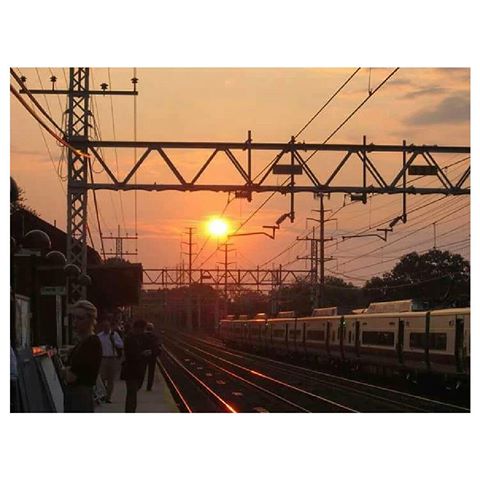
The days grow shorter through most of Advent in our hemisphere. In New England the sun appears to just give up around two-thirty or three, taking on the cinematic orange of sunset even though it still hangs fairly high in the sky. By four-thirty, it is gone altogether. By the time it is seven o’clock, I feel as though I’ve been up half the night. The passing of the solstice means the balance turns in favor of the light, but by Christmas the days are not yet longer enough for us to notice. The sun still seems to surrender rather than set. We have to trust the darkness cannot put it out.

I find it helpful that, here in America, the first Sunday in Advent shares a long weekend with a holiday we call Thanksgiving. We end the liturgical year using gratitude as a diving board into the darkness of the new year, waiting for the light in the stable to shine once again. My cup of thankfulness is overflowing because Ginger, my wife, surprised me with my brother, Miller, and my sister-in-law, Ginger. I had asked them to come soon after my mother died and then never heard much about it. Unbeknownst to me, they had colluded to surprise, and it worked.

We had dinner in the barn behind our house in Guilford, a barn we worked hard to restore this15253427_10154195029299716_4943158562213135120_n past summer. The sextant at church built us a big table out of reclaimed wood he had at his house. While the three of them cleaned and decorated, I cooked, and together we made an indelible memory of family. Driving back from the airport this evening, which is about an hour drive for us, I thought about the stories my brother and I recalled from our childhood and realized I have forgotten more than I have remembered. For all the afternoons we played with our friends in the backyard, there are calendars full of memories that go untouched by our recollection, unheeded, lost under the leaves of time that pile up as one year blows into another. Even the ones I remember are not constant companions, for the most part. I thought of words Paul Bowles wrote in The Sheltering Sky:

Because we do not know when we will die, we get to think of life as an inexhaustible well, and yet everything only happens a certain number of times. How many times will you remember a certain afternoon of your childhood that is so deeply a part of your being you can’t conceive of your life without it? Perhaps four or five more? Perhaps not even that.

There’s a line in the prayer of confession in the Book of Common Prayer that asks forgiveness “for things done and for things left undone.” I think of my life with my brother and I have to ask forgiveness on both counts. And then I find myself flooded with thanksgiving because in the midst of all that was done and left undone, we found each other in new ways even as we buried our mother. The change came mostly because we chose to give each other the grace we offered others. We reminded ourselves we were together. We were family. After many years, the days we share have begun to grow longer. And, I trust, there is still more light to break forth.

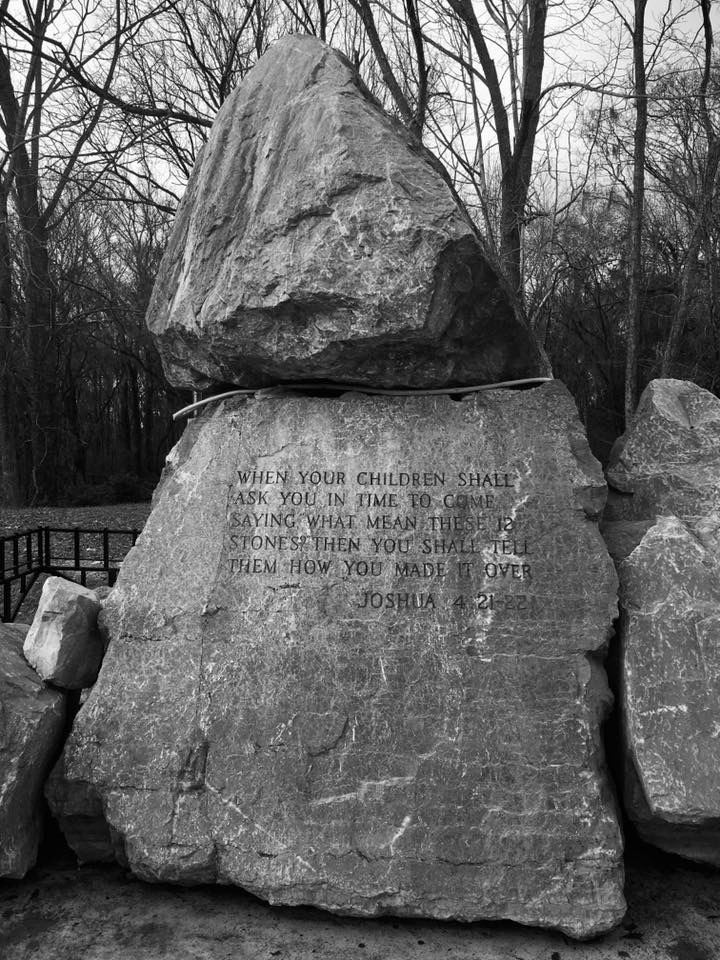
On a larger scale, the darkness this year has been particularly tenacious it seems, and, Christmas or not, it seems poised to go storming into 2017, challenging whatever light we might muster. On one of our walks to show Ginger and Miller our town, we walked past a stone marker that holds the words of the covenant made between the original settlers of Guilford. We read these words:

We whose names are herein written, intending by God’s gracious permission, to plant ourselves in New England, and if it may be in the southerly part, about Quinpisac [Quinnipiac, later named New Haven], we do faithfully promise each for ourselves and families and those that belong to us, that we will, the Lord assisting us, sit down and join ourselves together in one entire plantation and to be helpful to the other in any common work, according to every man’s ability and as need shall require, and we promise not to desert or leave each other on the plantation but with the consent of the rest, or the greater part of the company, who have entered into this engagement.

We are turned to the light when we turn to one another. It is the darkness that divides us, that harbors our fears, that hides the things done and left undone, that leaves us feeling alone. The night is far gone, yes, but I promise not to desert or leave as long as we are in this together. What do you say?

Peace,
Milton

stonecatchers

I’ve allowed myself to become stuck in the aftermath of both the campaign and the election. The volume of discourse has been overwhelming, even when those talking on the same side. Opinions about everything from sexism to safety pins feel as though most all of them are shouted. I haven’t wanted to join in, even though I sort of naturally talk loudly.

At the same time, I don’t want to sit silently while people I love are fearful of what the near future might hold. And I certainly have my opinions about our political process and what we need to do to set things on a better course, but this post is not going to be about that. I want to tell you about words I found that gave me hope, and something to say.

I have been reading Just Mercy: A Story of Justice and Redemption by Bryan Stevenson, who is the founder of the Equal Justice Initiative. We would all do better if this were required reading for the entire country. Stevenson tells the story of his working to get a man named Walter McMillian off of death row in Alabama. Walter, who was from Monroeville, Harper Lee’s hometown, had been unjustly convicted. The book not only tells the story of his work to free Walter, but he tells of the birth and growth of his organization as they work to help those crushed by our brutal prison/justice system.

Read it. Finish reading this first.

Towards the end of the book, he talks about meeting a woman who said she came to the courthouse everyday to help people. Many years before, her son had been murdered by two other teenagers, all of them African American. The boys were tried as adults and imprisoned as such. She spoke of a woman who had sat with her in those days, and she came each day. Part of what she said was,

All these young children being sent to prison forever, all this grief and violence. Those judges throwing people away like they’re not even human, people shooting each other, hurting each other like they don’t care. I don’t know, its a lot of pain. I decided that I was supposed to be here to catch some of the stones people cast at each other. (108)

Stevenson said later that evening he was speaking to a church group interested in Walter’s case. He talks about a story from John 8, where a crowd of men bring a woman to Jesus, saying the caught her in the act of adultery and that she deserved to be stoned to death. They were armed and ready. Stevenson says,

I also reminded people that when the woman accused of adultery was brought to Jesus, he told the accusers who wanted to stone her to death, “Let he who is without sin cast the first stone.” The woman’s accusers retreated, and Jesus forgave her and urged her to sin no more. But today our self-righteousness, our fear, and our anger have caused the Christians to hurl stones at the people who fall down, even when we know we should forgive or show compassion. I told the congregation that we can’t simply watch that happen. I told them we have to be stonecatchers. (108-9)

Stonecatchers. I was a little over halfway home on the train when I read those words and I put the book in my lap and said, “That’s it!” out loud. Only a couple of people looked up.

Stonecatchers.

I thought of a friend in Boston whose Facebook feed has had some anonymous slurs because he is Muslim. I watched as friends chimed in to remind him he was loved and safe, catching stones as they could.

I thought of Wilshire Baptist Church in Dallas, a place dear to my heart. This week they voted to be a welcoming and affirming congregation, giving LGBTQ full rights of membership. The Baptist General Convention of Texas (BGCT) sent a letter before the vote was finalized telling them they would be thrown out. I watched as people gathered around the church, telling stories and catching stones.

Stonecatchers. It’s not a sentimental image. It’s painful work. This is no egg toss. And I am mindful as I think about Jesus watching those smug and sanctimonious men walk away that he didn’t pick up one of the stones and peg one of them between the shoulders. We don’t catch stones to return fire.

One of the stories from Hebrew scripture that I keep coming back to has stones of its own. After the people had been freed from slavery in Egypt, Joshua told them to stack up the stones and build an altar so that when children in later years asked what the stones meant they could tell the story of what God had done.

The air is thick with stones these days. Let us catch all we can and stack them up so when those who come after us ask what the stones mean the answer will be something other than they were how we destroyed one another. Let us catch the stones and stack them up, not as walls, but altars and sanctuaries that we might one day say, this is how we learned to love one another.

Peace,
Milton

aftermath

aftermath


I didn’t watch the debate last night

on purpose. I went to bed and woke

this morning to screens strewn with

the debris of comments and video

clips like empty beer cups and hot dog

wrappers left after a WWF cage match.


Orange is the new angry. No. It’s the

same old angry, the puke of privilege,

intending to set a tone that shouts down

anyone who dares to disagree, or even

suggest that his is not the only voice.


But there are other voices. Charlotte.

Tulsa. Aleppo. Dallas. (Insert city here.)

Your city. My city. Our country. Take

to the streets, my friends. Hold up

signs. Hold out your hands. Knock

on doors. Let’s turn to one another

on street corners and tell the truth

with our smiles, our words, our

willingness to not be defined by

our differences, to not be fueled

by our fears. Live beyond the lie

that there is not enough for

everyone. Trust that it takes all

of us to tell the whole story of

what it means to be an American.


Loud and powerful are not the same

thing; rich and right are not synonymns.

Human and hopeful; neighbor; friend;

just, kind, deferential, determined;

loving; engaging; tenacious; together:

a short list from the vocabulary of

freedom. Speak your words and add

them to the lexicon of lament and

promise. Write them on the walls of

our prisons, our police stations, our

capitols and our churches, our schools

and our state houses. Let the graffiti

of grace speak louder than the garbage

talk of a failed game show host.


Peace,
Milton

further along

4

This is the manuscript of the sermon I preached yesterday at First Congregational Church of Guilford UCC. The text was Genesis 37 and the sermon was the beginning of a series on Joseph that Ginger and Sarah will be continuing.

I titled it, “Further Along”.

______________________

Family: it’s one of the most comforting and discomforting words at the same time. It’s also one of the hot-button words in our culture. We hear some speak of “traditional family values,” saying all we need to do is structure our families just like they did in the Bible. Well, this morning we are going to look at one of those families—actually, one we might even consider as the Central Family in Genesis—and we are going to begin a journey with them over the next few weeks, focusing on the life of Joseph in particular.

The limb of the family tree we are going to climb out on begins with Jacob. You remember him. He was a twin and came out of the womb holding on to the heel of his older brother Esau. When he was old enough, he conspired with his mother Rebekah to deceive his blind and aging father Issac and steal Esau’s birthright. Yeah, that guy.

Jacob left home and got married. Four times. At the same time. But Rachel was his favorite. Jacob fathered twelve sons with his four wives. Rachel was the mother of Joseph and then–a good bit later–Benjamin. Both of the boys held a special place in Jacob’s heart and he couldn’t help but play favorites, which fed the already smoldering sibling rivalry. Listen to the story as told in Genesis 37.

Garrison Keillor said the elements of a good novel are royalty, sex, religion, and mystery, and then he offered the perfect story in one sentence: “Good God,” said the Queen, “I’m pregnant; I wonder who the father is?” Over the next few weeks, the novella, if you will, of Joseph’s life that unfolds in these chapters in Genesis has all those elements, as well as a happy ending. Keep that in mind: it all kind of works out.

But I’m getting ahead of myself.

As you can see from our reading, Joseph didn’t do himself any favors by sharing his dreams with his brothers. They already knew he was the favorite. He had the Coat of Many Colors; Jacob didn’t give those to everyone. And now dreams where he everything kept bowing down to him? A few days keeping flocks and fuming in the desert and they were ready to kill him. When he showed up out in the middle of nowhere to say Dad wanted them to come home, they decided to do more than talk: kill him, throw him down a well, and tell Jacob an animal had gotten him. Reuben, the eldest, had a moment of sanity: don’t kill him; throw him in the well and just tell Dad he’s dead.

They went with the second plan and threw him down an empty cistern (or “the pit,” as the King James translates it). Reuben intended to circle back and let him escape, but before he could get there the others had second thoughts of their own and sold him to passing merchants. As far as they are concerned, the pit was the end of the story. They could go home with goat’s blood on their hands and get on with their lives.

The Dreamer, however, wasn’t done. By the time the boys got back to Papa, Joseph had ended as a servant in Pharaohs’ court.

There’s a great sermon in here about family dynamics. And another about how we live with the damage we have done to one another. I’m not going to preach either of them. I want to talk about the pit and what it says about how God works in our lives.

Before the pit can be the segue to the next part of the story, it has first to be an ending. Joseph knew he was more than metaphorically in the pit of despair. Perhaps the reason his brothers pulled him out and sold him was they were tired of his wailing for help. He didn’t see a way out.

If we took the time this morning, most all of us could name pits in our lives—death, depression, despair, disappointment. And those are just the Ds. Sometimes the pit is one dug by tragedy. At other times, we seem to slide to the bottom in a sort of slow descent of circumstance. Either way we are left to wonder: Where is God when we are in the pit? What role does God play in our story?

Where is God in Joseph’s story?

How much God intervenes in our lives is one of life’s most persistent questions.

If we say, for instance, that God delivered Joseph from the pit, or that God already had in mind for him to end up in Egypt so the Happy Ending could take place, we run the risk of turning this story into a puppet show. His brothers and the slave merchants acted out of self-interest, out of hatred; they were not divinely inspired.

On the other hand, to say those showed up out of simple coincidence, or that Joseph’s survival was just dumb luck doesn’t offer much hope or consolation.

What then shall we say?

I would like to say I don’t plan to answer those questions, but I would like to offer ways to live with them.

First, let us remember that we live in the moment and we interpret in hindsight. We see God in our lives when we look back. What is holy shows up best in our rearview mirror. Faith in God is trusting that one day we will get to look back and understand a little more. Like the old gospel song says, “Further along we’ll know more about it.”

I don’t mean we will see how God engineered circumstances. I mean with the eyes of faith we will see things we could not see in the moment of crisis. In the pit. We will see that we lived through it. And that we were not alone.

In his book A Force of Will, Mike Stavlund tells the story of the birth of his son, Will, who was born a twin, and was born with severe heart problems that required extensive surgeries. He lived only a few days. The book, written some years later, is the story of his looking back to see what he learned about God and faith and life having lived through the throes of trying to save his little boy’s life. One of the things Mike says that speaks to me is that he learned the meaning of the word palliative:

Palliative repairs are those that come in a series—one repair builds on the one before it and aims to enable the surgery that will follow. Which seems unsatisfying. . . . As difficult as it was to do so, we learned to focus on the current procedure and not be overwhelmed with the whole regimen . . . . (25-26)

Then he went on,

Though many might disagree, I think our faith is palliative, too. Faith needs to work well enough to get us further along, and we are allowed to make adjustments as we go along the journey of life. (26)

Hold that thought, and let’s talk about God for a minute. In his book Participating in God, Paul Fiddes says God created us as partners, capable of making choices that matter and he says,

If God is going to allow the world to be creative with some reflection of God’s creativity, there must be some things which are possible but which have not yet become actual for God. Further, when they actually happen there will be something new about them, something contributed by the world. (143)

Just as our capacity for relationship leaves us open to love and loss, to being thrown in the pit and being rescued by strangers, so God’s leaves God’s self open and chooses to move palliatively in our lives, from one thing to the next, so that we might know what Love looks like.

We can’t see the whole story because we are in the middle of it. What we know is we belong to a God whose name is Love and who meets us palliatively everyday, should we choose to live in relationship with God. Listen to Mike Stavlund again:

Like a writer’s drafts, or a backpacker’s tent, or a scientist’s hypothesis, or gardener’s weeding, or a parent’s relationship with a child, our present faith only needs to work for its appointed time and should in fact be flexible, temporary, and transitory. We shape it as best we can and then let it be shaped by God, ourselves, and our community. Maybe faith is only and ever palliative, intended to start us on a journey of eternal collaboration with our Maker. (29)

We are a week past our marking of the anniversary of September 11. Fifteen years later and there’s still no way to explain why bad things happen. We have friends and family members who died too soon, or just died before we were ready. We know the pits of grief and betrayal, of hopelessness, of failure and even sin. We have lost jobs, missed chances, and broken our hearts.

But that is not the whole picture. We can look back and remember those who heard us call and pulled us out, those who stayed when that was all to be done, those who kept showing up to remind us the pit is never the last word. There is more light, more love to come further along.

My brothers and sisters, there is still more of the story of God’s love to live out together. Our God has called us as cowriters. As co-creators in this palliative life. Let us look backward in gratitude and move forward in grace. Amen.

Peace,
Milton