Home Blog Page 76

lenten journal: altar

The Madeleine L’Engle book that has been one of my Lenten companions is called A Stone for a Pillow, and centers around the story of Jacob. As a result, the idea of an altar has been on my mind, which has led me to repeated listening to one of my favorite songs by my friend, Bob Bennett, “Altar in the Field.” It follows my poem.

altar

I was off today,
even though I worked.
I was not myself,
though I was recognized.
I was weary and
restless at the same time;
full of emotion
and searching for words.
I am in the desert,
searching for the stones
we stacked as altars
for days such as these.

Peace,
Milton

lenten journal: courage

I woke up to a surprise snowfall this morning, and nowhere I had to be immediately, so I sat down for my morning coffee and continuing conversation with Madeleine L’Engle and Marilynne Robinson. Even though their two books were written two decades apart and, as far as I know, independent of one another, I am fascinated by the resonance I keep hearing between them, and then, also, in me. Both of them were still talking about stars, about the universe, and what it means to find our place in it. Marilynne said,

The thought occurred to me that if the name of everyone on earth who is remembered for any kind of distinction were assigned to a crater or a mountain or a seeming rivulet somewhere in the visible universe, the astronomers would soon be out of names . . . . Scatter the names of all those who have ever lived over the surface of the knowable cosmos and it would remain, for all purposes, as unnamed as if was before the small, anomalous flicker of human life appeared on this small, wildly atypical planet.

Say that we are a puff of warm breath in a very cold universe. By this kind of reckoning we are either immeasurably insignificant or we are incalculably precious and interesting.

She went on to say she chose the latter. Madeleine was thinking about the universe as well, and our connection to—or separation from (dis-aster)—the stars:

Dis-aster makes me thing of dis-grace. Often the wonder of the stars is enough to return me to God’s loving grace.

To lose our sense of wonder is to grow rigid, unable to accept change with grace.

In the margin I wrote, dis-grace, and have wondered most of the day how we separate one another from the grace of God in the ways we treat each other. Madeleine couched it in terms of T. S. Eliot’s question in “The Love Song of J. Alfred Prufrock”: “Do I dare disturb the universe?” Part of her response was,

Sometimes simply being open, refusing to settle for finite answers, disturbs the universe. Questions are disturbing, especially those which may threaten our traditions, our institutions, our security. But questions never threaten the living God, who is constantly calling us, and who affirms for us that love is stronger than hate, blessing stronger than cursing.

In the margin I wrote, courage.

When I moved to Robinson’s book, she was talking about the same thing:

Western society at its best expresses the serene sort of courage that allows us to grant one another real safety, real autonomy, the means to think and act as judgment and conscience dictate. It assumes that this great mutual courtesy will bear its best fruit if we respect, educate, inform, and trust one another.

At its best, yes. She was also clear about the fear-driven world we live in these days. Though she wrote the essay a few years back, her words felt like a response to what is masquerading as a presidential campaign these days.

Over the years we seem to have become habituated, even addicted, to the notion of radical threat, threat of the kind that can make virtually anything seem expendable if it does not serve an immediate desperate purpose of self-defense—as defined by people often in too high a state of alarm to make sound judgments about what real safety would be or how it might be achieved and who feel that their duty to the rest of us is to be very certain we share their alarm.

In the margin I wrote, dis-courage.

I realize, as David Wilcox says, that there will always be some crazy with an army or a knife, but we are believing a lie when we allow ourselves to be dis-couraged, when we choose fear as the common currency of our culture. To dis-courage is to dis-grace one another, to live as though something can separate us from the love that breathed us into being and made us for each other. Robinson says,

And there is a much larger, more general sense in which we are creators of the universe. We would not be the first human beings to base a universe on fear, and to make sacrifices to allay in which seem unaccountable from the perspective of another culture or generation. We can channel and exploit minds and energies, bending them to use against imagined adversaries. These things have been done any number of times. The alternative is to let ourselves be—that is, to let ourselves be the reflective, productive creatures we are, unconstrained and uncorked.

Courage is not being willing to fight as much as being willing to define ourselves by our calling rather than our cautions, to be fueled by intention rather than suspicion, to live in wonder rather than wariness. To live with courage and grace is to question, to disturb. Madeleine, once more:

Whenever we make a choice of action, the first thing to ask ourselves is whether it is creative or destructive. Will it heal, or will it wound? Are we doing something to make ourselves look big and brave, or because it is truly needed? Do we know the answers to these questions? Not always, but we will never know unless we ask them. And we will never dare to ask them if we close ourselves off from wonder.

I am discouraged when I watch TV and see what passes for political discourse these days. The prospects for the upcoming election are frightening. But I must raise my gaze, go out into the night and stare up at the stars, watch Orion make his nightly trek across the heavens. We are here by the grace of God, born in original love, specks of some significance. Let us chose to reflect the ancient light of Creation rather than this present darkness as it appears on the news channels. Love is stronger than fear.

Courage.

Peace,
Milton

lenten journal: conjunction

Today has been a difficult day. I struggled to find words. I might do better to say these words found me.

lost and found

everything rides
on the conjunction—
and, not or.
I am both.
lost in grief, and
found by friends;
full of joy, and
broken hearted.
grief house rock—
what’s my function?

Peace,
Milton

lenten journal: structure

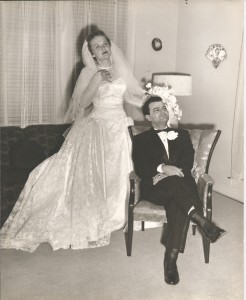
Today would have been my parents’ sixtieth wedding anniversary, so this morning I went looking for Scan 23
Wendell Berry’s poem “The Country of Marriage” to set the tone for my day, landing on these words in particular:

Our bond is no little economy based on the exchange
of my love and work for yours, so much for so much
of an expendable fund. We don’t know what its limits are—
that puts us in the dark. We are more together
than we know, how else could we keep on discovering
we are more together than we thought?

My parents had a good marriage. No. A great marriage. They loved being together, and that increased as they aged. I paid more attention to how they related to each other as I grew older, yet, as I think back on what they were like when I was a child, I can say they always enjoyed being together. That’s the way they looked at life: together.

Though my father was and is remembered as a confident and self-assured person, my mother was the healing force in their relationship. My mother was the one who knew what she wanted out of life. She was going to Africa as a missionary. She had no interest in anyone who was not going with her. Dad didn’t grow up with much sense of family and belonging, and struggled to feel worthy as a person. Thanks to the love and compassion of Dr. W. R. White at Baylor, Dad found his vocation; thanks to the tenacious and enduring love of my mother, he found healing. They went through huge changes together, and they were committed to the promises they had made: to the form, to the structure.

My search for the poem also offered the serendipitous discovery of an essay by Berry called “On Poetry and Marriage: The Use of Old Forms,” in which he looks at a poem and a marriage as art that flourishes within a form, a structure.

Properly used, a verse form, like a marriage, creates impasses, which the will and present understanding can solve only arbitrarily and superficially. These halts and difficulties do not ask for immediate remedy; we fail them by making emergencies of them. They ask, rather, for patience, forbearance, inspiration—the gifts and graces of time, circumstance, and faith. They are, perhaps, the true occasions of the poem: occasions for surpassing what we know or have reason to expect. They are points of growth, like the axils of leaves.

One of the favorite chapters, or perhaps I should say verses, of my life is the decade or so when I wrote songs with Billy Crockett. What started out as writing stuff for youth camp turned into a challenging and wonderful journey. I had written poetry before, and I had paid attention to other people’s lyrics for a long time, but learning how to find words to fit the form and marry the melody in just the right way was hard work. I loved it.

We didn’t have a set process, in that the words always came first or vice versa. We would find an idea that appealed to both of us and then chase it down. The joke was, when I found the words first, he would say, “I love the line. The rhyme is good. Now say the same thing in six syllables instead of nine.” Committing to write songs meant committing to the form, to the structure.

Ginger and I had been married four or five years when I came up with an idea for a love song: “Well Worn Love.” Even a few years in I had begun to realize that, the fire and excitement of new love notwithstanding, the real stuff of marriage—of love—was to be found in staying together and learning of levels that could not be seen at first sight. The idea came from seeing the steps of the Boston Public Library, worn little by little each day, adding up to a profound change of shape. Over time, the stairs reflected how they had been touched by those who came and went. Billy and I were traveling together and staying in a hotel that had a grand piano in the lobby. As he responded the lyrics I gave him, the song took on the form of a waltz, which is an evocative rhythm for me; it feels like a form, a structure for love. The song never made it to a record, but it’s still one of my favorites. The chorus says,

this is the story of two common hearts
that started out young and grew old
they have practiced a lifetime
the waltz of a well-worn love

I have never been much of a dancer, so I hear a waltz, rather than grasp what it feels like to spin together across the floor in three-quarter time. I hear the rhythm in the words, and the way the words fall on a line. When I read the words to the song now I can see I was writing about something that was not unknown to me, and yet still to be discovered. We had moved to Boston on our Great Adventure. My depression had not yet fully shown itself. We have written the waltz of our life together by showing up and keeping our promises—and we are still three decades short of the dance my parents knew. Listening to my mother tell the stories of her life, I could see, even though she had done many things, the form—the structure—of her life was being married to Dad.

Back to Berry:

Because the condition of marriage is worldly and its meaning communal, no one party to it can be solely in charge. What you alone think it ought to be, it is not going to be. Where you alone think you want it to go, it is not going to go. It is going where the two of you—and marriage, time, life, history, and the world—will take it. You do not know the road; you have committed your life to a way.

Here in Guilford, I am learning new roads, once again, and staying true to a form I chose a long time ago. As I have said many times, if I ever have to give an account for the value of my life, the best answer I know to give will be to point at Ginger and say, “I was with her.” And then I’ll start singing, “This is the story of two common hearts . . . .”

Peace,
Milton

lenten journal: old friend

Today’s words grew out of those suggested when I was crowdsourcing ideas for my Lenten writings. The suggestion was best friends. After hearing from some lifelong friends over the past several days in different ways, I made a slight adjustment.  Thinking about the words set me to thinking of songs, and so I offer another musical journey this evening, starting with a song by Rich Mullins (and guitar by Billy Crockett): “Hello, Old Friends.”

hello old friends
there’s really nothing new to say
but the old, old story bears repeating
and the plain old truth grows dearer every day
when you find something worth believing
well, that’s a joy that nothin’ could take away

Old Friends is the title of one of my favorite Guy Clark songs, here sung with James McMurtry and Nanci Griffith.

old friends, they shine like diamonds
old friends, you can always call
old friends Lord, you can’t buy ’em
you know it’s old friends after all

Simon and Garfunkel had a song called “Old Friends/Bookends” that came out a few years before Clark wrote his. I love this video of the two of them singing close to the age of the men they imagined in their twenties.

old friends
winter companions, the old men
lost in their overcoats, waiting for the sunset
the sounds of the city sifting through trees
settle like dust
on the shoulders of the old friends

One of my favorite friend songs that doesn’t have the word in the title is John Denver’s “Poems, Prayers, and Promises,” in particular because it reminds me of my old friend, David Gentiles. I love this version of him singing with the Muppets (with a slight lyric change) from a television special I remember without the help of Youtube.

and talk of poems and prayers and promises and things that we believe in.
how sweet it is to love someone, how right it is to care.
how long it’s been since yesterday, what about tomorrow
and what about our dreams and all the memories we share?

Patty Griffin sings a song of informed and weathered friendship in “Little Fire.”

my friend, you know me and my family
you’ve seen us wandering through these times
you’ve seen us in weakness and in power
you’ve seen us forgetful and unkind
all that I want is one who knows me
a kind hand on my face when I weep
and I’d give back these things I know are meaningless
for a little fire beside me when I sleep

Though Carole King wrote the song, I first remember hearing “You’ve Got a Friend” on James Taylor’s record. I found out she wrote the song in response to “Fire and Rain,” where Taylor sang, “I’ve see lonely times when I could not find a friend,” and King responded:

you just call out my name
and you know wherever I am
I’ll come running, oh yeah baby, to see you again
winter, spring, summer or fall
all you’ve got to do is call
and I’ll be there, ye, ye, ye
you’ve got a friend

We weren’t too far into our songwriting together when Billy Crockett and I wrote “Best of Friends,” which was for the University Baptist Church youth group, where I was youth minister. Sorry. No video on this one, but I have a whole movie library of memories that play when I hear this song.

these days of sunshine these days of rain
we pull together in days of pain
we share beginnings we share the ends
it’s worth it all in these days to be best of friends

Yes. It is worth it all.

Peace, old friends,
Milton

lenten journal: sermon

”What About Me?”
Mark 5:21-43
A Sermon for First Congregational Church of Guilford UCC
February 28, 2016

Let me begin this morning by saying you’re going to hear a story you’ve heard before. In fact, you’re going to hear one you heard just a couple of weeks ago when Ginger preached about the woman who had been hemorrhaging for twelve years, or, as I learned to call her as a young boy reading from the King James Bible, the woman with the issue of blood. But this morning you are going to hear it in the context of the story that happened before and after her healing—a miracle sandwich, if you will. Mark tells the story of this woman in between another one, that is he starts an account of Jesus’s encounter with one person, this woman interrupts them, Jesus heals her, and then returns to the first person. Listen to these stories from Mark 5.

Jesus crossed the lake again, and on the other side a large crowd gathered around him on the shore. Jairus, one of the synagogue leaders, came forward. When he saw Jesus, he fell at his feet and pleaded with him, “My daughter is about to die. Please, come and place your hands on her so that she can be healed and live.” So Jesus went with him.
A swarm of people were following Jesus, crowding in on him. A woman was there who had been bleeding for twelve years. She had suffered a lot under the care of many doctors, and had spent everything she had without getting any better. In fact, she had gotten worse. Because she had heard about Jesus, she came up behind him in the crowd and touched his clothes. She was thinking, If I can just touch his clothes, I’ll be healed. Her bleeding stopped immediately, and she sensed in her body that her illness had been healed.

At that very moment, Jesus recognized that power had gone out from him. He turned around in the crowd and said, “Who touched my clothes?”

His disciples said to him, “Don’t you see the crowd pressing against you? Yet you ask, ‘Who touched me?’” But Jesus looked around carefully to see who had done it.
The woman, full of fear and trembling, came forward. Knowing what had happened to her, she fell down in front of Jesus and told him the whole truth. He responded, “Daughter, your faith has healed you; go in peace, healed from your disease.”

While Jesus was still speaking with her, messengers came from the synagogue leader’s house, saying to Jairus, “Your daughter has died. Why bother the teacher any longer?”
But Jesus overheard their report and said to the synagogue leader, “Don’t be afraid; just keep trusting.” He didn’t allow anyone to follow him except Peter, James, and John, James’ brother. They came to the synagogue leader’s house, and he saw a commotion, with people crying and wailing loudly. He went in and said to them, “What’s all this commotion and crying about? The child isn’t dead. She’s only sleeping.” They laughed at him, but he threw them all out. Then, taking the child’s parents and his disciples with him, he went to the room where the child was. Taking her hand, he said to her, “Talitha koum,” which means, “Young woman, get up.” Suddenly the young woman got up and began to walk around. She was 12 years old. They were shocked! He gave them strict orders that no one should know what had happened. Then he told them to give her something to eat. (CEB)

One of the signatures of Mark’s gospel is how much of Jesus’s ministry happens in the context of interruptions. It was not as though Peter met him when they got up in the morning and said, “Master, you need to get ready. You have to cast out the demons of the guy up on the hill at nine, sail across the Sea of Galilee by ten-thirty, calm the storm on the way, and then meet Jairus to heal his daughter around 11:45, and let a bleeding woman touch you on the way. Oh—and then we have lunch for five thousand a little after one.”

Jesus was a man on a mission, not a schedule. The point was to be available, to be in the middle of humanity, to be God With Us. Mark’s other signature is his profligate use of the word, immediately, as if Jesus has no time to lose. He goes from parable to miracle to whatever’s next with a sense of urgency: he is the Word Made Flesh so the world could see a tangible, visceral vision of God’s love. Marilynne Robinson, a fellow UCCer, says, the gospel stories “tell us that there is a great love that has intervened in history, making itself known in terms that are startlingly, and inexhaustibly, palpable to us as human beings,” and their main point “is that God is of a kind to love the world extravagantly, wondrously, and the world is of a kind to be worth . . . this pained and rapturous love.”

Jesus had hardly stepped out of their little boat when Jairus met him. Sure, there was a crowd of people, but not a crowd of people with a sick child. Jairus had an emergency. He needed help. His helpless twelve year old daughter was in trouble. She was dying. What could be more important than that?

Step back. Wait your turn. Jesus is here for me. For me.

Still, the crowd pressed close. As Jesus and Jairus pushed through the throng of humanity, they passed the woman who had been bleeding for twelve years. She knew nothing of the girl. She trusted that this was her chance. Sure, there was a crowd of people, but not a crowd of people who were suffering from an endless hemorrhage. She needed help. She needed to touch him. What could be more important than that?

Step back. Wait your turn. Jesus is here for me. For me.

And so she pushed her way through the crowd, past Jairus, and touched the hem of Jesus’s tunic.

When we look at the stories as they are being told side by side, we can look at the contrasts between the two people: rich, poor; powerful, powerless; asks for healing, takes the healing without asking; a twelve-year-old girl with a sudden and deadly illness, and a twelve-year-old chronic illness in a grown woman; a girl who is touched by Jesus and raised from the dead, and a woman who touches Jesus who is healed while still very much alive.

When we look at the heart of the stories, we see they are the same story with different circumstances. They are, the stories of two people come in contact with Jesus and are transformed from death to life, just like us.

Frederick Buechner writes beautifully about these two stories and says,

Little girl. Old girl. Old boy. Old boys and girls with high blood pressure and arthritis, and young boys and girls with tattoos and body piercing. You who believe, and you who sometimes believe and sometimes don’t believe much of anything, and you who would give almost anything to believe if only you could. You happy ones and you who can hardly remember what it was like once to be happy. You who know where you’re going and how to get there and you who much of the time aren’t sure you’re getting anywhere. “Get up,” he says, “all of you!”—all of you!—and the power that is in him is the power to give life not just to the dead like the child, but to those who are only partly alive, which is to say to people like you and me who much of the time live with our lives closed to the wild beauty and miracle of things, including the wild beauty and miracle of every day we live and even of ourselves.

Yes. Yes. Jesus came that we might have life and have it more abundantly, as John wrote. Remember that. Trust that. Stake your life on that.

And then I want to ask you to go back to the story for one more thing. Look past Jesus and look at Jairus for a moment. He meets Jesus before both feet are even on dry land to plead his case: my daughter is dying; you must come. They begin walking, but then Jesus stops to deal with some woman and, by the time he has finished talking to her, the servants have arrived to tell Jairus his daughter is dead. It’s too late. Mark notes Jesus’s response to them, but there’s nothing about Jairus. No rant. No explosion. No trace of why-did-you-have-to-stop-for-her-and-now-my-daughter-is-dead. No What About Me.

Jesus said, “Don’t be afraid. Keep trusting,” and Jairus did. He trusted that there was no shortage on God’s love. He trusted that Jesus did not spend everything on that woman. He trusted, somehow, that his great pain was not the only pain, and that the healing of the woman who had been bleeding as long as his daughter had been breathing not only mattered, but was connected. He needed her to be healed, even as she needed his daughter to live. Neither of them was going to run out of the love Jesus was offering. There was no shortage.

If we need help, then speak up. Reach out. There are times when we need to push through the crowd a bit, or call out a name, when we need to be willing to let those who can help us know we are hurting. And—not but—and we must remember we are not the only ones who are dying inside. Everyone in the crowd is part of the walking wounded. As Ginger quoted last week, “Be kind, for everyone is fighting a great battle.” Yes, and that battle is not against one another.

So let us go out into the streets, cross whatever lakes and rivers we must to do what we do, ask for help and healing when we need it, and leave ourselves open to interruptions, both from those who need our love and who have come to love us. My church family, there is more of God’s wondrous love than we can imagine, and it is that love that we are called to extravagantly share in Jesus’s name. Amen.

Peace,
Milton

lenten journal: sound

From time to time, as I read an author’s work, my connection with the writer moves beyond the page to a more personal connection. They become my friend—an odd use of the word, I suppose, having never met them—because of the resonance I feel. Reading their books becomes a conversation of sorts. I can almost hear them reading to me, even though I have no idea what they actually sound like. Madeleine L’Engle is one, Frederick Buechner another, and now Marilynne Robinson is quickly joining that circle. Here is the opening paragraph to her essay, “Wondrous Love.”

I have reached the point in my life when I can see what has mattered, what has become part of its substance—I might say a part of my substance. Some of the things are obvious, since they have been important to me in my career as a student and teacher. But some of them I could never have anticipated. The importance to me of elderly and old American hymns is certainly one example. They can move me so deeply that I have difficulty even speaking about them.

One of the things I miss most about our life in Durham is the monthly gathering at Fullsteam Brewery for Beer and Hymns. The man who leads the evening, Jesse DeConto, does a marvelous job of connecting old and new, memory and meaning, and we all sing our hearts out. One of the hymns we have sung there, and that Robinson mentions, is “In the Garden.” Until I got to seminary, I always thought of the song as rather saccharine until one day in Dr. Reynolds’ hymnody class he explained that the song was written from the perspective of Mary Magdalene coming to the tomb on Easter morning and meeting Jesus, first mistaking him as the gardener and not recognizing him until he called her name. Robinson speaks of the hymn with these words:

Jesus spoke as a man, in a human voice. And a human voice has a music that gives words their meaning. In that old hymn I mentioned, as in the Gospel, Mary is awakened out of her loneliness by the sound of her own name spoken in a voice “so sweet the birds hush their singing.” It is beautiful to think what the sound of one’s own name would be, when the inflection of it would carry the meaning. Mary heard in the unmistakable, familiar, and utterly unexpected voice of her friend and teacher. To propose analogies for the sound of it, a human name spoken in the world’s new morning, would be to trivialize it. I admire the tact of the lyric in making no attempt to evoke it, except obliquely in the hush that falls over the birds. But it is nevertheless the center of meaning of this story that we can know something of the inflection of that voice. Christ’s humanity speaks to our humanity.rca

The sound of his voice. It evokes, for me, images of old RCA Victor records with the little dog staring at the amplifier, surrounded by the words, “his master’s voice.” And it ties in beautifully with a comment from my friend Terry—in Durham—in response to last night’s post on tone.

I think of music as I am reading this, Milton. One can learn, and needs to learn, scales, chord structure, harmony, etc., but when it comes down to it, timing and tone are what most express the emotional content, and thus most communicate the feel of a song. Stan Getz was called “The Sound” because of his warm, lyrical tone. I am inspired by your observations to think of Jesus more as “the sound” rather than “the word.”

In the beginning was the Word. In the beginning was the Sound. Yes.

During my years in Durham, Terry and I played and sang together. He is one of the best harmonica players I have ever heard; he, too, knows about tone and timing. We called ourselves, Oysters on the Half Shell: we’re raw and delicious. One of the songs I loved to do with him was a John Prine tune that says,

what in the world’s come over you
what in heaven’s name have you done
you’ve broken the speed of the sound of loneliness
you’re out there running just to be on the run

The song has always intrigued me because, though I cannot articulate how one might break the speed of the sound of loneliness, the words are deeply resonant because there’s something about the word, sound. The sound of loneliness is a cry in the night, a mournful song, or, perhaps, an expansive silence. You know it when you hear it.

Robinson has more to say:

I tell my students, language is music. Written words are musical notation. The music of a piece of fiction establishes the way in which it is to be read, and in the largest sense, what it means. It is essential to remember that characters have a music as well, a pitch and tempo, just as real people do. To make them believable, you must always be aware of what they would or would not say, where stresses would or would not fall.

One of the old hymns I keep coming back to is “Come, Thou Fount of Every Blessing“, and particularly the line that says, “Tune my heart to sing thy praise.” Tonight, I feel the tuning touch of my friends, those I know in the flesh, and those I know through words and music.

The Sound became flesh and dwelt among us. Within in us. Amen.

Peace,
Milton

lenten journal: missing

Today has been a day of missing for me.

I began by posting this picture of my mother’s recipe box, which now resides here in Guilford. She has stayed on my mind ever since. My brother and sister-in-law left today for Cambodia , which they have done before, but somehow it matters more this time. I spent the afternoon preparing for dinner for those who would gather around our Guilford table and missing those who ate with us in Durham. And now it’s late and my heart is awash in feelings that I don’t know how to articulate in any way that make a coherent blog post.

Dag Hammarskjöld prayed, “For all that has been, thanks. For all that will be, yes.” Tonight, that is my prayer.

Peace
Milton

lenten journal: garlic

Our church has a gathering each Wednesday night during Lent and they asked me to prepare the meals. I spent the day working on soups and bread and dessert for sixty and, after sitting here at the computer for some time now trying to keep my promise, I have found the words elusive, other than having the word garlic stuck in my head, even as the house still smells like it. So I found my way to a poem, once I gave in to the aroma of the evening.

garlic

I have spent the day
working with my hands,
and not with words.
I have chopped and sliced,
measured and stirred,
sautéed and simmered,
all on my way to soup.
The church supper is long
over, and my kitchen
still smells like garlic.
I have spent the last two
hours staring at a screen,
typing lost drafts, trying
to force ideas to ripen.
I should have something
profound to offer and
I do not, other than to
say I wish I knew words
that smelled like garlic.
That would be enough.

Peace,
Milton

lenten journal: weather

weather report

yes, there’s a certain sadness
in the tears of a late night rain,
the showers of memories, now
caught in tiny sidewalk ponds—
and I’m stepping around them,
wishing you would call to say
you saw the storm on the news,
them ask about the weather
as if our lives depended on it.
four or five storms have come
and gone since you quit calling,
and I have no one to tell how
the big flakes failed to freeze,
or the big storm never came,
and I’m walking to my car . . .
yes, there’s a certain sadness—
call it the weather of my heart:
an empty wind on a rainy night
trusting that spring will come.

Peace,
Milton