Home Blog Page 62

advent journal: do not be afraid

When I was a boy living in Lusaka, Zambia, one of our neighbors was an American woman who had a large German Shepherd named Tammy. The dog was trained to sit in the middle of the front yard and look and sound menacing, since the woman was frightened of people who didn’t look like her. Tammy was most inclined to bark at those who didn’t look like her, as well.

The dog scared me. When we did go to her house, I was hesitant to approach her at all. One day, the dog did something she wasn’t supposed to do and the woman turned on the dog and yelled, “Tammy—shame!” The ferocious animal crumbled. She didn’t move. I felt incredibly sad for her.

Ginger worked late last night, trying to wrangle her sermon into its final form. The story for today is about Elizabeth and Zechariah learning that they would have a child who would grow up to be John the Baptist. The story became more complicated for her when she read one commentator who pointed to the line about the “disgrace” or “shame” Elizabeth felt for being childless. Luke notes that she remained secluded for five months after she found out she was pregnant and would say, “How good the Lord is to me,” she would say, “now that he has taken away the shame that I have suffered.” (1:25, Phillips) The commentator pointed out that for those who have struggled to have children, or who have not been able to do so, this is a difficult story, and that difficulty is lost on those who don’t walk the same road.

I love to tell the story, for those who know it best
seem hungering and thirsting to hear it like the rest

says one of my favorite old hymns, but when the way we tell the old, old story does damage, we need to look at how we tell it. The fact that Elizabeth and Zechariah could not have children was not their fault, yet they felt shame—the same life-crushing force that broke that German Shepherd into pieces in front of me. Too many times, we hear that the old, old story is one of God yelling, “What the hell is wrong with you?” rather than saying, “I am with you.”

Most every time an angel shows up in the story, they start by saying, “Do not be afraid.” I understand how that can be read simply as a response to the fact that an angel was suddenly in the room, but what if, as we tell the old, old story, we were to take it in a larger sense: the presence of God is not something to be afraid of. God is not mad. God is not our for revenge. The point of the Incarnation is not payback. God is not trying to get even.

The same Gabriel who talked to Zechariah told Joseph it was all in the name of his son: Emmanuel—God With Us.

Shame does not give birth to life. Only love creates life. Only love breaks through the barriers we build between ourselves. We are created in the image of God. We were not created to be controlled by shame.

Last week, we went to see Boy Erased. The movie is based on a true story about a young man who is the son of an evangelical preacher. The boy comes out to his parents and his dad sends him to conversion therapy. The boy goes willingly at first, until he begins to realize what is being done to him and the others there, which is they are reminded over and over that God hates who they are. The one running the camp might as well have been yelling, “Shame!” over and over and over. When we left the movie, I could not get away from the thought that if our theology does damage, then something is wrong with our theology. If we are not building relationships, building up one another, binding ourselves to one another, then we are not telling the old, old story as it was first told to us.

The best thing we could do this Advent is to tell the old, old story with clarity and simplicity, beginning with, “Do not be afraid.” Gabriel told Zechariah to not be afraid because God had heard their prayers. A few verses later, Gabriel appeared to Mary and said, “Do not be afraid. God loves you dearly.”

Let’s tell that story. Please.

We are not sinners at the hands of an angry God. Jesus did not have to die as some sort of cosmic payment for our sins. Jesus was killed because the religious leaders of his day thought they could be more successful if they aligned with the fear-based oppression of the ruling government. Sound familiar?

Yes, we have sinned. And we keep sinning. But that is not who we are. We are the beloved of God. We are created in God’s image and worthy to be loved. That is the oldest story of all. And the best one.

Advent began here with a dark and rainy day. Even with full sunshine, these short winter days mean we only get about nine hours of daylight. We have had to have the lights on all day. In the early verses of John’s gospel he says, “The light still shines in the darkness and the darkness has never put it out.” (1:5, Phillips)

In these dark days, those words are both hopeful and fantastic. Can the light really outlast these days when we see some much hate running unleashed, so much intentional divisiveness, so much that pushes to define people by what they have done wrong or how they don’t measure up?

The old, old story reads like contemporary news, as the Romans sought ways to control and crush the people of Palestine, whom they considered to be less than human. They had set up an economic system that played to the rich at the expense of the poor. And still, Christ was born.

The light does shine in the darkness. Period.

We are the beloved of God. Period.

Do not be afraid.

Peace,
Milton

this is why we gather . . .

I preached at my church yesterday.

The sermon is short because it was a New Member Sunday and we had twenty-two people join. Here’s what I said.

_______________________________

There is a tradition in poetry of the “found poem,” which is a type of poetry created by taking words, phrases, and sometimes whole passages from other sources and reframing them as a poem—the literary equivalent of a collage. My message this morning is sort of a found sermon, if you will, pulling together a story, a poem, and a song—all borrowed—that say best what I is on my heart today.

When Ginger asked me to preach as we mark both Thanksgiving Sunday and Membership Sunday, I started thinking about the relationship between gratitude and belonging. What does it mean to be thankful? In our passage for today, Paul said, “Give thanks in all circumstances.” But for what? And how?

The story. Many years ago, my brother lived in Akron, Ohio. His barber was a Lebanese man who had fled Lebanon with his family when it was what Syria is today. They literally fled in the middle of the night with the clothes on their backs. In Lebanon, he had been a doctor. In Akron, he was a barber. My brother said when you walked in the shop and said, “How are you?” the man always answered, “Grateful.”

His gratitude had to do with more than things going well. He had learned that sorrow and joy are not opposites. Grief and gladness are not two sides of a coin. Its all mixed together, woven, one thread over, around, and through the other. We’re not waiting for things to get better so we can say thank you. We trust that God wants to do more than rescue us. We are here to make meaning of our lives, and we do that in deliberate community. We gather together to remember that love is stronger than death, than difficulty, than oppression, even stronger than evil. We give thanks because we are not hopeless. And we are not alone.

Now, the poem–written by W. S. Merwin. It’s called “Thanks.”

Listen
with the night falling we are saying thank you
we are stopping on the bridges to bow from the railings
we are running out of the glass rooms
with our mouths full of food to look at the sky
and say thank you
we are standing by the water thanking it
standing by the windows looking out
in our directions

back from a series of hospitals back from a mugging
after funerals we are saying thank you
after the news of the dead
whether or not we knew them we are saying thank you

over telephones we are saying thank you
in doorways and in the backs of cars and in elevators
remembering wars and the police at the door
and the beatings on stairs we are saying thank you
in the banks we are saying thank you
in the faces of the officials and the rich
and of all who will never change
we go on saying thank you thank you

with the animals dying around us
taking our feelings we are saying thank you
with the forests falling faster than the minutes
of our lives we are saying thank you
with the words going out like cells of a brain
with the cities growing over us
we are saying thank you faster and faster
with nobody listening we are saying thank you
thank you we are saying and waving
dark though it is

There’s one line in that poem I want to talk back to.

Near the end he says, “With nobody listening we are saying thank you.” I want to talk back because of you. Because of us. Our faith in Christ and our commitment to one another means we trust someone is listening. That is why we are here today. That’s why we are welcoming folks into our belonging. That is why we are filling out our pledge cards—just one of the ways we make our belonging tangible.

The song. My friend Christopher Williams has a wonderful song called “Gather,” and I want to borrow some of his words.

when we help each other fight the fear
be present with one another
we will find that’s where the life of God is lived
to give courage, to hear it now
we are beloved this is holy ground
I need you you need me
this is why we gather
to remember why we matter
this is why we gather

One of the sentences that jumped out at me in our scripture reading said, “Be at peace among yourselves. And we urge you, beloved, to admonish the idlers, encourage the fainthearted, help the weak, be patient with all of them.” Be patient with all of them. I feel like I need to repeat that last phrase over and over until I get it. Be patient with all of them. With all of one another.

My church family, this is why we gather—why we join, why we read historic covenants, why we go to coffee hour, why we sit on committees, why we pledge, why we sing and pray and worship. This is why we gather: to remember why we matter.

Let us be thankful boys and girls. Amen.

Peace,
Milton

power is not the point

2

I preached at North Madison Congregational Church again last Sunday. The text was Mark 8:27-38, a passage that offers new things any time I read it. Here is my sermon.

__________________________

When the gospel writers began to put the stories down on parchment, many years after Jesus had ascended, they seem to have organized them so that one thing sort of leads to another—or at least that is how it appears as I read. We know the stories are not told in the exact order in which Jesus and his followers lived them because they are not in the same order from book to book. How we remember what happened matters as much as what actually happened, so there is something for us to learn from the context of our story this morning, even as we seek to learn from the account itself.

In the verses before Jesus started asking questions of his followers, Mark records this interaction:

They came to Bethsaida. Some people brought a blind man to him and begged him to touch him. He took the blind man by the hand and led him out of the village; and when he had put saliva on his eyes and laid his hands on him, he asked him, “Can you see anything?” And the man looked up and said, “I can see people, but they look like trees, walking.” Then Jesus laid his hands on his eyes again; and he looked intently and his sight was restored, and he saw everything clearly. Then he sent him away to his home, saying, “Do not even go into the village.”

Mark says Jesus and the disciples hit the road after the encounter and headed for Caesarea Philippi. The talk as they walked along the road is a rollercoaster of emotion. Jesus asks his disciples who people think he is. “They think you’re a prophet,” they said. That was pretty good news, I guess. It meant that folks were getting at least part of the message.

Then Jesus asked a more daring question: “Who do you think I am?”

Mark says that Peter was the one who answered. “You are the Christ. The Messiah.”

Jesus’ heart must have leapt just a little. Yes. Good answer. A+. We have a winner. High fives all around. Since they seemed to finally be getting the picture, Jesus decided he could go deeper. He began to tell them what it meant that he was the Messiah. He was going to suffer. He was a dangerous man to those in power and they were out to get him. They would get him. They would kill him. But that would not be the end of the story. That Jesus knew how to bring down a room.

Peter wasn’t having any of it. Mark says he “rebuked” Jesus. He reprimanded him. He was the Messiah—the Captain of the Winning Team. Things were about to change. Being the People of God meant they got to come out on top, right?

But Jesus turned and rebuked him right back. Peter might have been able to see he was the Christ, but he didn’t understand what that meant—much like the blind man Jesus had healed before they left town. So Jesus kept talking, working to help them see what it meant to follow him. The point of being the Messiah wasn’t to rise to power or to get revenge or to take control. God wasn’t trying to get things in order. The point of the Incarnation was to show the world what love looked like. Jesus came to love people and show them how to love one another. The point was to learn how to see a world where people take care of one another. Then he said, “Take up your cross and follow me.”

We hear those words and the metaphor seems clear: Jesus died on the Cross—we are called to live sacrificially, to offer our lives to God. But though his disciples knew about crosses, they did not know that was how Jesus was going to die. So what did the metaphor mean to them? And what did Jesus mean by his statement? It had to be more than, “When the Bible finally comes out, this verse will preach!”

What does it mean to take up our crosses and follow Jesus?

I will lean into the words of two friends for answers to that question. One lives in North Carolina and has spent his life working to help those who are homeless find housing. His name is Terry. He says he thinks our cross is the deepest pain in our lives. To take up our cross is to respond to that pain in the lives of those around us—to see it more clearly, if you will—rather than trying to get away from it.

This past September 13 marked what would have been my father’s ninetieth birthday. He died five years ago, a month short of eighty-five. After he died, I wanted to call all my friends whose fathers had died before mine and say, “I’m sorry. I meant well, but I had no idea how this felt.” The pain of my grief invited me to a resonance I had not known before.

Eric is a Methodist minister in Texas. He says when we talk about following our passion in life we miss our true calling and purpose. God calls us to follow our broken hearts. “Lose your life,” Jesus says, “and you will find it.” To follow our broken hearts is to live with compassion, voluntarily carrying each other’s pain, seeing all of those around us as those we are called to love.

I suppose the Apostle Paul might have heard the story about Jesus healing the blind man in stages, and the man thinking that people were trees. I hear echoes of it in Paul’s words at the end of 1 Corinthians 13—the Love Chapter. when he says, “For now we see in a mirror, dimly, but then we will see face to face. Now I know only in part; then I will know fully, even as I have been fully known.” But even through a cloudy mirror, Paul could see

Love is patient; love is kind; love is not envious or boastful or arrogant or rude. It does not insist on its own way; it is not irritable or resentful; it does not rejoice in wrongdoing, but rejoices in the truth. It bears all things, believes all things, hopes all things, endures all things. Love never ends.

Love never ends. Then again, neither does the need for it. Perhaps part of taking up our crosses is realizing the call to love those around in us is relentless, whether we are talking about the world at large or the pain and struggle that is a part of the lives in this room. It is easier to let ourselves see others as trees walking around rather than embracing them as one of us. To love one another—to share who we are and what we have—means to lose a lot. It means we have to give up our stuff, our privilege, our comfort, or our position so someone else can see a new life. Jesus was not being hyperbolic when he said love would cost us. If love never ends, neither does our calling to love those around us. To see people around us as they really are will break our hearts and help us truly see our place in this world. Power is not the point. We are called to love the world.

I closed my sermon by singing “In This Very Room, which you can hear here.

In this very room
There’s quite enough love
For one like me
And in this very room
There’s quite enough joy
For one like me
And there’s quite enough hope
And quite enough power
To chase away any gloom
For Jesus Lord Jesus
Is in this very room

In this very room
There’s quite enough love
For all of us
And in this very room
There’s quite enough joy
For all of us
And there’s quite enough hope
And quite enough power
To chase away any gloom
For Jesus Lord Jesus
Is in this very room

In this very room
There’s quite enough love
For all the world
And in this very room
There’s quite enough joy
For all the world
And there’s quite enough hope
And quite enough power
To chase away any gloom
For Jesus Lord Jesus
Is in this very room

Amen.

Peace,
Milton

dressing for the day

I preached last Sunday at North Madison Congregational Church UCC—my first time to preach there. I drew from two passages, Ephesians 6:10-20 and 1 Samuel 17:31-40, both of them having to do with armor.

—————————-

I have to start this morning with two confessions. The first is that I have never found much use for battle as a metaphor for life or faith. I don’t mean to say there is no conflict in life, but that I have yet to find a situation in my life, or in history for that matter, where responding to violence with violence proved to be a healing solution. I could go on, but I’ll leave it there for now.
My second confession has to do with the sermon title in the order of service: “The Grammar of Grace.” It’s wrong. Most of what I had to say when I sent in that title is still here, but sermon preparation, for me, is a bit like a Chopped, the show where the chefs have to make something out of the ingredients that are put in front of them. I pick up ingredients all week long, so the dish keeps changing. So let me tell you what ingredients I found and maybe by the end of the sermon I’ll know what the title should have been.

Even with all its battle language, the passage from Ephesians is meaningful to me, mostly because of a sermon I heard my father preach many years ago. I remember it because he talked about prepositions, which I found far more interesting than he did on most occasions.

“When we say, ‘the armor of God,’” my father said, “we have to understand that the preposition is descriptive and not possessive. The armor of God is not something God has that God gives us like a uniform. The armor is God. We wrap ourselves up in the Spirit of God.”

I can’t read the passage without hearing his words. And you can see where my first title came from. As a former high school English teacher, it was too good. But then I read the words of David Finnegan-Hosey, one of the authors I worked with this year, who is a UCC minister and the chaplain at Barton College in North Carolina. He wrote a piece for the UCC Mental Health Network looking at our two passages for this week—one where Paul calls us to put on armor, and the other the story of David taking off the unnecessary armor that was thrust upon him..

David closed his article by saying, “My prayer for the church this week is that we can be a place where people can take off the ill-fitting armor that they have learned to wear to try to protect themselves from the world, and instead put on a different kind of armor, one made up of peace, of prayer, of love. This armor, rather than cutting us off from each other, will connect us to each other and to God, so that we can stand, not alone, but together.”

When I finished the article, I sent a note to the office and added the passage from 1 Samuel.

The final piece found me yesterday as I was wandering the back roads between East Haven and Guilford, trying to get around the snarled traffic on I-95. “The Power of Design” was the focus of the TED Radio Hour, one of my favorite NPR shows, and Tony Faddel, who led the team that created the iPod and iPhone, and then created the NEST thermostat, was the speaker.

He started off talking about how we get used to everyday things, even when they aren’t helpful, and he used the stickers on our fruits and vegetables as an example. They help us at check out, but they are a pain when we get home and want to eat the fruit. We got frustrated the first time we tried to peel them off. Then we got used to it. And we got used to it because, as people, we become numb to bad design. The process, he said, is called habituation—our brains learn things that become habits in order to free up space to do new things.

Habituation can be helpful. He mentioned learning to drive. I thought about playing guitar. I don’t have to think about how to shape the chords with my left hand. My fingers know where to go. If we didn’t habituate, he said, we would notice every detail and be unable to learn anything new. But when it numbs us—when we learn to live with bad design—it stops us from noticing and fixing the problems around us and we stop looking for new ways to live and learn.

He offered three tips for making good design that also speak to us this morning.

  • Look broader: notice the larger context. Look at the factors that came before the problem, and the ones that will come after.
  • Look closer: identify the missing details. Pay attention to the small stuff.
  • Look younger: he wasn’t talking about Oil of Olay. He said Steve Jobs always challenged them to “stay beginners.” Faddel talked about listening to his children’s questions as they encountered the world. And he quoted Picasso, who said, “Every child is an artist. The problem is when he or she grows up is how to remain an artist.”

And I thought about David. He was a kid: picture a seasoned, seventh-grade shepherd. The reason he was on the battlefield at all was that his father sent him to check on his older brothers, who were in the army. While he was there, David heard Goliath taunting the Israelites, so he went to Saul and volunteered to stand up to him.

Saul finally agreed to let him go, but Saul was blinded by the habituations of combat. If David was going to fight, he needed armor. He brought a helmet and a coat of chain mail—not the letter, but the metal suit—a shield and a sword and layered them all on the brave little middle schooler. David couldn’t even walk, so he took it all off. It was bad design, if you will. The big picture, for him, was to trust God and his own abilities. He had killed lions and bears in the field. The closer look was to choose the five stones from the river for his slingshot. And off he went to meet the giant.

Now let’s circle back around to the chaplain David’s words about both taking off our armor and putting it on. One of the problems with using battle as a metaphor for faith is that war is about power and fear, and faith is about trust and relationship. Paul was writing to Christians who were being terrorized by the Roman army. They were being jailed, beaten, and killed. He leans hard into battle language. But I think there’s a certain irony in the way Paul implores them to put on the armor of God because the armor he names is truth, righteousness, peace, faith, and salvation, or grace, which brings me back to my dad’s take on the prepositions. Paul wasn’t describing weapons. He was describing God.

To put on the armor of God is to wrap ourselves in the Spirit of Christ, to look broader than our fears and our pain and see what got us to where we are and look for what lies ahead. To put on the armor of God is to wrap ourselves in the Sprit of Christ that gives us eyes to look closer and see all that binds us together even as we feel thrown to the edges by the centrifugal force of life. To put on the armor of God is to wrap ourselves in the Spirit of God so that we can see with younger eyes, so that we can become like children, willing to ask wide-open questions and trust that nothing—absolutely nothing—can separate us from the love of God.

To put on the armor of God is to break our habituations that have allowed us to learn to live with fear as our national currency, or that led us to think that nothing can really change, or that reinforce that we are on our own. To put on the armor of God is to remember that we are wonderfully and uniquely created in the image of God and worthy to be loved. To put on the armor of God is to stay beginners and keep asking questions, rather than allow our habituations to give in to our fears or numb us to the hope ahead.

Let us remember that the armor of God is not designed to be put on one time, but something we do over and over again. We know we need the armor of God as we face life’s big challenges, but we need to wrap ourselves in the Spirit of Christ over and over, as we drive out kids to school, or deal with our coworkers, as we stand in line at the grocery store, or sit in a church committee meeting. Putting on the armor of God is how we dress for the day. Hey—maybe that’s the title: dressing for the day. To put on the armor of God is to wrap ourselves in the Spirit of Christ that we might be reminded that life is not just one the same ol’ same ol’, over and over again. This is the day our God has made, let us rejoice and stay beginners. Amen.

Peace,
Milton

not numb enough

I’m behind on my posts. This is a sermon I preached at First Church of Christ, Congregational of East Haddam, Connecticut a couple of weeks ago.

____________________

I have an old friend who is a singer-songwriter. He lives in Texas now, but many years ago he lived in California for awhile and we wrote songs together long distance, which means we talked almost every night. One night he answered the phone with tales of his trip to the dentist, which included a root canal.

“I have a song idea from the whole thing,” he said. “It would be called ‘Not Numb Enough.’”

I was in my car Wednesday morning when I first heard the news of the reports that chronicled the decades of child abuse by predatory priests in Pennsylvania. Yesterday, I heard about the overdoses on the New Haven Green—over a hundred people who were given drugs that were intended to hurt them. The fires blaze on in California. The craziness goes on in Washington. The list could go on. I thought about my friend’s song idea and wondered if this might not finally be the week to actually write it. Numbing ourselves from the pain that surrounds and inflicts us is one option, as is distancing ourselves and acting as though those problems are not ours to engage. Our scripture passage for today offers another choice. Listen for the word of God in Paul’s letter to the Ephesians:

Live life, then, with a due sense of responsibility, not as those who do not know the meaning and purpose of life but as those who do. Make the best use of your time, despite all the difficulties of these days. Don’t be vague but firmly grasp what you know to be the will of God. Don’t get your stimulus from wine (for there is always the danger of excessive drinking), but let the Spirit stimulate your souls. Express your joy in singing among yourselves psalms and hymns and spiritual songs, making music in your hearts for the ears of God! Thank God at all times for everything, in the name of our Lord Jesus Christ. And “fit in with” each other, because of your common reverence for Christ. (Ephesians 5:15-21, Phillips)

The Letter to the Ephesians, as we call it, was probably a letter that was passed from church to church, and the copy we have is the one that went to Ephesus. Most of the other letters have specific greetings and instructions that let us know they were intended for a specific congregation. Ephesians is a letter of more general encouragement and admonition written to Christians all across the Mediterranean world. The early Christians didn’t have a lot of tradition or history to lean into. They lived in a world made up of good news and bad. They were finding new hope and meaning in their faith, even as they were being persecuted and oppressed by the Roman government. Paul’s words were not speaking to hypotheticals. Life was difficult. Life was painful. And he was encouraging them to do more than look for ways to numb themselves.

“Live life,” he says, “with a due sense of responsibility, not as those who do not know the meaning and purpose of life but as those who do. Make the best use of your time, despite all the difficulties of these days. Don’t be vague but firmly grasp what you know to be the will of God.”

Live like those who know what the purpose of life is.
Make the best of your time, despite the difficulties.
Don’t be vague in the way you live our your faith.

I had breakfast with a friend this week who told me about a marriage enrichment retreat he attended with his wife. One of the things that was mattered most to him was when the leader asked them to remember that love is a series of decisions. The larger promises we make to one another are kept by our daily choices, but the small, deliberate actions that allow others to trust our words.

Last week at our church in Guilford, a woman stood up during our time of prayer to offer a joy for the small intentional ways that our congregation took care of each other. She has a six-year-old son who needed a tissue during church, which was—for him—a crisis. “When we got to the back of the church, there was a box of tissues,” she said, “and a crisis was averted.” She went on the list several small, routine ways that she saw love expressed in the details around her.

Love is a series of decisions.

Yesterday afternoon, I heard a story on NPR about a man named Tsutomo Yamaguchi. In August of 1945, he was on a business trip to Hiroshima, Japan when American forces dropped the first atomic bomb on that city. He was thrown into a ditch by the explosion and thus survived it. Somehow, he managed to get to the train station and find his way to his home and family—in Nagasaki, which was bombed three days later. He survived that attack as well, and lived to be 93. I wondered, as I drove, how he chose to live his life. I found a story about a man who had interviewed him. The reporter said she understood Mr. Yamaguchi had come to feel like he had been given a second life. The interview agreed.

For a period of time,” the man said, “he was very depressed, very angry, even wanting revenge. And he felt where another colleague of his . . . stayed angry for a very long time and referred to these concentric circles of death. Mr. Yamaguchi had another type of viral idea that he could empower children, he could empower anyone to just go out with something. . . . And he felt that somewhere, somehow, this would reach into some place, maybe change the life of some child who might otherwise grow up to do something evil and ultimately had a small chance of even preventing perhaps another Hiroshima or another Nagasaki in the future.”

One of my seminary professors used the image of concentric circles when he talked about how we share our faith. Concentric circles are the rings that emanate from the center, like the rings on the surface of the water when you throw a stone into the lake. If we choose to allow the source of the disturbance to be fueled by our anger or fear, they are “concentric circles of death,” as he called them, perpetuating the violence. But if our lives are disquieted by love—if we make the small decisions to connect with those around us—the ripples become circles of healing, hope, and belonging.

“Sing songs.” Paul said, “Show your joy. Look for ways to be grateful. Pay attention to the ways you fit together in Christ.”

Though Paul was writing to people in crisis, he took a long look. There was more to life than all that seemed wrong with the world. All these centuries later, life feels much the same. These are difficult days. Perhaps you feel like a bomb has been dropped in the middle of your life. Perhaps it feels more like a thousand tiny cuts that all add up to excruciating pain. Perhaps it feels like the best you can do is survive.

Yet, here we are. Gathered again because we trust that the purpose of life is to do more than endure the pain. We were created to do more than survive. We were breathed into existence to take care of one another, to love one another, to make the daily decisions we need to make to let love triumph over anger and hatred and fear. We make the best of our time during these difficult days by sharing our pain with one another, by bearing one another’s burdens.

We can’t get numb enough to stop the pain in our lives or in the world. The pain just keeps coming. Therefore, let us not be vague, then, about the ways we live out our faith. Our lives send out ripples into the world, whether we realize it or not. Life doesn’t offer many discards. Every motion matters. When we choose love, joy, and gratitude in our daily decisions, we offer our world a chance to see itself as something other than a war zone, and for others to see themselves as something other than casualties of that war.

May the ripples of our lives flood the world with the love of Christ. Amen.

Peace,
Milton

what is this?

I preached this morning at our church in Guilford. The first Sunday of the month is when we observe Communion. The passage for today was Exodus 16:2-15, when God gave the people manna from heaven. Though some of it is specific to our church, I hope you find something here that speaks to you.

________________________

It had been about two and half months since the Hebrew people had been liberated from their captivity and slavery in Egypt. For the sake of comparison, let’s say it was about the same as from Memorial Day to Labor Day. We don’t know what happened during those days because Exodus jumps straight from the songs of gratitude and praise sung by Moses and Miriam after their deliverance to “the whole congregation of Israel” grumbling about all that was wrong with their world. They had no idea, at that point, that they were going to spend forty years wandering around in the wilderness—traveling a distance about the same as from here to Albany—before they got to the Promised Land. They only knew they had gone day after day in discomfort and uncertainty.

They complained. One translation says they murmured. I love that word. I hear the sounds of the people in the grandstands at Fenway when the umpire calls a ball that they can clearly see was a strike. Murmur, murmur, murmur. They murmured that they would be better off dead, or back in slavery. They murmured that least they got meals with their oppression. They murmured that God had forgotten them.

It would make sense for the skies to have opened over the desert and the voice of God to have thundered, “Really, people?” Instead, God told Moses to tell the people that God would take care of them. “Draw near to God, for God has heard your complaining.”

Not their anguish. Not their prayers. Their complaining.

The people were given specific instructions. At night, quail would land in their camp and just sit there. All they had to do was go pick up the birds and make dinner. In the morning, the dew would turn to bread and they could eat their fill. God had heard their complaining.

I suppose the people easily understood what to do with the quail for dinner, but breakfast was a different story. When they came out of their tents and saw the ground covered with little white morsels, they said, “What is this?” The transliteration of the Hebrew word into English is manna. There is nothing sacred about the word itself. They were just trying to understand what was happening.

“God heard us. Great. But what is this?”

The other part of the instruction was that they only take enough for the day and trust that there would be more tomorrow. If they tried to hoard it, it would spoil and they would get food poisoning. They had to live day to day, not complaining this time, but trusting.

The Hebrew people were had been accustomed to living day to day in Egypt because their despair gave them no reason to believe things would change. They had little hope of a life beyond their enslavement. How could they imagine a future when they knew tomorrow would not be any different than today?

But God was asking them to live day to day in a different way. To live in hope. To live in faith, trusting God had more for them than mere survival.

I love that God didn’t correct their complaining. God heard their frustration, their fear, their sense of scarcity, and God provided enough for each day. Moses and Aaron couldn’t explain all the details, or tell anyone how long the birds and bread would be provided. The writer of Exodus doesn’t tell us how long it went on, only that the bread was there when they woke up every morning and the birds were there at night.

God’s action in their lives helped the Hebrew people shift from an attitude of complaining to to one of curiosity: what is this? They moved from routines of despair and frustration to routines of dependence, trust, and generosity. Even in the wilderness, there was more to life than murmuring about what was wrong, or how things were getting worse. However dramatically God had acted to get them out of Egypt, the real power of God’s faithfulness was as dependable as sunrise.

We are a little over a month away from our celebration of the three hundred and seventy-fifth anniversary of our church. I don’t know many details about how our church began, but I’m pretty sure those who first gathered almost four centuries ago never imagined who we have become. I do know there are instances in our history when the congregation has split. I would guess there were times when they wondered how they would keep going. Over the years, we’ve probably done our fair share of complaining as well.

And yet here we are. And we got from there to here by living day to day. Yes, along the way people planned and saved and worked and created. Yes, along the way, they began to think of ways to provide for those who came after them, but they could not see the future, and so we have ended up with things like an endowed fund to buy hats for the minister’s wife. (True story.)

For all of the planning, we have gotten from there to here one day at a time. And, like the congregation of the people of Israel, we have done our best work when we have opened our hearts for grace to take us by surprise, when we have looked around and said, “What is this?”—when we have lived by routines of dependence, trust, and generosity.

One of my favorite hymns is “Great is Thy Faithfulness.” The chorus was inspired by our story today.

great is thy faithfulness, great is thy faithfulness
morning by morning new mercies I see
all I have needed thy hand hath provided
great is thy faithfulness Lord unto me

When Jesus shared the bread and the wine with his disciples, I’m not sure he knew he was instituting a ritual for all to follow. He was taking care of his friends on that particular night. He was giving them food for that day. And yet, here we are, down all the days that have passed since then, still being fed by God and feeding one another in a routine—a ritual—of dependence, trust, and generosity. Morning by morning, new mercies we see.

What is this, that we gather trusting that God is alive in us and providing for us day by day? This is our story. This is our hope. We are not defined by the wilderness, or by our tragedy, or by our grief, or by our fear. God hears our complaining, our heartache, our questions, and God answers in grace, defining us by our dependence, trust, and gratitude, and calling us to share.

Come, all is now ready. Amen.

Peace,
Milton

living and dying in 3/4 time

I preached again at First Church of Christ, Congregational of East Haddam, Connecticut. They are without a pastor, and so I have sort of become the building sub, as it were. My text today was 2 Corinthians 4:5-12. I must also say I altered one line in the poem below, which has now been restored to its original text. You’ll know the line when you come to it. The title is borrowed from an early Jimmy Buffet album.

___________________

I have a friend named Sarah who teaches eighth grade in Henderson, Texas. After the tragedy at the high school in Santa Fe, Texas, she posted a poem on Facebook entitled “Good Bones” by Maggie Smith.

Life is short, though I keep this from my children.
Life is short, and I’ve shortened mine
in a thousand delicious, ill-advised ways,
a thousand deliciously ill-advised ways
I’ll keep from my children. The world is at least
fifty percent terrible, and that’s a conservative
estimate, though I keep this from my children.
For every bird there is a stone thrown at a bird.
For every loved child, a child broken, bagged,
sunk in a lake. Life is short and the world
is at least half terrible, and for every kind
stranger, there is one who would break you,
though I keep this from my children. I am trying
to sell them the world. Any decent realtor,
walking you through a real shithole, chirps on
about good bones: This place could be beautiful,
right? You could make this place beautiful.

This weekend across America, people are wearing orange to take a stand—again—against gun violence. Coloring our country orange is another way of saying we could make this place beautiful. Whatever the issue, we begin to make the world beautiful when we begin with asking something other than, “What’s in it for me?” If we begin the conversation by staking claim to what we deserve or what we must hold on to, we are not going to have a conversation. The word compassion means to voluntarily take on another’s pain. Jesus said we are to bear one another’s burdens. For me to help carry your load means I can’t start by setting weight limits. We grow together when we think of ourselves as part of something bigger.

There is an unfortunate irony in the fact that many times when we feel frightened or stressed or hurt we pull away from other people when what we need most is to lean into one another. When life is feels most fragile is when we most need to hold on to one another. To love one another.

The apostle Paul found meaning in his faith in Christ by trusting that God’s love was stronger than whatever adversity he faced. He compared his life to a clay pot. J. B. Phillips translated the passage this way:

“This priceless treasure we hold, so to speak, in a common earthenware jar—to show that the splendid power of it belongs to God and not to us. We are handicapped on all sides, but we are never frustrated; we are puzzled, but never in despair. We are persecuted, but we never have to stand it alone: we may be knocked down but we are never knocked out! Every day we experience something of the death of the Lord Jesus, so that we may also know the power of the life of Jesus in these bodies of ours.”

The metaphor of the clay jar reminds me of a line from Fiddler on the Roof where Tevye says, “Whether the stone hits the pitcher or the pitcher hits the stone, it’s going to be bad for the pitcher.” We are breakable; God’s love is not.

In the movie Forrest Gump, Forrest and Jenny were best friends growing up in small town Alabama—like “peas and carrots.” As a child, Jenny was repeatedly abused by her alcoholic father in the farmhouse where she grew up. When she got old enough, she moved away but still had a difficult life. When she finally hit rock bottom, Jenny returned to Forrest, who had loved her through everything, and they revisited the old farmhouse. As Jenny approached it, her anger over the decades of suffering burst out, and she started throwing rocks at the house until she finally fell to the ground, sobbing in exasperation. Forrest sat down next to her, and his narration of the scene observed, “I guess sometimes, there just aren’t enough rocks.

To say that life is difficult is to state the obvious. We are all acquainted with grief. Figuring out what happens next is hard work. But when we run out of stones when we find that we do not run out of love. When the cracks appear in our earthly jars, we find that love heals and sustains. All that is wrong with the world is not the last word.

That is why we come to the table together: to remember. As we have said before, we are re-membering ourselves—putting ourselves back together—in Jesus’ name. Mending the cracks. Tightening the ties that bind. Reminding ourselves that morning by morning new mercies we see. We come to the table to remember Jesus’ death so that we can remember that is not the end of the story. Love is the last word. Amen.

Peace,
Milton

you are my friends . . .

I preached again today at the First Christian Church, Congregational of East Haddam, Connecticut—a wonderful congregation. My text for today was John 15:9-17.

I was a high school English teacher for about ten years. One of the things I was determined to differently than those who had taught me was the way in which I helped my students encounter plays. My teachers had assigned us reading to do at home as preparation for class discussion, much the same way they did with novels; that approach works well for novels, but not for plays because you don’t read a play you watch it, or you perform it to fully engage the story. So when we came to Shakespeare in my classes, I assigned parts each day and got the kids up out of their seats and thinking about how they would move and encounter one another in the drama. I even taught them how to stage a sword fight using wooden dowels, which quite surprised my principal one day when he turned the corner and we were all out swashbuckling in the hallway.

I wonder sometimes if we need to take the same approach with scripture readings. Much like reading a play, we have to pay attention to the context to get a sense of how the words were being offered and received. Matthew 5-7 gives us what we have come to call the Sermon on the Mount. Matthew said when Jesus saw the crowds, he went up to the top of a mountain, sat down, and began to teach his disciples. Imagine them following him up the slope of the hillside from the Sea of Galilee until he came to a place where they could gather. Perhaps there was a gentle breeze blowing off the water. Jesus sat down and they gathered around him. At the very end of the sermon, Matthew says the crowds were astounded. People had continued to gather as he spoke, by the time the sermon was over, the hillside was covered with people.

Our reading from John 15 this morning is a part of a five-chapter discourse Jesus gave his disciples on the night before his crucifixion. It reads, in many ways, like his words in Matthew unless we put ourselves in the play, if you will. John doesn’t offer any stage direction, or give us any scene descriptions other than we know they moved from the familiar security of the Upper Room after what became their last supper together to the somewhat sinister sacredness of the grove of olive trees in the Garden of Gethsemane, their twisted branches casting shadows down into the Kidron Valley. There was very little light other than the moon. Perhaps Jesus sat down as he had done on the hillside. Or maybe they walked among the trees as he talked.

Jesus was not preaching to them. He was imploring them to pay attention. He was working hard to see if this ragtag group of followers had grasped what he had been telling them. So he gave them metaphors, he prayed for them, he prayed with them, he washed their feet, he gave them the bread and the cup that we will share this morning, and he spoke as clearly and directly as he could: “This is my commandment, that you love one another as I have loved you.” Then he gave them another word picture: there is no greater love than this—when a person lays down their life for a friend. I imagine he paused to let his words sink in, and then looked around the circle so he saw each person’s face. Then he said, and you are my friends.

What does it mean to be a friend?

A number of years ago, I heard an African pastor who was a guest preacher at a church in Texas. He began his sermon by pointing out a significant difference in the way Africans and Americans use the word “friend.” He said, “I was in a church recently where they welcomed visitors by saying, ‘There are no strangers here, only friends.’ as though an acquaintance is the same as a friend. In my country, friendship is something borne out of struggle, something that is demonstrated over time.”

Those in my life whom I call friend are people I can trust, people I can call on when I need help, people who let me share in their lives, people who work to stay connected. My definition is by no means exhaustive. We could go around the room this morning and add to it, I’m sure. I am also sure what would happen is we would soon be telling stories rather than offering adjectives or descriptions about what it means to lay down our lives for one another, much like I talked about how acting out a play was better than reading it. Our stories make our pictures of love come to life. Like this:

My father died almost five years ago in Waco, Texas, where he lived. He died early in the morning. I began to send out text messages to friends somewhere around 7:30, as best I can remember. Two friends from North Carolina, where Ginger, my wife and I lived at the time, happened to be in Dallas, which was about two hours away from Waco. They met me for breakfast in Waco before ten o’clock that morning. They laid down their plans for the day and came to find me.

Laying down our lives is not as much about dying for one another as it is about living for one another. It is going through our days looking for ways to lay down our lives, to live out our love for those around us in Jesus’ name by loving one another as Christ loves us. It means choosing to be connected over anything else. True friendship has some miles on it. Jesus didn’t call them his friends until the end. Friendship is love that has stood the test of time. It’s like James Taylor and Carole King sing,

you just call out my name
and you know wherever I am
I’ll come running to see you again
winter, spring, summer, or fall
all you have to do is call
and I’ll be there—you’ve got a friend

Jesus said he was telling his disciples all of these things so their joy would be full. The word for joy is the same one used to describe how the shepherds felt when they saw the baby in the manger, and how the women felt when they discovered the tomb was empty. When we love one another—when we befriend one another—we connect with the expansive and creative love of God that is at the heart of the story of our faith. In the middle of all that is wrong around us and within us, in these days of difficulty and uncertainty, in all that we have done and left undone, we are called to be friends, to love one another, so that we might know the joy of the Risen Christ in the dailiness of life—in the simple interactions that build trust between us.

As we gather once again to pass the bread and the cup to one another, let our gestures be promises that we will pass love to one another just as intentionally. Amen.

Peace,
Milton

PS—Since I quoted the lyric, how can I not include the song?

this is what love looks like

I preached this morning at the United Churches of Durham, Connecticut–a lovely congregation. Here is my sermon, “This is What Love Looks Like.”

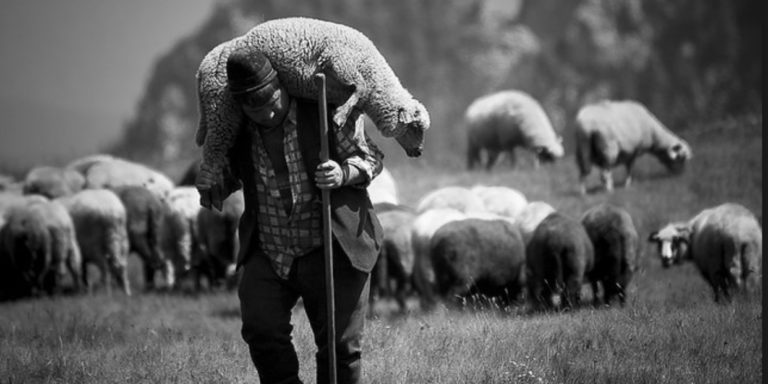
Our choice of scripture today follows the Revised Common Lectionary, which offers a psalm, an Old Testament reading, a reading from one of the gospels, and a New Testament reading. Out call to worship this morning was based on the Twenty-Third Psalm, which is, perhaps, one of the most well-known passages of scripture: the Lord is my shepherd, I shall not want. It is a profound statement of faith and hope. Both the psalm and the Gospel reading are about shepherds. The verses from the tenth chapter of John, which we are not reading in full this morning, quote Jesus: “I am the good shepherd. The good shepherd lays down his life for his sheep.”

It was a metaphor that would have spoken clearly to those gathered around Jesus. They knew shepherds. Some of them were shepherds. They understood what it meant to take care of a herd of sheep, particularly in the semi-arid climate of Palestine. On this bright Sunday morning, I bet it is fairly safe to say most of us do not have first-hand experience tending sheep, so our understanding of what it means to say, “the Lord is my shepherd” is a bit more romanticized, or at least has become more of an idea than an experience.

Our New Testament reading this morning is from 1 John, one of the letters written to the churches in Europe and Asia Minor. Like many of the letters we have in our Bible, it is full of practical advice on how to live a hands-on faith. Listen to our reading for this morning.

We know what true love looks like because of Jesus. He gave His life for us, and He calls us to give our lives for our brothers and sisters. If a person owns the kinds of things we need to make it in the world but refuses to share with those in need, is it even possible that God’s love lives in them? My little children, don’t just talk about love as an idea or a theory. Make it your true way of life, and live in the pattern of gracious love.

There is a sure way for us to know that we belong to the truth. Even though our inner thoughts may condemn us with storms of guilt and constant reminders of our failures, we can know in our hearts that God is greater than any accusation. God knows all things. My loved ones, if our hearts cannot condemn us, then we can stand with confidence before God. Whatever we may ask, we receive it from God because we follow God’s commands and take the path that pleases God. The command is clear: believe in the name of Jesus and love one another as God commanded. The one who follows this teaching and walks this path lives in an intimate relationship with God. How do we know that God lives in us? By the gift of the Holy Spirit. (I John 3:16-24)

I know. No shepherds. Not even any metaphors. Instead, there is a rather pointed question: “If a person owns the kinds of things we need to make it in the world but refuses to share with those in need, is it even possible that God’s love lives in them?” I guess neither poetry nor subtlety was John’s strong suit. So I spent some time this week wondering what made those who created the Lectionary put these passages together, as well as trying to see what connections I could find, since I was preaching this morning.

Reading the passages about shepherding made me think of my father, who was a pastor and loved to joke that Jesus calling himself a shepherd was not a compliment to his followers since sheep are not known for their intelligence. In my studying this week, I looked up some of the recent research on sheep, which is showing sheep are not quite as dumb as we have thought they were—there is more to them than their “herd mentality” that means they will just go wherever the flock is going. They adapt to their surroundings, form relationships, and pay attention to details. Their tendency to flock together is not out of stupidity, but out of an understanding of the importance of community. They can learn and grow. So can we—and I think that is what John assumed when he wrote to tell the young churches how to take care of each other. They didn’t need metaphors. They needed practical advice. They needed specific images of what love looked like in their lives. So he said, it is as simple as this: if you have what people need, share. He didn’t say, if you have more than you need, share, but if you have what others need, share it. Be like sheep. Realize that without the flock all of us are vulnerable. Unless we take care of each other, we will not survive.

I am not a shepherd, and I don’t know any first hand. The closest I have gotten to farming recently is I went out last week to a friend’s farm to play with their baby goats. She and her husband have a small farm where they are growing vegetables and raising goats for milk and chicken for eggs. Even my limited agricultural experience helps me to understand that it is practical work. You feed the animals. You make sure they have shelter. You clean up after them. You protect them. While we stood in the goat pen, a bald eagle flew overhead, checking out the goats and chickens. You care for your animals in hands-on, tangible, even visceral ways.

John may have said nothing about sheep when he wrote his letter, but I think I see the connection with the other passages because he spoke in practical and tangible terms. Share what you have with those who need it. Live as though you trust that God will see you through, rather than living a life of scarcity and fear. Of course bad things will happen. Of course things will not go as expected. But you are not alone. God is never not with us. So share. Ask for help. Lean into one another in Jesus’ name. Love one another.

I am one of many in the world who live with depression. I first began to come to terms with it in my life in 2001. A couple of years later, a singer named Patty Griffin released a song called When It Don’t Come Easy. The chorus says,

if you break down, I’ll drive out and find you
if you forget my love, I’m here to remind you
and stand by you when it don’t come easy

I listened to that song over and over. One day I said to Ginger, my wife, “This song says what you do for me. Each day, I feel like I break down and you drive out and find me. That is how I am making it through.” She didn’t come find me because life was great for her and she was being generous. I think it’s harder for the person living with the one who is depressed than it is to be depressed. She finds me everyday because she loves me. That’s what love looks like.

Yesterday was our twenty-eighth wedding anniversary. We went to the Bronx Zoo and had a wonderful time. On the way there, we stopped and at breakfast at Poppy’s Diner in Rye, New York and then walked around the little downtown there. We wandered into a little market and saw one of those wooden art pieces that has a saying written on it that said:

Life is simple, it’s just not easy. Be kind because everyone is fighting a hard battle.

The quote has been important to us since Ginger used it in a sermon years ago. The sign became our anniversary gift to one another, and it is a word I pass along to you in the spirit of the psalmist and John, in both the gospel and his letters. To be a follower of Christ is simple, but it is not easy. Both life and faith are team sports. If we have what someone else needs, we are called to share it. And we have what others need because we can love them. We can drive out and find them. We are all in this together. That’s what love looks like. Amen.

Peace,
Milton

PS–Here’s Patty . . .

first breakfast

I preached at my home church yesterday and afterwards we shared a pot luck meal called “Every Dish Tells a Story . . . .” We asked people to bring food that had a story attached to it, and then we ate together and talked about our lives. We had a great day. Here’s the sermon; you can also listen to it here.

“First Breakfast”
John 21:1-17
A Sermon for First Congregational Church UCC, Guilford, Connecticut
April 8, 2018

I learned a lot of important things from my father.

A number of them had to do with food—but I’ll have to save those for another time. I learned to love to read by watching his example. He devoured books. And he remembered them. As a child, Doctor Seuss was a favorite at our house, and of the one he loved best was called On Beyond Zebra. The story centered around one boy telling his younger friend how much more he could imagine if he refused to be confined by the prescribed alphabet: there were words and worlds to discover if one kept going “on beyond zebra.” Dad read it as a metaphor of faith. He was on to something.

“In the places I go there are things that I see
“That I never could spell if I stopped with the Z.
“I’m telling you this ’cause you’re one of my friends.
“My alphabet starts where your alphabet ends!”

For us to show up today to mark the Second Sunday of Eastertide is kind of like coming to terms with a new alphabet. Up until Jesus’ resurrection, our alphabet ended at death. But Jesus’ life and death and resurrection requires language that is new to us, as we can see in the gospel stories of those who encountered Jesus after his resurrection. Listen, now, to one of the stories on beyond Easter.

After these things Jesus showed himself again to the disciples by the Sea of Tiberias; and he showed himself in this way. Gathered there together were Simon Peter, Thomas called the Twin, Nathanael of Cana in Galilee, the sons of Zebedee, and two others of his disciples. Simon Peter said to them, “I am going fishing.” They said to him, “We will go with you.” They went out and got into the boat, but that night they caught nothing.

Just after daybreak, Jesus stood on the beach; but the disciples did not know that it was Jesus. Jesus said to them, “Children, you have no fish, have you?” They answered him, “No.” He said to them, “Cast the net to the right side of the boat, and you will find some.” So they cast it, and now they were not able to haul it in because there were so many fish. That disciple whom Jesus loved said to Peter, “It is the Lord!” When Simon Peter heard that it was the Lord, he put on some clothes, for he was naked, and jumped into the sea. But the other disciples came in the boat, dragging the net full of fish, for they were not far from the land, only about a hundred yards off.

When they had gone ashore, they saw a charcoal fire there, with fish on it, and bread. Jesus said to them, “Bring some of the fish that you have just caught.” So Simon Peter went aboard and hauled the net ashore, full of large fish, a hundred fifty-three of them; and though there were so many, the net was not torn. Jesus said to them, “Come and have breakfast.” Now none of the disciples dared to ask him, “Who are you?” because they knew it was the Lord. Jesus came and took the bread and gave it to them, and did the same with the fish. This was now the third time that Jesus appeared to the disciples after he was raised from the dead.

When they had finished breakfast, Jesus said to Simon Peter, “Simon son of John, do you love me more than these?” He said to him, “Yes, Lord; you know that I love you.” Jesus said to him, “Feed my lambs.” A second time he said to him, “Simon son of John, do you love me?” He said to him, “Yes, Lord; you know that I love you.” Jesus said to him, “Tend my sheep.” He said to him the third time, “Simon son of John, do you love me?” Peter felt hurt because he said to him the third time, “Do you love me?” And he said to him, “Lord, you know everything; you know that I love you.” Jesus said to him, “Feed my sheep.”

Alright—I’m going to begin with pointing out my favorite detail: Jesus did something on beyond Easter that he had not done before: he cooked. He carried out his earthly ministry, endured the cross and the grave, came back from the dead, and made breakfast. I love that.

Jesus had made three or four other appearances to those whom he loved before we get to this moment on the shore, but his followers were still reeling. He spoke with Mary in the grave yard, walked along the Emmaus road, and showed up twice in the room where everyone was gathered—the second time to make sure Thomas got to see him. Each time, including our story for today, they didn’t recognize him at first. Things were not as they had been before his death. He was alive, yes, but they weren’t hanging out or taking trips together. He wasn’t with them all the time. The Resurrection had not erased the grief. They were all indelibly marked by the Crucifixion and all that had happened around it. Judas was dead. Peter still carried the weight of his denial. There was Before; this was After. They had the memory of their last supper with Jesus, but that things had not been right since. They had run out of letters in their alphabet of hope. So they went fishing. They went back to what they knew how to do, hoping something would make sense.

They fished all night and had nothing to show for it as the sun was coming up. Who knows why they didn’t catch anything, but the futility of their enterprise appears to have been excruciating. Things were broken and they couldn’t be fixed. Life was never going to be like it was before ever again.

Then they heard a voice call out from the shore, asking if they had caught anything. When they reported their failure, the person told them to cast the net on the right side of the boat. They had nothing to lose, so they followed the instructions that came our of the fading darkness and came up with a net so full that it almost sank them.

Peter said, “It’s the Lord.” No one, it seems, had recognized who was calling out to them until that moment. He dropped his net and swam to shore, where he found Jesus cooking fish on the beach over an open fire.

Maybe it mattered that the last time a charcoal fire showed up in the story, Peter was in the courtyard denying he had anything to do with Jesus, or, perhaps, he had been around one of those fires at every day since. Maybe it mattered that Jesus served bread and fish, much like the lunch the little boy had offered when they ended up feeding over five thousand people and had baskets and baskets of leftovers, or, perhaps, they ate fish at most every meal. Maybe it mattered that they caught one hundred and fifty three fish and, perhaps, they just caught as many as the net would hold. Maybe it mattered that Jesus asked Peter if he loved him three times — as many times has Peter had betrayed him — or, perhaps, it mattered, mostly, that Jesus made breakfast and fed the friend who had disowned him, offering him the grace to know his betrayal was not the last word, and to know that there was something on beyond the courtyard, the cross, and the cemetery, even on beyond the fretful night they had just lived through.

The gospel writers offer us two incredibly important meals that happen within days of each other. One we mark regularly. The Last Supper became the Lord’s Supper and is, for many Christians, both primary meal and metaphor. It is the one thing that happens across denominational and cultural divides. We have come to the Table in an unbroken line since that night when Jesus first broke the bread and poured the wine and said, “As often as you do this, remember me.”

In the first couple of hundred years after Jesus, the communities of faith gathered around a meal. The shared supper was less like the silver trays we pass and a lot more like the pot luck meal we will share together after worship. They told old stories, new stories, and remembered—they put themselves back together again in Jesus’ name, much like Jesus did with Peter and those gathered around the fire that morning. Paul even wrote to the church in Corinth and said, if you have something wrong between you and someone else, make it right before you come to the table. Give yourself a story to tell.

I want to tell you a story about the dish I brought for lunch today: my mother’s taco salad.

As many of you know, I grew up in Africa. My mother was willing to give up lots of things to move ten thousand miles away from her Texas home, but I think the thing she missed most were Fritos corn chips. After three or four years, she wrote the president of Frito-Lay, whose headquarters were in Dallas, and told him her story and we received two boxes of Fritos, in vacuum-packed in coffee cans. There were eight cans to a box. She gave each of us two for our personal consumption and kept the rest in the kitchen to make Taco Salad.

When we moved back to the States for good, we had it every Saturday.

When I was in my twenties, my parents and I had a hard time finding a way to communicate effectively. However distant I felt from them, or even angry, I was reminded of what I needed to remember every time I walked down the potato chip aisle. Now that they have both died, the meal offers healing in a different way, on beyond Saturdays, on beyond Fritos, and on beyond being an adult orphan.

Though pretty much every one of the disciples bailed out in one way or another when Jesus was arrested, the two that get the spotlight are Peter and Judas, the denier and the betrayer. Such harsh words. I don’t think either one was malicious. Peter was in the courtyard because he was trying to stay close to Jesus and he just outran his courage. I think Judas expected Jesus to actually take on the oppressive government and was trying to call Jesus’ hand and make him act. Whatever their motivation, the biggest difference between the two is Judas never made it to breakfast. If he had, there would have been forgiveness for him as well.

Each time Jesus asked Peter, “Do you love me?” and Peter answered, “Yes, Lord,” Jesus said, “Feed my sheep,” leaning into a metaphor Jesus used throughout his ministry. What I hear in his words is, you know what it feels like to completely screw up; you know what it feels like to feel hungry for hope; you know what it feels like to be fed by grace, and to be loved back into being. Now go do that for someone else.

Our story today makes me wish we observed not only the Last Supper but also the First Breakfast as a part of our sacraments and rituals. We don’t need more silver platters, and we don’t necessarily have to grill fish. But we do need to hear the call to go on beyond Communion, on beyond the Cross, on beyond Easter, and meet each other for breakfast, lunch, and dinner to re-member one another in Jesus’ name, to keep looking for new ways to say, “I love you,” “I forgive you,” and “Forgive me”—“Now pass the potatoes.” Amen.

Peace,
Milton