Home Blog Page 56

advent journal: nothing matters

nothing matters

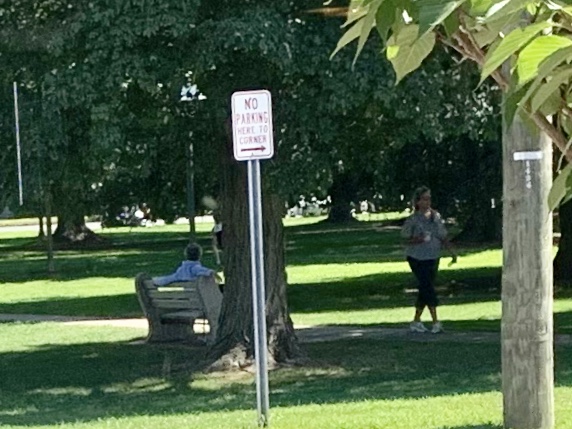
from my window seat I can see a bench
concrete sides holding wooden slats
under the tree that has taken a century
to grow beyond the telephone pole

meet me there with nothing other
than a cup of coffee, or a pup
leave anything that beeps or vibrates
and we will linger with a sense of purpose

as though nothing matters
(as in we have nothing to prove other)
let us linger with a sense of purpose
as though it’s as natural as working

nothing matters so much that we must do
nothing other than find ways to each other
so meet me on the bench–and bring snacks
all this talk about food has made me hungry

Peace,
Milton

advent journal: word power

People who think poetry has no power have a very limited understanding of what power means.–Christian Wiman

If you look up power in the dictionary, the definitions revolve around influence and control, as in the power to make people do what you want. If you look at the way we talk about power these days, it seems almost synonymous with force, as in do unto others before they do unto you, which leads us to things like preemptive strikes and redemptive violence.

A nation based on power cannibalizes itself, intimately, because power, when construed as force or violence, destroys. It is never a solution. Violence breeds more violence. Brazen power is not a path to peace. Just because I can force you to sit down and shut up doesn’t mean I have made the world more peaceful. I have only planted the seeds of revolution.

But there’s another way to plant–that’s the power the poets know.

If you look up poet in the dictionary, it says, “a person possessing special powers of imagination or expression.” I love the word imagination because it is family to image, as in image of God, which is us. We are created in the image of God; we were birthed out of the imagination of God. Talk about special powers.

I am going to let the poet Tara Sophia Mohr say it in her words.

Your Other Name

If your life doesn’t often make you feel
like a cauldron of swirling light —

If you are not often enough a woman standing above a mysterious fire,
lifting her head to the sky —

You are doing too much, and listening too little.

Read poems. Walk in the woods. Make slow art.
Tie a rope around your heart, be led by it off the plank,
happy prisoner.

You are no animal. You are galaxy with skin.
Home to blue and yellow lightshots,
making speed-of-light curves and racecar turns,
bouncing in ricochet –

Don’t slow down the light and turn it into matter
with feeble preoccupations.

Don’t forget your true name:
Presiding one. Home for the gleaming. Strong cauldron for the feast of light.

Strong cauldron for the feast of light:
I am speaking to you.
I beg you not to forget.

I’ve got more words, some I’ve read and some I’ve written, but let’s rest here and keep begging each other not to forget who we are:

Home for the gleaming. Feast of light. Image of God.

Peace,
Milton

advent journal: grating expectations

One of the songs sure to show up over the next few weeks is “Come, Thou Long-Expected Jesus.” In our congregation, we sing it to the HYFRODOL tune, which is warm and familiar to me. As long as I have heard the story of Jesus’ birth, it has had expectations attached to it: the people in his time expected a certain messiah; we have expectations of our own as we move toward Christmas, even and we sing about love and hope and forgiveness.

The expectations didn’t stop with his birth. One of the ways to read the temptations he faced in the wilderness is as a trio of expectations: feed everyone, impress everyone, take control. We might even say we killed Jesus because he didn’t meet our expectations.

The word expect has some waiting built into it, at least etymologically–we are waiting for something to happen. Too often, however, it is colored by judgment. Whoever we are and wherever we are on life’s journey, it’s hard to live up to expectations. Most of us do not become what others (or at least some of them) are waiting for us to become.

But that’s not the hard part–at least, not for me. The hard part is when the equation gets flipped around and I realize I am the expector, not the expectee. (I’m not sure either of those are real words, but what did you expect?) I want the grace for me to fall short, but I want others to measure up. So when I came across this sentence in Simone Weil’s Gravity and Grace it felt worth sharing:

[People] owe us what we imagine they will give us. We must forgive them this debt.

The first time I read that sentence, I thought about my father saying in a sermon, “In life you have to learn the difference between a problem and a predicament. A problem is something you can solve; a predicament is something you have to learn to live with. I used to think my eldest son was a problem; now, I understand that he is a predicament.”

I learned the same thing about him. Our relationship grew when I learned not to expect what he was unable to give. I had to learn how to find it from someone else. He did, too.

I watch the kids in our town try to negotiate middle and high school and I wonder if I could have measured up had the expectations been the same. I never thought about my “resumé” when I was applying to Baylor. I just went to school and church and my after-school job and sent in my stuff. I never took an honors or AP course. I was a good student, but based on today’s expectations, I would be an also-ran.

I think Jesus would suffer much the same fate, based on the metrics we use to measure success in church life. The man wandered around that tiny little country with a handful of friends and followers, without much of a schedule or a plan. And he only lasted three years. He wouldn’t make it out of the first round with most search committees in big steeple churches.

My anachronistic comparison is not particularly original, and I am not as cynical as it sounds when it comes to church. My point is to raise this question: how do we forgive Jesus of the burden of our expectations?

For many years, one of the quotes that gives me hope in this season is from Meister Eckhart:

We are all meant to be mothers of God. What good is it to me if this eternal birth of the divine Son takes place unceasingly but does not take place within myself? And what good is it to me if Mary is full of grace if I am not also full of grace?

To be full of grace means, perhaps, to be mostly empty of expectations–at least the ones that come with weights of judgment attached to them. Charles Wesley wrote,

come, thou long expected Jesus,
born to set thy people free;
from our fears and sins release us,
let us find our rest in thee

May we all rest in the Love that gave birth to us, even as we prepare to give birth to Love once again.

Peace,
Milton

advent journal: slow train to bethlehem

On my train ride to Grand Central Station, the penultimate stop is Harlem/125th Street. Once the doors close, it takes about fifteen minutes to go the last eighty blocks to the terminal on 42nd Street. The closer we get, the slower the train goes. Passengers get up, put on coats, and line up in front of the doors so they are ready when we finally arrive, but it feels like it takes forever. All we can do is wait.

Advent feels like that ride to me: the slow train to Bethlehem. It takes a long time for Jesus to be born again.

Wait shares a common root with the word wake. Both hold a sense of watchfulness and awareness, as in we are waiting for something. Or someone. Even the lectionary passage this morning was a call to stay awake. Pay attention. Don’t fall asleep at the switch. Waiting can carry a sense of expectancy, as it does in Advent, or a sense of dread, as it might in a doctor’s waiting room or worrying about a thieves in the night like the verses from Matthew, and a variety of graduations in between.

Even as we wait for, we can also wait on—as servers do in restaurants. To wait means to pay attention to someone else’s needs, which also carries a sense of awareness. Those empty water glasses aren’t going to fill themselves.

Over the past year, wait has taken on another connotation for me—as an acronym—WAIT: Why Am I Talking. I learned it in the context of discussions around white privilege, or should I say white-cisgender-male privilege, and our tendency to explain the world on our terms. If I really want to know how someone else understands the world, I need to learn to WAIT, which is a kinder way of saying, “Shut the hell up and listen.”

Our ride on the slow train to Bethlehem calls us to wait in all three ways. We wait for Christ to be born again in our time and in our cultures; we wait on one another, paying attention to what those around us need to get on board; and we WAIT so that we can among those who in silent stillness lay to hear the angels sing.

That sentence makes it sound so easy, doesn’t it?

It’s not—at least, not for me.

Throughout the history of my depression, sleep has been an escape. When the shadows are the deepest, I close my eyes. I don’t want to be awake because it hurts too much, so I sleep. Staying awake is hard work. The cost of paying attention feels prohibitive. Sleeping is easier than swimming in molasses. I am exhausted by my daily commute, if you will.

Many years ago, my friends Billy and Kenny wrote a song that asked

why does love come like a thief in the night
warning no one like a thief in the night

Good questions. Why is it so hard to stay awake for love: to wait for, to wait on, to WAIT, to listen for the sound of the whistle in the distance? I don’t know all the answers, other than to say it just is.

As I have been writing, the first significant snowfall of the season has been falling. At times, the flakes have been the size of silver dollars and they have fallen just like the carol: how silently, how silently. The temperature is not cold enough for the lovely covering to last long, but for this afternoon our town is at its snow-globe best. Night is falling along with the snow. Currier and Ives could not have imagined it more beautifully. It does feel like we should all go stand in a circle on the Green and sing.

The storm warnings yesterday caused one of our annual town traditions to be postponed. It is a service of remembrance for children who have died. Parents who have lost their kids—of any age—come together to wait on one another, in a way, as they face another holiday season without their sons and daughters. The service was put off so more people could come. We will gather next Sunday. My part in the service is to sing “I Wish You Peace,” a song written by Bernie Leadon and Patti Davis and recorded by the Eagles. The chorus says

I wish you peace when times are hard
the light to guide you through the dark
and when storms are high and your, your dreams are low
I wish you the strength to let love grow on
I wish you the strength to let love flow

Our first candle today represented Peace, which, I think, is not the official order but it was a candle worth lighting in these days of endless war and shouting. Hope, Peace, Love, Joy: they all need to be lighted; the order does not matter so much other than to those who ordered the candles to begin with. I came home and turned on all the electric candles in our windows that will burn through Advent and Christmastide and Epiphany and as long as winter stays. On Sundays, we let them burn all night.

I am not waiting for Christ to be born because I think his birth makes things better magically somehow. The power of love to change the world is its own slow train. As we tell the story each year, I wait for the angel to say to Joseph, “You should call him Emmanuel”—God with us. We are not alone in our waiting, our waking, and even in our sleeping.

God is along for the ride.

Peace,
Milton

shaking hands

I preached this morning at the First Church of Christ, Congregational in East Haddam, Connecticut. They are a wonderful congregation. The text was Luke 1:67-79: Zechariah’s words after his son, John, was born. Here’s what I had to say.

Our scripture this morning picks up in the middle of a story, which I guess is the case most any Sunday morning. In that way, our worship is a lot like our lives: we are always in the middle of the story—and we don’t have time to catch up on all of the context, otherwise we would be really late for lunch. But let’s look at a couple of things.

Zechariah was a small-town priest and also a new father. He was married to Elizabeth who had just given birth. Their son would grow up to be John the Baptist. Because they were both older, Zechariah had responded skeptically when the angel told Elizabeth she would have a baby, and, as a consequence he had been mute for her entire pregnancy. Elizabeth had nine months of silence, as far as he was concerned—which may not have been bad news, necessarily. Zechariah kept everything bottled up until the baby appeared and, when asked what the boy would be named, he scribbled, “His name is John” on a tablet. Then, according to the verses we read, he just kept going because his heart overflowed with thanksgiving.

The first part of his song, as it’s often called, is a history lesson recounting how God acted in the lives of David and Abraham. But when he gets to the second verse, he talks directly to his new son, telling him that he will grow up to be a prophet and lead people to find forgiveness and then, in most translations, he says,

“By the tender mercy of our God,
the dawn from on high will break upon us,
to give light to those who sit in darkness and in the shadow of death,
to guide our feet into the way of peace.”
That’s the part that got me this week: the tender mercy of our God.

One of the dictionaries I looked at said the word mercy has fallen out of use over the last couple of hundred years. It is not a word we use much, other than in church. It means “showing compassion or forgiveness toward someone that it is in your power to harm or punish.” Some of the synonyms include generosity and kindness. The root of the word comes from the Old French word merci—the word they now use to say thank you. From the start, it seems, mercy and gratitude are connected.

If you think that’s interesting—and I hope you do—let me tell you what I learned about the Greek word translated as “tender.” It literally means intestinal. I’m guessing you didn’t think that is what I would say. But where we think of the heart as the seat of our emotions, the Hebrews talked about the bowels–the gut—as the, well, heart of everything. Maybe that’s why the Bible doesn’t contain many great love songs.

When I hear the word tender, words like gentle, soft, or delicate come to mind. Not heavy-handed. But I don’t think that is what Zechariah was singing about. He was talking about the visceral, gutsy compassion of God. John the Baptist was the one who was going to prepare the way for Jesus, the Word Made Flesh. The hope Zachariah saw in his little boy was earthy and tenacious. God was not sending good wishes from afar; God was landing right in the middle of us like a stomach punch.

I was at a Christian festival last summer and saw someone wearing a t-shirt that said, “Compassion is Badass.” Maybe that is the modern translation of tender mercy. We are living in a time when what passes for public discourse is damaging and dehumanizing. It feels like almost everyone one is talking, even shouting, and few are listening. It takes guts to do more than shout at one another or label one another. It is risky to reach out. It is costly to be generous. It takes courage—or maybe faithfulness is a better word—to be vulnerable. And to be grateful.

Our worship guide reminds us that in the lectionary calendar today is “The Reign of Christ Sunday”—the last Sunday before Advent begins, and we start telling the story over again. It’s hard not to hear the title as ironic in some sense. We have lots of hymns that sing about Christ as King, but what monarchs do and what Jesus did seem far removed from one another. Jesus ate with people and walked with them and talked with them. He listened and wept and told stories. He didn’t raise an army or garner power or play to his base. Instead, he showed what visceral compassion looks like in everyday life.

Pádraig Ó Tuama is an Irish poet and theologian who has spent his life waging peace. I want to lean into his words this morning in a poem called “Shaking Hands.”

Shaking Hands

Because what’s the alternative?
Because of courage.
Because of loved ones lost.
Because no more.
Because it’s a small thing; shaking hands; it happens every day.
Because I heard of one man whose hands haven’t stopped shaking since a market day in Omagh.
Because it takes a second to say hate, but it takes longer, much longer, to be a great leader.
Much, much longer.

Because shared space without human touching doesn’t amount to much.
Because it’s easier to speak to your own than to hold the hand of someone whose side has been previously described, proscribed, denied.
Because it is tough.
Because it is meant to be tough, and this is the stuff of memory, the stuff of hope, the stuff of gesture, and meaning and leading.
Because it has taken so, so long.
Because it has taken land and money and languages and barrels and barrels of blood.

Because lives have been lost.
Because lives have been taken.

Because to be bereaved is to be troubled by grief.
Because more than two troubled peoples live here.
Because I know a woman whose hand hasn’t been shaken since she was a man.
Because shaking a hand is only a part of the start.
Because I know a woman whose touch calmed a man whose heart was breaking.
Because privilege is not to be taken lightly.

Because this just might be good.
Because who said that this would be easy?
Because some people love what you stand for, and for some, if you can, they can.
Because solidarity means a common hand.
Because a hand is only a hand; so hang onto it.

So join your much discussed hands.
We need this; for one small second.
So touch.
So lead.

Whomever we come in contact with today or tomorrow or next week, we will walk into the middle of their story. We won’t know all the context. But when the checkout person is gruff, or the customer service representative appears not to care, or the server makes a mistake; when our kid gets a bad grade, or a friend disappoints us, or things are tense around the Thanksgiving table because we don’t know what to talk about, remember we are created in the image of our God, who is a God of visceral compassion, of gutsy generosity, and we can live into that image by shaking hands, or maybe by just passing the potatoes instead of passing judgment.

Let us join hands. The world needs this. Amen.

Peace,
Milton

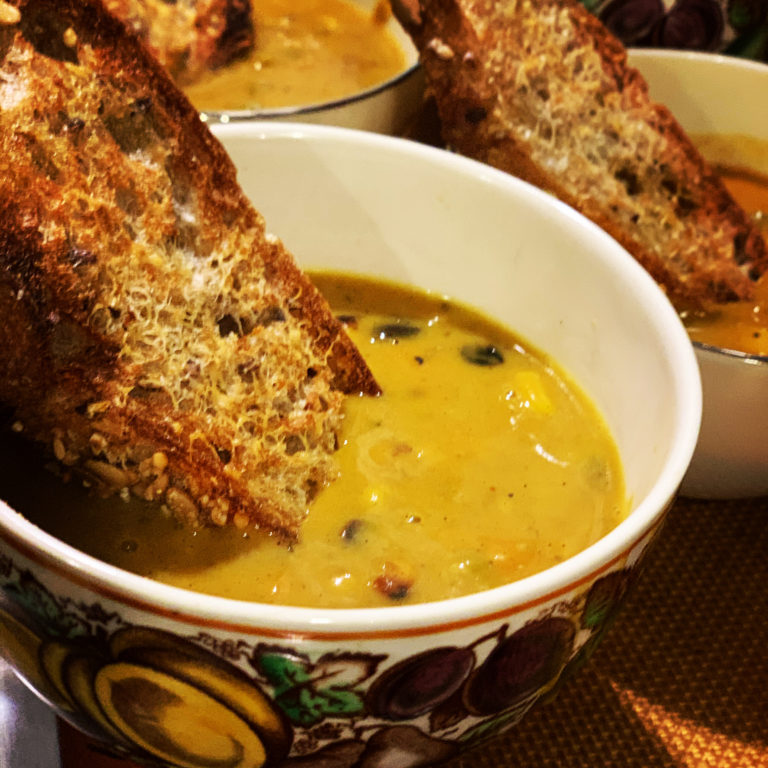
pumpkin corn chowder

You may notice that the site looks different than before. I am in the middle of a number of changes—many of which I don’t yet know how to make. One of the changes is to get back to posting recipes. For now, rather than posting them on my recipe blog that has been quiet for far too long, I will post them here. When the site is in full bloom, the recipes will have their own page. For now, I give you pumpkin-corn chowder, mostly because several people saw my Instagram post from our Barn Dinner and asked for the recipe.

I love making soup.

One of my jobs at the restaurants in Durham, North Carolina (I have to be specific; the town next to us in Connecticut is also Durham.) was to make two soups everyday. I was expected to make use of whatever I could find in the walk-in refrigerator or the pantry. Though I went searching on the Web for recipes, I never followed them exactly. They were inspiration more than instruction. This soup is much the same. I had corn and beans and pumpkin. I found this recipe and then went from there to make the soup I served for our Barn Dinner.

Soup-making is very personal to me, which is to say consider the amounts as suggestions. If you like another vegetable in your chowder, then make it your chowder. If you want to use some sort of stock instead of the water, do that. If you want to use heavy cream instead of coconut milk, do it. The original recipe has potatoes, but I chose not to use them. I can’t cook with onions or onion powder because Ginger is allergic, so I use more garlic and spices and look for other ways to flavor.

One of the extra steps I took with this recipe was to roast the corn first. I did it in batches in my cast iron skillet (which means only put in as much as loosely covers the bottom of the skillet) with a minimal amount of oil and I added the cumin here. I put the pan over high heat and let the corn cook until it caramelized a good bit and then set it aside.

I also make sure the celery and carrots are diced very small. I like the flavor, but I also sort of want them to dissipate into the soup as it cooks. (The same would be true for onions, if I could use them.)

Pumpkin Corn Chowder

olive oil
1 1/2 cups corn (can be two small packages of frozen)
2/3 cup diced white onion
6 garlic cloves, minced
3 large carrots, diced small
4 stalks of celery, diced small
2 teaspoon cumin (could also add chili powder, oregano, thyme)
1 can black beans, drained
1 15-ounce can pumpkin puree
1 can coconut milk
salt and pepper, to taste
water, as needed


Roast corn in a cast iron skillet or sauté pan over high heat. Sprinkle with cumin. Do it in batches as described above. Set aside.

In a soup pot, heat olive oil to medium high heat and then add celery, carrots, and garlic. Once the vegetables are coated with the oil and beginning to cook, add cumin and other spices. Keep covered, but stir occasionally. Lower to medium heat and let them cook until the vegetables are pretty soft, about 8-10 minutes.

Add enough water to cover the bottom of the pot to about a half an inch and stir to deglaze the pot and unstick whatever has stuck to the bottom. Then add corn and beans. Cover and let cook for about 5 minutes.
 Add pumpkin purée and coconut milk and bring the mixture to a simmer. Let it simmer for at least 15 minutes. Salt and pepper to taste. If you leave it uncovered, it will reduce and thicken a bit. If it feels too thick, you can add more water, just do so incrementally so it doesn’t thin out too much.

You can eat it after it has simmered for 15-30 minutes. (Of course, taste it and see if the seasonings need to be adjusted.) After 15 minutes, I would let is simmer, but I would cover it again so it doesn’t reduce too much.

When you’re ready, ladle it into bowls and enjoy. We served it with a sliced baguette that we sliced, drizzled with olive oil, and toasted in the oven.

Peace,
Milton

let’s finish this

I preached this morning at our church in Guilford. My text was Hebrews 12:1-2. Here’s what I had to say.

I am not a runner.

I never have been. When I was in eighth grade, we had a school-wide track meet in which everyone was expected to participate. I signed up for whatever race it was that we only had to run one lap. As I rounded the last turn–in last place–my mother said I blew a bubble with the gum in my mouth. In tenth grade, we were in Texas and had to participate in the President’s physical fitness program–this time I had to do the hundred yard dash. I tied for last place. After we finished, I learned that the boy I tied had a permanent leg injury.

Like I said, i am not a runner. So there is a touch of irony in the fact that our scripture this morning is about running the race that is set before us. After spending a whole chapter describing people who had been faithful to God, the writer of Hebrews turns to say it is our turn to run. Listen for the word of God in our passage this morning.

Our passage begins with the word “therefore,” which means it is dependent on what came before it, even though it’s the first verse of a new chapter. Hebrews 11 begins with a definition of faith–faith means putting our full confidence in the things we hope for, it means being certain of things we cannot see–and then gives a concise history of some of those whose lives were marked by their faith in God: Abel, Noah, Abraham, Sarah, Moses, Gideon; the list is not exhaustive. We could name Ruth, Naomi, Rahab, Hagar, and even then there would be others. The list ends with these words:

Not one of these people, even though their lives of faith were exemplary, got their hands on what was promised. God had a better plan for us: that their faith and our faith would come together to make one completed whole, their lives of faith not complete apart from ours.

And then—

Therefore, since we are surrounded by so great a cloud of witnesses, let us also lay aside every weight and the sin that clings so closely, and let us run with perseverance the race that is set before us, looking to Jesus the author and goal of our faith, who for the sake of the joy that was set before him endured the cross, disregarding its shame, and has taken his seat at the right hand of the throne of God.

If the writer of Hebrews had known Americans would be reading their words, I’m not sure they would have used a race as the primary metaphor because when we hear the word race our first response is to ask, “Who won?” We are bred for competition. As Vince Lombardi said, “Winning isn’t everything, it’s the only thing.”

But this race is not about winning. A better connection is to think of something like the Relay for Life, which is a twenty-four hour fundraising event for the American Cancer Society. Teams work together to keep someone on the track for an entire day and night to both raise money for and show solidarity with those have cancer.

The race of faith is a relay of life, if you will. We are running with all those who have come before us; we are running for those who will follow; we are running together right now. Our task is to finish our leg, to be faithful to our calling, and to be mindful of all that connects us.

To run well, we have to “lay aside every weight and the sin that clings so closely.” I notice the writer doesn’t say, “Lose weight,” though that might be helpful advice. Instead, they say. “Lay it aside.” And they make a distinction between the things that weigh us down and the sin that clings so closely. To elaborate on that, I want to tell you a story I have told some of you before.

When we were living in Boston, I went back to Baylor University for Homecoming and learned my father had preached that day on campus. I did not hear the sermon, but a friend told me that he had used me as an illustration. My father said, “In life you have to learn the difference between a problem and a predicament. A problem you can fix. A predicament is something you have to learn to live with.” He paused. “I used to think my eldest son was a problem. Now I see he is a predicament.”

At his funeral, I told that story and then said, “I learned he was a predicament, too.” We had years of struggle, but we were both able to heed the advice of the text and lay aside both the weights and the sins that divided us.

We have to learn the difference between what weighs us down, as in what things are done to us, and our sin–the choices and decisions we make that do damage to us and to others. When I think of weights, I think of the depression I live with, or my hearing loss. Over the years, Ginger and I have both used this passage in working with young people. When we have talked about the weights, inevitably some have come to find us to tell stories of abuse and neglect.

I don’t think the writer of Hebrews is being flippant when they say, lay it aside. The sense of the verb is like taking off a garment or shedding something. Some experiences in our lives leave deep and abiding wounds. Some conditions or situations with which we live are chronic. We all have predicaments that are not easily discarded. But looking at those who have come before us and had weights of their own, and looking around at those who run with us and share the weight we carry, let us not allow the wounds and weights to define us.

We can say the same about the pain we inflict on ourselves and others with both the things we have done and the things we have left undone. Our sins are not the last word. Don’t let them distract you, says the writer. In our smartphone world, we understand distraction perhaps better than they did. Lay aside our sin–can you hear that in the same tone as someone you love saying, “Put down your phone and pay attention to me”? We can ask for forgiveness. We can make amends. That doesn’t mean the consequences or the scars disappear necessarily, but, again, our sins do not have to be what defines us, or what distracts us.

We have a race to run and it requires persistence. Jesus is our model for how to hang in there. In his gospel, John tells the story of Jesus washing the feet of his disciples on the night before he was executed rather than the Last Supper. John says of Jesus, “Knowing he had come from God and he was going to God, Jesus took a towel and wrapped it around his waist, bent down and washed the feet of the disciples.” Jesus’ sense of his source and goal—coming from God and going to God—let him lay aside the weight of the world as it came crashing down and offer love to his friends in a tangible way because he knew his death was not the last word.

The writer of Hebrews says Jesus is both source and goal of the race we are running, which is another way of saying we, too, have come from God and are going to God. We are running in a big circle, and, like those who have run before us, we can trust that nothing can separate us from the love of God anywhere along the way.

Therefore, let us run the race.

Last year marked the fiftieth anniversary of the 1968 Olympic Games in Mexico City. Many remember it as the games where Tommie Smith and John Carlos raised their fists during the medal ceremony. Some may recall that many of the athletes were affected by the altitude. The story i remember most is that of John Stephen Akhwari, a Tanzanian marathon runner who came in last.

Akhwari had muscle cramps early because of the altitude, but he kept running. About a third of the way through, he got caught up in a group of runners jockeying for position and he was knocked down on the pavement. He dislocated his knee and injured his shoulder. He kept running after they attended to him. The winner of the marathon, Mamo Wolde of Ethiopia, finished in 2:20:26. Akhwari finished over an hour later. The medal ceremony was over when word came that he was still running and a TV crew went out to find him. He entered the Olympic stadium after sunset. Over three thousand thousand people stayed to watch him cross the finish line.

After the race an interviewer asked why he had kept going when he knew he was last. He answered, “My country did not send me five thousand miles to start the race; they sent me five thousand miles to finish the race.”

Though one of the ways we can think about the race metaphor is to think about our whole lives, the truth is that life is full of finish lines. We are entered in more than one event. When the race we are running right now is over, there will be another. You may feel like you are entered in several at once. Whatever the race, whatever we feel is at stake, we have come from God and we are going to God. There is not a step we take that falls outside of the love of God.

Therefore, since we are surrounded by so great a cloud of witnesses, since we know we have come from God and we are going to God, let us deal with what weighs down and repent and reconcile for the impediments we have caused and finish the race, following in Jesus’ steps, so that we like him can say, “It is finished.” Well, this one is . . . Amen.

Peace,
Milton

sermon prep

I’m preaching tomorrow at First Congregational Church in Guilford. Since it is my church, I’m going to wait to post the sermon until tomorrow, since I want to make sure no one gets a sneak peak. Instead, here’s a poem that grew out of my preparation.

sermon prep

what can I say
what should I say
can I say that
I don’t know
what to say
say that again
don’t say that
what did you say
that’s been said
far too often
nothing to say
say something
what can I say

Peace,
Milton

nothing matters

nothing matters

from my window seat I can see a bench
concrete sides holding wooden slats
under the tree that has taken a century
to grow beyond the telephone pole

from my window seat I can see a bench
concrete sides holding wooden slats
under the tree that has taken a century
to grow beyond the telephone pole

meet me there

and don’t bring a thing with you
perhaps a cup of coffee, or a pup
leave anything that beeps or vibrates
and we will linger with a sense of purpose

as though nothing matters
(as in we have nothing to prove other)

we will do nothing the way Martha did
–you say that’s how I always talk about her
because I’m with Mary in the kitchen–
I am working to learn that nothing matters

to understand what I mean you have to be here
on the bench next to me listening to the tone
of my voice, paying attention the way
Mary could not with her tray of hors d’oeuvres

nothing matters so much that we must do
nothing other than find ways to each other
so meet me on the bench–and bring snacks
all this talk about food has made me hungry

Peace,
Milton

listen up, breaches

I’m preaching tomorrow at North Madison Congregational Church UCC, a wonderful congregation in the next town over from Guilford. In light of all that has gone on in the past couple of weeks, and also in light of Ginger’s trip to El Paso, I am using Isaiah 58:9-12 rather than the lectionary passage for the day. Since I am using an amalgam of different translations, I included the verses here.

My sermon title is “Repairers of the Breach.” The post title is how I wish I could begin my sermon.

If you remove the yoke of oppression from among you,
    the finger-pointing, the mean and inflammatory speech;
If you open your heart to the hungry,
    and provide abundantly for those who are afflicted,
    your light will shine in your despair,
    and your gloom will be like the noonday.
God will guide you continually
    and provide for you, even in parched places,
   and make your bones strong.
You will be like a watered garden,
    like a spring of water that won’t run dry.
Your ancient ruins shall be rebuilt;
    you shall raise up the foundations of many generations;
You will be called Repairers of the Breach,
    Restorer of Livable Streets.

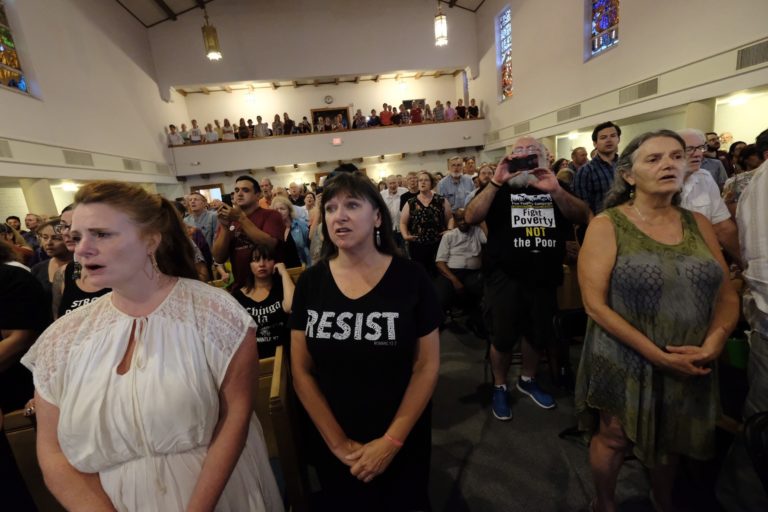
The last time I was here, I told you that Ginger, my wife, was on her way to El Paso, Texas to take part in a protest at one of the detention centers. She got back home last Wednesday night. On Saturday, we heard the news of the mass shooting there and it hit us a little closer to home. When we looked on the map we saw that her hotel was only a couple of block from the Walmart where people were killed as they shopped. She had walked past it in the evenings. She called the hotel to see if folks there were alright and the woman who had driven her shuttle bus answered. They were unharmed, but they were shaken.

The next morning came news of the shooting in Dayton. Barely a week before El Paso, there was a mass shooting in at a Garlic Festival in Gilroy, California. In all three cases, the terrorists who attacked and people had been exploring “violent ideologies,” according to news reports. Someone asked the man in California why he was doing it and he said, “Because I’m really angry.” The white man in El Paso was trying to kill Latinix people because he saw them as an “invasion”—words he learned from the partisan rhetoric around immigration—the kind of “mean and inflammatory speech” Isaiah condemned.

Once again, we are traumatized. We are left angry, confused, and scared. Even though mass shootings have long ago ceased to be unusual, it still feels like the world has shifted and requires a different response. Layer on to that the polarization of the political discussion on just about any issue, and it is hard to know both what to say and how to say it. If this room of people is like any other sanctuary on the Shoreline, we share a variety of opinions on the important issues of our time. We are not in unison in how we vote, or how we choose our candidates. Often, we are wary of speaking up because we are not sure how we will be either received and perceived.

So I am asking us to risk together this morning. I know the good New England way is to not talk about religion or politics, but avoiding a discussion—not a debate, a discussion—doesn’t give us a chance to build a true beloved community. The verses we read talk about being “the restorers of streets to live in.” How can we build community if we are not honest with each other? How can we come together if we cannot learn to talk about hard things? There is more to faith than worshipping together on Sunday—that is actually at the heart of today’s passage.

The verses we read from Isaiah pick up in the middle of the story. After generations of captivity in Babylon, the Hebrew people had returned to their land and were rebuilding their lives. They had lived in captivity for generations. They were traumatized. In the midst of all that had been lost and all they were trying to build, they had committed themselves to worshipping God—by observing a weekly fast—as a way to show they wanted to make Israel great again. The prophet showed up to tell them God was not impressed because on the days they were not fasting, they were overworking and underpaying their employees, they were arguing bitterly among themselves, and acting duplicitously in their relationships.

Isaiah then drew a different picture of what it looked like to be the people of God, which Carol Anne read. The verses start with conditions—

If you remove the yoke of oppression from among you,
    the finger-pointing, the mean and inflammatory speech;
If you open your heart to the hungry,
    and provide abundantly for those who are afflicted,
    your light will shine in your despair,
    and your gloom will be like the noonday.

The prophet was not saying God would only love them if they did what God said. Isaiah said their behavior would give God room to act among and through them. Their acts of justice and compassion would release God’s healing Spirit in the world.

God will guide you continually
    and provide for you, even in parched places,
   and make your bones strong.
You will be like a watered garden,
    like a spring of water that won’t run dry.
Your ancient ruins shall be rebuilt;
    you shall raise up the foundations of many generations;
You will be called Repairers of the Breach,
    Restorer of Livable Streets.

Breach, in military terms, means a break in protection, as in, “the wall has been breached.” A is also “a break in relationship.”

Repair, as you know, means to fix or mend, to make good, to put right, to put back together.

To repair the breach, then is to restore the relationship. It means to do what we have to do to put things right, to mend what is broken, to create a place where everyone belongs.

When we talk about repairing the breach, the call to action seems obvious: we go to the border, we work to feed the hungry, to push for living wages, we work to make sure all children have access to good education, we work to build an economy that doesn’t allow a few to prosper on the backs of the poor, we work to come to terms with our privilege, and we pledge ourselves to do what we need to do to dismantle racism and discrimination on all fronts.

Yes. All of those things. Yes.

And there is another breach to talk about, another healing that needs to take place that is more difficult. We have to figure out how to repair the breach between us and our siblings who feel angry and displaced and who act out that anger in ways that terrorize and discriminate against those whom they see as not like them.

During the last campaign, one of the labels aimed at an opposing group was that they were a “bag of deplorables.” I wish I could say that was the only insult thrown around during the campaign, but it was not. I mention it here because it came to mind as another example of the “mean and inflammatory speech” Isaiah told the Hebrews to stop.

We need to stop it too, whatever the discussion. Ginger quotes one of her former pastors who said, “Actions speak louder than words, but words speak more clearly.” Words that characterize people as “invasive” or deplorable” entice us to divide our nation into “us” and “them,” so that we can more easily dismiss or discard people because they are not like us. That kind of approach doesn’t heal anything; it does damage—to everyone.

This week, in response to the mass shootings in El Paso and Dayton, Representative Alexandria Ocasio-Cortez offered another approach:

“Here’s what we have to say to all of America’s men and women falling in the grips of hatred and white supremacy: Come back. It’s not too late. You have neighbors and loved ones waiting, holding space for you. And we will love you back.”

“There is a mother waiting for you, I know it. I know there’s a teacher waiting for you, saying, ‘What happened to my kid? What happened to my friend?’ And we will always be here and hold space for you to come back. We will love you back. You are not too far gone.”

Her words challenge me because she chose to offer an invitation, rather than a condemnation. Her words convict me, to use a good Baptist word, of my sin of dividing people into us and them—which is another way of saying who I think is worth listening to. It is far easier for me to think of the refugees and migrants at the border as part of my community than it is to work to feel connected those who foment hate, or those who are so driven by fear that they lash out at people not like themselves. I want to write them off, but that is no way to repair the breach. I only make the divide deeper. We are called to repair the breach—to rebuild the relationship—whatever that breach is.

That means more than “agreeing to disagree.” It means more than correcting their Facebook posts. It means working to find a way to connect, to listen, to invite. It means, as the prophet Micah said, to do justice, love kindness, and walk humbly with our God. It’s that last phrase—walk humbly—that may be the first key to how we repair the breach to walk humbly with God means to walk humbly with one another. It means, “Love your enemies; be good to those who hate you”–to quote Jesus.

When people ask me about the United Church of Christ, I have a little spiel in response. I say we ordained the first African-American man to pastor a white congregation before the Civil War; we began ordaining women sixty years before they could vote; and we ordained the first openly gay man in 1970, when the American Psychiatric Association still listed homosexuality as mental illness. That is a rich an important heritage, after which we should probably repeat again, “Walk humbly with our God.”

My other repeatable statement about the UCC is that if Christianity were a neighborhood, we’d be the last house on the left. Maybe that’s where it starts—in our neighborhoods, both literally and metaphorically. Who do we know on your street, or in our neighborhood, or in our town stands on the other side of breach? What can we do to make our street livable for all of us? How can we incarnate the love of Christ in a way that brings healing? What questions can we ask? What word can we offer?

These are questions we can ask about our relationships, whether it is someone who may be undocumented, or someone in a service job that feels invisible, or someone who is so beaten down by the circumstances of life that they are lashing out, or someone so unaware of their privilege that they do unintentional harm. Whoever they are, they are us. There is no them. Whatever the breach, we are called to repair it. Amen.

Peace,
Milton