One of the ripples of the pandemic has been that we have gone through a lot more firewood than usual at our house, thanks to both the fire place and the fire pit on our patio, though the latter is filled with snow right now. We bought a cord of word in early December and we’re down to the last few logs. The small mountain range of driveway snow created by the guy who plows has made getting to the wood pile quite a challenge and the prospect of restocking it an even bigger one.
As the wood dwindles, the ashes in the fireplace increase. But a cord of wood burns down to pile of ashes that would hardly fill up a tall kitchen garbage bag. What’s left of the logs is a mere remnant: a reminder of what has been used up so we could be warmer.
The ancient poetry for Ash Wednesday–“ashes to ashes, dust to dust”–is a false parallel. The two phrases are more than two ways of saying the same thing. The creation story says God molded humanity out of the stuff of earth, out of the dust. Our organic makeup connects us to the conversation of all living things and reminds us we are one of them. To return to our original material takes time. Buried bodies decay little by little, not unlike, I suppose the same gradual way we learn to grow into our full humanity.
Decay requires companionship. The organisms that live in the dirt participate in our reentry into dustdom, breaking us down so we can disseminate into all that gave us life and breath as we walked the planet. From dust we came and to dust we will return.
But we don’t start out as ashes. Ash doesn’t grow into trees that then burn back to powder. Ashes are remnants, the leftovers of what has been consumed by fire, because something has to burn to end up with ashes. Our fireplace full of ashes is a sign of a house that has been warmed by wood that was cut and split and seasoned so we could sit in comfort or, even in the midst of the pandemic, gather with friends on the patio to at least lessen the distance between us. What has burned has done more than just go up in flames; it has made of itself an offering.
Dust returns to the soil, but ashes are more complicated. Seedlings of the trees they once were do not spring up where ashes have fallen. I’ve learned from gardening that ashes can add nutrients to soil and compost, but only in moderation. A small amount can bring big changes, not all of which are beneficial. Throw out ashes before they are fully cooled and you spread fire, not forests.
The practice of being marked with ashes on this day is less than a thousand years old, as best I could tell from reading about it. The grey smudge on our foreheads is supposed to symbolize dust. It makes me wonder why we don’t use dust to make our point. It’s not as though it’s hard to find. I love the poetry of burning the palm fronds from the previous Palm Sunday to make the mix for Ash Wednesday, still what marks today for me is I am aware ashes and dust are not the same thing, regardless of symbolism.
To say I am dust is to say I am on my way back to where I came from; I belong to the creation that has housed me for these days; each time my foot strikes the soil or my hands dig in the dirt I am connected to the cosmic conversation that is our universe. To say I am ash, at least today, feels like I am saying I am on my way to being all used up, which does carry its own truth, but the story I need to hear is in the dust.
The lectionary text for the Sunday after the insurrection at the Capitol was the account of Jesus’ baptism. The events of the week took my sermon in a different direction. As I prepared to preach this last Sunday before Lent begins, the notes I had made popped back in my head and it felt like the right word for this week, even though the lectionary thinks differently. Here is where the journey took me. And the song to accompany the sermon is Amy Grant’s “All I Ever Have To Be.”
______________________________
At this time, Jesus came from Nazareth in Galilee and was baptized by John in the Jordan. The moment he came out of the water, he saw the sky split open and God’s Spirit, looking like a dove, come down on him. Along with the Spirit, a voice: “You are my Son, chosen and marked by my love, in whom I delight.” (Mark 1:9-11)
One of the rituals in my life that I look forward to each year will happen this week. My friend Patty, who lives in Michigan, will call and we will wish each other “Happy Lent.” It may sound like an oxymoron, but we mean it. I love the season of Lent because it is the primary season that calls us to focus, to create some space, to do without so that we can better hear the Spirit speaking.
I have a ritual from the last five years I will not get to do this week because of COVID. My job as an editor has meant, until about a year ago, that I went into New York once a week to our office there–usually on Wednesdays. On Ash Wednesday, I would stop in my walk from Grand Central at the Church of the Incarnation, which offered ashes all day. I usually got there around 7:30 am and I was the only one who walked down the center aisle of the old stone church to where a priest was standing as though I had an appointment. She smudged my forehead with the sign of the cross and said, “From dust you came and to dust you will return.”
That sentence is the reason I chose our passage this morning. I want to remind us of the difference between dust and dirt, which is another way of saying Lent is a season to remind ourselves that we are temporary, not that we are worthless.
It’s my guess that, even though I am sure Mary told him the story of the angel coming to visit, that Jesus grew up hearing that his mother was pregnant before she was married. I’m sure the whole family took some ridicule for their circumstance. I know the gospels offer a picture of a confident kid when Mary and Joseph found Jesus hanging out in the synagogue when he was twelve, yet I also find room to imagine a boy who grew up feeling odd and estranged from those around him.
Mark, as we know, doesn’t tell any of those stories. When Jesus walks into his gospel, he is thirty years old or so, and he comes to John to be baptized. Baptism, in Jesus’ day, was more than a sprinkle. He went into the water and when he came up, Mark says, the sky broke open and the Spirit fell on him like a bird descending and a voice said, “You are my child, chosen and marked by my love, the pride of my life.” Another translation says, “. . . in whom I delight.”
I don’t care if you are the messiah. I don’t think it matters what age you are. A blessing like that is life-changing. Life-giving. And it is the central message God offers all of God’s children: you are my beloved, my delight.”
Maybe one of the reasons it is more difficult to believe that God’s words apply to us as well is that the whole thing is couched in the metaphor of family–between parent and child. For many parents, it’s hard to express their love for their children in ways that the kids really get it. For many kids, even grown ones, it’s hard to hear the blessing; sometimes it is not given.
Years ago, my friend Burt, who was then pastoring a church in Texas, asked me to write a poem related to this passage. Ginger and I were living in Boston at the time–in Charlestown, right on the harbor. Not far from us was the Museum of Science and they had a big billboard across from their building that said, “Come see our new planetarium, you tiny insignificant speck in the universe.” I had seen the sign a couple of days before Burt called. Here is the poem I wrote:
daily work
The crush of afternoon traffic finds me in an unending stream of souls staring at the stoplight. From my seat I can see the billboard: “Come visit the New Planetarium You Tiny Insignificant Speck in the Universe.”
When the signal changes, I follow the flow over river and railroad yard, coming to rest in front of our row house, to be welcomed by our schnauzers, the only ones who appear to notice my return.
I have been hard at work in my stream of consciousness, but the ripples of my life have stopped no wars, have saved no lives — and I forgot to pick up the dry cleaning; I am a speck who has been found wanting.
I walk the dogs down to the river and wonder how many times I have stood at the edge hoping to hear, “You are My Beloved Child.” Instead, I skip across life’s surface to find I am not The One You Were Looking For.
I am standing in the river of humanity between the banks of Blessing and Despair, with the sinking feeling that messiahs matter most: I am supposed to change the world and I have not done my job.
Yet–if I stack up the stones of my life like an altar, I can find myself in the legacy of Love somewhere between star and sea: I am a Speck of Some Significance. So say the schnauzers every time I come home.
Our schnauzers still offer their boisterous blessing whenever we come home, even though they aren’t the same pups that were in the poem. Their unabashed affection mirrors the love I hear in the words that fell on Jesus like the sunshine and the Spirit: “It’s you! I love you!”
Can you recall a moment, large or small, when you felt the blessing of Love with a capital L? When, even for a few minutes, you knew you mattered just because you were breathing—not because you did something, or said something, but because you’re you? Wherever that place is in your heart, remember it. Visit often. Whoever told you that was telling the truth. Every last one of us is wonderfully created in the image of God and worthy to be loved.
Life changed quickly for Jesus, as we have seen in our study of this chapter: his temptation, John’s arrest, calling the disciples, being challenged in the synagogue, the whole town descending on him because they wanted healing from him. Time and again, he tried to get away for some time alone to pray–to be with God. I wonder if part of that prayer was saying, “Tell me the part about being the pride of your life again.”
And then he would get back in the fray, knowing his life was short and he had much to do—just like ours. The words we say are true. From dust to dust. And also, from blessing to blessing. It matters that we are here, no matter how short our days or how long our years. We have been reminded this year more than most that life is not guaranteed.
But love is. We are God’s children, chosen and marked by love, in whom God delights. May we take every opportunity to remind one another of that truth.
This week’s sermon is a response to my reading not only Mark 1:29-39 but continuing to consider all of the first chapter as well as holding the questions I find there. The song that follows is a favorite hymn: “Come, Ye Disconsolate” by Samuel Webbe.
_______________________
If I were to go back over my sermons, both ones I have preached here and those I have preached for other congregations, I know I would find that one of the consistent things I say about the gospels is that they leave out details. They say little about the tone in anyone’s voice. They do not appear to be concerned with marking the passage of time, or how much time passes between events. They don’t describe the scenery or what people were wearing, for the most part. The conversations are truncated. And I have said those are the places we have to use our sacred imaginations to fill in the gaps.
I stand by all of that and, this morning, I want to say what struck me this week is that sometimes we get so wrapped up in our hunt for details that we miss the message in the big picture: the theme of the story.
As you know, we have been reading the first chapter of the Gospel of Mark for a month–and we are still not finished. The chapter is packed full of stories:
John the Baptist
Jesus’ baptism
Jesus’ temptations
John’s arrest
The calling of the disciples
Jesus in the synagogue
Healing Peter’s mother-in-law (today)
Mark helps us because he breaks each event down into a sentence or two, which make them helpful, as far as sermons go, because one of the realities of preaching is a short passage is easier to work with. It is easier to keep the congregation’s attention when you’re reading it, and it’s easier to find something to say by looking at a turn of phrase or one of the people in the story, or just by using it as a jumping off place for what you had on your heart for that week.
But in most every other kind of reading we do we look for the larger themes. We pay attention to details, but we know all the little things are intended to take their place as part of the larger story. As we have moved through this chapter, I have been pulled away from the details because of a pattern of Jesus emerges in these verses–one that is repeated throughout the gospels: Jesus keeps trying to to get away.
In this chapter, first, he gets up really early and goes to a deserted place to pray. I understand that. Second, once he’s found by the disciples, and then the others, he talks about leaving town altogether and going somewhere else to invite people to change their lives, which begs the question, if everyone was coming to him to be healed, why would he go somewhere else?
Hold on to that question as we look at today’s section of the story.
We have talked about the probability that Jesus knew Peter and the others before he happened by one day and said, “Let me show you how to fish for people.” When Mark says Jesus went straight from the synagogue to Peter’s house to see the sick woman, it makes me think Jesus knew her, too. That she got up and ministered to them after he healed her says to me that she and Jesus had already been talking theology, and there’s a pretty good chance she was the one who had prepared Peter for discipleship before Jesus said a word to her son-in-law.
This quiet little scene didn’t stay quiet for long. Mark makes it sound like everyone in town crowded around the house, hoping for healing. They trusted Jesus could make things better.
One of my seminary professors taught me to look at the miracles in the same way we look at the parables. Most of Jesus’ parables are not easy to understand. He wasn’t telling fables or talking in allegories. His stories were intended to puzzle his listeners, to make them think and ask questions. The miracle stories in the gospels play much the same role. They are not intended to be as simple as “I was sick and now I’m better.”
Mark doesn’t go into detail on Jesus’ temptations, but we know from the other gospel writers that when he was faced with the first temptation was to turn stones into bread so that everyone would follow him, Jesus replied, “People don’t live on bread alone, but on every word that comes from God,” which was his way of saying what he wanted to do in the world was more than amaze people; the reason he came wasn’t–primarily–about the miracles.
And that brings us back to our question: if everyone was coming to him to be healed, why did he want to go somewhere else?
And when I come back to this question, I realize it is way bigger than just this passage or just this sermon. The gospels are filled with sick people who were not healed by Jesus, even as we read the stories of those that were. Why were some healed and some not?
That last one leads me to another big question: what do we mean by healing?
Remember what Jesus said when he first came to town: “Now is the time. Here is God’s beloved community. Change your hearts and lives and trust the good news.” He was calling people to look at how they lived our lives, not just how they rid themselves of their ailments.
How do we talk about what ails us? How do we name our illnesses, our troubles? And how do we think about healing? How do we make meaning out of our grief and suffering?
Holding all of these questions calls me to say once more that we are not going to answer them all in this sermon. I have found in my life that often the power of great questions is not so much in definitive answers but in the pilgrimage for meaning they create. There is not an easy answer to why we suffer—well, some have been offered, but they come us short. When we are willing to look at the big picture—to live with things being unfinished and maybe even confusing sometimes—we come to a deeper understanding of life, of God, and of ourselves.
Some things in life heal faster than others. Jesus healed Peter’s mother-in-law by offering a hand to help her get up. In other places, he did it with a few words or with a touch. If we widen the notion of healing, we might wonder how long it took Zacchaeus to heal after he promised to right all the wrongs he had done as a tax collector. If you have ever had to work to heal a broken relationship, you know that trust doesn’t grow back in a day, or a week, or a year. After I had my total knee replacement in April 2019, my doctor told me I would be up and walking quickly but it would be a year before I forgot I had the surgery. He was right almost to the day and healing, as far as my knee is concerned, but I can’t run or jump anymore. It’s also really hard to kneel down. And I am grateful I had the surgery.
Some things don’t heal—not completely, or perhaps in the manner we had hoped. The grief over the death of a loved one does not go away. But here is a powerful thing: shared grief is one of the building blocks of God’s beloved community. When we are hurting is when we need help. When our hearts are broken because we have loved so deeply that it hurts to be without someone is when we are most vulnerable. Those who are broken-hearted know how to recognize it in each other. Compassion means carrying our pain together, which is another way of finding healing and hope.
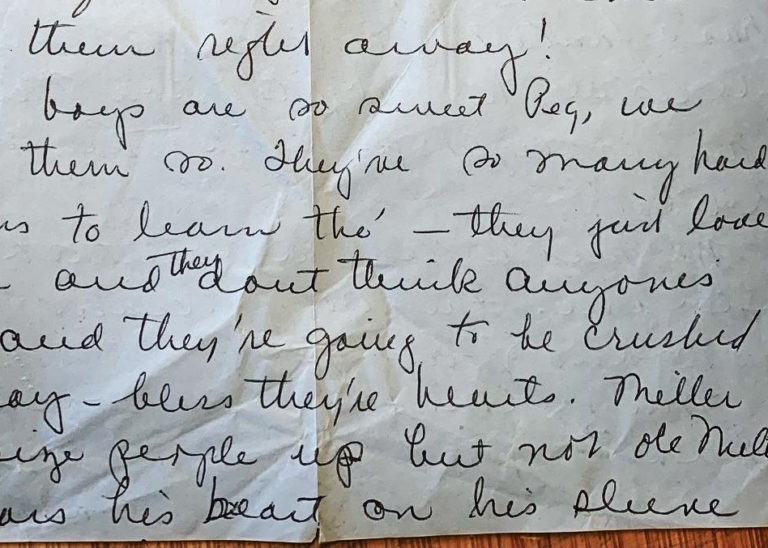
We are on the cusp of Lent, when we will remind each other that we came from dust and to dust we will return. None of us gets to remain unscathed or unharmed in life. This week, my cousin sent me a letter my mother had written to her mother when I was about seven. My mother said, “They just love people and they don’t think anyone’s bad—they’re going to be crushed one day, bless their hearts.”
Bless all of our hearts. Life hurts a lot of the time. And it also carries deep joy and some pretty good laughs as well. In the short time we have on this planet, we are called to love God with all that we are and love one another as we love ourselves, which is how we help contribute to God’s beloved community. For some, that means staying right where we are. For others, it may mean moving on to make other connections, as Jesus did. Even then, he didn’t go far. Some of you probably commute to work farther than he ever got from Nazareth in his whole life. No matter where he was, he wanted people to know they belonged to God and to one another—and those are healing words.
May our message be the same, wherever we are. Amen.
This week’s sermon takes its title from one of my favorite Guy Clark songs, “Come from the Heart,” which I sing as well. The church where I have been interim has some momentous decisions in the weeks and months to come, so the sermon takes a turn towards them at the end. The passage is Mark 1:21-28.
_______________________________
One of my favorite songwriters is Guy Clark. He told stories in his songs that made you feel like he knew your story, too. The first song of his that I ever learned to play and sing—and the song I’ll sing after the sermon—is called “Come From the Heart.” The chorus says,
you’ve got to sing like you don’t need the money love like you’ll never get hurt dance like there’s nobody watching it’s gotta come from the heart if you want it to work
I thought of the song as I read the passage and saw the way people responded when Jesus stood to teach in the synagogue: Mark says they were amazed because he taught with authority, not like the regular teachers. That statement says more about Jesus than it does those who usually spoke. What I hear is that Jesus taught from the heart, and that wasn’t what people were used to hearing.
I remind you, that even though we are through the first month of 2021, we are still in the first chapter of Mark’s Gospel. So far, Mark has covered John the Baptist, Jesus’ baptism, Jesus’ time in the wilderness, John’s arrest, Jesus’ calling his disciples, and now his teaching in the synagogue and healing of a man with as “unclean spirit.” And we still have a few verses to go before we finish chapter 1; next week, we will see Jesus heal a woman who was almost dead. We most often look at these stories one at a time, but it matters to look at the big picture also. Mark is painting with a big brush; he’s not concerned with the particulars. We’ve talked a lot about his missing details—that’s where our sacred imagination comes in.
We don’t know what Jesus said, only how the people responded to it. And in the middle of their astonishment, a man with an “unclean spirit” stood up and said, “What have you to do with us, Jesus of Nazareth? Have you come to destroy us? I know who you are. You are the holy one from God.”
We don’t really know what Mark meant by “unclean spirit.” The Greek word is used a number of times in the New Testament and it doesn’t always get translated consistently. But the man was troubled or agitated in some way. In the middle of all that was going on, I wonder if those in the room resonated with his first question: “What have you to do with us, Jesus of Nazareth?”
In a way, the troubled man said something that kind of sums up the point Mark has been making in the chapter so far: “I know who you are. You are the holy one of God.”
And in the way that Mark describes Jesus speaking and teaching by heart, he lets us know that Jesus knew it too. But what Jesus knew God intended for his life and what people expected of him were, quite often, not the same thing–which is a big part of the story that unfolds in the rest of Mark and the other gospels, and even in the way we read the stories now.
As we stand alongside of those in the synagogue listening both to Jesus and the anguished man, we are offered a chance to relearn an important lesson of life and faith: often, what first catches our attention may not be at the heart of what is happening.
Most sermons I have heard on this passage never get past the statement that Jesus wasn’t like the regular teachers, as though Jesus’ point was to criticize them. But it’s the people who make that comparison, not Jesus; Mark is saying something larger than this first impression.
When Jesus came into Galillee after John’s arrest–and, perhaps, because of it—Mark recorded what Jesus said. He called people to “change their hearts and minds and trust the good news.” Who knows how long he did that before people started to listen. Last week we also noticed he didn’t magically call Peter, Andrew, James, and John. He built relationships with them that set the stage for them to drop what they were doing and trust the good news. They trusted him.
Though it is the first chapter of his gospel, Mark makes no claim that this was the first time Jesus spoke in the synagogue, only that when he started talking, people started listening in ways they had not. As we said, we don’t know what he talked about, but there was something in the way he said it–like he knew he was telling the truth. Then the man with the unclean spirit stood up and, in a sort of Robin Williams in The Fisher King, seemingly-delusional but spot on profound kind of way, named what was going on. Once again without much detail, Mark just says Jesus cast the unclean spirit out of the man. And once again, the people latched on to something other than what Jesus was really about: “A new teaching with authority!”
Tucked into the word authority is the word author, and the root of author means “one who causes to grow” or an “originator.” Jesus wasn’t trying to make a name for himself. I think that is why he often told those he healed not to tell anyone. He came, following in the steps of the prophets, to proclaim liberty and hope and love. When Jesus taught, people heard new possibilities in the scriptures, they heard invitations to live in a way that comes from heart–to grow, to risk, to fail, to become. Whatever the regular teachers were saying, it didn’t invite their listeners to that kind of expansive sense of God or themselves that Jesus offered: “Change your hearts and minds and trust the good news.” Can’t you kind of hear Jesus singing,
you’ve got to sing like you don’t need the money love like you’ll never get hurt dance like there’s nobody watching it’s gotta come from the heart if you want it to work
This congregation faces big changes in the weeks to come, alongside of all that is already going on. As we look into that uncertainty, I am reminded of the words of Rebecca Solnit, one of my favorite writers, who says that you need uncertainty to have hope, because it creates the possibility that anything could happen. Hope isn’t the easy road. It’s a little wild-eyed, like the man in the synagogue. Hope is willing to take a step beyond astonishment and ask, “What have you to do with us, Jesus of Nazareth?” and the sit still long enough to hear the answer: “Change your hearts and minds and trust the good news.” We don’t know all that the days ahead will bring. We do know we belong to a God will be with us every step of the way. Amen.
Ginger and I celebrated the thirty-second anniversary of our first meeting this week. Not too long after that, she came over to my apartment for dinner and I had made peanut butter cookies—my mom’s recipe. I offered her one and she said, “You can make these?”
I assured her the Nutter Butter people weren’t the ones who invented the peanut butter cookie.
Though my Peanut Butter Chocolate Chip Sriracha Cookies were a favorite back in my Milton’s Famous days, I have hunted for a while for a good peanut butter cookie, particularly because Ginger is quite specific about the kind of peanut butter cookie she likes—done, but still soft. After searching and reading, this link led me to this version of the recipe. (The original is here.)
As you will notice, these beauties are gluten-free and dairy-free without trying to be either. And they come together easily—you don’t even need to use your mixer; it all happens in one bowl.
salted peanut butter cookies
1 3/4 cups packed light brown sugar
2 large eggs, at room temperature
1/2 teaspoon vanilla extract
1 16 oz. jar of Skippy peanut butter (approximately 1 3/4 cups)
Maldon sea salt
In a medium bowl, whisk the brown sugar and eggs until they are well mixed and the mixture doesn’t look grainy; then whisk in the vanilla extract. Add the peanut butter and mix everything with a spatula until the mixture is smooth and you don’t see any streams of peanut butter. It will sort of have the consistency of Play-Doh; if you are used to baking cookies, this batter will seem a little soft. I usually let it sit in the refrigerator for about thirty minutes before I scoop the cookies. You can also put them in the freezer for fifteen or so.
Preheat the oven to 350°. Line two rimmed baking sheets with parchment paper.
Using a scoop or a spoon, form the dough into 18 two-ounce balls (I have a two-ounce scoop) and place them on the baking sheet, twelve to a sheet. Again, if you put them in the fridge or the freezer for a bit they will firm up. If you want the traditional fork lines, do that now, but don’t press them down too much. Sprinkle the tops of the cookies with the sea salt; be generous—there’s no other salt in the batter. Bake for 20 minutes. I bake two sheets at once, so after ten minutes, I rotate the sheet pans and switch their locations. When finished, the cookies will be lightly golden and cracked on top. Let them cool completely before serving.
NOTE: I said Skippy because the standard brands work better for this cookie than freshly ground or natural peanut butter and, because of Bruno Mars, we’re Skippy fans. If you prefer Jif, that will work as well.
It’s cold here in Connecticut and we’re hunkered down. I hope there are cookies in your weekend plans.
It started in my dream the other night: I was looking at my phone as I wondered why I spend so much time looking at my phone. I rarely remember my dreams, so I came back to it as I was journaling this morning.
The question is not a new one. The struggle is real. I don’t like how quickly I move to the small screen when nothing else is happening. I have deleted most all of my social media apps–Facebook, most notably–both to give me some distance from the chatter and also to force my eyes and my thoughts elsewhere, but in my dream last night I went farther. I deleted my news apps, my sports apps, most of my information apps.
When I woke up, I did the same thing. I am, as they say, living the dream.
I didn’t cancel subscriptions or close accounts. I just took them off of my phone so that I have to be at my laptop to get the information, which is one of the reasons I sit at my laptop. What I think I am chasing is the chance to learn how to do nothing again. To be bored. Unoccupied. I have a tendency to feel claustrophobic about life, in varying degrees; I am continually looking for space–for room to move, both physically and spiritually. These months of isolation have heightened that for all of us in many ways, but they have also created some space, or, at least, some time. My schedule is more open. My mind is still cluttered and crowded.
Rob Walker’s The Art of Noticing, is one of the books on my wish list. For now, I subscribe to his bi-weekly newsletter. In a past issue, he talked about the connection between noticing and caring:
When the book came out, and I was out meeting people and talking about it, this “care for something” idea — the connection between noticing and attention and caring — came up a lot. Often we end up “noticing” or paying attention to things we really don’t care about: They’re irrelevant distractions, forced on us through screens or social networks or billboards or whatever. The book was written to help remedy that problem.
And at some point while talking about this I simply blurted out, “Pay attention to what you care about, and care about what you pay attention to.”
Though I didn’t have his words in mind, that is what I was chasing in my dream last night and my time this morning. I want to stop paying attention to things I don’t really care about. Wait–I’d rather state that as a positive: I want to pay attention to what matters to me.
Mostly, I just want to pay attention.
Maria Popova is another whose newsletter populates my mailbox from time to time. Her website, Brain Pickings, is a treasure trove of ideas and authors. She started her letter this week with these words:
When I walk–which I do every day, as basic sanity-maintenance, whether in the forest or the cemetery or the city street–I walk the same routes, walk along loops, loops I often retrace multiple times in a single walk. This puzzles people. Some simply don’t get the appeal of such recursiveness. Others judge it as dull. But I walk to think more clearly, which means to traverse the world with ever-broadening scope of attention to reality, ever-widening circles of curiosity, ever-deepening interest in the ceaselessly flickering constellation of details within and without. In this respect, walking is a lot like love–for one human being to love another is to continually discover new layers of oneself while continuously discovering new layers of the other, and in them new footholds of love.
Yesterday marked the day Ginger and I met thirty-two years ago. I turned sixty-four last month, so that means I have spent half of my life finding new footholds of love. Last night after dinner, I built a fire and we sat in the living room, surrounded by Schnauzers and the sounds of a playlist I made for our twenty-fifth anniversary, and talked for a couple of hours. The depth and range of our conversation was a beautiful reminder of the layers we have to discover and re-discover in each other. And we could have missed it, had we chosen from any number of distractions and other promises we have to keep. Some nights we have to do the other things, but I need to keep reminding myself that most of life will wait on any given night until after I have given my attention to the one who matters most to me.
My sermon this week comes from Mark 1:14-20 where Jesus calls four of his disciples. The song that follows is “The Summons” by John Bell, which I learned at youth camp with Wilshire Baptist Church in Dallas.
____________________________________
As a boy, I was fascinated by the story where Jesus told his disciples to go into town and find a man with a donkey and say, “The Master needs your animal.” They did, and the guy just gave them the donkey. I pictured Jesus’ words sort of putting him in a trance that let the disciples take whatever they wanted. When I told that to my dad, he smiled and said, “I think Jesus knew the man with the donkey and had already made arrangements; the disciples were just picking it up.” It was the first time I ever thought about Jesus knowing people and having conversations that weren’t written down in the gospels.
The gospels are filled with stories where people kind of show up in the middle of a story and make huge decisions. The writers leave out all kinds of details—Mark, especially. Our passage for today begins about halfway through the first chapter of Mark. In the first thirteen verses, he covers John the Baptist, Jesus’ baptism, Jesus’ time in the wilderness, and John’s arrest. It is safe to say he left out a lot of details. Engaging the scripture requires our sacred imagination. We have to do the work to fill in the gaps—to humanize the people on the page.
Jesus and John the Baptist were cousins. We don’t know how much time they spent together as kids, but we do know they knew each other before Jesus showed up by the Jordan River to be baptized. John recognized him, and probably expected him. I even imagine they might have talked about it beforehand.
All of that is to say that John’s arrest would have been a cause of both alarm and grief for Jesus. And it appears it was also a signal for him to begin his public ministry in a more pronounced way. Because Mark is moving so quickly through these events, he makes it sound as though everything flowed one into the next—almost as if everything happened on the same day. But time passed. Jesus was in the wilderness for forty days after his baptism. We don’t know how long John was in prison before he was executed.
Instead of following Mark’s timeline, let’s look at the sequence of events. Jesus’ ministry begins in the context of grief: his cousin’s imprisonment. Jesus lost someone important to him, someone who had blessed him and mentored him, and, as a result, he began looking for those who would gather around him and work with him in the days to come—which brings us to the two scenes in our passage for today where Jesus calls out and the four men drop what they are doing and follow him.
Mark’s account makes them sound almost impulsive, but do we really think that Jesus just randomly picked people as he was walking? And do we think Peter, Andrew, James, and John just walked away from their fishing and their families because some guy asked them to? It makes me think of the movie Good Will Hunting, where Ben Affleck’s character, Chuckie, tells Will that he keeps thinking about the day that he comes to pick Will up and there will be a note saying he’s gone. Peter, Andrew, James, and John knew the day was coming.
I think Jesus had stopped to talk to them on many mornings. Maybe he bought fish from them. I also imagine a number of fish suppers around an open fire, much like the one Jesus built to serve Peter forgiveness over breakfast after Peter’s denial and Jesus’ death and resurrection. They saw each other day after day and then, one particular afternoon–or whatever time of day it was–Jesus stopped and said, “Come on, my friends; let’s do this,” and invited them into his dream to change the world. Jesus wasn’t magic. The disciples, or the ones who became disciples, followed him because he had built a relationship with them. They knew him. They were waiting for the invitation.
We might do better to read, “Follow me” as, “Are you ready to go?”
They all knew what they were doing. None of us follows Christ by accident. Though the grace of God often catches us by surprise and God does move in mysterious ways, we have to do the work of getting ourselves ready to hear the call of Love and respond to it.
When Jesus talked about fishing for people, I think he was doing more than demonstrating his ability at word play. We read the story and we see the metaphor: the fishing they knew meant casting nets and drawing everything in; Jesus was saying that’s how it worked with people, too. He could teach them how to do that.
As one who grew up in an evangelical denomination, the metaphor has grown more problematic for me because it can sound like we need to do whatever we can to hook people and reel them in, if you will. But the metaphor isn’t the heart of what is happening here. The point is that Jesus called, and they followed.
As far as the fishing goes, maybe we can draw another correlation. Fishing the way they did it was hard work. Fishing is still hard work. As Jesus walked by day after day, he saw their tenacity and dedication and he drew a parallel: “Let me show you how to channel that passion into people.”
One more thing. As Christians have read this story over the centuries we have talked about Jesus calling the disciples, which is a verb that means more than him offering them a new line of work. A calling carries a sense of purpose, of vocation, of doing what we were meant to do. Frederick Buechner says our calling is at the intersection of what we love most and what the world needs most. Krista Tippett wrote about calling, or vocation, this week and said,
To pick up the question of what is calling me and you is one way to begin to walk, each with our own offering, towards a new kind of wholeness in our life together. For there are callings in a time as in a life. Some of us–many of us–are called right now primarily to get safe and fed and warm, to keep those we love safe and fed and warm. Some of us are called to place our bodies between other bodies and danger. Some of us are called to be bridge people, staking out the vast ground at the heart of our life together where there is meaningful difference but no desire for animosity. And some of us are called to be calmers of fear.
“There are callings in a time as in a life,” she said. Let us let that sink in for a minute.
And I love the options she presents: some of us are called to get safe and fed and warm, some are called to place our bodies between other bodies and danger, some of us are called to be bridge people, some of us are called to be calmers of fear.
We must end this uncivil war that pits red against blue, rural versus urban, conservative versus liberal. We can do this if we open our souls instead of hardening our hearts. If we show a little tolerance and humility. If we’re willing to stand in the other person’s shoes just for a moment. Because here is the thing about life: There is no accounting for what fate will deal you. There are some days when we need a hand. There are other days when we’re called on to lend one. That is how we must be with one another.
Who, then, is God calling us to be in this time? How is God calling us to drop our nets—to change our routines—and follow Christ? How is God calling us to change our hearts and lives and trust the good news that God’s kin-dom—God’s beloved community—is among us? How have our conversations prepared us for our next steps in faith? What conversations do we need to have to prepare to follow Christ in the days to come?
Let us change our hearts and lives and trust the good news. Amen.
Saturday morning means I get to have some fun making breakfast.
The day starts early because I drive to Madison, Connecticut (once East Guilford) to meet a group of guys for coffee around 6:30. They have been meeting for twenty years and were kind enough to let me join in.
For some reason, as I drove home I savored the memory of breakfast with one of my seminary roommates, Brad Creed, eating “Dutch Babies” at the Old South Pancake House. So I decided to make one this morning. Ginger accepted breakfast and then wondered why it was called a Dutch Baby. Here is what I learned:
According to Sunset magazine, Dutch babies were introduced in the first half of the 1900s at Manca’s Cafe, a family-run restaurant that was located in Seattle, Washington and that was owned by Victor Manca. While these pancakes are derived from the German pancake dish, it is said that the name Dutch baby was coined by one of Victor Manca’s daughters, where “Dutch” perhaps was her corruption of the German autonym deutsch. Manca’s Cafe claimed that it owned the trademark for Dutch babies in 1942.
They are really German pancakes (which I like since my mother’s family name was Schultz) that are relatives of the popover–it is as if a popover and a crepe had a kid.
As I sat down to type up the recipe, I went to put on some music and remembered John Prine’s record, German Afternoons. Since the title has no particular reference to any of the songs on the album, I went looking to see if I could learn why he chose it. Here is what I learned:
Prine said, “I had this guy explain to me once that a German afternoon is like you go into town with some errands to run and stuff to do but then you run into an old buddy you haven’t seen. And you drop into a bar for just a minute and start to talk. And next thing you know it’s already evening and you’ve just spent a German afternoon.”
I digress. Here’s the recipe.
german pancakes
3 eggs
½ cup flour
½ cup milk
1 tablespoon sugar
a pinch of nutmeg
4 tablespoons unsalted butter
Lemon juice, confectioners’ sugar, or syrup, jam, cinnamon sugar, or whatever else you might put on a pancake
Preheat oven to 425°.
Mix eggs, flour, milk, sugar and nutmeg in a blender or food processor. You can also do it by hand.
Place butter in a ten-inch cast iron skillet or baking dish and place in the oven. As soon as the butter has melted–dont let it burn–pull it out of the oven and add the batter to the pan. Return pan to the oven and bake for twenty minutes; the pancake will be puffed and golden. Lower oven temperature to 300° and bake another five minutes.
Remove pancake from oven, sprinkle with lemon juice and confectioner’s sugar, cut into wedges and serve–unless, of course, you want to top it with syrup, jam, or cinnamon sugar.
One of my favorite John Prine songs is on German Afternoons: “The Speed of the Sound of Loneliness.” One of the things I figured out over the years is that you can sing the words to “Come, Thou Fount of Every Blessing” to his tune. It deepens both songs for me.
prone to wonder, Lord I feel it prone to leave the God I love here’s my heart, O take and seal it seal if for they courts above
what in the world’s come over you? what in heaven’s name have you done? you’ve broken the speed of the sound of loneliness you’re out there running just to be on the run
I love that the story of Samuel falls on MLK weekend, thanks to the lectionary. Here is where the two stories took me this week.
_____________________________
Today is the second Sunday of Epiphany, if we mark time by the liturgical calendar. As we know, epiphany is a word that means “awakening,” and points us to the sages who followed the star to the manger–although they had no idea it was Epiphany.
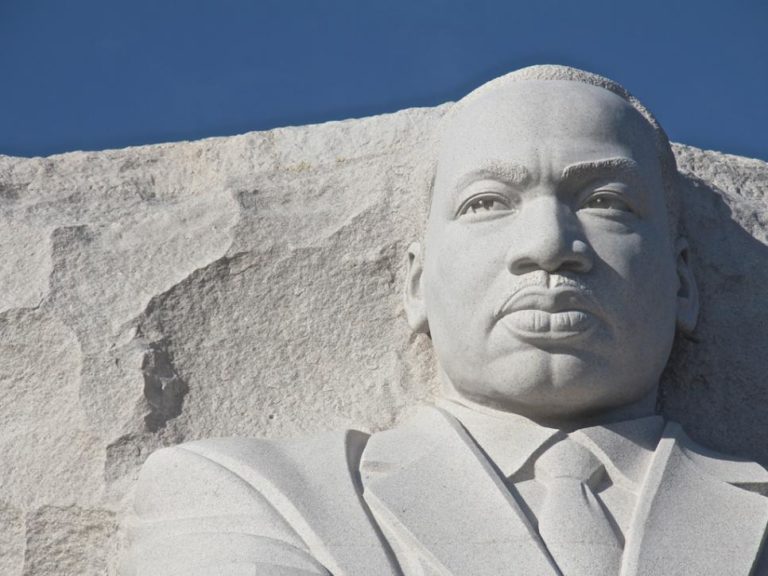
If we mark time by our American calendar, this is the Sunday when we honor the legacy of the Rev. Dr. Martin Luther King, Jr. Tomorrow we will celebrate him with a national holiday.
On the night of January 27, 1956, in the middle of the Montgomery, Alabama bus boycott, Dr. King got a phone call at his home telling him if he didn’t get out of town they were going to blow up his house and kill him and his family. He was twenty-seven years old. He recounted later that he hung up the phone and went into the kitchen to pray. In the silence, he said he heard a voice call him by name: “Martin Luther, stand up for truth, stand up for justice, and stand up for righteousness.” His epiphany that night led him to lead us and to change how we look at and listen to one another, and, perhaps, how we listen to God.
Our text for this morning deals with another call in the middle of the night—this one to Samuel, a young boy to whom God spoke out of the darkness. Let us listen to the part of the story told in I Samuel 3:1-10 (CEB):
Now the boy Samuel was serving the Lord under Eli. The Lord’s word was rare at that time, and visions weren’t widely known. One day Eli, whose eyes had grown so weak he was unable to see, was lying down in his room. God’s lamp hadn’t gone out yet, and Samuel was lying down in the Lord’s temple, where God’s chest was.
The Lord called to Samuel. “I’m here,” he said.
Samuel hurried to Eli and said, “I’m here. You called me?”
“I didn’t call you,” Eli replied. “Go lie down.” So he did.
Again the Lord called Samuel, so Samuel got up, went to Eli, and said, “I’m here. You called me?”
“I didn’t call, my son,” Eli replied. “Go and lie down.” (Now Samuel didn’t yet know the Lord, and the Lord’s word hadn’t yet been revealed to him.) A third time the Lord called Samuel. He got up, went to Eli, and said, “I’m here. You called me?”
Then Eli realized that it was the Lord who was calling the boy. So Eli said to Samuel, “Go and lie down. If he calls you, say, ‘Speak, Lord. Your servant is listening.’” So Samuel went and lay down where he’d been.
Then the Lord came and stood there, calling just as before, “Samuel, Samuel!”
Samuel said, “Speak. Your servant is listening.”
The story from the life of Samuel was one that engaged me as a young boy because I imagined him at my age. I didn’t understand how his mother could have sent him to live in the Temple, but I could see him waking in the night and going to Eli, thinking the old man had called him. But the story is bigger than a little boy.
Samuel’s mother was named Hannah. She had a hard life, to put it mildly. Her husband had two wives and the other woman had given birth to several children and Hannah had none. As a result, the husband played favorites and discriminated against Hannah because she had not given birth. Hannah went to the temple and pleaded with God to give her a child. Her prayer was so fervent that Eli, the priest, saw her without hearing her and thought she was drunk. Hannah told him her story and Eli said he hoped she got what she asked for.
She became pregnant and gave birth to Samuel. Then she decided the best way to say thank you was to give the boy back to God. We need to understand here that the boy was her ticket to some equity in the way she was treated by her husband, but she chose a story bigger than her own—beyond the injustice and misogyny of the time. Once the child was weaned, she took him to the temple and left him there for Eli to mentor as a way of saying thank you to God.
Eli was–what’s the theological term?–a hot mess as a priest. By the time Samuel came to live with him, Eli was old. His sons were priests alongside him, but they used their positions as opportunities to enrich themselves and take advantage of whomever they could. All of this had gone on a really long time, even before Samuel came to the temple.
As our passage noted that a word from God had become a rare thing by the time Samuel heard his name called out in the night. He went to Eli because he didn’t think anyone else was there. The drowsy priest said, “I didn’t call you. Go back to bed.” It happened a second time, and then a third. By then, Samuel wasn’t the only one who was awake, and Eli had a sense that more was going on, so he gave Samuel different instructions: “Next time answer, ‘Speak, Lord. Your servant—your follower, your disciple—is listening.’”
Samuel’s childlike response makes his answer sound so doable. But to actually say to God, “I’m listening”—and mean it—is a brave thing to say. When Samuel listened, God told him to go to breakfast the next morning and let Eli know that his blindness was both a physical reality and a metaphor: he and his sons had lost sight of their calling and their humanity and were going to be punished for their abuse of their office. The whole house was about to come down.
When Eli asked Samuel what God had said, Samuel didn’t hold back. He chose to tell the truth.
I had a chance a few years ago to visit the house where Dr. King was living in Montgomery, Alabama when he got the call that threatened his life–and when he heard God’s call that followed it. Shirley Cherry, the woman who was leading our tour, told us the story and said, “He had a choice. Dr. King had a privileged life. He didn’t have to do what he did.” Her choice of words jumped out at me: he had a privileged life. Yes, he got to study at Boston University. He did have some advantages others did not. Yet, when he came to Durham, North Carolina, just days before he was assassinated, to meet with an interracial group of ministers, they had to meet in the private home of one of the pastors because there was not a restaurant in town that would allow them to eat together.
Yet, she said, he had a choice.
The night he stood up to speak to the sanitation workers in Memphis, Dr. King began his speech with these words:
As you know, if I were standing at the beginning of time, with the possibility of general and panoramic view of the whole human history up to now, and the Almighty said to me, “Martin Luther King, which age would you like to live in?” — I would take my mental flight by Egypt through, or rather across the Red Sea, through the wilderness on toward the promised land. And in spite of its magnificence, I wouldn’t stop there. I would move on by Greece and take my mind to Mount Olympus. And I would see Plato, Aristotle, Socrates, Euripides and Aristophanes assembled around the Parthenon as they discussed the great and eternal issues of reality.
He kept saying, “I wouldn’t stop there,” as he moved through different historical epochs and then he said,
Strangely enough, I would turn to the Almighty, and say, “If you allow me to live just a few years in the second half of the twentieth century, I will be happy.” Now that’s a strange statement to make, because the world is all messed up. The nation is sick. Trouble is in the land. Confusion all around. That’s a strange statement. But I know, somehow, that only when it is dark enough, can you see the stars. And I see God working in this period of the twentieth century in a way that [people], in some strange way, are responding — something is happening in our world. The masses of people are rising up. And wherever they are assembled today, whether they are in Johannesburg, South Africa; Nairobi, Kenya; Accra, Ghana; New York City; Atlanta, Georgia; Jackson, Mississippi; or Memphis, Tennessee — the cry is always the same — “We want to be free.”
And another reason that I’m happy to live in this period is that we have been forced to a point where we’re going to have to grapple with the problems that [people] have been trying to grapple with through history, but the demand didn’t force them to do it. Survival demands that we grapple with them. [People], for years now, have been talking about war and peace. But now, no longer can they just talk about it. It is no longer a choice between violence and nonviolence in this world; it’s nonviolence or nonexistence.
Samuel made a choice and rose to greatness. Martin Luther King made a choice and was murdered for it. The call to follow God is not a guarantee for everything to turn out just as we hoped. It is not a promise that if we follow God we will be set for life.
It is a choice to do justice, love kindness, and walk humbly. Or not.
One of the heartbreaking images for me, as I watched the invasion of the Capitol, was to see someone carrying a “Jesus Saves” sign. Condemning the violence and condemning the attempt to baptize it are not hard choices. But choosing to examine whether our lives–our words, our practices, our actions, our silences–feed the fires of hatred and prejudices or join a river of hope that will let justice roll down like water is not always so easy because it means we have to listen, like Samuel–and listen hard–and we have to make the daily decisions, like Dr. King, to live out our understanding that life is not primarily about us. We are not the stars of the show. We are not the ones who deserve our privilege and our advantages. We are the ones whom God is calling to do more than say what happened at the Capitol was wrong. I’ve heard some people say, “This is not who we are.”
Actually it is who we are, and who we have been—but it is not who we have to be.
I woke up Saturday morning to an article by Krista Tippett, the host of the On BeingProject. She wrote about an e-mail she had received from a woman named Whitney Kimball Coe who works with the Center for Rural Strategies and lives in East Tennessee. Monday night, Whitney’s daughter took a bad fall and required surgery. She wrote:
You know, our hospital experience put us directly in the path of so many wonderful East Tennesseans. Nurses and technicians and doctors, the other parents waiting in the ER, the parking attendant, the security guard. I’m sure many of them didn’t vote as I did in the last election and probably believe the events of Jan 6 were mere protests, but they responded to our trauma with their full humanity. I’d forgotten what it feels like to really see people beyond their tribe/ideology. It broke something open in me. I’ve been living in a castle of isolation these many months and it’s rotted and blotted my insides. I’m aware of contempt, anger, and maybe even paranoia coursing through my veins, and I wonder if that’s just a snippet of where we are as a nation. Why is our righteous indignation and disgust so much easier to flame than our compassion?
It makes me realize that there is no substitute for coming into the presence of one another. No meme nor Twitter post nor op-ed nor breaking news nor TED talk can soften and strengthen our hearts like actually tending to one another. . . . We have to keep showing up so we don’t lose ourselves to bitterness.
Krista Tippett ended her article by saying,
We are creatures made, again and again, by what would break us. Yet only if we open to the fullness of the reality of what goes wrong for us, and walk ourselves with and through it, are we able to integrate it into a new kind of wholeness on the other side. Our collective need for a new kind of wholeness might be the only aspiration we can share across all of our chasms right now.
Longings, too, can be common ground. A shared desire not to be lost to bitterness. A clear-eyed commitment that what divides us now does not have to define what can become possible between us.
Choosing to do the hard work of togetherness is more than agreeing to disagree. If we are going to choose to not be lost to bitterness, then we will have to choose to speak the truth in love, like Samuel. We will have to choose to trust nonviolence as strength against brazen aggression and prejudice, like Dr. King. We have to choose to ask honest questions and to offer honest answers. We have to choose to listen to God and to one another. Samuel heard God’s call because he woke up. Eli slept through the whole thing because he had long since lost sight of what God wanted to do through and with him. May we continue to awaken and choose to listen. Amen.
Like many people preaching this week, the sermon I worked on before Wednesday is not the one I preached. The events in Washington sent me back to Matthew 2:1-12 for a second time—with a bit of a different emphasis.
_______________________________
Yes, I know I am preaching on the same passage I read last week. I’m not sure I have ever done that before. I am also aware that I need to ask you to breathe in the depth of God’s love for all of humanity as we move into a difficult reflection. But as I sat in front of my television on Wednesday–on Epiphany–and watched insurrectionists take over the Capitol building because people had been encouraged to do so by some of our elected leaders, I came back to this passage because of this verse:
When King Herod heard this, he was troubled, and everyone in Jerusalem was troubled with him.
The sentence has always struck me as odd because I have never understood how everyone in Jerusalem could have known that the sages had stopped by the palace to ask directions to where the messiah had been born. But once they did, Herod went on a rampage and demanded that all the children under the age of two be killed to make sure he held on to power. So, a better translation might be everyone in Jerusalem was troubled because of him rather than with him. Herod was troubled by the prospect of being replaced; Jerusalem was troubled because he took out his fear and anxiety on them—which looks a lot like what we have seen happening in our own country this week.
I want to pause here and say that I am well aware that my sermon so far may be troubling to all of us. I am the bridge pastor filling in for Pastor Jeanette. You and I don’t know each other well. We don’t even get to see each other face to face. If you are like most any congregation in this country, you are spread across the political continuum. And part of the reason we, as a nation, have gotten to a place that we had people storming the Capitol is we haven’t figured out how to talk to each other about difficult things. So bear with me.
My sermon last week focused on the last verse in the passage:
Because they were warned in a dream not to return to Herod, they went back to their own country by another route.
And I said,
For all that was difficult and tragic about 2020, I hope it gives us reason to act like the wise ones and go home by another way. Rather than reconstructing the life we knew before COVID-19, let’s take this chance to tear down things that need to be torn down, to leave behind behaviors that divide and discourage us, on both personal and societal levels, and to do the work to find a better way to live together.
And I still hope we do that. But today I want us to imagine ourselves in the story not as the magi who got to skip town and avoid the craziness, but as the people of Jerusalem who were already home and had to figure out how to live in the middle of the troubles because I think that is who we are in this story.
The sages went home. The people of Jerusalem had to stay and live through the massacre of the children, through the madness of their leader, through all that divided and frightened them. They didn’t have another way to go home. They were home. And home was falling apart.
Matthew’s gospel is centered on Jesus’ story, so he goes on to tell us about Mary and Joseph fleeing into Egypt and staying there until Herod died. He doesn’t give an account of how the people of Jerusalem survived. We don’t have any other stories about angels showing up to warn anyone else that Herod was on a rampage, only that he went after every child under the age of two. No wonder everyone in Jerusalem was troubled.
In my sacred imagination, I can see a variety of responses to Herod’s onslaught. But most of all, I picture people finding ways to take care of each other once they figured out what he was up to. I imagine those who didn’t have children hiding the babies of their neighbors so the soldiers couldn’t find them. I imagine people working hard to figure out ways to alleviate the suffering of those who lost their children. I’m sure there were some who bought what Herod was selling, but that kind of fear has a short self-life. No one survives for long when they are fueled by anger and fear–even when they dress it up as power.
But when things are difficult, it’s hard to choose not to be fueled by anger and fear because they are both high energy fuels. But anger and fear do not create community. They isolate us because they both require a target. In times like ours, where divisions run deep—or at least we are constantly told we need to choose sides—we need to learn how to stay home by another way, if you will. I know that is not easy work.
Like many, I have a family member that I don’t know how to talk to in these days. Mine is my brother. And my faith calls me to figure out how to do that. We have to learn how to talk to each other at every level of life or more than just our children are going to die. We have to learn not to allow our vocabulary to be limited by those in power. We are more than red and blue. We are more than our opinions, our fears, our demands, our desires, our issues, our privilege, our heritage, even our hopes. We are more than–well, pick any polarity you want. We are, first and foremost, people created in the image of God and worthy to be loved.
And that goes for every last one of us.
The troubles in our country are far from over. Whatever media gets our attention is packed with articles and speeches that dissect our problems and speculate about our future. Lots of folks are blasting blame across the airwaves. Others shout in hatred, in disgust, in righteous indignation. Many voices are going to keep shouting. We, however, are not required to join the chorus.
Let me say that again. We are not required to join the chorus.
We can stay home by another way. We can speak truth to power and name injustice without becoming one of the hateful folks that seem to be magnets for the camera. We can choose not to listen to Herod or his minions. They are not telling the truth. Power is not the point. Listen to Jesus: love God with all that you are and love your neighbor as yourself.
At the start of this sermon, I asked you to breathe in the depth of God’s love. Many years ago, two friends of mine wrote a song called “The Depth of God’s Love.” The chorus says,
and the depth of God’s love reaches down, down, down to where we are until we’re found, found, found a quiet word or none at all pursues the heart behind the wall and to those who wait with darkness all around the depth of God’s love reaches down
No matter how loud the chorus, love will always be the last word. Amen.